The four Servant Songs in Isaiah describe the service, suffering, and exaltation of the Servant of the Lord. In Christian interpretation, the Servant is ultimately identified with Jesus Christ, the Messiah who faithfully accomplishes God’s work, brings justice and light to the nations, bears the sins of others, and is vindicated through resurrection and exaltation.
The four passages are Isaiah 42:1-9, Isaiah 49:1-13, Isaiah 50:4-11, and Isaiah 52:13-53:12. Together they present a developing portrait: the Servant is chosen and Spirit-filled, commissioned as a prophetic light to Israel and the Gentiles, perfectly obedient amid persecution, and finally a suffering substitute whose death brings salvation to many.
What is a Servant Song?
The latter chapters of Isaiah contain a series of beautiful poetic prophecies about a servant who would bless the world through his life, labors, and suffering. Collectively these prophecies are known as the “Servant Songs” or the “Servant Psalms.”
Isaiah’s so-called “Servant Songs” have long captivated theologians and biblical scholars, standing as some of the most profound and debated passages in the Old Testament. Scattered through Second Isaiah (Isaiah 40-55), these four poems introduce a mysterious figure known as the Servant of the Lord (Hebrew ebed YHWH).
In these texts we encounter a servant endowed with the Spirit, chosen by God to bring justice and light to the nations, gentle in demeanor yet steadfast in obedience. We also see a servant who endures deep suffering, rejection, and even death, a “man of sorrows” who somehow bears the sins of others and in whose sacrifice many find healing (Isa 53:3-5).
In the royal terminology of the ancient Near East, a servant was a “trusted envoy,” a “confidential representative,” or “one who is chosen.” The title therefore does not necessarily describe a person of low status; it can identify a royal representative who carries out the will of a sovereign.
The historical and literary setting
Isaiah 40-55 is often called “Second Isaiah” by scholars, referring to a section of the Book of Isaiah that addresses the situation of the Jewish exiles in Babylon (mid-6th century BC). In this context, the tone shifts from the oracles of judgment in earlier chapters to messages of comfort and restoration: “Comfort, comfort my people, says your God…” (Isa 40:1).
These chapters repeatedly mention Cyrus of Persia as the anointed deliverer who will allow the exiles to return (Isa 45:1), situating the material around the time leading up to Cyrus’s decree (ca. 540 BC). Whether one attributes Isaiah 40-55 to the 8th-century prophet Isaiah of Jerusalem writing prophetically about the future, or to a later prophet in the exile (the historical-critical view of “Deutero-Isaiah”), the text itself presents a coherent theological drama.
Central to this drama is the figure of the Servant, who appears intermittently but decisively. The Holy One of Israel is going to achieve the hope, grace, and restoration promised in the first 39 chapters through this mystery guest, whom he refers to as “the Servant of the LORD.”
The Servant Songs should therefore be read within the larger themes of Isaiah 40-55: the new exodus, the restoration of Israel, the defeat of idolatry, the role of the nations, the establishment of justice, and the universal reach of God’s salvation.
Israel and the individual Servant
Isaiah initially identifies God’s servant as Israel (41:8; 44:1-2), who serves as God’s witness (43:10) and as a light to the Gentiles. Yet Israel could not fulfill this mission: Israel was deaf, blind (42:19), and in need of God’s forgiveness (44:21-22).
Israel failed again and again. By contrast, God’s Servant, the Messiah, faithfully completes all the work He is given to do (cf. Luke 13:32; John 17:4). The Servant of the Lord is God’s faithful and true witness to humanity.
Through the centuries, scholars, saints, and students have debated the identity of the servant. Some speculate the servant is Isaiah himself. Others suggest that perhaps the servant is Cyrus, the great and magnanimous king who united the Medes and Persians, conquered Babylon, and allowed the Jews to return to Judah.
One of the songs, Isaiah 49:1-7, specifically identifies Israel as the servant. Still others see Moses, Jeremiah, and Abraham as fulfillments of the prophecies. Indeed, a case can be made for each of these individuals or entities, and others, to be a fulfillment of some of the Servant Song prophecies.
However, many phrases in the songs echo descriptions of Israel elsewhere in Isaiah, supporting a collective interpretation, while other aspects, especially in Isaiah 53, seem to point to an individual distinct from the nation: “for the transgression of my people he was stricken,” Isa 53:8.
The ambiguity may be intentional, allowing the servant figure to stand in a rich, multivalent role within the book’s poetry and the canon. Thus while other individuals or entities such as Isaiah, Cyrus, or Israel appear to fulfill certain portions of the Servant Songs’ prophecies, in that capacity they can appropriately be viewed as a type or a symbol for Jesus Christ-the Servant who fulfills them all.
Modern scholarship admits that “no explanation for the identity of the servant of the Lord in the ‘servant songs’ of Isaiah commands a scholarly consensus.” The collective identity of Israel and the individual identity of the Messiah should therefore be considered in relation to the text’s developing logic.
The Servant will be all Israel was not. He will do all Israel could not. He will perfectly obey the Holy One of Israel. Isaiah is proclaiming that Israel’s salvation will come through the substitutionary suffering of the Servant. It will take the life of another to bring salvation.
Overview of the four Servant Songs
| Servant Song | Central emphasis | Principal themes |
|---|---|---|
| Isaiah 42:1-9 | The Spirit-filled Servant | Election, gentleness, justice, covenant, light, freedom |
| Isaiah 49:1-13 | The Servant’s prophetic commission | Calling from the womb, restoration, light to the nations, rejection, worldwide salvation |
| Isaiah 50:4-11 | The obedient and persecuted Servant | Discipleship, obedience, suffering, vindication, trust in God |
| Isaiah 52:13-53:12 | The suffering and exalted Servant | Substitution, atonement, death, resurrection, exaltation, salvation for many |
First Servant Song: Isaiah 42:1-9
The chosen and Spirit-filled Servant
This first of the four Servant Songs introduces us to the Servant of the LORD: “Here is my servant, whom I uphold, my chosen one in whom I delight; I will put my Spirit on him, and he will bring justice to the nations.”
According to this song, the Servant of the Lord is chosen by God, and God delights in Him. The Servant has the Spirit of God abiding on Him.
The voice in this first Servant Song is Jehovah, speaking in the first person on behalf of the Father. The opening verse of the song (see Isaiah 42:1) tells us much about the sacred relationship between our Heavenly Father and the Servant, his Son, Jesus Christ.
We learn from the passage that Christ serves the Father and that the Father upholds and supports the Son. We are taught that God elected or chose the Son for the work and delights in him. We are further taught that Christ has the Spirit of God upon him as he serves.
The verse helps us understand that the relationship between the Father and the Son is one of unity, love, trust, and support. This first verse of the song closes with the assurance that the Servant’s labors will bring “judgment” or justice to the Gentiles.
The Hebrew term mishpat, translated here as “judgment,” can refer to either a favorable or unfavorable verdict or sentence. Likely those in Isaiah’s day who had suffered at the hands of some of the Gentile nations preferred to understand this promised “judgment” to be a punishment to be poured down upon those who had oppressed them, but the sixth verse of the passage suggests that the justice to be given the Gentiles through the Servant would be a blessing rather than a curse, for the Servant was to be given “for a light of the Gentiles” (42:6; see also Isaiah 60:1-5).
Gentleness and quiet strength
The Servant is not presented as a violent revolutionary or a ruler who relies on public spectacle: “He will not shout or cry out, or raise his voice in the streets. A bruised reed he will not break, and a smoldering wick he will not snuff out.”
The next three verses (see Isaiah 42:2-4) tell us something about the mortal ministry of Christ. In the meridian of time, when Jesus was born, many of the descendants of Israel were looking for a Messiah who would come in great power and glory, destroy the wicked, and usher in a great theocracy of peace-they were looking for the millennial Messiah.
But this song speaks of a different coming of the Messiah, the coming of the mortal Messiah, whose ministry would be quiet and gentle, whose “voice” would not be “heard in the street,” and whose actions would be so tender and quiet that even a delicate, bruised, or damaged reed would not be broken thereby, nor would a feeble “smoking flax” or smoldering wick of a lamp be quenched by his passing.
While those close to Jesus were deeply moved and changed by his ministry, on the worldwide stage it drew little attention. The millennial Messiah’s coming would shake the earth, and every knee would bow and every tongue would confess (see Isaiah 45:23; Romans 14:11; D&C 88:104), but the Servant’s first coming would pass largely unnoticed by most of contemporary humankind.
We see this prophecy fulfilled in Jesus’s birth to a humble woman in simple surroundings and in his modest and quiet upbringing in an obscure village located in a relatively unremarkable part of the ancient world. His teachings were mostly unknown beyond his own people and land and his death drew little notice in the Roman Empire.
Justice, truth, and perseverance
“In faithfulness he will bring forth justice; he will not falter or be discouraged till he establishes justice on earth.” The Servant’s gentleness does not mean weakness or indecision. His ministry is quiet, but it is also unwavering.
We further learn that though the Servant’s ministry would be comparatively quiet and humble, he would indeed establish truth and justice on the earth. We are also assured that he would not fail (see Isaiah 42:3-4).
These verses contrast the Servant with both idols and failed rulers. Rather than being an “empty wind” (Isa. 41:29), the Servant is Spirit-filled. The Holy One has put his Spirit on this Servant (Isa. 42:1). This will be evident in the justice the Servant will bring (vv. 1, 2, 4).
He will do what many of Israel’s rulers failed to do: rule with justice. This is certain because God will empower him (vv. 6-9). The promises made to God’s people in Isaiah 1-39 will begin to come to fruition in this Spirit-filled Servant as he brings forth justice.
The Servant as covenant and light
God says to the Servant: “I the Lord have called thee in righteousness, and will hold thine hand, and will keep thee, and give thee as a covenant of the people, for a light of the Gentiles.” The Servant is not merely a messenger who announces salvation; he is himself given as the covenant instrument through whom salvation is established.
It is helpful to understand “light” in this context as truth, knowledge, and intelligence (see D&C 93:24-37). Thus the ministry of the Messiah would serve and bless all, Israel and Gentiles alike, leading both out of darkness.
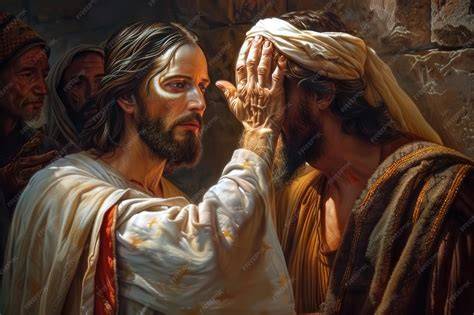
That mission includes opening blind eyes and releasing prisoners: “To open the blind eyes, to bring out the prisoners from the prison, and them that sit in darkness out of the prison house.”
Here we learn that in addition to bringing “light” to the Gentiles (v. 6), he will open the eyes of the blind (see v. 7), a promise fulfilled both literally as he healed the blind during his mortal ministry and figuratively as he helps us see truth.
He will set prisoners free (see v. 7), another prophecy dualistically fulfilled as he frees us from sin and death through his atoning sacrifice, and as he provided for those in spirit prison to be taught the gospel (see 1 Peter 3:18-20; 4:6; D&C 138:18-21, 30).
New Testament fulfillment
The first four verses of this passage are specifically applied to Jesus in Matthew 12:18-21. When Jesus was baptized in the River Jordan, the Spirit of God descended upon Him, and a voice from heaven said, “This is my Son, whom I love; with him I am well pleased.” This was a divine allusion to Isaiah 42.
The Gospel of Matthew explicitly quotes Isaiah 42 to identify Jesus as the servant in whom God delights (Matt 12:17-21), and alludes to Isaiah 53 to explain Jesus’ healing ministry (Matt 8:16-17).
Jesus was chosen, upheld, and delighted in by God. He had the Spirit upon him, and has come to be the perfect just judge. Through his ministry he worked in humility and with patience, seeking to serve, to be kind and compassionate, and tender toward others.
And finally, he did not grow discouraged or stop the work he was called to do, not even unto the point of death. The clear teaching of the New Testament is that Jesus Christ is the Servant in the Servant Song prophecies.
Second Servant Song: Isaiah 49:1-13
Called from the womb
This second of the four Servant Songs speaks of the Messiah’s work in the world and His success. The Servant’s statement that “before I was born the Lord called me” (verse 1) uses language similar to the call of the prophet Jeremiah (Jeremiah 1:5).
This song begins with the Servant speaking in the first person. The Servant’s words add a second witness to many of the truths taught in the first song (Isaiah 42:1-7). We are taught again that the Servant was chosen and called early, even “from the womb” (49:1, 5; see also 42:1).
Jesus was not, as some early Christian sects believed, simply a man that lived such a good life in mortality that God chose to put his Spirit in him. Rather, he was elected in the premortal life (see John 1:1; Moses 4:2).
The prophetic element is highlighted at the outset of the song with the call to “listen” (v. 1). Using this same Hebrew term, the Holy One of Israel has persistently called his people to listen to him (Isa. 48:1, 12, 16). By employing this term the Servant is claiming to speak with God’s authority.
The sharp sword and polished shaft
The reference in Isaiah 49:2 to the mouth of the Servant of the LORD being “like a sharpened sword” is a prophetic image that crops up several times in the New Testament (Ephesians 6:17; Hebrews 4:12; Revelation 1:16; 2:12, 16; 19:15).
The imagery of swords and arrows (v. 2) further assumes prophetic capacity, illustrating the accuracy and penetrating power of the Servant’s prophetic words. His words will not miss their target.
He has made my mouth like a sharp sword; in the shadow of his hand hath he hid me, and made me a polished shaft; in his quiver hath he hid me. The language combines power with concealment: the Servant is equipped for decisive work, yet his ministry initially takes place without worldly prominence.
Irony and paradox flavor much of this song. The Servant explains that though he is both well prepared and powerful, having his mouth made “like a sharp sword” and being a “polished shaft,” yet he is hidden in the Father’s hand and kept in the Father’s quiver (49:2), reminding us again that the mortal Messiah conducted his ministry humbly and quietly, in a part of the world that many of his contemporaries would have considered obscure and unimportant (see 42:2-3).
Israel and the Servant’s larger mission
“And said unto me, Thou art my servant, O Israel, in whom I will be glorified.” This line is one of the strongest reasons some interpreters identify the Servant collectively with Israel. Yet the song also gives the Servant a mission to Israel, creating a distinction between the Servant and the people he restores.
In the second Servant Song, the Messiah displays God’s splendor (verse 3), restores God’s people (verse 6), and is honored in God’s eyes (verse 5). Significantly, the Messiah feels a great loss: “I have labored in vain; / I have spent my strength for nothing at all” (verse 4), yet He receives worldwide acclaim in the end.
The paradox continues in the following verses as the Servant seems to present opposing perspectives on the accomplishments of his ministry. He appears to observe that while on one hand his strength and labor seem to have been spent in vain, for “Israel hath not been gathered,” on the other hand he will have accomplished God’s work and is to be judged of the Lord (49:4).
In response to the Servant’s observation God assures him that though Jacob may not yet be “gathered,” his efforts would still be pleasing and “glorious” to the Lord, and God will strengthen him (49:5).
Light to Israel and the Gentiles
We are also taught again that the Servant would be a “light to the Gentiles” (49:6; see also 42:1, 6), that he would be supported by the Father (see 49:8; 42:1, 6), and that he would set prisoners free (see 49:9; 42:7).
In addition to being the One to restore the land of Israel (verse 8), the Messiah is chosen to redeem the Gentiles: “It is too small a thing for you to be my servant to restore the tribes of Jacob and bring back those of Israel I have kept. I will also make you a light for the Gentiles, that my salvation may reach to the ends of the earth” (verse 6).
In this way, God’s salvation is brought to all people. Christ Jesus is “the light of the world” (Luke 2:30-32; John 8:12; 9:5) and the fulfillment of Isaiah’s prophecies.
It is interesting to note that the Hebrew term translated as “salvation” in 49:6 is Yeshua, from which the Greek name Jesus is derived, further identifying the Servant as Jesus Christ.
The Servant’s work includes the restoration of the land and the creation of a peaceful kingdom (verses 8-13). The Messiah will be the agent of the Lord’s comfort to His people (verse 13).
Rejection followed by worldwide honor
The Servant will be “despised and abhorred by the nation,” yet kings will see him and stand up, and princes will bow down. The song moves from humiliation to universal recognition.
In song two the Servant communicates that he’s the conduit for God’s coming salvation for Israel (v. 5) and the nations (v. 6). The Servant’s message of salvation will not be accepted. This leads to the rejection of the Servant himself (v. 7), a rejection that will become more explicit in a later song.
These opposing perspectives of the Savior’s mortal ministry, one of failure and the other of pleasing accomplishment, can perhaps be illustrated by some of the events of the Savior’s last week in mortality. On Palm Sunday, the last Sunday before his Crucifixion, Christ made his Triumphal Entry into Jerusalem for the Passover.
Having endured many years of oppression and vassalage to foreign nations, the Jews at that time commonly hoped and believed that the Messiah would come at the Passover, overthrow their oppressors, and establish a theocracy of peace and prosperity.
On their first missionary journey, Paul and Barnabas bring the gospel to the Gentiles in Antioch, and they quote Isaiah 49:6. The response of the Gentiles in Antioch is pure joy: “When the Gentiles heard this, they were glad and honored the word of the Lord” (Acts 13:48).
In Christ both Jews and Gentiles are made one (Ephesians 2:11-18).
Third Servant Song: Isaiah 50:4-11
The obedient disciple
This third Servant Song contrasts Israel’s sin with the Servant’s obedience. We also see that the Messiah will be persecuted yet vindicated.
The third song’s theme is the Servant’s obedience. This is in direct contrast to Israel’s disobedience. In Isaiah 1-12 Israel’s disobedience was exposed extensively. There have been reminders of this continued disobedience (Isa. 42:18-20; 48:18-19).
By way of contrast, the perfectly obedient Servant enters the stage in song three (v. 4). His perfection is exhibited by a mouth instructed by God (v. 4), ears attentive to God’s teaching (v. 4), and the distinct absence of rebellion (v. 5).
Starting in verse 4, the Servant responds to the instruction of God. He is not rebellious (verse 5), even when His obedience to God results in suffering.
The Servant’s calling resembles that of a disciple who listens each morning to God’s instruction so that he may speak an appropriate word to the weary. The Servant is therefore both obedient learner and authoritative teacher.
Persecution and trust
The verses preceding this song (Isaiah 50:1-3) liken Israel to an immoral wife; only God has the power to ransom her back. The Servant enters this setting of rebellion as the faithful one who does not turn away from God.
“I offered my back to those who beat me, my cheeks to those who pulled out my beard; I did not hide my face from mocking and spitting” (verse 6). The Servant’s obedience leads to physical abuse, public humiliation, and rejection.
The Servant’s perfect obedience will lead to further rejection (v. 5). Notice the escalation from song two, in which the Servant is deeply despised (49:7), to song three, in which the Servant is physically assaulted (Isa. 50:6).
Yet he will be able to endure it as the Holy One of Israel helps his Servant (v. 7). The Servant of the Lord expresses His confidence that God will help Him and that He will be found innocent (verses 7-9).
In this confidence, the Messiah resolves to see His task to completion, no matter how difficult the road becomes (cf. Luke 9:51). “Because the Sovereign Lord helps me, / I will not be disgraced” (Isaiah 50:7).
Jesus and the fulfillment of the third Song
Some 700 years later, Jesus fulfilled this prophecy, too. Abuse and insults were heaped upon our Lord as He was thrown to the Roman soldiers. His back was beaten, His face was hit, and He was spit upon (see John 19:1-3; Matthew 27:30).
The Lord Jesus was obedient unto death (Philippians 2:8), and the Father vindicated His Suffering Servant by resurrecting Him.
Song three’s broad theme of obedience is exemplified in Jesus (cf. Matt. 5:17). It also speaks specifically of torture (Isa. 50:6), which represents all Jesus would face.
The third song also presents a choice to those who hear the Servant. They may trust the light provided by the Servant, or they may attempt to construct their own light.
It really raises a question for the reader-you can either surrender to the Servant and obey his teaching that he’s gaining from the father, or, in the midst of your darkness, you can keep trying to build your own fire and create your own light. But ultimately the Servant himself declared it will result in your torment.
The Savior, who comes in his first appearing will return. Yet when he does, he will be a warrior who will judge all who have stood against him. His wrath will be quickly kindled in that moment, and there will be no turning back. So, the call is decide now.
Fourth Servant Song: Isaiah 52:13-53:12
The climactic Song
This climactic fourth Servant Song describes the suffering and triumph of the Servant of the LORD. It is also one of the most detailed passages in the Old Testament concerning the death and resurrection of the Messiah.
Arguably, the best known of the Servant Songs is Isaiah 53. This beloved chapter can be understood to foretell the mortal Messiah’s humble beginnings and appearance, as well as his sorrows, suffering, and ultimate atoning sacrifice.
For Christian readers, the connection to Jesus Christ is unmistakable: indeed, Isaiah 53 has often been called “the gospel in the Old Testament,” even “a Bible in miniature” as 19th-century preacher Charles Spurgeon put it.
Franz Delitzsch, the great Hebrew commentator, described Isaiah 52:13-53:12 as “the most central, the deepest, and the loftiest thing that Old Testament prophecy, outstripping itself, has ever achieved,” as if the poem were written “beneath the cross on Golgotha.”
The structure of the poem
This song is divided into five stanzas, each consisting of three verses in our English translations. The pinnacle is the middle stanza (Isa. 53:4-6).
| Stanza | Passage | Theme |
|---|---|---|
| A | Isaiah 52:13-15 | Vindication and exaltation |
| B | Isaiah 53:1-3 | Suffering and rejection |
| C | Isaiah 53:4-6 | Substitution and sin-bearing |
| B′ | Isaiah 53:7-9 | Suffering, silence, innocence, and death |
| A′ | Isaiah 53:10-12 | Vindication, life, and exaltation |
This apex makes it explicitly clear that the Servant will be a substitute: each successive blow delivered against the Servant is because of us. The Servant’s suffering is emphasized in the stanzas on either side of the pinnacle (53:1-3, 7-9).
The Servant’s isolation in enduring this is striking in these two stanzas. There is hope, however, as the song’s introduction (52:13-15) and conclusion (53:10-12) allude to the Servant’s vindication.
There is a pyramid effect to the poem: C Substitution (53:4-6); B Suffering (53:1-3); B` Suffering (53:7-9); A Vindication (52:13-15); A` Vindication (53:10-12).
Exaltation and humiliation
The song begins with a promise that the Servant will be exalted (Isaiah 52:13), but then immediately turns to a description of extreme violence: “His appearance was so disfigured beyond that of any human being and his form marred beyond human likeness” (Isaiah 52:14).
“Behold my servant shall act wisely.” Right there we say, OK, we’re back to the subject right here of the Servant here, “He shall be high and lifted up” (Isa 52:13).
The Servant’s exaltation is best understood in light of Isaiah’s own language about the Lord being “high and lifted up” (Isaiah 6:1; 57:15). The New Testament likewise connects Christ’s humiliation, death, resurrection, and exaltation.
We’re envisioning here the Servant, after all that we’ve read, having a mission to save, to reach the broken, a mission that will include pain and rejection, a mission where he will be completely declared right by God. The ultimate end is declared in verse 13. “He will be high and lifted up.”
On the other side of his perfect obedience will become a beautiful exaltation, as Paul says in Romans chapter 1 that God has highly, no, that’s Philippians chapter 2. God has highly exalted him and given him a name that is above every name.
In Romans chapter 1 what we read is that through the resurrection, “he was appointed the son of God in power” (Rom 1:4)-declared to be, identified as the son of God in power. It happened through his resurrection from the dead.
That’s, I think what we’re going to see-we’re going to see a retelling of his suffering and a depiction of his resurrection unto absolute sovereignty. When he receives the reward for all of his labor, that’s where we’re going in the Servant Song.
The suffering Servant
The Messiah will be “despised and rejected by mankind” (Isaiah 53:3). When He is brutally punished, people will assume that He is being afflicted by God (verse 4).
But the fourth Servant Song makes it clear why He endures such persecution: “He was pierced for our transgressions, he was crushed for our iniquities; the punishment that brought us peace was on him, and by his wounds we are healed” (verse 5).
It is our iniquity being placed on Him that explains His suffering (verse 6). The Servant suffers not merely as an example of faithfulness, and not merely as a victim of injustice, but as the one who bears the guilt and consequences of others.
“All we like sheep have gone astray; we have turned-every one-to his own way; and the Lord has laid on him the iniquity of us all.” The verse identifies both the universality of human sin and the decisive action of God in placing iniquity upon the Servant.
Silence, innocence, and death
Verse 7 predicts that the Messiah will be silent before His accusers (cf. Matthew 27:14). The Servant does not retaliate or defend himself through violence.
Verse 9 says that, although the Servant of the Lord is innocent, He will die with the wicked and be “with the rich in his death.” The juxtaposition emphasizes the injustice of his death and the providential character of his burial.
Jesus was silent in front of His accusers (Matthew 27:12, 14; 1 Peter 2:23). Jesus was crucified between two thieves yet buried in a rich man’s tomb (Matthew 27:38, 57-60).
The Servant’s innocence is essential to the logic of substitution. The one who bears the sins of others is not himself condemned for his own guilt.
Substitutionary atonement
Isaiah 53:10 tells us why the Servant dies: “It was the Lord’s will to crush him and cause him to suffer, and. the Lord makes his life an offering for sin.” This is the substitutionary atonement. His life for ours.
The death of the Messiah accomplished the will of God concerning our salvation. Isaiah 53:4-6 is “the definitive Old Testament text regarding substitutionary atonement,” noting that the language of “bearing griefs and carrying sorrows” in Hebrew parallels the Levitical sin-bearings.
In this interpretation, “the righteous Messiah provides a substitutionary sacrifice, dying in place of His people and receiving divine wrath for their sin.” By His suffering, Jesus received the punishment we deserved and became for us the ultimate and perfect sacrifice (Hebrews 10:10).
Although His Son was sinless, God laid on Him our sin, and we became God’s righteousness in Him (2 Corinthians 5:21). In the Suffering Servant’s humiliation and final exaltation, He reconciles humanity with God (Matthew 8:17; Acts 8:30-35; Romans 10:15-17; 15:21; 1 Peter 2:24-25).
The passage can also be understood through the imagery of sacrificial cleansing. “So shall he sprinkle many nations.” This idea of sprinkling is straight out of the Old Testament law where sprinkling points to cleansing from sin and cleansing for the purpose of holiness.
It’s how things are purified: through blood. So the priest would sprinkle blood, and that which they sprinkled that blood on would become pure and upright.
Here’s what we read in Hebrews chapter 9, “If the blood of bulls and goats in the sprinkling of defiled persons with the ashes of a heifer, sanctify for the purification of the flesh, how much more will the blood of Christ, who through the eternal Spirit offered himself without blemish to God, purify our conscience from dead works to serve the living God” (Heb 9:13-14).
This is a blood sprinkled upon us that cleanses us wholly. As the writer of Hebrews says in Hebrews chapter 10:22, “Let us draw near with a true heart in full assurance of faith, with hearts sprinkled clean from an evil conscience.” That sprinkling happens through the blood of Christ.
Death is not the end
Immediately following the prophecy of the Servant’s death, Isaiah makes a startling prophecy of the Servant’s victory: “[The Lord] will see his offspring and prolong his days, and the will of the Lord will prosper in his hand.”
“After he has suffered, he will see the light of life and be satisfied. Therefore I will give him a portion among the great, and he will divide the spoils with the strong” (verses 10-12).
So, in the fourth Servant Song, death is not the end for the Servant. After He suffers, He will “see the light of life.” He will “divide the spoils.” His days will be prolonged. What we have here is a prophecy of the resurrection of Christ.
The whole of Isaiah 53 is a poignant and prophetic picture of the gospel. Jesus was despised and rejected by men (Luke 13:34; John 1:10-11); He was stricken by God (Matthew 27:46) and pierced for our transgressions (John 19:34; 1 Peter 2:24).
Jesus was crucified between two thieves yet buried in a rich man’s tomb (Matthew 27:38, 57-60). By His suffering, Jesus received the punishment we deserved and became for us the ultimate and perfect sacrifice (Hebrews 10:10).
The introduction and conclusion of the song therefore interpret the suffering: the Servant will be exalted, will see life after suffering, will prosper in God’s purpose, and will receive a portion among the great.
The four Songs as a composite portrait
Each Song contributes a distinct aspect of the Servant’s identity, but their themes overlap and develop progressively.
- Isaiah 42 presents the Servant as chosen, loved, Spirit-filled, gentle, just, and given as a covenant and light to the nations.
- Isaiah 49 presents the Servant as called from the womb, equipped with authoritative speech, commissioned to restore Israel, and appointed to bring salvation to the ends of the earth.
- Isaiah 50 presents the Servant as the obedient disciple who listens to God, speaks to the weary, accepts persecution, and trusts God for vindication.
- Isaiah 52-53 presents the Servant as the innocent substitute who suffers, dies, bears sin, cleanses many, rises to life, and is exalted.
Through careful exegesis, we highlight how each song contributes to a composite portrait of the Servant of the Lord, emphasizing motifs of divine election, innocent suffering, atoning sacrifice, and eschatological vindication.
The songs move from mission to rejection, from obedience to suffering, and from suffering to exaltation. Their combined portrait cannot be reduced to a generic ideal of service. The Servant is a divinely appointed representative whose ministry is directed toward Israel and the nations and whose suffering has saving significance.
Jesus as the Servant in the New Testament
Jesus as God’s servant
In Acts 3:13 Peter calls Jesus the “servant” of God. That verse says, in part, “The God of Abraham, Isaac and Jacob, the God of our fathers, has glorified his servant Jesus.”
Peter’s description of Jesus as a “servant” is accurate for at least four reasons:
- Jesus always did the will of the Father (John 4:34; 6:38).
- Jesus never sought to please Himself but always to please the Father (John 5:30).
- Jesus finished the work that God had sent Him to do (John 17:4).
- Jesus came to glorify the Father (John 13:31; 17:4).
Additionally, Peter’s reference to Jesus as the “servant of God” would have brought to the minds of his Jewish hearers the passages in Isaiah that describe the Messiah as the “Servant of the Lord.”
The New Testament makes it clear that Isaiah’s mystery guest is Jesus Christ of Nazareth.
Matthew and Isaiah 42
Song one is quoted by Matthew in his Gospel (Matt. 12:18-21). The point made by Matthew is that Jesus’s ministry was fulfilling song one: Jesus and his ministry were Spirit-filled.
Matthew applies the language of Isaiah 42 to Jesus’ healing ministry and to his refusal to advance the kingdom through loud public confrontation. Jesus is the chosen Servant in whom God delights, the one upon whom the Spirit rests.
Jesus as prophet and authoritative teacher
Song two foreshadows Jesus’s prophetic ministry. The Gospels all present Jesus as speaking God’s Word to his people, for example, Matthew 5-7.
The specific imagery of the Servant’s swordlike words is explicitly applied to Jesus in Revelation (Rev. 1:16; 19:15, 21). His words are penetrating, authoritative, and effective.
The Gospel of Luke portrays Jesus as embracing the servant’s mission, as seen when Jesus applies Isaiah’s words to himself (Luke 4:17-21, cf. Isa 61 and the servant’s anointing) and when he cites Isaiah 53:12 about being “numbered with the transgressors” on the eve of his passion (Luke 22:37).
Jesus as the obedient Servant
Song three’s broad theme of obedience is exemplified in Jesus (cf. Matt. 5:17). It also speaks specifically of torture (Isa. 50:6), which represents all Jesus would face.
Jesus consistently presents his mission as obedience to the Father. He does not pursue independent glory but completes the work given to him. His obedience reaches its climax in his willingness to suffer and die.
Jesus as the suffering substitute
Song four is frequently quoted in the New Testament. It’s the passage from which Philip explains the gospel to the Ethiopian Eunuch (Acts 8:26-40).
The apostle Peter also alludes to it as he writes about Jesus’s substitutionary sacrifice on the cross (1 Pet. 2:22-25). The Gospel of Mark frames Jesus as the suffering servant-king, with Mark 10:45 declaring that the Son of Man came “to give his life as a ransom for many,” a clear allusion to the sin-bearing servant of Isaiah 53.
Indeed, as commentator Mark L. Strauss observes, the entire structure of Mark’s Gospel shifts at Caesarea Philippi (Mark 8:31) to present Jesus as the suffering servant fulfilling Isaiah’s pattern.
The Gospel writers therefore do not treat Isaiah’s Servant merely as an illustration that resembles Jesus. They present Jesus’ mission, suffering, death, and resurrection as the fulfillment of the Servant’s prophetic pattern.
Philip and the Ethiopian eunuch
As the Ethiopian eunuch is traveling home in his chariot, he is reading from one of the Servant Songs (Acts 8:32-33). The eunuch was unsure of whom Isaiah was speaking-was it the prophet himself, or another man?
When the Ethiopian Eunuch turns to Philip, he asks: “About whom, I ask you, does the prophet say this, about himself or about someone else?” (Acts 8:34).
Philip the evangelist had the privilege of using Isaiah 53 to point the Ethiopian to Christ: “Philip began with that very passage of Scripture and told him the good news about Jesus” (Acts 8:35).
Philip is clear: the prophet speaks of someone else-someone whom Isaiah himself strained to glimpse and grasp (1 Pet. 1:10-12). Early Christian preaching therefore interpreted the suffering Servant as a direct announcement of the gospel about Jesus.
Early Christian preaching (Acts 8:26-35) famously expounds Isaiah 53 as “good news about Jesus,” reflecting how foundational these texts were for apostolic witness.
Philip and the Ethiopian
Typology and fuller biblical meaning
The Servant Songs can be read typologically. That is, we consider how the servant is presented as a type, a figure who, while emerging from the Old Testament context, prefigures something (or Someone) greater in God’s redemptive plan.
Isaiah’s servant can refer to Israel, a faithful remnant, a prophet, or another historical agent at one level, while also pointing beyond those figures to the Messiah. In this view, earlier servants are not competitors with Christ but patterns that find their fullest expression in him.
Thus while other individuals or entities such as Isaiah, Cyrus, or Israel appear to fulfill certain portions of the Servant Songs’ prophecies, in that capacity they can appropriately be viewed as a type or a symbol for Jesus Christ-the Servant who fulfills them all.
The songs will be read canonically, exploring intertextual links: how do later biblical texts (both Old and New Testament) echo or allude to Isaiah’s servant? We will note, for example, how phrases from the Servant Songs reverberate in the Psalms and prophetic literature, and especially how the New Testament writers draw connections between Jesus and Isaiah’s servant.
Ben Witherington III aptly notes that Isaiah’s prophecies can operate on more than one horizon of meaning: the prophet Isaiah may not have fully “realized” the messianic reference of his own words, yet in God’s design “Isa. 53 actually references Christ”, even if Isaiah himself only dimly understood how.
The New Testament writers, guided by the Holy Spirit and the precedent of Jesus’ own self-identification with the servant role, bring out this divinely intended meaning.
Major theological themes
Divine election and appointment
The Servant is chosen, upheld, called, formed, and supported by God. His mission is not self-appointed. Isaiah repeatedly emphasizes divine initiative: “my servant,” “my chosen one,” “I have put my Spirit on him,” and “the Lord called me from the womb.”
The Servant’s election is connected to his relationship with God. He is loved by the Father, empowered by the Spirit, and commissioned to bring justice, covenant, light, restoration, and salvation.
Gentleness and strength
The Servant’s gentleness is not passivity. He does not break the bruised reed or extinguish the smoldering wick, yet he does not falter until justice is established on earth.
His ministry is comparatively quiet and humble, but it is not ineffective. The Servant’s power appears through faithfulness, compassion, truth, endurance, and sacrificial obedience rather than through domination or self-promotion.
Justice and salvation
The Servant brings justice to the nations, but the justice of Isaiah 42 is connected to light and blessing. The Servant exposes evil, establishes truth, heals blindness, and brings people out of darkness.
Through what we could call this ‘Servant-King’, God will enact his mission in reconciling the world to himself once again. No longer will God’s people be ruled by inept human leaders, but will be governed by a selfless, humble, and perfect Servant-King.
Jesus comes to bring justice to the nations, and establish justice upon the earth. Jesus achieves these words of justice through his life and ministry, ultimately turning that justice upon himself, making himself the conduit of justice by taking upon the sins of the world.
Redemptive suffering
The suffering of the Servant is not accidental or meaningless. It is tied to the salvation of others. Isaiah does not describe suffering as valuable simply because suffering exists; the Servant’s suffering is redemptive because it is innocent, voluntary, divinely purposed, and directed toward the healing and forgiveness of others.
Dietrich Bonhoeffer, writing from a Nazi prison, found in the servant’s suffering a pattern for Christian discipleship, asserting that to be a Christian is to be drawn into the “Messianic suffering of God in Jesus Christ”, to “allow oneself to be caught up in the Messianic event, and thus fulfill Isaiah 53” by participating in God’s sufferings for the world.
Such insights show the enduring power of the Servant Songs to shape Christian understanding of the cross and the call to take up our own cross.
Substitution and atonement
The central theological claim of Isaiah 53 is that the Servant suffers for others. “He was pierced for our transgressions,” “the punishment that brought us peace was on him,” and “the Lord has laid on him the iniquity of us all.”
For Christian theology, this language provides a foundation for understanding the cross as substitutionary atonement. The Servant takes the place of the guilty and bears what belongs to them so that they may receive peace, healing, cleansing, and reconciliation with God.
R. C. Sproul highlights Isaiah 53:4-6 as “the definitive Old Testament text regarding substitutionary atonement,” noting that the language of “bearing griefs and carrying sorrows” in Hebrew parallels the Levitical sin-bearings and finds fulfillment when “the righteous Messiah provides a substitutionary sacrifice, dying in place of His people and receiving divine wrath for their sin.”
During the Reformation and in Puritan theology, Isaiah 53 was central in articulating the doctrine of penal substitutionary atonement. Jonathan Edwards expounded how Christ “was offered up to God as a lamb without blemish” (echoing Isa 53:7) and willingly took on the frail human nature (“a tender plant… a root out of dry ground”) precisely so that he could suffer on our behalf.
Charles Spurgeon in the 19th century preached many sermons on Isaiah 53, calling sinners to behold the Lamb of God. Spurgeon movingly described how “through the sufferings of our Lord, sin is pardoned, and we are delivered from the power of evil: this is regarded as the healing of a deadly malady”, capturing the gospel essence he saw in the servant’s stripes that bring us healing (Isa 53:5).
Mission to the nations
The Servant’s mission is never limited to Israel. He restores the tribes of Jacob, but this is “too small a thing” in comparison with his calling to become a light to the Gentiles and bring salvation to the ends of the earth.
Ultimately, through his offspring who become servants, the Servant gives rise to servants who carry out his mission, and that mission is to go to people who God’s word was never given to.
The Jews had the revelation. The rest of the world didn’t. And yet, even though they were never told to be hoping in the Messiah, that there would ultimately be an answer out of their darkness and out of their sin problem, what they were never told about they know about.
What they had never even considered seeing, now they see. They understand. So, what you have here is Gentiles, even the highest-level Gentiles, surrendering to a higher king because he is being high and exalted.
Paul applies Isaiah 52:15 to the Gentile mission: “Those who have never been told of him will see, and those who have never heard will understand” (Rom 15:20-21). The Servant’s exaltation therefore produces a worldwide proclamation of salvation.
The Servant-King and Christian discipleship
The Servant Songs present a paradoxical royal figure. He is chosen and exalted, yet gentle and hidden. He brings justice, yet suffers injustice. He is a king, yet serves. He is rejected, yet honored by kings. He dies, yet sees the light of life and receives the nations.
Through what is known as four ‘Servant Songs’ (Isaiah 42:1-4; 49:1-13; 50:4-9; 52:13-52:12), God’s message through Isaiah depicts a person who will come and serve the people of God.
This person will come from within Israel, and is to serve them as one who has been called and consecrated by the Lord. Through this ‘Servant of the Lord,’ there will come restoration, hope, and salvation for God’s people.
In chapter 49:5-6 the words of Isaiah speak of how the Lord will form this servant from the womb, and will provide him with strength to unite God’s people. The Lord then seems to be speaking to this servant directly when he says, “It is too small a thing for you to be my servant, restore the tribes of Jacob and bring back those of Israel I have kept. I will also make you a light for the Gentiles, that you may bring my salvation to the ends of the earth.”
Jesus, the Servant-King, provides us with the greatest service. And as we celebrate Jesus this Christmas it is worth considering at least one of these four Servant Songs, because through them we find how important they are for understanding the incarnation event.
These Servant Songs - written centuries before Jesus’ birth - reveal just how specifically the scripture speaks to the truth of who he would be.
He serves as the Servant-King, reminding us of the words of Mark 10:45, “For even the Son of Man came not to be served but to serve, and to give his life as a ransom for many.”
The faithfulness of God toward his people, the delivery of true restoration, the provision of hope for the future, and the salvation for souls finds culmination at the cross.
When we read these, knowing our New Testament scriptures, we find that Jesus meets each aspect of this criteria. Jesus was chosen, upheld, and delighted in by God. He had the Spirit upon him, and has come to be the perfect just judge.
Through his ministry he worked in humility and with patience, seeking to serve, to be kind and compassionate, and tender toward others. And finally, he did not grow discouraged or stop the work he was called to do, not even unto the point of death.