The Aramaic Bible in plain English presented here is a literal English translation and transliteration of the Eastern Aramaic New Testament, prepared from Eastern Aramaic manuscripts and designed for reading, study, and comparison with the Aramaic text. It preserves many Aramaic names, expressions, and idioms while providing English meanings in a readable form.
The translation is intended to render the Aramaic words as literally and faithfully as possible without making the English unintelligible. In places where a direct rendering of an Aramaic idiom would not clearly communicate the meaning in English, a dynamic equivalent is used to give the sense of the passage.
What the Aramaic Bible Is
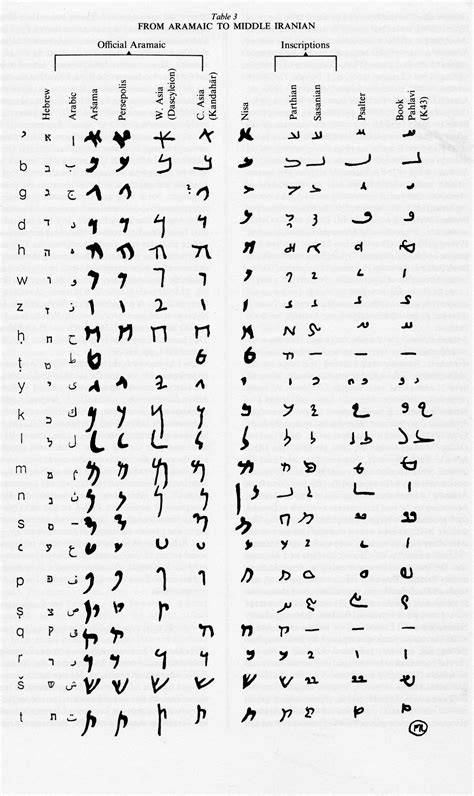
The Aramaic language is an older sister language of The Hebrew, a Semitic Language of The Middle Eastern region of the world, which it is very close to in its construction, alphabet, and vocabulary. Please note. The Aramaic Text is read from Right-to-Left like the Hebrew language.
This Website features The Holy Aramaic Scriptures, as preserved in the ancient Eastern Aramaic Text of The New Testament, in manuscripts such as The Yonan Codex, The Khabouris Codex, The 1199 Houghton Codex, and The Mingana 148 Codex, for you to read and study; giving as literal as possible a rendering of this Holy Biblical Text, in a fresh, accurate, and literal, English Translation.
The English translation presented here is a Translation/Transliteration effort intended to help readers study both the English meaning and the Aramaic wording. It is not only a Translation of the Aramaic words into English words which mean the same thing, but also gives the actual Aramaic words themselves in many places, as they read in the Aramaic language rendered in English letters.
The Eastern Aramaic Text and Its Manuscripts
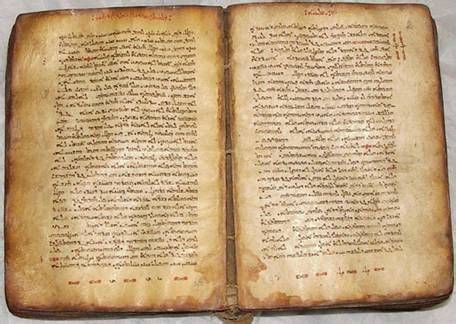
The Aramaic Text used to translate here at TheAramaicScriptures.com, is from Eastern Aramaic Manuscripts, such as The Khabouris Manuscript, pictured above, it being a handwritten Eastern Aramaic New Testament, said to have been scribed in the ancient city of Nineveh, and which is thought to have taken place sometime between 800 to 1000 A.D.
The Khabouris Manuscript is said to have been officially certified by a Bishop of The Holy Apostolic Catholic Church of the East as being a faithful copy of a much older Eastern Aramaic New Testament Manuscript, likely scribed during the mid 5th century, which in turn likely was itself a faithful copy of The Original Aramaic New Testament Scriptures, believed to have been produced in the ancient City of Edessa in the late first, or early second century.
A number of Eastern Peshitta Manuscripts have been examined for this translation, as well as the BFBS/UBS Text of the 1905/1920 Aramaic New Testament, which is said to be a Critical Text of about 70 to 80 Aramaic Manuscripts, consisting of both the Eastern and Western versions, and also the 5th-6th century Aramaic Manuscripts housed in the British Museum, numbered 14,470, 14,453, 14,473, and 14,475.
Manuscripts consulted for the translation
The manuscripts consulted for the actual translation are various 5th-6th century manuscripts, like the Goodspeed MS 716, manuscripts no.17 & no.54 from Saint Catherine's Monastery, 7th century manuscripts like The Yonan Codex, 8th-9th century manuscripts like the Paris Syr. 342 Codex, 1oth-11th century manuscripts like the Vat.510 manuscript, and The Khabouris Codex.
They also include 12th-13th century manuscripts like the 1199 A.D. Houghton Codex, and the 1261 A.D. Syr. 9 Codex manuscript, and lastly the 1613 A.D. Mingana Codex which is known as "The Textus Receptus" of The Eastern Aramaic New Testament.
These all were carefully compared when a scribal mistake in one of the manuscripts was made, while making certain that all the Original Eastern readings were present in this English translation, as preserved by The Holy Apostolic Catholic Church of the East since the time of the Apostles.
| Manuscript or text | Date or period stated | Role in the material |
|---|---|---|
| Goodspeed MS 716 | 5th-6th century | Consulted for the actual translation |
| Manuscripts no.17 and no.54 from Saint Catherine's Monastery | 5th-6th century | Consulted for the actual translation |
| The Yonan Codex | 7th century | Consulted for the actual translation |
| Paris Syr. 342 Codex | 8th-9th century | Consulted for the actual translation |
| Vat.510 manuscript | 1oth-11th century | Consulted for the actual translation |
| The Khabouris Codex | 800 to 1000 A.D. | Eastern Aramaic New Testament manuscript |
| The 1199 A.D. Houghton Codex | 12th-13th century | Consulted for the actual translation |
| The 1261 A.D. Syr. 9 Codex | 1261 A.D. | Consulted for the actual translation |
| The Mingana Codex | 1613 A.D. | Known as "The Textus Receptus" of The Eastern Aramaic New Testament |
Translation Principles
Unlike most other English translations of the Aramaic Scriptures, it was decided to make a very literal and faithful rendering into the English language, which is not only a Translation of the Aramaic words into English words which mean the same thing, but also to give the actual Aramaic words themselves in many places, as they read in the Aramaic language rendered in English letters, which is called transliterating.
This English Translation/Transliteration is rendered straight from The Eastern Aramaic New Testament Manuscripts. No Greek or Latin sources have been used, and no Western Peshitto readings have been used.
This English Translation/Transliteration is as literal and faithful to The Aramaic source Texts as could possibly be made, while still being readable/understandable in The English language.
Literal translation and readable English
Some Aramaic idioms are retained, while others, which are not very understandable in English, or which might alter the clear meaning of the Text, are rendered in a dynamic equivalent translation, which gives the sense.
Also, many other Aramaic/English Translations produced during the 19th-21st centuries have been checked/consulted to see how they render the very difficult passages. Prayer for wisdom is always made to God for guidance, to come as close to the Aramaic meaning as possible, with its context always taken into consideration.
Transliteration and the meaning of names
For Persons, Places, and Things, which are the most often mentioned, you can become acquainted with the actual Aramaic words which are used, and also see what they mean in the {bracketed} portion just following the original words or phrases.
These transliterated words are phonetically rendered into English characters in as simple a way as it could be done. This Translation/Transliteration is thus a tool to help you learn the Aramaic language as you read through it.
Aramaic forms such as Yeshua, Maryam, Yoseph, Alaha, Maran, Meshikha, and Shlama preserve the sound and character of the source language while the accompanying English meaning helps the reader understand the passage.
How to Read the Aramaic Meaning in English
Aramaic words may appear in transliterated English letters, followed by an explanation in brackets. This approach allows the reader to see the original form and its meaning together rather than encountering only an English substitute.
For example, the greeting ܛܝܒܘܬܐ ܥܡܟܘܢ ܘܫܠܡܐ ܡܢ ܐܠܗܐ ܐܒܘܢ ܘܡܢ ܡܪܢ ܝܫܘܥ ܡܫܝܚܐ is presented as: Taybutha {Grace} be with you, and Shlama {Peace}, from Alaha Abun {God, Our Father}, and from Maran Eshu Meshikha {Our Lord Yeshua, The Anointed One}.
This form shows how a reader can study an Aramaic expression, observe its transliteration, and immediately see its English meaning. It also preserves theological and personal names in forms that reflect the Eastern Aramaic wording.
Books Available for Reading and Study
The collection includes Matthew, Mark, Luke, John, Acts, James, 1st Peter, 1st John, Romans, 1st Corinthians, 2nd Corinthians, Galatians, Ephesians, Philippians, Colossians, 1st Thessalonians, 2nd Thessalonians, 1st Timothy, 2nd Timothy, Titus, Philemon, and Hebrews.
- Matthew
- Mark
- Luke
- John
- Acts
- James
- 1st Peter
- 1st John
- Romans
- 1st Corinthians
- 2nd Corinthians
- Galatians
- Ephesians
- Philippians
- Colossians
- 1st Thessalonians
- 2nd Thessalonians
- 1st Timothy
- 2nd Timothy
- Titus
- Philemon
- Hebrews
Interactive Study Tools
The English translation presented here, can be verified in its readings, when you click on the {Study Tool} at the start of each book, where you can examine the actual text itself, to make sure all is as it should be in this translation.
This {Study Tool} will also allow you to look at each and every word in a number of Aramaic/English Dictionaries and Lexicons, where you can analyze each word for yourself, in detail, and thus learn more of the Language as you study.
Also, one of the great features of the {Study Tool}, is the "show verse" section, where, when you click on it, it will show you every verse, where a particular word you are looking at is found in the rest of The Aramaic New Testament Scriptures.
This is like a regular Concordance, and is very helpful to see how the same Aramaic word is used in other books and chapters. You will also find more uses from The Study Tool as you delve deeper into its features.
What the study functions provide
- The actual text can be examined alongside the translation.
- Individual Aramaic words can be studied in Aramaic/English dictionaries and lexicons.
- The “show verse” section displays other passages where a particular Aramaic word occurs.
- The repeated use of a word can be compared across books and chapters.
- The translation and transliteration can be used as tools for learning the Aramaic language.
Part 1: Aramaic Papyri, the Syriac Bible, And What Else? (The Aramaic Library)
Audio and Pronunciation
Audio for Matthew, Mark, Luke, and John, are available to listen to, and it is hoped that we can have more recordings uploaded in the future.
To hear the ancient Aramaic text spoken by a native speaker, just click on each word "Chapter" at the start of each chapter in each Gospel. There are also audio links for each individual chapter when you click on the option to read a certain chapter in each Gospel.
The audio material provides an opportunity to hear the Eastern Aramaic text rather than relying only on English transliteration. Listening to the chapters can help readers connect the written form with the pronunciation of the language.
Plain English Example: Matthew 1
The following passage demonstrates the style of the plain English translation, including transliterated names and explanatory wording.
1The book of the genealogy of Yeshua The Messiah, The Son of David, The Son of Abraham. 2Abraham begot Isaaq, Isaaq begot Jaqob, Jaqob begot Yehuda and his brothers. 3Yehuda begot Pharez and Zarah from Tamar. Pharez begot Hezron, Hezron begot Aram. 4Aram begot Aminadab, Aminadab begot Nahshon, Nahshon begot Salmon 5Salmon begot Boaz from Rahab, Boaz begot Obayd from Ruth, Obayd begot Jesse.
6Jesse begot David the King, David begot Solomon from the wife of Uriah. 7Solomon begot Rehoboam, Rehoboam begot Abia, Abia begot Asa. 8Asa begot Jehoshaphat, Jehoshaphat begot Joram, Joram begot Uzaya. 9Uzaya begot Jotham, Jotham begot Ahaz, Ahaz begot Hezekiah.
10Hezekiah begot Menasheh, Menasheh begot Amon, Amon begot Joshaiah. 11Joshaiah begot Jokania and his brothers in the captivity of Babel. 12After the captivity of Babel, Jokania begot Shelathiel, Shelathiel begot Zorubabel. 13Zorubabel begot Abiud, Abiud begot Eliakim, Eliakim begot Azor.
14Azor begot Zadoq, Zadoq begot Akin, Akin begot Eliud. 15Eliud begot Eliazar, Eliazar begot Matthan, Matthan begot Yaqob. 16Yaqob begot Yoseph the guardian of Maryam, her from whom was begotten Yeshua, who is called The Messiah.
17Therefore all generations from Abraham until David were fourteen generations, and from David until the captivity of Babel, fourteen generations, and from the captivity of Babel until The Messiah, fourteen generations.
The birth of Yeshua in the translation
18The birth of Yeshua The Messiah was thus: when Maryam his mother was engaged to Yoseph before they would have a conjugal relation she was found pregnant from The Spirit of Holiness. 19But Yoseph her lord was righteous and did not want to expose her, and he was considering divorcing her secretly.
20But as he considered these things, The Angel of THE LORD JEHOVAH appeared to him in a dream and said unto him, "Yoseph, son of David, do not be afraid to take Maryam your woman, for he who is begotten in her is from The Spirit of Holiness." 21"And she shall bring forth a Son, and she shall call his name Yeshua, for he shall save his people from their sins."
22Now all this happened, that the thing which was spoken from THE LORD JEHOVAH by the Prophet would be fulfilled: 23"Behold the virgin shall conceive, and she shall bear a son, and they shall call* his Name Emmanuail, which is translated, 'Our God is with us' ". 24And when Yoseph arose from his sleep, he did according to that which The Angel of THE LORD JEHOVAH had commanded him, and he took his wife. 25And he did not know her sexually until she delivered her firstborn son, and she called his name Yeshua.
Aramaic Bible Translations Beyond the New Testament
This is a literal translation of the 1900+ year old Aramaic Old Testament called the Peshitta (say, "Pesh-eet'-a"). Aramaic was the native language of Jesus and of Israel in the 1st century AD.
The Peshitta Old Testament was very likely translated from the Hebrew Bible in the 1st century AD in Israel by Christian coverts from Judaism, or possibly Syrian Christians from across Israel's border. Either way, the Peshitta Old and New Testaments together constitute the first Christian Bible.
The text translated is the 6th-7th century Codex Ambrosianus- the oldest complete Semitic Old Testament extant.
The author has translated and published interlinears of the Aramaic Peshitta Torah, Psalms, Proverbs and Ecclesiastes, as well as the entire Aramaic Peshitta New Testament and plain English translations of the NT, the Torah, the Psalms & Proverbs.
In 2018 Dave published the entire 66 book Protestant Bible canon translated from the Aramaic Peshitta (pronounced "Peh-sheet'-ah" titled The Holy Peshitta Bible translated.
Publication and Translation History
This Translation/Transliteration effort was begun in 2010, and it's hoped that by 2017, God willing, it will be completed as an online edition, with printed editions available when everything is done and looked over carefully for any mistakes.
Pastor Dave published, “The Aramaic-English Interlinear New Testament”, in Jan. 2007 & “The Original Aramaic New Testament In Plain English” in Nov. -2007.
He has also published The Aramaic English Interlinear Peshitta Holy Bible, 2765 pages - a complete translation of the entire Peshitta Bible- Old and New Testaments as an ebook, and also in print in 5 volumes.
The English translation portions found herein are under copyright law to protect the integrity of the translation. If these translations are used in quotations, either online, or in some printed form, you are asked to provide the copyright notice given here at the bottom of each page. along with a link, (online) or the address (printed), pointing to this website.