The Catholic Church in France developed from the administrative structures of the late Roman Empire, survived the collapse of Roman imperial power, and became one of the central institutions of Frankish society. By 1789, Catholicism was the official religion of the French state, but the Revolution transformed the Church’s legal, financial, and social position, nationalised its property, divided its clergy, and temporarily suppressed religious worship.
France’s population of 28 million was almost entirely Catholic, with full membership of the state denied to Protestant and Jewish minorities. Being French effectively meant being Catholic. Yet, by 1794, France’s churches and religious orders were closed down and religious worship suppressed.
The Church in Gaul and the Frankish Kingdoms
The episcopate and the diocese were practically the only institutions to survive the collapse of Roman imperial power largely unchanged. Many bishops played important roles in defending the population during the German conquest. During the Frankish era, bishops and abbots occupied a socially prominent position because of both their great prestige among the people and their landed wealth.
Organization of the secular Church
The administrative bodies and the hierarchy of the early Christian church were derived from institutions existing during the late Roman Empire. In principle, a bishop was responsible for the clergy and faithful in each district (civitas). The bishop whose seat was in the metropolitan city had preeminence and was archbishop over the other bishops in his archdiocese.
The monarchy dominated the church. Kings most often appointed bishops from among their followers without regard for religious qualifications; the metropolitan see was often fragmented in the course of territorial partitions and tended to lose its importance, and the church in Francia increasingly withdrew from papal control despite papal attempts to reestablish ties.
The first Carolingians reestablished the ecclesiastical hierarchy. They restored the authority of the archbishops and established cathedral chapters so that the clergy living around a bishop were drawn into a communal life. They also maintained the right to nominate bishops, whom they considered agents of the monarchy.
Dioceses and parish churches
During the 4th and 5th centuries success at converting the countryside made it necessary for the bishops to divide the dioceses into parish churches. Initially there was a limit of between 15 and 40 of these per diocese. In the Carolingian era they were replaced by small parish churches better suited to the conditions of rural life.
Monasticism
Monasticism originated in the East. It was introduced in the West during the 4th century and was developed in Gaul, mainly in the west (St. Martin of Tours) and southeast (St. Honoratus and St. John Cassian).
In the 6th century the number of monasteries throughout Gaul increased, as did the number of rules regulating them. Introduced by St. Columban (c. 543-615), Irish monasticism was influential in the 7th century, but it was later superseded by the Benedictine rule, which originated in Italy.
The monasteries suffered from the upheavals affecting the church in the 8th century, and the Carolingians attempted to reform them. Louis the Pious, acting on the advice of St. Benedict of Aniane, imposed the Benedictine rule, which became a characteristic feature of Western monasticism. The Carolingians, however, continued the practice of having lay abbots.
Education and intellectual life
In the 6th century, especially in southern Gaul, the aristocracy and, consequently, the bishops drawn from it preserved an interest in traditional Classical culture. Beginning in the 7th century, the Columbanian monasteries insisted on the study of the Bible and the celebration of the liturgy. In the Carolingian era these innovations shared the focus of education with works of Classical antiquity.
Religious discipline and piety
Characteristic of the church in the 6th century were frequent councils to settle questions of doctrine and discipline. In time, however, the conciliar institution declined, leading to liturgical anarchy and a moral and intellectual crisis among the clergy.
Charlemagne and Louis the Pious attempted to impose a uniform liturgy, inspired by the one used at Rome. They also took measures to raise the standard of education of both clerics and the faithful.
Saints, relics, and pilgrimage
The cults of saints and relics were an important part of religion during late antiquity and the Middle Ages. Relics, the remains of the holy dead, were thought to have miraculous powers that could convert pagans and cure the sick. Consequently, the great desire to obtain relics led to the commercial exchange and even theft of them.
Rome, with its numerous catacombs filled with the remains of the earliest Christians, was one of the key centres of the relic trade. It also became the most prominent Western pilgrimage site at a time when pilgrimage, at first to local shrines and then to international ones, became increasingly important.
The desire on the part of the faithful to be buried near relics changed funeral practices. Ancient cemeteries were abandoned, and burials in or near churches (burials ad sanctos) increased.
The Church’s influence on society and legislation
The progressive Christianization of society influenced Frankish institutions significantly. The introduction of royal consecration and the creation of the empire afforded the clergy an opportunity to elaborate a new conception of power based on religious principles.
The church was involved in trying to discourage slavery and in ameliorating the legal condition of those enslaved. It was during the Carolingian period that, in reaction to the polygyny practiced in German society, Christian doctrines of marriage were more strictly formulated.
Merovingian literature and religious art
During the entire 6th century many writers, inspired by Classical tradition, produced works patterned on antique models; such writers included Sidonius Apollinaris (died c. 488) and Venantius Fortunatus (died c. 600). In the late 6th century, Gregory of Tours produced influential works in history and hagiography-the writing of saints’ lives, which became the most widespread literary genre of the period.
Nevertheless, the standard of literature continued to decline, becoming more and more conventional and artificial. The use of popular Latin became more common among writers.
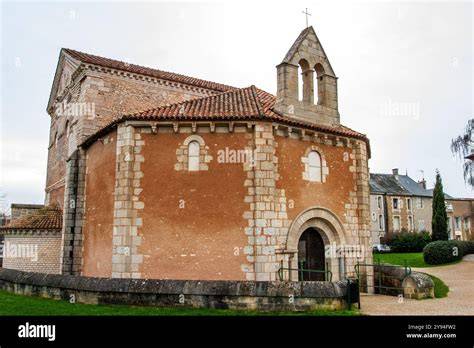
Religious architecture remained faithful to the early Christian model (churches of basilican type, baptisteries, and vaulted mausoleums with central plans). Because of the development of the cult of saints and the practice of burying ad sanctos, mausoleums became common in churches.
As had been the case in antiquity, marble was the principal sculptural material. In the Pyrenees, sculptors produced antique-style capitals and sarcophagi, which they exported throughout Gaul; these workshops reached their zenith in the 7th century.
The development of the art of metalwork (fibulae, buckles) was another characteristic of the Merovingian age. Germanic craftsmen adapted Roman techniques (e.g., cloisonné and damascene work). A new aesthetic standard, characterized by the play of colour and the use of stylized motifs, eventually predominated.
The Gallican Church before the Revolution
In 1789, the year of the outbreak of the French Revolution, Catholicism was the official religion of the French state. The French Catholic Church, known as the Gallican Church, recognised the authority of the pope as head of the Roman Catholic Church but had negotiated certain liberties that privileged the authority of the French monarch, giving it a distinct national identity characterised by considerable autonomy.
France’s population of 28 million was almost entirely Catholic, with full membership of the state denied to Protestant and Jewish minorities. Being French effectively meant being Catholic.
The strength and criticism of eighteenth-century Catholicism
Historians are divided over the strength of Catholicism in late eighteenth-century France. Some suggest that it was still flourishing after the efforts of the Council of Trent (1545-63) to reform and revitalise the Church, as witnessed by its well-educated clergy, numerous and varied religious orders, and renewed forms of worship.
Others trace a period of decline, with a small but noticeable decrease in religious observance in the decades before the Revolution. Regional studies of religious belief and practice reveal significant differences between urban and provincial France, between elites and the rest of the population, and, to a lesser degree, between men and women.
What is clear, however, is that the eighteenth-century Church was attracting growing criticism from the philosophes, the intellectuals of the Enlightenment who systematically questioned every aspect of French government and society. The Enlightenment quest to promote reason as the basis for legitimacy and progress found little to praise in the Church.
While the philosophes appreciated the value of religion in promoting moral and social order, the Church itself was condemned for its power and influence. The scandal surrounding the divisive theological movement of Jansenism, exacerbated by the heavy-handed treatment of its followers earlier in the century, furnished one reason for attacking the Church’s authority and its close links with the monarchy.
France’s lack of toleration for religious minorities provided another. Although the philosophe Voltaire managed some praise for the young nuns who devoted their lives to caring for the sick and poor, the clergy were seen as less useful.
The writer Louis-Sebastien Mercier complained in 1782 that Paris was ‘full of priests and tonsured clerics who serve neither the church nor the state’ and who were occupied with nothing but ‘useless and trifling’ matters.
Monasteries, religious vows, and anticlericalism
Criticism was specifically directed at monasteries where monks and nuns spent their days in prayer, much to the ire of philosophes who thought they should instead be reproducing for the good of the nation.
The solemn vows taken by these men and women, binding them to the religious state for life, also led to concerns about individual liberty. Denis Diderot railed against the lifelong nature of these vows, warning about decisions taken too young in life and, in his novel La Religieuse (The Nun), raising the spectre of a young woman forced to be a nun against her will.
Although most philosophes promoted reform rather than destruction, their comments gave encouragement to a growing anticlericalism whose spite was sharpened by resentment of the Church’s wealth.
Church wealth and social grievances
The Church’s revenue in 1789 was estimated at an immense - and possibly exaggerated - 150 million livres. It owned around six per cent of land throughout France, and its abbeys, churches, monasteries and convents, as well as the schools, hospitals and other institutions it operated, formed a visible reminder of the Church’s dominance in French society.
The Church was also permitted to collect the tithe, worth a nominal one-tenth of agricultural production, and was exempt from direct taxation on its earnings.
This prosperity caused considerable discontent, best illustrated in the cahiers de doléances, or ‘statements of grievances’, sent from throughout the kingdom to be discussed at the meeting of the Estates-General in May 1789.
Calls for the reform or abolition of the tithe and for the limitation of Church property were joined by complaints from parish priests who, excluded from the wealth bestowed upon the upper echelons of the Church hierarchy, often struggled to get by.
When crowds began to gather in Paris on 13 July 1789, the religious house of Saint-Lazare and its neighbouring convent were among the first places searched for supplies and weapons. The Catholic Church may have been the church of the majority of the French people, but its wealth and perceived abuses meant that it did not always have their trust.
The nationalisation of Church property
On the eve of the Revolution, the French state was on the verge of bankruptcy. Repeated attempts at financial reform had floundered but the Revolution opened the way for a new approach that, from the beginning, involved the Church.
On 4 August 1789, when the remains of France’s feudal past were abolished in a night of sweeping reforms, the clergy agreed to give up the tithe and allow the state to take over its funding.
The Declaration of the Rights of Man and Citizen, adopted on 26 August, made no recognition of the special position of the Catholic Church. With all authority located henceforth within the nation, the Church now found itself open - and vulnerable - to further reform.
On 2 November 1789, France’s new National Assembly, known as the Constituent Assembly, passed a decree that placed all Church property ‘at the disposition of the nation’.
Talleyrand, the bishop of Autun and one of the few clerics to support the measure, argued that all Church property rightfully belonged to the nation and that its return, by helping to bring about a better society, should therefore be viewed as a ‘religious act’.
Despite clerical support for the Revolution itself, this decree became the first in a series that targeted the Church in a way that soon cast doubt on the Revolution’s motives.
The suppression of monasteries
On 29 October 1789, just days before the nationalisation of Church property, the Assembly heard that two women in a nearby convent were being forced into the religious life. A proposal was immediately made to halt the taking of solemn vows.
Not only did this development associate the Church with the scheming and corruption featured in the anticlerical literature of the eighteenth century, but it prepared the way for the closure of France’s monasteries and the departure of their inhabitants, decreed on 13 February 1790.
It was hoped that the quick sale of monasteries and their contents would help stabilise the nation’s finances. The announcement was met with thousands of letters of protest.
The new French state had not only taken control of the Church’s revenue and property, but, through such radical intervention, seemed to be redrawing the boundaries between church and state.
The Civil Constitution of the Clergy
Charged with the Church’s financial administration, the Assembly now took the opportunity to reorganise it. On 12 July 1790 the Assembly approved the Civil Constitution of the Clergy, a constitution whose very name reflected the state’s new control of Church affairs.
Among the constitution’s reforms, dioceses were redrawn in line with state administrative divisions, clergy were to be paid by the state according to a new salary scale, and priests and bishops were to be elected by citizens.
The pope’s refusal to approve the Constitution, together with growing criticism from conservative members of the Assembly, began to cast doubt on the Church’s support.
The oath and the division of French Catholics
In an attempt to resolve the issue, the Assembly decreed on 27 November 1790 that all clergy must take a public oath of loyalty to the Constitution or surrender their salary and position.
As Nigel Aston has suggested, this oath became ‘a referendum on whether one’s first loyalties were to Catholicism or to the Revolution’.
Figures varied considerably between regions, but over 50 per cent of parish clergy swore their loyalty to the Constitution. For others the oath presented a grave matter of conscience eased only on 13 April 1791 when the pope, who had been hesitating, issued his condemnation.
Those who took the oath became known as ‘jurors’, while those who refused were labelled ‘non-jurors’ or ‘refractory priests’. A growing number fled overseas, joining those nobles and clergy who had already emigrated rather than live under the revolutionary regime.
The French population gradually split between those who supported the ‘Constitutional Church’ and those who remained loyal to refractory priests, initially allowed to continue practising.
Rather than confirming the allegiance of French clergy to a state-operated church, the oath had put before them a decision that, by forcing them to choose between the Constitutional Church and Rome, would cause a schism among French Catholics for the next decade and generate hostility towards the Revolution and its aims.
Refractory priests and counter-revolution
Meanwhile, support for the refractory Church became increasingly associated with counter-revolution. Émigré priests and bishops preached against the Revolution from abroad, while the refractories that remained became a focal point for broader resentment of the Revolution.
The suspicion with which many people viewed constitutional priests, especially in parts of regional France, helped create popular support for the counterrevolutionary cause.
This association had immediate implications. In the first week of April 1791, the sisters of a Parisian religious congregation were attacked by crowds of women who accused them of teaching ‘false principles’ to children and plotting counter-revolution with refractory priests.
Such sentiments found official expression in the debates of the ‘Legislative Assembly’, formed in October 1791 and determined to carry through the policies of the early Revolution.
In November it stopped the pensions of refractory priests and prohibited their use of religious buildings. On 6 April 1792 it banned all forms of religious dress, seeking to abolish this visible reminder of the ancien régime and force people to see priests as ‘citizens like any others’.
War, the fall of the monarchy, and persecution
France’s declaration of war on Austria on 20 April 1792 and its early losses cast further suspicion on refractory clergy and their followers, now suspected of plotting with the enemy.
The fall of the monarchy on 10 August provided added impetus for the destruction of anything connected with the ancien régime. The Assembly suppressed all remaining religious orders, including those staffing schools and hospitals, and ordered remaining non-jurors to leave or be arrested and deported.
Concern peaked on 2 September when news arrived that the fortress-town of Verdun near Paris had fallen to the allied Prussian forces.
Parisians, imagining that imprisoned counter-revolutionaries were preparing to break out and join the enemy, dispensed their own preventative justice when they descended on the city’s prisons and, over the course of several days, slaughtered over 1200 prisoners, including at least 200 priests.
The September Massacres made clear the distrust that would prevent any accommodation between the Church and the new Republic proclaimed on 22 September 1792.
The Reign of Terror and attacks on religion
The new Republican government, known as the Convention, responded to growing civil unrest and the ongoing overseas threat with the Reign of Terror.
The Revolutionary Tribunal, established on 10 March 1793, aimed to demonstrate that persons of danger to the Republic were being identified and punished.
Laws of September 1793 and June 1794 targeting ‘enemies of liberty’ and ‘enemies of the people’ saw mounting numbers of priests and nuns arrested and placed on trial.
Their charges included not only counter-revolution but ‘fanaticism’ and possession of items used in the celebration of mass, again demonstrating the suspicion now attached to religious worship.
Only a small percentage were guillotined, but their trials - designed to set an example - instead garnered further support for counterrevolutionary forces in the Vendée and other parts of western France and drove religious practice underground.
Napoleon vs The Catholic Church: The Rivalry That Changed Europe
Dechristianisation
Although the Constitutional Church had been permitted to continue its work, the Convention now considered Catholicism in any form suspicious.
Its association with ancien régime France, its adherence to values not of the Revolution’s making, and the private nature of worship seemed incompatible with the values of the Republic.
From here sprung a movement referred to as ‘dechristianisation’, which aimed to excise religion from French society.
Constitutional priests were advised to abandon the priesthood and were encouraged - or in some cases forced - to marry. Any priest that continued to practise, whether constitutional or refractory, now faced arrest and deportation.
The removal of Christian symbols
In October 1793, public worship was forbidden and over the next few months all visible signs of Christianity were removed, a policy pursued with particular enthusiasm by revolutionary armies eager to seek revenge on the institution that harboured so many counter-revolutionaries.
Church bells were pulled down and melted, ostensibly to help the war effort, crosses were taken from churches and cemeteries, and statues, relics and works of art were seized and sometimes destroyed.
Such iconoclasm caused considerable concern at official levels, not least because of the destruction wrought on France’s artistic and cultural heritage.
On 23 November 1793, churches were closed, to be converted into warehouses, manufacturing works or even stables.
The Revolutionary calendar and the rejection of Christian time
Streets and other public places bearing the names of saints were given new, often Republicanthemed names, and time itself was recast to further repudiate France’s Christian past.
The Revolutionary calendar started with the advent of the French Republic (Year 1). The names of its months reflected the seasons and its ten-day week eliminated Sunday as a day of rest and worship.
Although such measures were unevenly applied, and in many cases met with considerable local opposition, they reinforced the message that Christianity had no place in the Republic.