The Church of Christ is a subdivision of Protestant Christianity that began with a spiritual reformation in the 1800s called the Restoration or Stone-Campbell Movement after founders Barton Stone and Alexander Campbell. From a scholarly focus on the Bible to an emphasis on Communion, the Church of Christ has a rich history of developing and shifting conventions that define worship.
Church of Christ worship is traditionally characterized by congregational acapella singing, weekly Communion, Scripture-focused teaching, individual Bible study, prayer, and active participation by the whole congregation. Acapella music remains an important and recognizable tradition, although many congregations increasingly treat the use or absence of instruments as a matter of preference rather than a central moral or theological requirement.
What Defines Church of Christ Worship?
The first thing that comes to mind when one thinks of the Church of Christ may be the melodic harmonizing of voices and echoing absence of strings or percussion. However, there are many more elements to explore in order to truly understand this faith’s worship tradition.
Although the acapella worship tradition is highly discussed, Barton said other more deeply rooted customs are more definitional when it comes to worship for the Church of Christ faith. “I have been to Churches of Christ that have instruments,” Barton said. “But I’ve never been to a Church of Christ that didn’t have Communion in the service.”
Most of the Church of Christ worship rituals are quite Scripture-focused. Think biblical research and intellectual sermons.
- Congregational acapella singing is a traditional feature of worship.
- Communion is regarded as a consistent and central part of the service.
- Bible reading, study, and preaching occupy a prominent place in worship.
- Prayer is an important expression of dependence on God.
- The congregation is encouraged to participate rather than leave worship primarily to a choir or professional musicians.
Acapella Congregational Singing
The Church of Christ traditionally engages in acapella-style worship. Acapella is a term describing the absence of instruments and the use of only human voice to create melody.
Early Church of Christ members also had enthusiasm for simplicity and a desire to include the entire congregation, she said. “Part of the concern was that, if there was a choir or musicians, some people wouldn’t be able to participate,” Barton said.
Joi Carr, a singer, actress and professor of English and film studies at Pepperdine, said she grew up in the Church of Christ tradition using her talent for singing. For her, acapella worship enables a connection to God in a way instruments cannot.
“I’m a lyrical person,” Carr said. “Words are of primary importance to me, so I feel that acapella worship facilitates that connection more for me.”
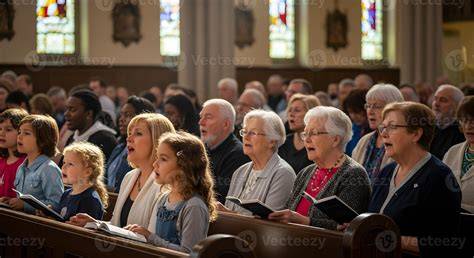
Acapella singing also gives worshippers a direct role in creating the musical sound of the service. “For me, acapella music feels more like ‘church.’ I still really like acapella worship … I love hearing the harmonies and I like how everyone in the church has a part to play,” Salley said.
Why Churches of Christ Traditionally Avoided Instruments
This tradition initially began because of financial realities, said David Baird, historian and dean emeritus of Seaver College. “In post-Civil War times, some Northern groups of churches began incorporating mechanical or instrumental music into their services,” Baird said. “After the war, many Southern churches didn’t have the resources to do this and became critical of churches that spent money on instruments such as organs.”
Barton said lack of funds was just one historical motivation for the acapella tradition. Early Church of Christ members also had enthusiasm for simplicity and a desire to include the entire congregation, she said.
The historical development of acapella worship therefore involved more than one consideration. Financial limitations, criticism of expensive church instruments, a preference for simplicity, and concern that choirs or musicians could reduce congregational participation all contributed to the tradition.
Regional Differences in Singing Style
Carr said she has experienced differences in Church of Christ acapella worship throughout different regions of the United States. She said that while the South has a lot of “lush harmony,” California churches have an emphasis on “melody-driven” songs with components such as rounds and repetition.
These differences show that congregational acapella worship is not musically identical in every congregation. The same broad practice may be expressed through different approaches to harmony, melody, repetition, and participation.
Is Acapella Music a Requirement?
Baird said he can remember a time several decades ago when acapella worship was “absolutely necessary” to be in accordance with proper Church of Christ practice. Nowadays, although acapella music continues to be a notable tradition in Churches of Christ as a whole, it is mostly a matter of preference rather than moral or theological importance, Barton said.
“Some people are legalistic about [acapella music] and feel that acapella worship is the only right way to worship,” Barton said. “However, I myself actually don’t know that many people that feel very strongly about instrumental worship being inherently wrong anymore.”
At the same time, congregations and individuals do not all approach the issue in the same way. Salley noticed a difference between acapella conservatism at Pepperdine and her childhood church in Charleston, South Carolina. She described her home church’s approach to acapella as more “strict and conservative” compared to practices at Pepperdine.
“I wasn’t exposed to instruments in worship growing up,” Salley said. “My family was super open to it but it was a big deal in church that you didn’t use instruments.”
Instrumental and Blended Worship
As chaplain, Barton said she emphasizes the importance of “blended” worship, or the combination of acapella and instrumental music. Many worship opportunities at Pepperdine, including the Faculty and Staff Advent Service, Wednesday Morning Chapel and the Good Friday Service, display this style of worship.
Although the University Church of Christ (UCC) hosts strictly acapella Sunday morning services, Baird said the on-campus church recently decided to host smaller and less formal services on Sunday afternoons that include instrumental worship.
“There is a sense here on campus that if the church has an instrumental service, it will be filled by more students,” Baird said. “The greatest influence to include instruments is an assumption that it will be more relevant to the times, more current and contemporary, and as a consequence, that more students will join us.”
Salley said her preference for acapella music slightly diminished when she came to college. “But for my own spiritual growth, I enjoy instrumental music and how it allows me to put my hands out and focus inwardly.”
| Worship approach | Characteristics described in the material |
|---|---|
| Traditional acapella worship | Human voices, harmony, congregational participation, no instruments |
| Strict acapella conservatism | Instruments viewed as unacceptable in worship |
| Blended worship | Combination of acapella and instrumental music |
| Instrumental worship | Services that include instruments, sometimes in smaller or less formal settings |
Communion as a Central Practice
Salley and Baird also emphasized the importance of Communion. They affirmed that a service is never held without it and that this tradition stems from a Church of Christ tendency to interpret the Bible literally.
Communion is therefore treated as more than an occasional ceremony. It is a regular and defining element of the worship service, one that many members regard as essential to the congregation’s weekly gathering.
The shine of the chalice during the weekly celebration of Holy Communion is one visible expression of this emphasis. Yet even the practical details of Communion have historically been discussed through close attention to Scripture.
The Question of One Cup or Multiple Cups
In the past, there was dissension over whether it was acceptable for multiple cups to be used during Communion. Baird explained that some Church of Christ goers resisted this idea and favored a single chalice.
If the Bible only mentioned one cup in the passage, they would only use one cup too. Baird said this particular tradition has noticeably loosened over time due to fear of communicable diseases.
This example illustrates the tension between literal or detailed biblical interpretation and practical adaptation. A practice that was once defended by some congregations as closely matching the biblical text could change when health concerns became more prominent.
Bible-Centered Worship and Doctrine
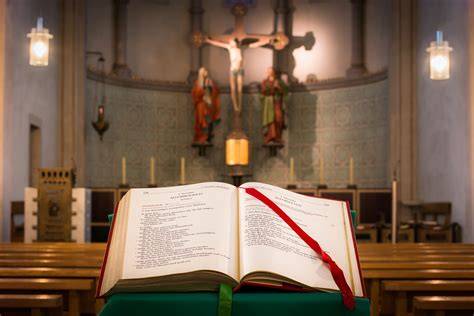
Barton emphasized that every member is highly encouraged to study the Bible individually. An example of the importance of the word of God can be seen in Pepperdine’s Stauffer Chapel. A depiction of the Bible takes the center of the decorative, stained-glass windows.
Baird said there is no central creed or hierarchy that unites the Churches of Christ. Rather, practitioners derive their doctrine solely from individual analysis and detailed attention to the Bible.
He described it as “speaking where the Bible speaks and remaining silent where it does not speak.”
Because Church of Christ members focus on scriptural study, Barton said it would be accurate to describe them as an “intellectual” and “rational” bunch - definitely not the group to emphasize spiritual emotion or mysticism.
“That’s probably why we have so many schools and universities,” Barton said. “Study is important to us. We seek to encounter God through the Bible.”
Interpretation, Simplicity, and Congregational Practice
The focus on Scripture affects both major doctrines and ordinary congregational arrangements. Opposition in certain congregations against children’s “Sunday School” is another demonstration of Church of Christ resistance to structures not specifically laid out in Scripture, Baird said.
This approach can lead congregations to examine familiar religious practices carefully. The question is not merely whether a practice is useful or traditional, but whether it can be justified through the congregation’s understanding of the Bible.
At the same time, Church of Christ congregations have not remained unchanged. The movement from a single chalice toward multiple cups in some settings and the introduction of instrumental services in others demonstrate that practices may shift as congregations respond to health concerns, cultural changes, and pastoral or educational needs.
Participation by the Whole Congregation
The traditional preference for congregational singing is connected to a broader understanding of worship as shared activity. If there was a choir or musicians, some people might not be able to participate, while acapella singing allows the congregation to create the music together.
“I love hearing the harmonies and I like how everyone in the church has a part to play,” Salley said.
This emphasis on participation also appears in the wider expectations placed upon church members. Many people in the Lord’s body possess talents. Many of them are as the one-talent man and are not using them.
We, too, will give account. We, too, will stand blessed or condemned, not because of the number of abilities which we possess, but because we have either used the talents, or have not used them.
Service, Gifts, and Responsibility
The abilities which we do have, whether few or many, have been given to us by God. These lessons are manifest in our Lord’s parable of Matthew 25:14-30, which has been called “The Parable of the Talents.”
Another lesson which one cannot help but see is that the Lord does not condemn a person because he has few talents, nor does He reward a man just because he has many talents. The five-talent man did not receive a blessing because of his many talents, but because he used the five talents he had.
On the other hand, the one-talent man was not condemned because of his one talent, but because he did not put the talent to use.
It is not that one does not possess the ability to teach a Bible class, but he just does not want to. One may be able to lead singing, lead prayer, or wait on the Lord’s Table; but his “I don’t want to” keeps him from it.
Members fail to make visits to shut-ins, nursing homes, and hospitals just because they simply do not want to. With others, ability stops where indifference sets in.
Where does you ability stop’? Is it where your “I do not want to” comes in? Could it be where indifference has stilled your soul? Maybe it is where time lost in other areas can be felt.
Prayer and Perseverance in Christian Service
One of the most rewarding blessings in life is doing good for others. I love the fact that doing good not only benefits the lives of those to whom good is performed, but it also blesses the lives of those who do the good deeds.
Perhaps this is one of the reasons why the Bible commands Christians to live every day doing good. “Therefore, as we have opportunity, let us do good to all, especially to those who are of the household of faith.” (Gal. 6:10)
Though we can never get to the point that we do too much good in this life, there is, however, a danger that many fall into while doing good. The danger is growing weary while doing good.
“And let us not grow weary while doing good, for in due season we shall reap if we do not lose heart.” (Gal. 6:9)
What would cause one to get tired of doing good? It could be a lack of desired results. It could be due to a lack of help. Then again, it could also be related to criticism or persecution.
Regardless of the cause for growing weary, how can we avoid it or overcome it? Remember the example of Jesus. The Bible states that Jesus “went about doing good.” (Acts 10:38).
Prayer will also help keep one from growing weary. In Luke’s account of the gospel, Jesus told His disciples, “Men ought always to pray, and not to faint.” (Lk. 18:1)
Finally, focus on the reward. “And let us not grow weary while doing good, for in due season we shall reap if we do not lose heart.” (Gal. 6:9)
Leadership and Mutual Support in the Church
Leadership in the church is a calling that requires dedication, humility, and spiritual strength. When a husband or wife steps into a role of service-whether as an elder, deacon, Bible class teacher, preacher, or active servant-there is great responsibility placed on their shoulders.
Behind every strong leader in the church is often a supportive spouse who helps carry that burden with love, patience, and prayer.
God designed marriage to be a partnership. In Ecclesiastes 4:9-10, we’re told, “Two are better than one… For if they fall, the one will lift up his fellow.”
A spouse’s encouragement, faithfulness, and quiet strength can provide the spiritual and emotional support needed to keep a leader focused and grounded. Whether it's helping with hospitality, being a listening ear, or simply praying for wisdom, your role is vital.
Supporting your spouse in their service to the church doesn’t mean being in the spotlight. It means being a source of peace at home, offering spiritual encouragement, and standing by them when leadership becomes difficult or discouraging.
Galatians 6:9 reminds us, “And let us not be weary in well doing: for in due season we shall reap, if we faint not.”
You are helping to carry out the work of the church, even in ways that may never be seen by others-but are always seen by God.
Doubt, Questions, and Intellectual Faith
Doubt is common. We all experience it to one degree or another at one time or another. Nothing is accomplished by pretending we don’t have questions.
We must be honest with ourselves . each other . with God. We must trust God to see us through the difficult moments.
Like a loving father, God patiently listens and gives us space to question and grow (cf. Psalm 6:2-3; 13:1-2). God loves us, so He listens to us and offers us a safe place to which we can return (cf. Luke 15:20).
Yet, we cannot remain in doubt and let it develop to the point that we walk away from the Lord (James 1:5-8). Doubt is powerful and if left unchecked can lead us to places we do not want to go.
Additionally, there are times when we have questions. Our intellectual and emotional questions can lead to doubts thus requiring well-reasoned responses and credible evidence.
Often, we just don’t have the proper expectations of God . we doubt because we have the wrong idea about who He is and what His plan really is. We must keep seeking (Matt. 7:7-8; Heb. 11:6).
Church of Christ worship reflects this concern for thoughtful faith. Biblical study, rational examination, and serious attention to the text are not separate from devotion but are central ways in which many members seek to encounter God.
Faith Through Suffering and Uncertainty
One cause of doubt is guilt. A major roadblock to thriving, powerful faith is the inability to see past our sin.
We struggle to believe we could be forgiven for the times that we strayed from the Lord. We compare God’s power and beauty with our own weakness and ugliness and we doubt we could be loved in such a way as described in Scripture.
However, if we have been washed in the blood of the Lamb, our sins have been removed! If God says our sins have been forgiven, then our sins have been forgiven! We must trust Him.
Another cause of doubt is suffering. Few things cause us to question God’s love and God’s plan for us like suffering does.
This father had suffered for years as he watched his son be tormented by an evil spirit. Evidently (and understandably), he had reached a breaking point of sorts. He was desperate. He is the one who cried out, “I believe; help my unbelief!” (Mark 9:24)
We must trust the evidence (Matt. 11:4-6). The proof is clear. There is no excuse for denying God’s existence (Rom. 1:20). The Bible is the Word of God. Whatever the Bible teaches, we know it is true!
Tradition and Adaptation in Modern Worship
Church of Christ worship entails a history of tension between strict reliance on Scripture versus movement to adapt with the Modern era.
Whether that looks like dropping single chalice guidelines or experimenting with instrumental music, Churches of Christ everywhere are seeking to strike this balance.
The resulting worship practices may differ from one congregation to another. Some continue strictly acapella Sunday morning services, some offer blended or instrumental services in other settings, and some maintain more conservative traditions concerning Communion or congregational organization.
These differences do not erase the central patterns that have shaped Church of Christ worship: attention to Scripture, congregational participation, Communion, prayer, service, and the continuing effort to connect inherited practices with the needs of contemporary Christian communities.
tags: #church #of #christ #congregational #singing