The Jesuit School of Theology of Santa Clara University (JST) is an international center for the study of theology, ministry, research, and formation rooted in the lived realities of diverse communities of faith. Located in Berkeley, California, since 1970, JST prepares men and women to become leaders, both Jesuit and lay, in ministry and academia for the Roman Catholic Church.
JST provides students the opportunity to faithfully and critically engage the two thousand year tradition of Christianity through approaches grounded in the 21st century, the Church’s global context, and the Jesuit identity. Its unique programs offer professional graduate degrees in theology and ministry, as well as ecclesiastical licentiates and doctorates in sacred theology.
What is the Jesuit School of Theology?
The Jesuit School of Theology is a global ministry of the Society of Jesus and a graduate school of Santa Clara University. It is an international center for innovative theological education, research, and formation shaped by a keen sensitivity to the varied cultural factors affecting the Church's mission.
JST is faithful to the intellectual tradition of the Society of Jesus while responding to the realities of the contemporary Church. The school embraces synodality, the Catholic Church’s process of prayer, listening, and communal discernment into where the Holy Spirit is leading the Church.
JST empowers women and men to serve and lead in the global Catholic church. Students come to JST from across the nation and around the world to prepare for a broad range of ministries in reverent and critical service of a faith that does justice.

Jesuit identity and educational mission
JST’s faculty are committed to providing a Jesuit education grounded in an engaged pedagogy for the formation of leaders of competence, conscience, and compassion. The school couples rigorous academic courses of study with opportunities to engage in ecumenical and interreligious dialogue, serve in local ministries, and participate in international immersion experiences.
Its Jesuit identity encourages a deep consideration for how faith leads people to work for social justice. The academic program therefore connects theological study with ministry, intercultural engagement, critical reflection, and service.
Why study at JST?
Academic excellence
JST’s distinguished faculty encourage students to explore the riches of the Catholic theological tradition. With expertise in a wide variety of theological concentrations, the faculty demonstrate the possibilities of theological scholarship at JST.
The faculty foster academic excellence by inspiring students to explore the riches of the Catholic theological tradition and the complex ways in which faith finds a home in the many cultures of the global context.
Jesuit identity
JST’s Jesuit identity encourages a deep consideration for how faith leads people to work for social justice. This identity shapes theological education through attention to conscience, discernment, service, and the Church’s mission in the world.
Vibrant location
The scholarly, artistic, and cultural diversity of the surrounding community enriches the school’s studies. Students also benefit from opportunities to serve in local ministries and to connect theological expertise with the needs of diverse communities.
Formation and fellowship
JST cultivates a community where students learn and grow alongside one another. Students engage in fellowship and formation by participating in community Masses and lay-led liturgies, weekly dinners, retreats, and community service projects and reflection sessions.
Degrees and programs
JST offers professional graduate degrees in theology and ministry and ecclesiastical licentiates and doctorates in sacred theology. Degrees offered include:
- Master of Divinity
- Master of Theological Studies
- Master of Arts
- Master of Theology
- Licentiate of Sacred Theology
- Doctorate of Sacred Theology
JST also offers the New Directions Sabbatical Program. Its programs are designed for people preparing for ministry, academic work, theological research, and leadership in the global Catholic Church.
Master of Theological Studies in Synodal Leadership
Responding to a synodal vision for a more listening, discerning, and participatory Church, the Jesuit School of Theology of Santa Clara University offers the online Master of Theological Studies with a concentration in Synodal Leadership.
As one of the few programs of its kind, this concentration equips students with the theological, pastoral, and spiritual knowledge needed to participate in and lead synodal processes-fostering listening, discernment, and co-responsibility for the Church's mission in the world.
The program is especially relevant to the development of a Church shaped by deep and inclusive listening, prayer, communal discernment, and shared responsibility. JST-SCU is offering full-tuition scholarships for Catholic religious sisters admitted to this program in fall 2026.
Community life and formation
Formation at JST extends beyond classroom study. Students learn and grow alongside one another through community Masses, lay-led liturgies, weekly dinners, retreats, community service projects, and reflection sessions.
JST couples rigorous academic courses of study with opportunities to engage in ecumenical and interreligious dialogue, serve in local ministries, and participate in international immersion experiences. These opportunities connect theological education with lived faith and the practical demands of ministry.
Ministry, field education, and social justice
JST prepares students for a broad range of ministries in reverent and critical service of a faith that does justice. Field education enables students to connect theological expertise from the classroom with pastoral service and the values of social justice.
Vivian encounters the suffering Christ during her field education placement at the San Francisco General Hospital, bridging theological expertise from the classroom with a chaplaincy internship rooted in the values of social justice.
After working for two years in campus ministry at a Jesuit university, Kelly desired to grow spiritually and professionally. At JST, she found top-notch academics, a welcoming community, and a field experience that challenged her to grow as a minister.
Daniel shares that participating in the 19th Annotation, St. Ignatius’ Spiritual Exercises, led him to JST. By following his desire to do good in the world, Daniel arrived at JST and found a diverse community that also held this deep-seeded desire to be a force of love, compassion, and change.
Global and intercultural character
JST is an international center for the study of theology and ministry shaped by a keen sensitivity to the varied cultural factors affecting the Church's mission. Its faculty and students represent a wide range of experiences, cultures, and theological perspectives.
The faculty and students of JST-SCU hail from more than 40 countries and bring their life experiences into the heart of campus life. Their presence supports intercultural learning and strengthens the school’s contribution to global conversations about the Church and its mission.
JST’s global character also supports ecumenical and interreligious dialogue, international immersion experiences, and theological reflection grounded in the lived realities of diverse communities of faith.
JST and synodality
JST-SCU has established itself as a leader for the global Church in increasing understanding and implementation of “synodality,” the global Catholic Church’s vision for reform and renewal through deep and inclusive listening, prayer, and discernment.
JST-SCU’s spring 2025 conference, keynoted by the Vatican’s top synodality leader, Cardinal Mario Grech, as well as a new massive open online course and a new masters in theological studies with a concentration in synodal leadership, represent rich resources for global Catholics as well as Santa Clara students and faculty.
The school’s work in synodality connects theological study with the question of how the Church listens, discerns, participates, and shares responsibility for its mission in the world.
Relocation from Berkeley to Santa Clara
In a move that will deepen and enhance the theological, global, and academic reach of Santa Clara University, the University’s Jesuit School of Theology will relocate from its current location in Berkeley, California, to the main campus in Santa Clara, California.
The relocation was endorsed by the Jesuit Conference of Canada and the United States, following approval by the boards of JST-SCU and Santa Clara University. The relocation process will begin immediately and culminate in a fall 2027 grand opening of the new space on the main campus, located on the third floor of the University’s Guadalupe Hall, which will be renovated for JST-SCU.
Due to its relocation 50 miles south of Berkeley and other factors, effective June 2027, JST-SCU will withdraw as a member of the Graduate Theological Union, the group of theology schools of different faith traditions and Christian denominations, most based in Berkeley.
| Relocation detail | Information |
|---|---|
| Current location | Berkeley, California |
| Future location | Main campus of Santa Clara University in Santa Clara, California |
| New space | Third floor of Guadalupe Hall |
| Planned opening | Fall 2027 |
| Distance from Berkeley | 50 miles south of Berkeley |
| Withdrawal from GTU | Effective June 2027 |
Reasons for the move
The decision to move the theologate follows more than a year of assessment and intentional discernment regarding the future and optimal location of the school for student support, academic integration, and future growth.
Santa Clara’s strategic plan, Impact 2030, established ambitious goals for expanding the University’s international engagement, including becoming the leading Jesuit university in service to global society and the global Church, and becoming a global hub for collaboration that advances economic, social, ecological, and political development.
Having JST-SCU’s students and scholars-who hail from more than 40 countries-study contextualized theology working alongside Santa Clara’s arts and sciences, business, law, and engineering schools will open up new opportunities for global partnerships, networks, and leadership.
New opportunities at Santa Clara
Deeper presence in Silicon Valley
The relocation positions JST-SCU at the heart of emerging social and technological conversations around AI and ethics, religion and society, synodality, ecological stewardship, and other critical topics relevant to a region serving as a key nexus between technology and its impact on humanity.
Academic synergy
The move will foster deeper collaboration with major academic units on campus, including the Graduate Program in Pastoral Ministries, the Religious Studies Department, Santa Clara’s Division of Mission and Ministry, and its three university-wide Centers of Distinction in ethics, global impact, and Ignatian values.
A recently announced $10 million grant from the Lilly Endowment will enable JST-SCU to create and launch a new Pope Francis Institute for Pastoral Flourishing in partnership with those units, as well as with existing and emerging centers at Santa Clara.
Enhanced student support
JST-SCU students will gain seamless access to comprehensive services on the main campus, including Student Health and Wellness, Campus Ministry, the SCU library, recreational facilities, and a larger community of support.
Increased intercultural interaction
The faculty and students of JST-SCU hail from more than 40 countries and will bring their life experiences into the heart of campus life. This will increase opportunities for intercultural interaction and create new settings for shared theological, academic, and pastoral reflection.
Historical development
This relocation represents a powerful homecoming of sorts for JST-SCU. The school, originally established in 1934 as Alma College in the Santa Cruz Mountains, was first affiliated with Santa Clara University from 1958 to 1970 before disaffiliating and moving to Berkeley to associate with the Graduate Theological Union.
JST-SCU was formally reintegrated with Santa Clara University in 2009 while remaining in Berkeley. The upcoming move will complete the integration, bringing JST-SCU back to the South Bay, closer to its origins near the Santa Cruz Mountains.
JST-SCU’s next incarnation promises to give rise to something new, says its dean Agbonkhianmeghe E. Orobator, S.J. “Out of the horizon of Santa Clara arises a vision of integration, summoning us to forge new bonds, weave new alliances, foster new collaborations, discover new opportunities, and build a new community,” said Orobator.
Planning and institutional support
A university-wide relocation committee and five subcommittees will be responsible for implementing a relocation plan, which is built on an intensive and exhaustive study conducted by Santa Clara’s Office of the Provost and Executive Vice President, involving interviews, data collection, and analysis.
The comprehensive assessment focused on several key priorities, including:
- Robust support for students, staff, and faculty.
- Continued access to world-class library materials and support services.
- Increased capacity to facilitate global conversations around synodality and the future of the Church.
Relationship with Santa Clara University
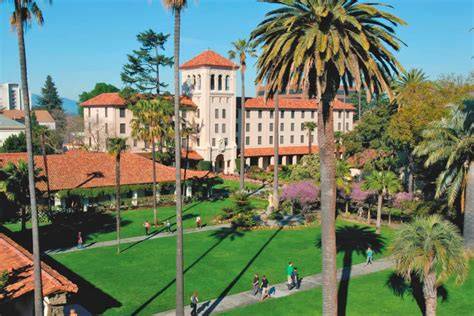
Founded in 1851, Santa Clara University sits in the heart of Silicon Valley-the world’s most innovative and entrepreneurial region. The University’s stunningly landscaped 106-acre campus is home to the historic Mission Santa Clara de Asís.
Ranked among the top 15 percent of national universities by U.S. News & World Report, SCU has among the best four-year graduation rates in the nation and is rated by PayScale in the top 1 percent of universities with the highest-paid graduates.
SCU has produced elite levels of Fulbright Scholars as well as four Rhodes Scholars. With undergraduate programs in arts and sciences, business, and engineering, and graduate programs in six disciplines, the curriculum blends high-tech innovation with social consciousness grounded in the tradition of Jesuit, Catholic education.
The integration of JST-SCU with Santa Clara’s academic units is intended to strengthen collaboration across theology, pastoral ministry, religious studies, ethics, global impact, Ignatian values, and other fields connected with the University’s mission.
What makes JST distinctive?
- It is a global ministry of the Society of Jesus and a graduate school of Santa Clara University.
- It provides international theological education, research, and formation.
- It combines rigorous academic study with ministry, service, dialogue, and spiritual formation.
- It offers professional graduate degrees in theology and ministry.
- It offers ecclesiastical licentiates and doctorates in sacred theology.
- It prepares Jesuit and lay leaders for ministry and academia in the Roman Catholic Church.
- It places strong emphasis on social justice, intercultural understanding, and the Church’s global context.
- It has developed specialized work in synodality and synodal leadership.
- Its students and scholars come from more than 40 countries.
- Its planned move to Santa Clara will deepen its integration with the University and expand opportunities for academic and global collaboration.