“Remember the Sabbath day, to keep it holy” means to set apart one day for rest, reverence, worship, and renewed attention to God. The command calls people to stop ordinary work and to recognize that life is not defined by constant production, consumption, busyness, or worry.
The Sabbath is not merely a day of relaxation. The key to the Sabbath isn’t merely rest. Rather, it’s that in our rest we turn our attention to God, whose rest our Sabbath mirrors.
The Meaning of “Remember the Sabbath Day”
The fourth of the ten commandments is “Remember the Sabbath day, to keep it holy” (Exodus 20:8, ESV). Following the command are statements defining the Sabbath as “the seventh day” (verse 10), dedicating it to “the Lord your God” (verse 10), forbidding all work in it, applying it to everyone in Israel, and citing the basis for it: “For in six days the Lord made the heavens and the earth, the sea, and all that is in them, but he rested on the seventh day. Therefore the Lord blessed the Sabbath day and made it holy” (verse 11).
The Israelites under the Mosaic Law were to keep in mind that no work could be done on the seventh day of the week. If we parse the command, we can get a better picture of what it says:
“Remember”
This is the only command of the ten that starts with the word remember. This could mean that the Sabbath command had been given earlier-in fact, God had decreed a Sabbath rest in Exodus 16:22-30. Or the word remember could simply mean “keep this command in mind” with no reference to an earlier directive. Regardless, the word is emphatic; the children of Israel were not to grow lax in their observation of this command.
“The Sabbath day”
The word Sabbath comes from a Hebrew word meaning “day of rest.” The Bible specifies that this day of rest is the seventh day of the week, what we would call “Saturday,” or in the Israelite mindset, sundown on Friday until sundown on Saturday.
God set the pattern for the Sabbath rest in Genesis 2:2, ceasing from His work of creation on the seventh day. God’s action (or, rather, His inaction) in Genesis 2 foreshadowed the Law’s command in Exodus 20:8.
“To keep it holy”
This four-word phrase in English is only one word in Hebrew. It means “consecrate,” “set apart,” or “sanctify.” The Israelites were to make a distinction between the seventh day and the rest of the week. The Sabbath was different. It was to be dedicated to the Lord.
The Hebrew word for “holy”-as in, “Remember the Sabbath day and keep it holy”-means, literally, “set apart.”
The priests were to double the daily sacrifices on the Sabbath (Numbers 28:9-10), marking the day with increased sacred activity. The rest of the Israelites were to mark the day with decreased activity-no work at all-in honor of the Lord. The penalty for desecrating the Sabbath with work was death (Exodus 31:14; Numbers 15:32-36).
Keeping of the Sabbath was a sign of the covenant between Israel and the Lord: “You must observe my Sabbaths. This will be a sign between me and you for the generations to come” (Exodus 31:13). As Israel kept the Sabbath set apart, they were reminded that they were also being set apart: “So you may know that I am the LORD, who makes you holy” (verse 13).
The Sabbath as Rest and Work Stoppage
Sabbath, or Shabbat in Hebrew, simply means “rest” or “to stop.” This command is given to the Hebrews as a reminder of what happened as far back as the account of Creation.
“Remember the sabbath day and keep it holy. Six days you shall labor and do all your work. But the seventh day is a sabbath to the Lord your God; you shall not do any work.” - Exodus 20:9-10
Rest doesn’t usually come easily for me and I suspect it doesn’t for most of us. And yet rest is a pretty big deal to God. This topic is of such importance to God that He made it one of the Ten Commandments.
“Sabbath, in the first instance, is not about worship. It is about work stoppage. It is about withdrawal from the anxiety system of Pharaoh, the refusal to let one’s life be defined by production and consumption and the endless pursuit of private well-being.”
The Sabbath Day provides us with an opportunity not only to stop working, but to stop wanting, stressing, pursuing and worrying. To just stop.
The opposite of rest of course is restlessness and as author and pastor John Mark Comer notes: “Restlessness leads to a life of hurry, a life of busyness, overload, shopping, materialism, careerism…a life of more.” Living this kind of life means we are constantly in a state of motion, constantly working and we’re never satisfied.
Rest directly opposes systems of anxiety, which define value in production and busyness. It’s slowing down and going back to the Brueggemann quote earlier; work stoppage. It’s being quiet, it’s being still.
Why Rest Matters to God
The first three commandments are about our relationship with God:
- No other Gods
- No idols
- Do not take the Lord’s name in vain.
The fifth through tenth Commandments define how we are to relate to one another:
- Honor your father and mother
- No murder
- No adultery
- No stealing
- No lying
- Do not covet what others have
But the fourth Commandment serves to bridge those before and those following by honoring God and ourselves simultaneously.
In a society that values busyness and productivity, observing the Sabbath is downright countercultural. The Sabbath challenges the belief that our value depends on how much we accomplish, produce, purchase, or manage.
Rest is saying I’m going to take some time for myself so that I can be better prepared to handle life that is in front of me.
Jesus’ Example of Rest
Jesus regularly practiced rest and encouraged it among his followers. We know Jesus’ earthly ministry was a busy one. He was constantly interacting with people, and not just any people but typically, needy people. People who taxed Him emotionally and physically.
And He interacted with these folks all under the scornful eyes of the religious elite, which was another added stress in his life. Big Brother was constantly watching Him.
In Mark chapter 6 we see a perfect snapshot of the busyness of Jesus’ life. The chapter begins with Jesus being rejected by people in His own hometown. Not a great way to start the day, feeling the weight of rejection. All of us have felt that in our lives.
This is soon followed by Him dispatching the twelve Disciples to go heal people and to cast out demons, so that’s a good thing. Shortly afterwards, though, He hears that His cousin, John the Baptist, has lost his head in prison, so now the weight of grief enters the picture.
Finally, the Disciples return from their assignments and they're regaling Jesus with stories of all they had seen and done. Now everyone is on this super high! Are you beginning to feel the tension in all of this?
Represented in just a few short verses are the highs and lows every single one of us experience in our everyday lives. We’ve all had those days where we’ve had to comfort a scared toddler, celebrate our spouse’s promotion and then wonder why we weren’t invited to the book club social outing.
All of us have highs and lows in our lives and apparently Jesus was no different. As Jesus and His Disciples are talking, a large crowd of people are gathering and Mark writes this:
“Then because so many people were coming and going that they did not even have a chance to eat, he said to them, “Come with me by yourselves to a quiet place and get some rest.” So they went away by themselves in a boat to a solitary place.”
In the midst of all the busyness that had just transpired; all the highs and lows they had experienced, Jesus understood His own need as well as the need of his followers to get rest.
“But Jesus often withdrew to lonely places and prayed.” Luke 5:16.
“Very early in the morning, while it was still dark, Jesus got up, left the house and went off to a solitary place, where he prayed.” Mark 1:35.
The Psalmist reminds us of this: He says, “Be still, and know that I am God.” Psalm 46:10. Jesus told His friends, “Come with me to a quiet place and get some rest.”
Quiet, Solitude, and Stillness
So, obviously quiet is another ingredient that’s key to getting rest. Our goal as Christ followers is to become more like Him and quiet seemed to be a regular practice in his life.
It’s important to note here, I’m not saying quiet equals rest. We’ve all been there when things go eerily quiet in a house full of kids. In that case quiet equals TROUBLE! What I am saying is that quiet can be an ingredient to rest.
Quiet, solitude, silence and stillness…those aren’t things that a lot of us like to do.
“Solitude begins with a time and a place for God, and God alone. If we really believe not only that God exists but also that God is actively present in our lives - healing, teaching and guiding - we need to set aside a time and space to give God our undivided attention.”
I think we miss out on a lot of what God has to offer us simply because we are too busy to listen to what God is saying. Or we are too afraid.
“Empty space tends to create fear. As long as our minds, hearts, and hands are occupied, we can avoid confronting the painful questions to which we never gave much attention and that we do not want to surface.”
How many of us take the opportunity in moments of rest to, as the late John Denver once sang, talk to God and listen to the casual reply?
The Sabbath, Worship, and Attention to God
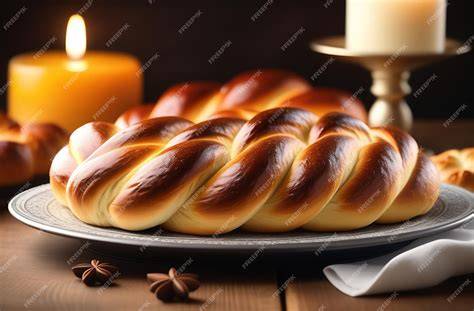
In Jewish communities, Sabbaths are truly set apart from the rest of the week. Shabbat candles, braided challah bread, prayer, family time.
When I practiced Judaism, I would begin my Sabbath with a relaxed Friday night dinner, followed by a day of worship, rest, and celebration. During the Sabbath day, I didn't think about my schoolwork, spend any money, ride in a car, or watch television.
The key to the Sabbath isn't merely rest. Rather, it's that in our rest we turn our attention to God, whose rest our Sabbath mirrors.
Through the ages Christians have seen the wisdom of devoting one full day to rest and praise. There's an old Puritan saying, “Good Sabbaths make good Christians.”
The holy piece I think would be worship. Whether it is Saturday night leading in, or Sunday morning, set aside a day when a significant focus is on corporate worship.
I think that’s implicit in the way the New Testament talks about the gathering of God’s people. So it’s holy in the sense that it’s set aside for corporate worship.
Old Testament Sabbath and Christian Practice
Christians aren't bound by Old Testament Sabbath directives. Twice in his epistles, the apostle Paul made it clear that Sabbath observance, like other external signs of piety, is insufficient for salvation.
As he wrote to the Colossians, “Therefore do not let anyone judge you . with regard to a religious festival, a New Moon celebration or a Sabbath day. These are a shadow of the things that were to come; the reality, however, is found in Christ” (Colossians 2:16-17).
And Jesus, when rebuked by the Pharisees for plucking grain from a field on the Sabbath, criticized those who made a fetish of Sabbath observance, insisting, “The Sabbath was made for man, not man for the Sabbath” (Mark 2:27).
But Jesus never said to forget the Sabbath completely. Keeping the Sabbath is one of the Ten Commandments, after all!
Believers today, being under the New Covenant, are not bound to keep the sign of the Old Covenant.
Saturday or Sunday?
The word Sabbath comes from a Hebrew word meaning “day of rest.” The Bible specifies that this day of rest is the seventh day of the week, what we would call “Saturday,” or in the Israelite mindset, sundown on Friday until sundown on Saturday.
The Christian Sabbath is Sunday, the Lord’s day, the resurrection day of Jesus. And I agree with that. I think those who do seventh day things are misunderstanding that the Lord’s day, the day Jesus rose from the dead, is the day that the early church marked the holy day of the week.
Now the question then becomes, What is God’s will for the resurrection day, for Sunday, as it is revealed in the New Testament?
And Romans 14 is significant for me, because it appears in Romans 14 that there was a disagreement in the church. One celebrates one day, and one counts all days alike.
Now it doesn’t say explicitly that was a Sabbath issue. It could have been some other kind of holiday issue. But it does say, “One sets aside one day for the Lord, and one considers all days alike.”
I remember talking about this with an Old Testament scholar, and he said that it doesn’t say that one person views “all days alike secular,” but maybe “all days alike holy.” And I said, “Right! I suspect that is what it means.”
In other words, every day is holy to the Lord for some people in Romans 14, and the others said, “Yes, but this one is special.” So it appears there was disagreement.
And Paul’s way of handling the disagreement was not to side with either one. That’s what is so significant: that he said, “One man keeps it to the Lord; another is free to the Lord. Let both honor the Lord.”
What Does It Mean Practically to Keep the Sabbath Holy?
What does it mean practically to keep the Sabbath holy? I think it is a matter of personal conscience. And, by and large, it probably should be a matter of personal conscience. But that doesn’t mean that it has no meaning and no biblical guidelines.
The big question for the Sabbath is whether or not in the New Testament there is a commandment to keep the Sabbath day holy in the same way it was commanded in the Old Testament.
It was a capital offense in the Old Testament. You could be killed for carrying sticks on the Sabbath day.
I’m going to ignore the issue right now of Sunday versus Saturday and just assume that’s not the question at all.
Now I think that the principle in the New Testament is that God ordains that one day in seven be restful. I think that’s a creation ordinance for our good, for our health.
And so, one of the things we should do is do things on the Lord’s day that refresh us for his service, intellectually, physically, and spiritually.
So if you sit at your desk all week, probably you should walk or ride a bike on Sunday. And if you work on the farm, breaking your back all week (which is what they did in the Old Testament), then sit down and take a long nap on Sunday.
The rest piece, I think, is physiologically and, from a creation-order standpoint, wise. I use the word “wisdom” rather than mandating any particular one way of doing it.
Just take one day in seven and set it aside as the day when you are physically recharging.
Work and Recovery
We get a whole weekend off, so we tend to think, “How does that relate to Saturday?” Whereas the Bible says, “Six days shall you labor and do all your work, and the seventh day you rest.”
So the Bible doesn’t have a five-day work week in mind. It has a six-day work week in mind.
That’s the way I think with myself. I’m working six days a week, and on Monday-which is the day I take off-I’m putting my feet up and not thinking in terms of work.
But rather, I pray at the beginning of the day, “Lord, whatever happens today, may it be energizing for Tuesday. May it be energizing for the week that’s coming. Give me strength, give me energy.”
Worship and Secular Activities
So it’s holy in the sense that it’s set aside for corporate worship. Secondly, I think that you want to try to restrain certain secular involvements in such a way that you say something special about this day.
It’s different from the other days, because Christ is Lord and risen in a way that I want to speak about in a unique way today.
But I really don’t want to lay down rules for what that would be. I can just give you some applications that we developed from our family.
We didn’t do professional sports on Sunday. None of my sons went to ball games on Sunday.
And I didn’t draw the line that they couldn’t go to somebody’s house and watch it on television.
People may say, “Well that’s weird. What kind of crazy line-drawing is that?” But I had my reasons. And I would tell the boys what those reasons were, about being a part of that whole swirl of non-God activity at the Metrodome.
We didn’t go to movies on Sunday. Ninety-nine percent of the movies are totally God-less and secular, even when they’re not “evil”. They just don’t have anything to do with God.
And I don’t think I’ve ever been to a movie on Sunday in my life, and I don’t ever intend to go to one. It’s just part of who I am.
But I do not snoop around at Bethlehem to find out what my staff are doing or what others are doing.
Rest Is More Than Self-Indulgence
Still, honoring the Sabbath was easier in Puritan New England, where almost everyone took the Sabbath seriously. Shops weren't open on Sundays, businesses closed their doors, and everyone headed to church.
Sabbaths are much more difficult in contemporary America. In fact, in a society that values busyness and productivity, observing the Sabbath is downright countercultural.
That's not to say contemporary society doesn't encourage us to relax. To the contrary, most secular women's magazines and television talk shows (not to mention Calgon ads) instruct us to indulge ourselves.
While there's nothing wrong with the occasional bubble bath, Calgon days aren't quite the same thing as Sabbath.
The Sabbath Day provides us with an opportunity not only to stop working, but to stop wanting, stressing, pursuing and worrying. To just stop.
By and large, they seem careless, not thoughtful about what they’re doing. And they default to professional sports, and TV, and movies. And you look at it and say, “Is this different from Saturday? Is there anything special about this?”
And there are a lot of Christians who say, “No, there is nothing special about it.”
Ways to Set Apart a Sabbath Day
So how, in our hectic world, can we set apart a day truly given over to rest and reverence?
I've found it helpful to mark the beginning of the Sabbath. On Saturday evenings, I gather with friends for an unhurried time of food, fellowship, and prayer.
I also have taken inspiration from the two commandments that govern Jewish Sabbath observance: to not work on the Sabbath, and to be joyful.
On Sundays, I don't shop, I don't grade papers, and I don't touch my phone. I even try not to make any plans for the week ahead.
Instead, I do things that will give me and God joy. I take long walks with friends. I take extra time for Bible study.
And I'm never overly meticulous about these guidelines. On a recent Sunday, my mother, who's quite ill, ran out of her nutritional drinks. Of course I headed to the store and bought her a pack.
The way into Christian Sabbath observance isn't so much about rules as orientation: away from the busyness of the week and towards the Creator who rested.
Rest as an Act of Resistance
It’s here we see what writer Maria Popova describes. “Rest, instead of being something passive, is actually an act of resistance.”
It’s an act of resistance against the tyranny of the urgent. It’s an act of resistance to the constant demands that are placed on all of us.
Rest is saying I’m going to take some time for myself so that I can be better prepared to handle life that is in front of me.
Jesus understood His own need as well as the need of his followers to get rest.
We just want very much to say that you need the rest one day a week, and you need to find a way to say to the Lord, “I love you, and I reverence you, and I’ll honor you in a special way on this day.”
Rest That Lets Life Speak
The question for all of us to answer is simply this: Can we identify and overcome the obstacles that prevent us from regularly making a conscious choice to practice resting?
There is a book titled “Let Your Life Speak” written by author Parker Palmer, in which he writes about finding meaning and purpose in your life. To me, the title says it all. Let Your Life Speak!
Every one of our lives is saying something without talking. We are constantly communicating the things that are important to us, and those closest to us can see what we value.
Therefore, the spiritual practice of resting not only affords us time to align our will with that of God, it provides us all with an opportunity for our life to speak, in gentle yet profound ways.
In this we may find a true sense of Shabbat shalom, Sabbath peace.