The story of the woman with the issue of blood appears in Mark 5:24-34 and Luke 8:42-48. Jesus was on His way to the house of Jairus, a synagogue leader, to heal his dying daughter when an unnamed woman interrupted His progress.
This woman had suffered from a bleeding condition for twelve years, had spent all her money on medical treatments, and had grown worse rather than better. After hearing about Jesus, she came through the crowd and touched His garment, believing that even touching His clothes would make her well.
Where the Story Appears in the Bible
Three Gospel accounts describe the woman with the issue of blood. Mark 5:25-34 has the longest passage about her. The story can be found in Mark 5:24-34 and Luke 8:42-48.
Matthew also records the surrounding account of Jairus’s daughter and the woman who touched Jesus’ garment, while Mark and Luke provide the principal details about her twelve-year illness, her suffering under physicians, her touch of Jesus’ clothing, and Jesus’ response to her faith.
What the Bible Says About the Woman
We do not even know her name. She is just “a certain woman who had a flow of blood for twelve years.” The story identifies her by her condition rather than by her family, occupation, or social position.
What we know about the woman is, first, she had a bleeding condition, and the issue had continued for twelve years. That’s a very long time. Second, she had spent all her money on treatments from many doctors, and nothing had helped; in fact, the blood issue had only grown worse (see Mark 5:25-26).
She was most likely anemic, fatigued, and worn out physically. She woke up every morning with pain and went to bed with pain. She had financial issues as she had exhausted everything she had on doctors, treatments and who knows what other failing hopes.
We know she suffered with this problem for over a decade and spent all of her money on many physicians, only to get worse and not better. I am inclined to think she had a feminine problem which caused her to bleed.
The Woman’s Ceremonial Uncleanness
Jewish Law declared her to be ceremonially unclean due to her bleeding issue (Leviticus 15:25-27). This meant that she would not have been permitted to enter the temple for Jewish religious ceremonies.
According to the Law, anything or anyone she touched became unclean as well. Under the Levitical Law, a woman with a discharge would be unclean for as long as she had a discharge and then for seven days after that.
Anything she came in contact with would be considered unclean, from anything she sat on to any vessel she touched or anyone who touched her or her belongings (Leviticus 15:19-33). When she was no longer unclean on the eighth day, she would have to bring two turtledoves and two young pigeons to the priest for a sin offering and a burnt offering to make atonement.
For a woman whose menstrual period lasted five to seven days, this law worked well because it relieved her of many of her responsibilities. She did not carry water from the well, cook or serve meals for her family, or have sexual intercourse. But what if the bleeding never stopped?
Twelve Years of Isolation
For twelve long years, the woman’s bleeding disorder isolated her because according to Jewish law, she contaminated anything she touched, including people. Her bleeding made her unclean according to Leviticus 15:25-27.
Think of the isolation this woman experienced. She lived for twelve years without feeling the warm embrace of her family. At first, she probably did not know the bleeding would never stop so avoiding others and not touching the furniture, food or clothing was difficult but doable.
No doubt, she did not feel well and maybe she stayed isolated in a small room, expecting the bleeding to eventually end. How many times did she reach out to touch a loved one’s hand, forgetting for an instant that they would have to bathe, change their clothes and remain alone until the evening?
At some point she, along with those who loved her, realized this bleeding was more than a menstrual cycle. Months turned into years of keeping herself physically clean, repeatedly washing her clothes and linens by hand, by herself.
Surely she sought help, including trying the eleven cures listed in the Talmud. Nothing worked. For twelve years, she followed the law, protecting others from her uncleanness but the isolation pressed her down.
She stood on the sidelines of life, hearing laughter and joy in others. Oh, how she longed for her former life when she too, walked with friends early in the morning to pull up buckets of water from the well, catching up on the neighborhood gossip.
She wondered when her friends stopped sympathizing with her in their conversations and started talking about how they needed to avoid her. She missed pounding out the bread dough, preparing meals and sitting around the fire on cool nights, soaking up the beauty of the skies and just belonging.
She missed community. At first, she worked hard to avoid touching others when she ventured out, but now she kept her head down, calling out the word “unclean”, knowing she needed to avoid contaminating anyone. Warned, her neighbors gave her a wide berth.
She felt purposeless. The return of joy had slipped away a long time ago. She was homeless, alone, isolated, abandoned, rejected, an outcast, broken, defiled and destitute.
Years of shame left her broken, stripped of any self-worth and a proper identity. She may have been bitter towards God, people and life. She may even have doubted God’s faithfulness and her faith may have grown cold.
She Heard About Jesus
This woman heard about Jesus. I’m sure word of Jesus’ ability to heal and cast out demons had been circulating and she was privy to those accounts somehow (Mark 3:10-11, Matthew 14:35-36).
The stories about this prophet captured her imagination. A seed of hope started growing. Could He heal her, too?
Jesus returned to this side of the sea and a multitude was waiting for Him (Mark 5:21; Luke 8:40). Jairus reached Jesus and begged Him to come to his house to heal his twelve-year-old daughter who was on the brink of death.
Jesus went with him, and so did the crowd. Jesus was on the way to Jairus’ house to heal his daughter when this woman came up and touched the border of His garment.
But how could she get through the crowd where people surely knew she was unclean and his disciples would never allow an unclean woman near their rabbi? Following along on the fringes, she saw Jesus pause to listen to Jairus. This was her chance.
Adrenaline suddenly surged through her body. She drew her shawl tighter around her face, took a deep breath and, heart pounding with fear and determination, pushed her way through the throng.
Hope fueled her determination through the mass of people. She risked everything. The anger of the crowd could explode against her and drive her deeper into isolation if He did not heal her, but hope grew as she moved closer to Jesus.
Her Touch of Jesus’ Garment
“When she heard about Jesus, she came up behind him in the crowd and touched his cloak, because she thought, ‘If I just touch his clothes, I will be healed’” (Mark 5:27-28).
The woman came from behind Jesus and touched the border of His garment. For she said, “If only I may touch His clothes, I shall be made well.”
The woman took a deep breath, bent low, almost crawling, stretched out her hand and touched the hem of His garment, hoping no one noticed her.
Immediately, the fountain of her blood was dried up, and she felt in her body that she was healed of the affliction (Mark 5:28-29). Her flow of blood stopped immediately (Luke 8:44).
As soon as the woman touched Jesus, her bleeding stopped and she knew she had been healed. In an instant, Jesus did what no doctor in twelve years had been able to do.
She felt in her body that she was healed of the affliction. For the first time in twelve years, her body felt well.
Jesus Asked, “Who Touched My Clothes?”
Jesus immediately responded to the woman who touched His clothing and was healed. People were pushing and pressing into Him from all over, yet He stopped, turned, and asked, “Who touched my clothes?” (Mark 5:30).
Jesus felt power leaving Him and searched for the person who had touched Him. His disciples were incredulous: “You see the multitude thronging You, and You say, ‘Who touched Me?’”
Jesus knew that healing power had gone out of Him. We can’t “steal” a miracle from God. Jesus looked around to see the woman who had done this thing.
His question mystified His disciples because people crowded around Him. Jesus could have healed the woman and kept on walking to His original destination. Only He and the woman would have known what had taken place.
But He did not do that. Jesus stopped what He was doing and acknowledged the result of this woman’s faith: her complete and instantaneous healing.
The Woman Came Forward
When the woman saw that she was not hidden, she came trembling and fell down before Jesus. She declared before all the people the reason she had touched Him and how she had been healed immediately (Luke 8:47).
But the woman, fearing and trembling, knowing what had happened to her, came and fell down before Him and told Him the whole truth.
What thoughts might have crossed her mind as she interlocked eyes with her Savior: I am in trouble! What have I done? What will they do to me? Will they run away from me?
Instead of running away, she fell before Him and in the presence of all the people she told her story, including how touching the hem of His garment healed her.
Rather than anger, Jesus responded tenderly: “Daughter, your faith has made you well; go in peace, and be healed of your disease” (Mark 5:34).
“Daughter, Your Faith Has Made You Well”
After the woman came forward and explained herself, Jesus cleared up any misconceptions about her healing, saying, “Daughter, your faith has healed you. Go in peace and be freed from your suffering” (Mark 5:34).
In Luke’s account, Jesus said, “Daughter, be of good comfort: thy faith hath made thee whole; go in peace.”
The word for “well” can be interpreted in two ways, “Your faith has made you well” or “Your faith has saved you”. She experienced physical and spiritual healing.
While others avoided her, Jesus called her daughter. With these few words, Jesus made it clear she belonged, she was safe with Him and her faith in Him had healed her.
This is the only recording in all of Scripture where Jesus personally calls any woman “daughter.” This certain woman-an outcast-became a chosen child of God.
He went from being the man who performed miracles to her now Savior and Father. Her faith became her conversion.
Physical and Spiritual Healing
Jesus knew that her touch of His garment had provided only a physical healing, but her greater issue was her lost soul. Her faith becomes her conversion.
For all intents and purposes, this woman was dead to the world. She died a little more every day when healing did not come. Purpose and joy left her years before. Life was not worth living.
Ironically, her story is sandwiched between the passages describing the healing of Jairus’ daughter. Both women were, in essence, dead, one physically, the other emotionally. Jesus raised both to life.
Most of us will not get through life without experiencing deep loss and sometimes those losses put us on a downward spiral whose destination is total despair. It feels like a living hell.
Sometimes we experience shame for our sin or insecurity because something about us causes others to deride or avoid contact. Jesus knows our sorrows.
Sometimes we might conclude we do not measure up to God’s standards. We do not understand Scripture the way others do. This story reminds me that God is not looking for healthy, wise and smart people.
He offers hope and healing to those some find contemptible. While we may not experience physical healing on this earth, we can be free of the burden of sin that so easily besets us.
Jesus and the Law
The healing also illustrates an important point about Jesus and the Law. In Leviticus 15:31 God says, “You must keep the Israelites separate from things that make them unclean, so they will not die in their uncleanness for defiling my dwelling place, which is among them.”
In the Old Testament, the temple was where God dwelt among the Israelites, but in the New Testament, God dwelt among men in the person of Jesus Christ (see John 1:14).
Through Jesus the penalties of the Law are reversed, and the contamination of this world had no effect on Christ. The woman did not make Jesus, God’s dwelling, unclean-He made her clean.
Instead of becoming defiled through contact with the woman, Jesus brought cleansing to her. The direction of purity moved from Him to her.
The Meaning of Her Faith
To review the sequence of events: she heard of Jesus, she believed in Jesus’s ability to heal, and she trusted Him to heal her. These three things led her to act.
She was not desperate; she was sure. We can see her faith. She did not merely hear about Jesus; she acted on what she believed about Him.
Are these three things not the same steps that lead us to salvation? We must hear of Jesus, we must believe in Jesus and trust in His power to save.
Desperation, though we are desperate without Him, should not lead us to the watery grave of baptism. Rather, it must be surety, surety in who Jesus is and the power of His blood to wash away our sins.
We must have faith. Then we must confess it and act on it, just as she did.
Why Jesus Made the Healing Public
Jesus did not allow the healing to remain a private event. He stopped and brought the woman into the open.
Her public confession gave her the opportunity to tell the whole truth. It also allowed Jesus to address her personally and restore her publicly.
For twelve years, she had been known by her uncleanness. Jesus addressed her as “Daughter.” For twelve years, she had lived outside the community. Jesus sent her away in peace.
Her action of faith took just moments to complete, but it changed her whole world. The same can be true for us.
Lessons from the Woman with the Issue of Blood
- Jesus sees people whom society overlooks. The woman was unnamed and treated as unclean, but Jesus stopped for her and called her “Daughter.”
- Long suffering does not place a person beyond hope. She had endured twelve years of illness and disappointment, yet her situation was not beyond Christ’s power.
- Human resources may fail. She had suffered under many physicians, spent all she had, and was no better but rather grew worse.
- Faith moves toward Jesus. She heard about Him, believed in His ability to heal, trusted Him, and acted.
- Jesus is not contaminated by human uncleanness. The woman did not make Jesus unclean; He made her clean.
- Jesus gives more than physical relief. He restored her body, identity, relationship, peace, and spiritual standing.
- Jesus restores people publicly. He did not let her remain hidden in the crowd but invited her to come forward and receive His words of peace.
- Faith is not a method for controlling God. We cannot “steal” a miracle from God. The story reveals Christ’s authority and compassion rather than a mechanical formula.
The Woman’s New Identity
This article is titled “The Woman with the Blood Issue,” but it is not just about her as a person. It is this nameless person’s interaction with Jesus that brings her importance to be included in three out of the four Gospel accounts.
This certain woman-an outcast-became a chosen child of God. Jesus’ words replaced the identity imposed on her by her illness and social isolation.
We never hear about this woman again, but it is easy to believe she was one of the women who followed Jesus along with the other women who supported Him and His disciples.
It is even easier to believe she stood afar off from the Cross with those women, determined to stay until His last breath. From a transformed life flow obedience, joy, and gratitude.
“Reach Out to Jesus”
Are you exhausted from fighting a battle? Reach out to Jesus. Is your heart tired? Reach out to Jesus.
Is your issue a physical ailment or illness? Reach out to Jesus. Is your issue relational: bitterness, unforgiveness, broken heart, or loneliness? Reach out to Jesus.
Is your issue pride, self-righteousness, anger, rage, or being an outcast? Reach out to Jesus. Have you lost your identity in Christ? Are you feeling worthless? Reach out to Jesus.
Have you been abandoned, rejected, abused, or defiled? Reach out to Jesus. Has your family fallen apart? Reach out to Jesus. Whatever your issue, reach out to Jesus.
For those who may not necessarily identify with this woman in the Bible, take a minute to ask God to reveal to you who in your sphere of influence may be feeling hopeless.
Remember, the only reason this certain woman knew of Jesus was because she had heard of Him. When did you first hear about Jesus?
Jesus knows our sorrows. He offers hope and healing to those some find contemptible. May we too respond with joy to the grace Jesus extends to us.
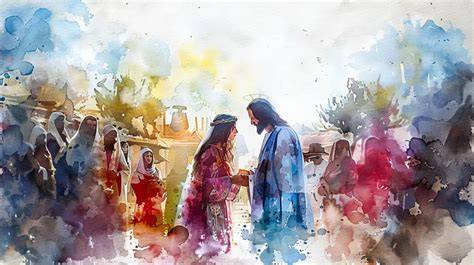
Her story shows the meeting of human suffering, persistent faith, and the compassionate authority of Jesus. She came to Him carrying twelve years of illness, shame, loss, and isolation, and she left with healing and peace.