Phat Diem Cathedral is a remarkable religious and architectural complex in Phat Diem Town, Kim Son District, Ninh Binh Province, Vietnam, about 120 kilometers south of Hanoi. Built between 1875 and 1899, it is renowned for combining Vietnamese traditional temple architecture with European Gothic influences.
Designed with curved tiled roofs, wooden doors, stone structures, Buddhist-style forms, Catholic symbols, and Vietnamese folk motifs, Phat Diem Cathedral is widely considered one of the most unique religious buildings in Vietnam. Its architecture reflects the integration of Catholicism with Vietnamese culture and the harmony between Catholics and other religious traditions in the country.
Location and General Overview
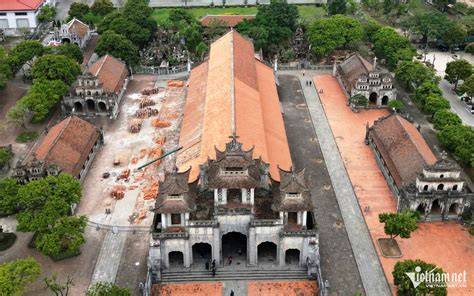
Phat Diem Stone Cathedral is located in Phat Diem Town, Kim Son District, Ninh Binh Province, with an area of 22 hectares. The complex includes several remarkable religious structures such as ponds, churches, and artificial caves constructed between 1875 and 1899.
Phat Diem Cathedral is an enormous religious edifice in Ninh Binh Province, Vietnam, and was built between 1875 and 1899. It epitomizes a perfect blend of European Gothic architecture with traditional Vietnamese design elements.
The whole complex comprises one major stone church, smaller chapels, and a bell tower, all surrounded by serene lakes and lush greenery. It is a grand architectural complex, renowned as a Catholic pilgrimage site in northern Vietnam.
The cathedral is also known as the “Stone Church” due to its unique construction using stone and wood. The cathedral complex covers an area of over 22 hectares and consists of several buildings, including the main cathedral, a bell tower, a smaller church, and a network of canals and ponds.
History of Phat Diem Cathedral
Construction in the Nineteenth Century
Phat Diem Cathedral was built from 1875 to 1899 under the control of Father Trần Lục, also called Father Sáu, an important Catholic priest in Vietnam. Father Trần Lục was the leading figure who developed the complex by combining local traditions with European influences into an architectural structure that symbolized the marriage of faith and culture.
History has recorded that Phat Diem Cathedral was connected with Catholic missionary activity in Vietnam in the nineteenth century. The construction was very detailed, requiring thousands of skilled laborers to shape and assemble stones and wood, most of which were transported from faraway places.
In 1865, Father Peter Tran Luc, the founder and first priest of Phat Diem parish, began the construction of Phat Diem Stone Cathedral. He conducted site surveys and gathered building materials, mainly stone and limewood, from various regions such as Nghe An, Thanh Hoa, and Son Tay Province.
The stone was transported from Heaven Mountain, located 30 kilometers away from Phat Diem Town, while other precious stones were brought from Nhoi Mountain near Thanh Hoa Province. Much of the cathedral was made of stone and ironwood, transported and crafted wholly by hand, providing a testimony to human dedication and creativity.
Building on Marshy Land
Since Phat Diem was situated on marshy land, it needed dykes and man-made canals for protection. With limited resources and considerable logistical difficulties, the project was finally completed after 24 years of hard work.
The complex was constructed over a period of 24 years in the late nineteenth century. The entire project required careful planning, the transportation of heavy materials, and the work of skilled local craftsmen.
Completion of the Complex
In 1891, under the leadership of Father Joseph Trinh Tan, the main cathedral of the Phat Diem complex was completed after 26 years of construction. This was a significant milestone, marking the completion of the grand project with its unique architecture combining Gothic style and traditional Vietnamese elements.
The main church was inaugurated in 1891 under the title of Our Lady of the Rosary, becoming a major pilgrimage site in Ninh Binh.
In 1899, the entire Phat Diem Cathedral complex, including the main cathedral, five smaller churches, the bell tower, ponds, and artificial caves, was officially completed under Father John Dinh Ngoc Hoi’s supervision. After 34 years of construction, this project became one of the most prominent and influential religious structures in Vietnam.
Phuong Dinh, also known as the bell tower, was completed in 1899, marking the final structure in the stone complex of Phat Diem.
Father Trần Lục
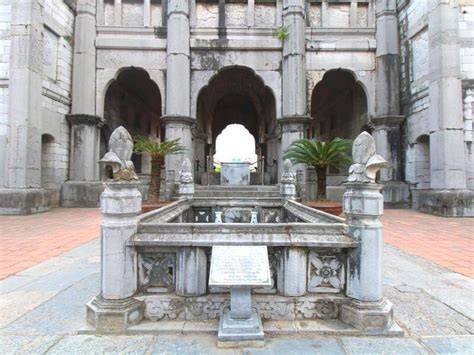
The cathedral was built, with considerable ingenuity, by Father Tran Luc, “Pere Six” (1825-1899), whose grave is found in the forecourt of the cathedral.
Father Trần Lục was extremely influential and was awarded many honours for his achievements, both civil and ecclesiastical. He remains the central historical figure associated with the creation and development of Phat Diem Cathedral.
War, Restoration, and Heritage Recognition
Phat Diem Cathedral has witnessed major events of war and colonial rule throughout history. Although partial damage occurred during some conflicts in the middle of the twentieth century, restoration was carried out to preserve its architectural and cultural importance.
In 1988, Phat Diem Cathedral was recognized as a national historical and cultural monument, acknowledging the historical and religious significance of the structure. This recognition followed decades of dedication and stewardship by successive priests, who maintained and preserved the cathedral’s rich heritage.
Today, Phat Diem Cathedral remains one of the most popular religious tourism destinations, attracting Catholic followers as well as visitors from Vietnam and abroad. Its harmonious blend of architecture, art, and nature continues to express the vision and work of the priests and local Catholics who shaped its history.
Architectural Character
A Synthesis of East and West
Phat Diem Cathedral is inspired by the Vietnamese traditional style blended with European Gothic architecture. Its buildings were constructed in the style of traditional Vietnamese temple architecture, with long curved tiled roofs, wooden doors, and wooden poles.
The cathedral is designed in the form of a traditional Vietnamese temple, with curved roofs and ornate carvings. At the same time, the stone and masonry construction techniques used in the building are reminiscent of European Gothic architecture.
Its roofs are not shaped like the high towers found in more typical Catholic churches, but are low and curved like those of Buddhist pagodas. The only feature that clearly distinguishes one of the buildings as Christian is the cross mounted atop the edifice.
One building evokes the image of a traditional Vietnamese communal house with upturned tiled roofs. The roofs of the buildings take the form of Vietnamese pagodas, while the heavy carvings in stone and wood demonstrate the skill of local craftsmen.
From time to time over the years I have spoken of good models of inculturation. Such models present themselves, not as incompatible compromises, but instead as truly harmonious approaches that adopt local or national cultural and artistic customs to authentically Catholic purposes.
Phat Diem was built in 1892, and while the author Graham Greene described it as “more Buddhist than Christian,” it appears as an appropriate and beautiful mixture of local styles within an otherwise thoroughly Catholic context.
Traditional Vietnamese Forms
The whole complex reflects the integration of Catholicism with the nation’s traditional architecture and culture, as well as the harmony between Catholics and other religions in Vietnam.
The buildings feature reliefs composed in the style of Vietnamese folk art, with familiar apricot blossoms, chrysanthemums, bamboo leaves, and traditional fictional creatures such as dragons, unicorns, tortoises, and phoenixes.
In the courtyards, there are also structures in the form of lotuses, a characteristic feature of Buddhist architecture. These motifs connect the Catholic complex with Vietnamese artistic traditions and religious symbolism.
The cathedral is adorned with intricate carvings featuring crosses, saints, and decorative motifs, showcasing the profound influence of the Catholic faith while retaining a strong Vietnamese visual identity.
Roman Basilica and Catholic Elements
The interior has a recognizable Romanesque-like arrangement, with a central nave and side aisles separated by columns, ultimately terminating in a raised sanctuary separated from the nave by an altar rail.
While the particulars may be distinctly oriental in many regards, the basic architectural structure is rooted in the Roman basilica. The interior includes a historic high altar with its tabernacle and six high altar candlesticks.
The cathedral’s interior is equally impressive, with a striking altar, colorful murals, and intricate wooden carvings. Large wooden columns and a high vaulted ceiling create a solemn and spacious interior.
| Architectural feature | Expression at Phat Diem |
|---|---|
| Vietnamese tradition | Curved tiled roofs, wooden structures, lotus forms, folk-art motifs, dragons, unicorns, tortoises, and phoenixes |
| European influence | Gothic elements, stone construction, arches, Catholic symbols, and basilica-like interior organization |
| Religious identity | Crosses, saints, Biblical imagery, altars, chapels, and spaces for Catholic worship |
| Natural setting | Artificial lakes, ponds, canals, greenery, grottos, and landscaped courtyards |
Main Architectural Features
The Stone Cathedral
The central part of the complex is the main cathedral, made largely of stone. Its detailed carvings of traditional Vietnamese motifs, including lotus flowers and dragons, harmoniously blend with Gothic architecture.
The Grand Cathedral is a vast religious structure located in the heart of the complex. Its interior features large wooden columns and a towering vaulted ceiling. Intricate decorations on the walls and columns, combined with the warm light from lamps, express the sacredness of the place.
The tower’s roof, with curved tiles and a cross symbol, blends Gothic and Vietnamese architectural features. The combination of stone, wood, arches, carvings, and religious imagery gives the building its distinctive character.
Phuong Dinh Bell Tower
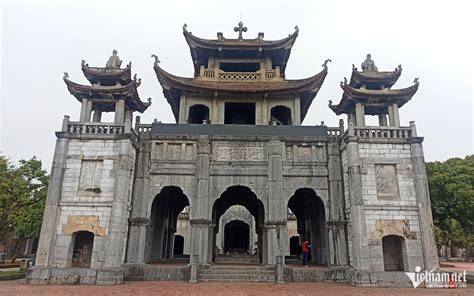
Phuong Dinh, also known as the bell tower, is one of the most distinctive architectural features of Phat Diem Stone Cathedral. The tower stands 25 meters tall, 24 meters long, and 17 meters wide, and is built from slate, with green stone used for the lower level.
The tower consists of three tiers, each with intricately crafted stone arches that demonstrate the quality of the design and workmanship. Its pagoda-style roofs and stone structure combine Vietnamese forms with Catholic and Gothic influences.
At the four corners of the tower are four statues of the Evangelists, each delicately carved and posed in ways similar to statues of saints in Vietnamese temples. These statues possess significant artistic value and reflect the strong cultural imprint of Vietnam.
The two-ton bronze bell features intricate carvings, symbolizing the fusion of Gothic architecture and Vietnamese culture.
Smaller Chapels and Auxiliary Buildings
Smaller chapels surround the main cathedral, and each has its own design and religious significance. Notable buildings include the Chapel of the Sacred Heart and the Chapel of Our Lady, which feature intricate wood carvings and peaceful interiors.
The Phat Diem Stone Cathedral complex includes four smaller chapels, each combining Western and Vietnamese architectural styles. Together, they provide sacred spaces for prayer decorated with carvings, arches, Biblical imagery, and stained-glass windows.
The Sacred Heart of Jesus Chapel
Built in 1889 and facing northeast, the Sacred Heart of Jesus Chapel has a rectangular shape and a high vaulted roof. Its exterior features intricate carvings, particularly symbols of the Cross and the heart, representing the boundless love of Jesus Christ for humanity.
Inside, stained-glass windows depict images of the Virgin Mary and Christ, creating a warm and sacred atmosphere. The columns and walls are decorated with finely crafted patterns that merge Western architectural elements with Vietnamese cultural influences.
St. Rocco Chapel
Built in 1895 and positioned to the southeast, St. Rocco Chapel has a simple yet dignified design. Its walls are decorated with lotus flower patterns, a symbol of purity in Vietnamese culture.
The stained-glass windows portray scenes of St. Rocco healing the sick and helping the poor, reflecting his role as the patron saint of the ill. The columns and walls are adorned with intricate carvings that blend Western art with Vietnamese cultural elements.
The chapel is also distinguished by curved-domed architecture associated with traditional Vietnamese forms.
St. Joseph Chapel
Built in 1896 and facing southwest, St. Joseph Chapel has a rectangular shape with a curved vaulted roof. Its architecture emphasizes fine decorative details on the columns and walls.
The carvings, especially those depicting family and labor, highlight St. Joseph’s role as the protector of families and workers. Stained-glass windows inside depict scenes from the Bible, creating a serene and sacred space for worshippers.
St. Peter Chapel
Built in 1896 and located to the northwest, St. Peter Chapel features strong architectural details. The columns and arches are carved with images of St. Peter, symbolizing steadfast faith and leadership within the Christian community.
The interior is decorated with statues and images from the Bible. Decorative elements on the columns and walls create a solemn atmosphere, reflecting the faith and strength of believers in St. Peter.
Artificial Grottos and Mountain
The Phat Diem Stone Cathedral complex includes three artificial grottos, each depicting scenes from the Bible and providing a sacred space for prayer. Built with natural stone, the grottos feature finely crafted statues and religious imagery, creating a tranquil and solemn atmosphere.
The Nativity Grotto
Built in 1875 and later renamed in 1954, the Nativity Grotto depicts the birth of Jesus and reflects the peacefulness of the Nativity scene.
The grotto is adorned with intricate carvings and statues of the Holy Family, with an architectural design emphasizing simplicity and reverence. It symbolizes the peaceful birth of Jesus.
The Lourdes Grotto
Inspired by the Grotto of Our Lady of Lourdes in France, this grotto was created to honor the Virgin Mary’s appearance to St. Bernadette. It was constructed in 1896 and renamed in 1925.
The grotto features detailed sculptures and stone carvings of the Virgin Mary, surrounded by symbolic religious imagery. Its design is both inviting and solemn, offering a place for prayer and healing.
Skull Mountain
Built in the late nineteenth century, Skull Mountain focuses on human mortality and salvation. The skull represents the death and resurrection of Christ.
The site is adorned with carved symbols of the Passion of Christ and serves as a reminder of faith, repentance, and eternal life.
Materials and Craftsmanship
The structure is largely built from stone and limewood, with materials sourced from various regions such as Nghe An, Thanh Hoa, and Son Tay Province. Much of the cathedral was transported and crafted wholly by hand.
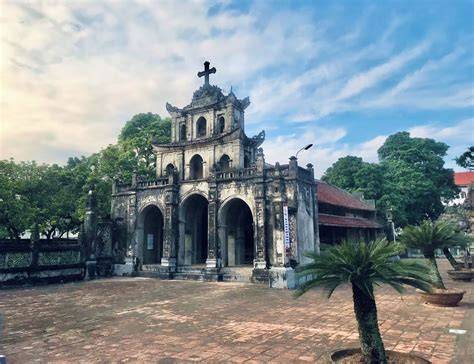
The cathedral was built entirely without the use of nails, screws, or other metal fittings. Instead, the stones were carefully carved and fitted together, creating a solid structure that has withstood the test of time.
The magnificent stone altars and wood reliefs contain religious stories and interpretations of traditional Vietnamese symbols. Their details reveal the skill of expert craftsmen and the extensive labor invested in the complex.
Stone and wood are not merely construction materials at Phat Diem; they also form the principal means through which Catholic narratives and Vietnamese artistic traditions are brought together.
Religious and Cultural Significance
A Model of Inculturation
Phat Diem Cathedral represents a form of religious inculturation in which Catholic worship is expressed through local architectural and artistic traditions. Vietnamese cultural and artistic customs are adopted for authentically Catholic purposes rather than treated as incompatible elements.
The cathedral is a true manifestation of Catholicism within Vietnam and a continuous process of effort and creativity by local Catholics. It is living evidence of the architectural connection between the Eastern and Western worlds.
The complex demonstrates how a Catholic institution can be expressed through the visual language of Vietnamese communal houses, pagodas, folk art, lotus symbolism, traditional materials, and local craftsmanship.
Harmony Between Religions and Cultures
With its harmony between Buddhism and Catholicism and its combination of Eastern and Western cultural features, Phat Diem Cathedral can be regarded as one of the most unique pieces of religious architecture in Vietnam.
The curved roofs, lotus forms, traditional creatures, wooden columns, and temple-like courtyards create visual associations with Vietnamese Buddhist and communal architecture, while crosses, altars, saints, Biblical scenes, and Catholic chapels establish the complex’s Christian identity.
This combination reflects the integration of Catholicism with Vietnam’s traditional architecture and culture, as well as the harmony between Catholics and other religions in Vietnam.
A Historical and Cultural Landmark
Phat Diem Cathedral is not only a spiritual destination for Catholics but also a cultural and historical landmark that attracts domestic and international visitors because of its distinctive beauty and rich heritage.
The cathedral has been recognized as a national heritage site. Its unique blend of European and Vietnamese architecture is a testament to Vietnam’s diverse history and culture.
The complex’s historical importance is reinforced by its connection with Catholic missionary activity, colonial rule, wartime events, local communities, successive priests, and generations of craftspeople who preserved its structures and traditions.
Visiting Phat Diem Cathedral
Best Time to Visit
The weather is favorable during the dry season, from November through April. During this period, the skies are usually clear, creating good conditions for viewing the elaborate architecture and the surrounding landscapes of Ninh Binh Province.
December is especially significant for visitors interested in cultural and religious events, because the cathedral is decorated with lights and festive ornaments for Christmas, while local Catholics attend Mass and celebrations inside.
The rainy season generally begins from May and continues until October. Heavy rain can make it less pleasant to travel around the area and view the complex’s outdoor features.
How to Get There
Phat Diem Cathedral is approximately 120 kilometers from Hanoi and can be reached by motorbike, car, taxi, bus, or train connections through Ninh Binh.
By car or taxi, the route using the Hanoi-Ninh Binh Expressway takes about 2.5 to 3 hours. Visitors traveling from Ninh Binh City can reach the cathedral by motorbike or taxi in approximately 30 to 45 minutes.
Budget travelers can take a bus from major Hanoi stations such as Giap Bat or My Dinh to central Ninh Binh City, then continue for another 30 kilometers by taxi or motorbike.
Alternatively, trains run from Hanoi to Ninh Binh Railway Station, from where visitors can continue by taxi or motorbike. Checking transport schedules in advance helps make the journey more convenient.
Visitor Etiquette
Phat Diem Cathedral is an active place of worship, so visitors should wear modest clothing that covers the shoulders and knees. Sleeveless tops and shorts are not recommended.
Visitors should keep noise levels low to respect the sacred atmosphere. Loud talking and disruptive behavior are considered disrespectful during a visit.
Photography is not allowed in certain areas, especially during Mass. Visitors should ask for permission before taking photographs inside the cathedral or of the altar.
Those planning to attend Mass should check the schedule in advance, as services are held on Sundays at 10:00 AM in English.
Nearby Attractions
Tam Coc-Bich Dong
Tam Coc-Bich Dong is located in Ninh Hai Commune, Hoa Lu District, and is often called “Ha Long Bay on land.” Visitors can take boat rides through rice fields, limestone caves, and towering karsts.
Nearby, visitors can also hike to the top of Mua Caves, a scenic viewpoint known for panoramic views over Tam Coc and the Ngo Dong River.
Trang An Scenic Landscape Complex
Trang An is situated in Hoa Lu District, Ninh Binh Province, and is a UNESCO World Heritage site known for boat tours passing through caves and ancient temples.
The picturesque landscape of limestone peaks and lush greenery makes Trang An a significant natural and cultural attraction in the region.
Hoa Lu Ancient Capital
Located in Truong Yen Commune, Hoa Lu District, Hoa Lu was the former capital of Vietnam. It contains historical temples dedicated to past emperors.
The ancient architecture and serene atmosphere allow visitors to explore the history of Vietnam’s early dynasties.
Bai Dinh Pagoda
Bai Dinh Pagoda is located in Gia Sinh Commune, Gia Vien District, Ninh Binh Province. It is famous for its grand scale, including the largest bronze Buddha statue in Southeast Asia.
The complex’s impressive architecture and tranquil surroundings offer a spiritual retreat for visitors and provide another important example of religious architecture in Ninh Binh.
Phat Diem Cathedral: The Perfect Fusion of West and East Architecture | Ninh Binh, Vietnam
Visitors to Phat Diem Cathedral can admire its intricate architecture, explore the surrounding grounds, view the artificial lakes and grottos, and study the carvings that express both Catholic themes and Vietnamese artistic traditions.