Praise and blame are ways of holding people responsible for their actions or attitudes. “They are responses, respectively, to people’s bad or good deeds, intentions, motives or attitudes toward us,” said philosopher David Shoemaker.
“If you wrong me, I’ll respond with blame, and if you do something excellent for me, I’ll respond with praise.” Although praise and blame may appear to be simple opposites, philosophical analysis shows that they have different forms, emotional effects, justifications and relationships to responsibility, desert, free will and social norms.
What praise and blame mean
Blame and praise are the ways we hold people responsible for their actions or attitudes. Blame responds to wrongdoing, failure, harmful intentions, bad motives or objectionable attitudes, while praise responds to good deeds, excellent achievements, worthy intentions, admirable motives or positive attitudes.
Blame is part of a social practice that’s quite recognizable and stable - and so is praise. Indeed, they are both part of a single social system in which we respond to others and ourselves in various ways: We know blame and praise when we see it, even if not every instance looks the same as every other.
There are some important differences between praise and blame. Misplaced blame is felt as deeply unfair, not least because being exposed to blame is unpleasant and costly in a way that being praised is not.
We often praise inanimate objects, such as art works or buildings, and animals, such as a loyal pet, although we could not blame such entities, however deeply dissatisfied we felt with them. The focus of philosophical accounts of praise and blame, however, is upon entities that are clearly open to blame as well as praise: human beings.
Responsibility, culpability and blameworthiness
What is blame, such that only human beings can be blamed? We are all familiar with resentment, reproach and accusation regarding a person’s past actions; likewise, we all know the sense of guilt, shame or indignation they can elicit.
Philosophers differ on how far certain emotions may be central to blame. What is clear is that blame suggests both responsibility and culpability.
Here, responsibility only implies that the act can be identified with a person, such that she can reasonably be expected to respond for it in some way. That is, it does not necessarily imply fault, or culpability.
This is the idea that the person is “in the wrong,” that fault somehow attaches to them so that they deserve blame. Philosophers tend to describe this as “blameworthiness.”
What sense we should give to these ideas of culpability or desert, and what is necessary for us to think of a person as responsible, are central issues in the philosophy of praise and blame.
Praise and blame as a social system
According to David Shoemaker, praise and blame should be understood as a system rather than as isolated reactions. Philosophers have really only been interested in investigating blame, not praise, probably because only blame causes pain and so it’s the response that cries out for moral justification.
In so doing, they have simply assumed that blame and praise are perfectly symmetrical responses, differing only in terms of the badness or goodness of the agent’s deed. Nevertheless, some psychologists have been investigating blame and praise for a while now, and their findings strongly suggest that we don’t view blame and praise symmetrically, that there are significant disanalogies between the two.
They are both part of a single social system in which we respond to others and ourselves in various ways. Their forms may differ, but both practices regulate conduct, communicate evaluations and shape relationships.
The function of the system
In the biological and social sciences, when we are trying to understand some mechanism, such as the heart, instead of asking, “What is it?” we have to ask the question, “What is it for?” - to pump blood, in the case of the heart.
This is to ask a question about the thing’s function. And I think we need to make the same move regarding blame and praise.
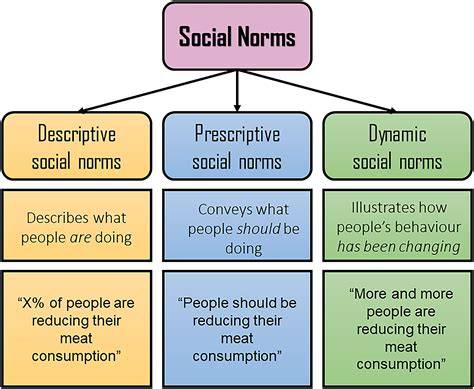
The claim Shoemaker defends is that blame and praise are ways of policing, enforcing and buttressing norms. Once we understand that that’s the function of the system, we are on the road to providing an explanation of its blame and praise practices, in all their myriad forms and expressions.
Blame can signal that a norm has been violated, while praise can signal that a norm has been successfully followed or exceeded. In this way, both responses help individuals understand what their social group considers acceptable, admirable or unacceptable.
Mockery as a form of blame
Mockery is a particularly revealing form of blame because it shows how blame can operate outside serious moral condemnation. Shoemaker argues that mockery is the key to seeing the symmetrical architecture of blame and praise, as it is the proper negative analog to complimenting types of praise.
To mock someone is to make fun of them for failing with respect to some norm - so it carries out the enforcement function of blame. Mockery therefore identifies a failure, exposes it to social attention and encourages the person not to repeat it.
Mockery is rife in our interpersonal lives, with friends and family, for example: We tease and mock each other all the time. But being laughed at for a failure is valuable in getting us to do better next time.
The great British moral philosopher Frances Hutcheson articulated this point well, noting that “men have been laughed out of faults that a sermon could not reform.”
Mockery and complimenting
Complimenting people, such as saying “Great job!”, is mockery’s positive counterpart. Complimenting someone highlights their success relative to some norm in a pleasing, enjoyable way - what Shoemaker calls the “buzz” of praise, as opposed to blame’s “sting.”
We mostly mock and compliment people for nonmoral failures and successes. If you miss an easy basketball shot, or your souffle turned out terribly, you may be the target of a close friend’s mockery, for those athletic or culinary failures.
This fact suggests that we tend to respond to moral failures and successes with different kinds of blame and praise. We don’t mock people who murder, after all.
Our blaming responses to moral failures are, instead, a kind of anger, and our praising responses to moral goodness are a kind of gratitude.
When mockery is effective
Mockery is not necessarily a bad thing in and of itself. If we take it to be a form of blame, its positive value is clear: It can be an incredibly effective way to get people to change their ways, to stick to the norms.
To succeed, though, it has to be on target - making fun of someone for an actual failure of theirs - and it needs to be funny. This can be hard to pull off, but it’s worth it.
When it’s funny, mockery both stings and salves. Being laughed at is never particularly fun, but if the zinger is funny, the target ought to be able to laugh along with the laughers.
The enjoyment that amusement brings can soothe blame’s sting, while reminding the target not to screw up again next time.
The philosophical problem of justification
Praise and blame are philosophically interesting partly because, despite appearances, they are not simple opposites, but mainly because there are significant disagreements about whether, and when, they can be justified.
The issue of justification connects praise and blame with some of philosophy’s most central concerns: justice, desert and free will.
Disagreements about the justification of praise and blame tend to take two forms. In one, the disagreement is about whether praise and blame can be justified without being deserved.
Utilitarians argue that the rightness of praise and blame does not depend on desert, but on their contributing to the level of happiness. They are opposed by those who believe that justice is of overriding value.
In its second form, the disagreement is about the essential requirements for deserving praise and blame. Among the conditions which have been proposed as essential are voluntariness, outlined originally by Aristotle, acting from the motive of duty, for praiseworthiness, and, usually in connection with blameworthiness, being free in a sense which is incompatible with determinism.
Determinism is the thesis that every event has a necessitating cause. Kant, who argued for both acting from the motive of duty and freedom incompatible with determinism, is a key figure in this debate.
Three philosophical approaches
Three influential philosophical accounts of everyday practices of praise and blame are broadly Kantian, utilitarian and roughly Aristotelian. They differ in how they understand responsibility and how they justify responses to conduct.
A broadly Kantian approach sees responsibility for actions as relying on forms of self-control that point back to the idea of free will. On this account praise and blame are justified because a person freely chooses her actions.
Praise and blame respond to the person as the chooser of her deed; they recognize her dignity as a rational agent, as Kantians tend to put it.
The utilitarian approach justifies praise and blame in terms of their social benefits. The Aristotelian approach situates practices of praise and blame in terms of our ongoing relationships with one another.
The Aristotelian account stresses the importance of mutual accountability, moral education, and assessments of character in terms of the many vices and virtues.
The problem of free will
The free will debate has become an old chestnut of modern philosophy. It is an intuitively plausible way of approaching the issues - familiar to many even before they encounter philosophical texts.
The basic idea is this: if I am to be responsible, really responsible, for my conduct, then it must be within my control. However, if it is true that every event in the universe is determined by causal laws, then this must be true of the events that constitute my actions.
Therefore, my conduct cannot really be within my control; therefore, I am not really responsible for my conduct.
Two conclusions immediately suggest themselves. One is that it is incoherent to praise or blame me - and everyone else - for our actions, because it is so difficult to doubt the causal well-orderedness of the universe.
The alternative conclusion, scarcely more appealing, is that the human will somehow sits outside this causal framework - that we have free will - because it is unthinkable that our moral ideas be so desperately incoherent.
Both lines of thought are incompatibilist; that is, they see the ideas of responsibility involved in praise and blame as incompatible with the causal well-orderedness of the universe.
But while both attract some limited support among philosophers, the overwhelming consensus now lies with compatibilism. This is simply the thesis that responsibility and causal order are compatible.
Most philosophers agree that the alleged incompatibility results from some important confusions, although there is much less consensus about what these may be. At least one area of confusion is clear, however, and forms the central issue of the debate: what sort of responsibility for conduct is involved in praise and blame?
Determinism and chance
The free will debate does not turn on the truth of determinism as such. Determinism is the idea that every event is determined by fixed causal laws.
Yet it may well be that every event is somehow random in origin. One interpretation of quantum physics claims that causal laws are the product of statistical regularities, while these regularities stem from a near infinite number of random events.
So far as the human will is concerned, this makes no difference. If my conduct is the product of chance, this makes me no more responsible for it than does its being generated by causal laws.
The point is that if I am to be blamed or praised, then I must control my conduct - not causal laws, nor mere chance, nor some particular combination of the two.
Responsibility and moral judgment
The free will debate bears a disquieting similarity to an older controversy. In medieval philosophy it used to be asked how God’s omniscience - his knowledge of everything that has happened and will happen - could be reconciled with our being subject to his moral judgment.
If God knows what we will do then this seems to imply that it is already decided whether we will act well or badly. And this, in turn, suggests that it makes no sense to punish or reward us.
Theologians developed various doctrines to overcome this difficulty, but few sound convincing to modern ears. However that may be, it is interesting that many modern versions of the debate seem to take at least one of the planks of Christian theology for granted: that individuals have wills that can be bad or good, usually now expressed in the terms of people’s “blameworthiness” or, less often, “praiseworthiness.”
In this way, the modern American philosopher Joel Feinberg ironically referred to “a moral bank account” that we carry through life, which sums up our moral credits and debits in a single sum.
Whether or not such an “account” makes sense, it is at least clear that the idea of “the will” is by no means self-explanatory.
For Kant, it was obvious that all my choices can be summed up in a single moral evaluation, whether I have a “good” or “bad” will. Kant is equivocal, however, as to whether only God might make this evaluation, or whether human beings might also form reasonable opinions on the matter.
But especially if we take the point of view of mutual, human accountability, it is not obvious why we should believe any such single evaluation to be possible, or what role this evaluation might play in our individual or collective lives.
Certainly, we usually praise and blame in terms of particular actions and particular vices and virtues - not a good or bad will.
Human beings, children and animals
The free will framework creates a problematic gulf between normal moral agents, adult human beings of sound mind, and other creatures, including animals and children.
At some stage of evolution, and at some stage toward maturity, certain animals become “free,” when before they had all been determined in their conduct. Although it is grossly implausible that there are no relevant moral differences between the other animals, children and human adults, it is no more plausible that free will simply pops into existence at a certain stage of human development.
Nonetheless, we tend to think there is something sufficiently distinctive about human action, so that many non-religious people find the idea of free will plausible, and almost everyone assumes that blame, if not praise, only makes sense with regard to mature human beings.
Taking these points together generates a further issue. If the idea of the will is complex, and there is no straightforward moral dividing line between children and adults, between humans and other animals, these ideas suggest that a “will” is not something we all straightforwardly “have.”
It is implausible that all adult humans have the same capacities, all to the same extent, that are involved in controlling action.
One way of retaining the idea of the will might be to think of it as the bundle of capacities that are needed to control action in the light of moral concerns, these capacities being set only at such a level that all adult human beings of sound mind really seem to possess them.
But two points need to be kept in mind about such a strategy. First, it remains the case that people will vary in how far they possess such capacities, and this variation will largely be a product of upbringing and natural qualities - that is, not something within an individual’s own control.
Second, the sort of ultimate control over one’s moral character supposed in Kant’s or similar “free will” accounts is unlikely to be vindicated in this way.
The utilitarian account
The utilitarian case is straightforward. Blame and praise encourage us to perform socially valuable actions and to avoid socially costly actions.
If we know we will be blamed for greed or cruelty, for example, then we have powerful motives to avoid these.
Praise and blame also involve us in making assessments of people’s strengths and weaknesses, which is important when it comes to deciding who should be entrusted with which tasks and responsibilities.
The stingy person might make a good banker, but a bad organizer of social occasions.
This approach captures important truths: we want to encourage and discourage different sorts of activity, and we need to have a sense of what different people are good at.
Freedom without metaphysical free will
The utilitarian account also makes sense of why we don’t blame some actions, even if they had bad outcomes. If the bad outcome was not chosen by the person, for example, if she was forced to act that way by someone else, then there is nothing to be gained from blaming them.
It is much better to blame the person who forced her. Thus the utilitarian can accommodate the important fact that praise and blame relate to free action.
This need not be thought of in terms of metaphysical “free will,” but instead the compatibilist freedom involved in choosing one’s actions independently of others’ interference.
The problem of desert
The utilitarian account faces a simple objection: does it really provide for responsibility, still more culpability?
For example, if we know that someone does not respond well to criticism, it seems that the utilitarian case for blame is undermined. We would do much better to flatter and cajole them into acting differently.
Of course, the utilitarian might reply that this is often what we in fact do with such people. Further, he might add that we do still blame such people when we discuss their characters behind their backs, perhaps describing them as self-righteous or stubborn.
What seems to be missing in this response, however, is the idea that the person deserves blame.
They seem to deserve criticism in just the same way that a faulty machine or a cracked mug deserve criticism: it’s useful that everyone knows they’re faulty, but they can hardly be described as blameworthy.
Especially when we move from blame to the question of sanctions or punishment, this lack of desert seems to present a real problem for the utilitarian account.
The Aristotelian account
A more complex account was given by Aristotle, who shares the utilitarian’s sense that praise and blame have important social consequences, but also offers an extended account of how they relate to the capacities needed for moral action.
The Aristotelian approach situates practices of praise and blame in terms of our ongoing relationships with one another. It stresses the importance of mutual accountability, moral education and assessments of character in terms of the many vices and virtues.
On this approach, praise and blame are not merely tools for producing useful consequences. They are part of the way people form, assess and respond to character within a shared moral life.
This approach is roughly Aristotelian rather than a precise reconstruction of every detail of Aristotle’s philosophy. It aims to capture the ways in which ordinary practices of responsibility are connected with relationships, habits, character and moral development.
The Kantian account and moral worth
A broadly Kantian approach sees responsibility for actions as relying on forms of self-control that point back to the idea of free will.
On this account praise and blame are justified because a person freely chooses her actions. Praise and blame respond to the person as the chooser of her deed; they recognize her dignity as a rational agent, as Kantians tend to put it.
Among the conditions proposed as essential for deserving praise and blame are voluntariness, acting from the motive of duty, and being free in a sense incompatible with determinism.
Kant argued for both of the last two requirements. His account is therefore closely connected with the idea that moral worth depends not merely on what a person does, but also on the motive from which the action is performed.
One modern commentator claimed that, in our attitudes to moral responsibility, “we are all Kantians now” - by “we” meaning not just philosophers but all Western persons.
Bernard Williams agrees that Kant captured a widespread tendency of modern moral thinking, but also claims that there exist important counter-tendencies in our actual practices of responsibility.
For Williams, ancient Greek understandings are actually more realistic and helpful than the Kantian one. So far as our modern praising and blaming actually make sense, he claims, they are better captured by a roughly Aristotelian account.
Why blame receives greater attention
There are some important differences between praise and blame that are not central to every philosophical account. In many discussions, blame receives the greatest attention.
This is partly because praise seems less problematic. Misplaced blame is felt as deeply unfair, not least because being exposed to blame is unpleasant and costly in a way that being praised is not.
It is principally because blame has a closer connection than praise to matters of intense philosophical interest, including freedom, responsibility and desert.
Blame can involve resentment, reproach, accusation, anger, guilt, shame and indignation. Praise can involve gratitude, approval, admiration, pleasure and encouragement.
These differences mean that praise and blame cannot simply be treated as identical practices operating in opposite directions. They belong to a common system, but their emotional and moral structures are not perfectly symmetrical.
Everyday uses of praise and blame
Blame and praise occur in moral judgments, personal relationships, education, professional assessment and ordinary social interaction.
We praise people for achievements, generosity, courage, reliability or kindness. We blame people for cruelty, dishonesty, negligence, betrayal or deliberate harm.
We may also praise or blame nonmoral conduct. Missing an easy basketball shot can invite mockery, while making an excellent play can invite a compliment. A poorly prepared souffle may attract teasing, while a successful one may receive praise.
These examples show that praise and blame can enforce both moral and nonmoral norms. The response appropriate to a technical or practical failure may be mockery, while moral wrongdoing calls for anger, reproach or condemnation.
Private and public responses
Praise and blame can be directed toward a person, expressed privately between individuals or communicated publicly to a wider group.
They can also affect how others assess a person’s strengths and weaknesses. This is important when it comes to deciding who should be entrusted with which tasks and responsibilities.
In this way, praise and blame help coordinate social expectations. They indicate not only how a particular act is evaluated, but also what kind of conduct may be expected from a person in the future.
Emotional effects
Blame’s “sting” and praise’s “buzz” describe two different affective experiences. Praise can be pleasing and enjoyable, while blame can be painful, embarrassing or costly.
Mockery occupies an intermediate position. Being laughed at is never particularly fun, but humor can make criticism easier to accept.
When mockery is accurate and funny, the target may be able to laugh along with the laughers. The amusement can soothe blame’s sting while preserving the reminder that the failure should not be repeated.
Moral blame generally has a more serious emotional structure. We don’t mock people who murder; our blaming responses to moral failures are instead a kind of anger.
Moral praise also differs from ordinary complimenting. Our praising responses to moral goodness are a kind of gratitude, connecting approval with the good that another person has done for us or for others.
Philosophy Bros Podcast | Episode 69: The Ethics of Free Will & Praise and Blame
Praise, blame and moral education
The claim that praise and blame police, enforce and buttress norms explains their role in moral education.
People learn what is expected of them not only through explicit rules, but also through the reactions of others. Praise can reinforce conduct that a community considers valuable, while blame can discourage conduct that violates shared standards.
The Aristotelian account emphasizes moral education as part of ongoing relationships. People develop habits and character through repeated actions, responses and assessments.
The utilitarian account emphasizes the consequences of these practices. Praise and blame encourage socially valuable actions and discourage socially costly actions.
The Kantian account emphasizes the person as a rational chooser. Praise and blame recognize the dignity of the agent who freely chooses her deed.
Each approach therefore captures an important part of ordinary moral experience: social consequences, interpersonal relationships, moral development, rational agency and the question of desert.
Comparison of the main approaches
| Approach | Basis of praise and blame | Main emphasis |
|---|---|---|
| Utilitarian | Social consequences | Encouraging socially valuable actions and discouraging socially costly actions |
| Aristotelian | Ongoing relationships and character | Mutual accountability, moral education, virtues and vices |
| Kantian | Free choice and rational agency | Dignity, self-control, moral worth and responsibility |
The relationship between action, motive and character
Philosophical theories of praise and blame differ over what exactly should be evaluated. The focus may be the action itself, the intention behind it, the motive from which it was performed, the consequences it produced or the character revealed by the action.
Utilitarianism gives priority to consequences and social benefits. The Aristotelian approach assesses character in terms of the many vices and virtues. The Kantian approach gives special importance to free choice and acting from the motive of duty.
In ordinary life, however, people often consider several aspects at once. We may praise an action because it helped someone, because it was voluntarily performed, because it expressed a good motive or because it revealed a stable virtue.
Likewise, blame may concern the harm caused, the intention behind the conduct, the degree of control the person had or the vice expressed in the action.
This complexity helps explain why praise and blame are not simple opposites. They are varied responses directed at different aspects of conduct and character.
Desert and justice
The idea of desert asks whether a person deserves praise or blame independently of the effects that such responses might produce.
Utilitarians argue that the rightness of praise and blame does not depend on desert, but on their contributing to the level of happiness.
Those who believe that justice is of overriding value argue that a person should be praised or blamed only when the response is deserved. On this view, a useful response may still be unjust if it is directed at someone who is not genuinely blameworthy.
The distinction becomes particularly important when praise or blame leads to sanctions or punishment. The lack of desert seems to present a real problem for the utilitarian account when blame is used instrumentally against a person who does not deserve it.
The comparison with a faulty machine or a cracked mug makes this concern clear: it may be useful that everyone knows they are faulty, but they can hardly be described as blameworthy.
Why praise and blame are not perfectly symmetrical
Praise and blame are often described as opposite responses to good and bad conduct. Yet psychological findings strongly suggest that people do not view praise and blame symmetrically.
Blame tends to be more closely associated with pain, anger, resentment, reproach, accusation, guilt and punishment. Praise tends to be associated with pleasure, gratitude, admiration, encouragement and recognition.
They also differ in their objects. We often praise inanimate objects and animals, but we do not blame such entities in the full moral sense.
They differ in their social risks as well. Being blamed can damage a person’s reputation, relationships and opportunities, whereas praise is generally less harmful when misplaced.
Even when they perform similar normative functions, therefore, praise and blame may require different standards of justification and may be appropriate under different conditions.
The architecture of praise and blame
In “The Architecture of Blame and Praise,” Shoemaker examines the complicated nature of both modes of response, teasing out their many varieties while defending a general symmetry between them.
Drawing from psychology and experimental economics, the book considers mockery as a form of blame and builds a comprehensive system for the praise and blame people encounter every day.
The idea of an architecture suggests that praise and blame are structured practices rather than random emotional reactions. Their forms vary, but they share an underlying role in regulating conduct and responding to perceived success or failure.
Mockery and complimenting reveal the structure especially clearly in nonmoral cases. Anger and gratitude reveal different forms of the same system in moral cases.
This framework allows praise and blame to be analyzed together without denying their important differences.
Artistic use of the phrase “Praise and Blame”
The phrase “Praise and Blame” is also the title of an album by Tom Jones, released on 26/07/2010 by Universal Island Records.
Tom Jones teams up with producer Ethan Johns to release a remarkable new album. Entitled ‘Praise and Blame’, the album is an intriguing collection of songs drawn from the American spiritual repertoire.
Tracks include interpretations of works by Susan Werner, Bob Dylan and John Lee Hooker, alongside takes on traditional songs previously rendered by the likes of The Staple Singers, Mahalia Jackson and Sister Rosetta Tharpe.
Tom and producer/player Ethan Johns lead a small, crack band through tracks that were recorded wholly live in singular performances at Real World Studios in Bath.
‘Praise and Blame’ is an evocative collection of songs, with Tom going back to his roots on stripped down interpretations of gospel, blues, traditional and country songs, wearing his heart on his sleeve, emotionally raw and true.