Recent Catholic saints come from different countries, centuries, vocations and social backgrounds, reminding the Church that holiness is possible for everyone. Among them are teenagers, missionaries, physicians, founders of religious communities, educators, lay leaders and martyrs.
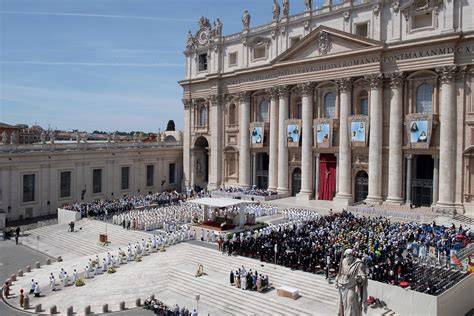
In 2025, Pope Leo XIV canonized Carlo Acutis, Pier Giorgio Frassati, Maria Troncatti, Luigia Poloni, José Gregorio Hernández Cisneros, Bartolo Longo, Peter To Rot and Ignatius Choukrallah Maloyan. On October 19, 2025, seven new saints were canonized in Saint Peter’s Square: Ignatius Maloyan, Peter To Rot, Vincenza Maria Poloni, María Carmen Rendiles Martínez, Maria Troncatti, José Gregorio Hernández Cisneros and Bartolo Longo.
What makes recent Catholic saints significant?
Saints have inspired, evangelized and loved Christ’s people since the beginning, and their lives continue to offer guidance to the Church. These recent saints are not merely historical figures; they are role models whose faith, courage, generosity and service speak to the circumstances of the modern world.
Some were missionaries. Some were doctors. Some were young adults. Some were martyrs. All of them responded to God’s call with courage, generosity and faith.
The canonization of new saints also demonstrates the universality of the Catholic Church. The newly canonized saints represent different regions of the world, including Italy, Venezuela, Papua New Guinea and West Asia.
Carlo Acutis: the first millennial saint
Carlo Acutis (3 May 1991-12 October 2006) was an English-born Italian Catholic teenager known for his devotion to the Eucharist and his use of digital media to promote Catholic devotion. He was canonized on 7 September 2025 in Saint Peter’s Square by Pope Leo XIV.
Carlo was born in London and raised in Milan. He developed an early interest in computers and video games, teaching himself programming and web design and assisting his parish and school with digital projects.
Acutis created a website dedicated to cataloguing each reported Eucharistic miracle in the world and maintaining a list of the Marian apparitions recognised by the Catholic Church. He launched the website in 2004 and worked on it for two and a half years, involving his entire family in the project.
Because of his digital work and his ability to communicate Catholic devotion through technology, Carlo has been referred to as the “patron saint of the Internet” and “God’s influencer.” Depictions of Acutis often show him with a laptop computer, as a symbol of his method of evangelization.
Carlo attended daily Mass, prayed the Rosary and called the Eucharist his “highway to heaven.” He was also a frequent communicant, attended Eucharistic Adoration and became a catechist in his parish when he was twelve years old.
His faith also expressed itself through personal relationships. He defended bullied classmates, helped the poor and helped inspire several people to convert to Catholicism. A Hindu immigrant employed by the Acutis family became his friend and later asked to be baptised after speaking with Carlo about Christianity.
Carlo loved video games but limited himself to one hour a week so he could focus on prayer, Mass and serving others. He showed a particular interest in the lives of Saint Francis of Assisi, Saint Anthony of Padua, Padre Pio, Francisco and Jacinta Marto, Saint Dominic Savio, Saint Tarcisius, Saint Bernadette Soubirous and Saint Mary Magdalene de’ Pazzi.
In October 2006, Acutis was diagnosed with acute promyelocytic leukaemia. He died on 12 October 2006 at the age of fifteen.
During his final illness, he offered his suffering for Pope Benedict XVI and the Catholic Church, saying: “I offer to the Lord the sufferings that I will have to undergo for the Pope and for the Church.” When doctors asked him whether he was in great pain, he replied: “There are people who suffer much more than me.”
Carlo’s final words to his mother were: “Mom, don't be afraid. Since Jesus became a man, death has become the passage towards life, and we don't need to flee it. Let us prepare ourselves to experience something extraordinary in the eternal life.”
Carlo was beatified on 10 October 2020 after the Church recognised a miracle attributed to his intercession. A second miracle in Italy was attributed to him in 2024, making him eligible for canonisation.
Carlo’s relics are venerated in Assisi. His exhibitions on Eucharistic miracles have travelled worldwide, and the travelling exhibition has been presented in more than 10,000 places, including churches, youth clubs and welcome centres.
| Detail | Information |
|---|---|
| Born | 3 May 1991, London, England |
| Died | 12 October 2006, Monza, Italy |
| Cause of death | Leukaemia |
| Beatified | 10 October 2020 |
| Canonized | 7 September 2025 |
| Feast | 12 October |
| Attributes | Laptop, monstrance, red polo shirt |
Pier Giorgio Frassati: joyful service and love for the poor
Pier Giorgio Frassati (1901-1925) lived in Italy in the early twentieth century. He was a college student, mountain climber and a man of strong faith.
Pier Giorgio opposed the Fascist regime in Italy, advocated for the poor and emphasized the Church’s teachings on dignity and justice. Despite coming from a wealthy family, he chose a life of simplicity and sacrifice.
He regularly gave away money, food and clothing to those in need, often without telling anyone. He lived a life of deep prayer and had a heart for the poor.
Frassati called the Eucharist and service to the poor his “double life,” both essential to who he was. He was also known as a practical joker and a friend to everyone he met.
Some of his pranks included switching up signs in his town and bringing a donkey to his family dinner. Pier Giorgio once brought a donkey to a formal family dinner as a prank.
He died at the age of twenty-four after contracting polio, likely while serving the sick. Thousands of people attended his funeral, consisting mostly of the poor whom Frassati had secretly helped throughout his life.
Pier Giorgio Frassati was canonized in 2025. He is often called the patron saint of young adults because his life joined deep prayer, friendship, physical activity, sacrifice and practical charity.
His canonization is especially meaningful for teenagers and young adults because it shows that holiness is possible in ordinary modern life, including student life, friendship, work for justice and care for people in poverty.
Maria Troncatti: missionary nurse and peacemaker
Maria Troncatti was a Salesian sister, nurse and missionary who devoted her life to serving indigenous communities in Ecuador.
She provided medical and pastoral care to indigenous populations in South America beginning in the 1920s. She worked as a nurse, teacher, peacemaker and evangelist.
Maria often risked her own safety to mediate conflicts between tribes and local authorities. She was known to foster peace among warring tribes, often stepping into dangerous situations to mediate conflicts.
She sometimes performed emergency surgeries in remote mission territories where doctors were unavailable. She also acted as a dentist, surgeon and teacher.
Her compassion and courage earned her the respect of everyone she encountered. Maria Troncatti was canonized in 2025.
Luigia Poloni: mercy in ordinary acts of charity
Luigia Poloni co-founded the Sisters of Mercy of Verona during the nineteenth century. She dedicated her life to caring for the poor, the sick and abandoned children in Italy.
She spent her life caring for the sick, establishing hospitals and establishing community among the marginalized of Verona. The community she co-founded was devoted to serving those most in need.
Her life reminds us that extraordinary holiness is often lived through ordinary acts of charity. Luigia was known for giving affectionate nicknames to the sisters and coworkers she worked alongside.
Luigia Poloni was canonized in 2025.
José Gregorio Hernández: the doctor of the poor
José Gregorio Hernández is one of the most beloved Catholic figures in Venezuela. Known as “the doctor of the poor,” he was a physician, scientist and devout Catholic.
He spent much of his life providing medical care to people who could not afford treatment. His reputation for kindness and holiness spread throughout Latin America long before his canonization process began.
Many Venezuelans have long referred to him simply as “Doctor José Gregorio” and seek his intercession for healing. He was canonized in 2025.
Bartolo Longo: conversion and devotion to the Rosary
Bartolo Longo’s story is one of the most dramatic conversions in Church history. After drifting away from the faith and becoming involved in anti-Catholic movements, he experienced a profound conversion.
He dedicated the rest of his life to spreading devotion to the Rosary. He founded the Shrine of Our Lady of Pompeii, which remains one of the most visited Marian pilgrimage sites in the world.
Bartolo is often called the “Apostle of the Rosary.” His life illustrates how conversion can redirect a person’s abilities and energy toward evangelization and service.
Bartolo Longo was canonized in 2025.
Peter To Rot: husband, father and martyr
Peter To Rot was a husband, father and catechist from Papua New Guinea who was martyred during World War II.
When missionaries were imprisoned during the Japanese occupation, Peter stepped forward to lead and support local Catholics. He continued teaching the faith despite threats and eventually gave his life for Christ.
Peter To Rot is the first canonized saint from Papua New Guinea and the first canonized saint from the Pacific Island nation.
His life is significant because it shows that sainthood is not limited to clergy or religious communities. Peter lived his vocation as a husband, father and lay catechist while remaining faithful under persecution.
Ignatius Choukrallah Maloyan: Armenian bishop and martyr
Ignatius Choukrallah Maloyan was an Armenian Catholic bishop and martyr who refused to renounce his faith during the Armenian genocide.
Despite intense persecution, he remained faithful to Christ and his people until his death in 1915. His witness continues to inspire Christians around the world.
Before becoming a bishop, Ignatius Maloyan was known for his gift for languages and could communicate with people from several different cultural backgrounds throughout the Ottoman Empire.
Ignatius Maloyan was canonized in 2025.
Canonization in 2025 and the Jubilee Year
On October 19, 2025, Pope Leo XIV presided over the Eucharistic celebration with the rite of canonization of seven new saints in Saint Peter’s Square.
Ignatius Maloyan, Peter To Rot, Vincenza Maria Poloni, María Carmen Rendiles Martínez, Maria Troncatti, José Gregorio Hernández Cisneros and Bartolo Longo were elevated to sainthood in a ceremony that highlighted the universality of the Church.
Among the newly canonized, three hail from Italy; two from Venezuela, deeply venerated throughout Latin America; and two from Oceania and West Asia, respectively.
The selection of an international group was intended to ensure that the new saints represent the universal Church’s holiness by coming from various regions around the world.
The consistory in which these canonizations were officially confirmed was held by Pope Leo on June 13. It had originally been convened by Pope Francis at the end of February, while he was still hospitalized.
For both the diversity of the saints’ origins and the bridging of two pontificates, the ceremony carries profound symbolic weight for the Church.
When the Jubilee Year program was being established, the idea of a Day of Holiness was already considered as an event intended to include a canonization ceremony.
The number and selection of new saints depend not only on the work of the congregation but, above all, on divine providence, because they are figures who have matured for a particular moment in time.
How canonization reflects Catholic teaching
The privilege of canonization belongs solely to the Pope. While the rite is typically celebrated in the Vatican, it may also occur during apostolic journeys, yet always under papal authority.
The Pope handles canonizations closely tied to his teaching infallibility. The formula used shows that he performs this act based on the authority of Saints Peter and Paul, by virtue of apostolic authority.
The historical connection between canonization and Rome is linked to the tombs of Peter and Paul. In the Middle Ages, pilgrims came to Rome because of the tombs of Peter and Paul, where they hoped to gain the keys to heaven.
During that time, many prelates, as well as kings and nobles, wished to come to Rome and be buried near Peter’s tomb, believing he held the power of the keys to open paradise.
Other recent Catholic saints canonized in 2024
Several important Catholic figures were canonized in 2024. Their lives include missionary work, spiritual education, service to clergy and martyrdom during periods of persecution.
Giuseppe Allamano
Giuseppe Allamano is the patron saint of the Consolata Missionaries and the Consolata Missionary Sisters, both of which he founded.
These orders are dedicated to serving in remote areas around the world and provide spiritual guidance, essential healthcare and educational services.
His confessor and spiritual director was Saint John Bosco, founder of the Salesians. Giuseppe Allamano’s feast day falls on February 16.
María Antonia de Paz y Figueroa
María Antonia de Paz y Figueroa, also known as “Mama Antula,” is the patron saint of the Missions in Argentina.
Born in 1730 in Argentina, she founded the “Beaterio de Belén,” a house of retreat for women. She was a major advocate of Ignatian prayer.
Her feast day is celebrated on March 7.
Marie-Léonie Paradis
Marie-Léonie Paradis was known as the queen of administration and founded the Little Sisters of the Holy Family in the mid-1800s.
The Little Sisters of the Holy Family are dedicated to supporting clergy by handling domestic duties in seminaries and rectories, allowing priests to focus more on their pastoral and spiritual roles.
Her feast day falls on May 4.
Elena Guerra
Elena Guerra influenced Pope Leo XIII to promote devotion to the Holy Spirit, leading him to dedicate the twentieth century to the Holy Spirit.
She founded the Oblates of the Holy Spirit, an order dedicated to the education and formation of young women.
Elena Guerra is remembered for her contribution to a deeper Catholic devotion to and understanding of the Holy Spirit. Her feast day is celebrated on April 11.
The Martyrs of Damascus
The Martyrs of Damascus include two distinct groups: the Massabki Brothers and Manuel Ruiz López and his companions.
Francis, Abdel Moati and Raphael Massabki were three Maronite laymen who were slain in Damascus in 1860. They were known for their steadfast faith and martyrdom during a period of intense anti-Christian violence.
Manuel Ruiz López and seven companions were Franciscan friars who were also martyred in Damascus in 1860. Their deaths demonstrated profound courage and devotion to the faith amid persecution.
Saint Manuel and his companions dedicated significant effort to translating contemporary Christian texts into Arabic, an endeavor that advanced evangelization and the Christian faith in Arabic-speaking regions.
The feast day of the Martyrs of Damascus falls on July 10.
Thérèse of Saint Augustine and her companions
Thérèse of Saint Augustine and fifteen companions are considered the first martyrs of the French Revolution.
These brave nuns maintained their faith and communal prayers despite the French Revolution’s harsh suppression of religious communities. They ultimately faced the guillotine while singing hymns of praise.
They were canonized on December 18, 2024, and their feast day is on July 17.
Saints as witnesses of hope
In a time of global tension and spiritual searching, the Church lifts up new saints as models of hope and holiness.
The new saints speak directly of hope and address individual churches, the universal Church and all of humanity. People need this message of hope, especially amid concerns in Europe and beyond, where peace and tranquility are under threat.
The lives of the new saints, both martyrs and confessors, who dedicated their energy in different parts of the world, serve as seeds of hope.
Their examples show that Christian holiness can be expressed through Eucharistic devotion, technological creativity, care for the sick, service to the poor, missionary work, spiritual education, family life, resistance to injustice and fidelity during persecution.
How recent saints represent different paths to holiness
| Path to holiness | Examples |
|---|---|
| Young people and digital evangelization | Carlo Acutis |
| Service to the poor | Pier Giorgio Frassati, José Gregorio Hernández, Luigia Poloni |
| Missionary service | Giuseppe Allamano, Maria Troncatti |
| Spiritual education | María Antonia de Paz y Figueroa, Elena Guerra |
| Support for clergy and religious communities | Marie-Léonie Paradis |
| Martyrdom | Peter To Rot, Ignatius Maloyan, the Martyrs of Damascus, Thérèse of Saint Augustine and her companions |
| Conversion and Marian devotion | Bartolo Longo |
The variety of these lives makes the recent canonizations especially significant. They demonstrate that holiness is not reserved for a single culture, age group, profession or form of religious life.
Carlo Acutis shows how technology can be used to share the Catholic faith. Pier Giorgio Frassati shows how friendship, joy, prayer and service can be united. Maria Troncatti shows the courage required for missionary work, while José Gregorio Hernández shows how professional skill can become an expression of mercy.
Peter To Rot shows the holiness of lay family life, and Ignatius Maloyan shows the strength of faith under persecution. Bartolo Longo illustrates the possibility of profound conversion, while the martyrs of Damascus and the French Revolution testify to fidelity in times of violence.
These saints challenge Christians to reflect on their own paths to holiness, ask for their intercession and respond to God’s call with renewed energy and commitment.