Saint Gregory the Great Catholic Church is a Catholic parish whose history, worship, school, and community life reflect the needs of the people it serves. Several Catholic communities bear the name Saint Gregory the Great, including parishes in Virginia Beach, New York City, and Scripps Ranch in San Diego, so their histories and services should be considered separately.
The Virginia Beach parish began as a church and school for a growing Catholic population, while the New York parish developed as an urban community with a strong tradition of education and social involvement. Saint Gregory the Great Catholic Church in Scripps Ranch offers worship, parish resources, spiritual support, and practical information for members and visitors.
Saint Gregory the Great Catholic Church in Virginia Beach
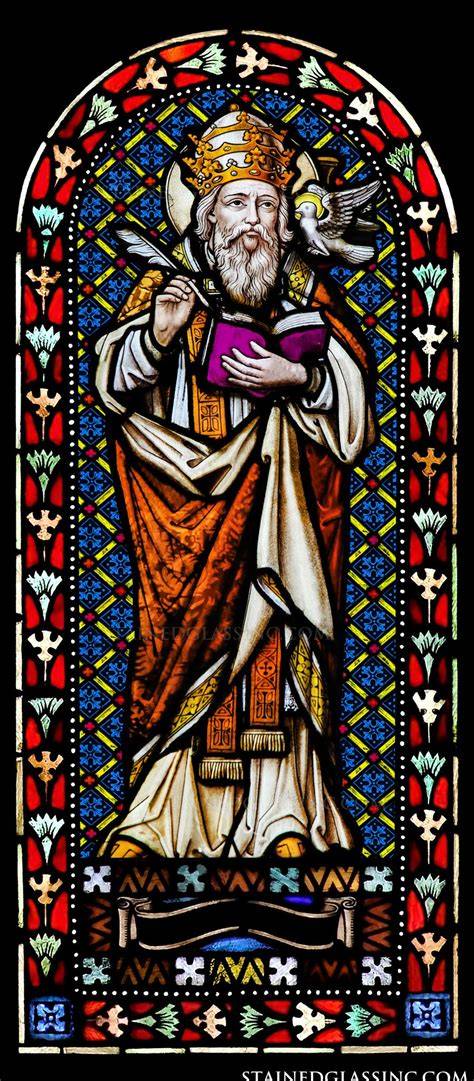
Saint Gregory the Great Catholic Church stands as one of Virginia Beach’s most active and architecturally striking parishes, welcoming both residents and visitors since its founding in 1961. Established to serve the growing Catholic community in the city’s expanding suburban landscape, the church was named in honor of Pope Gregory I, known for his leadership, scholarship, and influence on Christian worship and music.
Over the decades, the parish has become a cornerstone of faith life in the region, offering not only spiritual guidance but also education and cultural outreach. The church’s architecture blends modern design with traditional Catholic symbolism. Its tall, triangular roofline and stained-glass windows draw the eye upward, creating a sense of ascension and light.
The main sanctuary is both intimate and grand, marked by a warm interplay of wood and stone that enhances the contemplative atmosphere. Artworks depicting biblical scenes and saints add to the sense of devotion and connection to Catholic heritage.
School and community life
Beyond worship, Saint Gregory the Great serves as a vibrant community hub. The adjoining school provides education from pre-kindergarten through eighth grade, emphasizing faith-based learning and academic excellence.
Throughout the year, parish events such as seasonal festivals, choir performances, and charitable initiatives bring locals and visitors together in a spirit of service and celebration. For tourists, attending Mass or simply exploring the church grounds offers a glimpse into Virginia Beach’s diverse spiritual life.
Its welcoming environment and serene setting make it a meaningful stop for reflection amid the city’s coastal energy.
History of the Virginia Beach parish
Welcome to St. Gregory the Great Catholic Church & School. Our parish was founded in 1955. Two years earlier, the decision was made to form a new parish to the north of St. Mary Magdalen.
Eleven and a half acres of land were purchased at Dewhurst Road and Beryl Drive for the new parish. In 1954 Msgr. Michael J. Holden accepted the responsiblity to build the new parish that was to be a church and school for the growing number of Catholics in the area.
By June 1955 the temporary church and 12 classrooms were completed. Archbishop Robert E. Lucey offered a Solemn Mass and blessed the buildings on June 12, 1955. St. Gregory the Great Catholic Church began with 635 registared families.
The Catholic School opened on September 6, 1955 with an enrollment of 465 children. Construction of the present church began February 21, 1965 and was blessed and dedicated by Archbishop Lucey.
| Historical detail | Information |
|---|---|
| Parish founded | 1955 |
| Land purchased | Eleven and a half acres at Dewhurst Road and Beryl Drive |
| Temporary church completed | June 1955 |
| Classrooms completed | 12 classrooms |
| Buildings blessed | June 12, 1955 |
| Founding families | 635 registared families |
| School opened | September 6, 1955 |
| School enrollment at opening | 465 children |
| Present church construction began | February 21, 1965 |
The temporary church was renovated and today serves as a spacious library and school administration offices. The Presentation Sisters, with their Irish spirit, founded our school, led our ministries and shared their love and generosity with all.
Although some things have changed in our day, we invite you to join our parish community and live out His Love with us.
Saint Gregory the Great in New York City
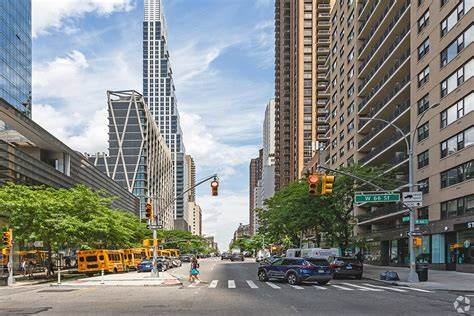
Another parish named Saint Gregory the Great developed on Manhattan’s Upper West Side. In 1906, John Cardinal Farley, Archbishop of New York, decided to create a new parish between West 86th Street and 93rd Street to serve the West Side's growing Catholic population.
A new subway, the IRT, was transforming the neighborhood. The next year the parish of St. Gregory the Great was established with Father James Fitzsimmons becoming pastor in 1908.
The congregation first would meet for services in an old stable on West 89th between Columbus and Amsterdam Avenues, while the priests lived in rented apartments. Christmas services were held in the same building on West 90th Street that parishioners worship in today.
That building was designed as a four-story parochial school with the first floor serving as a church until a separate building could be erected. It never was!
October 19, 1913, a Sunday, the new building was blessed by Cardinal Farley. Masses began in the parochial school where Sister Louise Mary Mattimore of the Sisters of Charity was principal.
The Sisters served the school until 1943, when the Presentation Sisters replaced them.
War, renovation, and parish development
In 1914, the shadow of World War I fell across St. Gregory's. Of the 700 young men from the parish who served in the Armed Services, 28 died. A special requiem mass was celebrated on the nation's first Armistice Day, 1918.
After Father Fitzsimmons' death in September 1918, Father William Hughes, president of Cathedral College, became pastor and launched a renovation program. In 1919 Father Hughes converted unused 4th floor space in the school into a rectory.
An elevator was installed, as well as a sky-lighted gallery and eventually a library and even a roof garden with a fish pond. During the next 10 years St. Gregory's became well known for its banquets that drew guests from the worlds of culture, scholarship and religion and usually ended on the roof garden.
These also were years of intense reaching out to the community. 1922 saw large crowds gathering for pulpit dialogues with non-Catholics. Meanwhile annual missions began in Spanish for the small, scattered Hispanic Catholic population of the Upper West Side.
After Father Hughes' death in 1929, Father Patrick O'Donnell served as pastor for 16 years. The 1930s was a time of financial consolidation.
Although the physical plant of the church was in good condition, parish debt was almost as large as a decade earlier. Yet despite unemployment and the Great Depression, St. Gregory's managed by 1939 to reduce its debt by 50%.
Wartime and postwar years
Wartime again made an impact in the 1940s. After peace returned again, the postwar years passed quickly as the parish, like the neighborhood and the nation, prepared for the 20th century's tumultuous second half.
Even though the 1950s began uneventfully for St. Gregory's, by the end of the decade, changes were occurring that mirrored change in the neighborhood itself. The parish became involved in political and social developments.
The number of Catholic parishioners was much the same as in the previous decade, with weekly attendance at Mass slightly higher. The parish school still numbered just over 250 students, but religious instruction for public school children rose dramatically.
While a 1959 census showed 2/3rds of those attending Mass bore Irish names, the number of Hispanic parishioners was growing rapidly. The first Spanish-speaking priest was assigned in 1955, and in 1959 the first Spanish Mass was said in the upper chapel.
Housing advocacy and social action
The 1960s saw St. Gregory's emerge as a powerful voice for affordable housing for the poor. Together with Holy Name Parish and the Strycker's Bay Neighborhood Council, our parish helped convince the city to raise the number of low-cost housing units from 400 to 2,500.
In 1963 the first relocation housing opened across the street to provide living quarters for 399 families. Father Henry Browne was a central figure in these efforts.
He had been a parish priest at St. Gregory's before assuming the mantle of pastor in 1968. His two-year pastorate may have been brief -- he left to teach at Rutgers University -- but it was dynamic.
The activism that led to his presidency of Strycker's Bay grew into his opposition to the Vietnam War. He rallied large numbers of people for local peace vigils, as well as for bus trips to Washington, D. C., to protest the war.
During the two years under Father Browne, St. Gregory's also started a folk mass and Good Friday Procession that winds through the neighborhood streets and invites anyone wishing to join in.
There were classes for high school equivalency certificates, as well as services and discussion with neighboring Episcopalian, Presbyterian and Greek Orthodox congregations.
Education and ministry in the 1970s
A new pastor, Father Edward O'Donnell, kept many of these social and educational programs going in the 1970s. In addition, a religious educational program was started in 1971 for 1st through 6th grades.
By 1976 the program included 7th and 8th graders and those who were preparing for Confirmation. In 1978 the parish school, that by that time featured 19 different ethnic student backgrounds, marked its 65th anniversary.
After more than 10 years of service, Father O'Donnell was succeeded in 1981 by Father John Lennon, who served until 1989.
Parish service during the 1980s
In 1982 our activist pastor was commemorated when 90th Street between Amsterdam and Columbus Avenues was named "Henry Browne Boulevard."
St. Gregory's parishioners continued their tradition of social involvement in the 1980s. They took part in marches and rallies for disarmament and affordable housing.
The parish inaugurated a Saturday Food Cart on Broadway and 93rd Street. In 1983 St. Gregory's and Holy Name opened a homeless shelter at Holy Name on Amsterdam and 96th Street.
Archbishop John Cardinal O'Connor visited our church to bless it on our 75th anniversary. In 1989 Father Raymond Rafferty was appointed pastor of St. Gregory's.
Parish preservation and later history
In the early 1990s a major effort was mounted to finance and repair the church itself. An even larger effort was saving the parish school.
After St. Gregory's had been listed as one of 41 parochial schools that might close, the Parish Council voted to keep the school open and took steps to strengthen its finances.
Church officials from other nations were honored at St. Gregory's services in the early 1990s. A commemorative Mass for Cardinal Juan Jesus Posadas Ocampo, the slain Archbishop of Guadalajara, Mexico, was conducted on June 7, 1993.
On Palm Sunday 1994, a concert in the church dedicated to peace in Bosnia and the Middle East featured Metropolitan Opera soprano Theresa Cincione. And on October 7, 1995, St. Gregory's priests, students and the folk mass chorus took part in a special Papal Mass in Central Park.
Father Rafferty celebrated his last mass on June 24th before leaving to become pastor of the Church of Our Savior in The Hague. Father Joseph Darbouze, who hails from Haiti, succeeded him as pastor.
Among many other accomplishments, he organized The Parish Profile and History 1907 - 1996. Given his fluency in English, French and Spanish he was especially effective in uniting the parish community.
He now continues his service as Pastor Emeritus and comes down from St. Raymond's in the Bronx to celebrate the French mass at 1 o'clock on the first Sunday of the month.
With Father Darbouze's retirement in 2006 Msgr. Michael Crimmins took the pulpit. In 2015, The parishes of Saint Gregory’s and Holy Name of Jesus were merged.
The name of the new parish became Holy Name of Jesus-Saint Gregory the Great Parish. In 2017, Saint Gregory the Great church was closed.
Holy Name of Jesus historical context
The completed Church of the Holy Name of Jesus was solemnly blessed and dedicated to the service of God by the Most Reverend Michael J. Corrigan, Archbishop of New York, on Sunday, April 1, 1900.
The Archbishop was assisted by the Very Reverend Canon Peter Puissant, D.D., as Assistant Priest, and the Reverend Henry A. Brann, D.D., and the Reverend William L. Penny as Chaplains.
The ceremony of dedication was followed by a Solemn Pontifical Mass, celebrated by the Right Reverend Henry Gabriels, D.D., Bishop of Ogdensburg.
Saint Gregory the Great Catholic Church in Scripps Ranch
Welcome to Saint Gregory the Great Catholic Church in Scripps Ranch, a community of San Diego. Our website contains a wealth of information concerning our church community.
We hope you will find this to be a helpful resource to answer any questions you may have about the Catholic Faith, this parish, or your spiritual needs.
We invite you to be a part of our worship life, especially through the celebration of the Holy Sacrifice of the Mass. We pray that you will join us each Sunday for the celebration of the Most Holy Eucharist and to be an active member of our parish family.
Parish office and church hours
| Information | Schedule |
|---|---|
| Parish Office | 858-653-3540 |
| Office hours, Monday-Friday | 8:30 am - 4:30 pm |
| Office hours, Sunday | 8:30 am - 12:30 pm |
| Lunch closure | 12:00 pm - 1:00 pm |
| Summer office hours, Monday-Friday | 8:30 am - 3:00 pm |
| Church hours, Monday-Friday | 7:00 am - 3:30 pm |
| Church hours, Saturday | 4:00 pm - 6:15 pm |
| Church hours, Sunday | 7:00 am - 12:30 pm & 4:00 pm - 6:15 pm |
Contact a Priest in Case of Emergency If this is an after-hour emergency, and you need to reach a priest, please call (858) 653-3540 and our answering service will assist you.
Location and directions
Saint Gregory the Great is a Catholic Faith Community located in the heart of Scripps Ranch. The church and campus are a short distance from Interstate 15.
For personalized directions, please click the “Directions” link below or continue to scroll for common routes. Please call if you need assistance.
Directions from San Diego
- From Interstate 15 Exit Scripps Poway Parkway, travel East for 1.5 miles
- Right on Cypress Canyon Road
- Right on Blue Cypress Drive
- Church is the first driveway on your left
Directions from Poway From Pomerado Road Turn West on Scripps Poway Parkway, travel .7 miles Left on Cypress Canyon Road Right on Blue Cypress Drive Church is the first driveway on your left.
Directions from Mira Mesa From Mira Mesa Boulevard, travel East Left on Scripps Ranch Boulevard Right on Spring Canyon Road Left on Blue Cypress Drive Church is the first driveway on your right.
“How I would like to engrave this idea on each one’s heart, Christianity is not just a collection of truths to be believed, of laws to be obeyed, of prohibitions to be observed. No, that makes it very distasteful. Christianity is a person…One who loved us so much. one who calls for our love. Christianity is Christ.” Archbishop Oscar Romero