According to Hebrews 9:22, “without the shedding of blood there is no forgiveness of sins.” The statement explains why blood was central to the worship prescribed under the Mosaic Law and why the death of Jesus Christ is presented in the New Testament as necessary for the forgiveness of sins.
The shedding of blood was absolutely necessary for atonement under the old covenant, and death is also absolutely necessary for atonement in the new covenant. Animal sacrifices could not finally remove sin, but Christ offered Himself once for all, securing eternal redemption for all who trust in Him.
What Hebrews 9:22 Means
The author of Hebrews writes: “Indeed, under the law almost everything is purified with blood, and without the shedding of blood there is no forgiveness of sins” (Hebrews 9:22). The verse connects three ideas: purification, blood, and forgiveness.
The Mosaic Law required blood in the consecration of the covenant, the tabernacle, the priests, and the altar, because sin had defiled human worship and separated people from a holy God. Blood represented life given in the place of the guilty, as Leviticus 17:11 teaches.
“Nearly everything” allows for prescribed cleansings involving water, fire, or other means, yet the central pattern of the sacrificial system remained clear: cleansing from sin required a life offered before God. Forgiveness rests on atonement, not on human effort or religious ceremony.
Why Blood Was Associated with Life and Atonement
Leviticus 17:11 says, “For the life of the flesh is in the blood, and I have given it to you on the altar to make atonement for your souls, for it is the blood that makes atonement by the life.” Blood was not treated as a magical substance; it represented life surrendered in connection with atonement.
The worshipper recognized that his sin was worthy of his death, and was giving up the animal as a substitute. This ritual demonstrated God’s command to Adam in Genesis 2:17, where sin results in death: “But you must not eat from the tree of the knowledge of good and evil, for when you eat from it you will certainly die.”
The life of the sacrificial animal stood in relation to the life of the guilty worshipper. The offering visibly represented death, judgment, substitution, and the restoration of fellowship with God through the means He had appointed.
The Old Covenant and Its Blood Sacrifices
The original audience of the book of Hebrews lived in a culture that denied the necessity of the death of Christ. Many said that His death proved that He was not who He claimed to be. Therefore, the author of Hebrews reminds his audience of the necessity of the death of Christ.
The first covenant was inaugurated by means of blood. When Moses had declared every commandment of the Law to the people, he took the blood of calves and goats, with water, scarlet wool, and hyssop, and sprinkled both the book itself and all the people.
Moses said, “This is the blood of the covenant that God commanded for you.” In the same way, he sprinkled with blood both the tabernacle and all the vessels used in worship.
The Mosaic Law required blood in the consecration of the covenant, the tabernacle, the priests, and the altar, because sin had defiled human worship and separated people from a holy God.
The Tabernacle and the Holy Places
Under the first covenant, there were regulations for worship and an earthly place of holiness. A tent was prepared with a first section containing the lampstand, the table, and the bread of the Presence. This section was called the Holy Place.
Behind the second curtain was a second section called the Most Holy Place. It contained the golden altar of incense and the ark of the covenant covered on all sides with gold. Inside the ark were a golden urn holding the manna, Aaron’s staff that budded, and the tablets of the covenant.
Above the ark were the cherubim of glory overshadowing the mercy seat. The priests regularly entered the first section, performing their ritual duties, but only the high priest entered the second section, and he did so once a year.
The high priest did not enter the Most Holy Place without taking blood, which he offered for himself and for the unintentional sins of the people. This annual act demonstrated both the seriousness of sin and the restricted access to the presence of God under the old covenant.
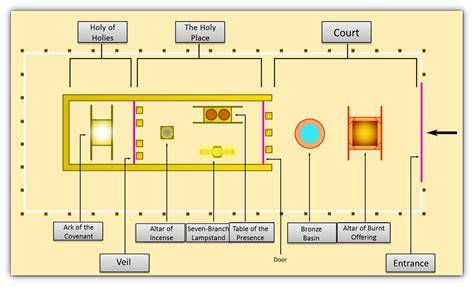
By this arrangement, the Holy Spirit indicated that the way into the holy places had not yet been opened as long as the first section was still standing. The arrangement was symbolic for the present age.
According to this arrangement, gifts and sacrifices were offered that could not perfect the conscience of the worshiper. They dealt only with food and drink and various washings, regulations for the body imposed until the time of reformation.
Why Hebrews Says “Almost Everything”
The wording “almost everything” is important. The Law did mention cleansing rites apart from sacrifice, including rituals involving water, ashes, and other prescribed means. Numbers 19:11-12, for example, describes purification after contact with a dead body.
There were also cases in which a bloodless grain offering could atone for sin under the Law, as described in Leviticus 5:11-13. This does not contradict Hebrews 9:22.
Even though the Law mentions some cleansing rites apart from sacrifice, once a year, on the Day of Atonement, blood was offered for the sins of the entire nation. As such, all of the cleansing rites of the old covenant were subsumed under the absolute necessity of a blood sacrifice once every year.
Likewise, the grain offerings that in some cases could atone for sin were ultimately effectual only because of this annual, “bloody” event. Hebrews therefore does not claim that every individual ritual involved blood in exactly the same way; it identifies the central principle of the covenantal system.
| Expression in Hebrews 9 | Meaning within the passage |
|---|---|
| “Almost everything” | The Law included some cleansing rites using water, fire, ashes, or other prescribed means. |
| “Purified with blood” | Blood was central to the consecration and purification of the covenant, worship, and sacrifices. |
| “Without the shedding of blood” | Forgiveness required atonement represented by life given in connection with sin. |
| “No forgiveness of sins” | Human effort and religious ceremony could not replace the atoning provision established by God. |
The Day of Atonement
On the Day of Atonement, the high priest took some of the bull’s blood and sprinkled it with his finger on the east side of the mercy seat and seven times before the mercy seat.
He then slaughtered the goat for the sin offering for the people and brought its blood behind the veil. With its blood he did as he had done with the bull’s blood: he sprinkled it against the mercy seat and in front of it.
In this way, he made atonement for the Most Holy Place because of the impurities and rebellious acts of the Israelites in regard to all their sins. He did the same for the tent of meeting that remained among them in the midst of their impurities.
The Day of Atonement showed that the sacrificial system was not limited to isolated personal acts of worship. The sanctuary, the priesthood, the people, and the covenant community all required purification.
The Sacrificial Offerings in Leviticus
People had been sacrificing animals long before the Old Testament to appease the various gods they worshipped. When God starts out with the Israelites He is entering their world as a missionary in a foreign land.
Because of their sinfulness He had to accommodate His ideal will in order to meet them where they were at and bring them toward His ideal gradually. Although God really wanted a contrite and surrendered heart, while he was weaning them off their culture’s influence, he gave sacrifice a new meaning.
Instead of appeasing the gods’ anger and wrath, God made it a symbol the covenantal relationship He was establishing with His people. The sacrificial system therefore functioned within the covenant relationship established between God and Israel.
There were wave offerings, where an object or part of an animal was waved from side to side. There were heave offerings, where a cooked item was lifted up, as if to the Lord.
With drink offerings, wine or oil was not consumed, but poured onto another offering before offering it to the Lord or being eaten by the priests. A burnt offering burned an entire animal as an offering.
A grain offering, consisting of either unmilled grain or small bread cakes, was offered either with a burnt offering or as a separate offering, and had to include frankincense, oil, and salt.
Most of these offerings required killing animals and thus the spilling of blood, but it was the sin offering that was most associated with blood. This was a mandatory offering made on specific dates, in which the worshipper laid his hands on an animal, confessed his sins, and then the animal was sacrificed.
Animal Blood Could Not Perfect the Conscience
The shedding of blood was necessary under the old covenant, even though animal blood could not perfect the conscience. The old covenant gifts and sacrifices could not perfect the conscience of the worshiper.
The author of Hebrews contrasts the external purification provided through the Law with the deeper purification provided through Christ. If the blood of goats and bulls, and the sprinkling of defiled persons with the ashes of a heifer, sanctify for the purification of the flesh, then the blood of Christ provides something infinitely greater.
“How much more will the blood of Christ, who through the eternal Spirit offered himself without blemish to God, purify our conscience from dead works to serve the living God.”
The old sacrifices dealt with ritual status and covenantal worship, but Christ’s sacrifice reaches the conscience. It does not merely regulate the body; it cleanses the inner person for service to God.
Christ as the Perfect High Priest
When Christ appeared as a high priest of the good things that have come, He entered through the greater and more perfect tent, not made with hands, that is, not of this creation.
He entered once for all into the holy places, not by means of the blood of goats and calves but by means of His own blood, thus securing an eternal redemption.
Christ has entered not into holy places made with hands, which are copies of the true things, but into heaven itself, now to appear in the presence of God on our behalf.
The high priest under the old covenant entered the earthly sanctuary once a year with blood not his own. Christ entered the true heavenly presence of God with His own sacrificial offering.
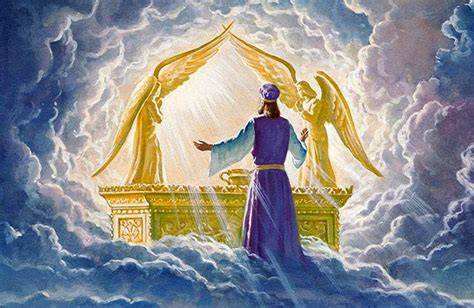
The contrast is not merely between two locations. It is between repeated animal sacrifices and the unique self-offering of the Son of God; between an earthly copy and the heavenly reality; and between temporary ritual purification and eternal redemption.
Why Jesus Had to Die
The author of Hebrews explains that a death had occurred which redeems those called to receive the promised eternal inheritance from the transgressions committed under the first covenant.
Where a will is involved, the death of the one who made it must be established. A will takes effect only at death, since it is not in force as long as the one who made it is alive.
One explanation renders the argument this way: “Even the first plan required a death to set it in motion.” After Moses had read out all the terms of the plan of the law-God’s “will”-he took the blood of sacrificed animals and, in a solemn ritual, sprinkled the document and the people who were its beneficiaries.
He attested its validity with the words, “This is the blood of the covenant commanded by God.” He did the same thing with the place of worship and its furniture.
Jesus’ death therefore was not an accidental interruption of His mission. The New Testament presents His death as the event through which the new covenant was inaugurated and through which redemption was secured.
The New Covenant and the Blood of Christ
Jesus said, “This is My blood of the covenant, which is poured out for many for the forgiveness of sins.” The language deliberately connects His death with the covenant blood used in the days of Moses.
The first covenant was inaugurated with animal blood. The new covenant was inaugurated through the blood of Christ. The old covenant sacrifices were repeated; Christ offered Himself once for all.
He is the mediator of a new covenant, so that those who are called may receive the promised eternal inheritance, since a death has occurred that redeems them from the transgressions committed under the first covenant.
In Him we have redemption through His blood, the forgiveness of our trespasses, according to the riches of His grace. The blood of Jesus His Son cleanses us from all sin.
Once for All
Christ was not offered repeatedly, as the high priest entered the holy places every year with blood not his own. If that had been necessary, Christ would have had to suffer repeatedly since the foundation of the world.
Instead, He has appeared once for all at the end of the ages to put away sin by the sacrifice of Himself. Just as it is appointed for man to die once, and after that comes judgment, so Christ, having been offered once to bear the sins of many, will appear a second time, not to deal with sin but to save those who are eagerly waiting for Him.
The repeated sacrifices of the old covenant pointed beyond themselves. They demonstrated the necessity of atonement but could not provide final redemption. Christ’s sacrifice accomplishes what those sacrifices could only foreshadow.
Blood, Forgiveness, and Substitution
The phrase “without the shedding of blood there is no forgiveness” has historically been used to support the penal substitution view of atonement, in which the guilt of sinners has been transferred to Christ and His death on the cross is viewed as a substitute punishment in the place of guilty sinners.
Those who support this view argue Christ’s sacrifice in taking our punishment upon Him shows us His deep love for us. The blood He shed is seen as satisfying God the Father’s wrath and need for justice.
Almost nobody can explain substitutionary atonement- the blood offering of Jesus on the cross to atone for our sins-better than Charles H. Spurgeon:
“There is no truth more plain than this in the whole of the Old Testament, and it must have within it a very weighty lesson to our souls. There are some who cannot endure the doctrine of a substitutionary atonement. Let them beware lest they be casting away the very soul and essence of the gospel.”
“It is evident that the sacrifice of Christ was intended to give ease to the conscience, for we read that the blood of bulls and of goats could not do that. I fail to see how any doctrine of atonement except the doctrine of the vicarious sacrifice of Christ can give ease to the guilty conscience.”
“Christ in my stead suffering the penalty of my sin-that pacifies my conscience, but nothing else does. All the repentance in the world cannot blot out the smallest sin.”
“Where repentance is the work of the Spirit of God, it is a very precious gift, and is a sign of grace; but there is no atoning power in repentance. In a sea full of penitential tears, there is not the power or the virtue to wash out one spot of this hideous uncleanness.”
“Without the blood-shedding, there is no remission. Jesus Christ Himself cannot save us apart from His blood.”
God’s Love and the Meaning of the Cross
The cross is presented as the self-sacrificial love of God. God’s self-sacrificial love in shedding His own blood through Jesus’ death on the cross was the only way to open our eyes to see who He truly is and receive the forgiveness He freely offers.
Christ’s death puts on display self-sacrificial love as the way to defeat evil, not violence. God’s justice doesn’t compete with His love, it’s an expression of it. So when it’s not loving to do justice, he doesn’t.
In Christ, not only do we not get what we deserve, we actually get what we don’t deserve-an abundant life free of fear and full of the life-giving joy of the triune God.
This understanding emphasizes that the cross reveals the character of God rather than dividing the Father and the Son into opposing figures. The Father is not presented as unwilling to love until Jesus changes His attitude; the cross is the unified self-giving action of God for the salvation of sinners.
Forgiveness Is Not Human Achievement
Forgiveness rests on atonement, not on human effort or religious ceremony. All the repentance in the world cannot blot out the smallest sin, although repentance remains a precious gift and a sign of grace when it is the work of the Spirit of God.
The New Testament reframes the human condition. God’s problem is not how to love sinners, but rather how to free sinners from the bondage to the kingdom of darkness we’ve entered by our covenant-breaking sin.
The death of Christ addresses both guilt and bondage. It provides forgiveness for sins and opens the way for people to be reconciled to God, purified in conscience, and released from dead works to serve the living God.
Important Biblical Connections
- Leviticus 17:11: “For the life of the flesh is in the blood, and I have given it to you on the altar to make atonement for your souls.”
- Exodus 24:8: “This is the blood of the covenant that the LORD has made with you in accordance with all these words.”
- Matthew 26:28: “This is My blood of the covenant, which is poured out for many for the forgiveness of sins.”
- Ephesians 1:7: “In Him we have redemption through His blood, the forgiveness of our trespasses, according to the riches of His grace.”
- Colossians 1:14: “In whom we have redemption, the forgiveness of sins.”
- 1 John 1:7: “The blood of Jesus His Son cleanses us from all sin.”
- Revelation 1:5: “To Him who loves us and has released us from our sins by His blood.”
- Isaiah 53:5: “He was pierced for our transgressions, He was crushed for our iniquities; the punishment that brought us peace was upon Him, and by His stripes we are healed.”
Translations of Hebrews 9:22
The central idea of Hebrews 9:22 remains consistent across English translations, although the words “forgiveness,” “remission,” “purified,” “cleansed,” and “shed” are used in different combinations.
| Translation | Wording |
|---|---|
| English Standard Version | “Indeed, under the law almost everything is purified with blood, and without the shedding of blood there is no forgiveness of sins.” |
| New International Version | “In fact, the law requires that nearly everything be cleansed with blood, and without the shedding of blood there is no forgiveness.” |
| King James Bible | “And almost all things are by the law purged with blood; and without shedding of blood is no remission.” |
| New Living Translation | “In fact, according to the law of Moses, nearly everything was purified with blood. For without the shedding of blood, there is no forgiveness.” |
| New American Standard Bible | “And almost all things are cleansed with blood, according to the Law, and without the shedding of blood there is no forgiveness.” |
| Contemporary English Version | “The Law says that almost everything must be sprinkled with blood, and no sins can be forgiven unless blood is offered.” |
| Good News Translation | “Indeed, according to the Law almost everything is purified by blood, and sins are forgiven only if blood is poured out.” |
| World English Bible | “According to the law, nearly everything is cleansed with blood, and apart from shedding of blood there is no remission.” |
These translations express the same connection: under the Law, blood was the ordinary means associated with purification and atonement, and forgiveness was not available apart from the shedding of blood.
The Significance of “Without”
The statement does not merely say that blood was common in the worship of Israel. It says that forgiveness does not come apart from blood-shedding. The wording identifies blood-shedding as essential to the atoning structure revealed in Scripture.
Some translations use “no remission,” while others use “no forgiveness.” The meaning concerns release from sin and its guilt, cancellation of the merited punishment, and restoration through atonement.
The phrase therefore cannot be reduced to a comment about religious symbolism alone. It refers to the biblical claim that sin requires a decisive answer involving life, death, judgment, and God’s provision for reconciliation.
The Superiority of Christ’s Blood
If the blood of goats and bulls and the ashes of a heifer could sanctify for the purification of the flesh, how much more will the blood of Christ purify the conscience from dead works to serve the living God.
Animal blood was temporary and representative. Christ’s blood is the blood of the sinless Son who offered Himself without blemish to God through the eternal Spirit.
The old covenant pointed toward Christ. The Passover lamb, the sacrifices of the Day of Atonement, and every sin offering pointed forward to Jesus Christ, whose blood established the new covenant.
Christ’s death therefore fulfills rather than ignores the pattern of the Law. The old covenant established the necessity of sacrificial blood; the new covenant reveals the perfect sacrifice to which the earlier sacrifices pointed.
Why Hebrews 9 Changes Everything About How You See Jesus’ Sacrifice (No Ads)
Access to God Through Christ
Under the old covenant, the way into the holy places was not yet opened while the first section of the tabernacle was still standing. The high priest entered the Most Holy Place only once a year and not without blood.
Christ has entered heaven itself, now to appear in the presence of God on our behalf. His sacrifice does not merely cleanse a building, a vessel, or an external ritual status; it opens access to God through the completed work of the eternal High Priest.
The restricted access associated with the earthly sanctuary pointed to the need for a greater priest and a better sacrifice. In Christ, the temporary barriers represented by the old covenant give way to the lasting redemption secured by the new covenant.
What the Shedding of Blood Accomplishes
- It establishes atonement: Blood represents life given in connection with the guilt of sin.
- It inaugurates covenant: Moses used blood when the first covenant was formally established, and Christ’s blood establishes the new covenant.
- It provides purification: The Law used blood in the cleansing of the tabernacle, its vessels, and the worshiping community.
- It addresses guilt: Forgiveness requires atonement rather than human effort or religious ceremony.
- It cleanses the conscience: Christ’s sacrifice purifies the conscience from dead works.
- It secures redemption: Christ entered the holy places once for all, securing eternal redemption.
- It opens access to God: Christ appears in the presence of God on behalf of those who trust in Him.
- It defeats evil through love: Christ’s death displays self-sacrificial love as the way to defeat evil, not violence.
Why the Old Sacrifices Were Not Enough
The blood of bulls and goats could not perfect the conscience. The sacrifices had to be repeated because they did not finally remove sin.
If the old covenant sacrifices had provided complete and permanent forgiveness, there would have been no need for a better sacrifice. Their repetition showed that they were provisional and pointed beyond themselves.
Christ, by contrast, appeared once for all at the end of the ages to put away sin by the sacrifice of Himself. His offering is not one more sacrifice in a long sequence; it is the decisive sacrifice to which the sequence was directing attention.
The distinction can be stated simply: animal sacrifices could not finally remove sin, but Christ offered Himself once for all, securing eternal redemption for all who trust in Him.
The Central Message of Hebrews 9:22
Hebrews 9:22 explains the logic of the biblical sacrificial system: sin separates people from God, atonement requires life given in relation to sin, and forgiveness depends on God’s appointed provision rather than human effort.
Under the Law, almost everything was purified with blood, and without the shedding of blood there was no forgiveness of sins. Under the new covenant, Jesus Christ offered His own blood once for all, cleansing the conscience, establishing the covenant, bearing the sins of many, and securing eternal redemption.
Jesus Christ is the ultimate High Priest and the perfect sacrifice, whose blood was shed for the forgiveness of sins, fulfilling the requirements of the Law.