The Person and Work of the Holy Spirit is a theological and devotional study in which R. A. Torrey argues that the Holy Spirit is not merely an influence, power, or illumination from God, but a divine Person worthy of worship, faith, love, and complete surrender. The book explores the Spirit’s personality, divine nature, work in Scripture, ministry in the world, presence in believers, and role in Christian life and service.
Torrey’s central principle is direct: “Before one can correctly understand the work of the Holy Spirit, he must first of all know the Spirit Himself.” He maintains that the Christian life cannot be understood adequately apart from the Holy Spirit, because the Spirit reveals Christ, convicts of sin, regenerates, indwells, empowers, guides, sanctifies, and equips believers for ministry.
R. A. Torrey and the book’s setting
R. A. Torrey (1856 - 1928) was an American evangelist and Bible scholar. A graduate of Yale College and Seminary, he also studied in German universities. He was ordained to the Congregational ministry in 1878, and became superintendent of the Congregational City Missionary Society of Minneapolis.
He had a long association with D. L. Moody and was the first superintendent of the Moody Bible Institute (1889 - 1908). He wrote numerous devotional and theological books, including What the Bible Teaches, How to Work for Christ, and The Person and Work of the Holy Spirit.
The Person and Work of The Holy Spirit by R. A. Torrey is a theological work written in the early 20th century. The book aims to explore the role, personality, and divine nature of the Holy Spirit, drawing on both scripture and personal experience to illuminate its topics.
The author seeks to establish a deeper understanding and appreciation for the Holy Spirit as a divine and personal being rather than a mere force or influence. The initial chapter sets the stage for a comprehensive exploration of the Holy Spirit's functions, characteristics, and significance within the framework of Christian faith.
The foundational question: Who is the Holy Spirit?
Before one can correctly understand the work of the Holy Spirit, he must first of all know the Spirit Himself. A frequent source of error and fanaticism about the work of the Holy Spirit is the attempt to study and understand His work without first of all coming to know Him as a Person.
It is of the highest importance from the standpoint of worship that we decide whether the Holy Spirit is a Divine Person, worthy to receive our adoration, our faith, our love, and our entire surrender to Himself, or whether it is simply an influence emanating from God or a power or an illumination that God imparts to us.
If the Holy Spirit is a person, and a Divine Person, and we do not know Him as such, then we are robbing a Divine Being of the worship and the faith and the love and the surrender to Himself which are His due.
It is also of the highest importance from the practical standpoint that we decide whether the Holy Spirit is merely some mysterious and wonderful power that we in our weakness and ignorance are somehow to get hold of and use, or whether the Holy Spirit is a real Person, infinitely holy, infinitely wise, infinitely mighty and infinitely tender who is to get hold of and use us.
Power to be used or Person who uses us?
The former conception is utterly heathenish, not essentially different from the thought of the African fetich worshipper who has his god whom he uses. The latter conception is sublime and Christian.
If we think of the Holy Spirit as so many do as merely a power or influence, our constant thought will be, How can I get more of the Holy Spirit, but if we think of Him in the Biblical way as a Divine Person, our thought will rather be, How can the Holy Spirit have more of me?
The conception of the Holy Spirit as a Divine influence or power that we are somehow to get hold of and use, leads to self-exaltation and self-sufficiency. One who so thinks of the Holy Spirit and who at the same time imagines that he has received the Holy Spirit will almost inevitably be full of spiritual pride and strut about as if he belonged to some superior order of Christians.
One frequently hears such persons say, I am a Holy Ghost man, or I am a Holy Ghost woman. But if we once grasp the thought that the Holy Spirit is a Divine Person of infinite majesty, glory and holiness and power, who in marvellous condescension has come into our hearts to make His abode there and take possession of our lives and make use of them, it will put us in the dust and keep us in the dust.
I can think of no thought more humbling or more overwhelming than the thought that a person of Divine majesty and glory dwells in my heart and is ready to use even me.
The experiential importance of knowing the Spirit
It is of the highest importance from the standpoint of experience that we know the Holy Spirit as a person. Thousands and tens of thousands of men and women can testify to the blessing that has come into their own lives as they have come to know the Holy Spirit, not merely as a gracious influence (emanating, it is true, from God) but as a real Person, just as real as Jesus Christ Himself, an ever-present, loving Friend and mighty Helper, who is not only always by their side but dwells in their heart every day and every hour and who is ready to undertake for them in every emergency of life.
Thousands of ministers, Christian workers and Christians in the humblest spheres of life have spoken to me, or written to me, of the complete transformation of their Christian experience that came to them when they grasped the thought (not merely in a theological, but in an experimental way) that the Holy Spirit was a Person and consequently came to know Him.
The book’s opening concept introduces the foundational idea that in order to understand the work of the Holy Spirit, one must first recognize Him as a person. Torrey argues that viewing the Holy Spirit solely as a power or influence could lead to a superficial and misguided understanding of His role in the believer's life.
By understanding and engaging with the Holy Spirit as a divine being deserving of worship and adherence, Christians can transform their spiritual lives and deepen their relationship with God.
Biblical evidence for the Spirit’s personality
There are at least four distinct lines of proof in the Bible that the Holy Spirit is a person. I. All the distinctive characteristics of personality are ascribed to the Holy Spirit in the Bible.
What are the distinctive characteristics, or marks, of personality? Knowledge, feeling or emotion, and will. Any entity that thinks and feels and wills is a person.
When we say that the Holy Spirit is a person, there are those who understand us to mean that the Holy Spirit has hands and feet and eyes and ears and mouth, and so on, but these are not the characteristics of personality but of corporeity.
All of these characteristics or marks of personality are repeatedly ascribed to the Holy Spirit in the Old and New Testaments.
Knowledge
We read in 1 Cor. ii. 10, 11, But God hath revealed them unto us by His Spirit: for the Spirit searcheth all things, yea, the deep things of God. For what man knoweth the things of a man, save the spirit of man which is in him? even so the things of God knoweth no man, but the Spirit of God.
Here knowledge is ascribed to the Holy Spirit. We are clearly taught that the Holy Spirit is not merely an influence that illuminates our minds to comprehend the truth but a Being who Himself knows the truth.
Will
In 1 Cor. xii. 11, we read, But all these worketh that one and the selfsame Spirit, dividing to every man severally as He will.
Here will is ascribed to the Spirit and we are taught that the Holy Spirit is not a power that we get hold of and use according to our will but a Person of sovereign majesty, who uses us according to His will.
This distinction is of fundamental importance in our getting into right relations with the Holy Spirit. It is at this very point that many honest seekers after power and efficiency in service go astray.
They are reaching out after and struggling to get possession of some mysterious and mighty power that they can make use of in their work according to their own will. They will never get possession of the power they seek until they come to recognize that there is not some Divine power for them to get hold of and use in their blindness and ignorance but that there is a Person, infinitely wise, as well as infinitely mighty, who is willing to take possession of them and use them according to His own perfect will.
When we stop to think of it, we must rejoice that there is no Divine power that beings so ignorant as we are, so liable to err, to get hold of and use. How appalling might be the results if there were.
But what a holy joy must come into our hearts when we grasp the thought that there is a Divine Person, One who never errs, who is willing to take possession of us and impart to us such gifts as He sees best and to use us according to His wise and loving will.
Mind, thought, feeling, and purpose
We read in Rom. viii. 27, And He that searcheth the hearts knoweth what is the mind of the Spirit, because He maketh intercession for the saints according to the will of God.
In this passage mind is ascribed to the Holy Spirit. The Greek word translated mind is a comprehensive word, including the ideas of thought, feeling and purpose.
It is the same that is used in Rom. viii. 7 where we read that the carnal mind is enmity against God: for it is not subject to the law of God, neither indeed can be.
So then in this passage we have all the distinctive marks of personality ascribed to the Holy Spirit.
Love
We find the personality of the Holy Spirit brought out in a most touching and suggestive way in Rom. xv. 30, Now I beseech you, brethren, for the Lord Jesus Christ's sake, and for the love of the Spirit, that ye strive together with me in your prayers to God for me.
Here we have love ascribed to the Holy Spirit. The reader would do well to stop and ponder those five words, the love of the Spirit.
We dwell often upon the love of God the Father. It is the subject of our daily and constant thought. We dwell often upon the love of Jesus Christ the Son.
Who would think of calling himself a Christian who passed a day without meditating on the love of his Saviour, but how often have we meditated upon the love of the Spirit?
Each day of our lives, if we are living as Christians ought, we kneel down in the presence of God the Father and look up into His face and say, I thank Thee, Father, for Thy great love that led Thee to give Thine only begotten Son to die upon the cross of Calvary for me.
Each day of our lives we also look up into the face of our Lord and Saviour, Jesus Christ, and say, Oh, Thou glorious Lord and Saviour, Jesus Thou Son of God, I thank Thee for Thy great love that led Thee not to count it a thing to be grasped to be on equality with God but to empty Thyself and forsaking all the glory of heaven, come down to earth with all its shame and to take my sins upon Thyself and die in my place upon the cross of Calvary.
But how often do we kneel and say to the Holy Spirit, Oh, Thou eternal and infinite Spirit of God, I thank Thee for Thy great love that led Thee to come into this world of sin and darkness and to seek me out and to follow me so patiently until Thou didst bring me to see my utter ruin and need of a Saviour and to reveal to me my Lord and Saviour, Jesus Christ, as just the Saviour whom I need.
Yet we owe our salvation just as truly to the love of the Spirit as we do to the love of the Father and the love of the Son.
The Spirit’s patient work in salvation
If it had not been for the love of God the Father looking down upon me in my utter ruin and providing a perfect atonement for me in the death of His own Son on the cross of Calvary, I would have been in hell to-day.
If it had not been for the love of Jesus Christ, the eternal Word of God, looking upon me in my utter ruin and in obedience to the Father, putting aside all the glory of heaven for all the shame of earth and taking my place, the place of the curse, upon the cross of Calvary and pouring out His life utterly for me, I would have been in hell to-day.
But if it had not been for the love of the Holy Spirit, sent by the Father in answer to the prayer of the Son (John xiv. 16) leading Him to seek me out in my utter blindness and ruin and to follow me day after day, week after week, and year after year, when I persistently turned a deaf ear to His pleadings, following me through paths of sin where it must have been agony for that holy One to go, until at last I listened and He opened my eyes to see my utter ruin and then revealed Jesus to me as just the Saviour that would meet my every need and then enabled me to receive this Jesus as my own Saviour; if it had not been for this patient, long-suffering, never-tiring, infinitely-tender love of the Holy Spirit, I would have been in hell to-day.
Oh, the Holy Spirit is not merely an influence or a power or an illumination but is a Person just as real as God the Father or Jesus Christ His Son.
The Spirit’s personality in the Old Testament
The personality of the Holy Spirit comes out in the Old Testament as truly as in the New, for we read in Neh. ix. 20, Thou gavest also Thy good Spirit to instruct them, and withheldest not Thy manna from their mouth, and gavest them water for their thirst.
Here both intelligence and goodness are ascribed to the Holy Spirit. There are some who tell us that while it is true the personality of the Holy Spirit is found in the New Testament, it is not found in the Old.
But it is certainly found in this passage. As a matter of course, the doctrine of the personality of the Holy Spirit is not as fully developed in the Old Testament as in the New. But the doctrine is there.
The Spirit can be grieved
There is perhaps no passage in the entire Bible in which the personality of the Holy Spirit comes out more tenderly and touchingly than in Eph. iv. 30, And grieve not the Holy Spirit of God, whereby ye are sealed unto the day of redemption.
Here grief is ascribed to the Holy Spirit. The Holy Spirit is not a blind, impersonal influence or power that comes into our lives to illuminate, sanctify and empower them.
No, He is immeasurably more than that, He is a holy Person who comes to dwell in our hearts, One who sees clearly every act we perform, every word we speak, every thought we entertain, even the most fleeting fancy that is allowed to pass through our minds; and if there is anything in act, or word or deed that is impure, unholy, unkind, selfish, mean, petty or untrue, this infinitely holy One is deeply grieved by it.
I know of no thought that will help one more than this to lead a holy life and to walk softly in the presence of the holy One.
How often a young man is kept back from yielding to the temptations that surround young manhood by the thought that if he should yield to the temptation that now assails him, his holy mother might hear of it and would be grieved by it beyond expression.
How often some young man has had his hand upon the door of some place of sin that he is about to enter and the thought has come to him, If I should enter there, my mother might hear of it and it would nearly kill her, and he has turned his back upon that door and gone away to lead a pure life, that he might not grieve his mother.
But there is One who is holier than any mother, One who is more sensitive against sin than the purest woman who ever walked this earth, and who loves us as even no mother ever loved, and this One dwells in our hearts, if we are really Christians, and He sees every act we do by day or under cover of the night.
He hears every word we utter in public or in private; He sees every thought we entertain, He beholds every fancy and imagination that is permitted even a momentary lodgment in our mind, and if there is anything unholy, impure, selfish, mean, petty, unkind, harsh, unjust, or in anywise evil in act or word or thought or fancy, He is grieved by it.
If we will allow those words, Grieve not the Holy Spirit of God, to sink into our hearts and become the motto of our lives, they will keep us from many a sin.
How often some thought or fancy has knocked for an entrance into my own mind and was about to find entertainment when the thought has come, The Holy Spirit sees that thought and will be grieved by it and that thought has gone.
Acts attributed to the Holy Spirit
II. Many acts that only a Person can perform are ascribed to the Holy Spirit. If we deny the personality of the Holy Spirit, many passages of Scripture become meaningless and absurd.
The Spirit searches and reveals
For example, we read in 1 Cor. ii. 10, But God hath revealed them unto us by His Spirit: for the Spirit searcheth all things, yea, the deep things of God.
This passage sets before us the Holy Spirit, not merely as an illumination whereby we are enabled to grasp the deep things of God, but a Person who Himself searches the deep things of God and then reveals to us the precious discoveries which He has made.
The Spirit speaks
We read in Rev. ii. 7, He that hath an ear, let him hear what the Spirit saith unto the churches; To him that overcometh will I give to eat of the tree of life, which is in the midst of the paradise of God.
Here the Holy Spirit is set before us, not merely as an impersonal enlightenment that comes to our mind but a Person who speaks and out of the depths of His own wisdom, whispers into the ear of His listening servant the precious truth of God.
The Spirit and the Word of God
“Power belongeth unto God.” The Holy Spirit is the person who imparts to the individual believer the power that belongs to God.
This is the Holy Spirit's work in the believer, to take what belongs to God and make it ours. All the manifold power of God belongs to the children of God as their birthright in Christ.
“All things are your's” (I Cor. 3:21). But all that belongs to us as our birthright in Christ becomes ours in actual and experimental possession through the Holy Spirit's work in us as individuals.
To the extent that we understand and claim for ourselves the Holy Spirit's work, to that extent do we obtain for ourselves the fullness of power in Christian life and service that God has provided for us in Christ.
A very large portion of the church knows and claims for itself a very small part of that which God has made possible for them in Christ, because they know so very little of what the Holy Spirit can do for us, and longs to do for us.
Let us study the Word, then, to find out what the Holy Spirit has power to do in men.
The Word as the Spirit’s instrument
We shall not go far before we discover that the same work which we see ascribed in one place to the power of the Word of God is in other places ascribed to the Holy Spirit.
The explanation to this is simple. The Word of God is the instrument through which the Holy Spirit does his work.
The Word of God is “the sword of the Spirit” (Eph. 6:17). The Word of God is also the seed the Spirit sows and quickens (Luke 8:11; I Peter 1:23).
The Word of God is the instrument of all the manifold operations of the Holy Spirit, as seen in Chapter 1.
If, therefore, we wish the Holy Spirit to do His work in our hearts, we must study the Word. If we wish Him to do His work in the hearts of others, we must give them the Word.
But the bare Word will not do the work alone. The Spirit must Himself use the Word.
It is when the Spirit Himself uses His own sword that it manifests its real temper, keenness and power.
God's work is accomplished by the Word and the Spirit, or rather by the Spirit through the Word.
Word without Spirit and Spirit without Word
The secret of effectual living is knowing the power of the Spirit through the Word. The secret of effectual service is using the Word in the power of the Spirit.
There are some who seek to magnify the Spirit but neglect the Word. This will not do at all.
Fanaticism, baseless enthusiasm, wildfire are the result. Others seek to magnify the Word, but largely ignore the Spirit.
Neither will this do. It leads to dead orthodoxy, truth without life and power.
The true course is to recognize the instrumental power of the Word through which the Holy Spirit works, and the living, personal power of the Holy Spirit who acts through the Word.
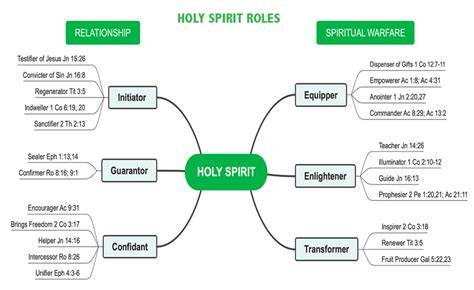
What the Holy Spirit has power to do
Reveal Jesus Christ and His glory
Turn to I Corinthians 12:3, “Wherefore I give you to understand, that no man speaking by the Spirit of God calleth Jesus accursed: and that no man can say that Jesus is the Lord, But by the Holy Ghost”
The Holy Spirit has power to reveal Jesus Christ and His glory to man.
When Jesus spoke of The Spirit's coming, He said: “But when the comforter is come, whom I will send unto you from the Father, even the Spirit of truth, which proceedeth from the Father, He shall testify of me” (John 15:26).
And it is only as He does testify of Christ that men will ever come to a true knowledge of Christ.
You send men to the Word to get a knowledge of Christ; but it is only as the Spirit takes the Word and illuminates it, that men ever get a real living knowledge of Christ.
“No man can say that Jesus is the Lord, but by the Holy Ghost.”
If you wish men to get a true knowledge of Jesus Christ, such a view that they will believe on Him and be saved, you must seek for them the testimony of the Holy Spirit.
Neither your testimony nor that of the Word alone, will suffice, though it is your testimony, or that of the Word, which the Spirit uses.
But unless your testimony is taken up by the Holy Spirit and He Himself testifies, they will not believe.
It was not merely Peter's words about Christ that convinced the Jews at Pentecost. It was the Spirit Himself bearing witness.
If you wish men to see the truth about Jesus, do not depend upon your own powers of exposition and persuasion, but cast yourself upon the Holy Ghost and seek His testimony.
If you wish yourself to know Jesus with a true and living knowledge, seek the witness of the Spirit through the Word.
Many a man has a correct doctrinal conception of Christ, through a study of the Word, long before he has a true personal knowledge of Christ through the testimony of the living Spirit.
Convict the world of sin
Now let us turn to John 16:8-11: “And when He is come, He will reprove the world of sin, and of righteousness, and of judgment: Of sin, because they believe not on Me; Of righteousness, because I go to My Father, and ye see Me no more; Of judgment, because the prince of this world is judged.”
The Holy Spirit has power to convict the world of sin.
This is closely connected with the preceding; for, it is by showing Jesus and His glory and His righteousness, that the Holy Spirit convicts of sin, and of righteousness and of judgment.
Note the sin of which the Holy Spirit convicts, “Of sin, because they believe not on Me.”
It was so at Pentecost, as we see in Acts 2:36, 37.
You can never convict any man of sin because that is the work of the Holy Spirit. You can reason and reason, and you will fail.
The Holy Spirit can do it very quickly.
Did you never have this experience? You have shown a man passage after passage of Scripture, and he was unmoved, and you have wondered why the man did not break down.
Suddenly it has occurred to you, “Why, I am not looking in my helplessness to the mighty Spirit of God to convict this man of sin, but I am trying the man of sin myself.”
Then you have cast yourself upon the Spirit of God for Him to do the work, and conviction came.
The Spirit can convince the most careless, as experience has proven again and again.
But it is through us that the Spirit produces conviction.
In John 16:7, 8, we read, “. I will send Him unto you. And when He is come, He will reprove the world of sin, and of righteousness, and of judgment.”
It was the Spirit who was sent to Peter and the rest, who convicted the three thousand through Peter and the others on the day of Pentecost.
It is ours to preach the Word and to look to the Holy Spirit to produce conviction (See Acts 2:4-37).
Regenerate and renew human beings
In Titus 3:5, we read, “Not by works of righteousness which we have done, but according to His mercy He saved us, by the washing of regeneration, and renewing of the Holy Ghost.”
The Holy Spirit has power to renew men or to make men new, to regenerate.
Regeneration is the Holy Spirit's work.
He can take a man dead in trespasses and sins, and make him alive.
He can take a man whose mind is blind to the truth of God, whose will is at enmity with God and set on sin, whose affections are corrupt and vile, and transform that man, impart to him God's nature, so that he thinks God's thoughts, wills what God wills, loves what God loves, and hates what God hates.
I never despair of any man when I think of the power of the Holy Spirit to make new, as I have seen it manifested again and again in the most hardened and hopeless cases.
It is through us that the Holy Spirit regenerates others (I Cor. 4:15).
As we have seen in Chapter 1, the Word has power to regenerate; but it is not the bare Word, but the Word made a living thing in the heart by the power of the Holy Spirit.
No amount of preaching, no matter how orthodox it is, and no amount of mere study of the Word will regenerate, unless the Holy Spirit works.
Just as we are utterly dependent on the work of Christ for us in justification, so we are utterly dependent upon the work of the Holy Spirit in us in regeneration.
Indwell believers
When one is born of the Spirit, the Spirit takes up His own abode in him (I Cor. 3:16; 6:19).
The Holy Spirit dwells in everyone who belongs to Christ (Ro. 8:9).
We may not have surrendered our lives very fully to this indwelling Spirit; we may be very far from being “full of the Spirit”; we may be very imperfect Christians, but, if we have been born again, the Spirit dwells in us, just as Paul said to the Corinthians, who were certainly very far from perfect Christians, that He did in them.
What a glorious thought it is that the Holy Spirit dwells in me!
But it is also a very solemn thought.
If my body is the temple of the Holy Spirit, I certainly ought not to defile it, as many professed Christians do.
Bearing in mind that our bodies are the temples of the Holy Spirit would solve many problems that perplex young Christians.
Give abiding and everlasting satisfaction
We find a further thought about the power of the Holy Spirit in John 4:14, “But whosoever drinketh of the water that I shall give him shall never thirst; but the water that I shall give him shall be in him a well of water springing up into everlasting life”
You may not see at first that this verse has anything to do with the Holy Spirit, but compare John7:37, 39, and it will be evident that the water here means the Holy Spirit.
The Holy Spirit, then, has power to give abiding and everlasting satisfaction.
The world can never satisfy. Of every worldly joy it must be said, “Whosoever drinketh of this water shall thirst again.”
But the Holy Spirit has power to satisfy every longing of the soul.
The Holy Spirit and He alone can satisfy the human heart.
If you give yourself up to the Holy Spirit's inflowing, or rather upspringing, in your heart, you will never thirst.
You will not long for the theater, or the ballroom, or th card party, or worldly gain, or honor.
Oh, with what joy unutterable and satisfaction indescribable the Holy Spirit has poured forth His living water in many souls!
Have you this living fountain within? Is the spring unchoked? Is it springing up into everlasting life?
Set believers free from sin’s dominion
In Romans 8:2, we read, “For the law of the Spirit of life in Christ Jesus hath made me free from the law of sin and death.”
The Holy Spirit has power to set us free from the law of sin and death.
What the law of sin and death is we see in the preceding chapter (Romans 7:9-24).
Read this description carefully.
We all know this law of sin and death. We have all been in bondage to it.
Some of us are still in bondage to it, but we do not need to be.
God has provided a way of escape. That way is by the holy Spirit's power.
When we give up the hopeless struggle of trying to overcome the law of sin and death, of trying to live right in our own strength, in the power of the flesh; and in utter helplessness surrender to the Holy Spirit to do all for us; when we live after Him and walk in His blessed power; then He sets us free from the law of sin and death.
There are many professed Christians today living in Romans 7.
Some go so far as to maintain that this is the normal Christian life, that one must live this life of constant defeat.
This would be true, if we were left to ourselves; for in ourselves we are “carnal, sold under sin.”
But we are not left to ourselves.
The Holy Spirit undertakes for us what we have failed to do ourselves (Romans 8:2-4).
In Romans 8 we have the picture of the true Christian life, the life that is possible to us, and that God expects from each one of us; the life where not merely the commandment comes, as in chapter 7, but where the mighty Spirit comes also, and works obedience and victory.
The flesh is still in us, but we are not in the flesh (Romans 8:12,13, compare v.9).
We do not live after it.
We “live after the Spirit.”
We, “through the Spirit do mortify the deeds of the body.”
We “walk in the Spirit,”; and do “not fulfill the lust of the flesh” (Gal. 5:16).
It is our privilege, in the Spirit's power, to get daily, hourly, and constant victory over the flesh and over sin.
But the victory is not in ourselves, not in any strength of our own.
Left to ourselves, deserted of the Spirit of God, we would be as helpless as ever.
It is all in the Spirit's power.
If we try to take one step in our own strength, we shall fail.
Has the Holy Spirit set you free from the law of sin and death?
Will you let Him do it now? simply give up all self-effort to be free from “the law of sin and death”, to give up sinning; believe in the divine power of the Holy Spirit to set you free; and cast yourself upon Him to do it.
He will do it.
Then you can triumphantly cry with Paul, “For the law of the Spirit of life in Christ Jesus made me free from the law of sin and of death” (Rom. 8:2, R.V.).
Strengthen the inner person
We find a closely allied but larger thought about the Holy Spirit's power in Ephesians 3:16, R.V., “That He would grant you, according to the riches of His glory, that ye may be strengthened with power through His Spirit in the inward man.”
The Holy Spirit strengthens the believer with power in the inward man.
The result in this strengthening is seen in verses 17 to 19.
Here the power of the Spirit manifests itself not merely in giving us victory over sin, but (a) in Christ's dwelling in our hearts; (b) our being “rooted and grounded in love”; (c) our being made “strong to apprehend with all the saints what is the breadth and length and height and depth, and to know the love of Christ which passeth knowledge. ” (Ephesians 3:18, 19).
It all ultimates in our being “filled unto all the fullness of God.”
Lead believers into a holy life
We find a still further thought about the Holy Spirit's power in Romans 8:14, R.V., “For as many as are led by the Spirit of God, these are sons of God.”
The Holy Spirit has power to lead us into a holy life, a life as “sons of God”, a godlike life.
Not merely does the Holy Spirit gives us power to live a holy life, a life well-pleasing to God when we have discovered what that life is: He takes us by the hand, as it were, and leads us into that life.
Our whole part is simply to surrender ourselves utterly to Him to lead and to mould us.
Those who do this are not merely God's offspring, which all men are (Acts 17:28); neither are we merely God's children: “These are sons of God.”
Bear witness to believers’ adoption
Further down in the chapter there is a new thought. Romans 8:16, R.V., “The Spirit Himself beareth witness with our spirit, that we are the children of God.”
The Holy Spirit bears witness with the spirit of the believer that he is a child of God.
Note that Paul does not say that the Spirit bears witness to our spirit, but with it--“together with our spirit,” is the exact force of the words used.
That is, there are two who bears witness to our sonship: First, our spirit bears witness that we are children of God; second, the Holy Spirit bears witness together with our spirit that we are children of God.
The relationship between doctrine and devotion
While Torrey’s writing is theological, the book is also pastoral and practical. He does not treat the Holy Spirit as an abstract doctrine detached from daily life.
As the title suggests, Torrey focuses around the Holy Spirit, providing a solid overview of Him as a person, then examining the actions of this person from the Scriptures.
The writing reads like a sermon series, and, in addition to bountiful biblical evidence, contains many personal experiences and testimonies of the work of the Spirit in people's lives.
These firsthand accounts reveal the author's heart for God and for working to bring salvation to people.
Torrey frequently answered the “how” question to finish his observations. It was not enough for him to tell about something the Holy Spirit can do for a believer; he looked to the Scriptures to see HOW a believer can gain a partnership with the Holy Spirit in many ways.
The book connects doctrine and devotion, as it captures the absolute necessity of the work of the Spirit in the daily life of the believer.
The Spirit’s work in Christian service
“The difference between a religion of mere letter and form and one of life and power lies in knowing the Holy Spirit.” It was Dr. R. A. Torrey who pointed that out and showed Christians that the Holy Spirit is a Person to be worshiped, Someone who would take hold of you and use you as He transformed you from day to day.
Can you, or can any Christian, go far in the Christian life without giving time and thought to the third Person of the Godhead? Obviously not, for the Holy Spirit takes the things of Christ and shows them to us, who makes the practical application of Bible knowledge in the outworking of Christian living.
He alone can make Christian theory into life and deeds.
The book examines the importance of the Holy Spirit in the service of the Christian worker and in the ministry of the church.
It discusses conviction, baptism, filling, indwelling, and gifts of the Spirit.
Torrey’s emphasis is that Christian ministry cannot be sustained by natural ability, intellectual explanation, or human persuasion alone.
It is ours to preach the Word and to look to the Holy Spirit to produce conviction (See Acts 2:4-37).
If you wish men to see the truth about Jesus, do not depend upon your own powers of exposition and persuasion, but cast yourself upon the Holy Ghost and seek His testimony.
Major themes readers identify in the book
- The Holy Spirit is a divine Person rather than an impersonal force.
- The Spirit possesses knowledge, will, mind, love, and emotion.
- The Spirit searches the deep things of God and reveals them to believers.
- The Spirit speaks to the churches.
- The Spirit convicts the world of sin, righteousness, and judgment.
- The Spirit regenerates and renews human beings.
- The Spirit dwells in everyone who belongs to Christ.
- The Spirit gives abiding and everlasting satisfaction.
- The Spirit sets believers free from the law of sin and death.
- The Spirit strengthens the inward person.
- The Spirit leads believers into a holy life.
- The Spirit bears witness with the believer’s spirit that he is a child of God.
- The Word of God is the instrument through which the Spirit works.
- Christian service depends on the Spirit’s power rather than human ability alone.
Strengths commonly noted by readers
Readers frequently describe the book as a solid study of the Holy Spirit and a practical guide to Christian living.
One reader called it “a Christian classic” and noted that it provided spiritual food through biblical applications and concepts that had not previously been considered.
Another reader described it as “a solid overview” of the Holy Spirit as a person, followed by an examination of His actions from Scripture.
Readers also value Torrey’s consistent turning to the Bible for answers to questions and his extensive use of Scripture quotations, explanations, examples from the Bible, and personal experience.
Some readers find the book especially useful because it does not stop at describing what the Holy Spirit can do; it also addresses how a believer can seek a practical partnership with the Spirit.
The work has been described as “a comprehensive textbook about the Holy Spirit who fuels personal and corporate revival.”
It discusses systematically who the Holy Spirit is and how He has worked as a connection between God and humanity since the dawn of creation.
Torrey has some great instructions on how to be filled with the Holy Spirit and equipped for victorious living in Christ.
He concludes his tome with an explanation of how the Spirit’s work in Jesus during His ministry on earth was the perfect example of what Holy Spirit can do for those who receive Him.
One reader summarized the book as “an excellent overview of basic Biblical knowledge for anyone that wants a deeper understanding and growing relationship with the Holy Spirit.”
Another described it as a “clear, Scriptural explanation of the Holy Spirit” and praised Torrey’s description of the Spirit’s work.
Questions and areas requiring careful reading
The book is written in the more intellectual and scholarly style of a bygone era, and some readers find the language difficult because it reflects early 1900s usage and quotations from the King James and Revised versions of the Bible.
Although the author quotes from the King James and Revised versions of the Bible and writes in the more intellectual and scholarly style of a bygone era which make this a more difficult text than more contemporary works; nevertheless this book is worth the investment of time and effort to read.
Some readers raise questions about the relationship between the baptism with the Holy Spirit and being filled with the Spirit.
On a couple sections near the end, I would seek clarification--how can we both expect immediate baptism with the HS and expect to wait for it? etc.
Other readers criticize Torrey’s charismatic interpretations and his reliance on personal experiences as evidence.
One review argues that the book’s appeals to feeling can be troubling when they are treated as an alternative to careful biblical interpretation.
That review also raises concerns about the possibility of placing personal experiences on a par with biblical interpretation and about assertions that may encourage people to presume upon God’s will in difficult circumstances.
The same reader nevertheless acknowledged that Torrey appeared to recognize some of the potential problems in what he was expounding and attempted to give readers some leeway to avoid possible pitfalls.
These differing responses show that the work is read both as a deeply helpful study of the Holy Spirit and as a book requiring theological discernment in its treatment of spiritual gifts, experience, healing, baptism, and Christian obedience.
Why the book continues to attract readers
The book continues to attract readers because it addresses a subject that many Christians consider important but insufficiently discussed.
One reader wrote that it was “a great teaching book about a subject not talked enough about today.”
Another said that the work gave a better understanding of the Holy Spirit and of the reader’s relationship with Him.
Others describe the book as enlightening, refreshing, and capable of encouraging hunger for a closer relationship with the Holy Spirit.
The recurring response is that Torrey presents the Holy Spirit not as a remote theological idea but as the living divine Person who works in the believer and in the church.
When you awaken to the Holy Spirit, He gives you power to witness, power to understand, and the peace that passes worldly understanding of the word.
He gives the gifts of the Spirit to carry out His plans for each of us, plans for us here on earth.
There are different gifts for each.
The Holy Spirit has a work to do within each of us, and when He is freed to do so, He creates the fruit of the Spirit. (see Galatians 5:22-23)
A concise reading framework
- Begin with the Spirit’s identity. Torrey insists that the reader first recognize the Holy Spirit as a divine Person.
- Examine the biblical marks of personality. Knowledge, will, mind, love, and grief are treated as evidence of personal existence.
- Consider the Spirit’s actions. The Spirit searches, reveals, speaks, convicts, regenerates, indwells, guides, strengthens, and bears witness.
- Relate the Spirit to Scripture. The Word is the instrument through which the Spirit performs His work.
- Apply the doctrine to Christian living. The Spirit is presented as the source of holiness, freedom from sin, spiritual strength, satisfaction, and effective service.
- Read experiential claims carefully. The book combines biblical teaching with testimonies and personal experiences, so readers may compare its interpretations with their own understanding of Scripture.
The book’s central practical question remains the contrast between trying to obtain and use divine power and surrendering oneself to the divine Person who works according to His wisdom and will.
THE PERSON AND WORK OF THE HOLY SPIRIT by Reuben Archer Torrey FULL AUDIOBOOK | Best Audiobooks
The Person and Work of the Holy Spirit presents the Holy Spirit as infinitely holy, infinitely wise, infinitely mighty and infinitely tender, the divine Person who reveals Christ, applies the Word, renews the believer, and equips Christian life and service.