Congregation Tree of Life [CTL] welcomes everyone to worship Israel’s Messiah, Yeshua [Jesus] of Nazareth. It is a congregation of Jews and non-Jews who seek to put the Messiah back within His biblically Jewish context.
The congregation’s Shabbat service is held every Saturday at 10:30 AM, and all are welcome. CTL combines Jewish worship, biblical teaching, Messianic praise, and fellowship while emphasizing the harmony between Jewish identity, faith in Yeshua, and the Judaism He represents.
What Tree of Life Messianic Congregation Believes
CTL believes that there is harmony in being Jewish and believing in Yeshua and the Judaism He represents, where the principles of Torah are observed from the heart and not merely from the head. The congregation also teaches everyone to better understand Messiah and connect them with the Jewish roots of their faith.
The congregation believes that all believers should observe the Appointed Times of ADONAI, even today. This conviction places biblical festivals and the Jewish framework of Scripture within the ongoing life of the believing community.
Shabbat Worship and Congregational Life
In Shabbat morning and holiday services, CTL combines traditional Jewish liturgy with scriptural-based contemporary Messianic music that helps lead people into an enhanced experience praising ADONAI. Worship is presented as both rooted in Jewish tradition and directed toward the Messiah.
The congregation also includes group Israeli folk dance as a meaningful, joyous expression of love for Yeshua. These and the other jubilant manifestations, such as clapping (Ps. 47:1) and lifting hands in surrender to ADONAI (Ps. 63:5), are all part of Messianic praise and celebration (Ps. 150).
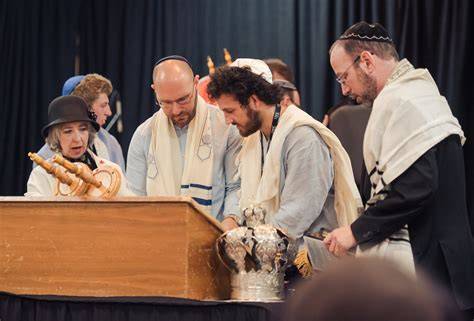
A Congregation of Jews and Non-Jews
Tree of Life is made up of Jews and non-Jews who seek to worship Yeshua within His biblically Jewish context. The congregation presents Messianic Judaism as a setting in which Jewish identity, Torah, biblical festivals, Jewish liturgy, and faith in Yeshua belong together.
Its teaching ministry is intended to help believers understand Messiah more fully and recognize the Jewish roots of their faith. This approach also addresses the relationship between Jewish and non-Jewish believers as a central part of the community’s biblical vision.
Teaching About the First Messianic Jewish Community
A major teaching emphasis is the Book of Acts and the development of the first-century Messianic Jewish community. The congregation teaches that the first-century movement had signs, wonders, and miracles (Mark 16:15,17,18 TLV), favor, and the respect of all the people.
It also had great numbers, touched every strata of Jewish society, remained Jewish, and became a worldwide movement. These characteristics are presented as important elements in understanding the original Messianic Jewish community.
The congregation examines how and why the Messianic Jewish movement initially disappeared, identifying two historical forces: the Gentile Christian dynamic (Isaiah 42:6) and the Jewish religious dynamic.
Yeshua’s Promise and the Beginning of the Movement
Teaching on Acts begins with the prologue and the resurrected Messiah Yeshua’s promise. The material examines Acts 1:1, Acts 1:2, Acts 1:3, and Acts 1:4,5 together with Isaiah 32:15 and Isaiah 44:3.
Yeshua’s last day on earth is studied through Acts 1:6,7 (TLV), Acts 1:8, Acts 1:9, and Acts 1:10,11. The teaching then considers Y’hudah’s/Judas’ fate and replacement, as well as the question of choosing leaders in the Kehilah.
The essentials for choosing leaders include continuing in one accord, praying steadfastly, and having a leader who must lead and must be someone whom people are willing to follow. These principles are considered through Acts 1:12, Acts 1:13-15, Acts 1:16-20, and Acts 1:21-26.
The Messianic Awakening in Acts
The congregation describes the events of Acts 2 as a recipe for a new Messianic awakening: the shake up and wake up. The teaching examines Acts 2:1-4, Acts 2:5-13, Acts 2:14, and Acts 2:15-21.
It also presents six elements for biblically receiving a similar infilling: rest on the “tree of sacrifice” as the way ADONAI pardons and forgives you; put away every known sin; openly confess the Messiah; absolutely surrender your life to ADONAI; definitely ask (Luke 11:9-13); and take ADONAI at His Word by faith.
Messianic Jewish Apologetics and Community
The congregation studies Messianic Jewish apologetics that results in Messianic Jewish community through Acts 2:22-47. The teaching examines Acts 2:22,23 (TLV), Acts 2:24, Acts 2:25-28, Acts 2:29-31, Acts 2:32-36, Acts 2:37, Acts 2:38, Acts 2:39, Acts 2:40, and Acts 2:41-47.
Particular attention is given to the core values and convictions found in the first Messianic Jewish community and to the characteristics found in individuals who make up a Messianic Jewish community.
Parts 01 and 02 Combined - To The Jew First (Introduction and Part 1)
Miracle, Persecution, and Proclamation
The first miracle and the first persecution of the newly birthed Messianic Jewish community are examined together. The teaching follows the first miracle in Acts 3:1-11 and the first persecution in Acts 4:1-31.
The material includes Acts 3:1-5 (TLV), Acts 3:6-8, Acts 3:9-11, Acts 4:1-4, Acts 4:5-10, Acts 4:11,12, Acts 4:13,14, Acts 4:15-18, Acts 4:19,20, Acts 4:21,22, Acts 4:23,24, Acts 4:25-28, Acts 4:29,30, and Acts 4:31.
The teaching also considers two biblical complementary relational models: acceptance, social change, and real dialogue; and rejection, resistance, and confrontation. Based on either model, the congregation asks what should be expected or not expected.
Purity, Power, Persecution, and Proclamation
One teaching focuses on “Purity, Power, Persecution & Proclamation - Ingredients that Enable the Body of the Messiah to Grow.” It examines Acts 4:32,34 (TLV), Acts 4:36,37, Acts 5:1-4, Acts 5:5,6, Acts 5:7-10, Acts 5:11, Acts 5:12-16, Acts 5:17,18, Acts 5:19-21a, Acts 5:21b-25, Acts 5:26-29, Acts 5:30,31, Acts 5:32, Acts 5:33-40, and Acts 5:41,42.
This material includes Gamaliel’s rabbinic legacy and Gamaliel’s interaction and influence on believers. The sequence presents the growth of the Body of the Messiah in the context of purity, spiritual power, opposition, witness, and proclamation.
Stephen: Service and Faithfulness Under Opposition
The congregation teaches about being chosen to serve and becoming a lightning rod for opposition through Acts 6. The material examines Acts 6:1 (TLV), Acts 6:2-4, Acts 6:5, Acts 6:6, Acts 6:7, Acts 6:8, Acts 6:9,10, Acts 6:11-14, and Acts 6:15.
Three false charges against Stephen are identified: speaking against the Temple, the Torah, and changing Jewish customs. Stephen is then presented as an ambassador for Messiah unto death through Acts 7:1-8 and Acts 7:30-41.
The charges against Israel include worshipping false gods, going beyond the dwelling place authorized, resisting Ruach Hakodesh, persecuting the prophets, and disregarding Torah. The teaching continues through Acts 7:54, Acts 7:55,56, Acts 7:57,58, Acts 7:59, and Acts 7:60.
Sha’ul: Persecutor, Convert, and Witness
Another teaching follows Sha’ul as the lead persecutor of the early Messianic Jews. It examines Acts 8:1, Acts 8:2, and Acts 8:3.
The confrontation between Sha’ul and the LORD is presented as a life-changing experience through Acts 9:1,2, Acts 9:3, Acts 9:4,5, Acts 9:6, Acts 9:7, and Acts 9:8,9.
Sha’ul’s preparation is considered in relation to the needs of a new Messianic Jew. Ananias’ traits that Sha’ul needed included being sensitive to G-D’s call, willing to face difficult assignments, willing to be the answer to a prayer, understanding inadequacy, and willing to obey when ADONAI said, “Go.”
Two things new believers need to know are that ADONAI has chosen them to bear His name in their heart, behavior, and actions, and that ADONAI has chosen them to suffer for the sake of His name. The teaching then turns to the beginning of Sha’ul’s witness through a believer’s life and testimony, including Acts 9:17-22.
Acts 10 and the Challenge to Prejudice
The sermon “Acts chapter 10: Striking a Fatal Blow Against Prejudice” examines the relationship between Jewish and non-Jewish believers through Acts 10:1-48.
Two factors made Jewish prejudice run deeper than most: the Jewish people had always been mistreated, enslaved, and persecuted much more than the other people of the world; and the Jewish people misread and misinterpreted G-D’s Word and purpose for them.
The teaching considers permitted and forbidden foods from Leviticus chapter 11, Mark 7:19 properly understood, 1 Timothy 4:4 properly understood, and 1 Timothy 4:1-3. It then follows Acts 10:17-23a, Acts 10:23b-26, Acts 10:27-29a, Acts 10:34,35, Acts 10:44,45, Acts 10:46a, Acts 10:46b,47, and Acts 10:48.
Through this account, the congregation addresses prejudice and the inclusion of non-Jews in the Messianic community while continuing to interpret the passage within its biblical and Jewish context.
Integrity, Holiness, and the Life of Faith
CTL also teaches from the Book of Job about integrity, holiness, and preparation for the end-time bride. Job chapter 31 is described as having a three-fold purpose: Job is going to validate his integrity beyond all doubt by listing his personal standards of holiness and good works; Job is going to delineate the high-water mark of true holiness, defining godliness for all generations; and Job is going to articulate the major themes that ought to pervade the end-time bride’s heart as she prepares for her Bridegroom.
The personal exhortations include guarding the window to our thought life (Job 31:1-4 TLV), walking the narrow path of righteousness (Job 31:5-8), fleeing fornication (Job 31:9-12; 2 Cor. 5:11), treating others without discrimination (Job 31:13-15), and helping the poor, the widow, and the fatherless (Job 31:16-23).
They also include guarding against the love of money (Job 31:24,25), cultivating an exclusive passion for G-D (Job 31:26-28), forsaking bitterness and blessing enemies (Job 31:29,30), being hospitable to strangers (Job 31:31,32), refusing to hide secret sin (Job 31:33,34), and being ethical in business practices (Job 31:38-40).
The teaching further addresses “The defense rests,” the two most powerful combination of ingredients on earth, and the exhortation: “Don’t allow hasatan a foothold - commit to integrity!”
Job’s Daughters and Spiritual Attainment
Another teaching looks more deeply at Job’s daughters and Job’s glorious attainments. The three daughters are presented as a portrait of the end-time bride through Job 42:13-15 (TLV), Jemimah (Ephesians 4:11,12), Keziah, and Keren-huppach.
Job’s attainments at the end of his crucible include wealth and honor (Job 1:3; 42:12; 42:11), character change (1 Kefa/Peter 1:7; Job 42:1-6), healing, a revelation of G-D (Job 42:5; 1 Yochanan/John 2:13; Job 42:6), and scaling the mountain (Psalm 18:34).
Leadership, Service, and Congregational Formation
Across its teaching on Acts, CTL emphasizes the formation of a community shaped by prayer, obedience, service, witness, perseverance, and unity. The material repeatedly returns to the life of the early Messianic Jews, their continued Jewish identity, their proclamation of Messiah, and their response to persecution.
The congregation’s approach connects biblical interpretation with communal practice: worship is expressed through Jewish liturgy, Messianic music, Israeli folk dance, clapping, and lifted hands, while discipleship is expressed through Torah observed from the heart, participation in the Appointed Times of ADONAI, personal integrity, and faithful witness.
Shabbat worship takes place every Saturday at 10:30 AM, and all are welcome to join Congregation Tree of Life in worshipping Yeshua within His biblically Jewish context.
tags: #tree #of #life #messianic #congregation