Ephesians 6:18 teaches Christians to pray continually, in the power and under the direction of the Holy Spirit, using every kind of prayer, remaining alert and persistent, and interceding for all believers. Prayer is the essential way Christians use and sustain the whole armor of God in spiritual warfare.
The verse reads: “Praying always with all prayer and supplication in the Spirit, and watching thereunto with all perseverance and supplication for all saints.” The ESV renders it: “Praying at all times in the Spirit, with all prayer and supplication. To that end, keep alert with all perseverance, making supplication for all the saints.”
The Context of Ephesians 6:18
Ephesians 6:10-20 is the most clear and comprehensive statement about spiritual warfare in the Bible. The Christian life is a battleground, not a playground. If you live for Christ, Satan will fight back.
Ephesians 6:10-13 calls us to combat readiness: “Finally, be strong in the Lord and in the strength of his might. Put on the whole armor of God, that you may be able to stand against the schemes of the devil. For we do not wrestle against flesh and blood, but against the rulers, against the authorities, against the cosmic powers over this present darkness, against the spiritual forces of evil in the heavenly places. Therefore take up the whole armor of God, that you may be able to withstand in the evil day, and having done all to stand firm.”
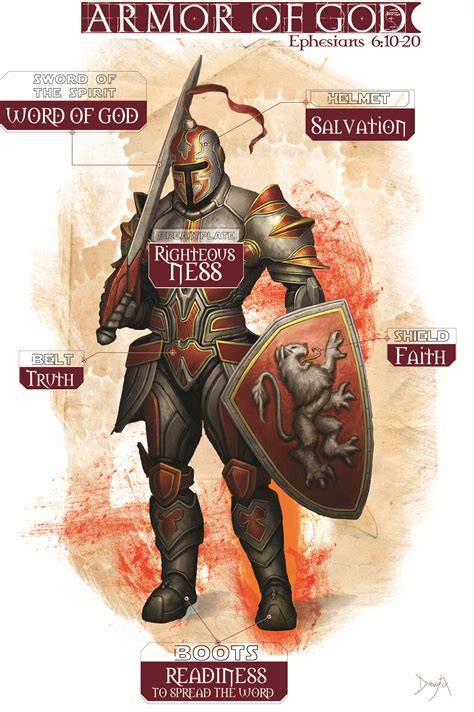
This passage focuses on how to stand firm, not deciphering the enemy’s schemes. Verses 14-17 train us how to be dressed and ready for battle:
- Fasten on the belt of truth tightly.
- Put on the breastplate of righteous.
- Wears the gospel of peace as shoes.
- Deflect attacks with the shield of faith.
- Put the helmet of salvation on your head.
- Arm yourself with the sword of the Spirit.
The armor of God equips you to stand your ground. But spiritual equipment will not win the battle without spiritual energy. Ephesians 6:18 tells us how to train for combat: “praying at all times in the Spirit, with all prayer and supplication. To that end, keep alert with all perseverance, making supplication for all the saints.”
Though Paul drops the military metaphor here, he still talks about spiritual warfare. The armor he describes was based on Roman soldiers’ battle gear. But the Roman soldier had nothing to compare to what the Christian soldier has in prayer.
Prayer Is Essential to Spiritual Warfare
Verses 18 to 20 set forth the dynamics of prayer in spiritual warfare. It is not the armor that makes the warrior but the character of the fighter. The warrior needs to be upheld by prayer.
This verse is not an additional piece of armor but rather an instruction about how we are to use all the pieces of armor. The armor provided by God cannot be used except in communion with God.
Prayer is essential for the Christian life, for without it the Christian is faint. Knowledge of doctrine and the whole armor of God is essential, but prayer brings these to life and allows us to experience God.
Prayer is the believer’s secret weapon that guarantees spiritual victory. Restraining prayer, we cease to fight. Prayer keeps the Christian’s armor bright. And Satan trembles when he sees, The weakest saint upon his knees.
Nothing is more fatal than beginning the Christian life thinking trouble and problems are finished. Rather, Christians should expect attacks as never before.
It’s easy to be a soldier in a parade,’ he writes. ‘The weapons aren’t loaded, there is no enemy to be found, and all your leader has to do is make sure you keep in step. But when you’re in a war, your weapons are always loaded, the enemy is in sight, and your commander is telling you what to do in order to stay alive and win the battle. Far too many believers in Jesus Christ think they are in a parade instead of a war.
Some Christians are known as “prayer warriors.” They may not hold any church title, office, or position. Yet they are easy to identify. They are the ones members go to when they need prayer.
It is good for the church to have members who are devoted to prayer and know how to get a prayer through. But this designation should not be for an elite group that is specially trained in warfare prayer. Every Christian is to be a prayer warrior.
The Meaning of “All” in Ephesians 6:18
Verse 18 contains 6 all’s (4 actual + 2 implied) that direct when, how, for whom and for what we should pray.
- All prayer
- All petition
- At all times
- All perseverance
- All petition
- For all the saints
Note the word “all” occurs four times in verse 18. Defeated Christians pray sometimes, with some supplication, some perseverance, for some of the saints. Victorious Christians wear and work the armor of God through prayer.
The word “all” implies concentration and thorough praying on all occasions and with every kind of prayer. There are five different kinds of prayer: confession, praise, thanksgiving, petition, and intercession.
“Praying at All Times”
We are to be at prayer on all occasions or every time a situation arises (1 Th 5:17). Prayer is important for spiritual conflict.
What does it mean to pray at all times? It does not mean you should do nothing but pray. It means you should do nothing without prayer.
Do not wait until the threat emerges, the enemy attacks, or the battle rages to pray. Pray at all times. View every occasion as a call to prayer.
On good days, thank God in prayer. On bad days, trust God in prayer. W. Graham Scroggie said, “Pray when you feel like it, pray when you don’t feel like it, pray until you feel like it.”
Daniel’s enemies sought to bring him down by seducing the king into signing a decree that required everyone to pray to him alone for a month. Daniel 6:10 says, “When Daniel knew that the document had been signed, he went to his house where he had windows in his upper chamber open toward Jerusalem. He got down on his knees three times a day and prayed and gave thanks before his God, as he had done previously.”
Daniel was able to pray in a crisis because he prayed before the crisis. He prayed at all times.
The apostle Paul instructs Christians to pray always in Ephesians 6:18. We must pray without ceasing, watching diligently and persevering in prayer. Prayer should be constant, not sporadic.
“With All Prayer and Supplication”
“Prayer” is the general word for prayer in the New Testament. Prayer includes all conversations with God.
Verse 18 instructs us to pray “with all prayer and supplication.” These terms are synonymous. Yet, there is a distinction between the terms.
“Prayer” translates the most general word for prayer in the New Testament. It simply means to talk to God. Prayer is a wonderful privilege, not a burdensome duty. Do not reluctantly say, “I have to pray.” You should eagerly declare, “I get to pray!”
Paul distinguishes between prayer and supplication to advise us that prayer should not only consist of supplications. Prayer is more than asking God for things. It is communication and communion with God.
“Supplication” is a specific request of God. “Supplication” is specific petition in prayer. It is a request, entreaty, or petition.
The apostle Paul speaks of “all prayer,” then “supplication.” First, he means all kinds of prayer in general - private, public, with or without words, orderly prayer, groans, etc. Then he specifies a certain kind of prayer: supplication, which is petition.
There are five different kinds of prayer: confession, praise, thanksgiving, petition, and intercession.
| Expression in Ephesians 6:18 | Meaning |
|---|---|
| Prayer | The general act of talking and communing with God |
| Supplication | A specific request, entreaty, or petition |
| All prayer | Every kind of prayer, including private, public, spoken, and wordless prayer |
| For all the saints | Intercession for all believers |
Prayer Expresses Dependence on God
Prayer is talking to God. Prayer is trusting in God. The key to prayer is a heart of dependence.
Prayer advertises our dependence upon God. The things you pray about are the things you trust God for. The things you do not pray about are the things you think you can handle on your own.
Prayer is abandoning my reliance on me and running toward the rest that can be found only when I rely on the power of God.
Prayer is the antidote to my selfish ambition and chronic anxiety. Prayer is the solution to the frustration of my failed attempts at control, especially self-control.
Hebrews 4:14-16 says, “Since we have a great high priest who has passed through the heavens, Jesus, the Son of God, let us hold fast our confession. For we do not have a high priest who is unable to sympathize with our weaknesses, but one who in every respect has been tempted as we are, yet without sin. Let us then with confidence draw near to the throne of grace, that we may receive mercy and find grace to help in time of need.”
Matthew 7:11 says, “If you then, who are evil, know how to give good gifts to your children, how much more will your Father who is in heaven give good things to those who ask him!”
Psalm 37:4 says, “Delight yourself in the Lord, and he will give you the desires of your heart.” When you delight in the Lord, you can ask what your heart desires with confidence that he will hear and answer.
What Does It Mean to Pray “In the Spirit”?
Praying in the Spirit is mentioned three times in Scripture. First Corinthians 14:15 says, “So what shall I do? I will pray with my spirit, but I will also pray with my mind; I will sing with my spirit, but I will also sing with my mind.” Ephesians 6:18 says, “And pray in the Spirit on all occasions with all kinds of prayers and requests. With this in mind, be alert and always keep on praying for all the saints.” Jude 20 says, “But you, dear friends, build yourselves up in your most holy faith and pray in the Holy Spirit.”
The Greek word translated “pray in” can have several different meanings. It can mean “by means of,” “with the help of,” “in the sphere of,” and “in connection to.”
Praying in the Spirit does not refer to the words we are saying. Rather, it refers to how we are praying. Praying in the Spirit is praying according to the Spirit’s leading.
It is praying for things the Spirit leads us to pray for. Romans 8:26 tells us, “In the same way, the Spirit helps us in our weakness. We do not know what we ought to pray for, but the Spirit Himself intercedes for us with groans that words cannot express.”
You cannot pray sincerely if you are in the flesh. Verse 18 says pray “at all times in the Spirit.” The biblical pattern is to the Father through the Son in the Spirit.
To pray in the Spirit is not about speaking in tongues. It is to have the Holy Spirit guide your thoughts, guard your heart, and govern your words in prayer.
It’s the difference between praying and saying prayers. We pray for the wrong things. We pray with the wrong attitude. We pray with the wrong motives. But the Holy Spirit is our prayer partner.
Romans 8:26-27 says, “Likewise the Spirit helps us in our weakness. For we do not know what to pray for as we ought, but the Spirit himself intercedes for us with groanings too deep for words. And he who searches hearts knows what is the mind of the Spirit, because the Spirit intercedes for the saints according to the will of God.”
Praying in the Spirit Is Not Simply Praying in Tongues
Some, based on 1 Corinthians 14:15, equate praying in the Spirit with praying in tongues. Discussing the gift of tongues, Paul mentions “pray with my spirit.”
First Corinthians 14:14 states that when a person prays in tongues, he does not know what he is saying, since it is spoken in a language he does not know. Further, no one else can understand what is being said, unless there is an interpreter (1 Corinthians 14:27-28).
In Ephesians 6:18, Paul instructs us to “pray in the Spirit on all occasions with all kinds of prayers and requests.” How are we to pray with all kinds of prayers and requests and pray for the saints, if no one, including the person praying, understands what is being said?
Therefore, praying in the Spirit should be understood as praying in the power of the Spirit, by the leading of the Spirit, and according to His will, not as praying in tongues.
Praying in the Spirit and Communion with God
The secret of true prayer is “in the Spirit.” Vain repetitions, merely uttering words out of habit or custom, is not praying.
Praying in the Spirit means being concentrated and submitted to the Spirit, so that He creates, directs, orders, and empowers praying.
It means recalling that the only way into the presence of God is in Christ. Praying in the Spirit is having fellowship with God, which ends in true worship.
The secret to true prayer is praying in the Spirit. This means prayer directed and empowered by the Holy Spirit.
Praying in the Spirit is the opposite of vain repetition, reliance on form or ritual, or cold and heartless prayer. Praying in the Spirit requires being in the Spirit yourself, realizing your access is through Christ, realizing the presence of God, and results in worship, freedom, and boldness.
Examples of praying in the Spirit include times when prayer becomes eloquent, freedom is experienced, and you lose sense of time.
Keeping Alert in Prayer
“Being watchful” means being alert. A good soldier keeps watch for the enemy. He never sleeps on his spiritual laurels. He is constantly on guard about praying in the Spirit.
To stand firm in prevailing prayer, we must keep alert. The Greek term means “no sleeping.” It is to be watchful.
A soldier guarding his post must be awake, alert, and aware. If he falls asleep, the enemy may catch him unaware. A faithful soldier must keep alert at all times.
In the Garden of Gethsemane, Jesus asked Peter, James, and John to pray with and for him. Matthew 25:40-41 says, “And he came to the disciples and found sleeping. And he said to Peter, ‘So, could you not watch with me one hour? Watch and pray that you may not enter into temptation. The spirit indeed is willing, but the flesh is weak.’”
This is true of all of us. Your spirit may be willing to be there for Jesus. But the flesh is weak. You will fall into temptation if you do not watch and pray.
Marvin Vincent wrote, “One must watch before prayer, in prayer, after prayer.”
Persevering in Prayer
We exhibit watchfulness in prayer by our perseverance in prayer. We bring prayers doggedly to God. We give constant attention to prayer, unremitting attention (Ro 12:12).
“Perseverance” is patient endurance regardless of circumstances. Perseverance in prayer is essential for maintaining our spiritual vitality and effectiveness in spiritual warfare.
Pray “always” - “at every time, on every occasion, at all seasons.” “Watch thereunto” - remain alert, vigilant, and attentive in prayer. Pray “with all perseverance” - don’t pray in fits and starts or have merely “spasms of praying.”
“Never quit, never cease praying” - as Jesus taught that “men should always pray and not faint.”
Matthew 7:7 says, “Ask, and it will be given to you; seek, and you will find; knock, and it will be opened to you.” The imperatives are in a grammatical emphasis that denotes continual action or habitual activity. Jesus says, “Keep asking, seeking, and knocking.”
Persevere in prayer. Don’t stop praying. Pray until something happens.
Luke 18:1 says we “ought always to pray and not lose heart.” Colossians 4:2 says, “Continue steadfastly in prayer, being watchful in it with thanksgiving.” 1 Thessalonians 5:17 says, “Pray without ceasing.”
Jesus told two parables about persevering in prayer. Luke 11 records the Parable of the Friend at Midnight. Luke 18 records the Parable of the Unjust Judge.
God is the anti-hero in both parables. If a sleepy friend will give you bread just to get back to sleep, you can trust God to provide what you need if you preserve in prayer.
If a crooked judge will help a widow just to get her off his back, you can trust God to take up your case if you persevere in prayer.
Don’t stop praying!
Praying for All the Saints
“For all the saints” means that Christians should not neglect to pray for all Christians. We not only pray about our own spiritual problems but for the spiritual battles of others.
You cannot be a healthy, growing, and fruitful Christian if you do not pray for yourself. Likewise, you cannot be a healthy, growing, and fruitful Christian if you only pray for yourself.
We are not to think only of ourselves when we pray. Supplication should overflow into intercession for others.
Verse 18 ends by saying we should be “making supplication for all the saints.” We should pray for one another by name and by need.
Stephen Motyer wrote, “Prayer binds the whole body of Christ together in love. We love people by praying for them.”
Prayer is not merely a private activity concerned with personal needs. The command to pray for all the saints directs believers toward the spiritual needs, struggles, temptations, ministries, and witness of the entire people of God.
Paul’s Example of Intercessory Prayer
Verses 19-20 give a personal and practical illustration of how to intercede for others: “And also for me, that words may be given to me in opening my mouth boldly to proclaim the mystery of the gospel, for which I am an ambassador in chains, that I may declare it boldly, as I ought to speak.”
The Apostle Paul is the church’s most outstanding pastor, missionary, and theologian. Yet Paul needed prayer. No Christian is strong enough to win spiritual battles on their own. We all need to be covered in believing prayer.
Paul’s prayer request reflected spiritual priorities. He did not ask them to pray that he would be released from prison. He asked for prayer that he would proclaim the gospel faithfully, clearly, and boldly.
Victorious prayer is gospel-driven, Christ-exalting prayer.
Paul’s request shows that prayer in spiritual warfare is not centered primarily on comfort, personal success, or escape from difficulty. It is centered on faithfulness to God and the bold proclamation of the gospel.
Prayer and Spiritual Maturity
Prayer is the highest activity of the human soul, and therefore it is at the same time the ultimate test of a man’s true spiritual condition (there is nothing so much as prayer life that tells the truth about us as Christian people.) Everything we do in the Christian life is easier than prayer.
Prayer is awe, intimacy, struggle-yet, the way to reality. There is nothing more important, or harder, or richer, or more life-altering. There is absolutely nothing so great as prayer.
Our ultimate position as Christians is tested by the character of our prayer life. The ultimate test of my understanding of the scriptural teaching is the amount of time I spend in prayer.
The more I know theology, the more it ought to drive me to seek to know God, not to know about Him, but to know Him. If our theological knowledge doesn’t lead to deeper prayer, there’s something wrong somewhere in how we’re handling that knowledge.
Why Orthodoxy Alone Is Not Enough
Even orthodoxy is not enough in spiritual warfare. It is possible for Christians to be perfectly orthodox and yet to be defeated, and to be living a defeated and a useless life.
The problem occurs when believers rely on their intellectual understanding of the truth without maintaining vital spiritual communion with God.
A mere intellectual acquaintance with the truth, though it is absolutely essential, is not sufficient. The armor of God cannot be used except in fellowship and communion with God.
A mechanical or magical view of the armor assumes that simply having correct doctrine automatically protects believers without the necessity of prayer. Ephesians 6:18 rejects that view by connecting the armor with continual, Spirit-directed prayer.
Prayer as Dependence Rather Than Self-Reliance
Prayer takes the situation out of your hands and puts it in the hands of God. Take your burden to the Lord and leave it there!
A league of nations rose up against Jehoshaphat. Jehoshaphat responded by calling for a time of national prayer and fasting. Then he went to the house of God to pray.
2 Chronicles 20:12 says, “O our Lord, will you not execute judgment on them? For we are powerless against this great horde that is coming against us. We do not know what to do, but our eyes are on you.”
The Lord answered through Jahaziel. Verse 17 says, “You will not need to fight this battle. Stand firm, hold your position, and see the salvation of the Lord on your behalf, O Judah and Jerusalem. Do not be afraid and do not be dismayed. Tomorrow go out against them, and the Lord will be with you.”
Jehoshaphat believed God and organized a choir to lead them into battle. Verse 21 says the sang, “Give thanks to the Lord, for his steadfast love endures forever.” As the people praised the Lord, the Lord set an ambush against the enemy!
What Ephesians 6:18 Requires of Christians
- Pray at all times, not only during emergencies.
- Pray in the Spirit, under the Spirit’s direction and power.
- Use every kind of prayer, including confession, praise, thanksgiving, petition, and intercession.
- Bring specific requests and supplications to God.
- Remain alert before, during, and after prayer.
- Persevere instead of praying only in occasional bursts.
- Pray for all the saints, not only for personal needs.
- Pray for spiritual strength, faithfulness, and gospel witness.
- Use the whole armor of God through fellowship and communion with God.
Ephesians 6:18 therefore describes prayer as continual dependence on God in the midst of spiritual conflict. The Christian is to pray on every occasion, with every kind of prayer, through the help of the Holy Spirit, with persistent alertness, and with loving intercession for all believers.