St. Mary Magdalene is the patron saint of repentant sinners, converts, hairdressers, perfumeries, pharmacists, tanners, women, sexual temptation, and the contemplative life. She is also associated with glove makers, people ridiculed for their piety, and those seeking freedom from past sins and harmful habits.
Mary Magdalene is especially honored as a model of repentance, loyalty, courage, and evangelization. After Jesus cast seven demons out of her, she became His devoted disciple, remained near Him during His Passion and Crucifixion, and became the first person to announce His Resurrection to the Apostles.
Mary Magdalene’s Main Patronages
| Patronage | Connection with Mary Magdalene |
|---|---|
| Repentant sinners | Her conversion and faithful life after encountering Christ make her an example of repentance and God’s mercy. |
| Converts | She became a devoted disciple after Jesus freed her from seven demons. |
| Hairdressers | She is traditionally connected with the woman who dried Jesus’ feet with her hair, although Scripture does not identify that woman with Mary Magdalene. |
| Perfumeries and perfumers | She is associated with the women who went to the tomb to anoint Jesus’ body with spices. |
| Contemplative life | Later traditions describe her spending many years in solitude and penance in southern France. |
| Pharmacists, tanners, glove makers, and women | These are additional traditional patronages associated with her in Catholic devotional lists. |
| Sexual temptation | Her traditional association with repentance makes her an intercessor for those struggling with temptation and past sins. |
Why Mary Magdalene Is the Patron Saint of Repentant Sinners
St. Mary Magdalene is one of the greatest biblical examples of conversion. The Gospels state that Jesus cast seven demons out of her, and her subsequent life shows a profound change from suffering and spiritual bondage to faithful discipleship.
St. Mary Magdalene is a disciple of Christ to whom every person can relate. She was a sinner, experienced human weakness, and was persecuted and humiliated. The fact that she brought this sin and shame to Christ is what makes her a great saint.
Mary Magdalene is perhaps best known for being the woman who had seven demons cast out of her (Mark 16:9) and for her immoral lifestyle. Though her life of sin is an important part of her story, far more important is how she lived after meeting Christ.
Her life of virtue, and penitence for her past sins, is why she is considered a great saint and looked to as proof of God’s mercy and grace. There is also debate over if Mary Magdalene is the same unnamed women, a sinner, who weeps and washes Jesus' feet with her hair in the Gospel of John. Scholars are skeptical this is the same person.
Mary Magdalene as Patron Saint of Converts
Mary Magdalene became a follower of Christ after he cast out seven demons from her. From then on, Mary Magdalene supported the Apostles throughout their ministry.
During Jesus' ministry, it is believed that Mary Magdalene followed him, part of a semi-permanent entourage who served Jesus and his Disciples. She was one of the many “who were assisting them [Jesus and the Twelve] out of their means.”
Despite the scholarly dispute over her background, what she did in her subsequent life, after meeting Jesus, is much more significant. She was certainly a sinner whom Jesus saved, giving us an example of how no person is beyond the saving grace of God.
Why She Is Called the “Apostle to the Apostles”
Mary Magdalene is known as “the Apostle to the Apostles.” “Apostle of the Apostles” is the title given Mary Magdalene by St Thomas Aquinas.
St. Mary is called “Apostle to the Apostles” because she was the first person Christ instructed to proclaim the Good News of His Resurrection to the Apostles (John 20:17). It is said that St. Hippolytus (c. 170- c.235) gave her this title.
Mary Magdalene became the first witness to His Resurrection and was sent to proclaim the joyful news to the Apostles. The Apostles went on to proclaim to the world this truth they learned from her.
Mary Magdalene in the Gospels
Mary Magdalene, that is, “of Magdala,” was the one from whom Christ cast out “seven demons” (Luke 8:2)-an indication at the worst, of extreme demonic possession or possibly, severe illness.
Her name comes from her home town of Magdala, a fishing village on the western shore of Lake Tiberias. St Luke the Evangelist tells us, in Chapter 8 of his Gospel, how Jesus went from town to town announcing the Good News of the Kingdom of God, and how the Twelve Apostles were with Him together with some women who had been healed of evil spirits or infirmities, and were serving them.
Among these was a certain "Mary, called the Magdalene, from whom seven demons came out." Mary was a faithful witness to Jesus.
Mary Magdalene is also known for being the most prominent woman mentioned in the New Testament, aside from the unique place of the Lord’s Mother. She accompanied Jesus and His disciples from early in His Ministry to the end in His Passion, Death, and Resurrection.
Her Presence at the Cross and the Tomb
She followed Jesus to His crucifixion and stood beside His mother and St. John at the foot of the cross. Mary Magdalene remained faithful to Christ through His Passion and was among the women present at His Crucifixion.
Mary Magdalene appears in the Gospels in the most dramatic moment of Jesus' life, when she accompanies Him to Calvary and, along with other women, observes Him from afar. She is still there when Joseph of Arimathea places the body of Jesus in the sepulcher, which is closed with a stone.
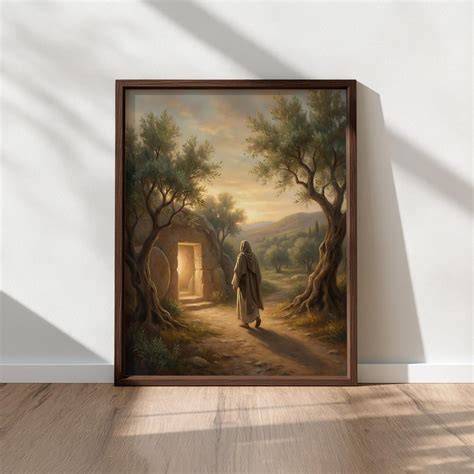
Early on the first day of the week, she went to His tomb to anoint His body but found the stone rolled away and the tomb empty. And on the morning of the first day of the week, she returns to the tomb, finds the stone rolled away, and runs to warn Peter and John.
They in turn hurry to the empty tomb and discover that the body of the Lord is missing. The two disciples return home but Mary Magdalene remains at the tomb in tears.
Mary Magdalene and the Resurrection
After the Sabbath, Mary Magdalene returned to an empty tomb and became the first witness of Christ’s Resurrection. She ran and brought the good news to the Apostles, becoming the first to announce the rising of Christ to new life.
Her initial disbelief gradually turns to faith when she sees two angels and asks them if they know where Jesus’ body has been taken. Then she sees Jesus Himself, but fails to recognize Him.
She thinks He is the gardener, and when He asks why she is crying and who she is looking for, she replies: "Sir, if you have taken Him away, tell me where you have put Him and I will go and remove Him.” But Jesus says her name, "Mary" - and she recognizes Him at once: "Rabbuni!”, she says, which in Hebrew means "Master!".
Jesus then tells her: "Do not cling to me because I have not yet ascended to the Father; but go and find the brothers and to tell them I am ascending to my Father and your Father, to my God and your God." So Mary Magdalene goes to the disciples and tells them she has seen the Lord and that He said these things to her. (cf. John 20).
She announces Jesus’ Resurrection from the dead. Mary Magdalene is the first among the women following Jesus to proclaim Him as having overcome death. She is the first to announce the joyful message of Easter.
Consider this passage from Scripture in the holy Gospel according to John: Jesus said to her, “Woman, why are you weeping? Whom are you looking for?” She thought it was the gardener and said to him, “Sir, if you carried him away, tell me where you laid him, and I will take him.” Jesus said to her, “Mary!” She turned and said to him in Hebrew, “Rabbouni,” which means Teacher.
Jesus said to her, “Stop holding on to me, for I have not yet ascended to the Father. But go to my brothers and tell them, ‘I am going to my Father and your Father, to my God and your God.’” Mary of Magdala went and announced to the disciples, “I have seen the Lord,” and what he told her.
Why She Is Associated with Perfume and Perfumeries
St. Mary Magdalene is traditionally associated with perfume makers and perfumeries because of Gospel accounts involving anointing Jesus with perfumed oil. She is also associated with the women who went to the tomb to anoint His body after His death.
But, according to Cardinal Ravasi, there is a further misunderstanding: anointing with perfumed oil is a gesture that was also performed by Mary, the sister of Martha and Lazarus, on a different occasion, as reported by the Evangelist, St John.
Without any real textual connection, Mary of Magdala was identified with that unnamed prostitute. But, according to Cardinal Ravasi, there is a further misunderstanding: anointing with perfumed oil is a gesture that was also performed by Mary, the sister of Martha and Lazarus, on a different occasion, as reported by the Evangelist, St John.
St. Mary Magdalene is the patron saint of repentant sinners, hairdressers, perfumeries, and contemplative life.
Why She Is Associated with Hairdressers
Mary Magdalene is traditionally associated with hairdressers because she has often been identified with the unnamed sinful woman who bathed Jesus’ feet with perfume and tears and dried them with her hair.
In Luke’s Gospel we read of the conversion of an anonymous "known sinner in that city" who, when Jesus was a guest in the house of a notable Pharisee, bathed His feet with perfume and her tears and dried them with her hair."
However, Scripture does not identify that woman as Mary Magdalene. Most Scripture scholars today point out that there is no scriptural basis for confusing the two women.
Misconceptions About Mary Magdalene
Mary Magdalene has long been referred to as being a prostitute, though nowhere in Scripture does it specify that she was one. The Gospel writers do share that she was a great sinner, without specifying in what way.
As Biblical exegesis teaches, the expression 'seven demons' could indicate a serious physical or moral malady that had struck the woman and from which Jesus had freed her. But, until now, tradition has claimed that Mary Magdalene was a prostitute.
This is only because in Chapter 7 of Luke’s Gospel we read of the conversion of an anonymous "known sinner in that city" who, when Jesus was a guest in the house of a notable Pharisee, bathed His feet with perfume and her tears and dried them with her hair." Without any real textual connection, Mary of Magdala was identified with that unnamed prostitute.
Most Scripture scholars today point out that there is no scriptural basis for confusing the two women. Writing in the New Catholic Commentary, Father Wilfrid J. Harrington, O.P., says that “seven demons” “does not mean that Mary had lived an immoral life-a conclusion reached only by means of a mistaken identification with the anonymous woman of Luke 7:36.”
In the Jerome Biblical Commentary, Father Edward Mally, S.J., agrees that she “is not…the same as the sinner of Luke 7:37, despite the later Western romantic tradition about her.”
Was Mary Magdalene the Same as Mary of Bethany?
Mary Magdalene has come to be identified with this Mary of Bethany, after being confused with the prostitute of Galilee. And so, in some popular traditions, Mary Magdalene has come to be identified with this Mary of Bethany, after being confused with the prostitute of Galilee.
Mary the sister of Martha and Lazarus of Bethany is likewise often identified as the same person. This Mary similarly anoints the Lord’s feet with a costly ointment, as the sinful woman did and as Magdalene would do of Christ’s Body in death.
In this view, Bethany is likely her origin, Magdala where she lived. In general, the opinions on who Mary Magdalene was tend to be divided along Greek and Latin lines.
The Latin or Western Fathers of the Church generally hold that St. Mary Magdalene, the sinful woman, and Mary of Bethany are the same, while the Greek or Eastern Fathers that they are three different women. Scripture provides no clear solution to this question.
The Meaning of the Seven Demons
Scripture doesn’t mention why Mary Magdalene was possessed by seven demons. This expression may mean seven individual demons, or, since the number seven can symbolize some kind of “perfection,” some hold that it simply means she was completely possessed.
Others believe that it represents the practice of the seven deadly sins. Since the demons can associate with particular sins, and the capital sins collectively represent all sins, the three views are not incompatible.
The fact that Mary Magdalene had seven demons cast out of her suggests that she may have suffered from illness, as well. This was the case with the boy who convulsed and foamed at the mouth before Jesus delivered from possession (Mt. 17:18).
Both mental and physical illness can exist in the possessed, for which reason the Church carefully discerns between natural and demonic causes in every case of alleged possession. The Lord would have known immediately, of course, and healed her of both spiritual and physical illnesses.
Mary Magdalene and the Contemplative Life
Mary Magdalene is also the patron saint of the contemplative life. This association comes mainly from later traditions about her life after the Ascension of Jesus.
According to the most commonly held tradition, Mary Magdalene and other friends of Jesus went by boat to the south of France and converted the whole of Provence. This account holds that she retired to a hill or cave, La Sainte-Baume, where she lived a life of great penance for thirty years and then died.
After the death of Christ, a legend states that she remained among the early Christians. After fourteen years, she was allegedly put into a boat by Jews, along with several other saints of the early Church, and set adrift without sails or oars.
The boat landed in southern France, where she spent the remaining years of her life living in solitude, in a cave. This tradition explains her connection with contemplation, solitude, penance, and prayer.
DISCOVER JESUS – The Risen Lord Jesus Christ Appears to Mary Magdalene (John 20:1-18) ESV
Other Traditional Patronages
In addition to repentant sinners, converts, hairdressers, perfumeries, and the contemplative life, Mary Magdalene is traditionally named the patroness of glove makers, people ridiculed for their piety, pharmacists, sexual temptation, tanners, and women.
- Repentant sinners
- Converts
- Hairdressers
- Perfumeries and perfumers
- The contemplative life
- Pharmacists
- Tanners
- Glove makers
- Women
- People ridiculed for their piety
- Those facing sexual temptation
Why the Church Honors Mary Magdalene
The Church celebrates St. Mary Magdalene because of her example of virtue and loyalty to Christ. She was a devoted disciple and close friend of Jesus during the time of His ministry, and one of the few who remained with Him during His agony on the Cross.
Finally, she was one of the three women who went to anoint His body in the tomb on Easter morning, becoming the first person to announce the Resurrection to others, when she went and told the Apostles that He had risen.
She did not deny him or run away in fear as the other disciples did, but remained close to Him every moment, up to and including the tomb. She is known as the “Apostle to the Apostles.”
Mary Magdalene’s Feast Day
St. Mary Magdalene’s feast day is July 22. Pope Francis elevated the memory of Mary Magdalene to the status of Festivity on July 22nd, 2016 in order to stress the importance of this faithful disciple of Christ.
In 2016, Pope Francis elevated the status of her liturgical celebration to a feast in order to stress her importance as a disciple and evangelizer.
Mary Magdalene’s Prayer and Spiritual Example
Look to Mary Magdalene’s intercession when you’re feeling unworthy or inadequate. Ask her to intercede for you when you feel drawn to past sins or old, bad habits.
St. Mary Magdalene, pray for us!
Saint Mary Magdalene, woman of many sins, who by conversion became the beloved of Jesus and remained at His cross, thank you for your witness that Jesus forgives through the miracle of love. You, who already possess eternal happiness in His glorious presence, please intercede for me, so that one day I may share in the same everlasting joy. Amen.
In an address given by Pope Benedict XVI in 2006 on St. Mary Magdalene, he said, The story of Mary of Magdala reminds us all of a fundamental truth. A disciple of Christ is one who, in the experience of human weakness, has had the humility to ask for His help, has been healed by Him, and has set out following closely after Him, becoming a witness of the power of His merciful love that is stronger than sin and death.
Questions About Mary Magdalene
Was Mary Magdalene Jesus’ wife?
No, Mary Magdalene was not Jesus’ wife. Our Lord was not married to any woman.
Any reference that is made to Christ and His Bride refers to the Church- of which all the redeemed are members. Some contemporary works of fiction make such claims, but nothing in secular history, nor Church history and tradition, supports them.
The only relationship between Jesus and Mary was that of Teacher and disciple, Savior and saved. This is the same love and friendship between the Lord and those whom He has redeemed-beginning with the Apostles and disciples who accompanied Him during His lifetime.
Was Mary Magdalene at the Last Supper?
Mary Magdalene was not mentioned in Scripture as being present at the Last Supper, though we do know she was present at Jesus’ Passion, Death, and Resurrection. It is quite possible, however, that the Mother of the Lord, Mary Magdalene, and other women were indeed present.
What did Mary Magdalene do after Jesus’ Ascension?
According to the most commonly held tradition, Mary Magdalene and other friends of Jesus went by boat to the south of France and converted the whole of Provence. This account holds that she retired to a hill or cave, La Sainte-Baume, where she lived a life of great penance for thirty years and then died.
Where is Mary Magdalene buried?
Following the tradition that Mary Magdalene ended up in the south of France, it is said that she died there and St. Maximinus buried her in his chapel, known today as the Basilica of St. Mary Magdalene, in Saint-Maximin-la-Sainte-Baume.
Today, people continue to visit the crypt at the Basilica to pray at her tomb and to view her relics.