The Tabernacle was not located permanently in one place: it was a portable sanctuary that traveled with the Israelites through the Sinai wilderness and during the conquest of Canaan. It was erected at the center of the Israelite camp, with its entrance facing east, and was moved whenever the Israelites established a new camp.
After the conquest of Canaan, the Tabernacle was set up at Shiloh, where it remained during most of the period of the Judges. Later, the sanctuary was moved to Nob and then to Gibeon, while the Ark of the Covenant was brought to Jerusalem by David. Solomon eventually transferred the Tabernacle and its furnishings to Jerusalem for the dedication of the Temple, after which the Temple superseded it as Israel’s permanent sanctuary.
The Tabernacle as a Mobile Sanctuary
Tabernacle (Hebrew מִשְׁכַּן miškan), literally “dwelling place,” is the main term used by the Torah’s Priestly author to describe YHWH’s tent-shrine.[1] According to the Hebrew Bible, the Tabernacle (Hebrew: מִשְׁכָּן, romanized: miškān, lit. 'residence, dwelling place'), also known as the Tent of the Congregation (Hebrew: אֹהֶל מוֹעֵד, romanized: ˌʔohel-mōˈʕēḏ, also Tent of Meeting), was the portable earthly dwelling of Yahweh used by the Israelites from the Exodus until the conquest of Canaan.
The tabernacle was the tent in which God’s glory abided (Exod 40:34; cf. 2 Sam 7:6-7; 1 Chron 17:5-6; Ps 78:60). In short, the tabernacle was a tent where Israel could meet God during their travels in the wilderness. In other words, the tabernacle was a mobile temple.
During the Exodus, the wandering in the desert and the conquest of Canaan, the Tabernacle was in part a portable tent, and in part a wooden enclosure draped with ten curtains, of blue (tekhelet תְּכֵלֶת), purple (’argāmān אַרְגָּמָן), and scarlet (šānî שָׁנִי) fabric. It had a rectangular, perimeter fence of fabric, poles and staked cords.
The completed Tabernacle was dedicated on the first day of the month of Nisan, one year after the exodus from Egypt. From that point forth, it would travel with the children of Israel throughout their forty year sojourn in the wilderness.
To build the Tabernacle, the Ark of the Covenant, and the other cultic implements, YHWH appoints two craftsmen, Bezalel and Oholiab (Exod 31:1-11), and the Tabernacle is erected in nine months (Exod 19:1; 40:17).
Where Was the Tabernacle Located in the Israelite Camp?
When Israel camped, the tabernacle was set up in the precise center of the camp (symbolizing the idea that God was to be the center of his people’s lives).
In the center of this enclosure was a rectangular sanctuary draped with goat-hair curtains, with the roof coverings made from rams' skins.
The desert encampment of the Israelites was laid out in a specific pattern, as described in Numbers. In the center of the encampment stood the Tabernacle. The courtyard entrance was in the east. Along the northern, southern and western sides of the courtyard were the Levite encampments, as described above.
Immediately surrounding the tabernacle and its courtyard were the encampments of the Levite families, the bearers of the Tabernacle and its vessels throughout the desert journey: the Gershoni family encamped to the west of the tabernacle; the Kehati family to the south; the Merari family to the north.
Directly opposite the entrance to the courtyard was the tent of Moshe and Aharon and his children. A special tent was erected for the coffin of Yoseph, enabling Moshe to bring his bones from Egypt to the land of Israel.
The exterior perimeter of the Israelite encampment was formed by the twelve tribes. Three tribes were encamped along each of the four directions surrounding the Tabernacle and the Levite encampments.
| Direction | Tribes |
|---|---|
| East | Yehudah, Issachar, and Zvulun |
| South | Reuven, Shim'on and Gad |
| West | Ephraim, Manasseh, and Benyamin |
| North | Dan, Asher and Naftali |
In this formation, they traveled throughout the wilderness. The Levites were positioned immediately around the sanctuary, while the twelve tribes surrounded the Levite camp on all four sides.
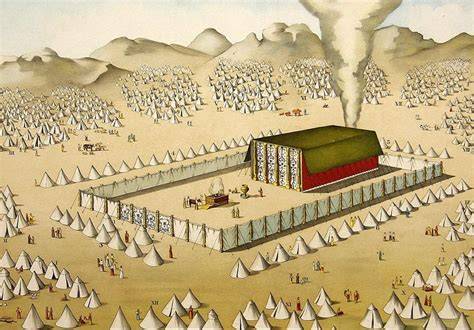
The Tabernacle at Mount Sinai
The Tabernacle was assembled and dedicated while the Israelite nation was still encamped at the foot of Mount Sinai, where the Torah had been received, and the divine plan for the Tabernacle had first been revealed.
At Mount Sinai the Israelite nation received the commandment to build for G-d a Sanctuary. The commandment consisted of precise instructions concerning the construction of the tabernacle, its attending vessels, and the surrounding courtyard.
Exod 25:8 And let them make Me a sanctuary that I may dwell among them. 25:9 Exactly as I show you - the model of the Tabernacle and the model of all its furnishings - so shall you make it.
To ensure that the structure is built properly, YHWH shows Moses a model of what should be built while he is still on the mountain.
It is likely that the text means that Moses was shown the Tabernacle and its furnishings in a prophetic vision, in the same manner as YHWH shows Ezekiel the future Temple (Ezek 40:4). Alternatively, the biblical text may be implying that the Tabernacle was modeled after YHWH’s celestial home, and that this is what Moses was shown on the Mountain.
The Layout of the Tabernacle
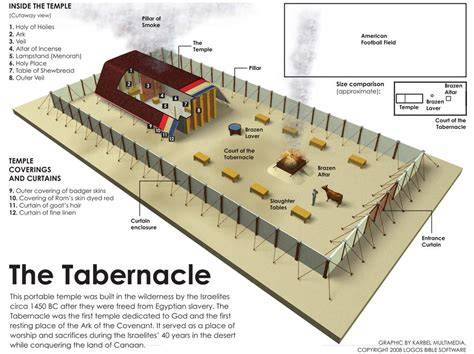
The Tabernacle consisted of three divisions through which one must pass to reach the presence of God: the outer courtyard, the holy place, and the Holy of Holies (see Exodus 25-30).
The tabernacle had three sections. The courtyard which one passes through to enter the tent is the first section (Exod 27:9-19). Next, one would walk into a space of about thirty feet inside the tent, which is called the holy place (Exod 26:1-2; 26:33). Afterward, one would pass through the curtain into the most holy place that has a depth of fifteen feet (Exod 26:33).
The most holy place sits at the west side of the tent (Exod 26:22, 27), while the holy place and the entrance stand at the east side (Exod 38:13).
The whole compound was surrounded by a high fence with only one entrance. A person could not simply come from any direction into the tabernacle as he pleased - he had to enter through the one gate, which was always located to the east.
The Tabernacle opens into the center of a large courtyard (27:9-19), measuring 100 cubits in length and 50 cubits in width, and in which the laver for washing (30:17-21) and the large sacrificial altar sit (27:1-8).
The tabernacle consisted of a tent-like structure (the tabernacle proper) covered by rug-like coverings for a roof, and an external courtyard (150 feet by 75 feet). The whole compound was surrounded by a high fence about 7 feet in height.
The tent was made of acacia wood boards overlaid with gold and fitted together to form the walls, measuring 45 by 15 feet. On top, four layers of curtains acted as a roof to shield the tabernacle from sun and rain.
| Part | Location or function |
|---|---|
| Outer courtyard | Enclosed the sanctuary and contained the sacrificial altar and bronze laver |
| Holy Place | Contained the table of showbread, the incense altar, and the seven-branched menorah |
| Holy of Holies | Contained the Ark of the Covenant and represented the presence of God |
The Courtyard
The court, enclosed by linen hangings, had the shape of two adjacent squares. In the centre of the eastern square stood the altar of sacrifice for burnt offerings; nearby stood a basin holding water used by the priests for ritual ablutions. The corresponding position in the western square was occupied by the ark of the Law situated in the inner sanctuary of the Tabernacle.
The courtyard was ceremonially clean. The fabric were all one type of thread with no embroidery. The furniture and utensils were mainly bronze; there was some silver but no gold.
The altar was used to offer sacrifices that would cleanse sinners, turn aside (propitiate) God’s wrath toward Israel, cleanse the Sanctuary from sin’s pollution, and express thanksgiving to God (Leviticus 1-7, 16).
Ordinary Israelites could enter here with sacrificial animals, but this area was dominated by the Levites, the tribe of Israel set aside by God to manage the Tabernacle (Numbers 1:47-53).
The Holy Place
In the room before the Holy of Holies, what might be referred to as the “standard Holy” room, sits an incense altar (30:1-10), the Table of Showbread (25:23-30), and a Menorah lampstand (25:31-39).
The first section of the Tabernacle was the holy place. It’s fabrics were better quality, had better workmanship, and included embroidery. It’s furniture and utensils were gold. Only the priests of the tribe of Levi could enter here in order to tend to their daily duties.
When walking in from the entrance, a table sat on the right-hand side of the tent. Upon the table, twelves loaves sat, representing the twelve tribes of Israel (Lev 24:8).
The twelve lunar cycles in a solar year were also symbolically represented in the Tabernacle, as there were 12 loaves of bread placed on the Table of Showbread every Sabbath (Lev 24:5-9).
The ornate lampstand provided the sole light-source inside the Tabernacle and was to remain alight when the sun was down (27:21). The seven lamps burned pure olive oil, providing light to the holy place.
The incense altar burned a unique incense inside the holy place (30:7-8). Twice a day, a priest would stand in front of the golden prayer altar and burn fragrant incense.
The Holy of Holies
Inside the Tabernacle is a dividing curtain, with the Holy of Holies in the back room where the Ark of the Covenant was to rest (26:33).
Beyond this curtain was the cube-shaped inner room, the Kodesh Hakedashim (Holy of Holies). This area housed the Ark of the Covenant, inside which were the two stone tablets brought down from Mount Sinai by Moses on which were written the Ten Commandments, a golden urn holding the manna, and Aaron's rod which had budded and borne ripe almonds.
The inner room was the most holy place of the Tabernacle. It used fabrics with multiple dyed wools and fine embroidery of the best workmanship. The furniture, pillars and hooks were gold, with some silver but no bronze.
Only the high priest could enter here, and he only did so once per year and with the greatest precaution. The high priest entered the Holy of Holies through a veil.
The Holy of Holies represented the presence of God and contained the ark of the covenant, the lid of which was called the mercy seat. “There I will meet with thee,” the Lord told Moses, “and I will commune with thee” (Exodus 25:22; see also Exodus 29:43; 30:36).
The only item of furniture in here was the Ark of the Covenant, a wooden box overlaid with gold with an impressive solid-gold cover on top. The poles remained permanently attached since no sinful human being was to touch what this holiest object in the world (25:15; 2 Samuel 6:6-7).
Why Did the Entrance Face East?
The entrance of both the court and tent faced the rising sun.
The entrance was always located to the east, so that people were facing west when they entered the tabernacle.
The eastward orientation also gave the Tabernacle a symbolic connection with the cosmos. Like many ancient Near Eastern religious structures, the Tabernacle symbolically mirrors the cosmos.
The Menorah has seven lamps, with seven possibly representing the number of luminary bodies visible to the naked eye (Sun, Moon, Mercury, Venus, Mars, Jupiter, and Saturn). The Tabernacle’s lamp was symbolically placed along the southern wall, as the planets would traverse the sky most often south of the structure.
How Was the Tabernacle Moved?
Thus, when the Israelites depart from Mt. Sinai, they disassemble the Tabernacle and its furnishings, transport it, and then erect it again at their new camp (Numbers 10). This is the procedure assumed by the Priestly text for the entire wilderness period.
Whenever the Tabernacle is moved, the Levites will take it down and set it up again. Anyone else who goes too near the tabernacle will be executed.
You must put the Levites in charge of the tabernacle of the Covenant, along with its furnishings and equipment. They must carry the tabernacle and its equipment as you travel, and they must care for it and camp around it.
Twelve sturdy bulls were donated by the leaders of the twelve Israelite tribes, (Numbers 7:3), to carry the beams and curtains, and other Tabernacle components on the journey through the wilderness.
The above painting depicts the arrival of the Israelites at a new camp site, where the Levites begin to unload the beasts of burden and assemble the Tabernacle.
The Tabernacle at Shiloh
According to Joshua 18:1, following the conquest of Israel, the Tent of Meeting was set up in Shiloh.
Josh 18:1 The whole community of the Israelite people assembled at Shiloh, and set up the Tent of Meeting there. The land was now under their control.
After the Israelite tribes had entered into the land, the Tabernacle eventually made its way to Shilo, where it stood for 369 years.
After the conquest and division of the land among the tribes, the tabernacle was moved to Shiloh in Ephraimite territory (Joshua's tribe) to avoid disputes among the other tribes (Joshua 18:1; 19:51; 22:9; Psalm 78:60). It remained there during most of the rule of the Judges.
In Shilo the curtained walls of the tabernacle were replaced with stone, but the roof remained a covering of skins. (Zevachim 14:6).
The book of Samuel describes in Shiloh a “House of YHWH” (1 Sam 1:7), or “Temple of YHWH” (1 Sam 1:9), and in one verse a “Tent of Meeting” (1 Sam 2:22).
The family of Eli the priest is in charge of this cultic site until the loss of the Ark in the battle of Ebenezer against the Philistines (1 Sam 4).
Standing before the tabernacle at Shilo, Hanna prays for a son. G-d would answer Hanna's prayer, and the son born to her would grow to be Shmuel, (Samuel), the prophet.
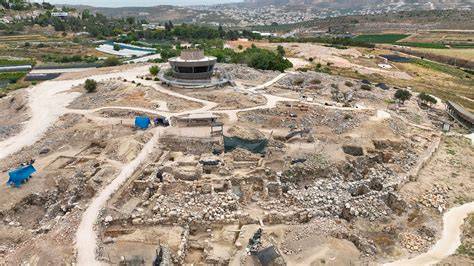
What Happened After the Ark Was Captured?
After the Ark of the Covenant was captured by the Philistines, the subsequent history of the tabernacle is separate from that of the Ark, even after the latter was returned.
The Ark is eventually returned to Beth Shemesh and then to Gibeah in Kiryat Yearim (1 Sam 6:13-7:2).
Under King Saul, the tabernacle was eventually moved to Nob, near Saul's home town of Gibeah, but after he massacred the priests there (1 Samuel 21-22), it was moved to Gibeon, a hill-shrine (1 Chronicles 16:39; 21:29; 2 Chronicles 1:2-6, 13).
Just prior to David's moving the ark to Jerusalem, the ark was located in Kiriath-Jearim (1 Chronicles 13:5-6). The Ark was eventually brought to Jerusalem, where it was placed "inside the tent David had pitched for it" (2 Samuel 6:17; 1 Chronicles 15:1), not in the tabernacle, which remained at Gibeon.
| Period | Location or status |
|---|---|
| Wilderness period | The Tabernacle traveled with the Israelites and was erected at the center of each camp |
| After the conquest | Shiloh |
| Under Saul | Nob, near Gibeah |
| Later period | Gibeon |
| Under David | The Ark was placed in a separate tent in Jerusalem, while the Tabernacle remained at Gibeon |
| Under Solomon | The Tabernacle and its furnishings were brought to Jerusalem for the Temple dedication |
The Tabernacle at Gibeon
The altar of the tabernacle at Gibeon was used for sacrificial worship (1 Chronicles 16:39; 21:29; 1 Kings 3:2-4), until Solomon brought the structure and its furnishings to Jerusalem to furnish and dedicate the Temple (1 Kings 8).
At Gibeon, the Tabernacle continued to function as a sanctuary even after David had brought the Ark to Jerusalem. This created two related but separate cultic locations: the Ark was in Jerusalem, while the Tabernacle and its altar remained at Gibeon.
When Solomon became king, he went to Gibeon to offer sacrifices, because that was the principal high place. The Tabernacle’s altar therefore remained an active place of worship until the Temple was completed.
The Tabernacle in Solomon’s Temple
YHWH’s tent makes a final appearance in the account of the dedication of Solomon’s Temple in Jerusalem.
1 Kings 8:3 When all the elders of Israel had come, the priests lifted the Ark 8:4 and carried up the Ark of YHWH. Then the priests and the Levites brought the Tent of Meeting and all the holy vessels that were in the Tent.
Solomon eventually transferred the Tabernacle and its furnishings to Jerusalem, where they were incorporated into the dedication of the Temple.
The text never states where in the Temple the tent was brought. Richard Elliott Friedman has argued, based on a comparison between the size of the Tabernacle in Exodus and the space underneath the wings of the large cherubim in the Temple’s Holy of Holies, that it was set up in that space.
Rabbinic tradition suggests that it was disassembled and stored in the Temple’s treasury.
Like the Ark of the Covenant, the Tabernacle’s ultimate fate after entering the Temple, remains a mystery.
Based on 1 Kings 6:1, biblical literalists hold that after either 480 (according to the Masoretic Text (𝕸)) or 440 years (according to the Septuagint (LXX)), Solomon's Temple in Jerusalem superseded it as God's dwelling-place.
The Tabernacle no longer served a purpose after the erection of Solomon’s Temple in Jerusalem in 950 bc.
Is the Tabernacle Still Located Somewhere Today?
There is no confirmed surviving Tabernacle that can be visited today. The biblical text does not identify a modern location, and its final fate after the Tabernacle and its furnishings were brought to Solomon’s Temple remains unknown.
There is no mention of the tabernacle in the Tanakh after the destruction of Jerusalem and the Temple by the Babylonians in c. 587 BCE.
Scholars believe that the tabernacle as described may have never existed, but it does reflect Jerusalem cultic iconography and objects, and thus has some historical basis.
The elaborate form of the Tabernacle, its engineering, and perceived symbolic riddles attracted many of humanity’s sharpest minds over the past two millennia, including Josephus, Philo, Origin, Jerome, Augustine, Bede, Maimonides, Rashi, and Sir Isaac Newton.
Historical Locations and Archaeological Parallels
The strongest parallels to the Tabernacle are remarkably found in the very time and place that the Torah purports that the Tabernacle was constructed: Late Bronze Age Egypt.
Since Cross’s original article, much more evidence has arisen favoring the historicity of such a structure.
In Late Bronze Age Ugarit, the Canaanite god El along with other deities lived in tent shrines that were frequently called a tent (͗hl) and a Tabernacle (mškn), and shared identical terminology for the tent frames (qrš).
In Mesopotamia, several texts from 18th century B.C.E. Mari mention tents, one of which was supported with 10 heavy frames. These texts use the word qersū, cognate to the tent frames at Ugarit and for the Tabernacle (qrš).
The closest parallel to the form and function of the Tabernacle stems from pictorial evidence of a military tent camp that Rameses II used to fight the Hittites in the Battle of Qedesh.
Both structures have rectilinear courtyards orientated to the East, and they are twice as long as they are wide, with the entrance in the center of the eastern short wall.
In the camp’s middle is the entrance to a 3:1 long-room tent, composed of a 2:1 reception tent leading to a square throne tent, alternatively labeled Pharaoh’s Chamber or the Holy of Holies for the Tabernacle.
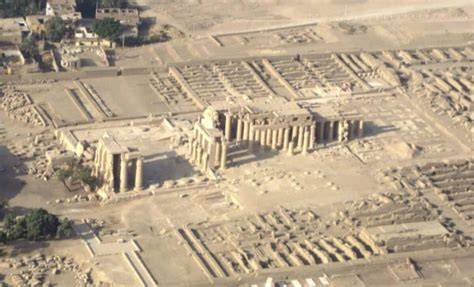
Other features of the Tabernacle share Late Bronze Age Egyptian parallels. This includes the form and function of the Ark of the Covenant.
Similarly, the Tabernacle Menorah, based on terminology, artistic parallels, and craftsmanship, shares similarities with Egyptian lampstands during the Late Bronze period.
Why Was the Tabernacle Located at the Center of the Camp?
The central location of the Tabernacle expressed the belief that God was to be the center of Israel’s communal and spiritual life.
It would serve as the spiritual heart of the nation, from which instruction would go forth, and in which the Divine service would be performed.
The Tabernacle was very important to the Priestly author. Nearly 400 verses are allotted to its form and furnishings, far more detail than comparable structures receive in the Hebrew Bible and other ancient Near Eastern writings.
In contrast, Solomon’s Temple and its furnishings receive only 70 verses in 1 Kings 6 and 7.
Since God’s glory dwelled there, the tabernacle united heaven and earth; it was “the tent where he dwelt among mankind” (Ps 78:60 ESV).
The tabernacle symbolically acts as an earthly representation of the heavenly tabernacle (Heb 8:5). God tells Moses to put together the tabernacle and its furniture “after the pattern for them, which is being shown you on the mountain” (Exod 25:40 ESV).
The Tent of Meeting is a microcosm of the created universe and of the heavenly throne room that was above the created universe. It is also the place where God who dwells in the highest heavens can be present or immanent in the world.
Tabernacle and Tent of Meeting
During the long elaboration on the construction of the tabernacle in Exodus 25-40, it sometimes speaks of the “tent of meeting.” At times, it seems as though the tabernacle and tent of meeting are different structures.
But upon closer examination, Exodus makes it clear that the tent of meeting and the tabernacle are two names for the same thing.
For example, Exodus 40 speaks of furnishing both the “tabernacle,” the “tent of meeting,” and even “the tabernacle of the tent of meeting” interchangeably.
Further, Leviticus 1:1 follows directly upon the glory of the Lord filling the tabernacle (Exod 40). Yet its first verse reads: “The Lord called Moses and spoke to him from the tent of meeting” (Lev 1:1 ESV). The implication is clear: the tent of meeting is the tabernacle.
The Meaning of the Tabernacle’s Location
The specific layout of the tabernacle and its courtyard is significant because it illustrates God’s prescribed way for man to approach Him.
The Tabernacle reflects this principle through the materials and quality of workmanship of each section of its three sections, as well as who has access.
The altar, the laver, the Holy Place, and the Holy of Holies formed a graduated approach toward the divine presence. The courtyard was ceremonially clean, the Holy Place was more restricted and more richly furnished, and the Holy of Holies was the most sacred area.
Only the high priest could enter the Holy of Holies, and he only did so once per year and with the greatest precaution. This is as close as a human being could come to God’s presence on earth.
The Tabernacle was therefore located physically at the center of the camp and symbolically at the center of Israel’s relationship with God. During the wilderness period it moved wherever the people moved; after the conquest it was associated first with Shiloh, then with Nob and Gibeon, and finally with Jerusalem, where Solomon’s Temple replaced it as the permanent sanctuary.
tags: #where #is #the #tabernacle #located