Zoo Station: The Story of Christiane F. is a nonfiction account of Christiane Felscherinow’s adolescence in 1970s West Berlin, where an ordinary childhood gradually gave way to drug use, heroin addiction, prostitution, and repeated attempts to withdraw. First published in Germany under the title Wir Kinder vom Bahnhof Zoo, the book was assembled from tape-recorded interviews by journalists Kai Hermann and Horst Rieck and became one of Europe’s most influential accounts of youth drug use.
Christiane F.’s story begins in a dysfunctional but otherwise fairly normal childhood and follows her movement from a housing project and youth clubs into Berlin’s nightlife, where she encounters hashish, pills, LSD, heroin, and a social environment organized around drugs. Bahnhof Zoo, formerly the main railway station in West Berlin, becomes a central location in the narrative because its underpasses and surrounding streets were associated with drug trafficking and child prostitution.
What the book is about
As Christiane F. grows up in housing projects of divided late 1970s Berlin, this intelligent young woman grows increasingly degraded by heroin addiction and prostitution. By the end of the book, Christiane is fifteen and has shot up nearly every morning for a year.
The majority of the book details the worst period of her addiction when, as her most recent publisher stresses, her needs were not only chemical, but also social and emotional. The book follows Christiane from her early childhood, when she was abused by her father, who was an alcoholic, to her teenage years, when, desperately hoping for acceptance and love, she sank deeper and deeper into the club scene around the Ku'damm, with all the associated drug problems.
The book, put together from interviews with Christiane F., a teenaged heroin addict, her mother, and authorities working to fight drug use in West Berlin in the 1970s, follows Christiane from her early childhood to her teenage years. Christiane doesn't romanticize or preach, but lets her experiences serve as a warning in themselves.
Publication and documentary background
In 1978 Christiane F. testified against a man who had traded heroin for sex with teenage girls at Berlin's notorious Zoo Station. In the course of that trial, Christiane F. became connected with two journalists who helped to turn her story into an acclaimed bestseller.
First published in Germany in 1979 with the aid of two journalists, the book was met with the immediate interest of German teenagers. Print success spurred its 1981 movie adaptation. Zoo Station is a new translation of the German original.
Christina Cartwright explains in her translator’s note that she updated Christiane’s slang to American English in an effort to “hone the edge that is present in a lot of her commentary.” By this measure, she is successful: the book reads as the speech of an occasionally foul-mouthed, but genuinely intelligent and perceptive teenager.
Additionally, Cartwright includes footnotes that help to situate an American reader possessing little to no knowledge of post-World War II Europe. The book’s editors append the work with a list of resources available to teenagers struggling with drug addiction and sexual violence.
Christiane’s childhood and Gropiusstadt
By her sixth year, Christiane grows up protected in the countryside near Hamburg. This protected life ends abruptly when Christiane moves with her parents to Berlin, to Gropiusstadt.
In a high-rise housing development like the housing projects on Gropiusstadt, where approximately 45,000 live, any problem is automatically magnified, just due to the sheer concentration of people in a relatively small area. There’s an abundance of the unemployed, of dropouts, of dissatisfaction, and of conflict.
Financial hardship, high rents, and a constantly rising cost of living impose a steadily increasing workload and the necessity of both parents to have a job and bring in money. This causes seemingly irresolvable stress: having to come up with more and more energy for the daily grind without reaping the benefits of working harder.
In addition to their parents, or single parent, having less and less time for them, kids and teens also suffer from overcrowded classes, a lack of jobs and internships, increasing demands at school and home, family conflicts, and a lack of recreational opportunities, playgrounds, and open spaces such as parks.
Drugs and alcohol have always been a quick, easy way for people to deal with these stresses by numbing the pain. Christiane’s environment fails her, from the structures of the German educational system to the private capital interests that shaped her corner of Berlin.
Down to the signs posted about the housing project that all but forbid children from playing, her environment fails her. Christiane’s sense of general disappointment is well tempered by her sense of personal responsibility.
From ordinary adolescence to Berlin nightlife
In 1976, thirteen-year-old Christiane Felscherinow lives with her mother, younger sister, and her pet cat in their small apartment in an unkempt multi-story, concrete social-housing building in a dull neighborhood on the outskirts of West Berlin, Joachim-Gottschalk-Weg 10, 7th Floor.
She is tired of living there and is a huge fan of David Bowie. She hears of Sound, a new trending nightclub in the city's center. Although she is not old enough to get in, she dresses up in high heels and makeup, and asks a popular classmate, Kessi, who goes there regularly, to take her.
Kessi also provides her with pills. At the club, Christiane is sexually harassed by various young boys but meets a slightly older boy named Detlev, who is part of a clique where everybody uses various types of drugs.
A day later, they go back to the same club and meet the same clique. They decide to break into a closed shopping mall and steal money from a lottery booth, resulting in the group becoming separated as they evade the police.
Detlev and Christiane make it to the roof, get to know each other better and are soon joined by the rest of the group. The next morning, Christiane and Kessi are waiting for the subway when Kessi's mother finds them and angrily berates Kessi, grabbing her by the arm and telling Christiane to stay away from her daughter.
Christiane starts taking LSD, in addition to abusing pills, and befriends a girl her age named Babsi. After a David Bowie concert, Christiane tries heroin for the first time.
Heroin and dependency
As she falls in love with Detlev, Christiane begins using heroin on a regular basis in order to be close to him, gradually becoming more and more dependent on the drug until she is a full-blown addict.
Christiane consciously chooses her substances and her johns; she persists despite her friend’s attempts to deter her from heroin. “Despite what the newspapers always say, it wasn’t like I’d been victimized by some evil dealer or seduced by a junkie,” she explains. “It wasn’t at all the case that I’d been turned into a heroin addict against my will. I don’t know anyone who’d been forced to shoot up against his will.”
By her 14th birthday, Christiane stops going home and spends more and more time at her cohorts' unkempt apartment, where she and Detlev have sex. She is also drawn to Bahnhof Zoo, a large train and subway station notorious for the drug trafficking and prostitution that takes place in its underpasses and back alleys.
Christiane’s dependence is described as a gradual process rather than a single transformation. Heroin first appears within a social world that offers belonging, intimacy, and identity, but it progressively reorganizes that world around obtaining and using the drug.
“During this phase of our lives, heroin simultaneously caused all our problems but also kept us all together. I’m not sure that this sort of friendship, the kind we had in our little group, could exist among kids who weren’t addicted to drugs. And in all honesty, that kind of desperate closeness seemed like it impressed a lot of other young people. People looked up to us.”
Withdrawal and relapse
After being discovered unconscious on the bathroom floor at home due to a heroin overdose, Christiane tries going cold turkey with Detlev, an excruciating experience for both of them. However, they both relapse the moment they revisit Bahnhof Zoo.
“Suddenly I was seized with this insane itch all over my body. I ripped off all my clothes and started scratching myself with a hairbrush. I scratched myself bloody, especially on the calves.”
Her attempts to stop are repeatedly interrupted by the social environment in which the drug is embedded. Withdrawal separates Christiane from the group, while returning to the station restores both the immediate possibility of obtaining heroin and the sense of belonging associated with it.
“I snorted H, and the problems were gone. But the high didn’t last anywhere near as long as it used to.”
Prostitution at Bahnhof Zoo
Christiane also starts to prostitute herself, imitating Detlev, who sells sex favours to male clients on a regular basis in order to support his heroin addiction. Having slept with Detlev changed a lot of things for her, and she no longer felt comfortable at the station because she suddenly had a much better idea of what Detlev and his friends did to earn their money.
By the time Christiane figured out that addiction doesn't make you cool, she was hooked, selling herself for 40 marks a go at the Bahnhof Zoo to maintain her habit.
And her story of addiction leads her to another frog-in-boiling-water path-prostitution. Christiane’s movement into prostitution is presented not as an isolated decision but as an extension of the dependence that has already taken over her relationships, time, money, and sense of self.
Perhaps the most odious and most improbable of all the tropes that are common to the young adult addiction novel is the unintentional first exposure. Christiane’s account instead emphasizes repeated choices made within a highly coercive and damaging social environment.
Deaths among Christiane’s friends
One day, Christiane and Detlev find their best friend and roommate, Axel, dead in the apartment from a fatal overdose, due to a bad batch of heroin he was sold on the streets that Detlev believes to be strychnine.
To fuel her addiction, Christiane steals from home, sells all her possessions, and sinks to abysmal levels. Christiane and Detlev quickly run away, ending up at the apartment of one of Detlev's male clients.
When Christiane walks in on the two having very loud anal intercourse, she has a breakdown and flees. She returns to the station in order to find Babsi, only to discover that she is dead of an overdose at barely 14 years old, the news of which is plastered all over the front pages of many newspapers.
Christiane turns 14 halfway through the film, the same age as her friend Babsi, who fatally overdoses. None of their companions, two of whom also fatally overdose, are older than 16, as reported by end titles recalling the birth and death dates of the real-life individuals portrayed in the film.
Suicide attempt and the ending of the narrative
In despair over the deaths of numerous friends, as well as her inability to break free from her heroin addiction, Christiane tries to overdose too. A voice-over states that Christiane eventually survived her overdose and was taken by her mother to a village near Hamburg to live with her grandmother and aunt.
Most of her cohorts had either died or were still addicts, including Detlev, whose whereabouts and current condition were unknown. The book’s ending does not turn the story into a simple recovery narrative.
In the real story, Christiane F. never fully recovered from her addiction, nor did her troubles end with going to Hamburg to begin withdrawal. The story therefore remains open-ended, with survival distinct from recovery and temporary withdrawal distinct from a completed escape from addiction.
The book’s style and significance
Zoo Station is a paradoxical coming-of-age story. The nonfiction approach delivers the familiar narrative of a teen’s progression from “gateway” to “cooler” hardcore drugs without a trace of triteness.
Zoo Station is a book with a strong commitment to honesty-even if honesty is boring. Chasing Christiane as she repeatedly chases her fix, shoots up, recovers, and relapses is often discouraging to the point of boredom, but it treats the drug problem in the terms that Jürgen Quandt, the director of a local protestant youth outreach center, is happy to see Berliners embracing: “as it really exists, instead of how we’d like to imagine it.”
It is told in plain language with a refreshing honesty, even about moments of deceit. The book reads as the speech of an occasionally foul-mouthed, but genuinely intelligent and perceptive teenager.
Wir Kinder vom Bahnhof Zoo is not a linguistic masterpiece. It does not impress through a special writing style or through a wonderfully elaborate plot. It is raw and unvarnished, it shocks and frightens, and that is precisely what makes this book distinctive.
Christiane F. shares her childhood and youth with readers and provides an insight into a scene that is often unknown and especially romanticized and admired by young people. The book is difficult to read, but its directness is central to its impact.
Berlin as a social and historical setting
Christiane’s story takes place in divided late-1970s Berlin, a city marked by the Wall, unequal urban development, limited housing, and a distinctive West Berlin youth culture.
In 1966, young people are lazing around the Church of Remembrance and getting Berliners hot under their collars. They have long hair and are known as deadbeats. These young people are trying out a new way of living that goes beyond merely working and consuming.
Meinhard Schröder looks back at those times. He believes that a lot of born-and-bred West Berliners had forgotten how to think and a Wall had formed in their heads. Meinhard recalls one of the standard arguments back then: “Why don't you just go over to the East?”
In 1965, young people are crazy about the Beatles and not just because of their music, much to the bemusement of many older Berliners. The Rolling Stones give a legendary concert in the West Berlin venue, the Waldbühne.
The miniskirt is all the rage in Berlin, and women are dancing on their own to beat music while fathers-to-be are taking baby courses organised by the Red Cross. Such changes in music, fashion, family life, and youth culture form the broader setting in which Christiane’s search for identity takes place.
Bahnhof Zoo in the geography of West Berlin
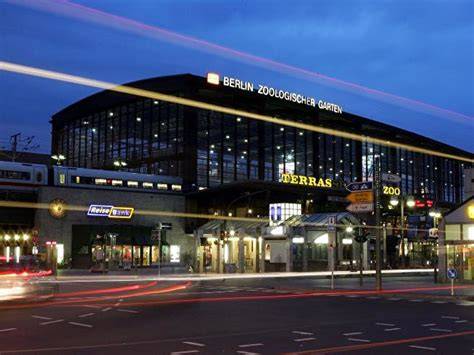
Bahnhof Zoo, formerly the main railway station in West Berlin, has already been the setting of very different films such as Christiane F. - We Children from Bahnhof Zoo and Emil and the Detectives.
The station’s address is Hardenbergplatz 1, 0623 Berlin. The location functions in Christiane’s story as a transport hub, meeting place, marketplace, and stage on which vulnerable young people become visible to dealers, clients, police, commuters, and one another.
The station is not presented merely as a backdrop. Its underpasses and back alleys connect the private spaces of addiction with the public life of the city, making the consequences of youth drug use impossible to isolate from Berlin’s wider social conditions.
The 1981 film adaptation
Christiane F. - Wir Kinder vom Bahnhof Zoo is a 1981 West German biographical drama film directed by Uli Edel. It depicts the descent of Christiane Felscherinow, a bored and depressed 13-year-old coming of age in 1970s West Berlin, to a 14-year-old heroin addict.
The film is based on the 1978 nonfiction book Zoo Station: The Story of Christiane F., transcribed and edited from tape recordings by Kai Hermann and Horst Rieck. It immediately acquired cult status and features David Bowie as both composer and as himself.
| Element | Information |
|---|---|
| Director | Uli Edel |
| Writer | Herman Weigel |
| Based on | Zoo Station: The Story of Christiane F. by Kai Hermann and Horst Rieck |
| Release date | 2 April 1981 |
| Running time | 131 minutes |
| Country | West Germany |
| Language | German |
| Budget | $2.7 million |
| Admissions | 4.6 million admissions (West Germany) |
Plot of the film
In 1976, thirteen-year-old Christiane Felscherinow lives with her mother, younger sister, and her pet cat in their small apartment in an unkempt multi-story, concrete social-housing building in a dull neighborhood on the outskirts of West Berlin.
She is tired of living there and is a huge fan of David Bowie. She hears of Sound, a new trending nightclub in the city's center, and dresses up in high heels and makeup even though she is not old enough to get in.
At the club, Christiane is sexually harassed by various young boys but meets a slightly older boy named Detlev, who is part of a clique where everybody uses various types of drugs. Christiane starts taking LSD, in addition to abusing pills, and befriends a girl her age named Babsi.
After a David Bowie concert, Christiane tries heroin for the first time. As she falls in love with Detlev, Christiane begins using heroin on a regular basis in order to be close to him, gradually becoming more and more dependent on the drug until she is a full-blown addict.
By her 14th birthday, Christiane stops going home and spends more and more time at her cohorts' unkempt apartment, where she and Detlev have sex. She is also drawn to Bahnhof Zoo, a large train and subway station notorious for the drug trafficking and prostitution that takes place in its underpasses and back alleys.
After being discovered unconscious on the bathroom floor at home due to a heroin overdose, Christiane tries going cold turkey with Detlev. However, they both relapse the moment they revisit Bahnhof Zoo.
One day, Christiane and Detlev find their best friend and roommate, Axel, dead in the apartment from a fatal overdose. Christiane returns to the station in order to find Babsi, only to discover that she is dead of an overdose at barely 14 years old.
In despair over the deaths of numerous friends and her inability to break free from her heroin addiction, Christiane tries to overdose too. The film states that she survives and is taken by her mother to a village near Hamburg to live with her grandmother and aunt.
Production and visual style
The film was shot with a low budget in 1980 and released in 1981 but set between 1975 and 1977 in West Berlin. It skips the beginning and the end of the book Zoo Station: The Story of Christiane F. by Kai Hermann and Horst Rieck and concentrates on the main story, starting when Christiane F. begins her nightlife in Berlin at around 13 years old, and stops rather abruptly after her suicide attempt by stating that she recovered.
Cinematography is bleak and dreary, depicting a dilapidated, working-class Berlin with rundown structures and dirty, blighted backdrops. The cast is composed mainly of first-time actors, most of whom were still in school at the time and have mostly not pursued acting careers since.
Natja Brunckhorst is the only cast member who continued to act in German films and television, starting with 1982's Querelle by Rainer Werner Fassbinder, at the time the highest-grossing film with a strongly homosexual theme.
Originally the film was going to be directed by Roland Klick but he was fired only two weeks before shooting after a fallout with Bernd Eichinger. Uli Edel came in to direct the film.
Young actors and real-life locations
Most of the extras at the railway station and at Sound were actual drug users and sex workers. In the scene where Christiane runs through the alleys of the station to find Babsi, the camera lingers on several drug users leaning against the walls of the underpass.
In a 2011 interview, Thomas Haustein, who was still in school at the time, recalled how terrified he felt being surrounded by real-life addicts but that he was able to successfully copy their behaviour for his character.
It would now be illegal to have minors act in the film's graphic shoot-up, nudity and sex scenes; at the time, however, all the production needed was a written letter of consent from the parents to proceed with filming.
Real life Stella, Catherine Schabeck, aged 18 at the time, has a short cameo as the drug dealer that sells the first dose of heroin to Detlev, played by Thomas Haustein.
The film’s depiction of addiction
Christiane and her cohorts are seen losing consciousness in decrepit lavatory cubicles amidst urine, vomit and blood, injecting in close-ups, cleaning and re-filling syringes directly from the toilet bowl, vomiting all over themselves and falling asleep right on top of it.
In one particularly disturbing scene, a junkie climbs over a public toilet stall to steal Christiane's fix, inject himself in the neck, hand back the used syringe and thank her, in front of the horrified gaze of an elderly woman.
The depiction of young addicts from seemingly normal families was particularly alarming. At the time junkies were still perceived in popular culture as much older, wilder characters, such as those depicted in Dennis Hopper's Easy Rider or in Lou Reed's songs.
The fact that the characters prostitute themselves, both heterosexually and homosexually, at such a young age, revolted audiences. The film’s shock came not only from its images of drug use but from the ages of the people involved and the contrast between their apparent ordinariness and the extremity of their circumstances.
David Bowie and the soundtrack
David Bowie, the star of Christiane’s record collection, supplied the soundtrack, thereby ensuring the film a cult status that it enjoys to this day. Bowie’s music from his albums made in West Berlin between 1976 and 1979 is played throughout the picture.
As he was at the peak of his popularity during the late 1970s and early 1980s, his presence helped boost the film’s commercial success. According to the book, the real Christiane F. had had her first experience with heroin at a David Bowie concert some years earlier; this is told in the film with David Bowie starring as himself.
The David Bowie concert featured in the film actually took place in New York City, with only some of the crew and cast attending, because at the time Bowie was performing on Broadway in The Elephant Man several nights a week and could not shoot in Berlin.
The close-up shots of Bowie were from this New York performance, whereas the mass audience scenes were from an AC/DC concert in West Germany. The two were spliced together to seem as one event.
| Song | Songwriting credit |
|---|---|
| “V-2 Schneider” | David Bowie |
| “TVC 15” | David Bowie |
| “'Heroes'/'Helden'” | David Bowie, Brian Eno and Antonia Maass |
| “Boys Keep Swinging” | David Bowie and Brian Eno |
| “Sense of Doubt” | David Bowie |
| “Station to Station” (Live) | David Bowie |
| “Look Back in Anger” | David Bowie and Brian Eno |
| “Stay” | David Bowie |
| “Warszawa” | David Bowie |
Reception and cultural impact
Both the film and the book acquired cult status in Europe immediately after release, raising awareness of heroin addiction. The film was the most popular West German film of the year with admissions of almost 4.6 million.
On the review aggregator website Rotten Tomatoes, 80% of 10 critics' reviews are positive, with an average rating of 7.2/10.
The film’s popularity was increased by David Bowie’s participation as himself and as the main contributor to the soundtrack. Its stark visual style, young cast, and focus on addiction among children from seemingly ordinary families made it an especially influential representation of the West Berlin heroin scene.
The book’s success also made Christiane F. a widely recognized figure in discussions of youth drug use, child prostitution, social neglect, and the conditions of divided Berlin. Its continuing significance comes from the way it combines an individual biography with a portrait of a city and its institutions.
Responsibility, systems, and social failure
Consistent with the recent trend in young adult literature that represents adults as either helpless or helplessly corrupt, Christiane describes a family and a community that are incapable of helping those who are young and addicted.
This indictment extends to the structures of the German educational system and the private capital interests that shaped her corner of Berlin. The environment described in the book leaves children with overcrowded schools, family conflict, limited recreation, and few credible forms of support.
Christiane’s sense of general disappointment is well tempered by her sense of personal responsibility. The book does not reduce her life to victimhood, but neither does it treat personal responsibility as a sufficient explanation for the conditions surrounding her.
American writers have most memorably treated these stories in fiction, but often at the expense of believability. Zoo Station, a memoir, succeeds because its nonfiction approach refuses to simplify the progression from social experimentation to dependence, prostitution, withdrawal, and relapse.
Later autobiography
In 2013, Felscherinow published her autobiography Christiane F. - My Second Life. The later autobiography extends the public story beyond the period covered by the original book and its film adaptation.
The original narrative therefore represents one stage of Christiane F.’s life rather than a complete account of her later experiences. Its abrupt film ending, which states that she recovered after surviving an overdose, does not describe the full course of her addiction.
Related screen appearances of Bahnhof Zoo
Bahnhof Zoo has been the setting of very different films, including Christiane F. - We Children from Bahnhof Zoo and Emil and the Detectives.
The station in its pre-war era is shown in the film Emil and the Detectives from 1931, based on the novel by Erich Kästner, which offers many more impressions of Berlin in this era, especially of the western part.
In the action thriller Bourne Supremacy, the Bahnhof Zoo is the scene of a dramatic chase; however, if you take a closer look you will see that Jason Bourne runs into the Bahnhof Zoo and runs out again at the S-Bahn station Friedrichstraße.
Why the story remains important
Zoo Station remains important because it presents addiction as a long sequence of ordinary decisions, social pressures, and escalating dependencies rather than as a single moment of moral failure. Christiane begins with a desire to belong, to escape a dull environment, and to become older than she is.
The story also shows how heroin can function simultaneously as a source of pleasure, a means of emotional regulation, a condition of group membership, and the cause of the group’s destruction. Its account of addiction is therefore social as well as chemical.
The book’s directness has made it influential in drug education, although its value does not depend on turning Christiane’s life into a simple cautionary tale. Its force comes from the fact that it presents contradiction: agency and coercion, intimacy and exploitation, survival and continuing vulnerability.
The film and the book also challenged the assumption that heroin users were necessarily older, visibly criminal, or socially distant. Their subjects are children and teenagers from apparently ordinary families, and their lives unfold in recognizable schools, apartments, clubs, stations, and streets.
Christiane F.’s story is consequently both a biography of one young woman and a case study of West Berlin’s social conditions in the 1970s. It links youth culture, urban isolation, family instability, child prostitution, heroin abuse, and institutional failure without reducing any of them to a single cause.
Mark Kermode reviews Christiane F (1981) | BFI Player
tags: #zoo #station #christiane #f