Holy Communion is important because it remembers Christ’s suffering, death, and resurrection; celebrates the new covenant established through His blood; provides spiritual nourishment; confirms the believer’s faith and commitment; unites the church; and points forward to Christ’s return and the final feast in God’s kingdom.
The Holy Communion, known also as the Lord’s Supper, represents the greatest expression of God’s love for His people. It is an integral part of Christian worship. It causes us to remember our Lord’s death and resurrection and to look for His glorious return in the future.
1. Holy Communion remembers Christ’s sacrifice
We remember Christ and what He has done for us. Jesus instructed His disciples: “Do this in remembrance of me” (Luke 22:19 and 1 Corinthians 11:24). The bread, Jesus tells us, represents His body. The fruit of the vine represents His blood. When we take the elements of communion we remember and thoughtfully reflect on Christ’s great sacrifice on our behalf.
It was during the age-old celebration of the Passover on the eve of His death that Jesus instituted a significant new fellowship meal that we observe to this day. During the Last Supper-a Passover celebration-Jesus took a loaf of bread and gave thanks to God. As He broke it and gave it to His disciples, He said, “‘This is my body given for you; do this in remembrance of me.’ In the same way, after the supper he took the cup, saying, ‘This cup is the new covenant in my blood, which is poured out for you’” (Luke 22:19-21).
The accounts of the Lord’s Supper are found in the Gospels (Matthew 26:26-29; Mark 14:17-25; Luke 22:7-22; and John 13:21-30). The apostle Paul wrote concerning the Lord’s Supper in 1 Corinthians 11:23-29. The bread and cup are symbols of Christ’s body and blood and were established as a monument to His death.
Jesus declared that the bread spoke of His body that would be broken. There was not a broken bone, but His body was so badly tortured that it was hardly recognizable (Psalm 22:12-17; Isaiah 53:4-7). The wine spoke of His blood, indicating the terrible death He would soon experience. He, the perfect Son of God, became the fulfillment of the countless Old Testament prophecies concerning a Redeemer (Genesis 3:15; Psalm 22; Isaiah 53).
“But God proves His own love for us in that while we were still sinners, Christ died for us!” The Lord’s Supper is a remembrance of what Christ did for us and a celebration of what we receive as a result of His sacrifice.
2. Holy Communion celebrates the new covenant
We celebrate the New Covenant that Christ came to initiate. Both Luke 22:20 and 1 Corinthians 11:25 refer to the cup as the “new covenant in my blood.” Jesus was celebrating the Passover meal with His disciples.
The Passover was the most sacred feast of the Jewish religious year. It commemorated the final plague on Egypt when the firstborn of the Egyptians died and the Israelites were spared because of the blood of a lamb that was sprinkled on their doorposts. The lamb was then roasted and eaten with unleavened bread. God’s command was that throughout the generations to come the feast would be celebrated. The story is recorded in Exodus 12.
That feast commemorated God’s deliverance of His people from Egyptian slavery by the exodus event. The blood on their doorposts was a means of protecting the Hebrew’s firstborn. The exodus was the key deliverance (salvation) event in the Old Testament.
Jesus takes this important tradition and inaugurates a new covenant, established not by the blood of a Passover lamb, but through His own blood, shed on the cross for our salvation and deliverance from the slavery of sin. This is the foundation of the new covenant.
The Passover, which required the death of a lamb and looked forward to the coming of the Lamb of God who would take away the sin of the world, was fulfilled in the Lord’s death on the cross. The New Covenant replaced the Old Covenant when Christ, the true Passover Lamb (1 Corinthians 5:7), was sacrificed (Hebrews 8:8-13). The old Levitical system was no longer needed (Hebrews 9:25-28).
In Luke 22:20, Jesus tells us that the cup is the “new covenant in My blood”, and the apostle Paul tells us that the blood of Jesus brings forgiveness of sins (Colossians 1:14, Ephesians 1:7).
3. Holy Communion provides spiritual nourishment and grace
We receive spiritual nourishment. I have sometimes wondered why God cares about rituals and why Jesus commanded us to observe the Lord’s Supper. I have come to realize that it is not really for God’s benefit, but for ours. We need tangible expressions of our faith.
When I take in the nutrients and nourishment of the bread and cup (however meager), this becomes a means of taking into my person the benefits of Christ’s death applied to me. Jesus didn’t simply die for an abstract ideal. He died for me. When the bread and drink enter into my body, I remember that He died on my behalf, and this provides me spiritual nourishment. I am taking the benefits of Christ’s death to myself.
John Wesley believed Holy Communion is the “grand channel” of divine grace for God’s children. The Lord’s Supper always acts upon us when we participate in it. When we receive it in faith, we derive benefit and nourishment from feeding on Jesus Christ.
Holy Communion is a sacramental event that symbolizes a child’s deep connection to their faith. By participating in the Eucharist, the child undergoes a spiritual experience that strengthens them on their religious journey and enables them to connect more deeply with God. It learns to consciously engage with its faith and learns to apply spiritual principles in everyday life.
The sacrament is a sign and symbol of God’s covenant with the Church and each of its members. It is a sign and symbol of God’s self-giving love for us within the community of the Church in the world.
The bread and cup as signs of Christ’s life
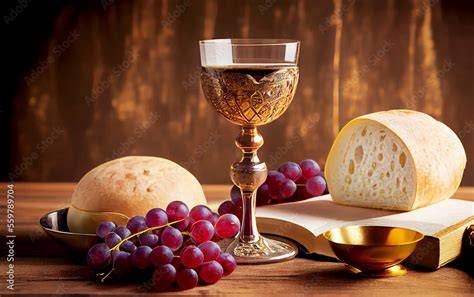
Two items are used in the Holy Communion-the bread which represents Jesus’ body that was scourged and broken before and during His crucifixion, and the cup which represents His shed blood.
When Jesus walked on earth, He was vibrant, and His body was full of life and health. He was never sick. But before Jesus went to the cross, He was badly scourged by the Roman soldiers, and His body was torn as He hung on the cross.
At the cross, God also took all our sicknesses and diseases and put them on Jesus’ originally perfect and healthy body, so that we can walk in divine health. That is why the Bible says by His stripes, we are healed (Isaiah 53:5, 1 Peter 2:24).
Jesus wanted us conscious of how His body was broken for our wholeness, and His blood was shed for the forgiveness of our sins. And whenever we partake in this consciousness, we “proclaim the Lord’s death till He comes” (1 Corinthians 11:26).
4. Holy Communion affirms faith, renews commitment, and unites the church
We affirm our faith in Christ. As we take the bread and the cup, we are affirming that we need Jesus and all that His death secures for us. We need His forgiveness, His love, His salvation, His indwelling Spirit, etc.
We pledge ourselves to Christ. It is a time of covenant renewal. We commit once again to trust Jesus and pledge our lives to Him. We declare that we wish to honor and obey Him.
The Lord's Supper is the sign of Christ's presence among His people and of their unity in Him. The unity of the church is a unity in Christ. The Lord's Supper seals that unity to us in that we all feed on Christ, and thus are all together made partakers of the same body.
The church is a body, says Paul, an organic system, not a collection of separated individual parts. We should be reminded of this by the fact that the Eucharist is normally received by congregations assembled in one place, not individuals in their own homes.
The Eucharist is not each believer communicating separately with God, and happening to be in the same room for matters of convenience and efficiency. Christians come together because the believers by definition are bound together. The congregation, not the individual, is the irreducible unit of Christianity.
Preparing for communion often brings families, friends and the community together. During the catechism lessons, during the preparations for the celebration and during the actual communion celebration, a strong sense of community is created, which supports the child and gives them the feeling of being part of a larger community.
They experience the warmth and support of their loved ones, which gives them a feeling of security. Communion is an important step in a child’s personal growth. By preparing for the celebration and participating in communion, the child learns important values such as love, trust, compassion and gratitude and develops a deeper understanding of their religious identity.
Why the unity of the church matters at the table
As Paul chastised the Corinthians for their factionalism, he called attention to the fact that by warring with one another, they were abusing the meaning of the central ritual of the church (1 Corinthians 10-11).
The Corinthians, however, were eating the "Lord's Supper" in various groups aligned with their factions. Such behavior was a grave offense to God, and showed that they neither understood nor appreciated the death of His Son and the gift of the sacrament.
Paul says in 1 Corinthians 10:16, “The cup of blessing that we bless, is it not a participation in the blood of Christ?” “The bread that we break, is it not a participation in the body of Christ?” Because there is one bread, who we are many, are one body, for we all partake of the one bread.
This institution of the Lord’s Supper was a fundamental of church practice from the get go and if you look in the Book of Acts, we see the early church practicing these gatherings where they would remember Christ’s resurrection, they would worship they would gather together, break bread together, celebrating communion or Eucharist together.
We commune with the saints who have gone before us and with other Christians around the globe who gathered at our “Lord’s table.” The uncontainable presence, grace, love, forgiveness and mercy of Christ come to us in simple bread and wine.
When we participate in Holy Communion, we are not only communing with God and Christ, we’re communing with all of our family of God around the world. How when we participate in communion on the same day that others are participating in it, we’re actually joining hands with them in a spiritual way by participating in Christ together and that is really powerful.
5. Holy Communion points to God’s coming kingdom
We proclaim His death until He comes and await the final supper. The community of faith observes the Lord’s Supper, proclaiming Jesus’ death, until He returns (1 Corinthians 11:26).
When Jesus finished with the bread and cup, He told His disciples: “But I tell you, from this moment I will not drink of this fruit of the vine until that day when I drink it in a new way in My Father’s kingdom with you.”
The gospel of Jesus Christ is the reign of God. The heart of his preaching and teaching are summarized in Mark 1:14-15 and described in Luke 4:18-19 and Matthew 5:1-7:28.
In the Lord’s Supper the church enacts the nature of the reign of God that is among is in Christ and that is coming. All are invited and welcomed. All are fed. All are loved, forgiven, and reconciled. All are given the grace they need to live as citizens of God’s realm.
The Lord’s Supper is Christ’s feast with the Church. In it he reveals for us the goodness of God and God’s creation. He enacts God’s covenant love for the Church and the world for which the Church exists.
Christ gives himself freely to all who “love him, who earnestly repent of their sin, and seek to live in peace with one another.” At the table, through confession and forgiveness, giving and receiving of life-giving gifts, and sending forth into the world he reminds the Church of its nature, life, and mission.
Finally the Lord’s Supper gives us a glimpse of the reign of God that is among us and that is coming.
Revelation tells us of a day when heaven proclaims that the marriage supper of the Lamb has come and His Bride has made herself ready (Revelation 19:7). We live between the cups, the first cup representing the death of Christ on our behalf, and the second cup of the gathered saints who will celebrate with Christ and His final victory at the marriage supper of the Lamb.
When we observe the Lord’s Supper, we anticipate that final Day by faith.
Creation, covenant, Christ, church, and the coming kingdom
Jesus’ use of bread and wine tell us that God values the goodness of creation. Bread and wine are products of the earth and must pass through the work of human hands and systems before they arrive at the Lord’s table. The Lord’s Supper tells us that creation and human beings are good and for good.
The sacrament is a sign and symbol of God’s covenant with the Church and each of its members. It is a sign and symbol of God’s self-giving love for us within the community of the Church in the world.
Holy Communion is a re-presentation of God’s love for the world in the life, death, and resurrection of Jesus Christ. When we come to the table to receive the bread and cup we remember Jesus’ breaking bread with sinners, tax collectors, prostitutes, lepers, Pharisees, Scribes, and Gentiles.
We remember the feeding of the five thousand when everyone was fed. Christ invites everyone to his table where he gives himself away. He supplies the grace we need to repent of our sin and to receive the forgiveness and healing we need to live and serve with Christ in the world.
In the Lord’s Supper the church enacts the nature of the reign of God that is among is in Christ and that is coming. All are invited and welcomed. All are fed. All are loved, forgiven, and reconciled. All are given the grace they need to live as citizens of God’s realm.
How Christians understand Holy Communion differently
A sacrament is a visible sign of invisible grace, and more liturgical churches are going to emphasize the sacrament a little bit more than maybe, less liturgical churches, would, liturgical churches are those like the Catholic, Orthodox, Anglican, etc. And the less liturgical churches would be more of the Baptist, Pentecostal, sometimes Methodist Non-denominational types.
Early in church history, there was a general consensus regarding communion that was more liturgical in nature, communion was seen as a very sacred act. A sacred act that we as believers would participate in together and remember Christ’s sacrifice and even participate in grace that’s received through this visible sign of invisible grace.
| Tradition | Understanding of Communion |
|---|---|
| Roman Catholic | After the bread and wine have been consecrated, Catholics believe that the bread and the wine actually transform into the body and blood of Christ, and this process is called transubstantiation. |
| Orthodox | The bread and wine are mystically turned into the body and blood of Christ once it’s been consecrated and you are consuming it. |
| Lutheran | Christ’s body and blood are present in with and under the bread and wine, and their view is called consubstantiation. |
| Reformed | Christ is not present physically in the Eucharist, but he is spiritually present. And we receive him through the Holy Spirit. |
| Baptist and related traditions | It is a remembrance of Christ’s suffering and death and is mainly symbolic. |
Roman Catholic and Orthodox perspectives
In the Roman Catholic view, the sacrifice of Christ is given to the believer, who’s participating in a sacramental form, so the sacrifice of Christ is truly present when you participate in the Eucharist.
The word Eucharist comes from the Greek word for “thanksgiving.” And if we look at Luke 22 or Matthew 26, what we see there is Jesus giving thanks then breaking the bread and passing the cup and this word Eucharist is taken from that instance, and then when we participate in Eucharist or Communion, we also are giving thanks for Christ’s sacrifice on our behalf.
By the consecration of the bread and wine there takes place a change of the whole substance of the bread into the substance of the Body of Christ, our Lord, and of the whole substance of the wine into the substance of his blood. This change the Holy Catholic Church has fittingly and properly called transubstantiation.
For the Orthodox, the Eucharist is the center of the church’s life. Everything in the church leads to the Eucharist and all things flow from it. The Eucharist then or Holy Communion as it’s called, is the completion of all the church’s sacraments.
One thing that’s unique about the Orthodox Church versus the Roman Catholic Church is that they view communion as a mystery. They call it Holy Communion whereas Roman Catholics are more commonly calling their practice Eucharist, but they focus on the mystery of this sacrament in the Orthodox Church.
The entire ceremony itself is called the Divine Liturgy, and similar to Catholicism, the bread and wine are mystically turned into the body and blood of Christ once it’s been consecrated and you are consuming it.
Lutheran and Reformed perspectives
So, in the Lutheran tradition, Christ’s body and blood are present in with and under the bread and wine, and their view is called consubstantiation. So, the presence of Christ coexists with the bread and the wine so it’s not transforming into the actual body and blood like the Catholics believe, but the presence of Christ coexists with the bread and wine.
One Catholic belief is that the Eucharist or Communion makes present Christ sacrifice on the cross. So, when you participate in communion, you’re participating in his sacrifice. But that’s not the Lutheran belief. They believe that Christ sacrifices once for all time, but Christ Himself is present in the elements when we take communion.
In the Reformed tradition, Christ is not present physically in the Eucharist, but he is spiritually present. And we receive him through the Holy Spirit. This view largely came from John Calvin and is called Receptionism.
The Holy Spirit uses the bread and the wine as vehicles to catalyze a connection between Christians and the risen Christ. In the reformed view, this participation in communion is connecting us more to the risen Christ, by the power of the Holy Spirit.
Memorialist perspectives
The last view is the Baptist view, but this view is not only Baptist, it’s also in other traditions, such as some Methodist Churches, even some Reformed Baptist Churches, it may be in Pentecostal Charismatic Churches, possibly Church of Christ.
It is a remembrance of Christ’s suffering and it’s mainly symbolic. The bread and the wine serve as flashcards for Jesus see bread, remember, Jesus, see wine, remember Jesus.
Here, the Lord’s Supper serves as an opportunity for remembrance and thinking deeply about Christ in his work, but not necessarily an occasion for a unique encounter with his presence.
In the end, the point of the memorialist view is that Jesus is not physically present in the bread and wine. There is no extra work of grace, there is no particular powerful revelation of God through this act. It is a memorial to what Christ did on the cross and that itself can be very, very powerful.
Receiving Communion with reverence
Paul includes a statement not found in the Gospels: “Therefore, whoever eats the bread or drinks the cup of the Lord in an unworthy manner will be guilty of sinning against the body and blood of the Lord. A man ought to examine himself before he eats of the bread and drinks of the cup. For anyone who eats and drinks without recognizing the body of the Lord eats and drinks judgment on himself” (1 Corinthians 11:27-29).
We may ask what it means to partake of the bread and the cup “in an unworthy manner.” It may mean to disregard the true meaning of the bread and cup and to forget the tremendous price our Savior paid for our salvation. Or it may mean to allow the ceremony to become a dead and formal ritual or to come to the Lord’s Supper with unconfessed sin.
In keeping with Paul’s instruction, we should examine ourselves before eating the bread and drinking the cup. The Lord's Supper always acts upon us when we participate in it. When, however, we harbor sin and abuse the Supper, we receive judgment from God.
The Corinthians were experiencing sickness and premature deaths because they, as a church, were offending God at His Supper.
Before you partake, remember that the Holy Communion is not a ritual to be observed, but a blessing to be received. Because it is not a ritual, there is no prescribed bread or special drink required. In the Last Supper, Jesus used whatever He had at the table-bread commonly eaten at supper, and whatever they were drinking.
Prayer, praying certain prayers as a part of the liturgy before and after you take Holy Communion, is common and encouraged in the Orthodox Church. It’s common and encouraged for Orthodox members to fast before they take communion and they’re also encouraged to take communion at least four times a year, usually during their highest holidays. But of course, taking it more often is encouraged as well.
Holy Communion as a continuing Christian practice
So, this institution of the Lord’s Supper was a fundamental of church practice from the get go and if you look in the Book of Acts, we see the early church practicing these gatherings where they would remember Christ’s resurrection, they would worship they would gather together, break bread together, celebrating communion or Eucharist together.
When He said, “Do this in remembrance of me,” He indicated this was a ceremony meant to continue into the future. The Lord’s Supper/Christian Communion is a remembrance of what Christ did for us and a celebration of what we receive as a result of His sacrifice.
Communion is an important step in a child’s personal growth. By preparing for the celebration and participating in communion, the child learns important values such as love, trust, compassion and gratitude and develops a deeper understanding of their religious identity.
The celebration of communion is characterized by a variety of traditions and customs that are often passed down from generation to generation. These rituals strengthen family ties and give the child a sense of connection with their ancestors.
Communion is an event that gives children and their families many precious memories. From the preparations to the celebration to the festivities afterwards, precious moments are created that will be remembered for a lifetime.
Taking Communion the RIGHT WAY!
tags: #5 #importance #of #holy #communion