The Biblical History Center in LaGrange, Georgia, is a museum and outdoor historical complex devoted to the daily life of people in the ancient biblical world. Located a mere 10-minute drive from downtown LaGrange, the Center combines archaeological replicas, ancient artifacts, lectures, interactive activities, and biblical meal presentations to place the Old and New Testament in a rich cultural and historical context.
The Center’s distinct focus on the daily life of men and women in ancient Israel sets it apart. Its mission is to provide a comprehensive understanding of the ancient world and the Bible’s Old and New Testament within a rich cultural and historical context.
What Makes the Biblical History Center Different
No major museum exists in the world today whose sole purpose is to present ancient archaeological artifacts that correlates and supports the historicity of the biblical narrative. Many museums throughout the world hold extremely important biblically related archaeological artifacts that are just a part of their collections but have no frame of reference for them in relation to the biblical narrative.
All of these archeological gems need a home that places them clearly within the historical context of the biblical narrative. The Museum of Archaeology and Biblical History’s missions is to provide a permanent home for archaeological artifacts that support the Biblical Narrative and present and correlate them historically with the times and places within the context of the Biblical Narrative.
Through authentic archaeological replicas, engaging Biblical meal presentations, an array of daily-life artifacts showcased in the Biblical Life Artifacts Gallery, captivating lectures, and other immersive experiences, the center vividly recreates the spirit of ancient Middle Eastern life, inviting visitors to journey through time and bring faith to life!
The Center is ranked fourth among the top ten religious museums in the country by USA Today. LaGrange’s Biblical History Center is a rare gem, one of only eight museums worldwide that are a long-term home to artifacts on loan from the Israeli Antiquity Authority.
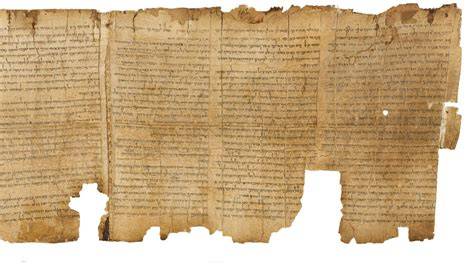
It is the sole museum in the Southeastern United States with on-loan exhibits. It offers visitors a unique opportunity to view historically significant treasures, such as a section of a Dead Sea Scroll.
Archaeological Replica Garden
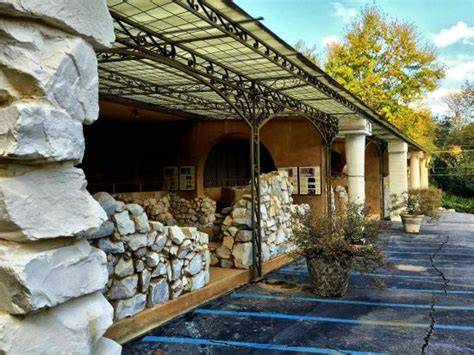
The highlight of any visit to the Biblical History Center is a walk through the Archaeological Replica Garden where full-scale reconstructions of structures relevant to daily life in Biblical times bring history to life.
The 23 large-scale outdoor replicas in the Archaeological Replica Garden are not just exhibits but a journey back in time. The structures erected here are similar to those found in Israel, Jordan, and Malta excavations, providing an immersive experience that makes you feel like you’ve stepped into the Biblical-era world.
Four areas of ancient life are represented in our Archaeological Replica Garden: Life of the Shepherd, Life of the Farmer, Life of the Village, and the Roman Theater. All are impressive on their own, but even more so when paired with the intriguing and engaging lectures from a Biblical History Center docent.
The displays encourage visitors to experience first-hand the life of nomadic shepherds. As I sat on a three-legged stool with a stretched leather seat inside a goat-hair tent-I could imagine being surrounded by shepherds who lived this way for thousands of years.
The Time Tunnel
Before stepping inside the museum, I was immersed in ancient life. The Time Tunnel outside the Center is filled with replicas of places of worship excavated over the years.
I followed signs without hesitation that guided me through history. I explored and learned about pagan, Jewish, and Christian worship rituals used in the Middle East 2,000 years ago.
Each worship center has columns in front of it, showing the typical architectural style of the period for that exhibit. The Time Tunnel signs are self-explanatory, and arrangements can be made for a private production through the ruins of these four ancient houses of worship for a nominal fee.
Ancient Places of Worship
For instance, the Canaanite Temple of 2,000 BC has a libation basin to satisfy the gods below, and to appeal to the gods above, there is an altar used to burn offerings.
The Israelite Shrine held artifacts common in the large Temple in Jerusalem, made from mud plaster. There were also altars for burning incense.
The Jewish Synagogue is representative of first-century structures. It has rows of steps that I walked down and sat on while soaking in the surroundings.
I gazed at a cabinet with scrolls and seven stairsteps descending into a ritual bath basin. In front of the Synagogue, I found my favorite style of graceful Greek Ionic columns.
Finally, I viewed the Byzantine Church, a replica of a Christian chapel next to Roman-style Corinthian columns. This church has a nave with a raised sanctuary containing a stone altar, a mosaic, a fresco, and a baptismal font in the shape of a cross.
Life of the Shepherd
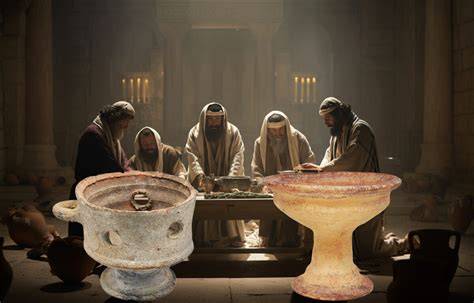
The displays encourage visitors to experience first-hand the life of nomadic shepherds. They still live a very similar life, tending their flocks.
As I sat on a three-legged stool with a stretched leather seat inside a goat-hair tent-I could imagine being surrounded by shepherds who lived this way for thousands of years.
The Shepherd’s Bread Experience is one of the Center’s hands-on opportunities to experience the ancient world in a personal way. Making bread like the shepherds in the desert have for thousands of years is one of those opportunities.
Participants enter a shepherd’s goat hair tent and learn about life in the desert. While being served tea, visitors learn to say “Thank you” and “You’re welcome” in Hebrew.
Each person flattens and shapes dough to be cooked over a wood fire, using a special oven like shepherds. While the bread cooks, everyone takes a turn at shaking cream into butter.
This hands on experience teaches visitors more about the lifestyle of the ancient shepherd, including what sort of manners were expected around the fire. This insightful look into the desert-nomad lifestyle of a biblical shepherd is another way that the Biblical History Center brings faith and history to life for visitors of all ages.
Life of the Farmer
From the tombs, I walked through the life of the Farmer area, where a well, millstones, and farming implements are on display. The toils of farm life are arduous, even with today’s modern implements.
There is a deep stone storage area for grain, similar to a silo, but with central stone steps that wind downward like a lighthouse stairway. Arched niches along the outer wall hold small oil lamps that would have given light enough to see to gather grain, perhaps for the evening’s bread.
The recreated agricultural spaces help connect biblical references to the practical work of growing, processing, storing, and preparing food in the ancient world.
Village Life
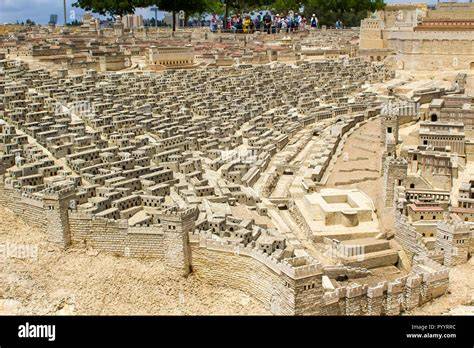
A large city gate led me into a recreated village. I could wander through houses with rustic tables holding oil lamps and pottery and outside onto sleeping porches.
When I entered storage rooms filled with large clay vessels and storage jars, I easily imagined that these would have held olive oil or wine and salted meat. The village even had an area that would have been a farmer’s market.
The reconstructed village presents domestic life through architecture, storage spaces, household objects, sleeping areas, and a marketplace. I had to pinch myself to remember I was still in LaGrange, Georgia.
Ancient Fishing and Mediterranean Trade
The display about the ancient fishing industry includes anchors, weights to hold nets in place, and methods of preserving the catch. These objects help visitors understand fishing on the Sea of Galilee.
Another display surrounding Murex shells explains an important Mediterranean industry. The Murex, a sea snail, created an essential industry in the Mediterranean, producing a dye called Tyrian purple.
In what is now Lebanon, the Phoenicians of the city of Tyre used the dye for fabric over 3,000 years ago. The reddish-purple fabrics were sold throughout the area, reaching as far as Carthage in Tunisia.
The color was also known as royal purple, and eventually, Romans restricted its possession to the royal family.
There is also an exhibit on ship disasters, where you can view remains like amphorae, or wine jars, and other storage vessels from underwater archaeological sites.
Burial Practices and Tomb Replicas
Further, along the dirt pathway, I entered tombs constructed much like the burial chambers of Abraham and Jesus. In the Old Testament replica tomb, I saw burial practices used in actual Jerusalem tombs, including funereal artifacts.
The New Testament tomb exhibits three Herodian-period bone boxes and a tomb door that has been rolled open. The outdoor replicas connect burial architecture and funerary customs with the historical settings described in biblical narratives.
For a Christian, this display has an inexpressible impact. For a non-Christian, walking through the history of people more than 2,000 years ago is still an incredible experience.
Biblical Life Artifacts Gallery
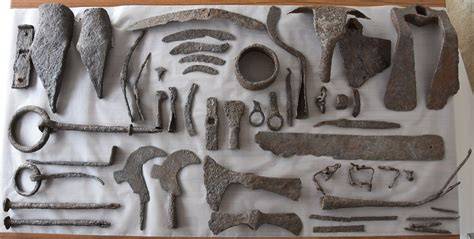
The Center’s Biblical Life Artifacts Gallery has fascinating ancient Middle Eastern displays of daily life and pieces of history on loan from international museums. Currently, the Center displays pieces from Jerusalem’s Israel Museum.
The Biblical Life Artifacts Gallery is an amazing opportunity to peer back across the ages to see what daily life was like in ancient times. The gallery features over 250 artifacts from as far back as the Paleolithic Period, marked by the first development of stone tools, including Stone Age tools, Iron Age pottery, coins, fishing equipment and more.
All of these incredible artifacts are on long-term loan from the Israeli Antiquity Authority, and the center is only one of eight museums in the world with such a collection.
The exhibition concurrently explores early Christian and Jewish life, displaying some of the most significant Biblical artifacts ever found, dating to the Paleolithic Period, including Stone Age tools and Iron Age pottery.
On exhibit is a Dead Sea Scroll segment, the burial ossuary, or container, of Caiaphas the High Priest, and a placard inscribed Pontius Pilate.
The New Testament tells us that Caiaphas handed Jesus over to the Romans. These artifacts represent the only surviving physical testimonies of these two prominent figures.
Hands-On Learning for Children
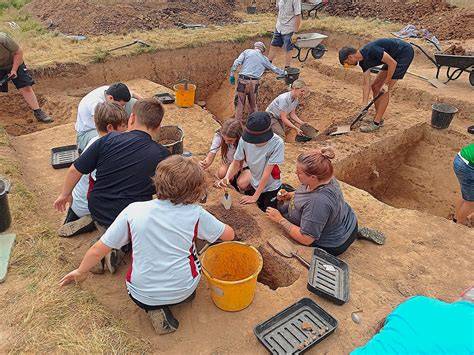
The Biblical History Museum is not just a place for passive learning, but also a hands-on experience. One of the primary goals of the Biblical History Center is encouraging young learners to get excited about history, archaeology and anthropology.
The Center is uniquely equipped for educating these bright minds, and constructed four archeological excavation pits in order to simulate a real dig site. School, church and large family groups all enjoy the opportunity to get their hands dirty in an effort to better understand what an archaeologist does, the tools they use on a daily basis and why excavation has to be done so carefully.
The museum’s four pits, three of which are actual excavations from the time of the Exodus to the 2nd century AD, are filled with genuine artifacts and replicas buried in the sand. The fourth pit, designed for the youngest children, is filled with fossils and dinosaur remains.
The Center requires a minimum of eight children for this experience, making it a perfect family activity. This experience is available to groups of 8 or more, and provides the perfect activity for a birthday celebration, field trip or youth group outing.
Biblical Meals and Ancient Dining
Interactive experiences permit museum visitors to “live” in the moment and truly bring the Middle East’s ancient history to life. Not only did I walk among accurately created replicas and museum displays of authentic antiquities, but I could also participate in lectures and personal experiences like Passover-style meal presentations.
The Biblical Meal presentation is more than just a typical tour or lecture. Guests join their docent in dining like Biblical citizens, complete with ancient table manners and a period-accurate menu.
The knowledgeable staff explain ancient meal practices, like one would have experienced during Passover or the Last Supper, and the setting of the table for reconciliation. All of this is done in the center’s 1st century-style dining room, at Roman triclinium-style tables.
The Last Supper meal consists of 15 foods that replicate those served at the last meal Jesus and his disciples shared. The dinner is served in a 1st-century-style dining room, including soup, salad, fruit, main course, dessert, and water or grape juice.
The guide explains ancient mealtime practices, discussing the Passover feast and the Last Supper. The meal presentation provides a look into what it might have been like during The Last Supper and adds a new reverence to the tradition of taking communion.
Seasonal and Special Experiences
Before you go, check the museum’s website for dates of seasonal and special events. Spring allows you to participate in the Empty Tomb Tour.
Winter tours focus on the Starry Night, a special one-night Christmas illuminated tour and meal. The Center requires reservations and confirmations for most dinners and special events.
Some events have a required group size, like the Kid’s Digs, which requires a minimum of eight children, and the bread-making experience requires ten participants.
Visitor Information
| Information | Details |
|---|---|
| Location | Minutes from downtown LaGrange, Georgia |
| General admission | Adults: $30.88 |
| Children | Children 6-12: $25.88 |
| Young children | Children 5 and under are free |
| Opening days | Tu/Wed/Fri/Sat: 10 am - 5 pm |
| Thursday hours | 10:30 am - 5 pm |
| Regular closing days | The Biblical History Center is closed Sundays and Mondays |
General admission does not include the 7% Troup County Sales Tax or any special experiences. The Center is closed Tuesday after President’s Day & MLK Day; Tuesday after Memorial Day; 4th of July; Tuesday after Labor Day; Thanksgiving Day; December 24 - January 13.