The biblical prophecies about Jesus’ birth identify the Messiah’s lineage, birthplace, manner of birth, divine identity, journey, reception, and purpose. The Old Testament foretold that the promised Savior would come from the line of David, be born in Bethlehem, be born of a virgin, be called Immanuel, and ultimately bring salvation, peace, and righteous rule.
The Christmas story in the Bible begins several hundred years before that night in Bethlehem. One Old Testament prophecy after another promised a coming Savior-the Messiah, the Anointed One-who would redeem the people of God.
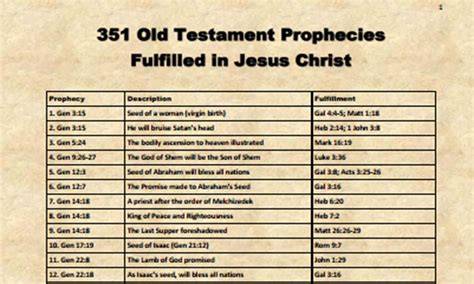
Why the Birth of Jesus Was Prophesied
The Bible tells us that long before the world began, God had a plan to bring redemption through Christ to all those who would choose to believe and follow Him (1 Peter 1:19-20). God knew we would need a Savior. He knew we would need to be set free. And He made a way, by sending His One and Only Son, so that we could receive forgiveness and find new life and hope through Him (John 3:16).
Throughout the Scriptures, weaved through verse after verse in the Old Testament, are prophecies that speak of the Christ who was to come. Bible scholars have concluded from much research that, hundreds of years before Jesus was even born, more than 300 prophecies were recorded to tell of His coming, His life and journey to the cross, and the power of His Resurrection.
These prophecies point to the exact location, circumstances, and even timing of Jesus Christ’s birth. God alone is the only One who could plan those specific details and ensure they all come to pass.
Perhaps no other person in history has received more attention than Jesus of Nazareth. More incredible than the volumes written on the life of Jesus after his birth, though, is what was written about him before he was born.
Jesus claimed the Hebrew Scriptures were about him, going so far as to say that Moses himself wrote with him in mind (Luke 24:44; John 5:46). The writings about Jesus that came prior to his birth are known as prophecies.
Sometimes people think of prophecies as vague, Nostradamus-type predictions about future events. But biblical prophecies are anything but vague, detailing everything from the place and manner of Jesus’ birth to the way he would die.
The Apostle Peter wrote, “And we have the prophetic word more fully confirmed, to which you will do well to pay attention as to a lamp shining in a dark place, until the day dawns and the morning star rises in your hearts, knowing this first of all, that no prophecy of Scripture comes from someone’s own interpretation. For no prophecy was ever produced by the will of man, but men spoke from God as they were carried along by the Holy Spirit” (2 Pet 1:19-21).
The Messiah Would Come from the Line of Abraham, Judah, Jesse, and David
Jesus was from the line of Abraham (Genesis 12:3), Isaac (Genesis 17:21, Genesis 26:4), Jacob (Genesis 28:14), Judah (Genesis 49:8-12), Jesse (Isaiah 11:1), and David (Isaiah 9:7, Jeremiah 23:5).
We see the entire fulfillment of Christ’s line of genealogy through Matthew 1:1-17 and Luke 1. “This is the genealogy of Jesus the Messiah the son of David, the son of Abraham…” (Matthew 1:1).
Luke 1:67-79-Zechariah’s song proclaims that God has raised up a “horn of Salvation” from the “house of David”.
“Praise be to the Lord, the God of Israel, because he has come to his people and redeemed them. He has raised up a horn of salvation for us in the house of his servant David” (Luke 1:68-69).
Isaiah 11:1-“A shoot will come up from the stump of Jesse; from his roots a Branch will bear fruit.” 2 Samuel 7:12-16 also seems to suggest an everlasting line for David and that the Messiah will establish His kingdom as David’s Heir. Both Matthew and Luke list David in Jesus’ genealogy.
Matthew pointed out that the Child had the credentials of the King: that is, He was born of the seed of Abraham and of the line of David, the royal line. The genealogy of Jesus is given in Matthew 1 so that we might understand that the one that was to be the promised son of David, the King of the Davidic line, the King of Israel, and the King of kings and the King over an eternal kingdom was indeed Jesus Christ, because He was, in fact, in the royal line.
The Messiah Would Be Born of a Virgin
Isaiah 7:14
“Therefore the Lord himself will give you a sign: the virgin will conceive and give birth to a son, and will call him Immanuel.”
Matthew directly links Jesus’ birth to Isaiah’s prophecy (Matthew 1:22,23)-a supernatural event made even more amazing in that it was predicted hundreds of years earlier.
Like the prophet Micah, Isaiah’s ministry took place hundreds of years before Christ, and he foresaw that the Messiah’s birth would be miraculous. A virgin would conceive and bear a son who would be called Immanuel, which means “God with us.”
Because Isaiah wrote that he was speaking “in the days of Uzziah, Jotham, Ahaz, and Hezekiah, kings of Judah” (Isa. 1:1), we can use history books to determine that Isaiah predicted the birth of Jesus about 600 years before that first Christmas.
To put this prediction into perspective, the United States is only 246 years old. We’d have to experience the Declaration of Independence and everything else in U.S. history more than two times to span the amount of time between Isaiah’s words and the birth of Jesus.
To put the prediction in context, God had just promised the Jewish people he would give them a sign as “deep as Sheol or high as heaven” (Isa. 7:11) to assure them he would not abandon his people or the Davidic covenant (that an ancestor of David would someday rule forever).
Next, Isaiah told them, “the Lord himself will give you a sign. Behold, the virgin shall conceive and bear a son, and shall call his name Immanuel” (Isa. 7:14).
Matthew’s Fulfillment of Isaiah’s Prophecy
Mary received this same prophecy when the angel Gabriel visited her, and we see this fulfilled clearly through Scripture. “The virgin will conceive and give birth to a son, and they will call him Immanuel (which means ‘God with us’)” (Matthew 1:23).
Mary, espoused to Joseph of Nazareth, received a visitation from and Angel of the Lord who revealed to her that she would conceive a son by the will of God and the power of the Holy Spirit (Luke 1:26-38). An Angel in a dream confirmed this to Joseph (Matt 1:18-25).
Matthew establishes that this one is indeed the promised King by virtue of His virgin birth. That is, He had no earthly father. This is the God-man, because that which was conceived in Mary was conceived by the Holy Spirit and not by a man.
It was the Holy Spirit who placed the seed in the egg of Mary that became the child that grew in her womb, and was born Jesus the Son of God. He is man because He comes through Mary’s womb; He is God because He was conceived by the Holy Spirit.
Why the Virgin Birth Matters
The virgin birth highlights that salvation is wholly a work of God. In the Old Testament, God often raised up mighty heroes to deliver his people in miraculous ways.
Some of the greatest Old Testament savior types were born to mothers who had difficulty conceiving. Sara was barren before she conceived Isaac (Gen 11:29-30); Rebekah was barren before she conceived Jacob (Gen 25:21-26); Rachel was barren before she bore Joseph (Gen 30:22-24); Samson’s mother was barren before she bore him (Judg 13:2-3); and Hannah was barren before she conceived Samuel (1 Sam 1:1-2).
God worked against the odds to demonstrate his power and glory. It’s only fitting that the greatest savior of all would be born against all odds, to a virgin.
The impossibility of the virgin birth showcases the divine manner of Jesus’ entrance into the world, and paves the way for the expectation that he would be the ultimate deliverer of God’s people.
The virgin birth is very important for another reason, too. Because Jesus was conceived of the Holy Spirit (Matt 1:18), he could assume humanity in its totality, and still be without sin. The virgin birth ensured that Jesus would be our perfect representative (Heb 4:15), sharing our humanity, but not our guilt.
Jesus Would Be the Son of God and Immanuel
Isaiah 9:6,7-“For to us a child is born. To us a son is given. And he will be called Wonderful Counsellor, Mighty God, Everlasting Father, Prince of Peace.”
The centerpiece of all the Christmas prophecies, Isaiah 9:6, was written nearly six hundred years before Jesus’ birth. Isaiah promised it would be a miraculous event, unlike any the world had ever known, and the details Isaiah gave were fulfilled precisely by Jesus.
“For to us a child is born, to us a son is given; and the government shall be upon his shoulder, and his name shall be called Wonderful Counselor, Mighty God, Everlasting Father, Prince of Peace.”
Isaiah 9:6 is the most familiar of all the Old Testament prophecies about the birth of Christ. To the Jewish nation, Isaiah’s prophecy was news of a coming King. To the unsuspecting world, the prophecy promised a Savior, God incarnate, whose coming would dramatically and forever alter human history.
“A Child Will Be Born”
“A child will be born to us” is a statement about His humanity. He began life like any other human-as an infant.
Isaiah doesn’t say more about this here, but we know from the New Testament that Christ experienced every temptation common to humanity, but He never sinned (Hebrews 4:15).
As a man, He felt everything we feel, hurt like we hurt, wept like we weep, and in His death He even felt the weight of sin as He took ours upon Himself.
“A Son Will Be Given”
“A son will be given to us” speaks of the Savior’s preexistent deity. By saying “given,” not “born,” Isaiah suggests that Jesus existed before His birth.
He was already God, the second Person of the Trinity, before He was given to us to be our Savior (Philippians 2:6-7). He came as the Son of God-God in a human body-to conquer sin and death forever.
He is the perfect Son of God, the promise of the ages, the Holy One of Israel, the desire of nations, the light in darkness, the only hope for our lost world.
Wonderful Counselor, Mighty God, Everlasting Father, Prince of Peace
“The government will rest on His shoulders” looks beyond that first Christmas to a time still in the prophetic future when Christ shall reign over a literal, earthly, geopolitical kingdom that encompasses all the kingdoms and governments of the world (Zechariah 14:9; Daniel 2:44).
In that day, the government of the whole world will rest on His shoulders, and He will reign as sovereign over a worldwide kingdom of righteousness and peace. In the meantime, His government operates in secret. His kingdom and sovereign rule are manifest within those who trust Him as their Lord (Luke 17:20-21).
Messiah’s kingdom has the answer to the world’s confusion. During His incarnation, Christ demonstrated His wisdom as a counselor. When people came to Him, He always knew what to say, when to reach out to a seeking heart, and when to rebuke an impetuous soul.
The testimony of those who heard Him was, “Never has a man spoken the way this man speaks” (John 7:46). Christ is the source of all truth (John 14:6), and it is to Him that we must turn to make sense of life’s confusion.
The King is the Mighty God and His kingdom is free from all chaos. “God is not a God of confusion but of peace” (1 Corinthians 14:33), which means chaos is antithetical to who He is.
In Jesus we have a sovereign Master who can forgive sin, defeat Satan, liberate us from the power of evil, redeem us, answer our prayers, restore our broken souls, and reign over rebuilt lives, bringing order to chaos.
Christ is Creator of heaven and earth. According to God the Father’s own testimony, the Son-Jesus-was the Person of the Godhead who created time out of eternity and fashioned the universe from nothing (Hebrews 1:10-12).
Nothing is too difficult for the Creator and Sustainer of everything. Infinity and all its intricacies are nothing to Him who is the Alpha and Omega, the First and Last, the Beginning and the End-the Father of Eternity.
In Messiah’s kingdom there are no conflicts because He is the Prince of Peace. He offers “peace from God” (Romans 1:7) to all who receive His grace. He makes “peace with God” (Romans 5:1) for those who surrender to Him in faith. And He brings the “peace of God” (Philippians 4:7) to those who walk with Him.
As we hear so often at Christmas, the beginning of His earthly life was heralded by angels who pronounced peace on earth (Luke 2:14).
There never really has been peace on earth in the sense we think of it. Wars and rumors of wars have characterized the entire two millennia since that first Christmas, as well as all the time before it.
The announcement of peace on earth was a two-pronged proclamation. First, it declared the arrival of the only One who ultimately can bring lasting peace on earth, which He will do when He returns to bring about the establishment of His earthly kingdom.
But more importantly, it was a proclamation that God’s peace is available to men and women. Read the words of Luke 2:14 carefully and note this emphasis: “Glory to God in the highest, and on earth peace among men with whom He is pleased.”
The Messiah Would Be Born in Bethlehem
Micah 5:2
“But you, Bethlehem Ephrathah, though you are small among the clans of Judah, out of you will come for me One who will be ruler over Israel.”
“But you, O Bethlehem Ephrathah, who are too little to be among the clans of Judah, from you shall come forth for me one who is to be ruler in Israel, whose coming forth is from of old, from ancient days.”
700 years before Jesus’ birth, the prophet Micah spoke of a ruler who would come out of the town of Bethlehem, and whose coming forth would be from of old, even “from ancient days.” The last phrase there could be translated, “from the days of eternity.”
Here Micah foresaw that this eternally existing one would be born in podunk Bethlehem. Why Bethlehem? In Hebrew, Bethlehem means “bread house.” Bethlehem is where the bread comes from. Jesus identified himself as the bread of life (John 6:35). He alone can satisfy our deepest spiritual longings.
Herod, the Magi, and the Prophecy
Christ was born in Bethlehem just as the prophecy foretold. “After Jesus was born in Bethlehem in Judea, during the time of King Herod, Magi from the east came to Jerusalem” (Matthew 2:10).
When Herod pointed the magi to Bethlehem, his scholars were probably working from this verse.
“Now after Jesus was born in Bethlehem of Judea in the days of Herod the king, behold, Magi” - or wise men - “from the east arrived in Jerusalem, saying, ‘Where is He who has been born King of the Jews? For we saw His star in the east and have come to worship Him.’”
Herod calls together the elite, the scribes, the chief priests of the people, and begins to ask them where this is to happen; and they respond that He is to be born in Bethlehem of Judea; for thus it has been written by the prophet.
“And you, Bethlehem, land of Judah, by no means least among the leaders of Judah; for out of you shall come forth a Ruler,” - and then Matthew adds this line - “who will shepherd My people Israel.”
He says that the Ruler will have the character of a shepherd - a gentle, pastoral, tender kind of ruler - very much different than Herod who was known as the wolf, the absolute enemy of the sheep.
Out of Bethlehem Jesus will come. Out of Bethlehem the Messiah will come. The Child was born in Bethlehem, and thus you have an explicit Old Testament prophecy that says the Messiah will be born in Bethlehem; and He was.
The Messiah Would Be Preceded by a Forerunner
Isaiah 40:3-5
“A voice cries: ‘In the wilderness prepare the way of the LORD; make straight in the desert a highway for our God. Every valley shall be lifted up, and every mountain and hill be made low; the uneven ground shall become level, and the rough places a plain. And the glory of the LORD shall be revealed, and all flesh shall see it together, for the mouth of the LORD has spoken.’”
Isaiah 40:3-5 takes up promises from chapter 35 and announces their fulfillment. The wilderness will be transformed (35:1-2, 6-7), Yahweh’s glory will be revealed (35:2), and the King will come (35:4).
Yahweh commands his heavenly council to “comfort, comfort my people” (40:1), and his Word does not return empty but accomplishes that for which he sends it (55:10-11).
Therefore, someone has to respond. One voice in the heavenly assembly replies, and Isaiah functions as Yahweh’s spokesman (40:6; cf. 6:1-8).
In the fullness of time (Gal 4:4), the speaker with this voice is John the Baptist, the herald of the Christ (Mt 3:1-3; Mk 1:1-4; Lk 3:1-6; Jn 1:19-23).
John the Baptist was a voice in the wilderness, fulfilling Isaiah 40:3.
To quote Pieper: “This prophecy, let it be said, concerns not only John the Baptist but also all other preachers who have a similar calling, whether they lived before John or later than he.”
Following in the footsteps of John, we are reminded that those who speak God’s Word of comfort are of little consequence (cf. Jn 3:26-30; 1 Cor 3:7). It is the message, and not the messenger, that is paramount.
The Messiah Would Come to the Temple
Malachi 3:1
“Then suddenly the Lord you are seeking will come to his temple; the messenger of the covenant, whom you desire, will come,’ says the LORD Almighty.”
Although Christ came to the temple many times in His life, only two people registered His first arrival there for cleansing rights as a babe-Anna and Simeon.
Simeon had been shown that he would see Christ before he died, and he celebrated when he did.
The Messiah Would Be Connected with Egypt
Hosea 11:1
“When Israel was a child, I loved him, and out of Egypt I called my son.”
While the nation of Israel’s origin story starts in Egypt, Matthew (2:13-15) also ties Jesus’ Egyptian exile into Hosea’s prophecy.
God sends an angel to awaken Joseph in the night and warn him of Herod’s plan. “An angel of the Lord appears to Joseph in a dream. ‘Get up,’ he said, ‘take the child and his mother and escape to Egypt. Stay there until I tell you, for Herod is going to search for the child to kill him’” (Matthew 2:13).
Angels warned Joseph to flee Herod’s aggression by route to Egypt. Following Herod’s death, Joseph, Mary, and Jesus returned from Egypt to Nazareth where Jesus grows in stature and wisdom before the commencement of his ministry, later his death by crucifixion, and then his resurrection.
The second prophecy that He fulfills has to do with Egypt. The prophet Hosea said that He would be called out of Egypt, and He was.
The Messiah Would Be Associated with a Star and Kings
Numbers 24:17
“A star will come out of Jacob; a sceptre will rise out of Israel.”
“I see him, but not now; I behold him, but not near; A star shall come forth from Jacob, and a scepter shall rise from Israel, and shall crush through the forehead of Moab, and tear down all the sons of Sheth” (Numbers 24:17).
During this early and formational time in Israel’s history, a star is predicted out of Jacob, pointing to a king. This may have been one of the prophecies that started the magi on their journey.
God places the star in the sky to lead the magi to Christ, that they might worship Him. “Now after Jesus was born in Bethlehem of Judea in the days of Herod the king, behold, magi from the east arrived in Jerusalem, saying, ‘Where is He who has been born King of the Jews? For we saw His star in the east, and have come to worship Him’” (Matthew 2:1-2).
One of the amazing aspects of the event is that wise men from Persia (Magi) were aware of the indications in the alignment of the stars that signaled the momentous event.
They searched the ancient writings to determine where the corresponding event occurred. No doubt, the Magi found the Hebrew Scriptures such as Isaiah 7:14, Isaiah 9:6-7, and Micah 5:2.
It took approximately two years for the Magi to find the source information and travel to Judah. We know this because when the Magi stopped to pay homage to Herod, the presiding King of Judah, Herod ascertained what city (Bethlehem) and what time the Magi captured the alignment of the “King Star” in the heavens.
Psalm 2
The psalmist speaks about kings of the earth banding together against God and “His anointed”. God calls the Anointed One His Son saying, “I will make the nations your inheritance” and warns “therefore you kings, be wise”.
We see Herod trying to destroy Jesus, while the “wise kings” of the East choose to bow at the manger.
Psalm 72: Kings Would Bring Gifts
“May the kings of Tarshish and of distant shores bring tribute to him. May the kings of Sheba and Seba present him gifts. May all kings bow down to him and all nations serve him” (Psalm 72:10-11).
The magi who visited Jesus brought him gifts and bowed to worship Him. “On coming to the house, they saw the child with his mother Mary, and they bowed down and worshiped him. Then they opened their treasures and presented him with gifts of gold, frankincense and myrrh” (Matthew 2:11).
The Magi bow in worship and present special gifts fit for a king: gold, frankincense, and myrrh (Matthew 2:1-12).
Psalm 72: Shepherds Would Bow
“May the desert tribes bow before him and his enemies lick the dust” (Psalm 72:9).
The angels came to the shepherds to tell them the good news of Christ’s birth, and they hurried to find him and worship Him.
“This will be a sign to you: You will find a baby wrapped in cloths and lying in a manger…When the angels had left them and gone into heaven, the shepherds said to one another, ‘Let's go to Bethlehem and see this thing that has happened, which the Lord has told us about.’ So they hurried off and found Mary and Joseph, and the baby, who was lying in the manger. When they had seen him, they spread the word concerning what had been told them about this child” (Luke 2:12, Luke 15-17).
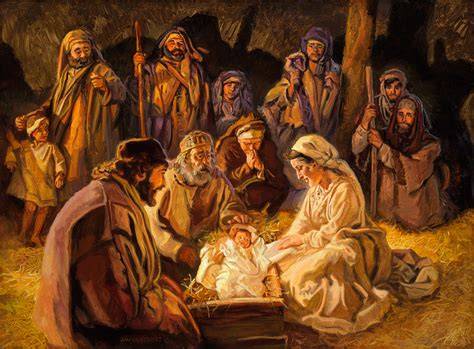
The Humble Circumstances of Jesus’ Birth
Isaiah 53:3
“Like one from whom people hide their faces; he was despised, and we held him in low esteem.”
Many link Isaiah’s prophecy to Jesus’ life of frugality. The fact He was raised in Nazareth of Galilee and born in a manger meant His beginnings were humble and not at all like the royal successor the Jews were expecting (see Matthew 2:23).
It was customary for family to reside with extended family when on such a journey. Upon arriving, Mary was ready to birth the Messiah, but there was no room for them in the guest chamber or quarters (kataluma - Greek).
Houses of that day had guest chambers and rooms beneath the living quarters for food storage and for animals. During the colder days and nights, the warmth of the animals would add comfort to the house.
It was in these animal quarters that the hosts prepared a place for Mary, Joseph, and the baby Messiah.
Another amazing aspect of the story is that angels announced the birth to shepherds attending their sheep in the hillside near Bethlehem. No pomp and ceremony or stately announcements were made to anyone but to shepherds who found the birth location and paid their homage.
This announcement to shepherds has a unique connection to Ezekiel 34 where the prophet declares that God will raise up true shepherds for the people. God entrusted this momentous announcement to shepherds in the hillside. Afterward, the shepherds share the good news to others in the area (Luke 2:8-21).
The Messiah Would Be Protected from Herod
Jeremiah 31:15
“A voice is heard in Ramah, mourning and great weeping. Rachel weeping for her children and refusing to be comforted, because her children are no more” (Jeremiah 31:15).
Herod’s cruel scheme to kill Jesus didn’t work, so he maliciously ordered that all baby boys living near Bethlehem, 2 years old and younger, be put to death.
“When Herod realized he had been outwitted by the Magi, he was furious, and he gave orders to kill all the boys in Bethlehem and its vicinity who were two years old and under, in accordance with the time he had learned from the Magi. Then what was said through the prophet Jeremiah was fulfilled” (Matthew 2:16).
Herod, though he had a measure of power, was a small-minded and threatened and insecure and wicked and evil man, who upon hearing that a king of the Jews had been born would do everything possible to make sure that that king was executed in his infancy.
This was the reason that Herod decreed that all the children in Bethlehem, two years of age and younger, be killed. However, the story discloses how God was involved in the birth and protection of Messiah.
The Purpose of the Messiah’s Birth
Genesis 3:15
“I will put enmity between you and the woman, and between your offspring and her offspring; he shall bruise your head, and you shall bruise his heel” (Gen 3:15; cf. Col 2:15).
Writing thousands of years before Jesus’ birth, Moses recorded this ancient prophecy about the offspring of a woman who would crush Satan’s head.
While this prophecy reveals to us why Jesus came, it also foreshadows the manner of his death. His heel would be bruised, a promise that Christ’s victory would come through Christ’s sufferings.
Jesus was born to restore humanity, and he was crucified to redeem humanity. From the earliest chapters of the Bible, prophecies of the Savior’s birth move the narrative forward.
Each book of the Old Testament is like a river bringing us down to the manger in Bethlehem. There, we find the promised seed who would deliver humanity by conquering sin and Satan.
Isaiah 61:1 and Luke 4:18
“The Spirit of the Sovereign LORD is on me, because the LORD has anointed me to proclaim good news to the poor. He has sent me to bind up the brokenhearted, to proclaim freedom for the captives and release from darkness for the prisoners” (Isaiah 61:1).
Christ Himself fulfilled these scriptures. “The Spirit of the Lord is on me, because he has anointed me to proclaim good news to the poor. He has sent me to proclaim freedom for the prisoners and recovery of sight for the blind, to set the oppressed free” (Luke 4:18).
Isaiah 53:11
Isaiah stated, “Out of the anguish of his soul he shall see and be satisfied; by his knowledge shall the righteous one, my servant, make many to be accounted righteous, and he shall bear their iniquities” (Isaiah 53:11).
Christmas commemorates the confirmation of God’s care and provision for all humanity by the giving the Messiah to free humanity from the chains of sin, shame, and guilt.
Christmas reminds us of the gift of life received through the unfolding of God’s great plan to restore all creation.
Prophecy, Revelation, and Faith
The themes of human ignorance and divine revelation, of “normal” expectations and hidden realities, flow seamlessly from chapter 1 and are magnified in chapter 2.
From the account of Joseph and the naming of Mary’s child, we learned that apart from God’s interruption and revelation, human beings will neither comprehend nor believe in God’s ways of working through his Christ, the Son of David and Son of God.
That same contrast helps to drive forward the narrative of chapter 2 in even more powerful ways, through the contrast of the two kings as well as the unexpected believers who arrive in Jerusalem.
Matthew 1:18b-19 shows Joseph’s perception of the situation and his pious, yet uninformed, decision. Mary “was found” (presumably by Joseph) to be pregnant, with the result that righteous and compassionate Joseph decided to cancel the legal marriage created by their betrothal.
This is the natural human evaluation of the “origin” of Jesus Christ. Since his origin is not from Joseph, Mary’s betrothed, it must have been from a sinful union between Mary and another man.
Ironically, although the narrator has informed the hearers/readers that Mary is pregnant “from the Holy Spirit,” Joseph can act only on the basis of his own logical understanding of the child’s origin.
Joseph’s plan to divorce Mary discreetly “would leave both his righteousness (his conformity to the law) and his compassion intact.” Joseph is, for the right reasons, about to do the wrong thing, but God intervenes.
In Joseph’s well-meaning incomprehension, we have the first glimpse of a powerfully important theme in Matthew’s Gospel, namely, that in order for human beings to know the ways of God and his Christ, those ways must be revealed to them.
They cannot attain to this knowledge and faith by their “own reason or strength.” What makes the difference is that humans fail to understand unless God reveals his purposes to save in Jesus.
That revelation, moreover, possesses the power to evoke a trusting response in men and women, as Joseph will show in 1:24-25.
The Prophetic Portrait of Jesus
| Prophecy | Old Testament passage | New Testament fulfillment |
|---|---|---|
| Born of a virgin | Isaiah 7:14 | Matthew 1:22-23 |
| Called Immanuel | Isaiah 7:14 | Matthew 1:23 |
| Child and Son given to humanity | Isaiah 9:6-7 | Luke 2:10-12 |
| Ruler from Bethlehem | Micah 5:2 | Matthew 2:1-10 |
| Called out of Egypt | Hosea 11:1 | Matthew 2:13-15 |
| Star and scepter from Jacob | Numbers 24:17 | Matthew 2:1-2 |
| Kings bow and bring gifts | Psalm 72:9-11 | Matthew 2:11 |
| Weeping over children | Jeremiah 31:15 | Matthew 2:16-18 |
| Forerunner in the wilderness | Isaiah 40:3-5 | Matthew 3:1-3; Mark 1:1-4; Luke 3:1-6; John 1:19-23 |
| Messiah from David’s line | 2 Samuel 7:12-16; Isaiah 9:7 | Matthew 1:1-17; Luke 1:68-69 |
The prophetic message of Christmas is the good news of God’s answer to all the confusion, chaos, complexities, and conflicts of life.
It is the gift of the newborn infant who is also the Father of all eternity. He is an innocent child, yet He is a wise Counselor and mighty King. He is God with us. Immanuel.
As we remember the birth of Christ, let’s reflect on the entire life of our Lord, marveling at the prophetic testimony and rejoicing in the greatest gift of all: Jesus.