The Bible does not assign one fixed symbolic meaning to the rose. The flower can be used as a Christian illustration of beauty, creation, and the passing nature of earthly life. While the Bible does not mention modern roses many times by name, flowers that are linked to roses appear in several scriptures.
The best-known biblical reference is the “rose of Sharon” in Song of Solomon 2:1: “I am the rose of Sharon, and the lily of the valleys.” Many Christians connect this image with beauty, purity, love, Christ, and the Church, although Scripture does not directly say that Jesus is the Rose of Sharon.
Where the Rose Appears in the Bible
The word rose, denoting a type of shrub and particularly the flower, appears in the Bible two times. In Song of Solomon 2:1, the rose of Sharon represents beauty as it does in Isaiah 35:1.
Rose occurs twice only, viz. in (Solomon 2:1; Isaiah 35:1) There is much difference of opinion as to what particular flower is here denoted; but it appears to us most probable that the narcissus is intended.
The main passages traditionally associated with the rose are:
- “I am the rose of Sharon, and the lily of the valleys.” Song of Solomon 2:1 KJV
- “The wilderness and the solitary place shall be glad for them; and the desert shall rejoice, and blossom as the rose.” Isaiah 35:1 KJV
These verses connect flowers and blooming with ideas such as beauty, joy, growth, renewal, God’s blessing, and hope after a difficult season. The Bible also uses flowers more broadly as illustrations of God’s care, the beauty of creation, and the temporary nature of earthly life.
The “Rose of Sharon” in Song of Solomon
The term “Rose of Sharon” appears in Song of Solomon 2:1, where the speaker, often interpreted as the Shulamite woman, says, “I am the rose of Sharon, and the lily of the valleys.” This verse is part of a love poem between the bride and bridegroom.
The “rose of Sharon” describes a beautiful flower associated with this region. The phrase shows the beauty and excellence associated with the beloved. It can therefore be used as a beautiful picture of purity, beauty, and God’s creation.
Sharon was a fertile plain in the land of Israel. The reference to “Sharon” in the Bible pertains to a fertile plain located between Joppa and Caesarea in ancient Israel, known for its lush landscapes and rich agricultural produce.
The exact identity of the plant referred to as the “Rose of Sharon” remains uncertain, as the Hebrew word ‘ḥavatzelet’ has been translated in various ways. The ambiguity surrounding this term has led to diverse interpretations over the centuries.
The exact botanical identity of the “rose of Sharon” is debated. Therefore, it is better not to assume that this verse definitely describes the modern garden rose.
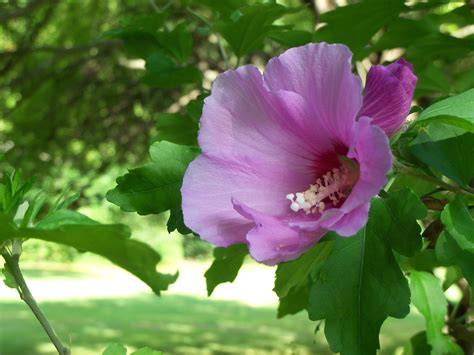
What Was the Biblical Flower?
By general consent English Versions of the Bible is wrong: in Songs 2:1 margin reads “Hebrew habazzeleth, the autumn crocus” and in Isaiah 35:1, margin reads “or autumn crocus.” This is the Colchicum autumnale (Natural Order, Liliaceae).
A Targum on Songs 2:1 explains the Hebrew word as “narcissus,” a very common plant in the plains and mountains of Palestine and a great favorite with the natives. Two species, N. tazetta and N. serolinus (Natural Order, Amaryllideae), occur, the latter being the finer; they are autumn plants.
All authorities agree that the so-called “rose” was some kind of bulbed plant. The “rose of Sharon,” sacredly associated with the heavenly Bridegroom, So 2:1 Isa 35:1, appears from the derivation of its Hebrew name to have been a bulbous plant.
Other proposed identifications include the oleander, the sweet-scented narcissus, the tulip, the daisy, the crocus, the autumn saffron, the asphodel, and the cistus or rock-rose. Nothing definite can be affirmed regarding it.
The “rose of Sharon” is probably the cistus or rock-rose, several species of which abound in Palestine. Mount Carmel especially abounds in the cistus, which in April covers some of the barer parts of the mountain with a glow not inferior to that of the Scottish heather.
Chateaubriand mentions the narcissus as growing in the Plain of Sharon. That the narcissus is found in Syria and Palestine is well known, as it has been mentioned by several travelers, and also that it is highly esteemed by all Asiatics from Syria even as far as India.
Because the precise plant is uncertain, the theological meaning should not depend on identifying it with the modern rose. The enduring biblical image is the image of a beautiful flower flourishing in Sharon.
Is the Rose of Sharon Jesus Christ?
Many Christians use Rose of Sharon as a title or picture of Jesus because Christ is viewed as perfectly beautiful, pure, and precious. Many Christians see the “Rose of Sharon” as a symbol of Jesus Christ, citing its beauty, fragrance, and ability to thrive in harsh conditions as reflective of Christ’s divine nature and His ability to bring hope and salvation to humanity.
However, the verse itself does not directly say that Jesus is the rose. Scripture does not directly say, “Jesus is the Rose of Sharon.” The phrase can be understood as a Christian picture of Christ, but the original passage is part of Song of Solomon and its immediate context is poetic love language.
In Christian theology, the “Rose of Sharon” has been interpreted in several ways:
- Representation of Jesus Christ: Many Christians see the “Rose of Sharon” as a symbol of Jesus Christ.
- Emblematic of the Church or believers: Others interpret the “Rose of Sharon” as representing the church or individual believers, seen as beautiful and flourishing under the care of Christ, the divine gardener.
- Marital symbolism: Within the context of the Song of Solomon, the “Rose of Sharon” is also seen as a symbol of love and beauty, reflecting the intimate relationship between Christ and His church, or more broadly, the love and commitment between married couples.
Common spiritual associations include beauty, purity, love, grace, Christ’s preciousness, and spiritual beauty. These associations are Christian interpretations rather than a direct biblical definition of the flower.
What Does a Rose Symbolize in the Bible?
If you ask what does a rose symbolize in the bible, the safest answer is that Scripture does not assign one fixed meaning to roses. The Bible does not say, “A rose means X.” Instead, Christians can use the rose as an illustration of several biblical ideas.
The rose can be discussed as a symbol of beauty and God’s creative work, but its meaning should not be treated as a fixed biblical doctrine. Possible biblical applications include beauty and creation, temporary earthly life, growth and flourishing, God’s care for creation, and a reminder to value eternal things.
Beauty and God’s Creation
Roses are deeply meaningful and special in the Bible. They stand for love, grace, and beauty. Their aroma and bright colours reflect God’s love and blessings.
The rose’s beauty and fragrance are seen as reflections of God’s glory and the beauty of His creation. The rose serves as a reminder of the transient nature of earthly beauty and the eternal beauty of the divine.
Beauty can remind us of God’s creative power. God’s creation points people toward His glory. A single white rose can be viewed as an image of simplicity, purity, and the love of its Creator.
Jesus used flowers to teach people about God’s care: “Consider the lilies of the field, how they grow.” Matthew 6:28. This verse speaks about flowers rather than roses specifically, but it shows how Jesus used flowers to teach people about God’s care.
Love, Grace, and Divine Affection
In biblical symbolism, the rose is frequently associated with themes of love and beauty. A rose blooms with beauty and fragrance. In the same way, God’s love brings peace and comfort into our lives.
The soft petals remind believers of His kindness and mercy. Just as a rose stands out in a garden, God’s love stands out in a broken world. It gives people hope during sadness and strength during fear.
Roses can remind us of God’s beautiful creation. People often connect roses with love, peace, prayer, and divine comfort. The rose remains a powerful emblem of spiritual truths, inviting believers to reflect on the divine beauty present in creation and the promise of renewal through Christ.
Purity and Holiness
In Christian art and literature, the rose is often depicted as a symbol of the Virgin Mary, representing purity and divine grace. This association further enriches the spiritual significance of the rose within the Christian tradition.
In Christian tradition, the rose has also been used to symbolize the Virgin Mary, often referred to as the “Mystical Rose,” highlighting her purity and divine grace.
In the twelfth century, cathedrals came to include a rose window at the end of a transept or above the entrance, dedicated to the Virgin. A century later, according to tradition, Saint Dominic instituted the Rosary, a series of prayers to the Virgin, named for the garlands of roses worn in heaven.
According to Ambrose of Milan, the Church Father who lived in the fourth century, roses first grew in the Garden of Eden, and those first roses were entirely without thorns. Only after Adam and Eve disobeyed God and were expelled from the Garden did these blossoms acquire their prickly defenses.
According to Ambrose, the Virgin Mary is “the rose without thorns”: born free of Original Sin, she was free of the thorns-the sins-that had pricked humankind since Eve ate from the apple.
The Meaning of Rose Thorns
The rose’s thorns are sometimes interpreted as a symbol of the trials and sufferings of life, reminding believers of the crown of thorns worn by Christ during His crucifixion.
The thorns on a rose carry an important spiritual message. They remind Christians that beauty and pain can exist together. Life may include suffering, but God still brings purpose and healing.
The crown of thorns placed on Jesus before His crucifixion also gives deeper meaning to thorns. It reminds believers of sacrifice, salvation, and God’s endless love.
“He himself bore our sins in his body on the cross.” 1 Peter 2:24. Because of Jesus, suffering is never wasted. God can turn pain into spiritual transformation.
This duality of beauty and suffering encapsulates the Christian understanding of the journey of faith, where beauty and hardship coexist. Rose blossoms, with their beauty and aroma, serve as enduring reminders of Paradise, even as roses’ thorns remind us that Paradise has been lost.
Among Jews, Christians, and Muslims in the Middle Ages, the rose, with its thorns, was a potent symbol of love-its ephemeral pleasures and hidden pains.
The Rose as a Picture of Spiritual Growth
A rose does not bloom overnight. It takes time, care, sunlight, and water. This reflects the Christian journey. Faith also grows slowly through prayer, trust, and obedience to God.
Jesus said: “Every branch that does bear fruit He prunes so that it will be even more fruitful.” John 15:2. This verse connects with the thorns of a rose. Sometimes God allows challenges to shape our hearts. Pain can help believers grow stronger in faith.
The rose’s blooming is likened to the flourishing of the soul in the presence of God’s love and grace. In the same way that a plant is cultivated, spiritual life develops through care, correction, and growth.
The rose bush has a nurseryman as a child has a parent. The rose bush is watered, fertilized, and pruned to stimulate new growth much like we encourage, educate, and chastise our children to stimulate new grow - shedding poor behavior to give way to further blossoming of greater character.
The Bible also uses the image of flourishing: “Listen to me, my faithful children, and blossom like a rose growing by a stream of water.” Sirach 39:13-14. This imagery suggests flourishing and growth, drawing on the natural beauty of the rose as a symbol of spiritual vitality.
The Rose and the Temporary Nature of Life
The Bible does not give a specific definition for the rose meaning in bible. However, flowers are sometimes used in Scripture as pictures of beauty, growth, life, and God’s creation.
Flowers can represent the shortness of human life. The delicate petals and fragrant aroma of the rose serve as reminders of the fleeting nature of human existence and the eternal beauty of God’s creation.
“The grass withereth, the flower fadeth: but the word of our God shall stand for ever.” Isaiah 40:8. This creates a helpful spiritual contrast: flowers are beautiful but temporary, while God’s Word is lasting.
“For all flesh is as grass, and all the glory of man as the flower of grass.” 1 Peter 1:24. The biblical application is not that the rose itself has a secret code, but that the beauty of flowers can direct attention to the brevity of earthly life and the permanence of God’s Word.
A rose is born, blossoms, matures, and then fades away until being overcome by death. So with human existence, we are born, blossom from infancy to childhood, grow into mature adults, and then fade away until captured by death.
As the life of a rose is fleeting, human existence is fleeting. James says: “For what is your life? It is even a vapor that appears for a little while and then vanishes away.” James 4:14.
And ironically, as a rose returns to dust, so this human tent must also return to dust. Our corruptible tent in which human existence consists has been formed from natural elements and returns to that from which it had been formed.
Roses, Renewal, Resurrection, and Eternal Life
Flowers bloom after storms and cold seasons. In the same way, roses can symbolize new beginnings and spiritual awakening. Isaiah 35:1 says: “The desert and the parched land will be glad; the wilderness will rejoice and blossom.”
This passage envisions a future where God’s presence brings life and beauty to barren places, using the rose as a symbol of hope and renewal. God can bring beauty into dry and difficult seasons of life.
In Christian eschatology, the rose is sometimes used to symbolize the resurrection and the promise of eternal life. Just as a rose blooms anew, so too do believers look forward to the renewal of all things in Christ.
Likewise, the flower of a rose bush dies and is reborn again the next season. We too must die to be reborn and acceptable to God. This is called the rebirth.
Jesus says: “Most assuredly, I say to you, unless one is born of water and the Spirit, he cannot enter the kingdom of God. That which is born of flesh is flesh, and that which is born of Spirit is spirit. Do not marvel that I said to you, You must be born again.” John 3:5-7.
For Christians, there is a blossom in the heart that never fades, grows old, nor vanishes away. It is the blossom of eternal life.
“Therefore we were buried with Him through baptism into death, that just as Christ was raised from the dead by the glory of the Father, even so we also should walk in newness of life.” Romans 6:4.
“For if we have been united together in the likeness of His death, certainly we also shall be in the likeness of His resurrection.” Romans 6:5.
So a Christian is like a rose in beauty and splendor, but unlike a rose in one respect. Unlike a rose, a Christian’s inner-man never fades nor sees corruption. A Christian lives forever to enjoy the rose of Sharon-eternal life in the kingdom of God.
Rose Colors and Christian Interpretation
The Bible does not directly explain flower colors, and the Bible does not specifically state what a white rose symbolizes. White flowers are not given a standard symbolic meaning in Scripture.
Still, many Christians use rose colors during prayer and reflection:
| Rose color | Common Christian association |
|---|---|
| Red | Love, sacrifice, passion, beauty, and the blood of Christ |
| White | Purity, peace, holiness, righteousness, and divine grace |
| Pink | Grace, joy, tenderness, and thankfulness |
| Yellow | Friendship, hope, encouragement, happiness, optimism, wisdom, love, and beauty |
Red Rose Biblical Meaning
The red rose biblical meaning is not directly defined in Scripture. The Bible does not say that a red rose specifically represents one particular spiritual truth.
Still, Christians sometimes use the red rose as a symbol of love, sacrifice, and beauty. These ideas can remind believers of biblical teachings about God’s love and Christ’s sacrifice.
“But God commendeth his love toward us, in that, while we were yet sinners, Christ died for us.” Romans 5:8 KJV.
The red color of a rose can also remind Christians of blood and sacrifice, but this is a Christian symbolic interpretation, not a specific biblical definition of a red rose.
White Rose Biblical Meaning
The beauty of a single white rose can be understood devotionally as an image of simplicity, purity, and the love of its Creator. Its whiteness can remind believers of holiness and righteousness, but this is personal and theological reflection rather than a symbolic rule established by the Bible.
The way it stood tall and proud on its thorny stem seemed to be reaching for its Creator. The way, over only one or two days, it slowly opened its petals, welcoming in life, silently shining the love and the light of its Creator to all who passed by.
This unique and priceless white rose may fade and die. The memory it leaves in my heart will last forever. The praise I sing to its Creator is a prayer that is in my heart forever.
Yellow Rose Christian Meaning
The yellow rose has become a symbol of God’s presence to me through the Holy Spirit, and indeed, I recognize and am grateful that he has brought to me living examples of the attributes of the yellow rose: happiness, optimism, wisdom, love and beauty!
This is a personal spiritual association rather than a biblical definition. Signs of God’s presence are always available; we just need the grace to identify his care!
At times, we ask for signs when we feel lost. Unbeknownst to my son, the roses that he planted for me following his father’s death would eventually come to remind me of God’s presence in my life as I began to use my discerned gifts!
The Rose in Christian Art and Tradition
Roses also appear as symbols in religious art and literature, representing purity, devotion, and divine love. Jesus’s love for people is often portrayed in paintings and sculptures, with a rose as the symbol.
Over time, the rose has become a powerful symbol in Christian art and literature, often used to convey spiritual truths and divine love.
The rose, of course, possessed rich and evocative symbolism centuries before Ambrose linked it to the Virgin Mary. Among the Greeks, the five-petaled rose was a symbol of Aphrodite, the goddess of love and beauty, while among the Romans it became associated with both Venus and the goddess of spring, Persephone.
Roses thus became associated with heaven and the afterlife in Christianity, and red roses specifically symbolized martyrs.
Thomas Tallis’ song, “Ave, Rosa Sine Spinis,” participates in a long tradition of flower poetry, which, in the Christian tradition of hymnody, tends to focus on Mary, herself an object of love and desire.
Ambrose of Milan in the fourth century and the poet Coelius Sedulius, writing a century later, both composed hymns celebrating Mary as the “antidote” to Eve: Eve, through sin, endowed the rose with thorns; Mary, born in and giving birth to the essence of purity, offered a thorn-free image of redemption.
The bloom of the rose represents the triumph of life over the suffering and doom of mortality’s thorns.
In western Christianity, “floral poetry” lives on, as well; the imagery is easy to find in contemporary Gospel songs, country music, and bluegrass ballads.
The Rose in Jewish and Medieval Interpretation
In post-biblical Jewish sources, the rose often symbolizes the people of Israel, and while the thorns symbolize hostile nations.
It is striking that the Zohar, the central work of medieval Jewish mysticism, opens with an explication of Song 2:2, “Rabbi Hezekiah opened his discourse, ‘It is written, “Like a rose among thorns”-Who is the rose? That rose is the Assembly of Israel.’”
Among Jews, Christians, and Muslims in the Middle Ages, the rose, with its thorns, was a potent symbol of love-its ephemeral pleasures and hidden pains.
An entire genre of “flower poems” emerged in medieval Andalusia, written in Hebrew, Judeo-Arabic, and Arabic; these works in turn shaped the European tradition of the troubadours and the Christian courts of Europe, including their music and art.
The rose’s symbolism therefore developed through biblical poetry, Jewish interpretation, Christian theology, Islamic and Mediterranean culture, religious art, music, and literature.
Rose References Beyond the Canonical Bible
While the rose is apparently not mentioned in the Hebrew Bible, it is referred to in Ecclesiasticus 24:14, where it is said of Wisdom that she is exalted “as a rose-plant in Jericho.”
So also in Ecclesiasticus 39:13, “And bud forth as a rose growing by the brook of the field;” and the high priest’s ornaments are compared to “the flowers of roses in the spring of the year.”
The passage in the book of Wisdom, “Let us crown ourselves with roses ere they be withered,” is especially well suited to the rose.
These books are received differently among Christian traditions. Sirach, while not part of the canonical Bible for many Protestant traditions, is included in the Septuagint and the Catholic and Orthodox Bibles.
The Rose of Jericho Is Not the Rose of Sharon
The expression, “rose plants in Jericho,” in Ecclesiasticus 24:14 has nothing whatever to do with what is now sold there as a “rose of Jericho,” a dwarf annual plant, Anastatica hierochuntina, which dries up and can be made to reexpand by placing the root in water.
The plant commonly called “rose of Jericho” is in no way referred to in the above-quoted passages. The Anastatica Hierochuntina, or rose of Jericho of the old herbalists, is not a rose at all, nor has it the smallest resemblance to a rose.
It is a little gray-leaved annual, very common in Palestine. When the seed vessels of this plant are ripe, the branches die, and, drying up, curve inwards so as to form a kind of ball.
The dry, hard branches absorb water, become softened, relax, and expand again into the position they occupied when alive. This is due to the hygroscopic property of vegetable texture.
Does the Name Rose Appear in the Bible?
The name Rose does not appear as a personal name in the Bible. However, the word rose appears in some Bible translations when describing a flower.
The name Rose does not have a specific personal-name meaning established in Biblical Hebrew. The Hebrew Bible uses words for flowers and plants, but Rose was not a Hebrew biblical name.
Therefore, it is better not to claim that “Rose” has a definite Hebrew meaning given by the Bible. From a Christian perspective, people may connect the name with qualities such as beauty, love, gentleness, and God’s creation.
Rose is associated with the beauty of a flower. Flowers can remind Christians of God’s creation. Biblical meaning should not be confused with modern name symbolism.
The Hebrew expression translated as “rose of Sharon” in Song of Solomon 2:1 is חֲבַצֶּלֶת הַשָּׁרוֹן (ḥăḇaṣṣeleṯ haššārôn). The exact flower intended by ḥăḇaṣṣeleṯ is debated. Some translations use rose, while others use terms such as crocus or flower.
Dreams About Roses
The Bible contains examples of dreams with spiritual meaning, but it does not provide a standard biblical dream meaning of roses. Because of this, seeing roses in a dream should not automatically be treated as a message from God.
A rose in a dream might personally remind someone of beauty, love, remembrance, or God’s creation. However, the Bible does not say that every dream involving a rose has a particular prophetic meaning.
- Do not assume every dream is a divine message.
- Compare spiritual interpretations with Scripture.
- Pray for wisdom when seeking understanding.
- Avoid treating dream symbols as biblical facts.
“If any of you lack wisdom, let him ask of God.” James 1:5.
What the Bible Says About Roses
When asking what does the bible say about roses, it is important to look at the actual biblical text. The Bible mentions flowers and plants in many places, but the identity of some plants translated as “rose” is uncertain.
One well-known passage is Song of Solomon 2:1: “I am the rose of Sharon, and the lily of the valleys.” The Bible also teaches that creation displays God’s glory, flowers have temporary beauty, God cares for His creation, and God’s Word lasts forever.
The Bible does not provide extensive details about roses, and it does not establish one official rose symbolism. The rose can therefore be used as a Christian symbol of beauty, growth, love, and the temporary nature of earthly life.
The safest biblical approach is to distinguish between what Scripture explicitly says and what Christians may infer devotionally. Scripture explicitly presents the “rose of Sharon” in poetic language, while associations with Christ, Mary, the Church, redemptive suffering, and particular flower colors come from Christian interpretation and tradition.