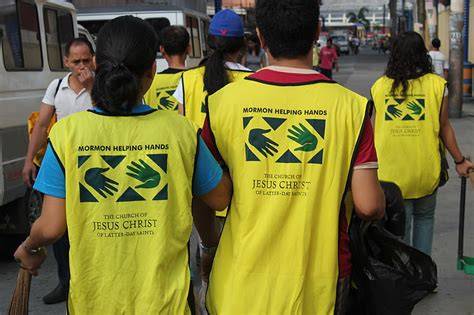
The LDS Mormon Helping Hands program is a worldwide service initiative that brings together members of The Church of Jesus Christ of Latter-day Saints and their neighbors to serve local communities and help people affected by natural disasters and other emergencies. Volunteers are widely recognized by their bright yellow T-shirts, jackets, or tabards.
The program reflects the desire of Latter-day Saints to follow the example of Jesus Christ by serving others. Volunteers work with government agencies, nonprofit organizations, community leaders, and local residents to improve neighborhoods, provide emergency assistance, and support people in need.
What the Mormon Helping Hands program is
Mormon Helping Hands is a worldwide program where Latter-day Saints reach out in their communities to give service and help those in need. The Mormon Helping Hands program brings together members of The Church of Jesus Christ of Latter-day Saints and their neighbors to provide community service.
These volunteers in their trademark yellow shirts help people whose lives have been affected by natural disasters and other emergencies. Mormon Helping Hands volunteers also partner with government and nonprofit organizations to support and improve the communities where they live.
The effort receives resources from Church humanitarian services, and the projects are coordinated by local Church leaders. Mormon Helping Hands is a priesthood-directed Church program that, teamed up with the welfare program of the Church, contributes to relief efforts and facilitates other service projects around the world.
Religious foundation and purpose
The Helping Hands program reflects the desire of Latter-day Saints to follow the example of Jesus Christ by serving others. We as members of The Church of Jesus Christ of Latter-day Saints believe strongly in the admonition of the Savior, Jesus Christ, to love and serve those around us.
Mormon Helping Hands is one way Latter-day Saints seek to follow His example and His commandments. One of the important principles taught by Jesus Christ and lived by His followers is that of service: “And behold, I tell you these things that ye may learn wisdom, that ye may learn that when ye are in the service of your fellow beings ye are only in the service of your God” (Mosiah 2:17).
Service rendered by members of the Church around the world comes in many forms, but over the past 10 years that service has usually come in one color: yellow. Whether rendering emergency aid after a natural disaster or cleaning up the local park, the Mormon Helping Hands program, with its bright yellow tabards or T-shirts, has become a welcome sign of hope for those in need during the past decade.
Origins and worldwide growth
The Helping Hands program was established in 1998, and since then hundreds of thousands of volunteers have donated millions of hours of service to their communities. The program started in South America but has since spread to nearly every corner of the world.
Officially established in 1998, the Mormon Helping Hands program was created as a way for Church members in South America to reach out and serve their communities. Starting in Argentina, Paraguay, Uruguay, and Chile, Church leaders designated an annual day of service for members to give of their time and efforts in a prepared service project.
During this first official organized effort, tens of thousands of Church members of all ages in South America collaborated to participate in a multinational service project. In an effort to strengthen and beautify their communities, members spent time repairing and painting schools and hospitals and cleaning parks, streets, and other public spaces.
Not long after the first service day, the idea spread to Brazil, where service continued and the program began to grow. By 2002 the organization had been named one of the most important volunteer organizations in Brazil because of the good it brought to the people.
Today, millions of hours of service have been donated by hundreds of thousands of volunteers in all areas of the world. What began as a multinational service project in a few countries of South America turned into a worldwide relief effort for people in need.
The program currently operates in Africa, Asia, Europe, Latin America, North America, and the Pacific.
How the program operates
The effort receives resources from Church humanitarian services, and the projects are coordinated by local Church leaders. Local Church members, neighbors, and community partners identify needs and organize practical projects that can improve living conditions or assist people facing hardship.
Church members and friends work together with government leaders, education officials, private businesses, nonprofit organizations, and local communities. Working with others allows the Church to make a greater impact on urgent needs and long-term self-reliance all over the world.
The Church of Jesus Christ of Latter-day Saints provides humanitarian aid worldwide, assisting people of all faiths, races, and backgrounds to show the Savior’s love to all people.
Disaster relief and emergency assistance
These volunteers in their trademark yellow shirts help people whose lives have been affected by natural disasters and other emergencies. Sometimes they appear after a disaster like the tsumani in Japan or Hurricane Katrina or the devastation in Joplin, MO.
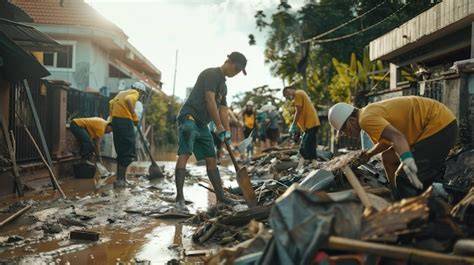
When disasters provide opportunities to serve, members organize work crews, distribute supplies, clear damaged areas, and help affected families and neighborhoods begin recovering. Volunteers may provide emergency aid after hurricanes, floods, tornadoes, earthquakes, typhoons, mudslides, and other crises.
Hurricane Ike and flooding in the United States
After Hurricane Ike stormed through the southern United States in 2008, work crews were organized to help with cleanup. Members in southeast Texas joined together to clean up debris left in yards and to distribute hygiene kits, cleaning kits, and food boxes in areas devastated by the storm.
Local bishops’ storehouses stocked with food, water, tools, and other necessary supplies provided resources for those in need. When flooding killed some 20 people in the midwestern United States and left thousands homeless in 2008, Church members and missionaries donned yellow Mormon Helping Hands T-shirts and helped with sandbagging and other relief efforts.
The Cedar Rapids Iowa Stake set up a relief warehouse filled with the wheelbarrows, shovels, and work clothes the Church sent. As part of the area most heavily affected by the flooding, the stake also received funds to purchase power washers and generators.
The community accepted the relief efforts with gratitude.
Other emergency response projects
Helping Hands volunteers have helped communities affected by Hurricane Katrina, the tsunami in Japan, the devastation in Joplin, Missouri, and Hurricane Sandy. Latter-day Saints in the Philippines helped clean up and rebuild after a 7.2 earthquake, while volunteers also responded to Typhoon Pablo and Typhoon Haiyan.
Other reported projects included assistance after tornadoes in the southern United States, flooding in Indiana, Iowa, and Wisconsin, a March mudslide in Washington State, and heavy rains in Brazil.
Community improvement projects
No disaster is necessary to involve members in reaching out to their communities. Working to improve communities gives Church members the opportunity to give their time and talents to bless others in need and to show that their community is important to them.
Other times, they plan community service efforts to help with ongoing needs in their communities, such as with service activities organized in California this past spring, or efforts last month in 40 countries in Africa such as ”Madagascar, Reunion and Mauritius in celebration of the 5th Annual All Africa Mormon Helping Hands day Saturday, 20 August 2011.”
Projects may include cleaning parks, streets, riverbanks, schools, hospitals, and public spaces. Volunteers have also planted trees, repaired playgrounds, cleared roads, filled potholes, painted buildings, restored community facilities, and helped improve access for people with disabilities.
All-Africa service project
In November 2007 more than 100,000 members in Africa participated in a continent-wide service project cleaning up communities. Their efforts included cleaning and landscaping the Red Cross War Memorial Children’s Hospital in Cape Town, South Africa; planting more than 50 trees in Olivenhoutbosch, South Africa; filling potholes and clearing glass and rubble along roads in Kitale, Kenya; and repairing playground equipment.
At the conclusion of the project, Nikki Bishop, CEO of the Red Cross War Memorial Children’s Hospital, commented that “the difference this is going to make to the children, parents, staff, and visitors will be enormous. We are deeply grateful. The project has gone tremendously well, transforming the hospital. I am delighted and thrilled.”
Schools and educational facilities
In partnership with government leaders, education officials, and private businesses, some 50,000 Church members and friends worked together in April 2005 to improve the conditions of 200 schools in São Paulo, Brazil.
Painting doors, cleaning classrooms, and repairing desks were some of the ways volunteers served in the schools. Such service events bring many different groups of people together; these people improve the areas and form friendships.
Community farms and public facilities
In September 2006 members in the Bristol England Stake worked within their community to improve a struggling community farm. In one day members were able to work on a wheelchair access path; paint; dig; clean; and build educational toys, bird boxes, and feeders for the farm.
More than 2,500 hours of service were given, and the improvement was noticeable. The local mayor visited the farm, expressed his gratitude, and said how impressed he was with what had been accomplished.
Examples of service activities
| Area | Service activity |
|---|---|
| South America | Repairing and painting schools and hospitals, and cleaning parks, streets, and other public spaces |
| Africa | Cleaning communities, landscaping a hospital, planting trees, filling potholes, clearing roads, and repairing playground equipment |
| Brazil | Improving 200 schools by painting doors, cleaning classrooms, and repairing desks |
| United States | Removing storm debris, distributing hygiene kits, cleaning kits, and food boxes, and filling sandbags |
| England | Improving a community farm, building a wheelchair access path, painting, cleaning, and constructing educational toys and bird boxes |
| Philippines | Cleaning up and rebuilding after a 7.2 earthquake and responding to typhoon damage |
| Haiti | Donating 400,000 trees |
| Costa Rica | Organizing a recycling campaign |
| El Salvador | Cleaning riverbanks |
Partnerships with communities and organizations
Mormon Helping Hands volunteers also partner with government and nonprofit organizations to support and improve the communities where they live. In partnership with government leaders, education officials, and private businesses, volunteers address needs that are important to local residents.
Relationships developed while giving service can build bridges of understanding and strengthen relationships with officials and the community. Through the Mormon Helping Hands organization, Church members worldwide have rendered service, improved communities, and formed friendships.
Such service events bring many different groups of people together; these people improve the areas and form friendships. The service projects have not only touched lives but also have deepened the faith of those involved and built bridges in communities and organizations.
Service and community relationships
Mormon Helping Hands projects are not meant to be proselytizing activities. Rather they are meant to be opportunities to promote Christian service that might not otherwise occur.
Volunteers serve alongside people from different backgrounds and work toward practical goals that benefit everyone. Cleaning a public area, restoring a school, repairing a community facility, or assisting after a disaster creates opportunities for neighbors to cooperate directly.
Relationships developed while giving service can build bridges of understanding and strengthen relationships with officials and the community. Through shared work, participants can learn more about the challenges facing their neighbors and about the needs of the wider community.
Benefits for volunteers
Not only do Mormon Helping Hands projects accomplish much good for those in need by making use of the time and talents of members, but they also bless those rendering the service. They help members become more sensitive to the challenges others face.
As members follow the example of the Savior, their testimonies are strengthened, and by serving together, members become more united. “First of all, it helps us internally,” said Mike Martin, then president of the Pretoria South Africa Stake, after the 2007 All-Africa Helping Hands Day.
“We are better able to bond with each other, and it develops unity; but really it is great just to be out there in the community, see some of the issues that people face, and try in a small way to make a little bit of a difference.”
Volunteer Charles Adebayo of Nigeria summed up the feelings of many who participate in the Helping Hands program: “We find real happiness when we think outside of ourselves. That is true joy,” he said.
Scale of the program
The Helping Hands program was established in 1998, and since then hundreds of thousands of volunteers have donated millions of hours of service to their communities. Today, millions of hours of service have been donated by hundreds of thousands of volunteers in all areas of the world.
The program currently operates in Africa, Asia, Europe, Latin America, North America, and the Pacific. What began as a multinational service project in a few countries of South America turned into a worldwide relief effort for people in need.
- The program was officially established in 1998.
- It began in Argentina, Paraguay, Uruguay, and Chile.
- It later expanded to Brazil and then to other regions.
- By 2002 the organization had been named one of the most important volunteer organizations in Brazil.
- More than 100,000 members in Africa participated in a continent-wide service project in November 2007.
- Some 50,000 Church members and friends worked together to improve 200 schools in São Paulo, Brazil, in April 2005.
- More than 2,500 hours of service were given to improve a community farm in Bristol, England, in September 2006.
Reported Helping Hands projects
Some of the previous news releases that cover Helping Hands projects are listed below:
- El Salvador: Helping Hands Clean River Banks (Spanish) (4/27/2014)
- Germany: Helping Hands Clean (German) (4/8/2014)
- Washington State-USA: Latter-day Saints Help After March Mudslide Covers Part of Town (3/22/2014)
- Pacific: Dozens of Projects Draw Helping Hands (2/25/2014)
- Volunteers Building Homes for Typhoon Haiyan Victims (2/21/2014)
- Brazil: Latter-day Saints Clean Up After Heavy Rains (Portuguese) (1/9/2014)
- Costa Rica: Latter-day Saints Organize a Recycling Campaign (Spanish) (1/4/2014)
- Latter-day Saints in the Philippines Help Clean Up and Rebuild After 7.2 Earthquake (11/1/2013)
- Latter-day Saints Donating 400,000 Trees to Haiti (5/3/2013)
- Latter-day Saints Respond to Typhoon Pablo With Relief Supplies, Service (1/16/2013)
- Latter-day Saints Continue Aid for Neighbors of Sandy Disaster Into New Year (12/27/2012)
- Thousands of Latter-day Saint Volunteers Turn Out to Help Victims of Sandy Over Thanksgiving Weekend (11/27/12)
- Latter-day Saint Volunteers Give More Than 140,000 Hours of Service to Hurricane Sandy Victims (11/14/12)
- New Round of Helping Hands Sandy Cleanup Projects Scheduled (11/7/12)
- Helping Hands Cleanup After Sandy (11/4/12)
- Church Issues Statement on Sandy: Local Latter-day Saints Stand Ready to Assist in Aftermath (10/30/12)
- Northwest Area Day of Service Yields Dozens of Service Projects (10/4/12)
- East Coast Helping Hands Work to Stop Hunger (10/3/12)
- Helping Hands Busy in Africa (9/14/12)
- Helping Hands Assist in Maryland Park Cleanup (Photo Essay) (5/23/2012)
- Latter-day Saints in Brazil Participate in Volunteer Fair (1/22/2012)
- Helping Hands Pitch in to Aid Neighbors in Tornado-Ravaged Southern U.S. (5/6/2011)
- Thousands of Mormon Volunteers Lend a Hand in California and Hawaii (5/3/2011)
- Day of Service in South Florida (4/13/2011)
- Step Out Across Multiple States to Clean Up Their Communities (9/21/2010)
- “Helping Hands” Program - A Decade of Service (10/27/2008)
- “Helping Hands” Clean Up After Hurricane Ike (9/19/2008)
- What Moves Latter-day Saints During Emergencies (8/11/2008)
- Latter-day Saints Aid Flood Victims in Indiana, Iowa and Wisconsin (6/17/2008)
- New Zealanders Spruce Up Neighborhoods (3/12/2008)
- Brazilian Senate Honors Church and Its Members (11/30/2007)
- One Hundred Thousand Africans Find Joy in Continent-Wide “Helping Hands” Project (11/9/2007)
- Countrywide Helping Hands Project Benefits Schools in Brazil (10/9/2007)
- Florida Youth Service Project Example of Latter-day Saint Core Values (7/18/2007)
- Latter-day Saints Work With Communities to Prepare for Hurricanes (7/5/2007)
- 60,000 Latter-day Saints Volunteers Help 300 Brazilian Hospitals (5/9/2007)
- Latter-day Saints to Mobilize Another 4,000 Volunteers in Chainsaw Brigade's Second Wave (9/16/2005)
- Joining Hands as Neighbors and Now Friend (9/13/2005)
How service expresses Latter-day Saint beliefs
For Latter-day Saints, service is not something done only within their own faith. One of the ways they seek to serve others is through the Mormon Helping Hands program.
The program gives members opportunities to care for neighbors, work with people of different backgrounds, and contribute time and practical skills to community needs. Its activities combine emergency relief, neighborhood improvement, cooperation with local organizations, and personal commitment to Christian service.
As members follow the example of the Savior, their testimonies are strengthened, and by serving together, members become more united. The service projects have not only touched lives but also have deepened the faith of those involved and built bridges in communities and organizations.