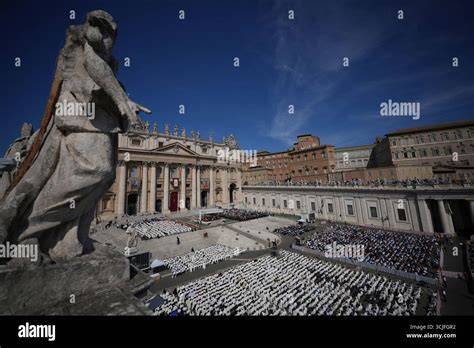
Pope Leo XIV canonized Carlo Acutis on Sunday, September 7, 2025, during an open-air Mass in St. Peter’s Square, declaring the London-born Italian teenager a saint of the Catholic Church. Acutis, who died of acute leukemia in 2006 at the age of 15, became known for using computer technology to spread Catholic teaching and was given the nickname “God’s influencer.”
During the first saint-making Mass of his pontificate, Pope Leo also canonized Pier Giorgio Frassati, an Italian Catholic activist who died in 1925 at the age of 24. The canonizations were attended by an estimated 70,000 to 80,000 people, including young Catholics, families with children, pilgrims from around the world and members of Acutis’s family.
The canonization Mass in St. Peter’s Square
Pope Leo XIV proclaimed Italians Pier Giorgio Frassati and Carlo Acutis as saints of the Church on Sunday, decreeing their veneration among the Catholic faithful. The canonizations of the two men, promulgated before an estimated 70,000 people in St. Peter’s Square, were the first of Leo’s pontificate.
Carlo Acutis was canonised by Pope Leo XIV alongside Pier Giorgio Frassati, another young Catholic activist, who died a century ago. A London-born Italian teenage computer whiz who died in 2006 age 15, has been declared the Catholic church’s first millennial saint during an open-air mass in a packed St Peter’s Square.
The congregation, which included the family of Acutis, applauded after Pope Leo pronounced the rite of canonization and declared the two patrons of young people as the Church’s newest saints. St. Peter’s Square had filled with tens of thousands of pilgrims from around the world, many of them millennial Italians and Americans, as Acutis’s family looked on.
A crowd numbering an estimated 80,000 braved sweltering heat, and many were forced to spill out into the boulevards next to the square, with witnesses describing the atmosphere as joyous and party-like. An hour before the Mass, St. Peter’s Square was already full with pilgrims, many of them young millennial Italians, many with toddlers in strollers.
“I learned from different people what his professors, his teachers said about his joy and the light he carried around him,” said Leopoldo Antimi, a 27-year-old Roman who got to the square early to secure a spot. “So for me personally as an Italian, even on social networks that are used so much, it is important to have him as an influencer.”
Leo, dressed in golden vestments, said before the Mass: “I’m happy to see so many young people.” Tapestries depicting images of Saints Pier Giorgio and Carlo were hung on the facade of St Peter’s Basilica as the two men were celebrated like pop stars.
Pope Leo’s homily about Carlo Acutis and Pier Giorgio Frassati
In his homily, Pope Leo said both men created “masterpieces” out of their lives by dedicating them to God. “The greatest risk in life is to waste it outside of God’s plan,” Leo said in his homily.
The new saints “are an invitation to all of us, especially young people, not to squander our lives, but to direct them upwards and make them masterpieces,” he said. “Today we look to St. Pier Giorgio Frassati and St. Carlo Acutis: a young man from the early 20th century and a teenager from our own day, both in love with Jesus and ready to give everything for him,” he said.
In his homily, the Holy Father reflected on a passage from the Book of Wisdom, which was read by Acutis’ younger brother Michele, during the Mass celebration. “[Lord], who has learned your counsel, unless you have given wisdom and sent your holy spirit from on high?” Leo said, quoting the Old Testament passage.
“This question comes after two young blesseds, Pier Giorgio Frassati and Carlo Acutis, were proclaimed saints.” “This is providential because in the Book of Wisdom, this question is attributed to a young man like them: King Solomon.”
Upon the death of his father David, he realized that he had many things: power, wealth, health, youth, beauty, and the entire kingdom. Leo spoke extensively about the two new saints in his homily, departing from his predecessor’s practice.
God “calls us to abandon ourselves without hesitation to the adventure that he offers us with the intelligence and strength that comes from his Spirit,” Leo said Sunday. “We can receive to the extent that we empty ourselves of the things and ideas to which we are attached, in order to listen to his word,” he continued.
The Holy Father also spoke of other young saints throughout history, including St. Francis of Assisi, who saw it was wise to prefer the love of God and others over riches. “Dear friends, Sts. Pier Giorgio Frassati and Carlo Acutis are an invitation to all of us, especially young people, not to squander our lives but to direct them upwards and make them masterpieces,” he added.
Who was Carlo Acutis?
Carlo Acutis was born on May 3, 1991, in London to a wealthy but not particularly observant Catholic family. They moved back to Milan soon after he was born and he enjoyed a typical, happy childhood, albeit marked by increasingly intense religious devotion.
His mother, Antonia Salzano, has also travelled across the globe, delivering speeches to Catholic communities about her son’s life, bringing strands of her son’s hair as gifts. She was present at the canonisation Mass with her family, including Carlo’s two teenage siblings who were born after his death.
His brother Michele did a reading. Salzano told the Guardian the family was not particularly religious, but her son showed a deep devotion to the Catholic faith from a young age.
“He would go to mass and do the rosary each day,” she said, adding that he was a child who “could not be indifferent to sorrow”. “We lived in the centre of Milan in a building surrounded by beggars. He wanted to help them, speak to them, bring them food and blankets.”
She added that Acutis was otherwise an average child, hanging out with friends or playing sports. Acutis limited himself to an hour of video games a week, apparently deciding long before TikTok that human relationships were far more important than virtual ones.
Carlo Acutis and computer technology
Acutis was particularly interested in computer science and devoured college-level books on programming even as a youngster. A skilful coder, his whiz-kid reputation started to grow when he created websites for Catholic organisations, including one that listed miracles, earning him the moniker “cyber apostle”.
He earned the nickname “God’s Influencer,” thanks to his main tech legacy: a multilingual website documenting so-called Eucharistic miracles recognized by the church, a project he completed at a time when the development of such sites was the domain of professionals.
Carlo Acutis, who died of leukaemia, built multilingual websites to spread Catholic teaching, later earning him the nickname “God’s influencer”. He also enjoyed playing on his PlayStation, although limited its use to an hour a week - a discipline that has proved appealing to a Catholic hierarchy that has often warned about the dangers of a technology-steered world.
“Carlo was an internet geek, but he had the temperance to use technology for good, and was not exploited by it,” she said. That discipline and restraint has proved appealing to the Catholic hierarchy, which has sounded the alarm about the dangers of today’s tech-driven society.
The Catholic hierarchy has been trying to promote the practice of Eucharistic adoration because, according to polls, most Catholics don’t believe Christ is physically present in the Eucharistic hosts. He was known to spend hours in prayer before the Eucharist each day.
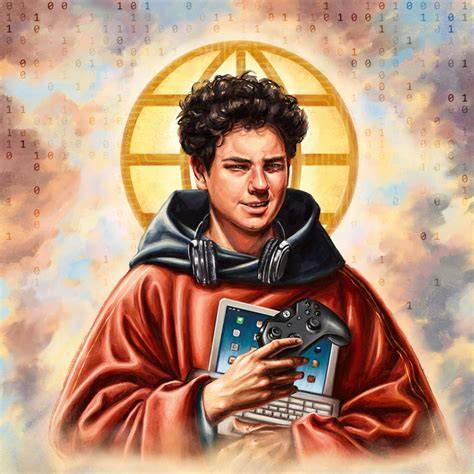
A “saint next door” for the digital age
Much of Acutis’ popularity is thanks to a concerted campaign by the Vatican to give the next generation of faithful a “saint next door” who was ordinary but did extraordinary things in life. In Acutis, they found a relatable tech-savvy millennial - the term used to describe a person born roughly between 1981 and 1996 who was the first generation to reach adulthood in the new millennium.
Francis had fervently pushed the Acutis sainthood case forward, convinced that the church needed someone like him to attract young Catholics to the faith while addressing the promises and perils of the digital age. Both ceremonies had been scheduled for earlier this year, but were postponed following Pope Francis’ death in April.
Matthew Schmalz, professor of religious studies at Holy Cross college in Worcester, Massachusetts, said Acutis’ canonization extends the church tradition of popular piety to the digital age.
“He becomes an emblem or model of how Catholics should approach and use the digital world--with discipline and with a focus on traditional Catholic spirituality that defies the passage of time,” he said in statement. “He is a new saint of simplicity for the ever complex digital landscape of contemporary Catholicism.”
“It’s like I can maybe not be as great as Carlo may be, but I can be looking after him and be like, ‘What would Carlo do?’” said Leo Kowalsky, an 8th grader at a Chicago school attached to the Blessed Carlo Acutis Parish.
Kowalsky said he was particularly excited that his own namesake - Pope Leo - would be canonizing the patron of his school. “It’s kind of all mashed up into one thing, so it is a joy to be a part of,” Kowalsky said in an interview last week.
Carlo Acutis’s religious life and service to others
According to the pope, the two Italian saints cultivated their love for God and for their brothers and sisters through “simple acts” of “daily Mass, prayer, and especially Eucharistic adoration,” which are available to every Catholic.
“Carlo, for his part, encountered Jesus in his family, thanks to his parents, Andrea and Antonia - who are here today with his two siblings, Francesca and Michele - and then at school, and above all in the sacraments celebrated in the parish community,” he added.
Salzano said Acutis wanted to help people living in poverty near his home in Milan. “We lived in the centre of Milan in a building surrounded by beggars. He wanted to help them, speak to them, bring them food and blankets.”
His funeral was attended by a host of people he had helped, among them immigrants and bullied children. The movement that had built up around Acutis was evident from the day he died, as seriously ill people began praying to him for cures.
His illness and death
In October 2006, at age 15, Acutis fell ill with what was quickly diagnosed as acute leukemia. Within days, he was dead. He was entombed in Assisi, which known for its association with another popular saint, St. Francis.
A London-born Italian teenage computer whiz who died in 2006 age 15, has been declared the Catholic church’s first millennial saint during an open-air mass in a packed St Peter’s Square. Carlo Acutis, who died of leukaemia, built multilingual websites to spread Catholic teaching, later earning him the nickname “God’s influencer”.
Assisi and the growing devotion to Acutis
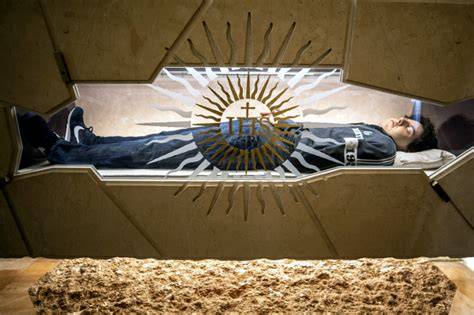
In the years since his death, young Catholics have flocked by the millions to Assisi, where they can see the young Acutis through a glass-sided tomb, dressed in jeans, Nike sneakers and a sweatshirt. He seems as if he’s sleeping, and questions have swirled about how his body was so well preserved, especially since parts of his heart have even toured the world as relics.
Over the past year, more than 1 million people have flocked to the central Italian town of Assisi, where Acutis’s body - covered in a wax mould of his likeness and dressed in his blue tracksuit top, jeans and trainers - is on view behind a glass-panelled case in Santa Maria Maggiore church.
His heart is in a gold casket in the town’s San Rufino Cathedral, while pieces of tissue from his pericardium - the membrane enclosing the heart - have toured the world in the lead-up to his canonisation. A bronze lifesize statue of him is also on display in the town.
Devotion to Acutis, in particular, extended to a wide range of merchandise on sale bearing his image, including action figures, T-shirts, mobile phone stickers and handheld fans.
The miracles attributed to Carlo Acutis
His mother claims it was around the time of his funeral that he started to work miracles, and last year Francis credited Acutis with two. The first involved the recovery of a boy in Brazil from a rare congenital disease affecting his pancreas; the second was the healing of a student in Florence with bleeding on the brain from a head trauma, and whose mother had prayed at Acutis’s tomb in Assisi.
Canonisation usually follows a long and detailed process, involving a meticulous investigation by the Vatican and outside specialists who determine the veracity of miracles attributed to the individual. Acutis’s beatification, the stage before canonisation, was carried out by Pope Francis in 2020.
The canonization of Pier Giorgio Frassati
Frassati, the other saint being canonized Sunday, lived from 1901-1925, when he died at age 24 of polio. He was born into a prominent Turin family but is known for his devotion to serving the poor and carrying out acts of charity while spreading his faith to his friends.
“Pier Giorgio encountered the Lord through school and church groups - Catholic Action, the Conferences of St. Vincent, the FUCI [Italian Catholic University Federation], the Dominican Third Order - and he bore witness to God with his joy of living and of being a Christian in prayer, friendship, and charity,” he said.
Describing their “winning formula” for holiness, the Holy Father spoke about the ordinary circumstances through which they dedicated their lives to God. “Pier Giorgio encountered the Lord through school and church groups - Catholic Action, the Conferences of St. Vincent, the FUCI [Italian Catholic University Federation], the Dominican Third Order - and he bore witness to God with his joy of living and of being a Christian in prayer, friendship, and charity,” he said.
The significance of Acutis’s canonization
The speed at which Acutis has been canonised, especially compared with Frassati, shows how keen the church is to attract more young people. The Vatican said 36 cardinals, 270 bishops and hundreds of priests had signed up to celebrate the Mass along with Leo in a sign of the saints’ enormous appeal to the hierarchy and ordinary faithful alike.
His canonization gives the next generation of Catholics a relatable role model who used technology to spread the faith. Acutis represents an ordinary young person whose religious devotion, service to others and disciplined use of digital technology became central to his public image.
At the end of the Mass, which he concelebrated with approximately 2,000 other priests, Pope Leo invoked the intercession of the Blessed Virgin Mary for peace, “especially in the Holy Land and in Ukraine and in every other land that is facing blood.”
“I invite all the authorities to listen and to put down the weapons that lead to destruction and death … they never bring peace and security,” he said. “God does not want war. God wants peace. God sustains those who fight for peace and who follow the path of dialogue,” he added, before leading the congregation in praying the Angelus.
Leo closed out the event by making a circuit of the square in his popemobile, waving at the crowd and stopping frequently to bless babies handed to him by his bodyguards. One pilgrim present in the square, Australian Caroline Khouri, told CNA the celebration was one she would “remember forever.” “The joy in the atmosphere here is incredible,” she said.
tags: #carlo #acutis #canonization #pope #leo