Mark 9:28-31 teaches that deliverance from a particular evil spirit is connected with prayerful dependence upon God. In the King James Version and New King James Version, Jesus says, “This kind can come out by nothing but prayer and fasting,” while most modern translations of Mark 9:29 read, “This kind can come out only by prayer.”
The central lesson is not that a person can control spiritual forces by following a mechanical formula, nor that fasting gives human beings independent power over demons. Jesus emphasizes constant dependence on God, humble faith, spiritual preparation, and confidence that God alone determines the time and manner of deliverance.
The Passage in Mark 9
After Jesus had gone indoors, his disciples asked him privately, “Why couldn’t we drive it out?” He replied, “This kind can come out only by prayer.” They left that place and passed through Galilee. Jesus did not want anyone to know where they were, because he was teaching his disciples. He said to them, “The Son of Man is going to be delivered into the hands of men. They will kill him, and after three days he will rise.”
In the King James Version, the relevant statement is: “This kind can come forth by nothing, but by prayer and fasting.” The New King James Version similarly reads: “This kind can come out by nothing but prayer and fasting.” The New International Version, English Standard Version, New Living Translation, Christian Standard Bible, New American Standard Bible, Amplified Bible, and New English Translation present the statement as prayer without the additional words “and fasting.”
| Translation tradition | Wording of Mark 9:29 |
|---|---|
| KJV | “This kind can come forth by nothing, but by prayer and fasting.” |
| NKJV | “This kind can come out by nothing but prayer and fasting.” |
| NIV | “This kind can come out only by prayer.” |
| ESV | “This kind cannot be driven out by anything but prayer.” |
| NLT | “This kind can be cast out only by prayer.” |
| CSB | “This kind can come out by nothing but prayer.” |
| NASB2020 | “This kind cannot come out by anything except prayer.” |
| AMP | “This kind [of unclean spirit] cannot come out by anything but prayer [to the Father].” |
Why the Translations Differ
It must be pointed out that most translations based on the critical text do not include the word “fasting.” The Majority Text does include it. The King James Version and New King James Version therefore preserve the familiar wording “prayer and fasting,” while many modern translations read only “prayer.”
Regardless of the Bible translation used, it is a long tradition that prayer and fasting are powerful aids to the ministry of casting out demons. The difference in wording should not obscure the central teaching of the passage: spiritual ministry must be carried out in dependence upon God rather than confidence in human ability.
The Immediate Context
The context of Jesus’ statement in Mark 9 is that the three disciples who were with Jesus on the Mount of Transfiguration have come down from that glorious experience, and they find a boy who has been under some deep oppression by the Evil One. The other disciples have not been able to do anything about it.
A man has brought his son who has a demon that caused the young boy to be deaf and dumb and tried to destroy him. Jesus cast the demon out. The disciples had tried to cast the demon out before Jesus came upon the scene and were not able to do so.
Before casting out the demon, Jesus rebukes the disciples. The disciples ask the Lord why they were not able to cast out the demon. Jesus tells them, “This kind can come out by nothing but prayer and fasting.”
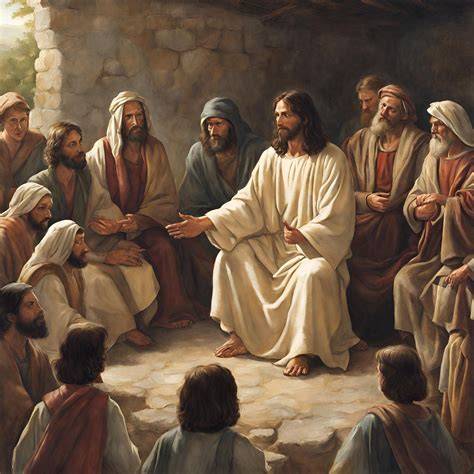
Prayer as Dependence on God
Jesus is saying in that context: “I have commissioned you to do this. This is to be your ministry, but you don’t have the power or authority to do this simply because I’ve commissioned you to do it. You can only do this through prayerful dependence upon God.”
Jesus is emphasizing to them the danger of thinking that because God has called you to a certain kind of ministry, you are, therefore, simply by that call, enabled to fulfill that ministry. You can fulfill that ministry only by constant dependence on the Lord and prayer to Him.
The disciples, when they tried to cast out the demon, were operating on the model of Mark 6. But things have changed. What before was done simply as a fulfillment of a command could now only be done in dependence upon the One they were following.
The Meaning of “This Kind”
I had always thought and heard that what Jesus was saying was that this particular demon was especially difficult to cast out. Most demons could be cast out without prayer and fasting, but this one was in a different category. In other words, casting out a demon was dependent upon how strong (?) the demon was.
Is it simply that this was a different kind of demon? If that is the case, I must simply confess that we are dealing with a situation that I don’t understand. Perhaps the Lord spoke to the disciples about different kinds of demons and told them how to recognize the differences, and such instructions are not found in the Bible.
The passage does not explain what distinguishes “this kind” from other spirits, and it does not provide a classification system for identifying demons. We are never told which demons are particularly strong or difficult to cast out. We are never told which demons require fasting and prayer to cast out.
Prayer and Fasting as an Idiom of Dependence
Could it be that the phrase “prayer and fasting” is an idiom expressing dependence upon God? These practices were examples of Jewish piety and such dependence.
“This kind” of ministry required a constant attitude of humility and a reliance upon Him. The disciples thought they were going to Jerusalem to reign. In Mark 8-10, Jesus is showing and teaching them that this is not the case.
The wording can therefore be understood not as a technique for forcing a demon to leave, but as a description of the spiritual posture required for faithful ministry. Prayer turns the minister toward God, while fasting can express humility, self-denial, seriousness, and focused dependence upon Him.
The Relationship Between Faith and Prayer
Jesus replied: It is because you don't have enough faith! But I can promise you this. If you had faith no larger than a mustard seed, you could tell this mountain to move from here to there. And it would. Everything would be possible for you. But this kind does not go out but by prayer and fasting.
“Because you have so little faith,” replied Jesus. “I assure you that if you have as much faith as a grain of mustard-seed it is enough. You can say to this mountain, ‘Move from here to there.’ And it will move-you will find nothing is impossible.” “However, this kind does not go out except by prayer and fasting.”
Faith in this passage is not confidence in one’s own spiritual strength. It is trust in God. Prayer expresses that trust directly, and fasting may accompany it as an outward discipline of dependence.
Why the Disciples’ Failure Matters
In Mark 6 we are told that the disciples had cast out many demons. When casting out demons they were simply doing what Jesus had commanded them to do. In Mark 6 the disciples were sent to the nation of Israel to proclaim the offer of the Kingdom. They could cast out demons to demonstrate that Jesus was the Messiah.
But in Mark 9 the disciples find themselves in a different situation. The nation has rejected the offer and Jesus is going to be rejected by the nation and killed. Their ministry will change dramatically. The Lord began to instruct them about the need to follow Him in His suffering.
This ministry will involve relying upon Him. Could it be that the phrase “prayer and fasting” is an idiom expressing dependence upon God? These practices were examples of Jewish piety and such dependence.
The disciples’ earlier success did not give them a permanent ability to act independently of Jesus. Their commission, previous experience, and visible results were not substitutes for present dependence upon the Lord.
Prayer Is Not a Mechanical Formula
Nowhere in the Bible are we told how to cast out a demon. Casting out demons is never mentioned in any of the Epistles. In addition, we are never told which demons are particularly strong or difficult to cast out.
Even in the Bible when demons are cast out, there is never a call for fasting and prayer prior to doing so. The passage does not give a fixed duration for fasting, a prescribed wording for prayer, or a repeatable procedure that guarantees immediate deliverance.
How long did they have to fast, even if they had known the boy was coming? The disciples had no idea that they would be called upon to cast out the demon, so how could they have done the necessary prerequisites in order to do it?
These questions make it difficult to interpret the verse as a simple rule stating that a certain number of hours without food automatically grants authority over a particular kind of demon. The emphasis is better placed on spiritual dependence and humble reliance upon God.
The Danger of Trusting in a Gift
There is also a general lesson in this text that’s applicable to all of us, whatever our gifts are. Sometimes people can be quite forward to those of us who are ministers and say, “My gift is this.”
This text is a real reminder to us that maybe the Lord Jesus is saying: “There’s something more important than thinking you have a gift. The real question whether you are depending on Me in order to exercise that gift.”
The disciples may have been tempted to rely on the authority they had previously exercised. Jesus redirects them from the gift to the Giver, from past success to present prayer, and from self-confidence to dependence upon God.
False Spiritual Power and Discernment
Toward the end of the Sermon on the Mount, Jesus says: “Many will come to Me on the last day, expecting entry into the kingdom of heaven and saying, ‘Lord, Lord, didn’t we do many mighty works in your name? Didn’t we cast out demons in your name?’ And I will say to them, ‘Depart from me; I never knew you.’”
That seems to imply something like when Moses showed works of power in Pharaoh’s presence, and Pharaoh brought magicians up who could do the same thing. Of course, the magicians were constantly defeated, but they seemed to be able to work the same miracles by their tricks.
Jesus is saying that it would beggar belief in what human beings are capable of doing, particularly things that might seem like evidences of the presence and power of God and the gospel. However, Jesus is saying, “People have extraordinary abilities, but do not be deceived.”
People can do pretend things and false things, but for a boy like the one in Mark 9, there needs to be absolute dependence on God for lasting deliverance to come.
HOW TO TRAIN YOUR SPIRITUAL DISCERNMENT TO GROW| APOSTLE JOSHUA SELMAN
Spiritual Preparation
The Rite of Exorcism is itself not a sacrament but a sacramental, which means that its efficacy partly relies on the faith and spiritual lives of those involved. So, the Exorcist and his Team are admonished to spiritually prepare themselves for each session, and the afflicted person should do the same.
We prepare ourselves by regular prayer and sacraments, including confession, plus fasting when appropriate. We have found that maintaining a disciplined spiritual life and controlling one's passions, including fasting, are important for the efficacy of the exorcism prayers.
Fasting should therefore be treated as a serious spiritual discipline rather than as a method of manipulating God or overpowering a spirit. It should be undertaken wisely and when appropriate, especially where health or other circumstances make abstaining from food unsafe.
God Determines the Deliverance
But in the end, it is God who is in charge and He decides when the demons will leave. While we prepare ourselves as best we can, we trust in Jesus to cast out the demons when He decides it is time to do so.
This conviction protects prayer and fasting from becoming forms of spiritual presumption. The believer prays, prepares, and trusts, but does not claim authority independent of Christ or demand a particular outcome on a human timetable.
A Responsible Christian Response
The passage should not be used to encourage inexperienced people to confront suspected demonic activity without wise pastoral, medical, and safety support. The biblical account does not provide a general authorization for every individual to perform exorcisms, and it does not identify every troubling condition as demonic.
For a boy like the one in Mark 9, there needs to be absolute dependence on God for lasting deliverance to come. The particular situation has widespread application to Christians because it calls every servant of God to humility, prayer, discernment, and dependence upon the Lord.
Prayer and fasting can express a believer’s surrender to God, readiness to obey Him, and rejection of self-reliance. They do not replace faith in Christ, careful discernment, spiritual maturity, or responsible care for people who are suffering.