The New Testament clearly presents Jesus receiving the Holy Spirit at His baptism, when the Spirit descended upon Him in bodily form like a dove and remained upon Him. This event marked the beginning of His public ministry and identified Him as God’s anointed Servant and Son.
Scripture does not give us enough information to positively answer the question, “Was Jesus filled with the Holy Spirit before He was baptized?” None of the Gospels explicitly state that Jesus was filled with the Holy Spirit before His baptism. Therefore, we cannot give a dogmatic answer about the precise moment when Jesus first received the Spirit before that event.
What Happened at Jesus’ Baptism?
When Jesus “had been baptized and was praying, the heavens were opened, and the Holy Spirit descended on him in bodily form, like a dove; and a voice came from heaven, ‘You are my beloved Son; with you I am well pleased’” (Luke 3:21-22; also Matthew 3:16).
After being baptized, Jesus came up immediately from the water; and behold, the heavens were opened, and he saw the Spirit of God descending as a dove and lighting on Him, and behold, a voice out of the heavens said, “This is My beloved Son, in whom I am well-pleased.” Matthew 3:16-17 (NASB)
John testified saying, “I have seen the Spirit descending as a dove out of heaven, and He remained upon Him.” John 1:32
John the Baptist’s statement is significant because it emphasizes that the Spirit remained upon Jesus. The Gospels teach that Jesus received the Holy Spirit at the moment of John’s baptism. Prior to that moment, Jesus did not have the anointing of the Spirit of God.
Why Was the Spirit Given to Jesus?
At the outset of His public ministry, the Spirit descends on Jesus with new fullness for His unique calling, and the voice from heaven first connects the Anointed of Psalm 2 with the Suffering Servant of Isaiah 42.
The Servant - and Son - not only enjoys God’s full favor, but he is also the one of whom it is said, “I have put my Spirit upon him” (Isaiah 42:1).
Isaiah had prophesied that the Spirit would rest upon the coming Anointed One: “The Spirit of the Lord shall rest upon him, the Spirit of wisdom and understanding, the Spirit of counsel and might, the Spirit of knowledge and the fear of the Lord” (Isaiah 11:2).
The Spirit of the Lord will rest on Him, The spirit of wisdom and understanding, The spirit of counsel and strength, The spirit of knowledge and the fear of the Lord. Isaiah 11:2 (NASB)
John the Baptist tells of a coming Spirit-baptism that John’s water-baptism anticipated (Luke 3:16). But first, before baptizing others in the Spirit, Jesus himself will be the preeminent Man of the Spirit.
Was Jesus Without the Holy Spirit Before His Baptism?
We can’t say whether the Spirit was with Jesus in any other way before that moment, but according to John, Jesus’ baptism was the moment He received the accompaniment of the Spirit of God.
Scripture does not tell us whether Jesus was filled with the Spirit before He was baptized, therefore, we do not have a dogmatic answer. Yet the New Testament gives several indications that the Holy Spirit was involved in Jesus’ life before His baptism.
The Holy Spirit is present and pronounced in the angelic announcements to both Mary and Joseph. How will it be, asks Mary, that I, a virgin, will conceive and bear a son? “The Holy Spirit will come upon you, and the power of the Most High will overshadow you” (Luke 1:35).
So too in Matthew’s account about Joseph, the Spirit both frames the report and is explicit in the angelic announcement (Matthew 1:18, 20). The resulting child was therefore “from Holy Spirit” (Matthew 1:18).
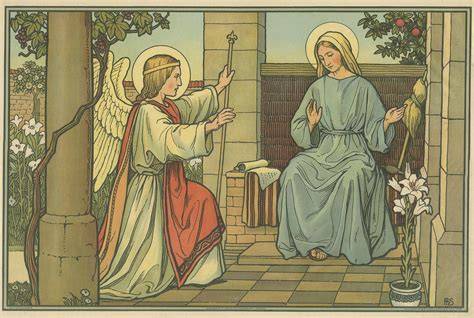
Taken together then, Jesus received God’s spirit in some fashion at baptism, at exaltation, and perhaps at conception. The Holy Spirit “came upon” Mary and “overshadowed” her (Luke 1:35) and the resulting child was therefore “from Holy Spirit” (Matthew 1:18).
Scripture does not explicitly state that Jesus was filled with the Holy Spirit before His baptism. However, Matthew and Luke imply that Jesus, like John the Baptist, was also conferred the Spirit before His birth.
The Holy Spirit and Jesus’ Birth
The Holy Spirit is not only present, and explicit, at the conception and birth of Christ, but also specifically prophesied by Isaiah, seven centuries prior, as “resting upon” the coming Anointed One.
Now in Jesus of Nazareth, the long-promised shoot from the stump of Jesse has come (Isaiah 11:1), and “the Spirit of wisdom and understanding” upon him is seen even as early as age 12 as Jesus listens in the temple to the teachers and asks them questions.
“All who heard him were amazed at his understanding and his answers. And when his parents saw him, they were astonished” (Luke 2:47-48).
Even in childhood, as Jesus “increased in wisdom and in stature and in favor with God and man” (Luke 2:52), he was not on his own but had the Spirit as his “inseparable companion.”
The Child continued to grow and become strong, increasing in wisdom; and the grace of God was upon Him. Luke 2:40 (NASB)
Jesus’ Humanity and Dependence on the Spirit
This truth doesn’t diminish Jesus’ deity. Rather, it reminds us the reality of Jesus’ humanity.
Jesus was both God and human. But in order to experience life as a human, Jesus limited the use of His divine attributes. This is the message of Philippians 2:5-8.
At His incarnation Jesus willingly gave up the place He had with the Father as Paul says:
Phil. 2:5 Have this attitude in yourselves which was also in Christ Jesus, Phil. 2:6 who, although He existed in the form of God, did not regard equality with God to be a thing to be grasped, Phil. 2:7 but emptied Himself, taking the form of a bond-servant, and being made in the likeness of men. Phil. 2:8 Being found in appearance as a man, He humbled Himself by becoming obedient to the point of death, even death on a cross.
But of what did Jesus empty Himself? The answer is His glory (Matthew 17:1-5) and some of His divine attributes.
He did not come knowing everything (Matthew 24:36). In fact, He came as a human baby who had to physically and intellectually grow and increase in wisdom.
In His form as man, Jesus willingly relinquished equality with God (in terms of His power and position, not identity). Therefore though Jesus was God, He required the presence of the Holy Spirit to perform supernatural works while on earth as a man.
Jesus’ Baptism, Temptation, and Public Ministry
Freshly endowed with (“full of”) the Spirit, Jesus then goes to the wilderness. Not only is he “led by the Spirit” (Luke 4:1; Matthew 4:1) into the wilderness, but as Mark reports, “The Spirit immediately drove him out into the wilderness” (Mark 1:12), not as a retreat but as an advance in war, to encounter the enemy and beginning taking back territory.
Once Christ has returned, victorious in his wilderness test - in the power of the Spirit (Luke 4:14) - he comes to Galilee and to his hometown of Nazareth.
In the synagogue, they hand him in the scroll of Isaiah, and what does he read, as the first public act after his baptism? He begins with Isaiah 61:1: “The Spirit of the Lord is upon me . ” (Luke 4:18).
Jesus’s ministry then unfolds in the subsequent pages as by the Spirit he proclaims good news to the poor, liberty to the captives, recovery of sight to the blind, freedom to the oppressed, and the year of the Lord’s favor (Luke 4:18-19; Isaiah 61:1-2).
Jesus Tempted || Temptation of Jesus - Bible Story
Miracles Performed by the Power of the Spirit
The gospel of Luke seems to imply that He needed the Holy Spirit to do miracles. One day He was teaching; and there were some Pharisees and teachers of the law sitting there, who had come from every village of Galilee and Judea and from Jerusalem; and the power of the Lord was present for Him to perform healing. Luke 5:17 (NASB)
Scripture goes on to tell us that all Jesus' miracles during His public ministry were “permitted" by the power of the Spirit. According to Mark 6:5, the Lord’s ability to perform miracles was not His own. He was “permitted” to do miracles by the Spirit.
Jesus will testify that it is “by the Spirit of God that I cast out demons” (Matthew 12:28). By the Spirit, he teaches with unusual authority.
And as Peter one day will summarize his life, in telling his story to Gentiles, “God anointed Jesus of Nazareth with the Holy Spirit and with power” (Acts 10:38).
| Event | Role of the Holy Spirit |
|---|---|
| Baptism | The Spirit descended upon Jesus and remained upon Him. |
| Wilderness | The Spirit led and drove Jesus into the wilderness. |
| Public ministry | Jesus proclaimed, healed, and cast out demons by the Spirit. |
| Death | Jesus offered Himself through the eternal Spirit. |
| Resurrection | Jesus was vindicated and raised by the Spirit. |
The gospel writers make it clear that Jesus did miracle after miracle by the Holy Spirit. He died by the Spirit and returned to life by the Spirit.
In the words of John 3:34, and Isaac Ambrose (1604-1664), Jesus “received the Spirit out of measure; there was in him as much as possibly could be in a creature, and more than in all other creatures whatsoever” (Looking unto Jesus, 280).
Did Jesus Perform Miracles Solely Because He Is God?
How did Jesus walk on water, multiply loaves, and raise the dead? The New Testament witness to the Spirit as Christ’s “inseparable companion” and source of divine power is too pronounced to ignore.
Jesus, the God-man, apparently needed the Spirit. The terms of the incarnation, in honoring the fullness of humanity, were that the second person of the Trinity did not immediately provide divine power and help to the human Christ. Rather, he did so mediately through the Spirit.
It was the great Puritan theologian John Owen (1616-1683) who perhaps first ventured the formulation that now has stood for almost four centuries: “The only singular immediate act of the person of the Son on the human nature was the assumption of it into subsistence with himself” (The Works of John Owen, 3:160).
“Every other act upon Christ’s human nature,” writes Mark Jones, “was from the Holy Spirit. Christ performed miracles through the power of the Holy Spirit, not immediately by his own divine power” (The Prayers of Jesus, 23).
As Jones comments elsewhere, “Christ’s obedience in our place had to be real obedience. He did not cheat by relying on his own divine nature while he acted as the second Adam” (Puritan Theology, 343).
Fully man, he is fully dependent on his Father - having come not to do his own will but the will of him who sent him (John 6:38).
The Spirit in Jesus’ Death and Resurrection
Significant as the testimony is about the Spirit’s work in Jesus’s childhood and ministry, we might expect that when he comes to die, and rise, and ascend, we would hear about the Spirit here too. Indeed we do.
According to Hebrews 9:14, Jesus offered himself for sins at the cross “through the eternal Spirit.” As he set his face like flint toward Jerusalem, mounted the donkey on Palm Sunday, confronted scribes and Pharisees, and prayed with “loud cries and tears” in Gethsemane (Hebrews 5:7), Jesus was anointed, sustained, and strengthened by the Spirit to the end.
And beyond. In his resurrection, Jesus was “vindicated by the Spirit” (1 Timothy 3:16).
As Paul writes in Romans 1:4, Jesus “was declared to be the Son of God in power according to the Spirit of holiness by his resurrection from the dead.”
Paul contrasts this designation as God’s son according to the spirit at the resurrection with Christ’s designation as David’s son according to the flesh at birth (1:3). In both events, birth and resurrection, Christ’s identity is demarcated, once by flesh and once by spirit.
Jesus Received the Spirit at His Exaltation
Promising a coming of, and baptizing with, the Holy Spirit (Acts 1:5, 8), Jesus ascended to heaven (Acts 1:9), to be glorified at God’s right hand, where he then would pour out the Spirit on those who believe (John 7:37-39; Acts 2:2-4, 17, 33).
Being therefore exalted at the right hand of God, and having received from the Father the promise of the Holy Spirit, he has poured out this that you both see and hear. Acts 2:33
Jesus is also filled with the spirit both after death and before birth. Luke, for instance, records that Jesus received the spirit upon his exaltation to heaven (Acts 2:33).
There are thus two primary outpourings of spirit upon Jesus in the New Testament narrative; one for prophetic work and one for royal rule. The former came at his baptism while the latter, although prefigured at conception, came at his resurrection.
How the Different Spirit Events Relate to One Another
One way to understand the multiplicity of these spirit-events is by examining the function of the spirit in each case.
Christ’s baptismal indwelling designated Jesus as Isaiah’s spirit-anointed servant/son (Greek: παῖς) in whom YHWH was pleased (Isaiah 42:1, cf. Mark 1:11, Luke 4:18-19, Acts 10:37-38).
This servant would perform prophetic signs through the spirit in order to proclaim a “day of God’s favor” and “a day of God’s vengeance” (Isaiah 42, 61).
Christ’s postmortem indwelling equipped him not for a prophetic mission but for a royal one (cf. Acts 13:34). This spirit was one of “wisdom and might;” a spirit by which Jesus might judge the earth as the Davidic king (Isaiah 11).
Within this second category we can include the spirit given at Jesus’ conception. As is made clear throughout the Lukan nativity account, this prenatal spiritual encounter foreshadowed the boy’s royal future as God’s appointed judge and monarch (Luke 1:31-33).
The Holy Spirit Before Pentecost
Before Pentecost, the Holy Spirit never indwelt a person all the time - continuously. The Holy Spirit did not remain permanently in a person until after Pentecost (Acts 2).
That is why Jesus said He was going to send the Holy Spirit (John 16:7). Something new was going to occur.
Saul is one example where the Holy Spirit did not remain on him (1 Samuel 10:6; 16:14) and King David is another. In fact, King David feared the Lord would take the Holy Spirit from him (Psalm 51:11).
When the Holy Spirit came upon an Old Testament believer, the manifestations or miracles of the Spirit did not always occur.
When Samson grew up, the “Spirit of the LORD began to stir him” (Judges 13:24-25). It is not until later that the “Spirit of the LORD came upon him mightily” (Judges 14:6, 19; 15:14).
The presence of the Holy Spirit in the life of Old Testament saints did not mean they performed wonders or miracles.
So the Holy Spirit could have “come on” John the Baptist at his birth, but not remained since Pentecost had not yet occurred.
John the Baptist and Jesus
It is significant that the gospel of Luke tells us that John the Baptist was filled with the Holy Spirit from his birth.
For he will be great in the sight of the Lord; and he will drink no wine or liquor, and he will be filled with the Holy Spirit while yet in his mother’s womb. Luke 1:15 (NASB)
Since John the Baptist was filled with the Holy Spirit at his birth, it is difficult to believe that Jesus was not filled with the Holy Spirit at His birth since Christ was of higher rank than John.
That is the testimony of John the Baptist. “After me comes a Man who has a higher rank than I, for He existed before me” (John 1:30).
Why would John be filled and not Jesus since Jesus was God in human flesh? Yet, we cannot state that positively since the New Testament does not explicitly state that.
The Spirit’s presence in John’s birth and the Spirit’s role in Jesus’ conception make it possible that Jesus was associated with the Spirit before His baptism. However, the first explicit account of the Spirit descending upon Jesus and remaining upon Him occurs at His baptism.
Was Jesus’ Baptism the First Time the Spirit Was Present?
At two particular points in the New Testament narrative the Holy Spirit breaks through the heavenly seal and escapes into the earthly realm. In the first case, the spirit descends upon Jesus at his baptism in the Jordan. In the second case, the spirit is poured out upon believers as they celebrate the feast of Pentecost 50 days after the death of their lord.
According to convention these two points constitute the initial reception of the spirit by Christ and the church, respectively. At these two climactic moments God’s spirit decisively entered into the life of Christ and the church for the first time.
This well-ordered timeline, however, is subverted by the New Testament writings themselves. In truth, neither Christ’s baptism by water in the river nor the church’s baptism by fire in the upper room represent the first time or the last time the spirit moved upon Christ or the church.
The early Christian writings offer a much more multifaceted answer to our original question: When did Jesus and his disciples first receive the spirit?
Despite the centrality of the spiritual encounter in the Jordan that inaugurated Jesus’ ministry, Jesus is also filled with the spirit both after death and before birth.
Did Jesus’ Disciples Receive the Spirit During His Ministry?
When Jesus first commissioned the Twelve to work alongside him, he gave them authority to cast out demons, heal sicknesses, and preach the gospel of the kingdom (Mark 3:15, Luke 9:1/Matthew 10:1).
Although the evangelists conspicuously avoid mentioning a bestowal of spirit upon the apostles at this point, there is little doubt that these powers and authorities were spiritual in nature.
Undoubtedly Jesus was allowing his disciples to drink from the same spirit he once drank from; the same spirit by which he was casting out demons, healing diseases, and preaching powerfully.
After all, if Jesus worked and preached in the spirit, why would his disciples who worked and preached alongside him have done so without that spirit?
The report in John 4:1 that there was a popular rumor that “Jesus was making and baptizing more disciples than John” gives further credence to this theory.
One plausible answer is that Jesus’ disciples were baptizing initiates into the spirit. For what other reason would the imitators of a spirit-baptized spirit-teacher and spirit-worker baptize?
If Jesus’ prophetic mission required an anointing in the spirit, so too would such an anointing be required for that mission as carried out by Jesus’ agents.
More likely than not then, Jesus’ immediate followers first received the spirit early on in Jesus’ ministry. Like their master, they considered themselves possessed by God’s spirit, and as such, recruited for a prophetic mission which involved preaching and signaling the coming kingdom through works of the spirit.
Jesus as the Man of the Spirit
God’s word notes again and again the power of the Spirit as Christ’s inseparable companion.
Jesus was and is unique. The power of the Spirit in his human life pointed to his uniqueness as God.
The Holy Spirit has accompanied, supplied, and carried the Son in his human nature from conception to childhood to ministry, to the cross and resurrection, and now in his glory, fully endowed as the Man of the Spirit at God’s right hand.
Jesus “received the Spirit out of measure; there was in him as much as possibly could be in a creature, and more than in all other creatures whatsoever” (Looking unto Jesus, 280).
The Spirit of Christ in Believers
Now, to receive Christ is to receive the Spirit, and vice versa.
In fact, the Holy Spirit has become such an “inseparable companion” for Christ that we find a striking identification of Jesus and the Spirit in the letters of Paul (1 Corinthians 15:45; 2 Corinthians 3:17-18).
Not only is the Holy Spirit now “the Spirit of Jesus” (Philippians 1:19; also Acts 16:7), but the glorified Christ and the poured-out Spirit can be spoken of interchangeably, as in Romans 8:9-11: Christians “have the Spirit of Christ,” and in the Spirit, “Christ is in you.”
The same Spirit who empowered Jesus’s earthly life, and sacrificial death, and triumphant resurrection, has been given to us today as “the Spirit of Jesus” (Acts 16:7).
He not only works on us, and through us, but dwells in us (Romans 8:9, 11; 2 Timothy 1:14). He has been given to us (Luke 11:13; John 7:38-39; Acts 5:32; 15:8; 1 Thessalonians 4:8).
We have received him (John 20:22; Acts 2:38; 8:15, 17, 19; 10:47; 19:2; Romans 5:5; 8:15; 1 Corinthians 2:12; 2 Corinthians 5:5; 1 John 3:24), to glorify the Son (John 16:14).
The very power of God himself, in his Spirit, has come to make himself at home in some real degree, and to increasing effect, in us.
We are his temple, both individually and collectively (1 Corinthians 3:16; 6:19), and a day is coming when we, like Christ, will reign in glory, fully endowed with the Spirit, to enjoy life, and God in Christ, beyond what we’ve even imagined so far.
When Do Believers Receive the Holy Spirit?
The apostle Paul clearly taught that we receive the Holy Spirit the moment we receive Jesus Christ as our Savior.
First Corinthians 12:13 declares, “For we were all baptized by one Spirit into one body-whether Jews or Greeks, slave or free-and we were all given the one Spirit to drink.”
Romans 8:9 tells us that if a person does not possess the Holy Spirit, he or she does not belong to Christ: “You, however, are controlled not by the sinful nature but by the Spirit, if the Spirit of God lives in you. And if anyone does not have the Spirit of Christ, he does not belong to Christ.”
Ephesians 1:13-14 teaches us that the Holy Spirit is the seal of salvation for all those who believe: “Having believed, you were marked in him with a seal, the promised Holy Spirit, who is a deposit guaranteeing our inheritance until the redemption of those who are God’s possession-to the praise of his glory.”
These three passages make it clear that the Holy Spirit is received at the moment of salvation.
The receiving/indwelling of the Spirit occurs at the moment of salvation. The filling of the Spirit is an ongoing process in the Christian life.
We hold that the baptism of the Spirit also occurs at the moment of salvation. Some other Christians do not, believing that the baptism of the Spirit comes subsequent to salvation.
In conclusion, how do we receive the Holy Spirit? We receive the Holy Spirit by simply receiving the Lord Jesus Christ as our Savior (John 3:5-16).