Catholic Charities burial assistance helps families experiencing financial hardship pay for funeral, burial, or cremation expenses. Assistance varies by local agency, is generally coordinated directly with the funeral home rather than paid to the family, and may be available regardless of religious affiliation.
The fastest way to find help is to contact the Catholic Charities agency serving your area through catholiccharitiesusa.org/find-help or by calling 211. You should also ask your local Department of Social Services, funeral home, faith community, veterans’ services office, employer, union, and state victim-compensation program about additional assistance.
What Catholic Charities burial assistance provides
Catholic Charities is not a single office. It is a nationwide network of more than 160 local dioceses and agencies operating across all 50 states. Each local agency runs its own programs. Burial assistance is one of the most common services they offer to families in financial hardship.
The program helps pay for funeral and burial costs for families who cannot afford them. Catholic Charities works directly with funeral homes. They do not hand you cash. Instead, a case manager coordinates with the funeral home on your behalf.
One important thing to know: you do not have to be Catholic to qualify. Most agencies serve anyone in financial need, regardless of faith, background, or immigration status. Catholic Charities works directly with funeral homes to secure reduced-cost services for families in financial distress.
The Catholic faith teaches that it is an important corporal work of mercy to bury the dead, and many local members of the faithful are heeding this moral imperative by giving to Catholic Charities Diocese of Charlotte to help those in need with the final expenses of their loved ones.
How much assistance may be available
The amount depends on your location. Every diocese sets its own funding levels. Catholic Charities rarely covers the full amount, but even $1,000 to $5,000 can make the difference between a dignified burial and impossible debt.
| Local program | Potential assistance | Important condition |
|---|---|---|
| Chicago Archdiocese | Up to $5,000 | Funeral and burial assistance |
| Illinois AOCCC | Up to $4,500 | Funeral or burial charges totaling no more than $8,500 |
| Charlotte Diocese | Amount determined by need and available funds | Financial hardship cases |
| Many dioceses | Between $500 and $2,000 | Some programs may provide more based on donor funding |
A traditional funeral in the United States now costs between $7,848 and $9,420, according to the National Funeral Directors Association (NFDA). Funeral and burial expenses often total between $10,000 and $15,000 for families already struggling to make ends meet.
The average cost of a funeral in the United States ranges from $7,000 to $12,000 - a major obstacle for many people struggling just to make ends meet. The unexpected expense compounds the burden they already face in grieving for their loved one.
Since 2020, the Catholic Charities program in the Archdiocese of Chicago alone has provided more than $5.9 million to nearly 2,000 families. The key is this: aid goes directly to the funeral home, not to your bank account.
Who may qualify
Every agency has slightly different rules. But most programs share these core requirements:
- Financial hardship. You must show that you cannot afford the funeral costs. This typically means low income, limited savings, or a sudden financial crisis.
- Documentation of the death. You need a death certificate or at least a pending death certificate application.
- Proof of your financial situation. Pay stubs, benefit award letters, bank statements, or a letter from a social worker can all serve as evidence.
- Exhausted or limited other resources. Most programs ask whether you have life insurance, survivor benefits, or access to other funds.
You do not need to be living in poverty to qualify. Losing a job, a medical emergency, or a sudden death can all count as hardship. You do not need to be Catholic. Policies vary slightly by diocese, but faith is not a barrier in the vast majority of locations.
This program serves families who have no insurance, are unable to negotiate financial arrangements with a funeral home, or cannot pay the costs associated with traditional death expenses. The deceased must have been a resident of Mecklenburg County or the Asheville area to be eligible.
Documents commonly requested
Do not wait until you have every document ready before contacting an agency. Call the agency the same day you learn about this program. A case manager can tell you what they need and hold a place for you in the queue while you gather documents.
- Government-issued photo ID
- Death certificate or proof that one is pending
- Funeral home name and a written cost estimate
- Pay stubs, Social Security or SSI award letter, or bank statement
- Any life insurance policy documents
- Your contact number and mailing address
In urgent situations, a case manager can often begin the process while the certificate is still being processed. If the death was unexpected and you have no documents yet, call anyway. A good case manager can begin working with you before all documents are finalized.
How to apply step by step
Step 1: Find the local agency
Go to catholiccharitiesusa.org/find-help and enter your zip code. You will get the phone number and address of the agency nearest to you. If you do not have internet access, call 211.
This free helpline connects you to local social services 24 hours a day. Tell the operator you need burial assistance from Catholic Charities.
Step 2: Call immediately
Funds are limited. Waiting even a few days can mean funds run out. Case managers typically follow up within 48 hours of your initial contact.
Step 3: Gather the required information
Get your identification, death documentation, funeral estimate, income records, insurance information, and contact details together while you wait for the callback.
Step 4: Speak with a case manager
The case manager will review your situation and determine the amount Catholic Charities can contribute. Be honest and specific. Explain any special circumstances - sudden death, job loss, recent medical bills, or other financial pressures.
The more clearly you communicate your situation, the better they can help. You must disclose other resources honestly, but this does not mean you must use all other options first.
Step 5: Allow the agency to coordinate payment
Once approved, the agency communicates with the funeral home and arranges payment. You do not manage this transaction. You focus on your family.
The entire process from first call to approval often takes two to five days. In urgent cases, it can move faster.
What the assistance may not cover
Knowing the limits helps you plan for what else you might need. Most programs do not cover:
- Flowers, reception food, or catering
- Memorial service venue rentals
- Obituary publication fees
- Headstones or grave markers in most cases
- Transportation costs beyond local funeral home coordination
Some agencies also cannot help with cremation in certain regions, or pre-need arrangements made before death occurred. Always ask your case manager specifically what is and is not included before you commit to a plan with the funeral home.
Local Catholic Charities programs and examples
Charlotte Diocese burial assistance
Catholic Charities’ burial assistance began in 1994, when Mecklenburg County stopped paying to bury the poor. The charity teamed up with concerned citizens, social workers, funeral home directors and the city’s cemetery director to establish a burial plan for needy Mecklenburg County residents, providing funeral and burial or cremation services to indigent families.
“We partner with funeral homes that will do burial (graveside service) and or cremation at a reduced rate. Burial is $1,100 and cremation is $600. We encourage the family to contribute toward that amount,” said Sylvia Sekle, the direct assistance coordinator for Catholic Charities Diocese of Charlotte.
Families contact Sekle, and she sets up an appointment to meet with them. She then contacts the partner funeral homes to see which one is the best fit for the family and their particular circumstances.
“Through the burial assistance program, we can assist and support families in providing dignified burial and/or cremation for their deceased loved ones,” she said.
Chicago Archdiocese services
Catholic Charities Social Services Archdiocese of Chicago provides help, including homelessness prevention, food and basic needs, and crisis assistance. It also connects people to other organizations that can help with emergency assistance in Chicago, suburban Cook County and Lake County.
Services include:
- Burial and funeral assistance
- Case management services
- Crisis assistance
- Rental and utility assistance
- Emergency shelter services
- Stabilization services
The Catholic Charities of the Archdiocese of Chicago operates a program through which low-income individuals can receive financial assistance to help fund the cost of a friend or family member’s funeral or burial.
To qualify for the program, callers must have an income below 40% of the Area Median Income (AMI) and an invoice at or below $12,000. Participants eligible for the study with an invoice amount equal to or exceeding $3,000 will be randomly assigned to the treatment group (receiving up to $8,000) or the control group (receiving $1,000).
All eligible callers, regardless of study participation, will receive a minimum of $750 in assistance.
Catholic Funeral and Cemetery Services programs
CFCS is committed to helping people from all walks of life, regardless of their family situation or financial status. We offer many different educational and financial assistance programs available to those who are in need.
The Mother Teresa Program provides sacred and dignified funeral and cemetery services to those who would otherwise be unable to pay for them. Funded through donations, this program is available to individuals within the community, as well as victims of violent crimes.
These individuals are provided with complete burial or internment services in accordance with the Order of Christian Funerals.
CFCS offers a dignified committal in our All Souls Remembrance Crypt of the cremated remains of anyone, of any faith, at any of our cemeteries. This is available at no charge and ensures that cremated remains do not remain at home or end up forgotten or scattered, following the Order of Christian Funerals and will be permanently interred within the consecrated grounds of the Catholic Cemetery.
Other sources of burial and funeral assistance
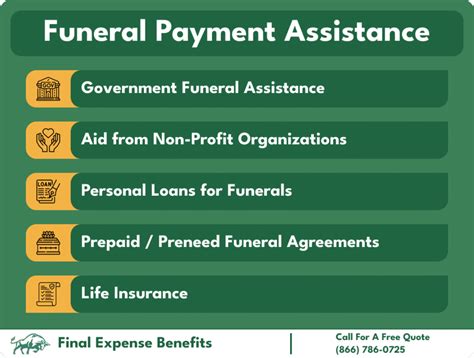
Catholic Charities is often one piece of a larger puzzle. You can combine it with other programs to cover more of the cost.
Department of Social Services
Your local Department of Social Services - ask if they offer state and/or local burial assistance funds. Many states offer burial assistance for people who were receiving government assistance at the time of their death, such as Medicaid, SSI, or Social Security Disability.
In Illinois, for example, the Department of Human Services reimburses funeral and burial expenses for eligible individuals. Call 211 to find your state's program.
Social Security payment
Surviving spouses of Social Security recipients can receive a lump-sum death payment of $255. If the deceased was receiving Social Security or was eligible for it, the surviving spouse or eligible child can claim a one-time $255 payment.
Veterans benefits
Veterans Affairs & Public Safety Officers Benefits both offer burial assistance to their members. If the deceased was a veteran, the VA provides burial benefits including a grave at a national cemetery, a government headstone or marker, a burial flag, and a Presidential Memorial Certificate.
In some cases, they also provide a burial allowance.
Funeral home assistance
Ask your local funeral home or cremation service - they do have this information although they don’t typically advertise it. Funeral homes often have information about local assistance programs, even if they do not advertise it.
Depending on the state, the funeral home may be the one required to petition the state for assistance. Many funeral homes offer reduced-rate services or payment plans for families in financial distress.
Faith communities, unions, employers, and organizations
Your or the decedent’s faith community may offer assistance. If the decedent was part of a benevolent society, union, or professional organization, you may be able to receive burial assistance through them.
Employer - some companies have survivors’ benefits available for the family of the deceased. Also, some unions may offer benefits to help cover or defray funeral costs.
Your local FCA Affiliate may have arranged discounts with local funeral homes. They can also offer you a price survey, so that you can easily determine the most affordable services in your area.
Victims’ assistance
Victims’ Assistance - some states help families of accident or homicide victims with funeral expenses through a state Victim Compensation Program.
Assistance for children and infants
If the decedent is a baby or child, there are numerous charities dedicated to providing assistance to the family. Final Farewell and the Tears Foundation are two examples.
If the deceased was a child under 18, contact Final Farewell at finalfarewell.org. They provide burial assistance for children in all 50 states.
If the child was an infant, the TEARS Foundation at thetearsfoundation.org offers grief support and financial assistance in many states.
Fundraising and borrowing
Fundraising, such as through local businesses or clubs, or through sites like GoFundMe, may be a viable option depending on your circumstances. GoFundMe and similar platforms let you raise funds from friends, family, and community quickly.
Borrowing money - we strongly believe that borrowing money for a funeral should be a last resort. But some loan companies offer their services through funeral homes, and the amount you can borrow is determined by your credit score.
Bereavement and emotional support
Our Bereavement Services program assists bereaved individuals regardless of faith or culture. Bereavement Services are offered on a one-to-one basis as well as in support group setting.
The program coordinator makes referrals to appropriate resources, and is available for bereavement trainings and presentations. We also assist with burial arrangements for indigent Catholic Charities clients.
Bereavement Support Groups meet in parishes of the Diocese of Brooklyn and Queens and include Spanish-speaking groups. Many active Parish Bereavement Groups serve as places where healing begins.
Grief is central to the human experience. Jesus came to heal the broken hearted, and here in Catholic Charities Bereavement Services, we take that mission seriously.
What to do if Catholic Charities cannot help
Sometimes funding runs out. Sometimes your situation does not meet eligibility requirements at your local agency. That is frustrating, but you are not out of options.
- Call 211 again. Tell them Catholic Charities could not help and ask what else exists locally.
- Contact the funeral home about their hardship program. Many funeral homes offer reduced-rate services or payment plans for families in financial distress.
- Check faith-specific and cause-specific programs, including Final Farewell and the TEARS Foundation.
- Start a memorial fundraiser through GoFundMe or a similar platform.
Frequently asked questions
Do I have to be Catholic?
No. Most local agencies serve anyone in financial need, regardless of religion. You do not have to be Catholic to qualify.
How quickly will I receive an answer?
Most agencies respond within 48 hours. Some can move faster in urgent situations. Apply as early as possible - the same day the need arises if you can.
Will Catholic Charities pay me directly?
Usually not. Most agencies pay the funeral home directly. This simplifies the process and ensures funds are used for the intended purpose.
Can I qualify after receiving help elsewhere?
You may still qualify for Catholic Charities assistance. Disclose what you have already received. The case manager will determine what gap remains and whether their program can help fill it.
What if I do not have all the documents?
Call anyway. A good case manager can begin working with you before all documents are finalized. Do not wait for paperwork to start the conversation.
tags: #catholic #charities #burial #assistance