The original nursery rhyme “Mary Had a Little Lamb” is not about Jesus. It was written about a real girl named Mary Sawyer, who kept a pet lamb and brought it to school. However, the rhyme’s familiar words have later been reworked by Christian writers as a symbolic way to describe Jesus Christ as Mary’s Lamb, the Lamb of God, the promised Messiah, and the Savior of the world.
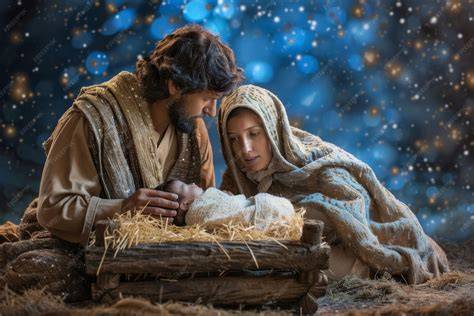
Christmas celebrates Mary’s boy child Jesus Christ whose birthday was anticipated in the Old Testament, announced by angels, attended by poor shepherds and wealthy magi and adorned by the Star of Bethlehem. The Bible tells us that Mary's little Lamb “will save His people from their sins” and “they will call Him Immanuel” which means “God with us” (Matthew 1:21, 23).
The original meaning of “Mary Had a Little Lamb”
Many of us are familiar with this nursery rhyme first published May 24, 1830, written by Sarah Josepha Haleon, and was inspired by an incident in which the same young girl, Mary Sawyer kept a pet lamb and brought him to school one day. “Mary had a little lamb, whose fleece was white as snow. And everywhere that Mary went; the lamb was sure to go. It followed her to school one day which was against the rule. It made the children laugh and play, to see a lamb at school.”
Remember the nursery rhyme, “Mary had a little lamb …”? No doubt this simple poem was based on a real, living, lamb. Somebody, somewhere thought and planned and wrote the rhyme. It required a designer.
Therefore, the historical nursery rhyme should not be presented as an originally Christian poem about the birth, death, and resurrection of Jesus. Its original subject was a girl and her pet lamb. The connection with Jesus comes from later Christian interpretations and rewritten poems that use the lamb as a biblical symbol.
Why Christians connect Mary’s lamb with Jesus
Sometimes, Jesus is called “The Lamb of God,” and since Jesus' mother was named Mary, I thought I would read a new poem called “Mary Had a Little Lamb.” It may never be as popular as the original poem, but it might help us to remember the true meaning of Christmas.
In a real sense the whole Bible and its offer of salvation was about Mary’s Lamb- God’s Son, the world’s Savior. This Lamb was prophesied at the first mention of the gospel (proto evangelion; Gen.3:15), remarkably typified at every Jewish Passover feast (Ex.12f), personified in God’s promise of the Messiah (Isa.9; 53), identified by John the Baptist on earth, magnified by thousands in heaven’s choirs (Rev.2:12) and glorified by Almighty God for all time and eternity (Rev.22:11).
The Bible declares that Jesus Christ was a Special Lamb, a Sacrificial Lamb and a Saving Lamb. The Christian interpretation therefore links Mary’s child to the lamb imagery found throughout Scripture, especially the Passover lamb and the Lamb of God identified by John the Baptist.
The biblical expectation of the Lamb
“Where is the lamb?”
The Expectation of the Lamb: Where is the lamb? (Gen.22:7) Someone has aptly pointed out regarding the Bible in two testaments that the New is in the Old concealed; and the Old in the New revealed.
For me, the Old Testament may be summed up in one question Isaac asked Abraham when taken to be sacrificed on Mount Moriah: “Where is the lamb?” Abraham’s answers became Israel’s consolation and the hope of all the earth: “God will provide himself a Lamb”. God’s people sacrificed countless lambs that at best covered sins, but they eagerly awaited God’s spotless Lamb.
The first sacrifice and the covering of sin
The first death in recorded history was the killing of an animal. In the Garden of Eden, the Creator God made garments of skin for Adam and his wife and clothed them (Genesis 3:21). Neither Adam nor Eve realized they were naked until they disobeyed the Creator and ate the fruit they were commanded not to eat (Genesis 3:6-7).
God had to kill an animal (possibly more than one) to acquire the skins. How could the animal have done anything wrong? The blood of the innocent was shed to cover the shame of Adam and Eve. Like a crimson thread, this truth is woven through the entire Bible.
The Passover lamb
For example, at the time of Moses, when the Angel of Death killed the firstborn males in Egypt, all the sons of the Israelites were spared. In each household, a lamb was slain in their place and its blood was sprinkled at the entrance of the home. The angel saw the blood and “passed over” that house (Exodus 12:1-30).
Each lamb that was sacrificed had to be a male and without any defect. This requirement corresponds to the Christian understanding of Jesus as the sinless and spotless Lamb whose death provides salvation.
John the Baptist identifies Jesus
The Exposition of the Lamb: Watch the lamb take sins away! (Jn.1:29) God had prepared John the Baptist as a forerunner to identify to Israel and declare that Jesus born of Mary by the Holy Spirit was indeed God’s Lamb, who once-and-for-all would take away the sins of the whole world.
At the beginning of Jesus” public ministry, when John the Baptist saw him in the crowd, John called out to the people, “Look, the Lamb of God, who takes away the sin of the world!” (John 1:29). John the Baptist compared Jesus with a sacrificial lamb.
Bethlehem and the Tower of the Flock
The place associated with Bethlehem
In Genesis 35:15-21 we see that Jacob, also known as Israel, journeyed from Bethel to the community of Bethlehem where his wife, Rachel went into hard labor and died giving birth to a boy whom she named Benoni which means “Son of My Sorrow.” Then soon after she expired, Jacob re-named him Benjamin, meaning “Son of the Right Hand.”
I bring to your attention that Genesis 35:19 pinpoints this important place to an exact location: “And Rachel died, and was buried in the way to Ephrath, which is Bethlehem.” Many years later while Jacob was dying in Egypt, he reminds Joseph, the oldest son of Rachel, where his mother was buried, “And as for me, when I came from Padan, Rachel died by me in the land of Canaan in the way, when yet there was but a little way to come unto Ephrath: and I buried her there in the way of Ephrath; the same is Bethlehem” (Genesis 48:7).
After Jacob buried Rachel and placed a pillar on her grave, an even more specific location in Bethlehem is revealed, for in Genesis 35:21 it says, “And Israel journeyed, and spread his tent beyond the tower of Edar.” The Hebrew word for “tower” is migdal and the Hebrew word for edar is translated into English as “the flock.”
The sacrificial lambs of Bethlehem
Advancing further into time, according to Jewish history, the fields surrounding Bethlehem were commonly known to all Israelites as the place where the lambs were birthed and brought up for the Temple sacrifices. Watchtowers were constructed throughout Israel to watch for approaching enemy and also used by shepherds to watch over their sheep.
The tower at Bethlehem was very special, for it was in this place where the sacrificial lambs were birthed. The towers were two stories tall, the uppermost used for a lookout and the bottom for the ewes to be brought in from the elements to birth the lambs.
The manger in this locale was ceremonially pristine clean because just a few short miles from this place they would be sacrificed in Jerusalem. This pure place was also equipped with swaddling cloths that were used to wrap the little lambs up as soon as they were born.
The purpose was to restrict the movements of the lambs so they would not hurt themselves or mar a leg, an ear, a snout or any portion of the delicate newborn lamb’s body. Then when the lambs were mature enough not to wobble around, they were loosed from the swaddling cloths.
Spotless lambs and swaddling cloths
This is in correlation with the early requirement of the Passover Lamb: “Your lamb shall be without blemish…” (Exodus 12:5). Whenever a lamb was offered up for a sin or a peace offering, he must be absolutely without blemish, “And he shall offer his offering unto the LORD, one he lamb of the first year without blemish for a burnt offering, and one ewe lamb of the first year without blemish for a sin offering, and one ram without blemish for peace offerings” (Numbers 6:14).
Thus, we see the simple swaddling cloths served a very important purpose. In Christian interpretation, the swaddling clothes and manger in the birth story of Jesus are viewed as details that point to the sacrificial purpose of the Lamb.
The prophecy of Bethlehem
Micah prophesied to the children of Israel warning of the captivity that comes to a disobedient people, but also giving them hope that in their land of Israel one day a King will come who will redeem them and bring them back to their homeland.
The Deliverer is identified: “But thou, Bethlehem Ephratah, though thou be little among the thousands of Judah, yet out of thee shall he come forth unto me that is to be ruler in Israel; whose goings forth have been from of old, from everlasting” (Micah 5:2).
The prophecy is that although Bethlehem Ephratah is one of the smaller communities in the earth, a Ruler is coming who shall be a man, but more than a man. Micah tells us that His “goings forth” are not only “from old” but “from everlasting.” This can only reference one Person, i.e., God of very God!
“Before the mountains were brought forth, or ever thou hadst formed the earth and the world, even from everlasting to everlasting, thou art God” (Psalm 90:2). “Thy throne is established of old: thou art from everlasting” (Psalm 93:2).
The prophecy of the Tower of the Flock
In the previous chapter Micah gives a strong promise that Messiah will come when he says, “And I will make her that halted a remnant, and her that was cast far off a strong nation: and the LORD shall reign over them in mount Zion from henceforth, even for ever” (Micah 4:7).
Then in the next verse God, through Micah, gives even more specificity: “And thou, O tower of the flock, the strong hold of the daughter of Zion, unto thee shall it come, even the first dominion; the kingdom shall come to the daughter of Jerusalem” (Micah 4:8).
Do you see the phrase, “tower of the flock”? This is the “Migdal Edar” (Tower of The Flock) referenced in Genesis 35! Migdal Edar is also mentioned by the Jewish Targums and is translated “The Anointed One of the flock of Israel.”
Targum Yonatan, cited by Rabbi Munk, paraphrases Genesis 35:23 and Micah 4:8: “He spread his tent beyond Migdal Edar, the place where King Messiah will reveal Himself at the end of days.”
The shepherds and the birth of Jesus
From The Life and Times of Jesus the Messiah by Alfred Edersheim published in 1883, we read, “That the Messiah was to be born in Bethlehem was a settled conviction. Equally so was the belief that He was to be revealed from Migdal Eder, ‘the tower of the flock.’ This Migdal Eder was not the watchtower for the ordinary flocks which pastured on the barren sheep ground beyond Bethlehem, but lay close to the town, on the road to Jerusalem. A passage in the Mishnah leads to the conclusion that the flocks, which pastured there, were destined for Temple-sacrifices, and, accordingly, that the shepherds, who watched over them, were not ordinary shepherds.”
When we read Luke 2:7-20, our eyes are opened. Would you not claim with me, “Open thou mine eyes, that I may behold wondrous things out of thy law” (Psalm 119:18)?
These shepherds were commissioned by the priests of the temple to watch over, aid birth to, inspect, approve and present these lambs to Jerusalem for sacrifice. One source tells us these special shepherds, in fact, may have been priests themselves.
When the angel therefore told the shepherds that Christ (the Messiah) was born, they were told it took place in the City of David, which is Bethlehem (Luke 2:11,4). Then Luke 2:12 says, “And this shall be a sign unto you; Ye shall find the babe wrapped in swaddling clothes, lying in a manger” (Luke 2:12).
The Bible says, “And they came with haste, and found Mary, and Joseph, and the babe lying in a manger” (Luke 2:16). The shepherds did not need a star or anyone to guide them. They knew the only manger in Bethlehem where swaddling cloths were used was the Tower of the Flock. And according to prophecy, it all made sense!
The place where the Passover lambs were born became the place where the one and only and final Passover Lamb was indeed born. “And the shepherds returned, glorifying and praising God for all the things that they had heard and seen, as it was told unto them” (Luke 2:20).
Mary’s Lamb in the story of salvation
Jesus’ incarnation was a necessity and precisely how our Creator could be among his creatures and the Infinite One became an infant. God the Son as a sacrificial lamb laid aside his majesty to share in our misery, exchanged his riches for ridicule, left his throne to die on a tree. Behold the lamb!
The sinless Lamb of God shed his blood on the Cross to cover our offences and guilt, and he rose again from the dead to be our Saviour and Lord. How wonderful to know that Jesus Christ has purchased forgiveness and salvation for all who believe.
If the story ended here, with Jesus dead on a cross, this would be a sad story to tell. Thank God, the story doesn't end at the cross. Three days after Jesus died on that cross, He came forth, alive, from the tomb (Matthew 28:1-6). And, He is still alive today (Hebrews 7:25).
The Saving Lamb cleanses sin
Jesus has the power to save sinners. Those who are lost in sin have hope today. They can turn to the Lord Jesus and He will save their souls.
There are three basic things that He will do in the heart and life of every sinner that will come to Him by faith.
- He can cleanse sin. His blood has the power to wash away sins forever (Psalm 103:12; 1 John 1:7). When you put your faith in Jesus and accept His death and resurrection as the payment for your sin debt, He washes you in His blood and your sins are no longer an issue.
- He can convert souls. When a sinner trusts Jesus for salvation, the Lord takes that life that was so far from God and brings it near to God (Ephesians 2:12-13). When Jesus does His saving work in your soul, He makes you pleasing to God and allows you to enter into a intimate relationship with God because, when you are saved, you become a child of God (1 John 3:1-2). No longer are you doomed to Hell but in Jesus you are saved and brought into a close relationship with God the Father.
- He can change sinners. When He saves you, He also changes you. Paul put it this way, “Therefore if any man be in Christ, he is a new creature: old things are passed away; behold, all things are become new (2 Corinthians 5:17). The truth needs to be understood by everyone - that if you are saved, you have been changed. You cannot be like you were before Jesus any longer. Everything has changed and can never be the same again! Jesus takes the worst sinners and turns them into the best saints.
From the Lamb to the Lion
The Exaltation of the Lamb: Worthy is the lamb once slain! (Rev.5:12) We can only celebrate Christmas because we already know about Good Friday and Easter. Unlike other lambs, Jesus the Lord of life, willing laid down his life therefore God raise him and has highly exalted him that at his name every knee will one day bow and every tongue confess: Jesus Christ is Lord.
All heaven will declare this enthroned Lamb as worthy to take all power, wealth, wisdom, honor, glory and blessing! The miracle of Christmas is that God’s Lamb offers himself not as God-Above-Us but as God-Among-Us. The mystery of Christmas is that the exalted lamb is God-With-Us and, by his Spirit, God-Within-Us!
Mary had the little Lamb, Mystery to behold! From the Lamb of Calvary A lion will unfold. The Lion that is from the tribe of Judah, the Root of David, has overcome so as to open the book…and I saw…a Lamb standing, as if slain. (Revelation 5:5, 6)
When the Day Star comes again, Of this be very sure: It won’t be the Lamb-like silence, But with the Lion’s roar. And I saw Heaven opened, and behold a white horse, and He who sat on it is called Faithful and True; and in righteousness He judges and wages war… (Revelation 19:11)
One day this lamb will come again more lion than a lamb Defeat his foes, reward his own, Oh praise the day he came!
Christian versions of “Mary Had a Little Lamb”
Christian writers have created several versions of the nursery rhyme to connect its familiar opening with the biblical account of Jesus. These poems are devotional adaptations, not the historical source of the original nursery rhyme.
Mary’s Lamb and the incarnation
Mary had the little Lamb
Who lived before His birth;
Self-existent Son of God
From Heaven He came to earth.
But as for you, Bethlehem Ephrathah, too little to be among the clans of Judah, from you One will go forth from Me to be ruler in Israel. His goings forth are from long ago, from the days of eternity. (Micah 5:2)
Mary had the little Lamb,
See Him in yonder stall
Virgin-born Son of God,
To save man from the fall.
Therefore the LORD Himself will give you a sign: behold a virgin will be with child and bear a son, and she will call His name Immanuel. (Isaiah 7:14)
Mary’s Lamb and obedience
Mary had the little Lamb,
Obedient Son of God,
Everywhere the Father led,
His feet were sure to trod.
For I have come down from heaven, not to do My own will, but the will of Him who sent Me. (John 6:38)
Mary’s Lamb and the cross
Mary had the little Lamb,
Crucified on a tree;
The rejected Son of God,
He died to set men free.
Knowing that you were not redeemed with perishable things…but with precious blood, as of a lamb unblemished and spotless, the blood of Christ (I Peter 1:18)
Mary’s Lamb and the resurrection
Mary had the little Lamb,
Men placed Him in the grave
Thinking they were done with Him;
To death He was no slave.
“He is not here, for He is risen, just as He said.”(Matthew 28:6)
Mary’s Lamb and Christ’s ascension
Mary had the little Lamb,
Ascended now is He,
All work on earth is ended,
Our Advocate to be.
Since then we have a great high priest who has passed through the heavens, Jesus the Son of God, let us hold fast our confession…Let us therefore draw near with confidence to the throne of grace, that we may receive mercy and may find grace to help in time of need. (Hebrews 4:14,16)
The Lamb’s design and the symbolism of innocence
So, too, the real lamb that inspired it reveals a masterpiece of design and, therefore, a Master Designer.
Preparation for birth
As the birth of a lamb approaches, the ewe’s body prepares in many ways, the most noticeable changes being caused by hormones. The ewe becomes more tame and quiet. The mothering instinct takes over, sometimes to such an extent that she tries to steal other newborn lambs.
Her tissues and bones soften so they can move and flex during birth. Her udder prepares colostrum, the first milk. Inside her, the lamb automatically positions itself for birth.
With head resting on its front legs, it forms a wedge to gently force the birth canal open during delivery, allowing its wider shoulders to follow through. If a leg moves out of position, or the head moves to one side or downwards, both lamb and mother will perish, without human intervention.
The same is usually true if the lamb presents hind feet first. Sheep with abnormal birthing positions, left to themselves, would die. Natural selection would thus produce an easy-birthing breed, but this is not evolution.
No new information is added to the gene pool. Instead, a fault (as a result of a fallen world) is automatically corrected.
Newborn wool
When the lamb is born, it is covered with the broken placental membranes. It is also wet and slippery from the natural yellow lubrication oils that eased the birth process. The ewe seems to like the taste of this and licks it off the lamb.
This is important, as the licking partially dries the lamb’s wool. In certain conditions, evaporation of moisture from an unlicked lamb could cause it to lose body heat and die.
Newborn lambs are covered with a densely packed, finely curled wool. As the lamb moves around and dries, this wool “unsprings” from its dense, skin-hugging position.
It forms a thin layer of curly, spring-like wool, trapping the air and forming an insulating blanket. The new wool commences growing immediately, but it is never as dense and finely curled as the birth wool.
The wool is also rich in the natural oil, called lanolin, which waterproofs it, adding to its insulation. Thus, God provides preplanned cover for His lambs.
And in cold, windy, wet weather, with no shelter in the fields, the lamb can take refuge from the elements on the lee side of the sheep.
The first feed
Almost as soon as the lamb hits the ground, it struggles to its feet for its first feed. It is amazing to see a newborn lamb, yellow, wet and slimy, still trailing placental tissues, staggering around on wobbly legs.
Where did its strength come from? The sheep will sometimes position herself so the lamb can easily find her milk. But usually she is distracted with licking, and keeps swinging her hindquarters away, making the lamb find its own way to the “milk bar”.
As the lamb bumps around, it stimulates the sheep to lower her hindquarters, sometimes until she is almost crouching. This brings the udder forward, making the teats easily accessible from behind her legs, usually angled towards the lamb’s mouth.
When the udder is too low, or the teats hang straight down, the young lamb can starve to death. This is often a fault in the genes, so a good farmer culls these ewes from his flock.
Each teat is initially sealed with a tiny “plug”, which is removed by the lamb’s first sucking. This plug prevents mastitis by stopping germs entering the udder before birth.
A good sheep will stand still so that the lamb can find this essential first feed. Who put that instinct into the sheep? Blind chance? Not likely! Again, who put the sucking instinct into the lamb?
If a lamb doesn’t suck within a short time of birth, for whatever reason, it usually loses this natural urge and if left to itself will die. And how does the lamb, hardly able to stand, know where to find the milk supply?
Colostrum
The first milk, called colostrum, is remarkable. It has over twice as much protein as regular milk. It is a thick, yellow super-concentrate, packed with extra nutrients and antibodies needed by, but not naturally present in, the newborn lamb.
Colostrum kick-starts the immune and digestive systems, removing meconium (a sticky dark brown substance) from the gut of the newborn lamb, getting it digesting normally.
Colostrum also provides a slippery protective coating over the gut, shielding it from rotavirus and other infections.1 It is, of course, at exactly the right temperature-blood temperature-neither too cold to chill the lamb nor too hot to upset digestion.
A small drink of colostrum straight after birth can keep a lamb alive for about 12 hours, without any other food. In cold weather a lamb will die within half an hour of birth if it gets no colostrum.
It has seemingly miraculous qualities, in some conditions reviving almost-dead lambs. It is incredible how the composition of milk changes exactly as the lamb needs it.
With our modern advances, the farmer may mix a replacement with extra protein, vitamins, minerals and antibodies. But it is only a second-class substitute. The lamb will probably live, but won’t do very well.
Without colostrum, real or man-made, the poor wee lamb is bound to die. So, the farmer will obtain genuine colostrum from another ewe or newly calved cow in an emergency.
The latter, of course, is designed for calves and, with lower levels of proteins and fats, doesn’t quite suit the lambs.2 God designed sheep colostrum to perfectly suit lambs.
Man, with all his science and chemistry, cannot produce a perfect substitute. Master plan or evolutionary accident? There is only one reasonable answer.
The lamb needs at least two feeds of colostrum to get started. Its ability to absorb the lymphocytes and immunoglobins reduces with time, the most being absorbed in the first few hours after birth.
This is when the sheep produces colostrum and when the lamb is most exposed to infection. After a day or two, the ewe’s milk changes composition to regular sheep’s milk.
The lamb now produces its own antibodies, as the newly coated, protected digestive cells in the gut are shed every four days.3 It is incredible how the composition of milk changes exactly as the lamb needs it. Perfect timing.
Feeding behavior and identification
As the lamb searches for milk, it will butt the ewe’s udder. Again, this is no mere accident nor impatience on the part of the lamb, but a predesigned response mechanism.
This butting stimulates the release of oxytocin hormones, which contract the milk sacs causing the ewe to let down her milk. The mother sheep identifies her lamb mostly by smell.
As it feeds, she constantly checks it is the correct lamb by smelling it, thus bumping the root of its tail and hindquarters. This touching, in turn, stimulates the lamb to fresh bursts of intense sucking.
Not only does it obtain the life-sustaining milk, but the ewe’s uterus is stimulated to contract, thus helping it to expel the afterbirth (or other lambs, in multiple birth situations).
If a lamb dies, an orphan lamb can be fostered onto the ewe. An old-fashioned trick was to cover the new lamb with the dead lamb’s skin.
The first lamb may have been brown and the new lamb snowy white. But even with head and ears poking out from under the old skin, the sheep will accept the lamb because it smells correct.
Nowadays, we have sprays and potions to put on the ewe’s nose and the lamb’s head and tail. These do the same job until you put more than one newly mothered set in the same paddock.
Then confusion reigns. Whose lamb is whose? They all smell the same. Like human fingerprints, only God can give each sheep and lamb set its own identifying smell.
Man’s imitations can never match the perfection of God’s originals. “O LORD, You are my God. I will exalt You, I will praise Your name, For You have done wonderful things …” (Isaiah 25:1).
Protective care and maturity
The ewe is extremely protective for the first few days after birth. Any dog, cat or other small animal coming too near is challenged or charged.
The sheep will circle around her lamb and if it walks away, will call it back. When her udder feels full, she will call it to drink. When the weather turns rough, she’ll lead it to shelter.
As the lamb grows bigger and stronger, the ewe’s care diminishes. She no longer fusses and, if she can see it is safe, will often not answer its bleating.
As the lamb gets older it can butt her so hard that her hindquarters almost lift off the ground. She’ll walk off while it is drinking if she thinks it’s had enough.
As the lamb matures it begins eating grass, so for many weeks it is living on both grass and milk. As it grows more independent, the ewe’s milk supply diminishes.
At this stage with domestic animals, man steps in and ends the weaning stage by separating the two. The weaned lamb then eats only grass and its digestive system can no longer cope with milk.
Mary had her little lamb, obviously well fed on colostrum before it adopted Mary as mum. Like the rhyme, the lamb’s birth was preplanned by a Master Designer. Without a whiff of evolution. Not a baa of it!
How the Christian adaptation answers the rhyme
Mary had the little Lamb
Who lived before His birth;
Self-existent Son of God
From Heaven He came to Earth.
Mary had the little Lamb,
He was born on Christmas day.
She laid him in a manger bed
To Sleep upon the hay.
Angels filled the night-time sky
And they began to sing.
Shepherds heard them all proclaim
The birthday of a King.
Wise men saw a blazing star
Up in the sky that night.
They followed it until they found
The King of love and light.
Mary had the little Lamb,
But He wasn't hers, you know,
He was the very Son of God,
The One who loves us so.
The Father of this little Lamb
Loved the world so much
That He sent his only Son to earth
So we could feel His touch.
He came to give us joy and peace
And take away our sin.
So when He knocks on your heart's door,
Be sure to let Him in.
Why do I love this precious Lamb?
What can the reason be?
The answer is quite plain to see,
It's because He first loved me!
What “Mary’s Lamb” means in Christian theology
When you think about Christmas this year, keep things in perspective. Christmas is about you coming to know God. After all, that is why God sent His Son into the world. Christmas is about Mary's Saving Lamb.
The miracle of Christmas is that God’s Lamb offers himself not as God-Above-Us but as God-Among-Us. The mystery of Christmas is that the exalted lamb is God-With-Us and, by his Spirit, God-Within-Us!
Come, let us worship the Lamb of glory!