Corruption in the Catholic Church has taken several forms, including financial misconduct, political favoritism, abuse of authority, sexual abuse, and institutional cover-ups. The Vatican Bank, officially known as the Institute for Works of Religion (IOR), has been linked to allegations involving money laundering, suspicious deaths, bribery, organized crime, and mismanagement, while investigations into clergy sexual abuse have exposed failures to protect children and hold senior officials accountable.
The central issue is not only whether individual clergy or officials committed crimes, but also how secrecy, concentrated authority, weak oversight, and institutional loyalty allowed misconduct to continue. The Catholic Church itself has acknowledged that its religious mission requires respect for justice and human rights within its own ranks, yet scandals involving the Vatican’s finances and clergy abuse have repeatedly challenged that commitment.
What corruption means in the Catholic Church
As political corruption has plagued civil society for centuries, Sacred Scripture and the Church from earliest times have commented on its detrimental effects, particularly on the poor. The Church, while drawing on Pope St John Paul II’s works and the Code of Canon Law is also aware that she herself and her institutions are not immune from corruption: “The Church, aware that her essentially religious mission includes the defence and promotion of human rights … profoundly experiences the need to respect justice and human rights within her own ranks (Compendium of the Social Doctrine of the Church, 159).
Corruption within a religious institution can involve more than the theft or misuse of money. It can include the exchange of favors, concealment of wrongdoing, interference with investigations, protection of powerful individuals, and the use of authority to silence victims or critics. In the Catholic Church, these concerns have appeared in both financial scandals surrounding the Vatican Bank and abuse scandals involving priests, bishops, religious orders, and senior administrators.
The Church has drawn attention to the context and consequences of corruption by noting that “in every part of the world stark inequalities between developed and developing countries … inequalities marked by various forms of exploitation, oppression and corruption have a negative influence on the internal and international life of many States” (Compendium of the Social Doctrine of the Church, 192).
The Vatican Bank and its reputation for corruption
Perhaps more than any other, the Vatican Bank should be expected to maintain the highest of moral standards in the way it conducts its business. However, despite its saintly links, the bank that acts on behalf of the Catholic Church has developed a reputation for corruption, scandal and mismanagement over the last few decades.
Murder, bribery, suspicious deaths, money laundering, and many other nefarious acts have been linked to the bank that is officially known as the Institute for Works of Religion (IOR). The bank’s history has been marked by secrecy, repeated leadership changes, investigations, and attempts to bring its operations closer to international financial standards.
How the Institute for Works of Religion was established
Like the Catholic Church, the Vatican Bank has been steeped in mystery for much of the time it has been in operation. Founded in 1942 as a means to manage money on behalf of the Catholic Church, its main purpose was to ‘provide for the safekeeping and administration of movable and immovable property transferred or entrusted to it by physical or juridical persons and intended for works of religion or charity.’
The institution’s stated purpose was therefore religious and charitable administration rather than ordinary commercial banking. Its association with the Holy See, however, meant that allegations of financial misconduct had consequences far beyond a conventional banking scandal, because they raised questions about the Church’s moral credibility and internal accountability.
The Banco Ambrosiano scandal
The Vatican Bank was plunged into disrepute in the late 1970s after many years of rumours about money laundering on behalf of the mafia. When Pope John Paul I died in 1978 in apparently mysterious circumstances, many conspiracy theories suggested it might have had something to do with his desire to clean up the affairs of the Vatican Bank.
The scandal intensified a few years later, when in the early 1980s a bank that it had a majority stake in called Banco Ambrosiano hit the news for all the wrong reasons. Its leaders were accused of transferring money out of the country into shady overseas banks, as well as being linked to an illegal masonic loge known as Propaganda Due (P2), which had ties to the mafia.
Banco Ambrosiano was investigated and its Chairman, Roberto Calvi, was arrested, trialled, and sentenced to four years in prison. After being released on appeal, Calvi fled Italy, before being discovered hanging under London’s Blackfriars Bridge shortly after.
It marked a dark period in the history of the Catholic Church, leading to the scandal forming the basis for the plot of the third instalment of the Godfather trilogy. The aftermath of the scandal rumbled on long after Calvi was found dead.
Unresolved prosecutions and alleged political connections
Repeated attempts to prosecute individuals supposedly responsible proved unsuccessful. Bishop Paul Marcinkus, who led the Vatican Bank between 1971 and 1989, avoided prosecution, despite overseeing the darkest period in its history.
Others included businessman Flavio Carboni, who was linked to the P2 lodge and mafia boss Pippo Calò. Both Carboni and Calò have been tried a number of times for the murder of Calvi, each time being cleared.
They remain prominent figures in Italian business and politics, despite the controversies that have surrounded them. The failure to secure convictions intensified public doubts about whether the people connected to the scandal could be effectively investigated and held responsible.
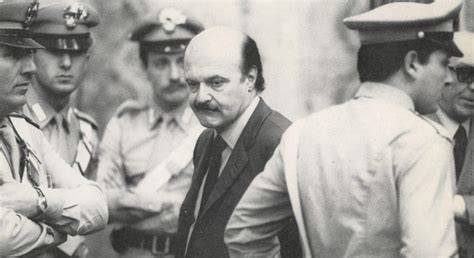
Giuseppe Calo appears by video link from a prison in central Italy during the trial of the alleged murderer of Roberto Calvi, 23 years after his body was found in London.
Renewed money-laundering allegations
While the scandals of 30 years ago are yet to be fully put to bed, new ones have emerged in recent years that have sent the Vatican Bank back into the murky spotlight of before. In 2009 the bank was being investigated by authorities over money-laundering worth €180m.
Further allegations then emerged over money laundering - which led to US investment bank JP Morgan closing one of the Vatican Bank’s accounts - after it failed to provide sufficient information about the sources of the €1.8bn deposits.
These allegations demonstrated the importance of transparency regarding the identity of account holders, the origins of funds, and the purpose of transactions. They also showed how the Vatican Bank’s reputation could affect its relationships with external financial institutions and regulators.
Vatican Bank figures
| Category | Amount | Type |
|---|---|---|
| Loans and receivables | €250.9m | Securities |
| Available for sale | €13.9m | Debt securities |
| Held to maturity | €574.8m | Debt securities |
| Other assets held by IOR | €86.5m | Other assets |
Leadership changes at the Vatican Bank
Ettore Gotti Tedeschi
As the Vatican Bank sought to draw a line under the corruption scandals of the past, it installed a series of directors to oversee reform. Italian economist and banker Ettore Gotti Tedeschi was installed in 2009 as the head of the IOR, alongside other directors that included banker Paolo Cipriani.
It was hoped that they would install a series of reforms at the bank, but they were both soon embroiled in scandals themselves. Tedeschi was investigated in 2010 or money laundering, although no charges were brought.
In May 2012 he was replaced after a vote of no confidence, while Cipriani followed in July 2013. Tedeschi had been in the role just three years, but it was a period beset with scandal.
He was eventually forced to step down in 2012 when a no-confidence vote among the board of directors was held, due to him failing “to fulfil the primary functions of his office.” However, after his departure, Tedeschi claimed that it was his push for greater transparency at the bank that led to his ousting, and specifically his looking into the accounts that were ‘non-religious’.
Ernst von Freyberg
The Vatican Bank replaced Tedeschi in June 2012 with Ernst von Freyberg, initially to serve as an interim leader, before appointing him as President of the Board of Superintendents in February 2013.
Born in Geneva in 1958, the German banker founded the finance house Von Freyberg in 1991, before a series of senior management roles at German firms. Von Freyberg joined the IOR as a representative of an untainted new leadership that would help to transform its reputation.
He quickly set about opening up the Vatican Bank and making it more transparent, as well as adopting a zero tolerance approach to suspicious activities. He called for a “zero tolerance” attitude to any transactions that were deemed suspicious, investigating all cases of potential tax evasion and money laundering.
He also aimed to make the IOR much more transparent than it had ever been, opening it up to international regulatory standards. However, by July Jean-Baptiste de Franssu had replaced him, with little explanation as to why.
Jean-Baptiste de Franssu
The most recent person appointed to take the Vatican Bank forward is Frenchman and former Invesco CEO Jean-Baptiste de Franssu. The sudden and unexpected announcement that von Freyberg would be replaced with Franssu in July has merely added to the sense that the job is a poisoned chalice that few are capable of seeing through.
Whether Franssu has what it takes to steady the ship and restore faith in the Vatican Bank remains to be seen, but it is certainly a concern that concerns have already been raised over the fact that his son currently works for the organisation charged with investigating the IOR’s affairs.
However, despite von Freyberg’s best efforts, his time in charge came to an abrupt - and surprising - end in July, with the news that he was being replaced by Frenchman Jean-Baptiste Franssu as IOR president.
The 51-year old de Franssu immediately claimed that “Catholic, ethical investment” would be the focus of the bank in the future. However, Franssu was quickly accused of having a conflict of interest, when it emerged that the Promontory Financial Group had hired his son a few months before, which was in the midst of conducting an investigation into the bank’s operations and its relationships with clients.
Pope Francis and the attempt to reform Vatican finances
After the shocking resignation of Pope Benedict XVI in February 2013, the Catholic Church set about a frantic search for a new leader after what had been a deeply troubling few years. Child abuse scandals had been in the headlines for all of Benedict’s reign, but there had also been plenty of trouble with the Vatican’s financial affairs.
Argentinian Cardinal Jorge Mario Bergoglio was selected as the church’s first non-European leader in 1,272 years, becoming Pope Francis I. Born in Buenos Aires in 1936, he has been praised for his dedication to modernising the church and attempts to restore its reputation.
After Pope Francis took the reins of the Catholic Church there were many rumours that he would look to shake up the way it managed its finances. Rumours coming from the church hinted that changes were afoot for much of his first year in charge.
The Secretariat for the Economy
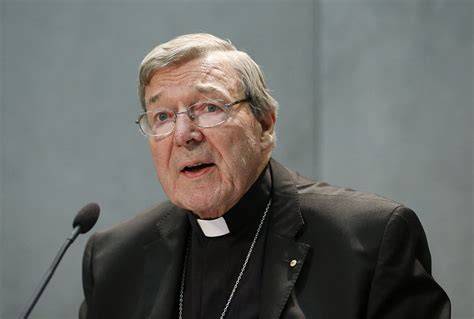
They became true when Pope Francis made his first change in February, appointing Australian Cardinal George Pell as the Prefect for the Secretariat for the Economy, a newly created department that would oversee the annual budget of the Holy See and the Vatican.
Shortly after his appointment, Cardinal Pell told reporters there needed to be considerable work on reforming the Vatican’s financial arm. “There needs to be changes in the economic area - not just with the so-called Vatican Bank - but more generally there is work there to be done [and] a need to ensure that things are being properly done.”
Changes to the Financial Intelligence Authority
Other, bigger changes took a few more months to be announced. In somewhat dramatic fashion in June, Pope Francis began by sacking all five members of the board of the Financial Intelligence Authority, which regulates the Vatican’s finances.
The entirely Italian board had been due to head up the regulator until 2016, but Pope Francis decided that a new batch of board members, from across the globe, would help to give it new impetus. New members included Juan Zarate, a former national security adviser to President George Bush, and Singaporean civil servant Joseph Pillay.
In response, Pope Francis established a new Pontifical Commission to study potential reforms for the bank, which later led to four senior cardinals being sacked.
Why financial reform has been difficult
How successful the new leadership of the IOR is in restoring the reputation of the bank remains to be seen. Certainly the words emanating from Pope Francis and his new appointees are encouraging, but it has proven difficult in the past to translate well-meaning words into meaningful actions.
Author Philip Willan, whose book The Last Supper looked into the murder of Calvi and the scandals surrounding the IOR, told our sister publication European CEO magazine earlier this year that the bank needed to undergo some serious reforms, and that Pope Francis was serious about ensuring they were carried out.
“I think Pope Francis has a sincere desire to turn the page on an embarrassing past and reform the way in which the Catholic Church handles money.”
However, he added that getting any meaningful reforms passed was likely to be difficult, with many people opposed to much change. “I don’t doubt, though, that there are powerful forces ranged against the reformists. The recent scandals show how a habit of flouting the law had become deeply ingrained among senior Vatican bureaucrats and their friends, something I examine in the last two chapters of the latest version of my book on the Calvi case.”
The scandals of the past reflect how corruption had infiltrated all aspects of Italy’s political and business class, and that meant a reluctance to pursue proper reforms. “The scandals show how even without the excuse of an ideological war against communism, Vatican officials continued to exchange favours with members of Italy’s political and business elite, simple greed supplanting ideology.
It is remarkable how defendants from the Calvi murder trial, Flavio Carboni and Ernesto Diotallevi, have continued to have business contacts with people associated with the Vatican,” says Willan.
“Paolo Oliverio, a financial consultant to the Camilliani, a religious order dedicated to the service of the sick, was arrested last year on suspicion of laundering money for the Calabrian mafia - Europe’s biggest cocaine traffickers.
He is reported to have been in contact with both Carboni and Diotallevi, as well as their offspring. Carboni has also been shown to have cultivated contacts with members of Silvio Berlusconi’s inner circle in recent years, despite having been on trial for murder.
A thorough reform of the church’s business culture will not be either easy or quick, but I think Pope Francis and his team are serious about pursuing it.”
Corruption, inequality, and the common good
The Compendium of the Social Doctrine of the Church (447) recognises that political corruption is one of the causes that greatly contributes to underdevelopment and poverty especially in developing countries. This is particularly true of countries that are in debt which are not repayable in part due to corruption, poor administration of public finances or improper utilisation of loans already received (450).
In these situations the people who suffer the worst brunt of political corruption are the poor and the powerless. Corruption can redirect public resources away from essential services, weaken confidence in democratic institutions, and make access to justice dependent on wealth or influence.
Both Church and secular commentators have noted the particularly adverse effect that political corruption can have on democratic institutions and societies. Especially in democratic governments, the Church states that “political corruption is one of the most serious [deformities] because it betrays at one and the same time both moral principles and the norms of social justice.
Corruption radically distorts the role of representative institutions,” because it makes the political sphere a place for a bartering of priorities of those who have wealth and influence instead of working towards the common good with a preferential option for the poor (Compendium of the Social Doctrine of the Church, 411).
“The absence of stability, together with the corruption of public officials and the spread of improper sources of growing rich and of easy profits deriving from illegal or purely speculative activities, constitutes one of the chief obstacles to development and to the economic order.” Pope St John Paul II, Centisiumus Annus, 48
The Church’s stated opposition to corruption
“You shall not pervert the justice due to your poor in his suit…And you shall take no bribe, for a bribe blinds the officials and subverts the cause of those who are in the right.” Exodus 6:8
Pope St John Paul II in his Message for World Day of Peace 1999 recognised that “All citizens have the right to participate in the life of their community … But this right means nothing when the democratic process breaks down because of corruption and favouritism, which … prevents people from benefiting equally from community assets and services, to which everyone has a right.”
As Pope Francis recognised in Laudato Si’, it is essential to developing a culture of integrity to have transparent political processes with a free and well informed debate (182). “Often, politics itself is responsible for the disrepute in which it is held, on account of corruption and the failure to enact sound public policies.” Pope Francis, Laudato Si’, 197.
In Laudato Si’, Pope Francis recognised that some countries are gradually making significant progress towards combating corruption but he also stressed that for poor countries, the priorities must be to eliminate extreme poverty and to promote the social development of their people and an effective means of doing this would be to curb corruption more stringently.
Pope Francis also recognised that despite corruption being wrong in law, a lack of enforcement is too often inadequate to combat corruption and called on individuals to exert public pressure on politicians to develop more rigoruous anti-corruption protocols and practices.
Sexual abuse and institutional cover-ups
Throughout the past few years, the Catholic Church has been exposed for covering up hundreds and hundreds of sexual assaults. Horror stories about such respected organizations have been visible to the public eye through media such as the TV show “The Keepers” which is about the Baltimore Archdiocese and the movie “Spotlight” which focuses on the Boston area.
Cases against the Catholic Church are continuously coming out. In August 2018, the Pennsylvania Supreme Court released a grand jury report naming over 300 accused individuals and describing sex abuse in the Catholic Church.
Through this breakthrough investigation, more than 1,000 children had come out about being abused by members of six dioceses in the state of Pennsylvania within the last 70 years. Even more are afraid to come forward and tell their story.
The Pennsylvania investigation
Beginning in 2016, the Pennsylvania grand jury interviewed dozens of witnesses and examined hundreds of thousands of pages of internal documents from every diocese in the state except Philadelphia and Altoona-Johnstown, which had already been investigated.
Many victims said they were drugged or manipulated in some other way. Some even recollected being physically abused by their family members who did not believe their stories.
The investigation illustrated how abuse could be compounded by institutional and family disbelief. Victims were not only harmed by the original acts, but could also face manipulation, intimidation, denial, and the refusal of adults to accept their accounts.
Investigations in Florida
After hearing about the investigation in Pennsylvania, Florida’s attorney general, Pam Bondi, felt the need to take action in her own state. “We have reason to believe there are similar stories in Florida,” said Bondi during a press conference.
In October 2018, Bondi said she was going forward with an investigation into sexual abuse in the Catholic Church. Bondi said she was going to team up with local prosecutors and review records from all seven of Florida’s Catholic dioceses.
All seven of the bishops in Florida were said to be cooperative with these investigations. Bondi also set up a tip website where individuals can report allegations of past or present sexual abuse by Catholic priests in the state of Florida.
The tip website asks for the names of the abuser, the organization, the location, date, and other necessary facts. According to Bondi, more than 15 victims have already come forward during this investigation and the numbers could possibly multiply.
“Any priest that would exploit a position of power and trust to abuse a child is a disgrace to the church and a threat to society,” says Bondi.
International cases and accountability
This isn’t just happening in American Catholic Churches. In May 2018, 34 Roman Catholic bishops in Chile offered to resign in the wake of a child sex scandal and cover-up.
In June 2018, a former Vatican diplomat was sentenced to five years in prison for child pornography offenses. In July 2018, an Australian Archbishop, Philip Wilson, resigned after being convicted of concealing child sex abuse carried out by another priest.
These cases showed that the crisis was not limited to one country, diocese, or legal system. They also raised questions about whether senior Church officials should be held responsible when they conceal abuse, fail to report allegations, or protect offenders from scrutiny.
Pope Francis and the response to abuse allegations
Now, you might ask yourself, has the Catholic Church even responded? When Pope Francis was elected in 2013, he talked about taking action against these assaults, but plenty of individuals say he has not done enough to hold these bishops accountable.
In August 2018, Pope Francis wrote to all Roman Catholics condemning the abuse and demanding to end the cover ups. “With shame and repentance, we acknowledge as an ecclesial community that we were not where we should have been, that we did not act in a timely manner, realizing the magnitude and the gravity of the damage done to so many lives,” Says Francis.
“We showed no care for the little ones; we abandoned them.” Francis’ predecessor, Pope Benedict, has been accused of failing to protect children and not going forward with investigations.
The Catholic Church tends to be silent when these allegations are heard by the public. Along with Florida and Pennsylvania, thirteen other states are now investigating alleged sexual abuse connected to the Catholic Church.
The more the Catholic Church comes into the limelight, the more they will have to address this situation.
Power, secrecy, and the structure of abuse
In the decade since The Boston Globe broke the story about the cover-up of pedophile priests in the Boston Archdiocese, countless Americans have shared their stories of clergy abuse. Bob Hoatson is a former priest who was abused as a teen by church leaders.
He speaks with host Michel Martin. (Advisory: This segment may not be suitable for all audiences.)
In the decade since the report was published, thousands of people across the country have come forward, to share their own stories of the abuse suffered at the hands of priests.
In today's Faith Matters - that's the part of the program where we talk about matters of faith and spirituality - we'll speak with one of the Boston Globe reporters who broke the story.
For now, though, we want to turn to a man with a unique perspective on this issue. Bob Hoatson served as a priest for decades but in 2003, he revealed that he had been abused by Catholic brothers as a teen.
He now runs a nonprofit for survivors of clergy sex abuse, called Road to Recovery. And he's with us now, and I do just want to mention that we are going to be talking about a sensitive issue - the issue of childhood sexual abuse - so this conversation may not be appropriate for all.
Bob Hoatson’s account
“I had no idea it was abuse, Michel. I was 18. I had been groomed through high school in Newark, New Jersey.
One Christian brother told me that I was such a bright student that he needed to have me in his senior year English honors class, and I politely rejected his offer. He moved me into that class anyway, and began to take me to Broadway shows and movies - and began the grooming process, as we call it.
Well, fortunately, he didn't touch me at that time, but I then entered the Congregation of Christian Brothers. And I was abused by four or five different men as I entered the Christian Brothers and went through the Christian Brothers.”
“The abuse didn't occur, Michel, actually, until I joined. The person who was grooming me did groom me through high school. But I really thought I had a religious vocation, and I wasn't going to let anybody stop me from pursuing that.
When I entered the religious order at the age of 18, after high school graduation, my first superior said to me: Bob, you are a cold person; we're going to have to warm you up. And I had no clue as to what he was talking about at the time.
You know, I was an idealistic kid of 18 who wanted to serve God. And unfortunately, what that forced me to do was to go into serious introspection about why I was such a cold person.
And what he really was doing was grooming me for the next level. And then after that, I just went through a series of one, two, three, four men who preyed upon me.
And yes, I did stay until I was 42 years old, in the Christian Brothers - 23 years, I stayed.”
“Retrospectively, absolutely. Did I know it at the time? No.”
Speaking out and confronting institutional failure
“Believe it or not, Michel, it was two of my former students. I was a teacher in Boston in the 1980s. In 2002, two of my students - whom I believed were being abused at the time, in the 1980s, and I spoke out about it.
They went public, and I finally contacted them after I saw their stories in the Boston Globe and in other Boston media outlets. I called them and I said, you know, David and Gary - and they've allowed me to use their names - David and Gary, I'm really sorry; I should have screamed much more loudly in the 1980s.
But as a result of my going to Boston once a week after they went public, to help them, I decided, you know what? It's time for me to face my truth. And it was my students who taught me that.”
“Oh, it's had - it is the seminal experience of my life. Actually - believe it or not - I am now uncovering, through therapy, more sexual abuse in my Catholic elementary school here in New Jersey.
And I'm working through that in therapy and - you know, the whole repressed memory; and we tend to bury things. So I'll be 60 years old in a couple of weeks, and I'm still uncovering more sex abuse within the Catholic Church, in my own life.”
Concentrated authority and institutional vulnerability
“Two principal reasons, and there are many -obviously - points to come after those two reasons. But essentially, number one: Wherever power and authority are abused, children will be abused, and all other people will be abused.
So the Catholic Church is a very closed, insular society with one leader, and everyone is answerable to that leader. When that leader can then have ultimate authority over everyone in the organization - well, that's abuse of power.
When power is not shared, when authority is not delineated to various people in the organization, you're going to have serious, serious issues.”
“And the pedestalization of the priesthood as a result of that - in other words, priests are other Christs. Anybody who develops an ego or a narcissism that is centered around, I'm as - almost as good as God; and he must practice, then, mandatory celibacy; and he has sexual urges - well, you add God and urges and boy, that little altar boy at 7 o'clock in the morning starts to look pretty good, in terms of outlets for sexual pleasures and gratifications.”
The Boston Archdiocese and the “crime of silence”
BOSTON -- A few weeks ago, Cardinal Bernard F. Law met with an annually scheduled convocation of the Archdiocese of Boston's pastors and leading laity. By all reports, many among the laity harshly criticized Law for his decades-long and now-exposed efforts to hide and protect sex-predator priests under his supervision.
A few days later, the priest in the church I attend spoke of this event in his Sunday sermon. He seemed shaken by what he had seen and heard at the convocation -- by the openly expressed threat to the authority of the Catholic Church and even to the faith that the church serves.
He pleaded with the parishioners to continue attending church, to continue believing. He admitted that the church, in its handling of cases of sexual abuse by clergy, had been guilty of "what could be called a crime of silence."
The case became emblematic of a wider institutional problem: the protection of the Church’s public reputation could be treated as more important than the safety of children and the rights of victims. That approach allowed abuse to continue and delayed meaningful accountability.
Legal consequences and the limits of accountability
“Before we let you go, I think it is important to disclose that you sued the church in 2005. But the suit was dismissed, citing the statute of limitations had passed. Do I have that right?”
“That's correct.”
“I also think it's important to point out that just as of last month, you chose to leave the priesthood voluntarily. You were granted permission by the pope, which is required; it took about a year.
Can I ask why you decided to leave the priesthood, which has, in fact, been your vocation for your entire adult life?”
“Well, unfortunately, the Catholic Church has been corrupted to its core. And I felt that I could not remain inside that structure.
There is so much yet to be revealed about the inside of the Catholic Church that it's just mind-boggling. And I couldn't remain a part of that institution, and remain faithful to my own integrity.”
Historical roots of criticism: the medieval Church
Criticism of corruption in the Catholic Church is not a modern phenomenon. In 1517, a monk named Martin Luther addressed several problems he saw within the Catholic Church.
On Halloween night, he nailed a list of these problems to the door of the church in the town of Wittenberg, Germany. The list contained his grievances and is known today as the 95 Theses.
The 95 Theses pointed out several things that he believed were wrong with the Catholic Church at the time. One of the Luther's most significant issues within the Catholic Church were the sale of indulgences.
Indulgences and the abuse of spiritual authority
Indulgences were a piece of paper from the Church that was supposed to reduce a person’s time in purgatory and help them get to heaven faster. Luther disagreed with this, saying that buying indulgences had no impact on whether or not people would get into heaven.
In addition to indulgences, the 95 Theses pointed out other problems as well. These problems included priests not being well educated and some of the higher leaders in the Church being corrupt.
In addition, Luther stated that the Pope himself had too much power over the Church and politics. Luther also wrote down his own ideas about faith.
These beliefs included that salvation came from faith alone, and that the Bible was the sole place to get information about one’s faith. Perhaps most radically, Luther believed that all Christians were equal before God and therefore there was no need for a pope.
The Reformation and institutional response
The printing press helped spread Luther’s ideas and he became very popular. The movement he started became known as the Protestant Reformation, and the people who followed him away from the Catholic Church became known as Protestants.
As a result, the Catholic Church started its own movement that became known as the Counter Reformation. This involved some sweeping changes, including the stoppage of the sale of indulgences, but they also reaffirmed their commitment to other core beliefs and long-standing traditions of the Church.
The historical episode demonstrates how allegations of corruption can produce broad religious and political consequences when they concern the misuse of spiritual authority, financial practices, and the concentration of institutional power.
Reform, transparency, and accountability
The financial scandals surrounding the IOR and the abuse scandals involving clergy share several institutional themes: secrecy, unequal access to information, concentrated authority, inadequate oversight, and resistance to external scrutiny.
In financial affairs, reform efforts focused on identifying suspicious transactions, investigating potential tax evasion and money laundering, improving transparency, and bringing the Vatican’s financial institutions closer to international regulatory standards.
In cases of sexual abuse, accountability required the recognition of victims’ testimony, the preservation and examination of internal records, cooperation with civil authorities, and action against officials who concealed abuse or failed to protect children.
Pope Francis also recognised that despite corruption being wrong in law, a lack of enforcement is too often inadequate to combat corruption and called on individuals to exert public pressure on politicians to develop more rigoruous anti-corruption protocols and practices.
A thorough reform of the church’s business culture will not be either easy or quick, but I think Pope Francis and his team are serious about pursuing it.
tags: #catholic #church #corruption