A Christian prayer shawl is a garment used during prayer, worship, Bible study, ministry, or personal devotion as a visible reminder of God’s presence, promises, and Word. Many Christian prayer shawls are inspired by the traditional Jewish tallit while incorporating Christian themes, Scripture passages, and Messianic symbols.
The Christian Prayer Shawl from the Blessing Collection is thoughtfully designed to enrich prayer, worship, and daily devotion. Inspired by the traditional Messianic tallit, this elegant royal blue shawl combines biblical symbolism with carefully selected Scripture passages that encourage believers to grow in faith and remain rooted in God’s promises.
What Is a Christian Prayer Shawl?
The Christian prayer shawl is a fringed garment inspired by the Jewish tallit and adapted by some Christians as a devotional symbol. Traditionally rooted in Jewish customs, the tallit is a fringed garment worn during prayer and religious study. In recent years, many Christians have adopted the use of prayer shawls as a means to deepen their spiritual experience.
Shawls can follow any pattern and be knit, crocheted, woven, quilted, or sewn, often with embroidery, using whole cloth. The principles of prayer shawl ministries can be applied to making hats, scarves, twiddle muffs for children or patients with dementia, or handcrafted toys and clothing.
Unlike an ordinary scarf, a prayer shawl is often connected with intentional prayer, biblical reflection, pastoral care, or worship. Both the shawl maker and the recipient are invited to practice the presence of God, with the prayer shawl serving as a tangible reminder of the Father, the Son, and the Holy Spirit.
The Jewish Tallit and Its Biblical Background
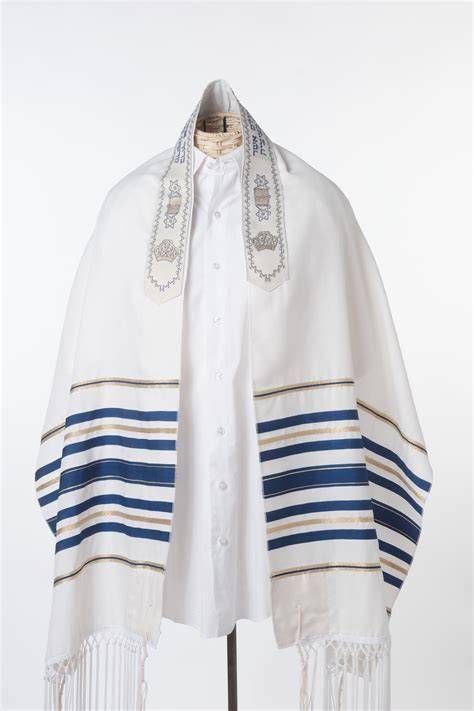
The Jewish prayer shawl is a fringed garment worn by Jewish men on the outside of their regular garments in the synagogue, especially during morning, Sabbath, and other holiday services. The Hebrew name for this prayer shawl is tallit, which simply means “a robe,” “a cloak,” or “a sheet.”
The Jewish prayer shawl is usually made of wool or silk and is often long enough to cover most of the body, with special twined and knotted fringes attached to each of its four corners. In modern times it is not uncommon to see a Jewish man wear a silk prayer shawl that is no more than a scarf around the neck.
The ultra-Orthodox Jewish men wear the prayer shawl over the head when they recite the more important prayers. When the tallit covers the head, it represents an enveloping sense of sanctity, signifying the wearer’s immersion in divine commandments and devotion to God’s will.
Although the Hebrew word tallit is not found in Scripture, the biblical command for Israelites to wear a “fringed” or “tasseled” garment can be found in the Torah, in which God says to Moses: “Speak to the Israelites and say to them: ‘Throughout the generations to come you are to make tassels on the corners of your garments, with a blue cord on each tassel. You will have these tassels to look at and so you will remember all the commands of the LORD, that you may obey them and not prostitute yourselves by chasing after the lusts of your own hearts and eyes. Then you will remember to obey all my commands and will be consecrated to your God’” (Numbers 15:38-40).
And also, “Make tassels on the four corners of the cloak you wear” (Deuteronomy 22:12). So the original scriptural intent behind this fringed garment was to remind the Israelites of God’s commandments to them.
According to Jewish understanding, the numerical value of the Hebrew word tzitzit, meaning fringes, is 600. Each of the fringes contains 8 threads and 5 knots, making a total of 613. Based on rabbinical Judaism, this number corresponds to the 613 commandments contained in the Torah.
Christian Interpretation of the Prayer Shawl
The use of prayer shawls in Christian worship is not merely a superficial adoption of a cultural artifact; it is imbued with profound theological significance. The fringes, or tzitzit, on the corners of the tallit serve as a tangible reminder of God’s commandments, as instructed in Numbers 15:38-40.
For Christians, wearing a prayer shawl can symbolize a commitment to living a life in accordance with God’s will. Moreover, the act of draping oneself in a prayer shawl can create a sense of sacred space, fostering an environment conducive to meditation, prayer, and communion with God.
Covering the head with a tallit-a Jewish prayer shawl-holds deep symbolic meaning within Jewish practice. While many Jewish individuals today choose to drape the tallit over their shoulders during prayer, those who cover their heads with it are expressing a heightened level of piety and submission.
The practice highlights a personal desire to be spiritually surrounded by the holiness imparted through the observance of religious laws and traditions. For Christians who use a prayer shawl, covering the head or shoulders may likewise serve as a personal expression of reverence, concentration, and devotion, although Christian communities do not all interpret or practice this custom in the same way.
Messianic Prayer Shawls
Messianic prayer shawls, in particular, hold a unique place within the Christian community. These shawls are often adorned with symbols and inscriptions that reflect the Messianic belief in Jesus as the Messiah.
For instance, many Messianic tallits feature the Hebrew phrase “Yeshua HaMashiach,” meaning Jesus the Messiah, or the Star of David intertwined with a cross. These elements serve to bridge the gap between Jewish tradition and Christian faith, creating a sacred connection that resonates deeply with believers.
The Messianic movement, which seeks to integrate Jewish heritage with the belief in Jesus as the Savior, has seen significant growth, with estimates suggesting that there are over 350,000 Messianic Jews worldwide.
One of the most compelling aspects of Messianic prayer shawls is their direct connection to Jerusalem, the spiritual epicenter of both Judaism and Christianity. The city of Jerusalem holds a special place in the hearts of believers, as it is the site of pivotal events in the life of Jesus, including His crucifixion and resurrection.
By wearing a prayer shawl from Jerusalem, Christians can feel a tangible link to the Holy Land and the historical roots of their faith. A prayer shawl from Jerusalem is more than just a garment; it is a connection to the land where our faith was born and where God’s promises were fulfilled.
The Blessing Christian Prayer Shawl
The Christian Prayer Shawl from the Blessing Collection is inspired by the traditional Messianic tallit and designed for prayer, worship, and daily devotion. Its royal blue color creates a distinctive expression of faith while symbolizing God’s love, compassion, and blessing.
Each corner of the shawl features a meaningful Bible verse: Deuteronomy 28:2, John 15:5, John 15:16, and Deuteronomy 1:11. Together, these Scriptures remind believers of God’s blessings, His faithfulness, and the importance of abiding in Christ.
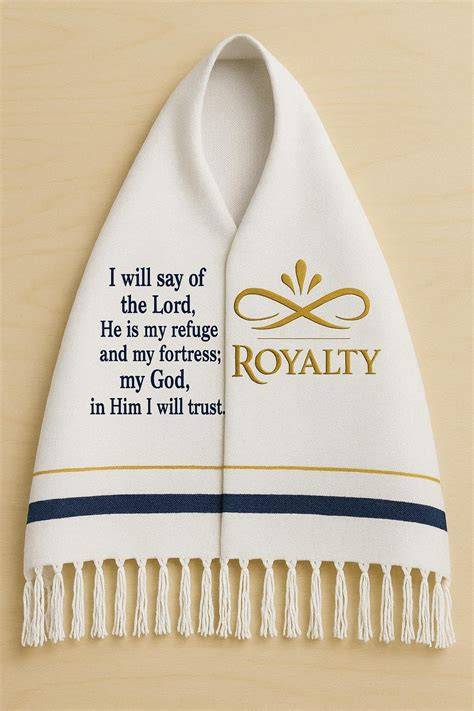
The collar displays the beautiful Aaronic Blessing from Numbers 6:24-26: “The Lord bless you and keep you; the Lord make His face shine on you and be gracious to you; the Lord turn His face toward you and give you peace.”
| Feature | Description |
|---|---|
| Design | Christian Prayer Shawl inspired by the traditional Messianic tallit |
| Color | Elegant royal blue |
| Collar | Aaronic Blessing from Numbers 6:24-26 |
| Corner Scriptures | Deuteronomy 28:2; John 15:5; John 15:16; Deuteronomy 1:11 |
| Size | 72″ x 22″ |
| Included materials | Educational brochure and matching zippered carrying bag |
| Intended users | Men and women |
Measuring 72 inches by 22 inches, this Christian Prayer Shawl provides generous coverage for worship services, Bible study, church gatherings, ministry events, and personal prayer. Every shawl includes a matching zippered carrying bag for convenient storage and travel.
Additionally, an educational brochure explains the meaning of the Messianic symbols, the purpose of the tallit, and the significance of each featured Scripture, making this prayer shawl both inspirational and educational.
Biblical Themes Represented on the Shawl
Deuteronomy 28:2
The first corner features Deuteronomy 28:2. Together, these Scriptures remind believers of God’s blessings, His faithfulness, and the importance of abiding in Christ.
John 15:5
John 15:5 points to the importance of abiding in Christ. The verse supports the prayer shawl’s central devotional purpose: encouraging believers to remain spiritually connected to Jesus during worship and daily prayer.
John 15:16
John 15:16 emphasizes calling, purpose, and spiritual fruitfulness. Its inclusion encourages believers to remember that faith is not only a private experience but also a life of service and obedience.
Deuteronomy 1:11
Deuteronomy 1:11 contributes a theme of blessing and increase. Alongside the other Scripture passages, it directs attention toward God’s faithfulness and the believer’s dependence on His promises.
The Aaronic Blessing
The collar displays the beautiful Aaronic Blessing from Numbers 6:24-26: “The Lord bless you and keep you; the Lord make His face shine on you and be gracious to you; the Lord turn His face toward you and give you peace.”
Placed on the collar, this blessing becomes a central visual and devotional element of the shawl. It emphasizes protection, grace, divine presence, and peace.
How Christians Use a Prayer Shawl
Whether you wear it during worship, prayer, ministry, or personal devotion, the Blessing Christian Prayer Shawl helps keep your heart focused on God’s Word while encouraging a deeper walk of faith.
- Christian prayer
- Worship services
- Church gatherings
- Bible study
- Ministry events
- Women’s prayer groups
- Personal devotions
- Messianic worship
- Prayer and pastoral ministry
- Christian gifts
- Use by pastors and ministry leaders
The shawl can be placed over the shoulders during private prayer, carried to a worship service, used during Bible study, or kept in a designated prayer space. Its function is devotional rather than mechanical: the garment does not replace prayer, Scripture, or faith, but can help establish a deliberate setting for them.
Many believers use a prayer shawl as a physical reminder to pause, meditate on Scripture, and become attentive to God’s presence. The fabric, colors, fringes, and verses can help create a focused environment for worship and intercession.
Prayer Shawls and Intercessory Ministry
Part of creating handmade shawls is the spiritual discipline of intercessory prayer for those who will receive them. Both the shawl maker and the recipient are invited to practice the presence of God, with the prayer shawl serving as a tangible reminder of the Father, the Son, and the Holy Spirit.
A prayer shawl can be prepared for someone facing illness, grief, anxiety, isolation, or another difficult season. The physical garment can communicate care when words are difficult to find, while the accompanying prayer points toward the love and presence of Christ.
Out of a single strand of yarn, a flowing fabric emerges that will eventually wrap itself around another’s shoulders and speak love into another’s heart, a visual expression of the inexpressible mystery that is the steadfast presence of God in our lives.
The prayer shawls our church’s prayer shawl ministry gave us helped sustain our faith. The shawls were tangible symbols of the love of Christ.
Knowing that the Holy Spirit was with us gave Royce the courage to keep fighting for his life - and gave me the strength to respond to his needs and carry on with my other responsibilities.
A Prayer Shawl as a Ministry of Care
It was, in fact, during Royce’s extended hospitalization that my sister-in-law taught me how to knit. I gave my first prayer shawl to a young woman I met one night in a darkened waiting room.
It turned out that her father was dying, and she was fighting temptation as a recovering addict to turn to drugs to ease her grief and anxiety. In a profound way, the shawl opened the door for us to talk about Christ’s love for her and to pray together for her father and her deliverance.
Since then, I have knitted hundreds of prayer shawls and other items, participating in and even coordinating several missions and outreach projects that have reached thousands.
You do not have to be part of a group to practice the ministry of prayer shawls. Projects can be created independently for people the crafter knows personally or donated to charitable organizations.
It is also unnecessary to be advanced at knitting, crocheting, or sewing. Using basic patterns allows for more focus on intercessory prayer in the presence of God.
This message from Colossians 2:2-3 is at the heart of that intercessory prayer: “This is what I have asked of God for you: that you will be encouraged and knit together by strong ties of love, and that you will have the rich experience of knowing Christ with real certainty and clear understanding” (Colossians 2:2a).
Choosing and Using a Christian Prayer Shawl
When choosing a Christian prayer shawl, consider its biblical content, theological emphasis, size, symbolism, and intended use. A shawl designed for personal devotion may emphasize Scripture and quiet prayer, while one used in congregational worship may include symbols connected with the church’s tradition.
- Scripture: Consider whether the verses support the intended season of prayer and spiritual focus.
- Design: Look for symbols that are meaningful within the wearer’s Christian tradition.
- Size: A larger shawl provides more generous coverage, while a smaller design may be easier to carry.
- Material: The fabric should be suitable for repeated use during prayer, worship, travel, or ministry.
- Storage: A carrying bag can help protect the shawl and keep it ready for devotional use.
- Educational context: Explanatory material can help clarify the significance of the symbols and Scripture passages.
The Blessing Christian Prayer Shawl is suitable for men and women. Its 72-inch by 22-inch dimensions provide generous coverage, while the matching zippered carrying bag supports convenient storage and travel.
Christian Freedom and the Use of a Tallit
Jewish prayer shawls are being promoted and marketed quite heavily today in the Messianic and Hebrew Roots movements, and they have also begun to make their way into some mainline Christian communities.
Some Christians believe that, if the fringed garment is a garment that Jesus wore, it therefore should or must be worn by Christian believers today, both Jewish and Gentile, if they are going to observe Torah in accordance with the laws that God commanded.
To this it is important to say that believers in the Jewish Messiah should avoid getting caught up in unhealthy practices. It is one thing to recover the Jewish foundations of the Christian faith; it is quite another to follow observances or traditions that bind us and put us once again under a yoke of legal bondage.
God’s New Covenant people are not called upon or required to wear the prayer shawl or any other type of fringed garment. Sadly, however, many well-meaning Messianic and Gentile believers seem to confuse the idea of Torah with that of covenant and therefore fail to “rightly divide the word of truth” (2 Timothy 2:15).
The Law of Moses was given to the nation of Israel and intended to function as a “tutor” for receiving and understanding the Messiah’s greater instruction (Galatians 3:19-25).
Followers of Jesus the Messiah, both Jewish and non-Jewish alike, are admonished not to revert to childish thinking but to understand spiritual matters with maturity (1 Corinthians 13:11; 14:20; Hebrews 5:12-14).
Failure to make a proper distinction between the Law and the gospel of grace always leads to doctrinal confusion within the covenant community of God’s people.
Even the most zealous among the Jewish people were not able to bear the burden of the yoke of the Law of Moses (see Acts 15). We who follow Jesus the Jewish Messiah are now led by the Spirit of God as God’s sons and are therefore no longer subject to religious regulations that command us to “touch not, taste not, handle not.”
We are now called to seek those things that are above, where the Messiah reigns from on high (Colossians 2:20-3:1). Followers of Jesus have a “better covenant based on better promises” (Hebrews 8:6), and the Law was only a shadow of something greater that was promised by the prophets; that “greater something” is Jesus Christ (2 Corinthians 3:18; 4:6).
The Spiritual Meaning of Covering
The act of covering oneself with a prayer shawl may represent a desire to become attentive to God, to enter a focused period of prayer, or to remember the believer’s relationship with Scripture.
The practice can create a sense of sacred space, fostering an environment conducive to meditation, prayer, and communion with God. This meaning depends on the wearer’s intention and faith rather than on the garment as an object with independent spiritual power.
A Christian prayer shawl can therefore be understood as a symbolic aid to devotion. It may help a believer mark the beginning of prayer, remain mindful of biblical promises, or carry a visible reminder of worship into daily life.
How to Wear Tallit
The Blessing Prayer Shawl in Worship and Daily Devotion
Unlike ordinary prayer shawls, the Blessing Christian Prayer Shawl combines biblical teaching, meaningful Scripture, and traditional Messianic symbolism in one elegant design.
As a result, it inspires deeper worship while serving as a lasting reminder of God’s blessings. Furthermore, the included carrying bag and educational brochure make it an excellent gift for anyone seeking to strengthen their daily walk with Christ.
The elegant royal blue color creates a distinctive expression of faith while symbolizing God’s love, compassion, and blessing. The Aaronic Blessing, the four Scripture passages, the Messianic symbols, and the explanatory brochure give the shawl both devotional and educational significance.
Used during worship, prayer, ministry, or personal devotion, the shawl can help keep the believer’s heart focused on God’s Word while encouraging a deeper walk of faith.