The Divine Office, also called the Liturgy of the Hours or the Breviary, is the official prayer of the Church offered at various times of the day in order to sanctify it. Traditionally prayed by priests and religious, the Divine Office has been growing in popularity among the laity.
Clergy and religious have a canonical obligation to pray the Liturgy of the Hours as official representatives of the Church. Increasingly, the laity are also praying it, though they do not do so in the name of the Church, but in union with her.
What the Divine Office Is
The Catechism of the Catholic Church beautifully describes the Divine Office as “the voice of the Bride herself addressed to her Bridegroom…. the very prayer which Christ himself together with his Body addresses the Father” (CCC 1174).
While there are many beautiful and powerful prayers within the Catholic tradition, the Divine Office holds a unique place as the “public prayer of the Church.” Every time you pray it-by yourself, with your family, or in a group setting-you are praying with the entire Body of Christ (CCC 1174-1175).
Its monastic rhythm, foundation in Scripture, and universality place it alongside the Rosary as one of the Church’s most beloved prayers. This rhythm of psalms, readings, hymns, and prayers allows Catholics to join in the same words prayed by the universal Church across time zones and continents.
The Divine Office is also called the Opus Dei (Work of God).
The Names: Divine Office, Liturgy of the Hours, and Breviary
All three names refer to the same reality; the official prayer of the Church offered at various times of the day in order to sanctify it.
| Name | Meaning |
|---|---|
| Liturgy of the Hours | From liturgia horarium (L) and the Greek litourgia, a service performed by an official. |
| Divine Office | From officium divina (L.), a divine service or duty. |
| Breviary | From breviarium (L.), a compendium (of the canonical hours). |
Historical Roots of the Divine Office
The Divine Office has deep roots in salvation history. Its foundation lies in the Jewish tradition of praying the Psalms at specific hours of the day.
God commanded the Aaronic priests (c.1280 BC) to offer a morning and evening sacrifice (Ex. 29:38-29). During the Babylonian Exile (587-521 BC), when the Temple did not exist, the synagogue services of Torah readings and psalms and hymns developed as a substitute for the bloody sacrifices of the Temple, a sacrifice of praise.
The inspiration to do this may have been fulfillment of David's words, "Seven times a day I praise you" (Ps. 119:164), as well as, "the just man mediates on the law day and night" (Ps. 1:2).
After the people returned to Judea, and the Temple was re-built, the prayer services developed in Babylon for the local assemblies (synagogues) of the people were brought into Temple use, as well.
We know that in addition to Morning and Evening Prayer to accompany the sacrifices, there was prayer at the Third, Sixth and Ninth Hours of the day. The Acts of the Apostles notes that Christians continued to pray at these hours (Third: Acts 2:15; Sixth: Acts 10:9; 10: 3, 13).
The first Christians continued this practice in the early Church; Acts 3:1 references the Apostles Peter and John going to the Temple for “ninth hour” of prayer. And, although the Apostles no longer shared in the Temple sacrifices-they had its fulfillment in the "breaking of the bread" (the Eucharist)-they continued to frequent the Temple at the customary hours of prayer (Acts 3:1).
Monastic Development and the Psalter
Monastic and eremitical (hermit) practice as it developed in the early Church recognized in the Psalms the perfect form of prayer and did not try to improve upon it. The practices were quite individual from monastery to monastery.
At first some tried to do the entire Psalter (150 Psalms) each day, but eventually that was abandoned for a weekly cycle built around certain hours of the day.
In the 6th century, St. Benedict structured monastic life around eight daily hours that covered the entire Psalter in a week. Among the earliest Psalter cycles of which we have a record is the division given by St. Benedict in his Rule Ch. 8-19 (c.550).
This led to the canonical hours that still shape the Divine Office today. St. Francis revised this rhythm in the 13th century, simplifying it for friars who were traveling preachers.
Among the canonical hours were Lauds (Morning Prayer) offered at sunrise, Prime (1st hour of the day), Terce (3rd hour, or Mid-morning), Sext (6th hour or Midday), None (9th hour or Mid-Afternoon), Vespers (Evening Prayer) offered at sunset, and Compline (Night Prayer) before going to bed.
In addition, the monks arose to read and pray during the Night. This Office of Matins (Readings) likewise had its divisions, into nocturnes, corresponding to the beginning of each of the "watches of the night" (Ps. 63:6), that is, 9 pm, midnight and 3 am.
From the Roman Breviary to the Modern Liturgy of the Hours
Originally the practice of monks, it was also used by the canons of cathedrals and other great churches. The Roman Breviary, perhaps as old or even older than the Benedictine, was originally the Office of the canons of St. Peters and the other Roman Basilicas.
Pope Innocent III (1198-1216) extended its use to the Roman Court (curia). When the Franciscan Order was looking for a convenient one volume Office for its much-traveled friars to use, it adopted this Breviarium Curiae, but substituting the Gallican (French) Psalter for the Roman.
This modified Roman Breviary was then spread throughout Europe by the Franciscans. Pope Nicholas III (c.1270) would then adopt this popularized Franciscan version of the Breviary as the Breviary of Rome itself.
After the Council of Trent, and its reforms, the Roman Breviary became the Office of the entire Latin Church. It should be noted that religious orders have a right to their own version, though many simply use the Roman Office, that used by the diocesan clergy.
With the reforms of the Second Vatican Council the traditional one-week Psalter cycle became a four-week cycle. Although the Divine Office has gone through various forms, and reforms, including that of Vatican II, its basic structure, combining Psalms, prayers, canticles and readings, has been relatively constant since the 11th century.
Historical development of the Divine Office from Jewish prayer and early Christian practice to the Roman Breviary and the four-week Psalter.
The Hours of the Divine Office
The Divine Office is made up of many different “hours.” These aren’t 60-minute periods of time but rather moments of the day dedicated to prayer.
| Traditional time | Latin name | English name |
|---|---|---|
| During the Night | Matins | Readings |
| Sunrise | Lauds | Morning Prayer |
| First Hour of the Day | Prime | (suppressed) |
| Third Hour of the Day | Terce | Mid-morning Prayer |
| Sixth Hour of the Day | Sext | Midday Prayer |
| Ninth Hour of the Day | None | Mid-afternoon Prayer |
| As evening approaches | Vespers | Evening Prayer |
| Nightfall | Compline | Night Prayer |
The names of the various hours and the traditional time of day when they are usually celebrated may vary in actual use, as provided in the G.I.L.H.
Office of Readings
Once called “Matins,” this includes extended readings from Sacred Scripture and the Church Fathers. It can be prayed at any time of day.
Morning Prayer or Lauds
Prayed at dawn, it offers praise for the gift of a new day. Lauds is traditionally offered at sunrise.
Daytime Prayer
Daytime Prayer consists of one or all of the following hours: mid-morning (Terce), midday (Sext), and mid-afternoon (None).
Evening Prayer or Vespers
Prayed at sunset, Evening Prayer is often considered the most solemn hour. Vespers is traditionally offered as evening approaches.
Night Prayer or Compline
Night Prayer is the final hour, prayed before bedtime. Compline is traditionally offered at nightfall.
While only priests (and seminarians in the process of becoming priests) are obligated to pray all the hours daily, deacons and religious also pray many of them. Due to work and family obligations, laity often choose to pray just one or two of the hours, such as Morning Prayer and Evening Prayer.
The Four-Week Psalter
The core of the Office is the 4-week cycle of the Psalter: Sunday Week 1, Monday Week 2, etc., through Saturday Week 4.
The Psalter is found in the middle of each volume, dividing the Propers in the front, from the Saints and Commons in the back. If you know the liturgical season, and the current week of that season, you can find the Proper and Psalter texts.
With the reforms of the Second Vatican Council the traditional one-week Psalter cycle became a four-week cycle. The Psalter provides the recurring framework through which the Psalms are distributed across the four weeks.
Finding a Day in the Breviary
The following is a typical example. Friday of the 18th Week in Ordinary Time: Proper Readings and Prayer - starting from the front of the volume, go to the 18th Week and then Friday of that week.
Psalter - In the Proper, Sunday of the 18th Week will indicate that it is the 2nd week of the Psalter cycle, or calculate yourself. 18/4=4 plus a remainder of 2. It is Week 2 of Psalter.
So, the core of the office is what is given for Friday Week 2 of the Psalter. Around this core is wrapped any special material which accrues to Friday of the 18th week, which can be found in the Proper at the front of the breviary.
The Structure of Each Hour
Each hour of the Divine Office follows a similar pattern, though with unique texts for the time of day.
- Hymn - A sung or recited hymn fitting for the time of day
- Psalms and Canticles - The heart of the Divine Office, by which we make the words of Scripture our own prayer
- Scripture Reading - A short passage that highlights God’s Word
- Responsory - A brief exchange of verses and responses
- Gospel Canticle - Three of the hours include a canticle from the Gospel: the Benedictus in the morning, the Magnificat in the evening, and the Nunc Dimittis at night
- Intercessions - Petitions for the Church, the world, and other intentions
- The Lord’s Prayer - What Jesus taught his disciples to pray
- Concluding Prayer and Blessing - Closing with thanksgiving and God’s peace
Throughout the course of the day, the hours will include hymns, Psalms and canticles, Scripture readings, responsories, Gospel canticles, intercessions, the Lord’s Prayer, and a concluding prayer and blessing.
Proper Texts, Saints, and Commons
On a saint's feast day the special prayers and texts are found in the saints' section behind the Psalter. This section is usually the minimum necessary, that is, only what pertains uniquely to that saint.
This unique material (e.g. St. Dominic) is then combined with general saint material from the Commons, depending on the category of saint (e.g for Dominic, Common of Pastors, or, Common of Religious).
The daily celebration therefore brings together the recurring Psalter, the proper texts for the liturgical day, and any special material assigned to a saint or feast.
How to Use a Divine Office Breviary
Praying the Divine Office may seem intimidating at first, but it’s more accessible than you might think. Many laity use one of the following tools for their prayer:
- A Breviary - The traditional four-volume set (or single-volume Christian Prayer) contains all the texts for the year.
- A Mobile App - Apps like iBreviary, Laudate, or Universalis guide you step by step.
The four-volume breviary is organized so that the liturgical year, the Psalter, the saints, and the Commons can be combined for each day’s Office. The one-volume edition provides a more compact way to pray selected hours throughout the year.
Guidebooks can also help new users navigate the changing page numbers and liturgical sections. Finally, for the US, Catholic Book Publishing Company publishes annually the St. Joseph's Guide to the Office for the upcoming liturgical year.
It gives the page numbers in the 4 volume Liturgy of the Hours for every part of every office on every day of liturgical calendar. It is highly recommended for novices.
They also publish a guide for the one volume condensed version of the Office, Christian Prayer.
Full Editions of the Roman Breviary
Liturgia Horarium, editio typica altera (Libreria Editrice Vaticana, 1985) is the official Latin text, in 4 volumes, and is lawful throughout the Latin Rite.
Liturgy of the Hours is approved for use in the United States, Canada, South Africa and most English-speaking countries. The US edition is published in 4 volumes by Catholic Book Publishing Co, NYC, NY.
The 4 volumes correspond to the liturgical seasons: Advent/Christmas, Ordinary Time 1-17, Lent/Easter, Ordinary Time 18-34.
Divine Office is approved for use in Australia, England, Wales, Ireland and Scotland, Gambia, Ghana, India, Kenya, Liberia, Malaysia, Singapore, new Zealand, Nigeria, Sierra Leone, Tanzania, Uganda and Zimbabwe.
It is published in 3 volumes by Harper Collins Publishers, London, England.
Abbreviated Breviary Editions
Christian Prayer
Christian Prayer, a one-volume edition of the Liturgy of the Hours (Catholic Book Pub.). This version contains the complete texts of Morning and Evening Prayer for the entire year.
It lacks the variety of proper readings and prayers found in the four-volume edition. However, it makes a good "starter edition" for the laity, and generally is adequate for following along in community recitation of the Office.
There is also a large print edition for the visually impaired.
Shorter Christian Prayer
Shorter Christian Prayer (Catholic Book Pub.) contains Morning and Evening Prayer from the Four-Week Psalter and selected texts for the Seasons and Major Feasts of the year.
This is a vademecum (carry with me) for those who only need the basics. There is also a large print edition for the visually impaired.
Shorter Morning and Evening Prayer
Shorter Morning and Evening Prayer (Liturgical Press), a vademecum of the Collins Divine Office, is approved for use in Australia, England, Wales, Ireland and Scotland, Gambia, Ghana, India, Kenya, Liberia, Malaysia, Singapore, new Zealand, Nigeria, Sierra Leone, Tanzania, Uganda and Zimbabwe.
The General Instruction
The norms for the celebration of the Liturgy of the Hours are available in the first volume of the current multi-volume set, as well as here: General Instruction of the Liturgy of the Hours.
The publication in 2027 of new liturgical texts in English should not impact the rules by which those texts are used, and other matters addressed by the norms. There norms apply everywhere in the Roman Rite for all languages.
The 2027 English Edition
A new edition of the Liturgy of the Hours for the United States will be published in 2027, with its mandatory adoption set for the First Sunday of Advent 2028.
Its texts will be in conformity with the 2002 Roman decree Liturgiam authenticam (which required closer adherence in translations to the Latin originals).
It will also include a new translation of the Psalms, the Abbey Psalms and Canticles, from the monks of Conception Abbey, MO, and essentially a revised Grail psalter (the version used in the English-speaking world since 1973).
It is anticipated that with the publication of the new Divine Office in 2027, these shorter versions will be republished with the updated texts.
Why Pray the Divine Office?
The Divine Office sanctifies the hours of the day, turning our hearts towards God’s presence with us at each moment. It immerses us in Scripture, especially the Psalms. It strengthens our connection to Christ and His Church.
Whether you only pray Night Prayer before bed or grow into praying several hours throughout the day, the Divine Office has the power to transform your everyday routine into a rhythm of grace.
Due to work and family obligations, laity often choose to pray just one or two of the hours, such as Morning Prayer and Evening Prayer. Start small-perhaps with Morning Prayer or Night Prayer-and discover how praying with the Church can draw you closer to Christ.
The Divine Office for September 15
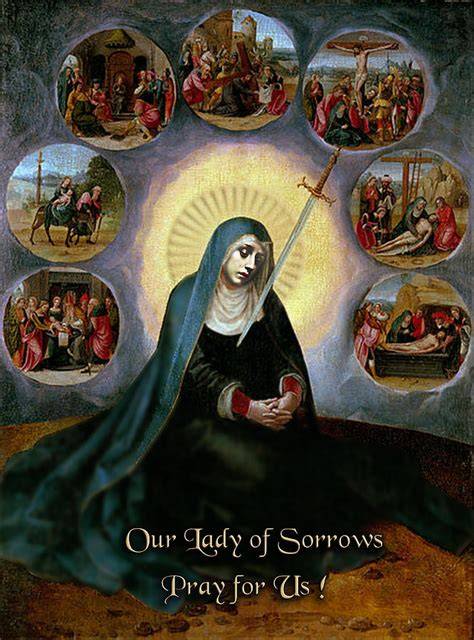
September 15 is associated with the memorial of Our Lady of Sorrows, expressed in the theme “His Mother Stood by the Cross.” The daily Office follows the ordinary structure of opening prayer, Psalms, readings, responsories, canticles, intercessions, the Lord’s Prayer, and a concluding prayer.
The opening of the Office begins with the invitation: “Lord, open my lips.” - “And my mouth will proclaim your praise.”
The invitatory antiphon is: “Come, let us worship the Lord, our mighty God.”
The invitatory Psalm is Psalm 100:
Cry out with joy to the Lord, all the earth.
Serve the Lord with gladness.
Come before him, singing for joy.
Know that he, the Lord, is God.
He made us, we belong to him,
we are his people, the sheep of his flock.
Go within his gates, giving thanks.
Enter his courts with songs of praise.
Give thanks to him and bless his name.
Indeed, how good is the Lord,
eternal his merciful love.
He is faithful from age to age.
The antiphon is repeated after each section: “Come, let us worship the Lord, our mighty God.”
The prayer concludes with the doxology: “Glory to the Father, and to the Son, and to the Holy Spirit: - as it was in the beginning, is now, and will be for ever. Amen.”
Beginning a Daily Practice
If you’re looking for a way to deepen your prayer life, consider making the Divine Office part of your day. Start small-perhaps with Morning Prayer or Night Prayer-and discover how praying with the Church can draw you closer to Christ.
And remember, you don’t have to do it alone. This rhythm of psalms, readings, hymns, and prayers allows Catholics to join in the same words prayed by the universal Church across time zones and continents.
You’ll discover that sanctifying the hours truly makes every day a love offering to God.