The European Union hymn is the instrumental melody from the final movement of Ludwig van Beethoven’s Ninth Symphony, commonly known as “Ode to Joy.” It represents the European ideals of freedom, peace and solidarity, as well as the unity of Europe in all its diversity.
The melody was adopted by the Council of Europe as its anthem in 1972 and by the heads of state and government of the European Community as the official anthem in 1985. It is now used by European institutions at official ceremonies and at events with a European character, but it does not replace the national anthems of EU member states.
The musical origin: Schiller’s “Ode to Joy” and Beethoven’s Ninth Symphony
In 1785, the German poet Friedrich Schiller penned the “Ode to Joy”. It was the time shortly before the French Revolution, and Schiller’s poem is characterised by the ideal of an equal society in which “all men shall be brothers” and which is characterised by joy and peace. The famous composer Ludwig van Beethoven already had the idea of setting the poem to music in some form after its publication a year later.
However, it took him a long time to complete the piece of music, his 9th Symphony: it was not until 1824 that the symphony was given its premiere - and caused a sensation. The audience was enthusiastic, the critics divided: For Beethoven had dared to do something completely new with this symphony.
One was the length of the piece, as the symphony, at over 70 minutes, is an evening-long programme. The other was the choir, which performed parts of Schiller’s poem - a choir in a symphony was something that had never been heard before!
The melody used to symbolise the EU comes from the Ninth Symphony composed in 1823 by Ludwig Van Beethoven, when he set music to the “Ode to Joy”, Friedrich von Schiller’s lyrical verse from 1785. From this symphony, the finale, known as the “Ode to Joy,” is one of the most recognizable motifs in classical music history.
The monumental work, which he composed while he was completely deaf, premiered 200 years ago. Beethoven’s finale features a text by the poet Friedrich Schiller, but the anthem is played without lyrics in the European Parliament.
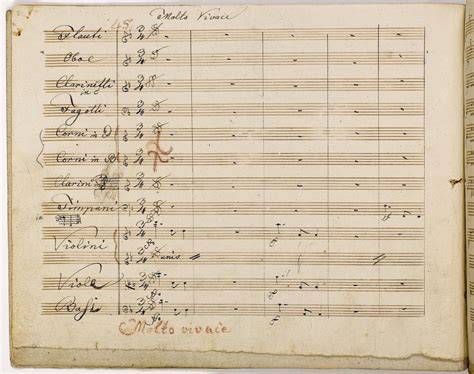
Why Beethoven was chosen as Europe’s musical symbol
At the end of the 1960s, the Council of Europe first began searching for a musical symbol for the growing cohesion of European countries. “We know that, even before the European Community was formed, there was a pan-European movement playing Beethoven’s music again and again,” said Malte Boecker, director of the Beethoven House in Bonn.
Beethoven’s piece was therefore at the top of the shortlist. But there were other alternatives that were being seriously considered. It was quickly agreed that the selected song could not be a contemporary composition. The idea of a competition was quickly discarded, and the search turned to the “old masters.”
Candidates included Georg Friedrich Händel, who was born in the German city of Halle and lived in London, and the French composer Marc-Antoine Charpentier. A fragment of his sublime “Te Deum” now serves as anthem of the Eurovision Song Contest.
In 1972, Beethoven was chosen. “Beethoven is considered a European personality. And his work is associated with something that stands above a purely national perspective,” notes Malte Boecker. The Ninth Symphony is, Boecker said, “the essence of utopian music.” It is music with a uniting vision.
Beethoven was an influential figure of the emancipatory political movement of his era, Boecker said: “In today’s world he would definitely be a convinced European!”
History of the European anthem’s official adoption
The anthem was originally chosen by the Council of Europe in 1972. The European anthem was launched via a major information campaign on Europe Day in 1972. In 1972, the Council of Europe adopted Beethoven’s “Ode to Joy” theme as its anthem.
In 1985, it was adopted by EU leaders as the official anthem of the European Union. It was adopted in 1985 by EU heads of State and government as the official anthem of the then European Community.
The European anthem is now used by European institutions. The anthem is played at official ceremonies involving the European Union and generally at all sorts of events with a European character.
| Year | Development |
|---|---|
| 1785 | Friedrich Schiller penned the “Ode to Joy”. |
| 1824 | Beethoven’s Ninth Symphony was given its premiere. |
| 1972 | The Council of Europe adopted Beethoven’s “Ode to Joy” theme as its anthem. |
| 1985 | It was adopted by EU leaders as the official anthem of the European Union. |
Why the European anthem has no lyrics
A symphony with the revolutionary peculiarity of including a choir, but the official anthem based on it comes without the lyrics? In fact, the piece of music played on official occasions for the EU is purely instrumental.
Reducing the length seems sensible, of course - but dispensing with the lyrics had equally valid reasons. For one thing, the original text was written in German - but to favour this one language would have been unfair in view of the linguistic diversity of the European countries.
Therefore, an attempt was initially made to translate the text into all the official languages of the EU - a difficult task with which many were not satisfied. In the end, the translations were rejected.
As a compromise, some suggested simply singing the anthem in Latin or Ancient Greek - or even Esperanto! However, these proposals were again rejected. “Perhaps there will be lyrics at some point,” said a document from the Council of Europe. Perhaps in Esperanto. That has not happened yet.
At the same time, some criticised the lyrics because they did not refer to Europe alone but to the whole of humanity, which is why they should not be used as a solely European anthem. In the end, it was agreed to simply rely on the universal language of music - and it works, because many people immediately recognise the melody as the European anthem, representing universal values.
Schiller’s lyrics, in German, were left out. The reasoning is that his message of community - with words such as “Be embraced, you millions!” - also comes across through the music itself.
Herbert von Karajan’s instrumental arrangement
Simply omitting the text does not create an anthem. The majestic fourth movement of the Ninth Symphony is about 25 minutes long, a symphonic painting with a choir at the end - and much too long for official occasions.
For this, however, they asked the star conductor Herbert von Karajan to create three different instrumental versions, each about 2 minutes long. These were then chosen as the anthem of the European Economic Community, the precursor of the EU, in 1985.
The task of arranging Beethoven’s music for state events was taken on by the star conductor Herbert von Karajan (1908-1989). The chief conductor of the Berlin Philharmonic Orchestra was one of the central figures in the world’s musical life and was nicknamed the “music director of Europe.”
He chose bars 140 to 187 and arranged them for wind instruments. The piece of music that is now used by European institutions was recorded by conductor Herbert Von Karajan who wrote an instrumental arrangement with a slower tempo than that of the original version.
At some point, von Karajan’s name disappeared from the official EU website. Perhaps the European Union wanted to distance itself from von Karajan, whose Nazi past was increasingly coming into focus. In any case, further arrangements were commissioned - including from the French composer Christian Guyard.
Flashmob Flash Mob - Ode an die Freude ( Ode to Joy ) Beethoven Symphony No.9 classical music
The meaning of the European anthem
The anthem symbolises not only the European Union but also Europe in a wider sense. The poem “Ode to Joy” expresses Schiller’s idealistic vision of the human race becoming brothers - a vision Beethoven shared.
The European anthem is intended in particular to express the unity of Europe in all its diversity - alongside the values of freedom, peace and solidarity, which play an important role in cross-border cooperation and a peaceful Europe overall.
“Ode to Joy” does not replace the national anthems of EU countries, but it expresses the values - freedom, peace and solidarity - shared by members of the union, and reflects the motto: “United in diversity.”
The anthem’s beauty, its grandiose and joyful nature express the ideals of a united Europe: freedom, peace and solidarity. In the universal language of music, this anthem expresses the European ideals of freedom, peace and solidarity.
The Ode to Joy is not intended to replace the national anthems of the EU member states but rather to celebrate the values they all share and their unity in diversity.
Peace, unity and solidarity after Europe’s wars
Representing these universal values was important to the European Union. After the horrible wars of the 19th century, but especially after the two terrible world wars, the wish emerged to create a peaceful united Europe.
As early as 1949, the Council of Europe was established, and soon after other various European organisations were founded, from which the EU emerged through the Treaty of Maastricht in 1993.
The European anthem is intended in particular to express the unity of Europe in all its diversity - alongside the values of freedom, peace and solidarity, which play an important role in cross-border cooperation and a peaceful Europe overall.
How strongly the piece of music is associated with these values is shown, for example, by a unique performance of it, conducted by Leonard Bernstein, after the fall of the Berlin Wall in 1989: the performance in which the word “joy” was replaced by the word “freedom” was broadcast in 36 countries!
Official status and relationship with national anthems
The European anthem is an official symbol of the European Union. It is also associated with Europe in a wider sense because it was first adopted by the Council of Europe and later by the European Community.
The anthem is not intended to replace the national anthems of the EU countries but rather to celebrate the values they share. It does not replace the national anthems of EU countries, but it expresses the values - freedom, peace and solidarity - shared by members of the union.
Its official use is therefore complementary rather than substitutive: the melody represents common European principles, while national anthems continue to represent the individual countries.
The European anthem in ceremonies and public life
The anthem is played at official ceremonies involving the European Union and generally at all sorts of events with a European character. Its instrumental form allows it to be used in a multilingual political and cultural setting without privileging one national language.
In May 2012, in Sabadell, Spain, a contrabass player performed a piece of music in the square, alone. Gradually, however, more and more musicians joined the man. Suddenly there was a whole orchestra, including conductor, and a choir - a total of more than 100 musicians playing a famous piece of music.
Passers-by had gathered in a large crowd, smiling, and children were dancing. This flash mob, although a staged promotional video, went viral on the internet in 2012. The piece of music was Beethoven’s 9th Symphony - nowadays also the European anthem.
The performance illustrates why the melody can function beyond formal political ceremonies: it can be recognised by audiences, performed by orchestras and understood without translation.
The anthem and major European historical moments
The 9th Symphony has been used by many governments throughout history to accompany ceremonial occasions. In the years between 1956 and 1964, it also served as the anthem of the German team for the Olympic Games, since Germany was divided into East and West Germany.
The 9th Symphony was, in a way, the compromise for the national anthem. The 9th Symphony was also used in more recent history - for example, for Kosovo’s declaration of independence in 2008.
Another particularly significant performance took place after the fall of the Berlin Wall in 1989. Conducted by Leonard Bernstein, it replaced the word “joy” with the word “freedom” and was broadcast in 36 countries.
The Ninth Symphony and the compact disc myth
According to this modern myth, a company developed the CD for a length of 74 minutes because they wanted to make it possible to hear even the longest version of the 9th Symphony in one piece - something that had not been possible with vinyl records.
However, the storage capacity of 74 minutes eventually became the standard for mass production. The capacity of the Audio CDs is as if tailored to the 9th Symphony - but not intentionally.
Why the melody remains effective without words
The original poem expresses an ideal of equality, brotherhood, joy and peace. Yet the official European anthem uses only the melody because the universal language of music can communicate across linguistic borders.
Many people immediately recognise the melody as the European anthem, representing universal values. The reasoning is that Schiller’s message of community - with words such as “Be embraced, you millions!” - also comes across through the music itself.
The Ninth Symphony is “the essence of utopian music.” It is music with a uniting vision. Its grandeur expresses the ideals of a united Europe: freedom, peace and solidarity.
To sum up, the 9th Symphony symbolises universal values, and has had important political meaning in the past, as well as in the present. As the European anthem, it is intended to represent the uniting effect of solidarity and how this makes peaceful coexistence in Europe possible.