An expository dictionary of New Testament words explains the meanings, usage, and contextual nuances of the original Greek terms translated into English. It is especially useful for readers who do not study Greek but want to understand how particular words function throughout the New Testament.
Vine’s Expository Dictionary of New Testament Words is a classic reference work containing 3,438 entries. It provides concise explanations of original Greek words, often with Bible verse references, discussions of context, related words, and distinctions between English translations.
What an expository dictionary explains
The work is more than an alphabetical list of English definitions. It is an expository resource that examines the meaning of New Testament words in their biblical context. Where an English word translates several Greek words, the dictionary distinguishes their shades of meaning and connotation, which may be lost in translation.
It also examines cases in which one Greek word has several English renderings. A list of these renderings is given at the close of the note on each word, providing a comprehensive study of the use of that word in the original.
For example, there are a number of Greek words that may be translated by the English word love. Vine's distinguishes the shadings of meaning and connotation that may be lost in the English translation.
| Feature | Use for Bible study |
|---|---|
| Alphabetical English headings | Locate a familiar English word quickly |
| Original Greek terms | Identify the word or words represented in the New Testament text |
| Contextual explanations | Understand how meaning changes according to usage |
| Scripture references | Examine examples throughout the New Testament |
| Cross-references | Compare related words, themes, and entries |
| Strong’s numbering | Connect English words with corresponding Greek entries |
William Edwy Vine and the purpose of the dictionary
William Edwy Vine was a twentieth-century scholar associated with the study of the New Testament. His work was produced especially for the help of those who do not study Greek, though it is hoped that those who are familiar with the original will find them useful.
Vine wrote that the present volumes were produced especially for the help of those who do not study Greek. The dictionary was intended to make the results of Greek word study accessible to English-speaking Bible readers without requiring them to complete a full course of language study.
Vine did not write an equivalent work for Old Testament Hebrew words; however, Vine's work is sometimes combined with another author's Hebrew dictionary and marketed under Vine's name as a “complete” expository dictionary.
Why the original Greek matters
To ascertain the exact meaning of the words and phraseology of the originals of the Holy Scriptures is of great importance, particularly those which have a variety of meanings in English.
The research work of the past fifty years, with the discovery of a large number of inscriptions and documents, and especially of the non-literary writings in the tombs and dust heaps of Egypt, has yielded much light upon the use and meaning of the language of the originals.
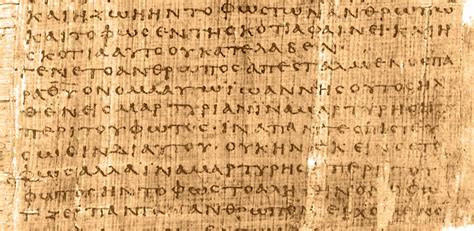
The importance of the Egyptian papyri writings etc. lies in the fact that they were written during the period in which the writers of the New Testament lived. Proof has thus been provided that the language of the New Testament was not a debased form of literary Greek corrupted by Hebrew idioms, but that in the main it was the vernacular, the speech of the everyday life of the people in the countries which came under Greek influence through the conquests of Alexander the Great.
Koine Greek and the language of everyday life
As the result of those conquests, the ancient Greek dialects became merged into one common speech, the Koine or “common” Greek.
In one form this language became the literary Koine, or Hellenistic, of such writers as Josephus. In its spoken form it was the everyday speech of millions of people throughout the Graeco-Roman world, and in the providence of God it was under these conditions and in this world-language that the New Testament was written.
New Testament Greek is not the Attic of the Classics, nor is it “a language of the Holy Ghost” as one scholar called it, but it is the ordinary vernacular Greek of that period, the language of everyday life, as it was spoken and written by the ordinary men and women of the day, tradesmen, soldiers, schoolboys, lovers, clerks, and so on, that is, the koine, or “Common” Greek of the great Graeco-Roman world.
The value of historical and documentary evidence
The fruit of these researches has been provided in such volumes as the “Vocabulary of the Greek Testament,” by J.H. Moulton and G. Milligan, the “Grammar of the New Testament Greek” by the former, and the book entitled “New Testament Documents” by the latter, “Bible Studies” by G.A. Deissmann, “Light from the Ancient East” by A. Deissmann, and similarly well-known works by W.M. Ramsay.
References will be found to some of these in the following pages.
During the last fifty years this light has been brought to bear upon the New Testament with precious and priceless results. In olden days in Egypt it was a custom not to burn waste paper, but to dump it outside the town, and the sands of the desert swept over it, and buried it, and for centuries a vast mass of such rubbish has lain there.
However, in 1896-1897 Dr. Grenfell and Dr. Hunt began digging at Oxyrhynchus and discovered a number of papyri, among which was a crumpled leaf, written on both sides in uncial characters, which proved to be a collection of Sayings attributed to Jesus, Logia which Dr. J. Hope Moulton believed to be genuine.
These and very many other papyri were classified and edited and one day when Dr. Deissmann was casually looking at a volume of these in the University Library at Heidelberg, he was impressed by the likeness of the language to that with which he was familiar in his study of the Greek New Testament.
By further study the great discovery was made that New Testament Greek is the ordinary vernacular Greek of that period, the language of everyday life, as it was spoken and written by the ordinary men and women of the day.
How the dictionary is organized
The work is arranged alphabetically by English word. Entries are cross-referenced and cross-linked to other resources, and Scripture references and references to other entries within the text have been linked.
Search and browse functions make it possible to locate entries by entering a word or moving through the alphabetical list. The dictionary includes entries beginning with words such as Abase, Abba, Abhor, Abide, Ability, Able, Abolish, Abomination, Abound, Abundance, Accept, Access, Accomplish, Accusation, Accuse, Acknowledge, Adoption, Adorn, Adultery, Adversary, Advice, Affliction, Afraid, After, Again, Against, Age, Agony, and Agreement.
The subject-matter is also analysed under the various parts of speech. To take an example, DILIGENCE, DILIGENT, DILIGENTLY, are associated in one heading, and the forms in the original are divided respectively under the sections, Nouns, Verbs, Adjectives, Adverbs.
The parts of speech are not given in the same order in every case. The order is largely dependent upon the greater prominence which a word receives in the original. Other considerations have made a variety in this respect advisable.
Synonyms and shades of meaning
The method of the Dictionary provides an exhaustive presentation of synonymous words. Where an English word translates a variety of Greek words the latter are given in English form.
Where there are no such variations, each word is dealt with according to its occurrences and usage in the New Testament, reference being made to the differences between the Authorised and Revised Versions.
There is thus a twofold presentation, firstly, of the different Greek words for one English word, secondly, of the different English meanings attaching to a single Greek word.
A good illustration of this is found under COME, and its related thoughts, such as APPEAR. Here, including the compounds, upwards of fifty words are employed to express one general thought, and the employment of any one of these, in any given passage, has precise historical or spiritual significance.
If this root idea is followed out, for example, in its bearing on Christ's Second Advent, it is profoundly important to apprehend the significance respectively of erchontai, heko, phaino, epiphaino, parousia, apokalupsis, and epiphaneia.
Doctrinal and contextual significance
This Dictionary indicates the doctrinal bearing which the use of chosen words has. A case in point will be found under ANOTHER.
The use of allos and heteros in the New Testament should be carefully examined, for “another numerically” must not be confounded with “another generically.” Mr. Vine points this out in John 14:16.
When Christ said, “I will make request of the Father, and He shall give you another Helper (allon Parakleton),” He made a tremendous claim both for Himself and for the Spirit, for allos here implies the personality of the Spirit, and the equality of both Jesus and the Spirit with the Father.
See also Mr. Vine's reference to the use of these words in Galatians 1:6,7.
For an illustration of how one word can have a variety of meanings see under DAY. Unless such expressions as “man's day”, “day of the Lord”, and “day of Christ”, are distinguished, one cannot understand the dispensational teaching of the New Testament.
Compound words and prepositional prefixes
This Dictionary shows how very many New Testament words are compounds, and how important are prepositional prefixes.
These added to a word either emphasise or extend its meaning, and many such words have become Anglicized. For illustration take the three words anabolism, katabolism, and metabolism.
The root word in each is ballo, to cast, or throw, and each has a prepositional prefix; in the first, ana, up; in the second, kata, down; and in the third, meta, with.
Metabolism tells of the chemical changes in living cells, by which the energy is provided for the vital processes and activities, and new material is assimilated to repair the waste; by a proper metabolism or “throwing-together” of the substances of the body, health is promoted.
This building up of the nutritive substances into the more complex living protoplasm is anabolism, or “throwing-up;” and the want of this results in katabolism, or “throwing-down” of protoplasm.
Now, two of the three words occur in the New Testament. For metaballo see p. 180; and for kataballo, p. 172, in both cases all the references are given.
For the possible range of prefixes to one word, see COME, with eis, and ek, and epi, and dia, and kata, and para, and pros, and sun; and two of the eleven compounds are double, No. 4 with epi and ana; and No. 8 with para and eis.
Connections with the Septuagint
In many cases the student is referred to the occurrences in the Septuagint Version, especially where that Version presents a comparatively small number of occurrences or contains only one instance of the use.
Reference to the Apocryphal books of the Old Testament is omitted.
The dictionary as a concordance
The sign (paragraph) at the close of the treatment of a word [not used in this etext version] indicates that all its occurrences in the original are mentioned.
The Dictionary thus partakes to a considerable extent of the nature of a Concordance. In many instances all the occurrences and usages of a word are analysed in a list, showing the different meanings as indicated by the context in each passage of the New Testament.
It provides a concise meaning of the original Greek word, often providing Bible verse references as examples. All scripture references and reference to other entries within the text have been linked.
Examples of contextual definition
Vine's also provides the definition of a word, as used in the King James Version, more accurately than an English dictionary, because it expands the Greek use of the word.
For example, the word, “godliness” in 1 Tim. 2:2 is defined in the Merriam-Webster Collegiate Dictionary as “1: Divine 2: pious, devout -”, but in Vines, it is defined as “'to be devout,' denotes that piety which is characterized by a Godward attitude, does that which is well-pleasing to Him.”
So we have a fuller meaning of the word by seeing how the word is used in the NT.
Look at Col. 2:14, which has several words which are found in the papyri; and take one of these, Cheirographon, handwriting.
This means a memorandum of debt, 'a writing by hand' used in public and private contracts, and it is a technical word in the Greek papyri.
A large number of ancient notes of hand have been published and of these Dr. Deissmann says, “a stereotyped formula in these documents is the promise to pay back the berrowed money, 'I will repay'; and they all are in the debtor's own hand, or, if he could not write, in the handwriting of another acting for him, with the express remark, 'I have written for him'”.
In such a note-of-hand, belonging to the first century, and with reference to a hundred silver drachmae, one named Papus wrote on behalf of two people who could not write, “which we will also repay, with any other that we may owe, I Papus wrote for him who is not able to write.”
Now, this expression occurs in the New Testament twice, in the parable of “The Lord and his Servants”, “have patience with me, and I will pay thee all”, and in Paul's note to Philemon concerning Onesimus, “if he hath wronged thee, or oweth thee ought, put that on mine account, I Paul have written it with mine own hand, I will repay it.”
In the famous Florentine papyrus of A.D. 85, the governor of Egypt gives this order in the course of a trial,--“Let the hand-writing be crossed out,” which corresponds to the “blotting out the hand-writing” of Col. 2:14.
References and scholarly foundations
Considerable use has been made of the two Commentaries, written jointly by Mr. C.F. Hogg of London and the present writer, upon the Epistle to the Galatians and the two Epistles to the Thessalonians.
I have also made use of Hastings' Dictionary of the Bible, Abbott-Smith's Manual Greek Lexicon of the New Testament, the larger works by Cremer and by Thayer's Grimm, and of A.T. Robertson's Grammar of the Greek New Testament in the Light of Historical Research; also of such works as Trench's New Testament Synonyms.
A criticism may be raised in regard to a work like this that it would provide students who know little or nothing of the original with an opportunity of airing some knowledge of Greek.
Even supposing that such a criticism were valid, the general advantage of the method adopted should outweigh the danger of such proclivities.
Digital search and cross-reference features
Modern digital editions of the dictionary provide search and browsing functions for locating entries. Containing 3,438 entries cross-referenced and cross-linked to other resources, this resource can be classified as a required reference book for any good study library.
To use this resource to its full potential, follow all the links presented within the text of the entry you are reading.
Some digital editions include Bible verses in the King James Version and connect key English words in the Authorized King James Bible Version to the original words in the Greek texts of the New Testament.
Other editions include search-engine improvements, interface rotation, corrected verses, stability improvements, and adaptation for modern devices.
Some applications also include Bible Concordance, Strong's Concordance, and Hebrew and Greek dictionaries. They may provide a cross-reference from key English words in the Authorized King James Bible Version to the original words in the Greek texts of the New Testament.
Clickable Strong Numbers are a possible additional feature, allowing a user to open the description and other information about a Strong Number when it is selected.
Vine’s Dictionary and related reference works
Reference works like Vine’s and Englishman’s have long aided Christians in understanding the nuances of different biblical words.
The Expository Dictionary of Bible Words gives readers the fruits of a working knowledge Hebrew and Greek without the years of language study.
The Expository Dictionary of Bible Words is more than just a handy and thorough alphabetical guide to the English translation of the Hebrew and Greek words used in both Testaments.
There are thousands of articles, all arranged alphabetically by English word and coded to Strong’s numbering system for ease of use.
Each article is divided into two sections - Old Testament (Hebrew) Words and New Testament (Greek) Words - with an entry for the Hebrew or Greek word along with its transliteration, translation, range of meaning(s), and comments on its use in different biblical contexts.
A comprehensive system of cross-references aids the reader in finding different words as well as discussions of related words and themes.
The “Additional Notes” to articles throughout the volume provide valuable and insightful information on the connections between Old and New Testament words and themes.
Mounce’s Complete Expository Dictionary is an excellent study companion for personal study and teaching preparation.
While many resources utilize the traditional Strong’s numbering system, Mounce’s employs the Goodrick and Kohlenberger (GK) numbering system which provides more faithful definitions and explanations for Greek and Hebrew words.
Research is made easy in the Olive Tree App! Access content from Mounce’s three ways: 1) Utilize the table of contents to find keywords; 2) Quickly look up Scripture with the hyperlinked cross-references and articles; 3) Let the Resource Guide find articles and keywords for you with the “Look Up” feature.
How to use an entry effectively
- Begin with the English word as it appears in the Bible translation.
- Examine the original Greek term or terms listed in the entry.
- Compare the different meanings and connotations associated with the English translation.
- Read the cited New Testament passages in their immediate contexts.
- Follow cross-references to related entries and synonymous words.
- Note distinctions between the Authorised and Revised Versions where they are provided.
- Consider the grammatical form and part of speech under which the word is discussed.
- Compare relevant occurrences in the Septuagint when the entry directs attention to them.
These illustrations are sufficient to show the scope and simplicity of this work and consequently its immense usefulness to the English reader.
I trust that notwithstanding imperfections and limitations of treatment the work may afford assistance to Bible students in enabling them to increase in their knowledge of God and His Word and in helping to equip them in their use and ministry of the Holy Scriptures.
tags: #expository #dictionary #of #new #testament #words