Greater Memphis Pentecostal Assembly is a Pentecostal church located at 8941 E Shelby Dr in Memphis, Tennessee. Its stated mission is to promote the spiritual well-being and growth of men, women, and children through teaching, preaching, discipleship, healing, and fellowship.
The church’s stated vision is compassionate people being the premier witness for Jesus Christ concerning salvation in the Memphis Metropolitan Area. Services are listed for Sundays at 10 a.m., in person or online, and Tuesdays at 7 p.m. in person.
Church information
| Information | Details |
|---|---|
| Name | Greater Memphis Pentecostal Assembly |
| Tradition | Pentecostal |
| Location | 8941 E SHELBY DR, Memphis, TN |
| Sunday service | Sundays @ 10a In Person or Online |
| Tuesday service | Tuesdays @ 7p In Person |
| Rating | Unrated |
| Reviews | No reviews yet |
Greater Memphis Pentecostal Assembly describes its purpose through the phrase “BUILDING FAMILIES FOR THE KINGDOM.” Its additional statements include “EXPECT SOMETHING GOOD TO HAPPEN” and “LIVE YOUR LIFE FOR ALMIGHTY GOD.”
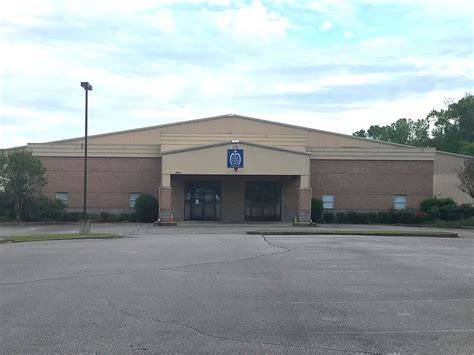
Mission and vision
We aim to promote the spiritual well-being and growth of the men, women, and children growing in the Word of God through teaching, preaching, discipleship, healing, and fellowship. Compassionate people being the premier witness for Jesus Christ concerning salvation in the Memphis Metropolitan Area.
The church invites visitors to worship at its facilities and presents worship as an opportunity to experience ministry through the love of Jesus Christ and His people. Our prayer is that God will bless you abundantly.
What Pentecostal churches emphasize
Pentecostal churches emerged in the early twentieth century and emphasise the present-day work of the Holy Spirit, including gifts such as speaking in tongues, healing and prophecy. Worship is expressive and often lengthy, with energetic music, spontaneous prayer and preaching that expects a personal response.
Some Pentecostal churches are independent and others belong to denominations such as the Church of God in Christ or the Foursquare Church.
Historical background of Pentecostalism in Memphis
The Great Discovery, 1907-1916
One hundred years ago, the Gospel preached by mainline churches failed to create enthusiasm among the masses. The revivals of the Second Great Awakening in the 1800s did refocus the attention of the nation upon man and his salvation, but failed to re-establish the New Testament church’s charismatic experiences.
Meanwhile, Rev. Charles Fox Parham, critical of his church’s modernistic teachings, rediscovered God through a personal healing and formed a holiness-slanted Bible college in Topeka, Kansas. There, while Parham was away on a speaking tour, students in prayer began speaking in other languages, considering this a gift bestowed upon them by God.
Newspapers reported this Kansas phenomenon, as did other ministers and colleges. Similar occurrences in Wales and at the Azusa Street Mission in Los Angeles confirmed the Kansas students’ experiences. Many believed these outpourings to be the “latter rain” spoken of by the prophet Joel.
G. B. Cashwell, editor of a monthly North Carolina-based Apostolic magazine, made a trip to Los Angeles to investigate. During his visit, he received the baptism in the Holy Spirit. In January 1906, Cashwell returned to North Carolina to open a revival in Durham.
A year later, he visited Memphis to bring the message to L. P. Adams, pastor of the Independent Holiness Church, holding services in his home at 736 Richmond, one block southwest of the East McLemore/Mississippi Blvd. intersection.
Adams, a well-educated lawyer and teacher, together with Rev. Charles H. Mason, an Azusa Street visitor-turned-believer, co-founded the Church of God in Christ. Mason, head of the African-American segment, and Adams, the Caucasion, often worshiped together in tents and rented halls.
In 1908, the Adams group raised a tent on Trigg Avenue between Florida and Adelaide Streets, attracting hundreds. That autumn, a downtown storefront was rented at the corner of 129 Jefferson Avenue and N. 2nd Street.
In 1911, the church-called the Grace and Truth Church of God in Christ-added to its membership Ralph M. Riggs, a young man who 42 years later became the General Superintendent of the Assemblies of God.
The following year, the Church of God in Christ, several Pentecostal churches and Apostolic Faith Assemblies were invited to participate in an informal conference in Hot Springs, Arkansas during the first week of April 1914. Attending from Memphis were Adams, Mason, Riggs and Paul Van Vaden.
Planned as a means for Pentecostal fellowship, the convention culminated in the organization of the Assemblies of God fellowship. Upon returning to Memphis, Adams and Mason remained with the Church of God in Christ.
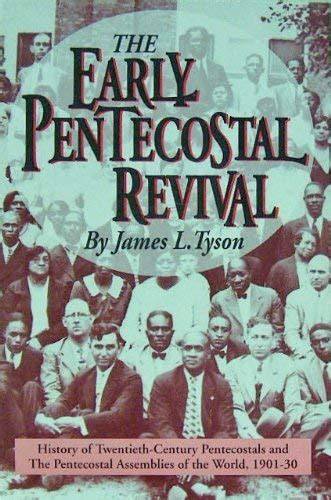
Founding the dream, 1917-1926
As the years progressed, the miracle of Pentecost continued. In 1917, the Fifth Annual Convocation of the Church of God in Christ was held at the Grace and Truth Church.
Rev. Adams was sought after nationally for his preaching, leadership and counsel. But the members at Grace and Truth soon tired of his frequent absences, and Adams eventually resigned in 1919.
That same year, the church separated from the Church of God in Christ and changed its name to the Pentecostal Mission. Rev. H. E. Schoettley, a prophetic preacher from Ohio, came to Memphis to lead the Pentecostal Mission.
He erected a tent on the corner of South Third and Lucy Avenue, where his preaching drew great crowds. Many of those who attended were saved and filled with the Holy Spirit.
In the meantime, a few members left to help the former Pastor Adams found another Memphis mission, but returned and reunited in the Fort Pickering area of Memphis south of the Harahan and Frisco bridges, upon Pastor Schoettley’s resignation in 1923.
Without a pastor, Emmett Simpson, one of the church’s deacons, invited the Arkansas District Superintendent of the Assemblies of God to speak in Memphis. At that meeting, the church officially became a part of the Assemblies of God, with 37 household heads signing the charter.
Throughout the next year, Rev. Howard Galbraith assumed the role of pastor. In June 1924, the church elected Rev. Ira Smith to oversee the congregation.
Smith, a prophetic preacher and organizer of Sunday schools, encouraged Tennessee congregations to unite as an Assemblies of God district. His efforts came to fruition in 1926 when the Memphis Assembly of God Church was re-chartered as a Tennessee Assemblies of God affiliate, along with churches in Dyersburg, Sidonia, Dyer, and Columbia.
Tumultuous transition, 1927-1936
First Assembly’s third decade was significant for the church’s future and indicative of its staying power. In 1927, Mrs. Elizabeth Harris, a member of the Memphis Assembly, organized a Saturday night youth training session that became the model for the fellowship’s national youth organization, the Christ’s Ambassadors.
Hundreds of young people evangelized Memphis through their worship and witness. In 1929, Pastor Smith was elected Tennessee District Superintendent, necessitating his resignation from the church.
A charismatic Mississippi preacher, Walter Byron Jessup, was elected to lead the congregation. On the first day the new pastor arrived, Sunday School attendance increased by eleven-all Jessups.
Reverend Jessup came to Memphis with a vision for a 2,000-seat temple in the heart of the city. In an effort to fulfill this vision, the church moved from a rented building on DeSoto Street in Fort Pickering to a new facility at Cleveland and Larkin Street, one block north of Poplar.
Unfortunately, the country was in the midst of the Great Depression, casting the church into the throes of financial difficulty. Consequently, the new property was lost, forcing the church to worship in a tent at Bellevue and Walker, one block north of McLemore.
Frustrated by what he considered interference from the fellowship’s leaders, Pastor Jessup took matters into his own hands and declared that the church would no longer be affiliated with the Assemblies of God. The Bellevue tent, which belonged to the Tennessee District, was removed.
Temporary places of worship were found for those who remained, but the congregation splintered over the fellowship’s position of the pastor, some staying with Jessup, others returning to the rented Fort Pickering property as an Assembly of God.
With an approving nod from the District, laypeople and special speakers led the Fort Pickering worshipers, having no elected pastor. The fragmented church remained in a state of confusion.
After the Jessup family moved back to Mississippi, an Assemblies of God minister, Rev. J. L. Slay, was chosen as the new leader for the group.
Pastor Slay’s first move was to find a permanent place of worship by purchasing property on Bella Place, due east of Elmwood Cemetery, and erecting a tabernacle. His second move was to reunite the congregation by assuring its reinstatement into the Tennessee District of the Assemblies of God.
But Pastor Slay’s tenure was cut short when the former Pastor Jessup returned to the Memphis church to hold a series of revival meetings. The campaign began with a good crowd, but ended in controversy with only a handful of members attending.
As a result, Pastor Slay resigned and returned to Mississippi. A young student from Glad Tidings Bible Institute in San Francisco, boarding with the Slay family, giving music lessons, and ministering to the youth while recovering from yellow jaundice, was surprised by his host’s resignation.
William H. Pickthorn, advised by his Bible school mentors never to preach, offered to stay without salary and assist the financially strapped church. Before the end of First Assembly’s tumultuous third decade ended, the twenty-three-year-old Pickthorn became the seventh pastor and the most productive leader to date of the Memphis Assembly of God.
Pickthorn’s efforts helped heal the long-standing rift between those who had returned to the Fort Pickering church during Jessup’s revival and those who had stayed at Bella Place.
Under the supervision of Assemblies of God General Superintendent Ernest S. Williams, the two congregations merged on Saturday night, September 8, 1934, and consolidated into one body.
The church boards agreed that, instead of worshiping in either of the two old structures, the merged congregation should move halfway between the two into a vacant church at 960 South Third, three blocks south of what is now Crump Boulevard.
On Sunday, October 21, 1934, the first service was held on Third Street, and the congregation acknowledged itself as the First Assembly of God. A very traumatic period of the church’s history had ended.
By 1935, church attendance was estimated to be near 200 and growing. The church’s first radio broadcast, “Sermons in Song,” aired regularly on WHBQ.
The firmer foundation, 1937-1946
With the accountability, good sense, and preaching talent of Pastor Pickthorn, First Assembly’s fourth decade got off to a great start. His words were, “This seems to be an occasion for beginning again, for leaving the weaknesses and failures of the past behind and making resolutions with a determination for better things in the future.”
In 1937, the Assemblies of God chose Memphis as the location for its 13th General Council, hosted by the young energetic pastor and his new bride, Mary Evelyn Hastings.
During 1939, the church’s attendance increased so quickly that a recently added Sunday school annex became overcrowded. An additional building program was desperately needed to accommodate the more than 350 attending.
During this time, First Assembly organized a bus ministry-renting two city buses and drivers-supervised by churchwomen who often bathed and dressed the children before their ride to Sunday school.
On December 7, 1941, America entered World War II. Consequently, no construction materials were available, putting First Assembly’s new church building plans on hold.
Pastor Pickthorn’s brother, Albert, came to Memphis as the church’s first associate pastor. Sunday school attendance advanced toward 500.
However, an invitation was extended to Pastor Pickthorn in 1943 by the Assemblies of God to teach at Central Bible Institute in Springfield, Missouri and serve in an editorial position at the fellowship’s Gospel Publishing House.
The beloved pastor accepted the new ministry opportunity and resigned from First Assembly. Throughout the next year, evangelist Doreen Justus filled the vacant position.
During this interim, the church Board contacted a young Assemblies of God pastor and evangelist, James E. Hamill of Mississippi. His evangelistic efforts had grown to include some of the fellowship’s largest churches.
Upon being elected pastor, Hamill moved his family to Memphis. On his first Sunday, December 31, 1944, Pastor Hamill faced a congregation whose numbers had dropped, due to a lack of strong leadership and the involvement of many members in the war overseas.
But a year later, attendance was again pushing upward to 400, presenting the church with a new challenge: not enough room and still no access to building materials.
Pastor Hamill expressed his desire to see the church relocate and personally oversaw the acquisition of property at 1084 East McLemore at Somerville.
The defining years, 1947-1956
On a Sunday afternoon in early 1948, a groundbreaking ceremony was held at the McLemore site. From the regulatory halls of Memphis’ legal venues to Washington, DC, Pastor Hamill petitioned for materials and permits.
A year later, the building was completed and occupied. Believing in the power of the media, Pastor Hamill introduced a weekly full-sized church newspaper, The Memphis Mirror.
The radio program Words of Life premiered, and in November 1955, the church put the first locally produced Mid-South religious telecast, “Christ Is the Answer,” on the air on Saturday mornings.
The first guest to be interviewed on the program was First Assembly’s Vincent Liberto, a former liquor salesman whose conversion had resulted in a career change-selling milk.
The growth of the church’s Sunday school was phenomenal, led by Cecil Parrish, the new Christian education director and gifted promoter. Attendance quickly surpassed the 1,000 mark, as a result of church members involving themselves in promotional campaigns and eventually winning first place in national Sunday school contests sponsored by Christian Life magazine.
The increasing popularity of Southern Gospel music brought national recognition to a Mississippi family male quartet-the Blackwood Brothers. After moving from Shenandoah, Iowa to Memphis, the quartet members and their families made First Assembly their church home.
In return, the congregation benefited from the music and fame of the renowned group. Placing a heightened emphasis on Assemblies of God missions, both at home and abroad, Pastor Hamill invited missionaries such as Stephen Vandermerwe, Paul Bruton, Ernie Rebb, Kenneth Short, Charles Greenaway, and Lillian Trasher-the Mother of the Nile-to fill the pulpit.
Popular evangelists who conducted revival services at First Assembly were William McPherson, Keetah Jones, Gene Martin and Willard Cantelon.
Credited with much of the church’s renewed spirit of worship was the pastor’s wife and music director, Katheryne Hamill. Her leadership and inclusion of various musical styles in the church set the tone for worship and became a model for music ministries throughout the fellowship.
“Multiple staff” became First Assembly’s new catchphrase when Jerry Hiller, the first youth pastor, increased the ministerial staff to four: Bruce Fite, Warren Grant and Memphis State University basketball star Forest Arnold.
At the time of its fiftieth anniversary, First Assembly was listed in national Christian publications as one of the top ten evangelical churches in the nation and ranked among the top three Assemblies of God churches.
Local and national dignitaries, including mayors, union officials, governors, senators, vice presidential candidates, and religious leaders visited the church, seeking the favor of the pastor and congregation.
The great expansion, 1957-1966
In 1960, stewardship became a major topic of First Assembly’s teachings and practices. Although asking a congregation to annually subscribe to a church’s operational and world missionary budgets seemed controversial at the time, the church board took unprecedented action and implemented the plan.
Yearly budget campaigns and missionary crusades would highlight the financial needs, but the operational and missionary goals would be subscribed early in the year.
Beginning in 1960, with a target of $160,000, the annual collections more than doubled by the decade’s end. Once again, First Assembly became the model for other churches by implementing a more predictable approach to church development and operations.
Daily Scripture readings
“Perfecting Love”
“For in Jesus Christ neither circumcision availeth anything, nor uncircumsision; but faith which worketh by love.” Galatians 5:6
| Month | Reading |
|---|---|
| January | John 15:1-27 |
| February | 1 Samuel 18:1-7 |
| March | Hebrews 13:1-25 |
| April | Psalms 26:1-12 |
| May | Ephesians 4:1-16 |
| June | Psalm 119:97-119 |
| July | Romans 8:31-39 |
| August | John 3:14-17 |
| September | Colossians 3:1-17 |
| October | 1 Timothy 6:1-10 |
| November | Psalms 145:1-21 |
| December | Galatians 5:6 |
Services and visitor information
Join us for services: Sundays @ 10a In Person or Online Tuesdays @ 7p In Person.
Thank you for taking the time to visit the website of Greater Memphis Pentecostal Assembly. We invite you to visit our church facilities and worship the Lord with us! You will have a rich and fulfilling worship experience.
tags: #greater #memphis #pentecostal #assembly