There is no universally agreed number of laws in the Book of Leviticus. A commonly cited count identifies approximately 247 commandments in Leviticus, while other enumerations produce different totals because some verses contain several commands, repeated commands may be counted separately or together, and some instructions are treated as explanations rather than independent laws.
The number 613 is often associated with the commandments of the entire Old Testament Law, not with Leviticus alone. There is no verse in the Bible that gives 613 as the correct enumeration, and there is no universal agreement among Jews or Christians that there are exactly 613 laws given by God through Moses.
Why the number of laws in Leviticus is difficult to calculate
In any calculation of the number of commandments in the Mosaic Law, complications arise. If a command occurs in Exodus and is then repeated in Deuteronomy, it may be counted as one commandment or two. Some commandments can be understood as clarifications of other commandments rather than additional commandments.
The same problem appears within Leviticus. One verse may contain several imperatives, while a single command may be restated in another passage with a different application or penalty. Consequently, a list that counts individual instructions can be longer than a list that counts broader legal subjects.
The 613-commandment tradition itself illustrates this difficulty. The most commonly accepted breakdown was done by Maimonides in the 12th century AD. Maimonides further divided the 613 commandments into positive, “do this” commandments, numbering 248, and negative, “do not do this” commandments, numbering 365.
How Leviticus fits within the Old Testament Law
Leviticus is the third book of the Bible, the third book of the Torah, and the third book of the Pentateuch. It flows directly out of the events in the previous book of Exodus.
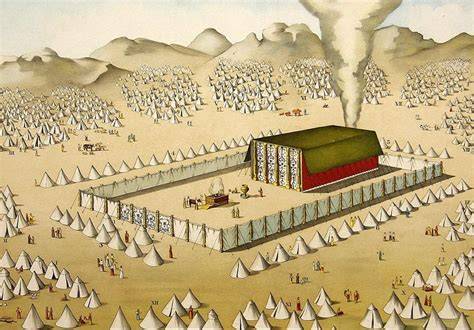
Israel has been freed from slavery in Egypt, and they have gathered at the foot of Mount Sinai to enter into a covenant relationship with God. The Book of Exodus narrates how Moses led the Israelites in building the Tabernacle with God’s instructions.
Leviticus takes place during the month or month-and-a-half between the completion of the Tabernacle and the Israelites’ departure from Sinai. Most of its chapters consist of God’s speeches to Moses, which he tells Moses to repeat to the Israelites.
The instructions of Leviticus emphasize ritual, legal, and moral practices rather than beliefs. They explain how the Israelites and their priests, Aaron and his sons, are to make offerings in the Tabernacle and conduct themselves while camped around the holy tent sanctuary.
How many commandments are specifically listed in Leviticus?
A frequently cited enumeration of the Mosaic commandments lists Leviticus references from Leviticus 1:3 through Leviticus 27:33. In that enumeration, Leviticus begins at commandment 113 and ends at commandment 355.
| Measure | Number |
|---|---|
| Commandments traditionally counted in the entire Old Testament Law | 613 |
| Positive commandments in Maimonides’ division | 248 |
| Negative commandments in Maimonides’ division | 365 |
| Numbered entries beginning with Leviticus | 113 |
| Numbered entries ending with Leviticus | 355 |
Because the numbered list includes commandments from earlier and later books, subtracting the first Leviticus entry from the first entry after Leviticus gives a commonly cited total of 243 numbered entries for Leviticus in that particular list. Other methods count some verses differently, so 243 is a traditional enumeration rather than an indisputable biblical total.
The safest answer is therefore that Leviticus contains roughly 240-250 individual commandments, commonly counted as 243, while acknowledging that the exact total depends on the method of enumeration.
The main legal sections of Leviticus
Leviticus has an amazing symmetrical literary design, exploring three main ways that God enables Israel to live in his presence. The outer sections describe the rituals Israel is to practice in the presence of God’s holiness.
The inner sections focus on the role of Israel’s priests as mediators between God and Israel. Matching sections focus on Israel’s purity, while the center of the book contains the Day of Atonement, a key ritual that brings the themes of the book together.
Leviticus 1-7: sacrifices and offerings
The first section explores the five types of ritual sacrifices Israel was to perform. Two of them were ways an Israelite could thank God by offering back to God symbolic tokens of what he first gave them.
The other three were different ways of apologizing to God. As an Israelite offered up the life-blood of an animal, they would acknowledge that their sin had created more evil and death in God’s good world.
Through these rituals, the Israelites were constantly reminded of God’s grace but also of his justice and the seriousness of evil and its consequences. Chapters 1-5 describe the various sacrifices from the sacrificers’ point of view, although the priests are essential for handling the blood.
Chapters 6-7 go over much the same ground from the point of view of the priest, who, as the one actually carrying out the sacrifice and dividing the portions, needs to know how to do it.
- Burnt offerings
- Cereal or grain offerings
- Peace or fellowship offerings
- Purification or sin offerings
- Reparation or guilt offerings
Through sacrifice, the priest “makes atonement” for sin and the offeror receives forgiveness, but only if Yahweh accepts the sacrifice. Atonement rituals involve the pouring or sprinkling of blood as the symbol of the life of the victim.
Leviticus 8-10: the priesthood
In chapters 8-10, Aaron and his sons are first ordained as priests to enter God’s presence on Israel’s behalf, while the matching section outlines the qualifications for being a priest.
Priests were called to the highest level of moral integrity and ritual holiness, as they represent the people before God and then represent God to the people. Chapters 8-10 describe how Moses consecrates Aaron and his sons as the first priests, Aaron makes the first sacrifices, and God destroys two of Aaron’s sons for ritual offenses.
The purpose is to underline the character of altar priesthood as an Aaronite privilege, and the responsibilities and dangers of their position. After Aaron’s family is ordained, two of the sons flagrantly violate the rules and are consumed by God’s holiness on the spot.
Leviticus 11-15: purity and impurity
Chapters 11-15 are about the ritual purity required of the Israelites. Eating certain animals produces uncleanliness, as does giving birth; certain skin diseases are unclean, as are certain conditions affecting walls and clothing, including mildew and similar conditions.
Unusual bodily discharges, including female menses and male emissions, are also described as unclean. The reasoning behind the food rules is obscure; for the rest, the guiding principle seems to be that these conditions involve a loss of “life force,” usually but not always blood.
Because God is holy and set apart, the Israelites need to be in a state of holiness themselves in order to enter his presence, which was called being “clean” or “pure.” God’s presence was off-limits to anyone who was not in a holy state, which was called being “unclean” or “impure.”
Now, simply being impure was not sinful or wrong. Touching those things is a normal part of life. Impurity was a temporary state that lasted a week or two and then was over.
What was wrong was to enter into God’s presence with symbols of death and impurity on you. Ritual purity is essential for an Israelite to be able to approach Yahweh and remain part of the community.
Leviticus 16: the Day of Atonement
At the center of the book is a long description of one of Israel’s annual feasts, the Day of Atonement. This was the only day on which the High Priest was to enter the holiest part of the sanctuary, the Holy of Holies.
Not every Israelite’s sin and rebellion would be accounted for through individual sacrifices, so once a year, the high priest would use two goats to represent all the unacknowledged sins of the entire nation.
One goat would be sacrificed as a purification offering to atone for the sins of Israel. The other animal was called the scapegoat. The priest would confess the sins of Israel and symbolically place them on this goat and cast it out into the wilderness.
It is a powerful symbol that illustrates God’s desire to remove sin and its consequences from Israel so that they can live together in peace. The two-part division of the book structurally reflects the role of atonement: chapters 1-16 call for the establishment of the institution for atonement, and chapters 17-27 call for the life of the atoned community in holiness.
Leviticus 17-26: the Holiness Code
Chapters 17-26 are the Holiness Code. It begins with a prohibition on all unauthorized ritual slaughter of animals, and then prohibits a long list of sexual contacts and child sacrifice.
The consistent theme of chapters 17-26 is in the repetition of the phrase, “Be holy, for I the Lord your God am holy.” The corresponding section is about Israel’s moral purity.
The Israelites were called to live differently than the Canaanites. They were to care for the poor instead of overlooking them. They were to have a high level of sexual integrity, and they were to promote justice throughout their land.
Leviticus 19 contains commands concerning parents, Sabbaths, idols, offerings, the poor, foreigners, stealing, lying, deception, false oaths, fraud, wages, justice, slander, revenge, grudges, mixed breeding, mixed seeds, mixed fabrics, divination, tattoos, mediums, respect for the elderly, and honest weights and measures.
Leviticus 27: vows and dedicated gifts
Chapter 27 is a disparate and probably late addition telling about persons and things serving as dedication to the Lord and how one can redeem, instead of fulfill, vows.
The book concludes with Moses calling Israel to be faithful to all the terms of the covenant. He describes all the blessings of peace and abundance that will result if Israel obeys the laws.
He also warns them that if they are unfaithful and dishonor God’s holiness, it will result in disaster and ultimately exile from the promised land.
Examples of laws in Leviticus
The following examples show why different readers may produce different totals. Some are ritual regulations, some concern purity, some address morality, and others govern social or economic behavior.
Offerings and worship
- Burning any yeast or honey in offerings to God (2:11).
- Failing to include salt in offerings to God (2:13).
- Eating fat (3:17).
- Eating blood (3:17).
- Bringing unauthorized fire before God (10:1).
- Drinking alcohol in holy places (10:9).
- Working on the Sabbath (23:3).
- Blasphemy (24:14).
The first section lays out the seven annual feasts of Israel: the feasts of Passover, Unleavened Bread, Firstfruits, Pentecost, Trumpets, the Day of Atonement, and Tabernacles.
Food and ritual purity
- Eating an animal which does not both chew the cud and have a divided hoof (11:4-7).
- Touching the carcass of an unclean animal (11:8).
- Eating or touching the carcass of seafood without fins or scales (11:10-12).
- Eating or touching the carcass of certain birds (11:13-19).
- Eating or touching the carcass of certain insects (11:20-22).
- Eating an animal which walks on all four and has paws (11:27).
- Eating or touching the carcass of certain reptiles and other crawling creatures (11:29; 11:41-42).
- Eating any meat with the blood still in it (19:26).
The kosher food laws are found in this section as well. There have been many theories about why certain animals were considered impure and off-limits, but the text is not explicit about these reasons.
The only thing that is clear is the basic point: these animals were a set of cultural symbols to remind Israel that God’s holiness was to affect all areas of life.
Sexual conduct and family relationships
- Having sex with your mother (18:7).
- Having sex with your father’s wife (18:8).
- Having sex with your sister or half-sister (18:9; 18:11).
- Having sex with your granddaughter (18:10).
- Having sex with your biological aunt (18:12-13).
- Having sex with your uncle’s wife (18:14).
- Having sex with your daughter-in-law (18:15).
- Having sex with your sister-in-law (18:16).
- Having sex with a woman and also having sex with her daughter or granddaughter (18:17).
- Marrying your wife’s sister while your wife still lives (18:18).
- Having sex with a woman during her period (18:19).
- Having sex with your neighbor’s wife (18:20).
- Giving your children to be sacrificed to Molek (18:21).
- Having sex with a man “as one does with a woman” (18:22).
- Having sex with an animal (18:23).
The corresponding penalties vary. Some offenses are said to result in being “cut off” from the people, while other passages prescribe death, childlessness, burning, or responsibility for dishonor.
Social justice and treatment of neighbors
- Failing to testify against wrongdoing that has been witnessed or reported (5:1).
- Deceiving a neighbor about something entrusted to you (6:2).
- Finding lost property and lying about it (6:3).
- Reaping to the very edges of a field (19:9).
- Picking up grapes that have fallen in a vineyard (19:10).
- Stealing (19:11).
- Lying (19:11).
- Swearing falsely in God’s name (19:12).
- Defrauding a neighbor (19:13).
- Holding back the wages of an employee overnight (19:13).
- Cursing the deaf or abusing the blind (19:14).
- Perverting justice or showing partiality to the poor or the rich (19:15).
- Spreading slander (19:16).
- Doing anything to endanger a neighbor’s life (19:16).
- Seeking revenge or bearing a grudge (19:18).
- Mistreating foreigners (19:33-34).
- Using dishonest weights and scales (19:35-36).
The law about the edges of fields and fallen grapes requires that they be left for the poor and the foreigner. Leviticus also states: “Love your neighbor as yourself.”
If any of your fellow Israelites become poor and are unable to support themselves among you, help them as you would a foreigner and stranger, so they can continue to live among you. Do not take interest or any profit from them, but fear your God, so that they may continue to live among you.
Appearance, mourning, and religious practices
- Practicing divination or seeking omens (19:26).
- Cutting the hair at the sides of the head (19:27).
- Clipping the edges of the beard (19:27).
- Cutting the body for the dead or putting tattoo marks on oneself (19:28).
- Turning to mediums or spiritists (19:31).
- Failing to stand in the presence of the elderly (19:32).
The list of laws in Leviticus includes commands that modern readers may regard as minor, as well as commands concerning worship, sexuality, economic justice, violence, family relationships, and the sanctity of human life.
Does the number 613 refer to Leviticus?
No. The number 613 refers to a traditional count of commandments in the entire Old Testament Law, not to the Book of Leviticus alone.
There is no verse in the Bible that gives 613 as the correct enumeration. There are other counts as well, and there is no universal agreement among Jews or Christians that there are exactly 613 laws given by God through Moses.
Some of the 613 commandments come from Genesis, Exodus, Leviticus, Numbers, and Deuteronomy. The numbered list includes instructions about creation, circumcision, Passover, the Tabernacle, sacrifices, purity, priesthood, festivals, social conduct, warfare, property, vows, and many other subjects.
Leviticus is therefore one major part of the Mosaic Law, but it is not the whole of the 613-commandment tradition.
How Leviticus organizes its laws
The Book of Leviticus is not simply a random list of rules. Its laws are arranged around the central question of how sinful and impure people can live in the presence of a holy God.
The book teaches that faithful performance of the sanctuary rituals can make that possible, so long as the people avoid sin and impurity whenever possible. The rituals, especially the sin and guilt offerings, provide the means to gain forgiveness for sins and purification from impurities so that God can continue to live in the Tabernacle in the midst of the people.
God is holy, and when he shows up in person, the space around him also becomes holy and set apart because it is permeated with God’s life, power, and purity. If Israel wants to live in God’s holy presence, they also need to become holy by dealing with their sin.
Ritual, therefore, is not taking a series of actions for their own sake, but a means of maintaining the relationship between God, humanity, and the world.
Are all the laws in Leviticus the same kind of law?
The laws in Leviticus serve different purposes. Some regulate sacrifices and sanctuary worship, some define ritual purity, some govern priestly conduct, and some establish moral and social standards.
The Reformers divide the commandments of the Old Testament into three different categories: civil laws for the nation of Israel, ceremonial laws related to Jewish worship and distinctiveness as a people, and moral laws.
The civil laws do not directly apply to the church, though they do reflect the moral law. The ceremonial laws include regulations associated with worship, sacrifices, purity, and the distinctiveness of Israel as a people.
This classification is one reason Christian readers may agree about the number of laws in Leviticus while disagreeing about which laws continue to apply directly to believers today.
How Christians have understood the laws of Leviticus
Leviticus is a difficult book for modern Christians because it lays out the Law for the Israelites. Some readers believe that Jesus replaced the Law, while also holding that particular commandments still apply.
People sometimes cherry-pick which of the Levitical laws they think still apply and which do not. This cherry-picking is sometimes reasoned, and sometimes it is based on personal taste.
Jesus said that the greatest commandment was: “Love the Lord your God with all your heart and with all your soul and with all your mind.” Yet the second commandment, “Love your neighbor as yourself,” comes from Leviticus 19:18.
Jesus is the only one who has perfectly obeyed the Law. Through His life, death, and resurrection, He fulfilled all of God’s righteous commands.
From a Christian perspective, the number of commandments remains a historical and interpretive question, but the theological purpose of the Law is more important than achieving one universally accepted total. The Law makes human sinfulness evident and demonstrates the need for a Savior.
The central purpose of the laws in Leviticus
The book of Leviticus is about how God graciously provides a way for sinful, corrupt people to live in his holy presence. Its laws explain how Israel can approach God, how priests can serve as mediators, how impurity can be removed, and how the community can live as a holy people.
At the center of the book, the Day of Atonement brings all the themes together. Through sacrifice and the symbolic removal of sin, Israel is given a way to remain in covenant relationship with God.
To see how Leviticus fits into the story of the Torah, it is helpful to look at the first sentence of the next biblical book, Numbers: “The Lord spoke to Moses in the tent.” Now that the symbolic rituals of Leviticus are being practiced, Moses can enter God’s presence on behalf of Israel.
Despite their failures, God has provided a way for their sin to be covered, and they can now live with God in peace.