Jelly Roll is not publicly identified as Catholic. He is an American Christian artist who has spoken openly about his faith in God and Jesus, returned to church after years of addiction and incarceration, and incorporated explicitly Christian material into his music and performances.
His public religious identity is best described as Christian rather than specifically Catholic. His connection with Catholicism comes through major events such as his performance in St. Peter’s Square at the Vatican’s “Grace for the World” concert, his meeting with Pope Leo XIV, and the Catholic commentators who have discussed the evangelical potential of his music.
What religion does Jelly Roll follow?
Jelly Roll, whose real name is Jason Bradley DeFord, has publicly described himself as a Christian. In 2025, he said, “I might wear it a little different than other people, I might say things that other Christians don't think are right to say, but ultimately, I have a heart for God and I have a heart for Jesus”. In August 2026, during an appearance on The Jimmy Kimmel Show, he said, “I lean left on some things, but like most folks I’m pretty down the middle. I am a Christian. I am a country music singer. I’m a farmer. I’m a bow hunter. And most of things I eat I prefer to get with a stick and a string. That’s the truth.”
DeFord was baptized at age 14, but says around that time he began “dabbling” in drugs and stopped going to church. “The same year that I got baptized, I got arrested, and that started what would be a 10-year cycle of incarceration in and out”, he said.
DeFord returned to his Christian faith when he was 39 and his daughter, who was 14 at the time, expressed an interest in being baptized. “I should go see what kind of cult she's going to”, he recalled thinking, “because that's kind of how I looked at church at that time. And then I went, and I was reminded of the genuineness that can be in those walls, too. I was reminded of the humanity and the compassion and the forgiveness, the love and the community, more than anything watching her and all of her friends there”.
Why some people associate Jelly Roll with Catholicism
Jelly Roll’s association with Catholicism is mainly connected to his public appearances in Catholic settings, not to a stated conversion to the Catholic Church. When the Vatican's World Meeting on Human Fraternity concluded with a concert in St. Peter's Square on Sept. 13, one performer must have been baffled to find himself there.
But Jelly Roll's gravelly voice electrified an audience of 80,000, the gray ink of his face tattoos fully exposed in the spotlight as he sang “Hard Fought Hallelujah.” With a youth choir harmonizing behind him at the “Grace For the World” concert, Jelly Roll performed the song full-throttle, punching the air with each word of the refrain: “I'll bring my storm-tossed, torn-sail story to tell hallelujah.”
The camera cut to a majestic, aerial view over the yellow-domed Vatican glowing below, and then back to the musician, framed by rows of Bernini's colonnades. “Oh, I've wrestled with the darkness, but I'm trying to reach for the light” (Hard Fought Hallelujah).
At that moment it was hard to believe the Grammy-nominated artist was once a drug dealer struggling with addiction and convicted of aggravated robbery. How has a man who's declared that he's nothing but a “broken down car on a side street” ended up grinning with joy as he shakes the hand of Pope Leo XIV?
In 2024, close to his 40th birthday, Jelly Roll was invited to be part of the Vatican’s Grace for the World concert in St Peter’s Square. “Not only did I get to perform,” he reflected, “I got to praise, shamelessly, in front of the world.”
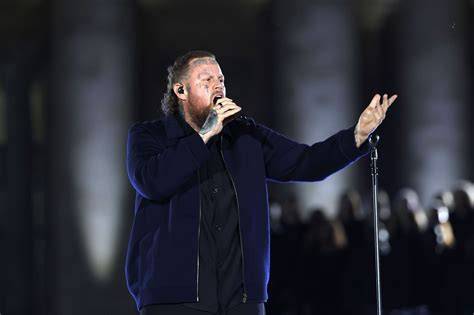
His performance of “Hard Fought Hallelujah”
Jelly Roll’s strongest recent Christian association comes from his collaboration with Brandon Lake, a contemporary Christian worship artist. He collaborated with Brandon Lake on a version of Lake's single “Hard Fought Hallelujah”, which was released in 2025.
The country singer recently won a Dove Award for his collaboration with Brandon Lake on ‘Hard fought Hallelujah’. When worship leader Brandon Lake accepted the song of the year award at the GMA Dove Awards for ‘Hard fought hallelujah’, few noticed the trophy itself.
Instead, all eyes were on the man stood beside him: Jelly Roll, the tattooed Nashville music artist whose gritty story and unconventional lifestyle have often raised eyebrows. As the applause faded and Jelly Roll took the mic, he admitted that he felt out of place.
But then, there was a stunning moment. He preached. “Y’all forgive me…I’m nervous. But I’m here because people visited the least. The world is hearing about Jesus right now like they haven’t heard in generations. But put faith on your feet and feet on your faith. They’ve heard of Jesus…now show ’em Jesus. Go feed the poor, love the broken, visit the prisoners. We’re done talking. It’s time to show them.”
It was rough, honest and utterly disarming. The audience were on their feet.
The song, a duet with contemporary Christian artist Brandon Lake, was voted 2025 Song of the Year in the K-Love Fan Awards and is nominated for the Song of the Year Dove Award by the Gospel Music Association.
The double rainbow and Jelly Roll’s public expression of faith
Recently, Jelly Roll, a country-pop artist who, prior to his musical career, had been incarcerated for drug use, pointed at a double rainbow that appeared while he was singing his song Hard Fought Hallelujah. The video was shared by Brandon Lake, a Christian artist who co-wrote the song with Jelly Roll.
“You can’t tell me that ain’t God!” Jelly Roll told the crowd as tears began to stream down his face. The moment went viral, and Christians, including Catholics, began to notice as religious references seem to be popping up in secular songs and at concerts, including Father Damian Ference, the vicar general for evangelization in the Diocese of Cleveland.
Hard Fought Hallelujah GMA Dove Awards 2025 Performance - Brandon Lake with Jon Batiste & Jelly Roll
Jelly Roll’s return to Christianity
Born Jason Bradley DeFord in Antioch, Tennessee, a working-class suburb of Nashville, Jelly Roll grew up surrounded by hardship and hymns. His father was a meat salesman and devoted Methodist. His mother battled addiction and mental-health challenges. Both seem to have shaped his world with equal parts struggle and grace.
His unforgettable stage moniker comes from a childhood nickname his mother gave him, saying he was a “chubby kid”. He’s spoken fondly of early memories filled with gospel choirs, and wearing a What Would Jesus Do? bracelet as a teenager.
But by 14, DeFord was selling drugs. By 15, he was behind bars. “I found belonging in the wrong places because I never believed I belonged anywhere else,” he has said.
While he was in prison, he discovered that he’d become a father. It was a moment that changed everything. “I wanted to be someone she could be proud of,” he says, speaking of his daughter, Bailee Ann, now 16.
When Bailee Ann chose to be baptised in 2023, her father followed her back into church. “Watching her faith made me want to find mine again,” he says. “I walked in expecting judgement and found love.”
Does Jelly Roll attend a Catholic church?
There is no clear public evidence in the available material that Jelly Roll has formally joined the Catholic Church, identifies as Roman Catholic, or regularly attends a Catholic parish. His statements describe a return to Christian faith and church generally rather than a specifically Catholic conversion.
His participation in a Vatican concert should therefore not automatically be interpreted as proof that he is Catholic. The Vatican is a Catholic institution, and St. Peter’s Square is a central Catholic setting, but artists from different backgrounds can participate in cultural and religious events without becoming Catholic.
His public statements about God, Jesus, baptism, church, forgiveness and ministry demonstrate Christian interest and commitment, but they do not establish a particular denomination.
What Jelly Roll says about his faith
Now he calls his shows “healing experiences” that “feel like church.” Before every performance, he and his band pray together. That rediscovered grace now runs through his back catalogue - from ‘Need a favour’ (“I only talk to God when I need a favour…”) to the award-winning collaboration with Lake, ‘Hard fought hallelujah’, which he calls “worship music for sinners.”
His faith is also reflected in his willingness to speak about people who feel excluded from religious communities. And he knows the Church hasn’t always known what to do with him, reflecting: “At times, Christians have not been the most welcoming, inviting of my kind.”
Nonetheless, he seems intent on holding space between two worlds for those with stories like his own. He often invites men still serving sentences to join him on stage, not as spectacle, but in solidarity.
At his father’s funeral, he noticed that people from both the local church and the local bar attended. “Wouldn’t it be cool to be that guy?” he said. “Someone so loved at a bar and so loved at a church.”
Christian themes in Jelly Roll’s music
His breakout hit ‘Son of a sinner’ best captures the tension between brokenness and belief: “Might pop a pill and smoke and maybe drink / Talk to God and tell Him what I think / At first He’s gonna hate me / But eventually He’ll save me.”
The theology may sometimes seem messy, but the longing is unmistakable. Jelly Roll is undoubtedly an artist who is searingly frank about his flaws - despite the criticism it may draw from some Christians: “I no longer have a deadly addiction to pain pills or cocaine,” he admits, “but I still smoke a little weed to keep my head straight.”
Jelly Roll writes about the disease of addiction from the inside out: stuck, sick on floors and in church pews, pining to fly away. Though it's a physical condition, he is able to articulate the truth of where addiction really lives: in our core.
He deftly describes how addiction misshapes our lives spiritually, the way it festers in the soul and makes everything distorted and warped - perhaps especially our relationship with God. The longing for healing, for Jesus, runs through all of Jelly Roll's work.
It's a restless, panicked search for restoration. Sometimes he finds it, more often he doesn't: “I only talk to God when I need a favor / but God, I need a favor” (“Need A Favor”). Yet he keeps crawling and confessing, hoping to stand up in the light.
Examples of religious language in his songs
In lines like “Somebody save me, me from myself” (“Save Me”) and “I am not okay, I'm barely getting by” (“I Am Not Okay”), there's an uncluttered way of communicating, to the listener and to God. The words aren't fancy, yet they are his, direct and often anguished.
His lyrics are psalm-like in construction: a lament, a cry citing a specific pain and then a pivot to faith, even praise. Song after song, despair and hope intertwine.
When he speaks of feeling shattered, it isn't just because of his own sickness. His pared-down lines capture the deeper pain of loving other addicts: “Little Mike cried when he got that time / Gavel came down and he kissed this world goodbye.” But this is followed by the offering of hope: “One thing I learned in life / Save room for the little light” (“Little Light”).
A song on his most recent album “Beautifully Broken” asks the question: “When the drugs don't work no more, who's gonna drive you home?” And there's a moving, resounding answer from the singer: “I will, I will, I will” (“When The Drugs Don't Work”).
Right there in the place we call the cradle of the Catholic faith, Jelly Roll pointed to the sky and vowed: “I'ma keep on singing / 'til my soul catches up with my song” (“Hard Fought Hallulujah”). In between stanzas, he offered these words spontaneously: “God is good, baby, God is good.”
His past and the theme of redemption
From his teenage years into his twenties, DeFord was arrested several times and spent time in jail for various charges and felonies including possession with intent to distribute and aggravated robbery.
After his release, Jelly Roll poured his pain into music. Starting in Nashville’s underground rap scene, he gained a following for his raw honesty. Collaborations with Lil Wyte and Struggle Jennings brought regional fame, but little peace.
As he matured, his sound shifted towards country and Southern rock. But the echo of redemption was undeniable. Songs like ‘Save me’ (2020) and ‘Son of a sinner’ (2021) cemented his reputation as a mainstream artist with a message: that grace can reach even those who think they’re beyond it.
His 2023 album Whitsitt Chapel, named after the small Tennessee church he attended as a child, became a number one hit in both the country and rock charts.
His story shows that grace doesn’t always look church-ready before it sings. Even a cracked voice can carry a hallelujah.
How Catholic observers interpret his music
A self-professed concert enthusiast, Father Ference took notice of Jelly Roll’s profession of faith. “There is some sort of relation between country music and Christian music. There’s like a co-naturality there; they are almost like cousins, but even Snoop Dogg on Easter was saying Jesus has risen from the dead, or something like this on Instagram, and this guy is really foulmouthed,” Father Ference told the Register.
“Jesus’ name has power, and I think sometimes people just want to claim that power and say his name.”
Sarah Kroger, a Catholic worship artist based in Nashville, also has noticed more and more artists acknowledging God in both their songs and at concerts. She believes it stems from more people searching for a deeper meaning in their life.
“I think in a post-COVID world, many of us came to terms with mortality. As a society, I think a lot of us found ourselves wrestling with some of those existential big questions about the purpose and meaning of life,” Kroger said. “I think a lot of people are finding themselves entering into spirituality maybe for the first time or feeling themselves drawn to that for the first time.”
“Music makes for an altogether more welcoming kind of ecosystem, and people are just longing for deeper meaning in life and thus expressing that in song,” she continued.
Why secular music can contain Christian themes
This trend - acknowledged by even The Associated Press - is not a new phenomenon, though. Robert Giracello, a composer and professor of music at John Paul the Great Catholic University in Escondido, California, says that in the past century, there have been times when gospel-influenced music was deeply popular.
“There are these 10- to 15-year periods where there is kind of a pendulum swing towards more gospel-influenced material, because there is a sense of the appeal to the divine that’s in all of popular culture,” Giracello said. “Think back to the folk music of the ’60s; there was a ton of appeal to Christian themes,” he added, while acknowledging other bands “that turn more away from Christian values.”
Music has often been a medium used to evangelize and worship God, providing an accessible avenue to express the transcendentals - truth, beauty and goodness.
“There is something about the combination of words and music and entering into that speaks to a different level of the human heart,” said Kroger, who recently wrote Belovedness, a devotional inspired by her song of the same name.
“Whether it’s secular music or Christian music, it doesn’t matter, if there is a song that speaks to the human experience or that communicates beauty, truth and goodness, it will help draw people to God.”
How Catholics can approach Jelly Roll’s music
A good song requires relatability, and artists know this. Thus, many of the great songs speak about the good, the bad and the ugly of the human condition, giving listeners something to relate to.
“So much of what we find in popular music is the cry of the human heart, longing for perfect love, perfect companionship, perfect forgiveness, perfect friendship, eternity, something that lasts forever; and whether or not you believe in God, you still experience all that because you’re made in his image and likeness, whether you reject him or not,” Father Ference said.
Thus, God and religious ideas often play a central role in lyrics. “Bono, the Rock & Roll Hall of Fame-r, said that the best music is music where someone’s running toward God or away from God. And if you’re not doing one of those things, your music is boring,” Father Ference observed.
Pop and rock music has its roots in jazz and gospel music, an era rich in Christian themes. “The historical foundation of rock and pop music is based on the blues and gospel music and spirituality,” Giracello said. “Spiritual themes are in the DNA of these music genres.”
Traditionally, bands look to the Bible for inspiration. Many famous artists and bands have used biblical imagery or stories in their music to much success.
“Some artists are inspired by biblical stories, and they mask it well. They may not be intending to evangelize, but they are using some of the richest allegory and parable that they can find,” Giracello said, adding that musicians have long “understood that biblical narratives are the best way to excite people’s minds and to get them aware of bigger pictures.”
Evangelization through conversations about music
Secular music, thus, has the potential to introduce the transcendentals to a large population that Christian music often struggles to reach. Kroger believes that the more artists explicitly mention God and convey religious messages, then it will have a profound impact on culture.
“Anytime that you can expose people to the transcendentals, anytime that you can expose people to God, that is a good thing. It plants seeds that you have no idea what fruit that will bear,” Kroger said. “In the lives of everyone in society, it doesn’t matter what work they are in, whether they are Christian or not, if you encounter beauty, truth and goodness, you cannot leave that unchanged.”
Catholics just need to learn how to tap into the evangelical potential of secular music. “If something matters to the culture, then it matters to the evangelist,” Father Ference said.
“I think it behooves us to pay attention to what is going on in the culture, and that doesn’t mean that you’re endorsing it, and it doesn’t mean that you’re approving every aspect. A good evangelizer will ask the right questions to get people to think more deeply about reality.”
Using music for evangelization requires asking probing questions about lyrics and inviting listeners to consider the deeper meaning of songful words and what it reveals about the human experience.
“When the Lord says we need to be salt, light and leaven, those are things that are added to something that is already there,” Father Ference said. “You are called to raise the music up. You may have a conversation and feel like that song was cool. And then you say, you know, she says in this song, blah, blah, blah, and you ask a question, which raises one’s intellect and one’s reason to a point where they’re actually considering what these lyrics are really saying.”
Such song-focused chats can have a huge evangelical impact and open the door to an encounter with God. “Asking questions could lead to a conversation with someone; it could lead to an open door to a deeper relationship with someone to talk about a song by asking, ‘Oh, what do you think about this artist talking about Jesus? How does that make you feel?’” Kroger said.
“You never know when a conversation can lead to an invite to church or to a deeper encounter with the love of God through your life and the way that you live.”
A Catholic approach based on discernment
“You must know your Bible, and you have to know your catechism. You have to know basic Church teaching, to be able to do some basic apologetics. But I think it’s very difficult to evangelize the culture if you don’t know the culture,” Father Ference said.
“It’s helpful if you have some insight into the popular TV shows, the movies and the music, because you need a little bit of traction to have conversations with people who want nothing to do with the Catholic Church.”
He added, “Having a little insight into pop culture goes a long way.”
For example, this summer, Father Ference is attempting to tap into the evangelical potential of secular music by hosting a weekly summer concert series at the Cathedral of St. John the Evangelist in Cleveland. The evening begins with vespers and then moves outside where there is live music, food and opportunities to build community.
Father Ference invites secular bands from across the region to play, according to his one rule. “My standard is: You do not have to be Catholic. You do have to be a good musician, but you cannot be anti-Catholic,” Father Ference said. “I just want to find a way to engage young people and welcome them to the Church and make the Church approachable.”
Jelly Roll’s public faith should therefore be considered with both openness and discernment. His testimony may encourage people who have experienced addiction, incarceration, shame or alienation, but his public statements do not identify him as Catholic.
Jelly Roll might never fit the mold of a Christian artist, but that’s precisely the point. His story shows that grace doesn’t always look church-ready before it sings.