The Society of Jesus, also known as the Jesuit Order or the Jesuits, is a religious order of clerics regular of pontifical right for men in the Catholic Church. Founded by Ignatius of Loyola and companions, it received official papal approval in 1540 and became one of the most influential Catholic institutions in education, missionary work, scholarship, charitable activity, and global religious affairs.
Jesuits are Catholic priests and brothers who make vows of poverty, chastity, and obedience, together with a special vow of obedience to the pope concerning worldwide missions. Their ministry includes evangelization, education, research, retreats, parish work, hospitals, social and humanitarian service, literary work, cultural engagement, and ecumenical dialogue.
What is the Society of Jesus?
The Society of Jesus (Latin: Societas Iesu; abbreviation: S.J. or SJ), also known as the Jesuit Order or the Jesuits, is a religious order of clerics regular of pontifical right for men in the Catholic Church. Headquartered in Rome, it was founded in 1540 by Ignatius of Loyola and six companions, with the approval of Pope Paul III.
The Society of Jesus is the largest Catholic religious male order and it has played a significant role in education, charity, humanitarian acts and global policies. Jesuits are engaged in evangelization and apostolic ministry in 112 countries, including education, research, and cultural pursuits.
They also conduct retreats, minister in hospitals and parishes, sponsor direct social and humanitarian works, and promote ecumenical dialogue. The Society of Jesus is consecrated under the patronage of Madonna della Strada, a title of the Blessed Virgin Mary, and it is led by a superior general.
| Feature | Information |
|---|---|
| Latin name | Societas Iesu |
| Common names | Society of Jesus, Jesuit Order, Jesuits |
| Official foundation | 27 September 1540 |
| Founders | Ignatius of Loyola, Francis Xavier, Peter Faber, Nicholas Bobadilla, Diego Laínez, Simão Rodrigues, Alfonso Salmeron |
| Founded at | Paris, France; formalised in Rome |
| Headquarters | Generalate: Borgo S. Spirito 4, 00195 Prati, Rome, Italy |
| Region served | Worldwide |
| Members | 13,768 (2025) |
| Motto | Ad Maiorem Dei Gloriam, “For the Greater Glory of God” |
| Superior General | Arturo Sosa |
| Parent organization | Catholic Church |
| Main areas of ministry | Missionary, educational, literary works |
The headquarters of the society, its general curia, is in Rome. The historic curia of Ignatius is now part of the Collegio del Gesù attached to the Church of the Gesù, the Jesuit mother church, also in Rome.
The Society of Jesus is classified among institutes as an order of clerks regular, that is, a body of priests organized for apostolic work, and following a religious rule.

Why are Jesuits Catholic?
Yes, the Jesuits are the largest male, Catholic, religious order in the world. Pope Paul III approved the Jesuits as a religious order of the Catholic Church on September 27th 1540. Since then, the Jesuits have been an order of missionaries and educators, taking the gospel of Jesus Christ throughout the world.
The Catholic Church is the parent organization of the Society of Jesus, while the pope is the bishop of Rome and the supreme authority to whom Jesuits promise a special obedience in matters concerning their missions.
In 2013, Pope Francis became the first member of the Jesuit order to become Pope. So yes, Jesuits are Catholic!
Who founded the Jesuits?
The Jesuits were founded by St Ignatius of Loyola in August 1534. Born Iñigo Lopez de Loyola in 1491, in what is now Spain’s Basque province, he was, for a large part of his life, a soldier.
Ignatius of Loyola, a Basque nobleman from the Pyrenees area of northern Spain, founded the society after discerning his spiritual vocation while recovering from a wound sustained in the Battle of Pamplona.
In defending Pamplona from a French army, Ignatius’ legs were severely injured by a cannonball and he was hospitalised. This would prove to be a life-changing event for Ignatius.
In the hospital, he read the Gospels and the lives of saints, becoming inspired by them and devoting his life to following their example. Ignatius would go on to become a priest and one of the most influential figures in Church and world history.
After a period of intense prayer, he composed The Spiritual Exercises, a guidebook to convert the heart and mind to a closer following of Jesus Christ.
His spiritual insights are a gift to the Church and the world, with Ignatian Spirituality, especially his ‘Spiritual Exercises’, having enriched the lives of many. The order he founded is now the largest male, Catholic, religious order in the world.
The founding companions in Paris
On 15 August 1534, Ignatius of Loyola, born Íñigo López de Loyola, and six others mostly of Castilian origin, all students at the University of Paris, met in Montmartre outside Paris, in a crypt beneath the church of Saint Denis, now Saint Pierre de Montmartre, to pronounce promises of poverty, chastity, and obedience.
Ignatius' six companions were: Francisco Xavier from Navarre, Alfonso Salmeron, Diego Laínez, Nicolás Bobadilla from Castile, Peter Faber from Savoy, and Simão Rodrigues from Portugal.
They called themselves the Compañía de Jesús, and also Amigos en El Señor or “Friends in the Lord,” because they felt “they were placed together by Christ.”
The meeting is commemorated in the Martyrium of Saint Denis, Montmartre. The name “company” had echoes of the military, reflecting perhaps Ignatius' background as captain in the Spanish army, as well as of discipleship, the “companions” of Jesus.
The Spanish “company” would be translated into Latin as societas like in socius, a partner or comrade. From this came Societas Iesu, in English Society of Jesus, by which they would be known more widely.
Why are they called Jesuits?
Religious orders established in the medieval era were named after particular men: Francis of Assisi, later canonized as Saint Francis, gave his name to the Franciscans; Domingo de Guzmán, later canonized as Saint Dominic, gave his name to the Dominicans; and Augustine of Hippo gave his name to the Augustinians.
Ignatius of Loyola and his followers appropriated the name of Jesus for their new order, provoking resentment by other orders who considered it presumptuous.
The resentment was recorded by Jesuit José de Acosta of a conversation with the Archbishop of Santo Domingo. The use of the name Jesus gave great offense. Both on the Continent and in England, it was denounced as blasphemous; petitions were sent to kings and to civil and ecclesiastical tribunals to have it changed; and even Pope Sixtus V had signed a Brief to do away with it.
But nothing came of all the opposition; there were already congregations named after the Trinity and as “God's daughters”.
The term Jesuit, of 15th-century origin, meaning “one who used too frequently or appropriated the name of Jesus,” was first applied to the society in reproach between 1544 and 1552. The term was never used by Ignatius of Loyola, but over time, members and friends of the society adopted the name with a positive meaning.
Papal approval and the official foundation
In 1537, the seven travelled to Italy to seek papal approval for their order. Pope Paul III gave them a commendation, and permitted them to be ordained priests.
They were ordained in Venice by the bishop of Arbe on 24 June. They devoted themselves to preaching and charitable work in Italy.
The Italian War of 1536-1538, renewed between Charles V, Holy Roman Emperor, Venice, the Pope, and the Ottoman Empire, had rendered any journey to Jerusalem impossible. If the pilgrimage could not take place, the companions would accept any apostolic work requested by the pope.
Again in 1540, they presented the project to Paul III. After months of dispute, a congregation of cardinals reported favourably upon the Constitution presented, and Paul III confirmed the order through the bull Regimini militantis ecclesiae, “To the Government of the Church Militant,” on 27 September 1540.
This is the founding document of the Society of Jesus as an official Catholic religious order. Ignatius was chosen as the first Superior General.
Paul III's bull had limited the number of its members to sixty. This limitation was removed through the bull Exposcit debitum of Julius III in 1550.
In 1543, Peter Canisius entered the company. Ignatius sent him to Messina, where he founded the first Jesuit college in Sicily.
The Jesuit vocation and the four vows
Jesuits make profession of “perpetual poverty, chastity, and obedience” and “promise a special obedience to the sovereign pontiff in regard to the missions.”
As the Jesuits are a religious order, Jesuit priests take vows. These vows are of poverty, chastity, and obedience, plus a fourth vow of obedience to the Pope specifically in regard to worldwide mission.
A commitment to poverty means to have freedom in response to created goods and therefore, not owning possessions. Chastity means to be Christ-like men for others, living chaste, unmarried lives and being in friendship and communion with all.
A vow of obedience is a response to the call of Christ, and a willingness to be sent wherever the need is greatest. The fourth vow reflects a dedication to the service of the universal Church and the greater good, and it means that Jesuits are ready to accept whatever mission the Pope gives them.
A Jesuit is expected to be totally available and obedient to his superiors, accepting orders to go anywhere in the world, even if required to live in extreme conditions.
Most Jesuits are priests but there have always been Jesuit brothers who assist the mission of the Society without being ordained as priests.
The society introduced several innovations in the form of the religious life. Among these were the discontinuance of many medieval practices-such as regular penances or fasts obligatory on all, a common uniform, and the choral recitation of the liturgical office-in the interest of greater mobility and adaptability.
Other innovations included a highly centralized form of authority with life tenure for the head of the order, probation lasting many years before final vows, gradation of members, and lack of a female branch.
Particular emphasis was laid upon the virtue of obedience, including special obedience to the pope. Emphasis was also placed upon flexibility, a condition that allowed Jesuits to become involved in a great variety of ministries and missionary endeavors in all parts of the world.
While the order is limited to men, Joanna of Austria, Princess of Portugal, favored the order and she is reputed to have been admitted surreptitiously under a male pseudonym.
The “soldiers of God” and “companions of Jesus”
Ignatius laid out his original vision for the new order in the “Formula of the Institute of the Society of Jesus”, which is “the fundamental charter of the order, of which all subsequent official documents were elaborations and to which they had to conform”.
He ensured that his formula was contained in two papal bulls signed by Pope Paul III in 1540 and by Pope Julius III in 1550.
The formula expressed the nature, spirituality, community life, and apostolate of the new religious order. Its famous opening statement echoed Ignatius' military background:
Whoever desires to serve as a soldier of God beneath the banner of the Cross in our Society, which we desire to be designated by the Name of Jesus, and to serve the Lord alone and the Church, his spouse, under the Roman Pontiff, the Vicar of Christ on earth, should, after a solemn vow of perpetual chastity, poverty and obedience, keep what follows in mind.
He is a member of a Society founded chiefly for this purpose: to strive especially for the defence and propagation of the faith and for the progress of souls in Christian life and doctrine, by means of public preaching, lectures and any other ministration whatsoever of the Word of God, and further by means of retreats, the education of children and unlettered persons in Christianity, and the spiritual consolation of Christ's faithful through hearing confessions and administering the other sacraments.
Moreover, he should show himself ready to reconcile the estranged, compassionately assist and serve those who are in prisons or hospitals, and indeed, to perform any other works of charity, according to what will seem expedient for the glory of God and the common good.
Ignatius’ vision echoes something of his own experience as a man of arms; he refers to the members of the Jesuit Order as “soldiers of God”, called to serve “beneath the banner of the Cross”.
Jesuits are thus sometimes referred to colloquially as “God's soldiers”, “God's marines”, or “the Company”.
But it’s a flexible vision, too, always to be adapted to suit the times and places in which Jesuits find themselves, serving the Church “according to what will seem expedient for the glory of God and the common good”.
Foremost, Jesuits have always been called to be “companions of Jesus”, on a mission of reconciliation and justice.
Ignatian spirituality
St Ignatius developed a whole new spirituality in the Church known as Ignatian Spirituality which focuses on helping individuals to discover how God is active in their lives.
This spirituality is often summed up with the phrase “finding God in all things”. At the time, this was considered a revolutionary thought, namely that nothing in life is outside of the spiritual.
This spirituality is at the heart of Jesuit life. Jesuits are often described as “contemplatives in action”, meaning that we are not contained within monasteries but are missionaries who are rooted in prayer.
This has led to us living diverse lives and being involved in many different fields, as parish priests, teachers, doctors, spiritual directors, lawyers, writers, artists, and astronomers.
Jesuits believe that God is involved in the details of our lives and that there are ways of learning how to discover Him in our lived experience. This core idea is often referred to as “finding God in all things”.
Jesuits are dedicated to helping others to find God for themselves and to be able to live prayerful lives even in the day-to-day rush of working life. In this way, Jesuit spirituality is a spirituality for real life.
This spirituality was developed by the founder of the Jesuit Order, St Ignatius of Loyola, and is often referred to as Ignatian Spirituality.
Ignatius also taught that people connect with God in different ways and that each person has to find the ways of praying that work for them.
“It is dangerous to make everybody go forward by the same road: and worse to measure others by oneself.”
All of this spiritual thought is built on the bedrock of the teachings of Jesus Christ and His Church, which teaches that God wants to draw near to us.
“God in a plan of sheer goodness freely created man to make him share in his own blessed life. For this reason, at every time and in every place, God draws close to man. He calls man to seek him, to know him, to love him with all his strength.”
The Spiritual Exercises and discernment
One of the main tools the Jesuits have used to bring about this conversion is the Ignatian retreat, called the Spiritual Exercises.
During a four-week period of silence, individuals undergo a series of directed meditations on the purpose of life and contemplations on the life of Christ. They meet regularly with a spiritual director who guides their choice of exercises and helps them to develop a more discerning love for Christ.
The retreat follows a “Purgative-Illuminative-Unitive” pattern in the tradition of the spirituality of John Cassian and the Desert Fathers.
Ignatius' innovation was to make this style of contemplative mysticism available to all people in active life. He used it as a means of rebuilding the spiritual life of the church.
The Exercises became both the basis for the training of Jesuits and one of the essential ministries of the order: giving the exercises to others in what became known as “retreats”.
Jesuits and the Counter-Reformation
The Jesuits were founded just before the Council of Trent, held from 1545 to 1563, and the ensuing Counter-Reformation that would introduce reforms within the Catholic Church, and so counter the Protestant Reformation throughout Catholic Europe.
The Society of Jesus participated in the Counter-Reformation and, later, in the implementation of the Second Vatican Council.
Jesuits and the early Jesuits did recognize, though, that the hierarchical church was in dire need of reform. Some of their greatest struggles were against corruption, venality, and spiritual lassitude within the Catholic Church.
Ignatius insisted on a high level of academic preparation for the clergy in contrast to the relatively poor education of much of the clergy of his time.
The Jesuit vow against “ambitioning prelacies” can be seen as an effort to counteract another problem evidenced in the preceding century.
Ignatius and the Jesuits who followed him believed that the reform of the church had to begin with the conversion of an individual's heart.
Jesuit education and scholarship
The Jesuits' contributions to the late Renaissance were significant in their roles both as a missionary order and as the first religious order to operate colleges and universities as a principal and distinct ministry.
In fulfilling the mission of the “Formula of the Institute of the Society”, the first Jesuits concentrated on a few key activities. First, they founded schools throughout Europe.
Jesuit teachers were trained in both classical studies and theology, and their schools reflected this. These schools taught with a balance of Aristotelian methods with mathematics.
By the time of Ignatius' death in 1556, the Jesuits were already operating a network of 74 colleges on three continents.
A precursor to liberal education, the Jesuit plan of studies incorporated the Classical teachings of Renaissance humanism into the Scholastic structure of Catholic thought.
This method of teaching was important in the context of the Scientific Revolution, as these universities were open to teaching new scientific and mathematical methodology.
Further, many important thinkers of the Scientific Revolution were educated by Jesuit universities.
In addition to the teachings of faith, the Jesuit Ratio Studiorum, published in 1599, would standardize the study of Latin, Greek, classical literature, poetry, and philosophy as well as non-European languages, sciences, and the arts.
Jesuit schools encouraged the study of vernacular literature and rhetoric, and thereby became important centres for the training of lawyers and public officials.
Education was a large part of how the Jesuits spread the Catholic faith throughout the world, and even today the Jesuits are largely known for being educators.
We can trace the beginnings of Jesuit Education back to Ignatius founding the Roman College in Rome. Over the centuries, hundreds of Jesuit schools, colleges and seminaries have been founded all over the world.

Missionary expansion across the world
Second, they sent out missionaries across the globe to evangelize those peoples who had not yet heard the Gospel, founding missions in widely diverse regions such as modern-day Paraguay, Japan, Ontario, and Ethiopia.
One of the original seven arrived in India already in 1541.
Within St Ignatius’ lifetime, the Jesuit Order grew rapidly and, as missionaries, they spread out across the world.
From their founding in 1534 to Ignatius’ death in 1556, roughly 1,000 Jesuits, including priests, brothers and novices, went out on mission to Spain, Italy, France, Germany, Portugal, Ethiopia, Brazil, Japan and India.
Mission has always been a part of the Christian faith, with Jesus instructing His followers to spread the Gospel to all the nations of the world.
“Go therefore and make disciples of all nations, baptising them in the name of the Father and of the Son and of the Holy Spirit, teaching them to observe all that I have commanded you; and lo, I am with you always, to the close of the age.”
Their missionary activity frequently put Jesuits in danger in foreign lands, where they were sometimes persecuted or killed by authorities hostile to their mission of conversion.
However, in some lands, the Jesuits were welcomed as men of wisdom and science.
Finally, though not initially formed for the purpose, they aimed to stop Protestantism from spreading and to preserve communion with Rome and the pope.
The zeal of the Jesuits overcame the movement toward Protestantism in the Polish-Lithuanian Commonwealth and southern Germany.
Jesuit missions and cultural encounters
Jesuit missionaries established missions around the world from the 16th to the 18th century and had both successes and failures in Christianizing the native peoples.
The society entered the foreign mission field within months of its founding as Ignatius sent St. Francis Xavier, his most gifted companion, and three others to the East.
More Jesuits were to be involved in missionary work than in any other activity, save education.
By the time of Ignatius’s death in 1556, about 1,000 Jesuits were working throughout Europe and in Asia, Africa, and the New World.
Matteo Ricci and the Chinese rites controversy
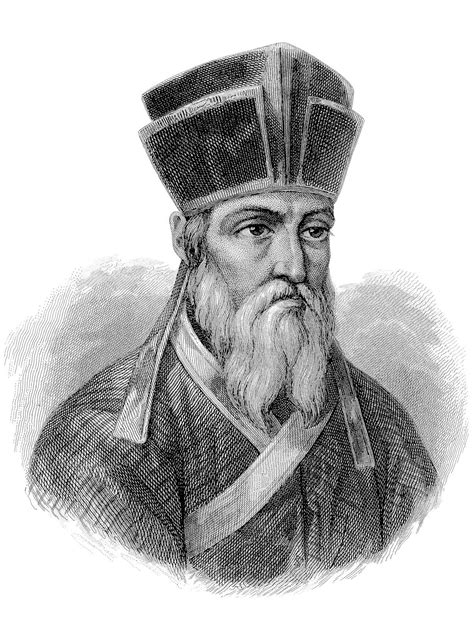
The society encountered an important controversy centered on the Italian Jesuit Matteo Ricci, who worked as a missionary in China in the late 16th and the early 17th centuries.
Decades of scholarly research into Buddhist and Confucian thought had prepared Ricci to attach the Roman Catholic understanding of the Christian faith to the deepest spiritual apprehensions of the Chinese religious tradition.
The veneration of Confucius, the great Chinese religious and philosophical leader, and the religious honors paid to ancestors were to be seen not as elements of so-called paganism to be rejected out of hand but as rituals of Chinese society that could be adapted to Christian purposes.
Although Ricci’s apostolic labors won him many converts in China, they also aroused the suspicion of many in the West that the distinctiveness of Christianity was being compromised.
The suspicion did not assert itself officially until long after Ricci’s death, but, when it did, the outcome was a condemnation of the so-called Chinese rites by Pope Clement XI in 1704 and 1715 and by Pope Benedict XIV in 1742.
Ancestor veneration and Confucian devotion were said to be inseparable elements of traditional Chinese religion and hence incompatible with Christian worship and doctrine.
Jesuit identity, symbols, and the IHS Christogram
IHS is what is known as a Christogram-a combination of letters to represent the name of “Jesus”.
Specifically, it is an abbreviation of the Greek spelling of the name, IHΣΟΥΣ, Jesus. The Jesuit Order adopted IHS as its fixed emblem sometime in the 1600s.
As the Jesuits are the Society of Jesus, it makes sense that the heart of their symbol is the name of Jesus.
The Jesuits and the Catholic Church in modern times
After the society was restored, the Jesuits grew to be the largest male religious order.
Work in education on all levels continued to involve more Jesuits than any other activity, while the number of Jesuits working in the mission fields, especially in Asia and Africa, exceeded that of any other religious order.
They were involved in a broad and complex list of activities, including the field of communications, social work, ecumenism, human rights, and politics.
The order was later a leading force in modernizing the church.
Pope Francis, formerly Cardinal Jorge Bergoglio of Buenos Aires, became the first Jesuit to serve as leader of the Roman Catholic Church in 2013.
Pope Francis, the first Jesuit Pope, understands this Jesuit missionary calling and has challenged all Christians to “go forth from our own comfort zone in order to reach all the ‘peripheries’ in need of the light of the Gospel.”
The Jesuit Universal Apostolic Preferences
The Jesuit Order has mostly been known throughout its history as a Catholic religious order of missionaries and educators. This is still very much true today, but in the modern world, Jesuits have adapted to the challenges of the twenty-first century.
In recent years, Jesuits across the world have agreed to focus their work and ministry on four areas of vital need. These are known as the Jesuit “Universal Apostolic Preferences”.
Showing the way to God
Showing the way to God through the Spiritual Exercises and discernment.
“In the next ten years, we want to share with others this most fundamental discovery of our own lives: Jesus Christ.”
Walking with the excluded
Walk with the poor, the outcasts of the world, those whose dignity has been violated, in a mission of reconciliation and justice.
“We desire, first and foremost, a conversion in our own hearts, that makes us alive and sensitive to the suffering Christ in our midst. Our communities desire to be more hospitable and open, learning how to live more deeply in the Spirit of Jesus, a Spirit that welcomes.”
Journeying with youth
Accompany young people in the creation of a hope-filled future.
“Young people have so many possibilities in this digital age which unites them as never before. We want to walk with them, discerning these possibilities and finding God in the depths of reality. Accompanying young people puts us on the path of conversion; it requires a new way of living in Jesuit community, a way that is more coherent, more personal, more open, more evangelical.”
Caring for our common home
Collaborate, with Gospel depth, for the protection and renewal of God’s Creation.
“At this vital time in our world’s history, the Society of Jesus commits itself to answer this call of our Creator over the next ten years.”
Even with these areas of vital need, the ultimate work of changing the world still starts within ourselves.
“He who goes about to reform the world must begin with himself, or he loses his labour.”
Conflict, controversy, and suppression
The Jesuits have always been controversial within the Catholic Church and have frequently clashed with secular governments and institutions.
Their preeminent position among the religious orders and their championship of the pope exposed them to hostility, and by the middle of the 18th century a variety of adversaries, both lay and clerical, were seeking to destroy the order.
The opposition can be traced to several reasons, primarily to the anticlerical and antipapal spirit of the times.
Hostility to the Jesuits was further inspired by their defense of the Indigenous populations in some parts of the Americas-notably the Guaraní in Paraguay and the Indigenous converts in the missions of the Amazon River basin in Brazil-against abuses committed by Spanish and Portuguese colonizers.
Moreover, the sheer strength of the order was regarded as an impediment to the establishment of absolute monarchist rule.
Beginning in 1759, the Catholic Church expelled Jesuits from most countries in Europe and from European colonies.
The Portuguese crown expelled the Jesuits in 1759, France made them illegal in 1764, and Spain and the Kingdom of the Two Sicilies took other repressive action in 1767.
Opponents of the Society of Jesus achieved their greatest success when they took their case to Rome.
Although Pope Clement XIII refused to act against the Jesuits, his successor, Clement XIV, issued a brief abolishing the order in 1773.
The society’s corporate existence was maintained in Russia, where political circumstances-notably the opposition of Catherine II the Great-prevented the canonical execution of the suppression.
The demand that the Jesuits take up their former work became so insistent that in 1814 Pope Pius VII reestablished the society.
Meanwhile, however, the suppression of the Jesuits had done serious damage to the missions and the educational program of the church at a time when both enterprises were under great pressure.
These devastating effects included the closure of many Jesuit schools, hospitals, and missions around the world and the confiscation or wholesale destruction of Jesuit apostolic works and texts.
Pedro Arrupe, liberation theology, and social justice
In 1968 the Jesuit superior general, Pedro Arrupe, refocused the order with “a preferential option for the poor”, a principle of Catholic social teaching.
Pedro Arrupe was the 28th superior general of the Society of Jesus from 1965 to 1983 and the founder of the Jesuit Refugee Service in 1980.
The Jesuit ranks experienced a rise in the popularity of liberation theology, which holds that ministry should include involvement in the political struggle of the poor.
This ideology influenced a number of Jesuit leaders in Latin America in the late 20th century, some of whom were met with violence and death because of their activism.
It also brought the order into conflict with Pope John Paul II, who sought to curb the movement by appointing conservative prelates in Latin America.
Jesuits and colonial slavery
Throughout Europeans’ colonization of the Americas, the Jesuits exhibited a mixed record on slavery.
Although some Jesuits served as protectors and advocates of Indigenous populations during the colonial era, particularly against their enslavement, the order was among the largest enslavers in places such as the French island of Martinique in the Caribbean, French Guiana in South America, and colonial Maryland and Louisiana in the United States.
Jesuit missions contributed to the spread of deadly European diseases among Indigenous populations and relied on the labor of enslaved Indigenous and African people.
Many Jesuit missions, churches, and schools also benefited from the sale of enslaved Africans and African Americans; the profits from such trafficking were used to support or expand the order’s institutions.
By the mid-18th century and the beginning of the suppression, the Jesuits’ holdings included more than 20,000 enslaved people throughout the Americas.
In the United States the order used and trafficked enslaved people until the Thirteenth Amendment abolished slavery in 1865.
Jesuit slaveholding in Illinois and Maryland
The earliest known Jesuit community to use forced labor in what became the United States was a mission founded by French Jesuits in 1703 along the Kaskaskia River in Illinois.
The Kaskaskia Jesuits used enslaved Native Americans and Africans to work their plantation and were the largest enslavers in Illinois until the order’s suppression by the French.
In Maryland, where the Jesuits first arrived in 1634, the order received extensive land tracts that were initially worked by indentured labor.
By the beginning of the 18th century that labor force had been replaced by enslaved people, specifically Africans and African Americans.
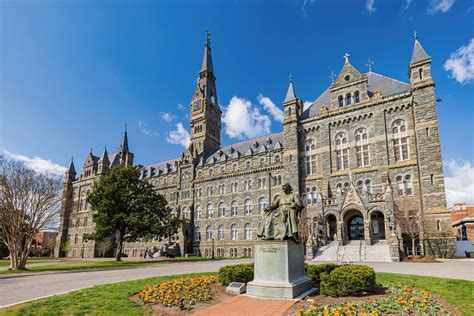
Some members of this enslaved population worked in various roles at Georgetown College, now Georgetown University, which the Jesuits founded in 1789 and was the first Roman Catholic college in the United States.
By 1838 the Maryland Jesuits had fallen into deep debt, partly because of unprofitable plantations.
In order to keep the college afloat, on June 19 Jesuit provincial superior Thomas Mulledy signed a bill of sale of 272 enslaved people to Jesse Batey and Henry Johnson, both of whom owned sugar plantations in Louisiana.
A large number of the people listed on the bill of sale were then trafficked to Louisiana. The 272 individuals included children less than a year old.
Even after the sale, the college and the Maryland Jesuits continued to use enslaved labor, essentially until slavery was abolished.
The 1838 sale and the fate of the “GU272”, as those who were trafficked came to be known through an activist campaign on social media, came to public attention in 2016 after a series of articles about the sale were published in The New York Times.
In 2017 the Jesuit Conference of Canada and the United States issued a public apology to the descendants of the GU272.
The order also established the Slavery, History, Memory, and Reconciliation Project in partnership with Saint Louis University, another Jesuit institution that relied on enslaved laborers.
The project works with descendants of enslaved people and with historians and genealogists to address the legacy of Jesuit slaveholding.
In 2023 the Jesuits pledged a donation of $17 million in the form of financial reparations and plantation land to the Descendants Truth & Reconciliation Foundation, which supports descendants of the GU272; Georgetown University pledged a $10 million donation.
Jesuit work today
Because of their missionary nature, Jesuits have spread all over the world, and are the largest Catholic order of men in the world.
Jesuits today continue to be inspired by the vision of their founder, St Ignatius.
Their ministries include parish work, teaching, medicine, spiritual direction, law, writing, art, astronomy, research, retreats, social work, humanitarian assistance, human rights, communication, ecumenism, and political engagement.
Jesuit institutions continue to combine Catholic formation with classical learning, scientific inquiry, professional education, and service to society.
The Society of Jesus therefore occupies a distinctive position within the Catholic Church: it is an order shaped by religious vows, papal mission, Ignatian spirituality, global mobility, education, missionary activity, intellectual work, and a continuing engagement with questions of justice and reconciliation.