Jesus’ teaching on taxes is found chiefly in Matthew 17:24-27 and Matthew 22:15-22, with parallel accounts in Mark 12:13-17 and Luke 20:20-26. In both episodes, Jesus does not instruct his followers to evade taxes or resist taxation as a matter of principle.
His teaching can be summarized in the words: “Give to Caesar what is Caesar’s, and to God what is God’s.” Christians are therefore called to fulfill legitimate civic obligations honestly while remembering that their highest loyalty, identity, worship, and resources belong to God.
The two biblical episodes about Jesus and taxes
In Jesus’ day, Jews paid taxes both locally to the Jewish temple and to the pagan government in Rome. Matthew records two separate instances depicting Jesus’ view on paying these taxes.
The temple tax in Capernaum
When they reached Capernaum, the collectors of the temple tax came to Peter and said, “Does your teacher not pay the temple tax?”He said, “Yes, he does.” And when he came home, Jesus spoke of it first, asking, “What do you think, Simon? From whom do kings of the earth take toll or tribute? From their children or from others?” When Peter said, “From others,” Jesus said to him, “Then the children are free. However, so that we do not give offense to them, go to the sea and cast a hook; take the first fish that comes up; and when you open its mouth, you will find a coin; take that and give it to them for you and me.” -Matthew 17:24-27
The tax in question here was the temple tax, a half-shekel payable annually by every adult male Jew. It was levied by the temple authorities themselves to finance the public sacrificial worship in the temple in Jerusalem.
The question about our Lord paying the temple tax was not a simple one. He had said that he was the Temple of God, and had exercised his divine rights over the material temple by purging it of buyers and sellers.
Would he who said that he was a Temple of God because divinity was dwelling in his human nature now pay the temple tribute? To pay the temple tax after his clear affirmation at the festival of Booths that he was the Son of God would have given rise to some serious misunderstandings.
The point at issue was not the poverty of the Master; it was whether or not he who is the living Temple of God would subordinate himself to the symbol and sign of himself.
The tribute tax to Caesar
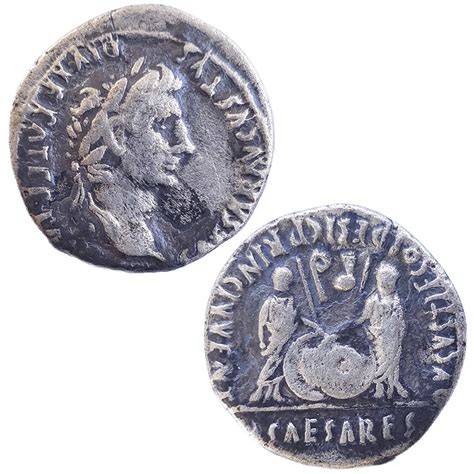
The second incident, concerning the Roman tax, is found in Matthew 22:15-22. Here the Pharisees and Herodians want to entrap Jesus with the question, “Is it lawful to pay taxes to the emperor, or not?” Jesus knows the malice in their hearts and responds with a cutting question, “Why are you putting me to the test, you hypocrites? Show me the coin used for the tax.”
When they hand him a denarius, he asks, “Whose head is this, and whose title?” They respond, “The emperor's.” Jesus ends the conversation with the words, “Give therefore to the emperor the things that are the emperor’s, and to God the things that are God’s.”
In these parallel passages, Pharisees and Herodians approach Jesus to try to trap Him in asking whether it is lawful to pay taxes to Caesar. It is likely that this was a tribute tax, which is one of the direct taxes charged by the Roman Empire.
In His response, Christ simply determines that it is appropriate to pay to Caesar what belongs to him or what is owed to him.
Why the question was a trap
The Pharisees wanted to trap Jesus by asking a “heads I win, tails you lose” question about taxation: “Is it lawful to pay taxes to Caesar or not?” (Matthew 22:17).
If Jesus answered “No,” they could condemn Him as seditious-an enemy of Rome, and liable to death. If He answered “Yes,” they could condemn Him as a traitor, robbing God of monies that were properly His own.
To a first-century Jewish mind, Caesar was an illegitimate ruler. Worse, the coins bore on one side the blasphemous inscription, “Tiberias Caesar, son of the divine Augustus,” and on the other, “pontifex maximus,” which a Jew would have understood as “High Priest.”
Thus, they rejected the notion of paying tribute to this pagan emperor. Jesus’ answer challenged this assumption.
The question was especially difficult because Jewish opposition to Roman taxation was not merely economic. Since the revolt of Judas the Galilean in AD 6, when the tribute to Caesar was first imposed on Judaea, there had been Jewish opposition to Roman taxation not only on economic, but on religio-political grounds.
The Zealot argument was that Israel and her land belonged to God, and God alone was the legitimate ruler of His people. Caesar had no rightful sovereignty over the people of God. Taxes paid to Caesar were an acknowledgement of his lordship, a token of submission to slavery, and should therefore be withheld.
“Give to Caesar” and “give to God”
Jesus’ statement contains two commands that must be held together. “Give to Caesar what is Caesar’s” recognizes a real, though limited, obligation to civil authority. “Give to God what is God’s” establishes that the claims of God are higher and more comprehensive than the claims of any government.
Our true citizenship is in God’s kingdom, and we devote our resources to God’s purposes. But we give to earthly powers what is due.
Jesus did not say that Caesar was God, that Caesar’s rule was morally perfect, or that government possessed unlimited authority. He distinguished civil obligations from divine obligations and prevented his opponents from making tax payment a test of religious loyalty.
The imposition of taxes on subject nations is quite unlike the rule of God. But on the other hand, Jesus did not deny Caesar’s right to levy taxes. God’s law permits it because human government without taxation would be impossible.
Since even secular authority comes from God, paying taxes to him was more than lawful; it was obligatory (Matthew 22:21). Christians should submit to the rule of their government.
Why Jesus paid the temple tax
Jesus offers a unique response in directing Peter’s attention to the role of kings in collecting taxes. The kings on the earth collect different kinds of taxes. But who are the people who pay the taxes? Are they the king’s children? Or do others pay the taxes?
Peter answers that other people pay the taxes. Jesus responds, “Then the children are free.” Jesus was not required to pay the temple tax.
Jesus, as the Son of God, was not obligated in the same way as ordinary worshipers to finance the temple, the house of his Father. In fact, we know that Jesus was the true Temple in the sense that, being God incarnate, he was the supreme abode of God.
Jesus would also be the only perfect High Priest and the only perfect sacrifice for sin. The sacrificial system carried out in the temple would only truly be completed through his work.
However, Jesus still paid the temple tax. He instructed Peter to pay the tax on His behalf.
“So that we do not give offense”
The heart of these verses is in a small and simple phrase: “so as not to offend them.” In this text, we see that Jesus refrains from exercising his rights as the Son of God to avoid any obstacles to sharing the Good News with people.
The word “offend” in its original context means “to cause to stumble.” Jesus was more concerned about making sure his adversaries didn’t stumble than he was about asserting his rights.
Jesus willingly gave up his right as the Son of God for the good of humanity. He voluntarily pledged to pay the temple tax so that the offense he might have caused would never become an obstacle for people to come to truly know God through him.
Seemingly, Jesus instructs Peter to pay the tax out of regard for the existing conditions. He appears to judge that, under the existing conditions, a refusal to pay the tax would have the effect of “leading them into error,” or the effect of “giving offense to them.”
The likelihood of such an outcome is enough to persuade Jesus that the preferable course of action is to comply with the collector’s request. Thus, a peaceful, respectful member of society submits to the governing authorities so as not to create unnecessary controversy.
The miracle and its purpose
It can be easy to focus on the miracles described: Jesus knew exactly where Peter had been, He knew the conversation they had had, and he had a coin in the mouth of a fish for Peter to find.
In fact, the story has less to do with the miracle of the fish and more to do with the mind of Jesus. Jesus, in that moment, is wrestling with several conflicting ideas.
Internally, the idea of going along with a mortal and flawed political system repulses Jesus. Why should Jesus, Peter, or any of the disciples be forced to pay taxes?
However, externally, he is also wrestling with the reality that Capernaum is not perfect. It is full of easily offended, hardened, and often misguided people - people who aren’t yet ready to hear the truth of who he is, people he was called to save and love, even when they don’t get it right the first time.
And so, Jesus, engaging with both his internal and external questioning, settles on a divine truth. Jesus says at the beginning of verse 27, “lest we should offend them” (KJV).
Jesus could have announced to all of Capernaum that he was the Son of God, that he and his disciples were too good for Capernaum’s political system, and that they refused to pay taxes. Instead, Jesus sent Peter to go fish, and out of the mouth of that one fish paid just enough in taxes for the two of them.
The political and religious background of taxation
Throughout the Gospels, the Word of God reveals numerous interactions between Jesus and tax collectors. Several Gospel accounts even address the payment of taxes. In the passage on governing authorities in Romans 13, the apostle Paul gives instruction regarding taxes.
Accordingly, the subject of taxation is an important topic in the New Testament. The New Testament takes place during a period characterized by the rule of Roman law, providing it stability; the “Roman peace” (pax Romana), providing a climate conducive for the construction of roads and the unification of the empire; and general prosperity and affluence.
After Archelaus was expelled to Gaul in AD 6, Judaea received the status of a Roman province of the third rank, to be governed by a prefect appointed by Augustus from the equestrian order.
Such a province was liable to pay tribute to the Roman state, and so a census was held to assess the annual amount which the new province could reasonably be expected to raise.
The purpose of Roman taxes
An empire the size of Rome required large and continuous streams of revenue to function. Although Rome had gained great wealth through its wars of conquest before the time of Christ, by the first century A.D. taxes had become its principal source of income.
Its limited military conquests during this era brought in far less booty than in the preceding century. Maintaining the Pax Romana was not a cheap endeavor.
The taxation the Romans levied was required for the maintenance of the Empire’s military power and bureaucratic structure, in other words for the peace and security with which the subjects of the Empire were blessed by Roman rule.
In addition, the emperor used tax revenue to pay for his building projects and personal needs back in Rome.
Accordingly, taxes served to fund the operations of the government, very similar to the present day. Taxes supported the initiatives of the government’s leader, which is not dissimilar to the present day.
Direct and indirect taxes
The Roman Empire charged numerous taxes to fund the various local and provincial expenditures. Some were direct for individuals, such as a tribute tax, and others were indirect, such as customs or tolls.
| Type of tax | Description |
|---|---|
| Tributum soli | A tax on agricultural produce paid by those who occupied the land. |
| Tributum capitis | A head tax imposed on owners of other forms of property and associated with the census. |
| Customs and tolls | Taxes on imports and exports, goods passing through a province, roads, bridges, and harbors. |
| Temple tax | A half-shekel payable annually by every adult male Jew to finance public sacrificial worship in Jerusalem. |
The main tax in every province was the tributum soli, a tax on agricultural produce paid by those who occupied the land; owners of other forms of property were liable to a tributum capitis, a head tax.
The head tax, which typically was based on the results of a census that was used to ascertain who was subject to the tax, was levied on men ages fourteen to sixty-five, and on women twelve to sixty-five.
The tribute consisted mainly of a tax on landed property, calculated on the estimated annual yield in crops and cattle, together with a tax on personal property of other kinds.
These were customs or tolls on imports and exports and on goods passing through a province, road money, bridge tolls, and harbor dues.
Caesar Augustus introduced several new taxes during his rule: a 1-percent sales tax, a 4-percent tax on the sale of slaves and a 5-percent tax on inheritances, except those from close relatives, over 100,000 sesterces.
The concept of a tax model including both direct and indirect taxes that existed in the Roman Empire also exists in many countries today.
Why taxation was especially difficult for first-century Jews
Ideological opposition
Given the history of theocratic rule for the Jews, there were ideological challenges associated with paying taxes to a different authority.
For centuries, Israelites identified God as their sovereign ruler. What would it say about their loyalty to Yahweh if they submitted to the authority of a civil leader?
The payment of tribute to the Romans was incompatible with Israel’s theocratic ideals. This payment became the most likely basis of popular support for revolt against Rome.
This ideological challenge was a significant contributor to the negative view of taxation. Paying taxes to Caesar could appear to acknowledge Caesar’s lordship over a people who believed that God alone was their legitimate king.
Economic pressure
The economic toll of taxes on the Jews was a significant concern. Taxation was especially burdensome for Jews, because in addition to these civil taxes from Rome they were also liable to the theocratic taxes imposed by the Jewish religious authorities.
Such religious taxes included a half-shekel temple tax to finance the construction and maintenance of Herod’s temple. They also paid tithes on produce to support the priests in Jerusalem.
All Jews outside of Palestine were required to send their temple tax to Jerusalem. Considering these various taxes imposed on the Jews, it is no wonder they would revolt against this economic responsibility.
After the destruction of the Temple in AD 70, Rome enacted a new tax on Judaea. It was customary for the Romans to impose a war indemnity upon conquered or rebellious nations, and Judaea was no exception.
The Didrachmon, as a war indemnity was a specific and limited form of taxation. Justification for its imposition required only the fact that Judaea had rebelled against Rome.
Why tax collectors were despised
Given the ideological challenge and financial burden of taxation on the Jews, tax collectors understandably would not have been popular in society.
During the first century, tax collectors were local residents who collected revenues for the Roman authorities and thus were despised by their fellow citizens as traitors.
Why would anyone want to be friends with one who works for the enemy? But this was not the only reason that many had contempt for tax collectors.
Besides being victims of the universal dislike for paying taxes, their work offered opportunities for extortion, which clearly many took (Luke 3:12-13).
Since paying taxes to a foreign power was hateful and commonly seen as unlawful, the publicans were regarded as traitors to their nation and willing tools of their oppressors.
In addition, because their work required constant contact with Gentiles, they would have been considered ceremonially unclean.
The tax collectors sometimes were referred to as “publicans” based on the name for the Roman public treasury.
Many times in the Synoptic Gospels the text links tax collectors with “sinners” (Matthew 9:10-11; 11:19; Mark 2:15-16; Luke 5:30; 7:34; 15:1) or “prostitutes” (Matthew 21:31), indicating the severe public scorn for the profession.
In one of His parables, Jesus tells of the Pharisee who gives thanks that he is not like “this tax collector” (Luke 18:11). The New Testament clearly reveals that tax collectors were disfavored in the first century.
Jesus, civil authority, and Christian responsibility
Christians should submit to the rule of their government. This includes willingness to pay taxes, even if the tax burden is unjust, or the government is godless.
Believers will not necessarily agree with a government’s fiscal policy, but this does not excuse them from paying honestly, out of obedience to Christ’s commandment.
God will judge rulers who set sinful levels of tax; the individual citizen is responsible for giving government its due.
The apostle Paul taught, “This is also why you pay taxes, for the authorities are God’s servants, who give their full time to governing. Give everyone what you owe him: If you owe taxes, pay taxes; if revenue, then revenue; if respect, then respect; if honor, then honor” (Romans 13:6-7).
In full agreement, the apostle Paul taught, “Give everyone what you owe him: If you owe taxes, pay taxes; if revenue, then revenue; if respect, then respect; if honor, then honor” (Romans 13:6-7).
Romans 13:1-7 makes it clear that we are to submit ourselves to the government. The only instance in which we are allowed to disobey the government is when it tells us to do something the Bible forbids.
The Bible does not forbid paying taxes. In fact, the Bible encourages us to pay taxes. Therefore, we must submit to God and His Word-and pay our taxes.
Submission does not mean agreement with everything government does
Even though not all of government activity serves God’s purposes, Jesus does not call us to flout the tax requirements of the nations where we reside (Romans 13:1-10; 1 Thessalonians 4:11-12).
We may not always agree on the type or extent of services our governments should provide, but we know that our taxes are essential in providing for our personal protection and for the help of those who cannot help themselves.
Paying taxes is one of the bedrock obligations we as citizens or residents undertake for the services we enjoy in any civilized society.
Those services include the work of first responders, police, firefighters, medical people, and so on, as well as the social nets in place to assure justice or aid for the poor, the aged, and others in need.
The Roman Empire was not governed primarily for the benefit of the common people, yet even so it provided roads, water, policing, and sometimes relief for the poor.
Generally speaking, taxes are intended to enable the beneficial running of society. Depending on one’s priorities, tax revenue is not always put to the best use.
Jesus is saying in essence that we do not necessarily have to resist paying taxes as a matter of principle. When possible, we should “live peaceably with all” (Romans 12:18; Hebrews 12:14; cf. 1 Peter 2:12), while also living as lights shining in the darkness (Matthew 5:13-16; Philippians 2:15).
Reform rather than revolution
This does not mean, however, that the system cannot be changed from within through sanctioned governmental structures. Jesus wants tax reformers, not revolutionaries.
Christians may question the validity of taxes set at an exorbitant level. However, the believer who out of obedience to Christ dutifully pays even a punitive tax bill set by an unjust government, is pleasing in God’s sight.
The most frequent objection to paying taxes is that the money is being misused by the government or even used for evil purposes by the government. That, however, is not our concern.
When Jesus said, “Give to Caesar,” the Roman government was by no means a righteous government. When Paul instructed us to pay taxes, Nero, one of the most evil Roman emperors in history, was the head of the government.
We are to pay our taxes even when the government is not God-honoring. Christians can oppose injustice, criticize public policy, and seek lawful reform without treating tax evasion or violent revolt as Christian obligations.
Honesty, legal deductions, and tax evasion
Others file their returns with a less-than-honest picture of their income situation. The biblical principle is not merely to submit a form, but to give what is honestly owed.
We are free to take every legal tax deduction available. We do not have to pay the maximum amount of taxes possible.
If the government allows you a tax break, you are free to take it. If there is a legal way you can shelter some of your money from being taxed, you are free to shelter it.
Illegal and/or dishonest methods of evading taxes must be rejected.
Once described by admirers as “a pillar in the church and the community,” insurance and investment broker Philip Harmon, an American Quaker, was sentenced to eight years in prison for conspiracy and tax evasion in July of 1998.
His arrest, which came as a result of years of defrauding the government and fellow Christians of millions of dollars, scandalized the very name of Christ Harmon claimed as his own.
The scandal was widely reported, and gave critics of Christianity yet another example of hypocrisy.
God’s people must never put the gospel to shame by failing to give Christ the honor due His name-or Caesar his.
Taxation and the use of money
Christians know that everything we have ultimately belongs to God. We are stewards and are called upon to invest our money and other resources into things with eternal value.
We are called upon to provide for our families (1 Timothy 5:8) and to give generously (2 Corinthians 9:6-8). It is also wise to save (Proverbs 6:6-8) and perfectly acceptable to spend money on ourselves and thank God for His good gifts (James 1:17; Colossians 3:17).
Paying taxes is the duty of a citizen, and Christians are called to be good citizens. But Christians are ultimately citizens of heaven (Philippians 3:20).
Reducing our tax burden in this life should have as its goal investing in God’s kingdom for eternity.
Putting Jesus’ teaching into practice
As we strive to learn from the example of Jesus, we must ask some important questions. Are we so committed to the Gospel that we would voluntarily give up our rights in order to spread the Good News of Jesus?
Do we care enough for our brothers and sisters that we are willing to sacrifice our privileges, even our biblically allowed rights, never to be an obstacle, to see how Jesus could work in someone's life?
What kinds of “rights” could you give up in your life? There is great freedom in this life for believers in Jesus. We should feast on our freedoms and enjoy the time we have on earth.
However, our freedoms must be carried out with an evangelical mindset first. As we learn about Jesus, the spiritual well-being of our brothers and sisters, and our relationship with the unbelieving community, they triumph over our earthly privileges.
Jesus’ priorities must become our priorities if we want our actions to reflect Jesus well in our community and in our world.
This story is a powerful example of leadership in political moments. It’s not about being right, winning, or even proving others wrong.
Jesus shows us that choosing connection over separation and choosing empathy over apathy are valuable and needed qualities.
Can you see the level of graciousness, restraint, and love Jesus showed? The lesson is not that every political or economic question is unimportant, but that the pursuit of one’s rights must be governed by love, wisdom, truth, and the good of others.
To work at our jobs and to refuse to pay our taxes in a way that brings dishonor to God’s kingdom would be neither peaceable nor winsome.
Of course, we must never engage in abusive practices for our own benefit. We are like spies or guerrillas in enemy territory. We can’t get bogged down in fighting the enemy kingdom at every stronghold.
Instead, we must act strategically, always asking what will most further the establishment of God’s kingdom on earth.
Render Unto Caesar The Things That Are Caesars | The Chosen S5E3
What the biblical account means
- Taxes are a legitimate civic obligation. Jesus does not command his followers to evade taxes, even when the government is pagan, unjust, or politically opposed to God’s purposes.
- Government is not God. Caesar receives what belongs to Caesar, but God receives what belongs to God; no ruler may claim the worship and ultimate allegiance owed to the Creator.
- Jesus’ rights were voluntarily restrained. In the temple-tax account, Jesus presents the children as free but pays anyway so as not to cause offense or create an obstacle.
- Love can require surrendering legitimate rights. Jesus prioritizes the spiritual good of others over the public assertion of his personal privilege.
- Honesty matters. Legal deductions may be used, but illegal and dishonest tax evasion conflicts with Christian obedience and witness.
- Submission does not eliminate lawful reform. Christians may seek tax reform and challenge unjust systems through sanctioned governmental structures rather than through revolution or deception.
- Earthly obligations exist within heavenly citizenship. Christians pay what they owe to civil authorities while directing their highest loyalty, worship, and resources toward God’s kingdom.