The book of Joshua shows how God fulfilled His covenant promise to bring Israel into the land promised to Abraham, while also teaching about faith, courage, obedience, sin, judgment, mercy, rest, remembrance, and hope in Jesus Christ. It follows Israel after the death of Moses as Joshua leads the people across the Jordan, through major battles, into the distribution of the land, and finally toward a renewed commitment to serve the Lord.
Joshua is a story of salvation within the Bible’s larger story of salvation through Christ, and each of these themes has a part to play in pulling the story along. Indeed, Jesus will come as a new Joshua to “save his people from their sins” (Matt. 1:21).
How to Use This Joshua Bible Study Guide
This guide can be used for personal study, family worship, or group discussion. Read the assigned passage carefully, observe what it says about God and His people, trace the themes through the rest of Scripture, and then consider how the passage points to Jesus Christ and shapes Christian faithfulness.
A complete study may be organized as 28 days, or four weeks, of daily Scripture readings. The four main movements of the book provide a natural structure: Israel enters the promised land, Israel takes the land, the land is divided among the tribes, and Joshua calls the nation to serve the Lord.
Joshua in the Larger Story of the Bible
Before looking at the book of Joshua, let’s back up and remember the story of the Bible so far. God chose Abraham to bring his blessing to the nations. Abraham’s family grew and became the people of Israel, and after some time, they were enslaved in Egypt. Through Moses, God rescued the Israelites and brought them out of Egypt to Mount Sinai where he made a covenant with them. Then, God brought the people through the wilderness despite the hardships and rebellions along the way. Finally, as Israel camped outside the promised land, Moses called upon them to obey God’s commandments, so that they could show the other nations the true character of God.
The book of Joshua picks up shortly after Moses dies as Israel prepares to enter the land. The storyline of Joshua is designed with four main movements. Joshua leads Israel into the promised land (Josh. 1-5). Once they’re there, they are met with hostility from the native Canaanites, and they engage in battle (Josh. 6-12). After their victories, Joshua divides up the land as an inheritance for the twelve tribes (Josh. 13-22), and finally, the book concludes with Joshua delivering his final words to the people (Josh. 23-24).
The book of Joshua shows us God’s covenant faithfulness to bring the Israelites into the land he promised Abraham. This book points to the importance of covenant obedience before, during, and after God fulfills his promises.
The Promise of Land
Central to the book of Joshua is God’s promise of land. The very structure of the story makes this clear, as seen in the outline provided below. Though often in a more subtle fashion, this theme stretches from the first page of the Bible to the last.
The promise of the land of Canaan has its origin in God’s promise to Abraham (Gen. 12:1-3). God called Abraham from among the nations and gave him several promises, including land, a nation, and blessing to the rest of the nations through him. The story of Joshua develops each of these promises, but its focus and emphasis is clearly on God’s promise of land.
Frequently in Joshua we’ll see references to the promises given to Abraham and his offspring. And yet God’s promise of land has a certain broader context. The land theme goes further back than Abraham.
God made Adam in his image and placed him in Eden. Adam and his race were to multiply and fill the earth, exercising dominion over it. But that didn’t happen. Instead, Adam turned from trusting God. As promised, God cursed Adam with death and sent the first human pair outside the garden.
This is where the story of land begins. The entire salvation story of the Bible is a response to what happened in Eden.
When God promised Abraham a place of blessing, he essentially promised him what was lost in the fall-a place for the enjoyment of God’s presence, a return to Eden. This is why the land of promise is regularly referred to as “like the garden of Eden” (Gen. 13:10; Isa. 51:3; Ezek. 36:35; Joel 2:3).
Major Themes in Joshua
Orbiting around the theme of land in Joshua are numerous other themes crucial to the Bible’s salvation story:
- In the land, God’s people will experience rest.
- The land is a gift from God promised to his people.
- God’s covenant with Abraham and Moses provide the context for the story of Israel inheriting the land.
- Obedience is required for entrance into the blessing of the land, even as disobedience will lead to cursing and failure to take the land.
- The Lord judges the Canaanite inhabitants in the land by means of his people.
- The Lord fights for his people as the Divine Warrior to judge and drive out the inhabitants of the land.
- The land is never fully obtained, evidencing a tension in the storyline leading us to Christ by showing our need for a new covenant with a fully obedient covenant mediator.
Through the story of Joshua, God is advancing his promise to bless his people with rest in the land. He will do this through his man Joshua, as Joshua and the people entrust themselves to the Lord with full obedience to his Word.
Key Verse
“The Lord gave to Israel all the land that he swore to give to their fathers. And they took possession of it, and they settled there.” (Josh. 21:43)
Historical Background and Date
The historical setting for the book of Joshua is given in the first line of the book: “After the death of Moses” (1:1). This time marker indicates the situation of God’s people. Forty years had passed since the exodus, years spent wandering and waiting to cross the Jordan and inherit the land promised by God.
Like a sequel to a movie, this book opens on the cusp of the rest of the story. As the first book written after the death of Moses, Joshua picks up and develops many of the themes established in the first five books of the Bible.
The author of Joshua is not specified. And while some have suggested Joshua as the author, the recurring phrase “to this day” (4:9; 5:9; 6:25; etc.) seems to indicate that the book was written later, or at least that an editor updated the book at a later date.
Joshua: A New Leader After Moses
Chapter 1 begins with Moses’ death and the appointment of Joshua as the new leader of Israel. The author intentionally presents Joshua as a new Moses. Like his predecessor, Joshua calls on the people to obey the terms of the covenant given to Israel at Mount Sinai that are found in the Torah.
Because of his sin against God (Numbers 20), Moses was not allowed to lead his people into the land. Now that Moses has died, God leads his people through Joshua.
Joshua is a fascinating narrative, but it is not easy to read, and its significance for the Christian can be difficult to grasp. There are familiar lines in this book, including God’s famous command to Joshua (“Be strong and courageous”; 1:9) and Joshua’s covenantal vow (“As for me and my house, we will serve the Lord”; 24:15).
While these verses have meaning for Christians today, as we will see later their immediate context is very different from our own: Joshua is the leader of a nation commanded by God to invade the ancient land of Canaan and kill all of its inhabitants.
Joshua’s Character and Calling
We know that Joshua:
- He was full of the spirit of wisdom (Deut. 34:9).
- Did not have a wife, but was “married” to the church - God’s people.
- Made it to the promised land from Egypt (from slavery to freedom).
- Was a victorious general (Exodus 17:9).
- Had a servant’s heart (Exodus 24:13, Numbers 11:28-29).
- Enjoyed being in God’s presence (Exodus 33:11).
Joshua is a type of Christ. (His life resembles that of Jesus. Can you spot the similarities above?)
Something interesting is that Jesus’ name in Hebrew is Yeshua which is Joshua in English.
Joshua 1: God’s Marching Orders
The first nine verses introduce a number of characters. Read these verses and write down the name of each character or group represented, along with what we learn about them.
With Moses departed, the Lord commissions Joshua to lead his people into the land with courage and obedience to Moses’ law-a daunting but achievable task, given the certainty of God’s promises and presence.
We read in Joshua 1:7-9 that God is talking to Joshua. He tells him that he needs to be strong and courageous, to not be afraid or dismayed because God was with him!
Joshua had big shoes to fill (those of Moses). But God was reminding him of His presence and encouraging him on. He would take God’s people into the Promised Land with God’s leading.
Joshua receives an order, and we have every reason to hear it as a difficult charge. How many times does God command Joshua, “Be strong and courageous”? What was there to fear? (See Numbers 13 for context.)
Joshua had good reasons to be afraid, but God gave him better reasons to be courageous. List the reasons God gave Joshua to be “strong and courageous.” What is the main reason?
Why Courage Is Possible
Courage is possible because of God’s promise: “I will not leave you or forsake you” (1:5).
Having spent some time in the passage, we can’t escape the presence of Moses. There are important points of continuity between God’s dealing with his people under Joshua and under Moses. What assurances does this afford Joshua?
The Christian walk is NOT an easy one. We need to be “strong and of good courage” because we know that “small is the gate and narrow the road the leads to life, and only a few find it.” (Matthew 7:13-14).
And Jesus tell us to enter His Kingdom we must deny ourselves and take up our cross and follow Him (Matthew 16:24).
Joshua 1: The Nation’s Response
The people of Israel would have been waiting their whole lives, quite literally, for this moment. What emotions do you think they experienced when Joshua’s men gave the orders to begin preparations?
This chapter is specifically structured to communicate a certain logic about how God leads his people. How does God speak to and lead his people?
In 1:12, however, we meet a set of three tribes: “the Reubenites, the Gadites, and the half-tribe of Manasseh.” Understanding their backstory will help us understand parts of this book. Read Numbers 32 and write down the reason these people have made a home east of the Jordan.
In Joshua’s speech, he uses an important word to interpret God’s gift of land. What word does he use, and what do you suppose this means?
In light of the Bible’s story to this point, what is surprising about the people’s response in Joshua 1:16-18? For a comparison, read Numbers 14:36-38 for a summary of how the previous generation responded to the same task.
The chapter ends with another command to Joshua to “be strong and courageous” (Josh. 1:18), this time from the lips of the people.
Joshua 2: Rahab and the Spies
In chapter 2, Joshua sends spies into the land, just as Moses had in Numbers 13-14. Things go much better this time, and even some Canaanites, such as Rahab the prostitute, turn to follow the God of Israel.
So, Joshua sends out 2 spies to check out the land (Joshua 2:1) and they arrive at Rahab’s house.
She demonstrates what the Christian walk is about: Jesus meeting us right where we are, denying ourselves and following Christ, laying down our lives for others, because she says to the two spies that she knew all that God was doing for His people and she wanted salvation for her and her family!
She became a traitor (she would have been killed if the king had known) to save the two spies.
Another interesting thing here is that what she says to the spies in Joshua 2:8-13 are the terms of salvation:
- Hearing the Word of God (v.8-10).
- Receiving it (v.11).
- Accepting and surrendering our lives to Him (v.12-13).
She hid the two spies or aka God’s messengers or those who have God’s Word. It brings to mind this verse: “Your word I have hidden in my heart that I might not sin against you.” Psalm 119:11.
Rahab’s Readiness
Rahab didn’t know when Joshua and God’s people would take over her land, but she was prepared. She *immediately* did God’s will by tying the scarlet cord in the window (Joshua 2:21).
We need to remember to be like her here - doing God’s will immediately. Because we don’t know when Jesus will come back for us or when our last day will be, but we need to be ready!
During Passover, the red blood on the doorpost (Exodus 12:13-28) meant that everyone inside those homes would survive. Here, the red cord in the window meant everyone inside would survive.
One life lesson from God here is that only those who are in the house - in the blood where the covenant is - will be saved. And we know whose blood that is…Jesus!
Joshua 3: Crossing the Jordan River
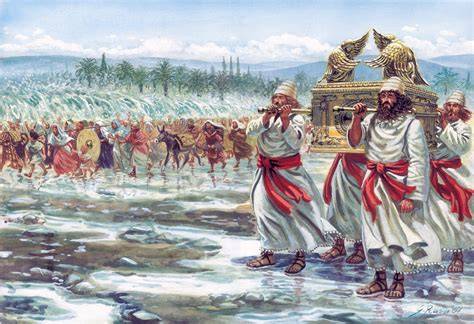
Joshua then leads all of Israel across the Jordan River and into the land. Just as the sea parted for Moses in Exodus, so here the river parts as priests carrying the ark of the covenant lead the Israelites across to the land.
It was a miracle that God’s people were able to cross the Jordan. What is interesting is that the ark of the covenant, carried by the priests, stood firm on dry ground in the midst of the Jordan while the people crossed. See Joshua 3:17.
Reminds us of the Israelites crossing the Red Sea, right?
But the important life lessons from God here is that He is a God of miracles! Just like God did these miracles for His people back then, He will do them for us today. If only we had more faith!
We will cross difficulties, even death, but we will be blessed and cleansed on the other side.
And that everyone has to pass before God’s law, meaning one day, we will too! See Romans 14:10-12, James 2:12, Revelation 20:12.
Joshua 4: Memorial Stones and Remembrance
God told Joshua and His people to take 12 stones, one for every tribe, from the Jordan and make a memorial where they were lodging (Joshua 4:2-3).
He told them that this would be a “sign among you when your children ask in time to come…’What do these stones mean to you.’“ And that they would answer them “that the waters of the Jordan were cut off before the ark of the covenant of the Lord; when it crossed over the Jordan, the waters of the Jordan were cut off.”
It was a reminder that He kept His promises, and that He will continue keeping His promises into the future.
Sometimes, we forget fairly quickly how God supplies our needs and delivers us. (Psalm 119:16, 83, 93, 109).
How can we have His faithfulness visible for us to see, our future/current children, or our neighbors/visitors?
I never thought to have God’s Word hanging or placing a visible bible verse in my future home. But now, I definitely want to have His Word somewhere -or in multiple places- in our future home. I want this to remind us and for others to see that our home serves the Lord and of His faithfulness to us.
Joshua 5: Covenant Renewal and the Commander of the Lord’s Army
The story transitions in chapter 5 as the Israelites look back to their roots as God’s covenant people. They have the new generation circumcised to honor that covenant, and they celebrate their first Passover in the new land.
The spiritual dimension of circumcision is that of the heart. This means being sensitive to the leading of God’s Spirit and cutting away of the carnal nature.
In other words, not living by the flesh, but by the Spirit. See these verses: Deuteronomy 10:16 (Moses talks about the circumcision of the heart). Romans 2:29. Colossians 2:11.
Just as they prepare to go forward, Joshua has an encounter with a mysterious warrior who, it turns out, is the angelic commander of God’s army.
Now Joshua asks the commander of the army of the Lord, “Are you for us or for our adversaries?” The warrior responds, “Neither,” which shows that the real question is whether Joshua is on God’s side.
Joshua asks, “Are you for us or for our adversaries?” Any guesses on who said something similar? Jesus did! See Matthew 12:30!
Why Study the Old Testament?
The OT teaches us more about who God is and biblical lessons, which we’ve been seeing all along throughout this bible study on the book of Joshua.
And I keep mentioning how the book of Joshua and our Christian walk go hand in hand. Well, Joshua and the Promised Land are a symbolic representation of what is to come for us as we go into our promised land with our “Joshua” (Jesus).
The book of Joshua will remind us to reflect on God’s goodness and celebrate His faithfulness, because He is with us wherever we go.
Joshua 6: The Fall of Jericho
Joshua takes Jericho, a paradigm for victory (6:1-27).
At Jericho, Israel is to take a completely passive approach, letting God’s presence in the ark lead them around the city with music for six days. Just as Rahab turned to the God of Israel, perhaps the people of Jericho will do the same. They do not, sadly, and so on the seventh day when the priests blow their trumpets, the walls miraculously crumble and Israel is led to victory.
The point of this story is that God is the one who will deliver his people. Israel simply needs to trust and wait.
The walls of Jericho stood as an obstacle to the Promised Land for God’s people. Could there be “walls” that stand as an obstacle to having a closer relationship with God, hindering our entrance into the Promised Land?
If we want to have victory over these walls, we need to pour out our hearts to Jesus. We need to share our sins, our struggles, our joys with Him regularly. He can do miracles!
However, if we are living separated from His Word, we miss out on His blessings+miracles!
If we struggle to obey Him, we have to tell Him and ask for His help! He is wanting+willing to help us!
And we need to make a decision to be ALL IN for Jesus…DAILY!
Don’t forget He is loving and merciful! See Isaiah 65:24 and 2 Peter 3:9.
Joshua 7: Achan’s Sin and Israel’s Defeat at Ai
A quick summary of Joshua 7. Joshua sent men to attack Ai, but they were defeated. Joshua started interceding in prayer for the people to see what was going on.
God had promised that they would have victory! Why didn’t they have victory over Ai? God tells Joshua that “Israel has sinned” because “they have even taken some of the accursed things, and have both stolen and deceived; and they have also put it among their own stuff.”
And that they needed to remove these things from among them. The next day, Joshua narrowed the ‘perpetrator’ by tribe, by family, by household until they got to Achan.
The battle at Ai makes a contrasting point, showing what happens if Israel doesn’t trust their God. An Israelite named Achan stole goods from Jericho that were meant to be devoted and offered to God. Then he proceeded to lie about it-a pretty selfish move after all that God had done for Israel.
So when Israel enters the battle of Ai, they are defeated. It’s only after humble repentance and severely dealing with Achan’s sin that they gain victory over Ai.
Individual Sin and the Community
The people of God are a collective group, a body. The Lord’s prayer says: “give us” “forgive us” “lead us” “deliver us” (See Matthew 6:9-13).
God told Joshua that “Israel had sinned” and “they had.” He never said “Achan did it” which tells us that…
Our actions/choices can react with blessings or curses on others. We always have to think how can our choices affect God and His church.
The next biblical lesson here is that we think we are hiding things, but the Bible tells us different! “…all things are naked and open to the eyes of Him…” Hebrews 4:13. “…your sin will find you out.” Numbers 32:23. “…nothing covered that will not be revealed…” Luke 12:2-3.
There is no such thing as secret sins. We have to reflect: are we more concerned with how God sees us or how others see us?
God is clear. He can’t be with us when we are holding on to “accursed” things. And when He isn’t with us, we can’t have victory!
“Yet in all these things we are more than conquerors through Him who loved us.” Romans 8:37.
If we want God to be with us, we need to relinquish those things that keep us from Him. Remember: we are His children, His creation, His temple.
Have we allowed anything in our church or in our home which is keeping us from victory?
Joshua 8: Victory After Repentance
Israel deals with Achan and takes Ai (8:1-35).
Together, the stories of Jericho and Ai are placed at the front of the battle narratives to make an important point. To inherit the land, Israel has to be obedient and trust in God’s commands.
This isn’t their battle, and God isn’t their trophy.
Joshua 9: The Gibeonites and the Cost of Deception
The Gibeonites knew about God’s people conquering Jericho and Ai. And “they worked craftily and pretended to be ambassadors” (Joshua 9:3).
So, they took old sacks on their donkeys, old wineskins torn and mended, old and patched sandals on their feet and old garment on themselves, and all the bread of their provision was dry and moldy (Joshua 9:4-5).
The Gibeonites told Joshua that they had come from afar (Joshua 9:9), which wasn’t true - they lived nearby! They knew they were next to be defeated and this was how they pleaded for mercy!
However, God’s people didn’t seek counsel from the Lord on this. Joshua made peace with the Gibeonites and made a covenant with them to let them live (Joshua 9:14-15).
The second part of this section begins in chapter 9 as the Gibeonites, a Canaanite people group, do what Rahab did-turn to follow Israel’s God and make peace.
Mercy for Those Who Turn to God
The Gibeonites represent the lost who know they are lost. Like us, they present themselves with filthy garments. Zechariah 3:4, Isaiah 64:6.
Jesus didn’t turn away anyone who thought they were too bad, but people were rejected who thought themselves too good. See the parable of the Pharisee and the tax collector in Luke 18:9-14.
They were allowed to live after finding out their deception. The rulers said: “Let them live” (Joshua 9:21) - the gospel is about eternal life.
They were able to live with them and were given jobs amongst God’s people: woodcutters for the fire and water carriers.
What is interesting here is that it represents the essence of the gospel: John 3:5 = Jesus answered, “Most assuredly, I say to you, unless one is born of water and the Spirit, he cannot enter the kingdom of God.”
Recall that at Pentecost (Acts 2), the Spirit descended as of fire.
And the Gibeonites continued serving alongside God’s people = you can read about them in Nehemiah 3, helping to build Jerusalem.
We are accepted as God’s people and just like we serve God now, we will continue to serve God in heaven. See Revelation 7:15.
Joshua 10-12: God Fights for His People
Joshua defends Gibeon and takes the south (10:1-43). Joshua takes the north and the author takes an inventory of kings (11:1-12:24).
The section concludes with a summary list of all the victories won by Moses and Joshua (Josh. 12).
In Joshua 10-12, Jen highlights again how God fights for His People.
By conquering Jericho, Ai, and Gibeon, Joshua has driven a geographic wedge between the northern kings and the southern kings of Canaan.
Stricken with panic at the news of the fall of Ai and Gibeon’s treaty, the king of Jerusalem hastens to form a united front with his neighbors.
Joshua 10 and Hope in God’s Deliverance
Joshua 10:6 says, “…come up to us quickly, save us and help us” This is our prayer to Jesus now!
Joshua 10:9 says, “Joshua therefore came upon them suddenly” Jesus is coming suddenly - see Mark 13:36.
Joshua 10:11 says, “…that the Lord case down large hailstones” Hail will come down from heaven nearing His coming - see Revelation 16:21, Job 38:22.
The Violence in Joshua
These stories and the violence described in the battles are going to bother you. If you’re a follower of Jesus, you’re bound to wonder, “Didn’t Jesus say, ‘love your enemies’? Why is God declaring war?”
The main reasons given are that their culture had become morally corrupt, especially when it came to sex (Lev. 18), and because they widely practiced child sacrifice (Deut. 12:29-31).
God didn’t want these practices to influence Israel, so these groups needed to be expelled.
At first glance, we see the phrases “totally destroy” and “leave no survivor” or “anything that breathes.” However, when we look more closely, we discover that these phrases are used by the author as hyperbole and are not meant literally.
Look again at God’s original command in Deuteronomy 7. Israel is first told to “drive out” the Canaanites as well as to “totally destroy” them. This is immediately followed by commands to not intermarry or enter business deals with them.
You can’t marry or do business with people that you’ve literally destroyed!
Moses is using hyperbole, an exaggerated expression, to make his point with force. The same idea applies to the stories told in Joshua.
For example, we’re told in Joshua 10:36-39 that Israel left “no survivors'' in either Hebron or Debir, but later in 15:13-15, these towns are still populated by Canaanites.
In this way, the stories of Joshua fit in with other ancient battle accounts in their use of nonliteral hyperbole as part of the narrative style.
So the word “genocide” doesn’t really fit with what we see here, especially in light of the stories about Canaanites who did turn to the God of Israel, like Rahab or the Gibeonites.
God was very open to all who would turn to him in repentance and trust.
These stories mark a unique moment in history. These battles were limited to the handful of people groups living in the land called Canaan.
We know this was a temporary and limited measure because Israel was commanded by God to pursue peace with all other nations (Deut. 20).
The purpose of these battle stories was never to tell the reader to commit violence in God’s name. Rather, they show God bringing his justice on human evil and delivering Israel from being annihilated by the Canaanites.
Joshua 13-21: Dividing the Land
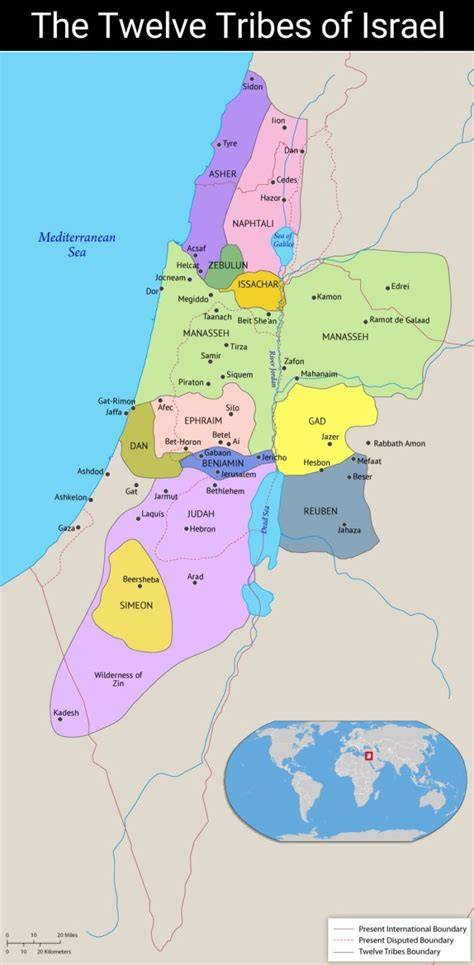
After years of battles, an aging Joshua divides up the land for the 12 tribes (Josh. 13-22). Most of this section is made up of lists of boundary lines.
And let’s be honest here, it’s kind of boring and hard to visualize. It’s like reading a map with no pictures!
For the Israelites, however, these lists were super important. This was the fulfillment of God’s ancient promise to Abraham that his descendants would inherit the land (Gen. 12:6-7).
It was finally all coming to pass, down to the last detail.
Joshua 13-21 Outline
- Allotments for the eastern territories (13:1-33).
- Allotments for the western territories (14:1-19:51).
- Provision for justice and worship (20:1-21:45).
Having entered the promised land (Joshua 1-4) and having conquered the promised land (Joshua 5-12), it is now time for the people of Israel to possess the promised land (Joshua 13-21).
The remaining tribal allotments, Israel’s establishment of the first center for religious life at Shiloh, and how Joshua urges the remaining tribes to take possession of the land, which the LORD, the God of their fathers, had given them, all belong to this section.
At long last, the nation will have rest.
Joshua 22-24: Serving the Lord in the Land
Joshua’s parting speech to the eastern tribes (22:1-34), Joshua’s parting speech to Israel’s leaders (23:1-16), and Joshua’s parting speech to the nation (24:1-33) form the closing section of the book.
This all leads to the final section found in chapters 23-24. Joshua gives two final speeches to the people-very similar to Moses’ final speeches in Deuteronomy.
Joshua reminds them of God’s generosity in bringing them into the land and rescuing them from the Canaanites.
He calls them to turn away from Canaanite gods and to be faithful to the covenant that they made with God.
If they do so, it will lead to life and blessing in the land. But if they’re unfaithful, Israel will call down on itself the same divine judgment the Canaanites experienced, and they’ll be kicked off the land back into exile.
The book concludes with Joshua leaving Israel with a choice. What are they going to do? That’s the big question that looms as the book of Joshua comes to a close.
“As for Me and My House”
Joshua’s covenantal vow is: “As for me and my house, we will serve the Lord”; 24:15.
The greatest feat of one's life is to remain faithful to Jesus until the end.
Key Concepts for Studying Joshua
Covenant
A binding agreement between two parties, typically involving a formal statement of their relationship, a list of stipulations and obligations for both parties, a list of witnesses to the agreement, and a list of curses for unfaithfulness and blessings for faithfulness to the agreement.
The OT is more properly understood as the old covenant, meaning the agreement established between God and his people prior to the coming of Jesus Christ and the establishment of the new covenant (NT).
Eschatology
Study of the end times as described in the Bible. Includes such topics as the return of Christ, the period of tribulation, the resurrection and judgment of all people, and the millennial reign of Christ on earth.
Joshua and Jesus Christ
Joshua is a type of Christ. His life resembles that of Jesus.
What Israel ultimately needs is something much greater than a plot of land on which to live. Joshua and the people will settle the land, but they will also die there because of sin’s curse.
What they need is a cross and a new creation. And while the story of Joshua doesn’t get us all the way there, it makes us long for that eschatological reality.
It makes us long with great expectation for this cross and for a city whose maker and builder is God, for a heavenly city, for a new creation in which everything is right and everything is at rest.
It will take some work to follow the Bible’s lead in making these connections, but we will make them before we’re done, and the journey will be worth it.
As we read and study together, may we rejoice in a fuller vision of the kind of Savior Christ is, the kind of people Christ saves, and the kind of salvation Christ brings.
In Christ, God dwelt among his people (Isa. 7:14; Matt. 1:23; John 1:14), and today the Lord is with us in an even more direct way through the Spirit (Matt. 28:20; 1 Cor. 3:16; 6:19).
In Genesis 3:15, God promised that a son of Eve would crush the head of the Serpent, who is Satan.
In Joshua 1, his promise to be with Joshua is a promise of victory in the land of Canaan, a promise in continuity with his promise to Moses.
In the course of this story we will see how God’s promises work together in this book to prepare us to see how every Old Testament promise finds fulfillment in Jesus Christ (2 Cor. 1:20).
God’s faithfulness in this story strengthens our faith in his promises to us through Jesus.
Joshua Bible Study Questions
Getting Started
- Read Deuteronomy 32:44-47. What was Israel to do and why?
- Read the first and last chapters of Joshua; write down the key words you expect to emerge time and again throughout the book.
- Based on your current understanding, how are the themes of land and rest fulfilled in Jesus Christ?
- What significance do these themes have for the Christian?
- From what you know so far about the book of Joshua, what excites you?
- What confuses you?
- What questions do you hope to answer through this study?
Joshua 1 Questions
- In a sentence, what is God commanding Joshua to do?
- What verse expresses the key to Joshua’s success?
- How many times does God command Joshua, “Be strong and courageous”?
- What was there to fear? See Numbers 13 for context.
- List the reasons God gave Joshua to be “strong and courageous.”
- What is the main reason?
- What assurances does the continuity between Moses and Joshua afford Joshua?
- How does God speak to and lead his people?
- What emotions might Israel have experienced when Joshua’s men gave the orders to begin preparations?
- Why had the Reubenites, the Gadites, and the half-tribe of Manasseh made a home east of the Jordan?
- What word does Joshua use to interpret God’s gift of land?
- What is surprising about the people’s response in Joshua 1:16-18?
- How does Hebrews 13:5-6 apply the promise “I will not leave you or forsake you” to Christians?
Joshua 2-4 Questions
- What does Rahab know about God and His work for Israel?
- What risks does Rahab take to protect the spies?
- How do Joshua 2:8-13 reflect hearing, receiving, and surrendering to God?
- What might the scarlet cord recall from the Passover account?
- What does the crossing of the Jordan reveal about God’s power?
- How does the ark of the covenant function in the crossing?
- Why were twelve stones taken from the Jordan?
- How can you make God’s faithfulness visible to your household and neighbors?
Joshua 5-7 Questions
- What does circumcision of the heart mean?
- What does the commander of the Lord’s army reveal when he answers Joshua, “Neither”?
- What does Jericho teach about trusting and waiting for God?
- What “walls” may hinder a closer relationship with God?
- Why was Israel defeated at Ai?
- How did Achan’s sin affect the wider community?
- Are you more concerned with how God sees you or how others see you?
- What must be relinquished in order to walk faithfully with God?
Joshua 8-12 Questions
- How does the victory at Ai contrast with the defeat at Ai?
- Why did the Gibeonites deceive Joshua?
- What happened because Israel did not seek counsel from the Lord?
- How do Rahab and the Gibeonites demonstrate that God welcomes those who turn to Him?
- What does Joshua 10 show about the Lord fighting for His people?
- How should the unique historical setting of the Canaanite battles shape the way Christians read these accounts?
Joshua 13-24 Questions
- Why were the tribal boundary lists important to Israel?
- How do the land allotments fulfill God’s promise to Abraham?
- What responsibilities accompanied the gift of the land?
- What warnings does Joshua give in his final speeches?
- What does it mean in practical terms to serve the Lord?
- What competing loyalties must believers reject?
- How does “As for me and my house, we will serve the Lord” challenge your household?
Suggested Four-Week Reading Plan
| Week | Focus | Suggested Passages |
|---|---|---|
| Week 1 | Overview and entering the land | Joshua 1-5 |
| Week 2 | Taking the land | Joshua 6-12 |
| Week 3 | Dividing the land | Joshua 13-21 |
| Week 4 | Serving the Lord in the land | Joshua 22-24 |
As you read and study, pay attention to repeated words and ideas, including land, rest, courage, obedience, covenant, presence, promise, remembrance, sin, judgment, mercy, and faithfulness.
Optional Study Features
A thorough Joshua study can include an introduction to the book of Joshua, an exploration of the book of Joshua in the context of Old Testament history, and an introduction to reading Old Testament historical narrative.
It can also include an exploration of key moments of remembrance in the book of Joshua, a comparison of the stories of Rahab and Achan, a map of the twelve tribes of Israel, and a look at the connections between Joshua and Jesus.
Weekly reflection prompts and two favorite hymns can provide additional opportunities for meditation and worship.
Verse-by-verse study can help readers understand the book’s structure, historical setting, geography, covenant themes, difficult passages, and connections to the rest of Scripture.
Group discussion questions and opening group activity for each session, in-depth personal Bible study between sessions, Scripture memory cards and coloring pages can support a full Bible study experience.
Prayer for Studying Joshua
Take a few minutes to ask for God’s help to grasp the story and significance of the book of Joshua, with all of its promises and commands.
Ask for a clearer vision of the kind of Savior Christ is, the kind of people Christ saves, and the kind of salvation Christ brings.