The Bible describes menstruation as a state of ceremonial uncleanness under the laws given to ancient Israel, not as a sin or a sign that a woman is morally bad. Leviticus 15 says that a woman’s regular menstrual period lasted seven days for purposes of ritual uncleanness, and it also gives instructions concerning contact, sexual relations, abnormal bleeding, and restoration to ceremonial cleanness.
These regulations belonged to the Old Testament system surrounding holiness, bodily discharges, and the sanctuary. They applied to men as well as women, and the Bible does not authorize shame, cruelty, humiliation, or blame toward menstruating women. In the New Testament, Jesus’ ministry and the teaching of the apostles emphasize that ritual uncleanness does not determine a person’s worth, spiritual status, or place among God’s people.
Menstruation in Leviticus 15
Leviticus 15 is the central biblical passage concerning menstruation. It begins with instructions about a man who has a bodily discharge and then addresses semen, sexual intercourse, a woman’s regular menstrual flow, and abnormal bleeding.
“When a woman has her regular flow of blood, the impurity of her monthly period will last seven days, and anyone who touches her will be unclean till evening.” “Anything she lies on during her period will be unclean, and anything she sits on will be unclean.”
“Whoever touches her bed must wash his clothes and bathe with water, and he will be unclean till evening.” “Whoever touches anything she sits on must wash his clothes and bathe with water, and he will be unclean till evening.”
“Whether it is the bed or anything she was sitting on, when anyone touches it, he will be unclean till evening.” These instructions describe ritual status and the actions required when someone came into contact with objects associated with the woman during her period.
What “unclean” meant in the Old Testament
In these passages, “unclean” did not mean sinful, wicked, dirty in a moral sense, or rejected by God. It referred to a ceremonial condition that affected participation in Israel’s religious system and required washing or waiting before a person became ceremonially clean again.
There was nothing sinful about burying the dead, yet it made you unclean. There is nothing sinful about having sex (the Bible encourages marital sex!) yet a couple was unclean after intercourse. This to me was a very important distinction because a menstruating woman was not bad.
And if she's not bad, then she's not being punished. If she's not being punished, there should be no shame during her monthly periods and the actions that surround them, including her times of impurity.
The list of things, animals, and people considered unclean includes leprosy on people, cloth, or houses; certain animals and their carcasses; human corpses, bones, and graves; and people with bodily discharges.
People with bodily discharges included men with unhealthy discharges, seminal discharges, women's menstruation, abnormal vaginal bleeding, and women after giving birth. The laws therefore did not single out women as the only people who could become ceremonially unclean.
Men and women were both subject to purity regulations
Leviticus 15 opens with regulations for men. “When any man has a bodily discharge, the discharge is unclean.” Whether the discharge continued flowing or was blocked, it made him unclean.
“Any bed the man with a discharge lies on will be unclean, and anything he sits on will be unclean.” Anyone who touched his bed or anything on which he sat had to wash his clothes and bathe with water, remaining unclean until evening.
“Whoever touches the man who has a discharge must wash his clothes and bathe with water, and he will be unclean till evening.” The regulations also addressed objects he touched, vessels, clothing, leather, and things used while riding.
“When a man has an emission of semen, he must bathe his whole body with water, and he will be unclean till evening.” Any clothing or leather that had semen on it had to be washed with water.
“When a man lies with a woman and there is an emission of semen, both must bathe with water, and they will be unclean till evening.” Sexual intercourse therefore also resulted in temporary ceremonial uncleanness for both partners.
These passages show that bodily processes connected with reproduction were treated within a broader system of ritual purity. Men had their own forms of uncleanness, and men and women could both transmit ceremonial uncleanness through contact with their bodies or belongings.
Sexual relations during menstruation
Leviticus also addresses sexual relations during a woman’s monthly period. “If a man lies with her and her monthly flow touches him, he will be unclean for seven days; any bed he lies on will be unclean.”
The passage does not describe the woman as morally corrupt, nor does it say that she has committed a sin simply because she is menstruating. It places sexual relations during the period within the regulations governing ceremonial uncleanness.
The instructions concerning sexual relations should be read alongside the wider rules in Leviticus 15. Both men and women could become ceremonially unclean after sexual activity, and both were required to wash and wait for a specified period.
Abnormal or prolonged bleeding
Leviticus 15 distinguishes a regular monthly period from bleeding that continued beyond the normal period or occurred at another time.
“When a woman has a discharge of blood for many days at a time other than her monthly period or has a discharge that continues beyond her period, she will be unclean as long as she has the discharge, just as in the days of her period.”
“Any bed she lies on while her discharge continues will be unclean, as is her bed during her monthly period, and anything she sits on will be unclean, as during her period.” Whoever touched those things had to wash his clothes and bathe with water.
“When she is cleansed from her discharge, she must count off seven days, and after that she will be ceremonially clean.” On the eighth day, she was to bring two doves or two young pigeons to the priest at the entrance to the Tent of Meeting.
The priest was to sacrifice one bird for a sin offering and the other for a burnt offering. “In this way he will make atonement for her before the LORD for the uncleanness of her discharge.”
The same basic pattern appears in the regulations for a man with a bodily discharge. After the discharge stopped, he was to count seven days, wash his clothes, bathe himself with fresh water, and then bring two doves or two young pigeons on the eighth day.
| Situation | Ritual response described in Leviticus 15 |
|---|---|
| Regular menstrual flow | Seven days of ceremonial uncleanness |
| Contact with a woman’s bed or seat | Washing, bathing, and uncleanness until evening |
| Sexual relations during menstruation | The man was unclean for seven days, and his bed was unclean |
| Prolonged or abnormal bleeding | Uncleanness continued as long as the bleeding continued |
| After abnormal bleeding stopped | Seven days, followed by offerings on the eighth day |
The purpose of the regulations
Leviticus explains the immediate religious concern: “You must keep the Israelites separate from things that make them unclean, so they will not die in their uncleanness for defiling my dwelling place, which is among them.”
“So you must warn the people of Israel to stay separated from things that make them unclean. If you don’t warn the people, they might make my Holy Tent unclean. And then they would have to die!”
The context of Leviticus 15 is therefore the holiness of God and the protection of the tabernacle from ritual defilement. The regulations were part of Israel’s covenant system, in which physical states, bodily fluids, death, disease, and contact with certain objects affected access to sacred space.
In the previous post on uncleanliness, I looked at how the people were called to be clean so that they would be holy as God is holy, and so that they would not profane the tabernacle. We may not know exactly why God made His list the way He did, but following God's protocols for cleanliness was important for the people spiritually.
Their obedience was not optional if they wanted to remain part of the community of the people of God. This does not mean that every regulation was given as a direct explanation of medical hygiene or that every unclean state represented personal wrongdoing.
Were these laws about health?
Some people have asserted that God chose certain things as being unclean for the sake of His people's health. Pork, for example, can make you very sick if it isn't cooked properly. Diseases can be transferred through bodily fluids.
There may be a certain logic to this explanation, but it isn't the reason given in the Bible. The text itself emphasizes ceremonial uncleanness and the need to protect the tabernacle from defilement.
These Levitical laws were concerned with the reduction of disease, and blood, though a symbol for life, in a very practical sense when lost, is a vehicle for decay and disease. Protecting the community through cleanliness, at a time when menstrual protection was not as effective, had to be a priority.
Ancient texts, without context can be difficult to understand. The biblical passage should not be used to claim that menstruating women were sinful, dangerous, or less valuable than men.
Menstruation and childbirth
Another purity concern for women was that they were unclean after giving birth. Leviticus 12 gives the steps to return to a state of cleanliness after childbirth.
“When she has a son, she is unclean for seven days as in the days of her menstruation.” The child was circumcised on the eighth day, and the mother then remained in the blood of purification for thirty-three days.
“She cannot touch any consecrated thing or enter the sanctuary.” It seems as if on that eighth day she would be able to attend her son's circumcision.
“When she has a daughter, she is unclean for fourteen days as in the days of her menstruation.” She remained in the blood of purification for sixty-six days.
After the days were complete for either a son or a daughter, she brought a sacrifice to the priest and was cleansed from the flow of her blood. A woman's blood of purification is different than her menstrual blood.
It is considered a pure blood, and the restrictions were on activities concerning the tabernacle or temple only. This would concern a Levite's wife particularly, as her husband would be involved in service to the tabernacle.
The restrictions on personal contact would be removed after the initial seven to fourteen days. Why is it longer for a daughter than for a son? It doesn't say in the scriptures.
Jewish tradition says that this is to account for the purity of the daughter as well, though there is never any mention of children being unclean. Others have suggested this is because her daughter will someday produce children of her own, an acknowledgment that the cycle of bringing life through blood will continue.
We don't know exactly why, just as we still don't know why is a rabbit is unclean but not a cricket. The important point is that childbirth and menstruation were included in a larger system of ritual purity rather than presented as evidence of a woman’s moral failure.
Did menstruating women have to be completely isolated?
The Bible gives basic rules, but it does not provide a complete day-to-day description of how every woman managed menstruation in every household. A woman was not forbidden from touching earthenware or wooden vessels, but the text does not explicitly explain whether she was permitted to cook, weave, sew, and care for her household.
In Leviticus, it says that anyone she touched was also unclean. It does not clearly state whether this applied in exactly the same way to her children, other women, servants, and every person in the household.
Jewish leaders and rabbis have debated just how to follow these commandments for centuries. What a niddah can and cannot do varies according to the different Jewish groups.
A woman experiencing her regular menses is called a “niddah” by Jewish speakers. According to one account, in ancient times a niddah was completely segregated, living in a “house for uncleanliness.” She did not eat food with others or attend to household duties.
The origin of this segregation lies in the custom, prevalent in Erez Israel long after the destruction of the Second Temple, of eating ordinary meals prepared according to the Levitical rules originally prescribed for sacred food. Such practices reflect later interpretations and applications, not necessarily a complete description of every biblical household.
Within modern Orthodox Jews, there are many variances in what niddah may do. According to one account, a woman may cook, clean, hold her children and so forth.
She must not touch her husband, and they must not share a bed to sleep, but he can sleep on her bed if she's not home. She cannot eat from a communal dish of food, though she may serve herself from it onto her plate and eat from it.
She participates in regular family meals and can travel. She cannot accept something passed to her by her husband, but he can set it down for her to pick up or toss it to her. After the seven days, she visits a mikveh for immersion.
These rules go beyond the direct commands of the Bible. They are careful rabbinic attempts to take Leviticus 15 and apply it to everyday situations.
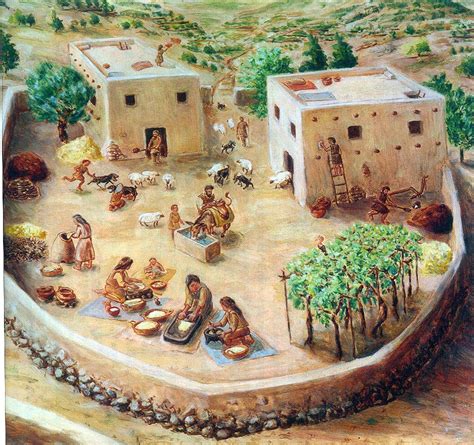
What might life have looked like in biblical times?
We don't have a whole lot in the Bible about real women experiencing their time of the month. The one slightly humorous story found in Genesis is when Rachel uses her time of the month as an excuse to get out of trouble in Genesis 31:35.
The Bible mentions tossing away a menstrual cloth in Isaiah 30:22, so we know cloths were used. Though likely they were washed and reused many times before being tossed out.
There is some evidence that sponges and simple tampons were used in Egypt and Greece, but these are contested by various historians. Whatever the method, considering that the people of Israel were on the move for forty years after receiving these commands, women had devised a way of being mobile during their periods.
The historical record does not tell us enough to reconstruct the daily experience of every menstruating woman. Household resources, social position, location, religious tradition, and later interpretations would all have affected how these rules were practiced.
Menstruation and access to worship
Based on Leviticus 15:31, a niddah's restrictions would have mostly been on her involvement in temple worship and not excluding others from temple worship.
It is likely that a menstruating woman would have refrained from sex and would not have shared her bed or her seat with her husband, and probably others. Because the context of Leviticus 15 is about not defiling the tabernacle, she would have not attended the temple ceremonies.
She could participate in family prayers at home. The precise details of worship and household practice varied from group to group, based on location, tradition, and rabbinic teaching.
Some later religious communities used purity laws to restrict women from multiple aspects of church life, including communion and leadership. The ancient church deemed women inherently unclean and we have been attempting to untangle this ever since.
These later restrictions should not automatically be treated as direct commands of Leviticus 15. The biblical passage concerns ceremonial status within the Old Testament system and does not say that menstruating women are inherently unworthy of prayer, community, leadership, or relationship with God.
The Bible does not speak of menstrual shame
What the scriptures do not say is important. They do not speak of a woman's shame. Indeed for all of the listed unclean persons, there is no permission to be cruel, to humiliate, or to blame.
Uncleanliness affected both genders at different times. Both men and women were considered unclean when they had bodily discharges. Both men and women could transfer uncleanliness to others when they were unclean.
The biblical regulations do not command people to insult a woman, expose her private condition, deny her dignity, or treat her as morally inferior. They describe ritual procedures connected with holiness and the sanctuary.
Menstruation is a natural biological function. Period blood isn’t sinful but does need washing and in this way the cycle serves us with the reminder that while we suffered the fall, we must, and can, be washed clean.
Menstruation in the teachings of Jesus and the New Testament
The Old Testament system of ceremonial cleansing is interpreted through a new covenant in the New Testament. The new covenant we have through the shedding of Jesus’ blood rid us of the need for the ceremonial cleansing demanded in the Old Testament.
Context is key and the Levitical laws were full of reminders of the holiness of God and the lengths humans needed to go to to purify themselves. The New Testament presents faith in Christ rather than ceremonial status as the basis of belonging to God.
Referring back to the Jewish prayer about being blessed not to be born a woman, the Apostle Paul has some interesting thoughts. The early church was struggling with accepting uncircumcised Gentiles as equals in Christ.
They weren't sure if they should be eating with them because Gentiles did not follow the purity requirements and so they were unclean. Paul launches into a sermon on being saved by faith rather than by the law.
“For you are all sons of God through faith in Christ Jesus. For all of you who were baptized into Christ have clothed yourselves with Christ. There is neither Jew nor Greek, there is neither slave nor free man, there is neither man nor female; for you are all one in Christ Jesus. And if you belong to Christ, then you are Abraham's descendants, heirs according to promise.” - Galatians 3:26-29
Physically, there were still different cultural backgrounds, there were still slaves, and there were still both men and women. But when it comes to matters of faith and being heirs of the kingdom, there was no division.
A man could feel no superiority that he was able to fulfill more aspects of the law than a woman, a Gentile, or a slave. His merit, like theirs, was based on what Jesus had done, not on what he was doing.
Peter’s teaching about ritual uncleanness
The apostle Peter also addresses the practice of being unclean. After receiving a vision from the Lord and seeing the Holy Spirit fall on the Gentiles, Peter says:
“You yourself know how unlawful it is for a man who is a Jew to associate with a foreigner or visit him; and yet God has shown me that I should not call any man unholy or unclean.” - Acts 10:28
That statement challenged a culture that based whether you were “in” or “out” on being ritually clean. There was a literal checklist of lifestyle choices that proved whether or not you were fit for association with the children of God.
Peter was saying that it isn't what we do, but what God does that determines a person's cleanliness. Both men were taking their cue from Jesus.
We see Jesus touch the untouchable and sit down to eat with those who were considered unclean. Jesus’ refusal to be inhibited by cleanliness traditions got him into hot water with the authorities on numerous occasions.
Jesus and the Forces of Death: Ritual Purity in the Gospels - Epi...
The woman with the ongoing bleeding
The New Testament contains a significant story about a woman who had suffered from bleeding for many years. Her condition would have been understood in relation to the purity concerns described in Leviticus 15.
Rather than treating the woman as morally contaminated or refusing to engage with her, Jesus responds to her with compassion and restores her publicly. The story demonstrates that ritual concerns do not give permission to despise a suffering woman or exclude her from God’s mercy.
Jesus’ ministry repeatedly places compassion, faith, healing, and human dignity at the center. His actions show that people affected by conditions associated with ritual uncleanness were not beyond God’s care or welcome.
Why the biblical language can feel difficult today
Reading chapters like Leviticus 15 can make a woman feel inferior, gross, left out, or unfairly treated. Though we don't know all the answers to why God put the system in place that He did, a careful reading of this chapter shows that in regards to a person's worth, this isn't a woman's rights issue at all.
It is also important to recognize the distance between the ancient Israelite system and modern Christian practice. Ancient texts, without context can be difficult to understand.
The ancient church fell foul of this and went on to use these passages to prohibit women from multiple aspects of church life including communion and leadership. They deemed women inherently unclean and we have been attempting to untangle this ever since.
Remembering that men were not excluded from ritual cleansing is helpful. When we return to Leviticus 15, we see equal uncleanness associated with male seminal discharge.
These passages can be confusing if you take them at face value for all women, for all time. The New Testament’s teaching about Christ, faith, equality, and the removal of ritual barriers must be considered when Christians ask how these laws apply today.
Periods, faith, and Christian attitudes today
Does all this apply to a modern Christian woman? The ceremonial regulations of Leviticus 15 belong to the Old Testament covenant and do not make menstruating Christian women spiritually unclean.
A modern Christian woman does not need to withdraw from church, communion, prayer, Christian service, family life, education, employment, or ordinary relationships because she is menstruating. The Bible does not teach that a period makes her less holy, less loved, or less capable of serving God.
Society has a complicated relationship with periods. Period product adverts bear no resemblance to the lived experience of women. Menstrual blood isn’t blue, nor do most women feel like roller-skating throughout their time of the month.
It is only in recent years when periods have been talked about in anything more than hushed tones, and girls still pass tampons between them at school like contraband. The Bible doesn’t shy away from periods and neither should we.
Midwife Michelle Tant explains that to ignore and fear the period is to misunderstand God's message of hope. And she suggested it should be talked about more, not less.
Acknowledging the vulnerability of women during childbearing and menses also served as a protection from sexual advances at a time when women held little autonomy over their bodies. This historical context can help explain why separation and sexual restrictions appeared in ancient regulations without turning menstruation itself into a moral defect.
Menstruation as part of creation and human vulnerability
The woman's body and cycle embody so many messages of creation, loss, God's goodness and his faithfulness through pain. The world's preoccupation with minimising the effect of the cycle is not reflected in the Bible.
In the Bible it is protected and acknowledged as both a vulnerability and life-giving strength. To ignore and fear the period is to misunderstand God's message of hope.
It should be talked about more, not less. Therefore, I welcome the recent research and hope that it sparks more conversations, including Christian circles and perhaps even pulpits.