The historical case for the resurrection of Jesus Christ is built around three central claims: Jesus was crucified and died, he was buried in a tomb that was found empty a few days later, and his disciples subsequently experienced encounters with someone they believed to be the risen Jesus.
The first claim is regarded as nearly certain by historians, while the empty tomb is considered highly probable by many scholars and the disciples’ post-resurrection experiences are widely accepted as historical events that require explanation. The crucial question is which explanation best accounts for these facts.
Why the Resurrection Is Central to Christianity
The doctrine of the Resurrection is central to Christianity, so much so that St. Paul states: "If there is no [R]esurrection of the dead, then not even Christ has been raised. And if Christ has not been raised, our preaching is useless and so is your faith." -1 Corinthians 15:13-15
For me, the bodily resurrection of Jesus is the litmus test for the truthfulness of Christianity. If Jesus genuinely died and rose again, it makes it extremely likely that he was who he claimed to be: the physical incarnation of the Son of God ( Matthew 16:16). If it did not happen, then Christianity would be a false religion.
Clearly, the resurrection of Jesus is unique, even within the context of many other claimed miracles about Jesus. Indeed, it is foundational to the Christian faith.
From the days of the early church, it was central to the gospel message they preached: that Christ died for our sins, was buried, rose again, and appeared to many of his disciples ( 1 Corinthians 15:3-6, see also Acts 2:22-32).
On the other hand, if Jesus had died and stayed dead like any other human being, then as Paul says, Christians are most to be pitied of all people, for their faith would be based on a lie ( 1 Corinthians 15:19).
The Historical Starting Point: Jesus’ Crucifixion and Death
It is a fairly well-established fact that Jesus Christ was publicly executed in Judea in the 1st Century A.D., under Pontius Pilate, by means of crucifixion, at the behest of the Jewish Sanhedrin.
The non-Christian historical accounts of Flavius Josephus, Cornelius Tacitus, Lucian of Samosata, Maimonides and even the Jewish Sanhedrin corroborate the early Christian eyewitness accounts of these important historical aspects of the death of Jesus Christ.
Almost no historian disputes that Jesus lived in the first century AD, carried out a ministry for a few years and was crucified to death by the Romans.
Even a skeptical scholar such as Bart Ehrman argues vigorously for the historical veracity of these basic facts, based on both Christian and non-Christian sources.
| Historical claim | Assessment presented in the material |
|---|---|
| Jesus was crucified and died | Near-certain |
| Jesus was buried in a tomb that was found empty a few days later | Highly probable |
| Several disciples encountered someone they believed to be the risen Jesus | Near-certain as an account of their experiences |
The Three Core Historical Claims
When asked to believe in something, scientists often ask questions about evidence. There certainly is evidence for the Resurrection, which can be summarized around three historical claims: 1) Jesus was crucified and died, 2) his body was buried in a tomb that was found empty a few days later, and 3) his disciples experienced encounters with who they believed to be the newly resurrected body.
I will show that these three claims, backed by historical evidence and scholarly consensus, together constitute a compelling case for the Resurrection.
Jesus Was Crucified and Died
The first claim is the least controversial. Almost no historian disputes that Jesus lived in the first century AD, carried out a ministry for a few years and was crucified to death by the Romans.
The accounts describe a public execution by crucifixion, a method that involved severe physical trauma and was intended to result in death. The historical question of Jesus’ death is therefore substantially different from the question of how his followers later interpreted their experiences.
Jesus Was Buried in a Tomb
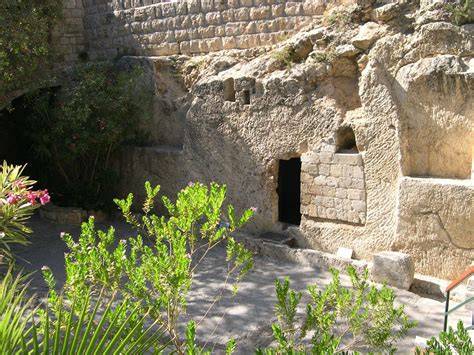
The second claim is Jesus’ burial and the empty tomb. Skeptical scholars such as Bart Ehrman dispute this, arguing that it is more likely that Jesus’ body was left to rot for a few days, then buried in a common pit for criminals.
However, Ehrman’s views do not represent a widespread consensus. More comprehensive examinations of Roman crucifixion and Jewish burial practices by specialist scholars show us that the gospel account of Jesus’ burial in a tomb by Joseph of Arimathea is historically credible.
We have reason to believe Jesus’ body was originally in the tomb based on the accusation made by the Jewish authorities. The accusation claims that Jesus’ disciples had stolen His body, indicating the existence of a real missing body.
If the body had not been put into an identifiable place (e.g., a tomb), the charge of theft would not have been necessary.
The Tomb Was Found Empty
Similarly, there are strong arguments to support the claim that the tomb was found empty a few days later.
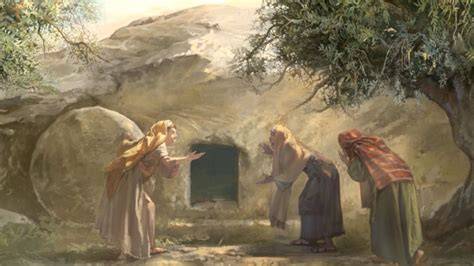
A commonly cited reason is that the gospel accounts are rendered more credible by their agreement that women were the first witnesses to the empty tomb.
More recently, John Granger Cook has argued that based on linguistic, historical, and cultural reasons, it is unlikely Paul mentions a burial and resurrection ( 1 Corinthians 15:3-7 ) without presupposing an empty tomb.
The empty tomb does not provide as much direct evidence of Jesus’ Resurrection and spiritual transformation as His risen appearances do; however, it indirectly corroborates His Resurrection and indicates His continuity with His former embodiment.
The Disciples Experienced Post-Resurrection Appearances
The third claim is that in the weeks after his death, his disciples claimed to have encountered the risen Jesus. The majority of scholars in the field concur that these visual experiences did occur.
More than mere visual apparitions, the accounts of Jesus’ post-resurrection appearances are also replete with tactile details (e.g. Matthew 28:9, Luke 24:30, 40, John 20:22, 27).
Additionally, only a limited number of Jesus’ disciples claimed to have witnessed the risen Jesus, as we see in the ancient creed of 1 Corinthians 15:3-7.
Thus, the claimed post-resurrection appearances of Jesus are distinct from incidences of mass psychological hysteria commonly encountered in other religious contexts.
The Gospel Accounts and the Nature of the Risen Jesus
The Gospel accounts show substantial agreement about Jesus’ transformed embodiment in His risen appearances. Though described in different ways, several characteristics of these accounts are quite similar.
For instance, Matthew, Luke, and John all indicate that in His risen appearances, Jesus was divinely and spiritually transformed.
Furthermore, this transformation outshone His former corporeality, so much so that the apostles at first had doubts about whether Jesus was in this divine-spiritual appearance.
Jesus overcame these doubts by revealing His identity (and continuity with His former embodiment) through the marks of His Crucifixion (Luke and John 20) and through His communication with and missioning of them (Matthew and John 21).
Hence, there are common elements in the three different Resurrection narratives that help us verify the claim that Jesus really did resurrect after His death.
Matthew, Luke, and John all affirm that, after His Crucifixion and death, Jesus appears in a divine-like glory, power, and spirit in which He shows continuity with His former embodiment.
The Early Testimony of Paul
Historical evidence of the Resurrection is found in the writings of St. Paul.
St. Paul’s testimony about the Resurrection (1 Corinthians 15) gives scholars of all subsequent generations the opportunity to test the historicity of his and the other witnesses’ claims.
Paul seems to be acquainted with many of the witnesses he lists, and he is aware that these witnesses are still alive.
While writing within living memory of the Resurrection, St. Paul challenges his Corinthian audience to “check out the facts” and investigate Paul’s claim through the testimonies of the living witnesses.
The early Christian message preserved in 1 Corinthians 15 states that Christ died, was buried, was raised, and appeared to witnesses. This passage is important because it presents the resurrection proclamation as a tradition received and transmitted within the earliest Christian movement.
Paul’s Witness Dilemma
We can also verify the claims made about Jesus’ Resurrection through St. Paul’s witness dilemma (1 Corinthians 15:14-32), which goes as follows:
- First side of the dilemma: “. if Christ has not been raised, then our preaching is in vain and your faith is in vain. We are also found to be false witnesses of God because we witnessed before God that He raised Christ. ”
- The other side of the dilemma: “If for this life only we have hoped in Christ, we are of all men most to be pitied. Why am I in peril every hour? . I die every day! What do I gain if, humanly speaking, I fought with beasts at Ephesus? If the dead are not raised, ‘Let us eat and drink, for tomorrow we die’”
Paul uses this dilemma to show (in a legal fashion) that he and the other witnesses have everything to lose and nothing to gain by bearing false witness to the Resurrection of Christ.
If the witnesses lacked authentic motives for preaching the Resurrection, they would have had self-interested ones.
However, as Paul shows, they could not have had self-interested motives because false preaching of the Resurrection would have led either to risking their salvation for undermining God’s will (if they believed in God) or to persecution for nothing (if they did not believe in God and a Resurrection).
The Sincerity of the Early Witnesses
To begin with, we have demonstrably sincere eyewitness testimony. Early Christian apologists cited hundreds of eyewitnesses, some of whom documented their own alleged experiences.
Many of these eyewitnesses willfully and resolutely endured prolonged torture and death rather than repudiate their testimony.
This fact attests to their sincerity, ruling out deception on their part.
According to the historical record (Acts 4:1-17; Pliny’s Letters to Trajan, X.97, etc.) most Christians could end their suffering simply by renouncing the faith.
Instead, it seems that most opted to endure the suffering and proclaim Christ’s resurrection unto death.
Granted, while martyrdom is remarkable, it is not necessarily compelling. It does not validate a belief so much as it authenticates a believer (by demonstrating his or her sincerity in a tangible way).
What makes the earliest Christian martyrs remarkable is that they knew whether or not what they were professing was true.
They either saw Jesus Christ alive-and-well after His death or they did not.
If it was all just a lie, why would so many perpetuate it given their circumstances?
Why would they all knowingly cling to such an unprofitable lie in the face of persecution, imprisonment, torture, and death?
The Transformation of the Apostles
Among the most illustrious of the professed eyewitnesses were the Apostles.
They collectively underwent an undeniable change following the alleged post-resurrection appearances of Christ.
Immediately following His crucifixion, they hid in fear for their lives.
Following the resurrection they took to the streets, boldly proclaiming the resurrection despite intensifying persecution.
What accounts for their sudden and dramatic change?
It certainly was not financial gain.
The Apostles gave up everything they had to preach the resurrection, including their lives.
Their transformation does not by itself prove that the Resurrection occurred, but it is a historical fact that the rise of the early Christian movement requires explanation.
The Conversion of Paul and James
A second line of evidence concerns the conversion of certain key skeptics, most notably Paul and James.
Paul was of his own admission a violent persecutor of the early Church.
After what he described as an encounter with the resurrected Christ, Paul underwent an immediate and drastic change from a vicious persecutor of the Church to one of its most prolific and selfless defenders.
Like many early Christians, Paul suffered impoverishment, persecution, beatings, imprisonment, and execution for his steadfast commitment to Christ’s resurrection.
James was skeptical, though not as hostile as Paul.
A purported post-resurrection encounter with Christ turned him into an inimitable believer, a leader of the Church in Jerusalem.
We still have what scholars generally accept to be one of his letters to the early Church.
Like Paul, James willingly suffered and died for his testimony, a fact which attests to the sincerity of his belief (see Acts and Josephus’ Antiquities of the Jews, XX.ix.1).
These conversions are historically significant because Paul and James were not simply anonymous members of a later community: they became prominent figures within the earliest Christian movement.
Enemy Attestation and the Empty Tomb
A third line and fourth line of evidence concern enemy attestation to the empty tomb and the fact that faith in the resurrection took root in Jerusalem.
Jesus was publicly executed and buried in Jerusalem.
It would have been impossible for faith in His resurrection to take root in Jerusalem while His body was still in the tomb where the Sanhedrin could exhume it, put it on public display, and thereby expose the hoax.
Instead, the Sanhedrin accused the disciples of stealing the body, apparently in an effort to explain its disappearance (and therefore an empty tomb).
We are now able to reconstruct the events surrounding the Jewish authorities’ accusation that the apostles stole Jesus’ body.
The moment the apostles started preaching that Jesus had appeared to them (and began making converts based on that preaching), their adversaries would have likely made every attempt to produce a body that would disprove (or undermine) the apostolic claim.
Apparently, they could not do this.
We might infer from this that the authorities made every attempt to find out where the body was laid, locate the site of the grave/tomb, and find that the body was gone.
Now, if the authorities could have identified where the body was, we must suppose that His followers could do the same.
Given this, it is likely that the women and other apostles witnessed the empty tomb, and shortly thereafter, Jesus appeared to them, spiritually transformed.
Alternative Explanations
What theory can best explain these three facts?
Skeptics have proposed a wide array of non-supernatural explanations.
- Some disciples stole the body ( Matthew 28:15).
- The disciples were experiencing mass group hallucinations.
- The disciples went to the wrong tomb.
- Jesus survived his crucifixion somehow.
A combination of these alternative theories could be coincidentally true at the same time, resulting in the improbable but not impossible illusion that Jesus was resurrected.
However, once one removes the requirement that some non-supernatural explanation must be true, it seems clear to me that the theory that Jesus rose from the dead is a much more plausible explanation than any of the other ones.
The Disciples Stole the Body
First, the disciples stole the body.
If this were the case, they would have known the resurrection was a hoax.
They would not therefore have been so willing to suffer and die for it.
All of the professed eyewitnesses would have known that they hadn’t really seen Christ and were therefore lying.
With so many conspirators, surely someone would have confessed, if not to end his own suffering then at least to end the suffering of his friends and family.
The first generation of Christians were absolutely brutalized, especially following the conflagration in Rome in AD 64 (a fire which Nero allegedly ordered to make room for the expansion of his palace, but which he blamed on the Christians in Rome in an effort to exculpate himself).
Surely someone would have confessed the truth under the threat of such terrible pain.
The fact is, however, we have no record of any early Christian denouncing the faith to end his suffering.
Jesus Survived the Crucifixion
Some have suggested that Christ faked His death and later escaped from the tomb.
This is patently absurd.
According to the eyewitness testimony, Christ was beaten, tortured, lacerated, and stabbed.
He suffered internal damage, massive blood loss, asphyxiation, and a spear through His side.
There is no good reason to believe that Jesus Christ (or any other man for that matter) could survive such an ordeal, fake His death, sit in a tomb for three days and nights without medical attention, food or water, remove the massive stone which sealed His tomb, escape undetected (without leaving behind a trail of blood), convince hundreds of eyewitnesses that He was resurrected from the death and in good health, and then disappear without a trace.
Such a notion is ridiculous.
Mass Hallucination
Another proposal is that the disciples experienced mass group hallucinations.
More than mere visual apparitions, the accounts of Jesus’ post-resurrection appearances are also replete with tactile details (e.g. Matthew 28:9, Luke 24:30, 40, John 20:22, 27).
Additionally, only a limited number of Jesus’ disciples claimed to have witnessed the risen Jesus, as we see in the ancient creed of 1 Corinthians 15:3-7.
Thus, the claimed post-resurrection appearances of Jesus are distinct from incidences of mass psychological hysteria commonly encountered in other religious contexts.
The Significance of the Women as First Witnesses
Finally, a fifth line of evidence concerns a peculiarity of the eyewitness testimony.
In all of the major resurrection narratives, women are credited as the first and primary eyewitnesses.
This would be an odd invention since in both the ancient Jewish and Roman cultures women were severely disesteemed.
Their testimony was regarded as insubstantial and dismissible.
Given this fact, it is highly unlikely that any perpetrators of a hoax in first century Judea would elect women to be their primary witnesses.
Of all the male disciples who claimed to see Jesus resurrected, if they all were lying and the resurrection was a scam, why did they pick the most ill-perceived, distrusted witnesses they could find?
Dr. William Lane Craig explains, “When you understand the role of women in first-century Jewish society, what’s really extraordinary is that this empty tomb story should feature women as the discoverers of the empty tomb in the first place.
Women were on a very low rung of the social ladder in first-century Israel.
There are old rabbinical sayings that said, 'Let the words of Law be burned rather than delivered to women' and 'blessed is he whose children are male, but woe to him whose children are female.'
Women’s testimony was regarded as so worthless that they weren’t even allowed to serve as legal witnesses in a Jewish court of Law.
In light of this, it’s absolutely remarkable that the chief witnesses to the empty tomb are these women.
Any later legendary account would have certainly portrayed male disciples as discovering the tomb-Peter or John, for example.
The fact that women are the first witnesses to the empty tomb is most plausibly explained by the reality that-like it or not-they were the discoverers of the empty tomb!
This shows that the Gospel writers faithfully recorded what happened, even if it was embarrassing.
This bespeaks the historicity of this tradition rather than its legendary status" (Dr. William Lane Craig, quoted by Lee Strobel, The Case For Christ, Zondervan, 1998, p. 293).
The Rise of Christian Messianism
We can verify the claims made about Jesus’ Resurrection through two important arguments made by N.T. Wright.
The first is the growth of the Christian messianic movement after the public persecution of its messiah (as discussed in Wright’s volume, Jesus and the Victory of God).
After the public humiliation, persecution, and execution of their messiah, the disciples maintained their identity and did not replace Jesus as the true leader of their community.
Wright points out that no other messianic movement displayed this behavior: ". In not one case do we hear of any group, after the death of its leader, claiming that [H]e was in any sense alive again, and that therefore Israel’s expectation had in some strange way actually come true."
We are now led to N.T. Wright’s probative questions.
- Why didn’t the Church follow the patterns of other groups whose leaders had been persecuted?
- Why did it (uniquely) consider Jesus as its continued leader?
- Why did it consider Jesus (after the Crucifixion) to be the fulfillment of Israel’s destiny?
- Furthermore, why did it organize itself so uniquely?
- Why did it worship Jesus as the Lord and endure persecution for that worship?
- How, with a publicly humiliated and executed “Messiah” as its sole leader, did it become one of the most inspired and dynamically expansive missionary organizations in the history of religions?
The powerful cause of this unique phenomenon would seem to be the post-Resurrection appearances of Jesus in combination with Jesus’ gift of the Holy Spirit, which enabled the apostles (along with other missionaries) to perform miracles in the name of Jesus.
The Christian Transformation of Jewish Resurrection Belief
N.T. Wright’s second and more extensive argument for the historicity of the Resurrection appearances stems from several Christian mutations of the Jewish doctrine of Resurrection prevalent at the time of Jesus (Second-Temple Judaism).
In his book, The Resurrection of the Son of God, Wright shows through a study of the New Testament that Christianity changed the dominant Jewish view of “Resurrection” in five major ways:
- The Jewish picture of the Resurrection was a return to the same kind of bodily life as the one experienced before death (except in a new world with the righteous).
- Christian views always entailed transformation into a very different kind of life-incorruptible, glorious, and spiritual-while still maintaining embodiment.
- In Second Temple Judaism, no one was expected to rise from the dead before Yahweh's initiation of the final age.
- However, Christians claimed that this occurred with Jesus.
- No one connected the Messiah to the Resurrection or the Jewish doctrine of the Resurrection to the Messiah prior to Christianity.
- For the Jewish people, the eschatological age was in the future; for Christians, the eschatological age had already arrived (and would be completed in the future).
- The doctrine of Resurrection is central to the earliest writings of Christianity, central to the writings of Paul and all the Gospel writers, and is the interconnecting theme among early Christian doctrines.
- Second Temple Judaism does not place the Resurrection in any such central role.
What could explain this radical change in the Jewish doctrine of the Resurrection?
Could it be Jesus's preaching?
This is not tenable because Jesus does not center his doctrine on the Resurrection but rather on the arrival of the kingdom.
Furthermore, he does not connect the Resurrection to His Messiahship, and he certainly does not talk about the Resurrection as a transformed embodiment, as is evident in early Christian doctrine.
The obvious explanation would be that many witnesses saw the risen Jesus in a transformed embodied state (manifesting at once a spiritual transformation that had the appearance of divine glory and power and some form of embodiment which was continuous with Jesus’ embodiment in His ministry).
Historical Evidence and Methodological Naturalism
The secular community’s response to the same evidence has been predictably apathetic in accordance with their steadfast commitment to methodological naturalism.
For those unfamiliar with the term, methodological naturalism is the human endeavor of explaining everything in terms of natural causes and natural causes only.
If an alleged historical event defies natural explanation (e.g., a miraculous resurrection), secular scholars generally treat it with overwhelming skepticism, regardless of the evidence, no matter how favorable and compelling it may be.
In our view, such an unwavering allegiance to natural causes regardless of substantive evidence to the contrary is not conducive to an impartial (and therefore adequate) investigation of the evidence.
We agree with Dr. Wernher von Braun and numerous others who still believe that forcing a popular philosophical predisposition upon the evidence hinders objectivity.
Or in the words of Dr. von Braun, “To be forced to believe only one conclusion . would violate the very objectivity of science itself” (quoted by Seagraves, K., in Jesus Christ Creator, Creation-Science Research Center, 1973, p. 7-8).
What Science Can and Cannot Determine
Now, some might have independent reasons for assuming that supernatural explanations are a priori improbable.
More specifically, a scientist might feel specially compelled to disbelieve the claim of supernatural occurrences.
After all, one of the narratives of scientific progress is that things which we thought to be supernatural before turned out to have mundane scientific explanations.
Isn’t it more judicious for careful scientists to be agnostic and assume that a better, non-supernatural explanation can someday be found?
With these objections in mind, there is potential wriggle room for some rational skepticism, but we shouldn’t overstate this wriggle room.
Firstly, science cannot disprove the Resurrection, as we no longer have empirical access to the body of Jesus or any other relevant physical evidence.
Secondly, the Resurrection is a one-time phenomenon that does not conform to the regularity and repeatable pattern of most events studied by science.
Science is agnostic about such events.
Thus, if one wants to remain skeptical, one cannot say that science compels them to do so.
As a scientist, my daily work consists of encountering God through the empirical investigation of his creation.
I work on an experiment in which lasers are used to detect tiny shifts in the energy structure of a specially chosen molecule, from which we can measure the shape of an electron orbiting the molecule.
Whether the electron is perfectly round or not may hold the secret to understanding how all the matter in the universe is put together.
Because of how small any imperfection in the electron’s shape is predicted to be, we must perform our measurement extremely carefully.
We comb our experimental apparatus for even the tiniest imperfections, as even the smallest flaw might fool us into thinking the electron to be round when it is not, or vice versa.
No stone is left unturned and no hypothesis is left unquestioned as we seek to understand every single way in which the experiment can go wrong.
Such is the standard operating procedure in this quirky, ambitious, neurotic sub-field of physics called precision measurement.
Historical investigation differs from laboratory experimentation, but it likewise involves examining testimony, context, competing explanations, and the explanatory power of the available evidence.
Historical Evidence Versus Definitive Proof
As we have just discussed, there is strong evidence that Jesus’ resurrection happened.
However, this evidence is not definitive.
Alternate explanations are available.
As a scientist, I understand why someone might see this and still walk away in unbelief.
In my opinion, historical evidence gives us a rational foundation to trust in Jesus, but it is not enough.
The historical case therefore depends not on a single isolated argument but on the cumulative explanatory power of several facts: Jesus’ death by crucifixion, the burial tradition, the empty-tomb tradition, the early proclamation of the Resurrection, the reported appearances, the transformation of the disciples, the conversions of Paul and James, the role of the women, and the rapid emergence of a resurrection-centered messianic movement in Jerusalem.
These lines of evidence: the demonstrable sincerity of the eyewitnesses (and in the apostles’ case, compelling, inexplicable change), the conversion and demonstrable sincerity of key antagonists- and skeptics-turned-martyrs, the fact of the empty tomb, enemy attestation to the empty tomb, the fact that all of this took place in Jerusalem where faith in the resurrection began and thrived, the testimony of the women, the significance of such testimony given the historical context; all of these strongly attest to the historicity of the resurrection.
Faith and Personal Evidence
The gospels themselves were not originally written for the purpose of proving skeptics wrong.
Rather, they were “…written so that you may believe that Jesus is the Christ, the Son of God, and that by believing you may have life in his name " ( John 20:31, ESV).
If Jesus is real, then He calls us to eternal life, not rational insight.
My own faith in Jesus works like this.
It is informed by the evidence, but it is much more than that.
After examining the evidence, at some point I chose to suspend any remaining doubts and see what would happen if I acted as if it was all real.
A cynical skeptic might comment that I am merely imagining things.
But to me, Jesus’ call is unrelenting, and the historical evidence gives me further rational reasons not to ignore it.
And Jesus certainly does not want me to know him like I know cold, dispassionate facts about molecules or electrons.
Instead, he wants me to know him as a living, personal, loving God.
He challenges me to stop treating him like a philosophical proposition and surrender all to him, the God-man who showed through his resurrection that he has achieved victory over death.
He gives us reason to hope that one day, all of us, too, will be resurrected as he was, “in a moment, in the twinkling of an eye, at the last trumpet” ( 1 Corinthians 15:52, ESV).
So I choose to believe.
In doing so, I join in the confession of millions of Christians throughout time and space who also chose to follow Christ and let him change their hearts, minds, and way of life.
The more I choose to surrender my life to Jesus, the more I grow in my relationship and trust in him.
Far from undermining my scientific work, my faith gives it a purpose, meaning, and ultimate foundation.
tags: #jesus #christ #resurrection #proof