Psalm 112:7 teaches that the righteous person does not fear bad news because his heart is steadfast, trusting in the Lord. This does not mean that the righteous are insulated from trouble, loss, or threats; it means that they are not ruled by them.
Bad news is inevitable in a fallen world-wars, illness, financial upheaval-but the righteous man’s first response is not panic. Confidence rests not in favorable circumstances, personal strength, or human protection, but in the Lord Himself.
The Meaning of Psalm 112:7
Psalm 112 describes the man who delights in God’s commands, and verse 7 opens with this calm declaration: “He does not fear bad news.” The psalmist is not naïve; he simply believes God’s word that nothing arrives outside the Lord’s sovereign care (Romans 8:28).
The righteous person is not insulated from trouble, loss, or threats, but he is not ruled by them. Israel regularly faced invasion, famine, and political instability, yet the faithful were called to rest in the Lord’s covenant faithfulness.
“Bad news” represents trials, challenges, or adverse circumstances that may arise in life. It may refer to the death of friends, loss of substance, public calamities, wars and rumours of wars, commotions, confusions, convulsions, and revolutions in states, kingdoms, and nations.
It may also refer to an evil report raised against a person. The righteous person knows that he must go through good report and bad report, and especially when a report is false and for the sake of truth and righteousness, it gives him no uneasiness.
“He Does Not Fear Bad News”
“He does not fear bad news.” Proverbs 1:33 promises, “Whoever listens to Me will dwell in safety, secure from the fear of evil.” That safety is not the absence of trouble; it is the absence of terror.
Proverbs 3:25-26 likewise teaches freedom from sudden fear because the Lord is the believer’s confidence. “Do not fear sudden danger or the ruin that overtakes the wicked, for the LORD will be your confidence and will keep your foot from the snare.”
Isaiah 41:10 gives the same assurance: “Do not fear, for I am with you; do not be afraid, for I am your God. I will strengthen you; I will surely help you; I will uphold you with My righteous right hand.”
Jesus reinforced this calm in John 14:27: “Peace I leave with you; My peace I give you… Do not let your hearts be troubled, do not be afraid.” Matthew 6:34 adds, “Therefore do not worry about tomorrow, for tomorrow will worry about itself. Today has enough trouble of its own.”
The psalmist’s confidence does not deny that difficult events may come. They may come, as even the best man is not exempt from them; but he will not meet them half-way. He does not anticipate misfortunes as though they were already his master.
Daniel displayed such confidence when he continued to pray despite the threat of the lions’ den. The story of Job, when the messengers of ill succeeded one another so fast, is an illustration of the truth of this verse.
There is only one person who knows what the future holds and that is our Lord and Savior. Yes, we will all face trials here on earth, but we can’t go day to day fearing what might happen.
“His Heart Is Steadfast”
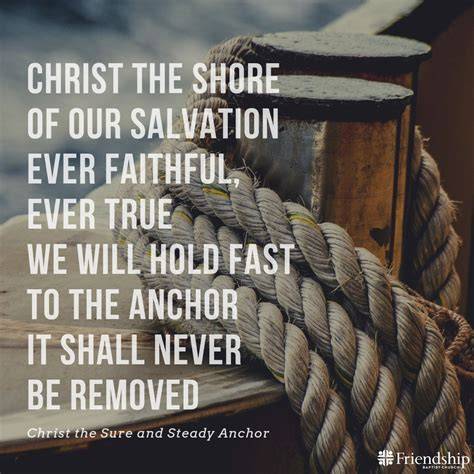
The verse continues, “his heart is steadfast.” A steadfast heart is an anchored heart. His inner life is firmly established rather than tossed about by changing circumstances.
The expression means that the heart is firmly established, settled on a sure basis, and fixed on a foundation that is solid and immovable. Rather than drifting with every headline, the righteous person fixes his inner compass on the unchanging character of God.
David confessed, “My heart is steadfast, O God, my heart is steadfast” while surrounded by danger (Psalm 57:7). David wrote that while hiding in a cave, illustrating that steadiness is possible even in crisis.
Psalm 108:1 similarly says, “My heart is steadfast, O God; I will sing and make music with all my being.” Psalm 118:6 declares, “The LORD is on my side; I will not fear: what can man do unto me?”
Such stability grows through knowing God’s works, remembering His promises, and ordering one’s life in reverent obedience. Such resolve cultivates consistency in thought, emotion, and action.
1 Corinthians 15:58 exhorts believers to be “steadfast, immovable, always abounding in the work of the Lord.” The same unwavering posture shows up in both testaments: stability amid shifting circumstances.
Hebrews 3:14 says we “share in Christ if we hold firmly to the end the confidence we had at first.” Persistence proves genuine faith.
Jesus perfectly embodied this steadfast devotion as He set His face toward Jerusalem and endured the cross in obedience to the Father.
“Trusting in the LORD”
The foundation of this fearlessness and steadfastness is simple: “trusting in the LORD.” Confidence rests not in favorable circumstances, personal strength, or human protection, but in the Lord Himself.
Trust replaces self-reliance with God-reliance. Proverbs 3:5-6 urges, “Trust in the LORD with all your heart and lean not on your own understanding; in all your ways acknowledge Him, and He will make your paths straight.”
Isaiah 26:3 speaks to the same settled frame of mind: “You will keep in perfect peace the steadfast of mind, because he trusts in You.” Isaiah 26:4 adds, “Trust in the LORD forever, because GOD the LORD is the Rock eternal.”
Jeremiah 17:7-8 paints the picture of a tree planted by water, “its leaves are always green… it has no worries in a year of drought.” Trust draws continuous nourishment from God’s sufficiency.
Jeremiah 17:7 says, “But blessed is the man who trusts in the LORD, whose confidence is in Him.” Psalm 62:8 invites, “Trust in him at all times; ye people, pour out your heart before him: God is a refuge for us. Selah.”
Psalm 37:5 invites, “Commit your way to the LORD; trust in Him, and He will act.” Faith hands over control to the One who already holds the future.
Abraham trusted God’s promise when its fulfillment appeared impossible, and God counted his faith as righteousness. Faith in Christ brings this same settled assurance, because the One who gave Himself for His people remains faithful in every trial.
Trust is not a vague optimism; it is a conscious reliance on the Lord’s proven faithfulness, displayed supremely in the cross and resurrection of Jesus Christ (Romans 5:8; 1 Peter 1:3-5).
What Psalm 112:7 Does Not Mean
Psalm 112:7 does not promise that the righteous will never hear painful reports. The righteous person may experience loss, illness, opposition, public calamity, and uncertainty.
The verse does not teach that faith makes a person unaware of danger or incapable of grief. It teaches that fear does not have the final authority over the believer’s heart.
Proverbs 1:33 promises safety from the fear of evil, not an existence without every difficult circumstance. The stability described in Psalm 112:7 is an inward confidence in God’s care while external conditions may remain difficult.
“A good conscience before God” is the best “armour against fate.” “Virtue is bold, and goodness never fearful.”- SHAKESPERE: Measure for Measure.
Psalm 112:7 and Fear in Daily Life
Anytime I open social media or the news it’s infiltrated with bad news. Storms. Shootings. Deaths. It can be so overwhelming at times that it almost leaves me paralyzed with fear.
Will fear come in if you focus more on the news than on God? Yes, it will! But when you remain steadfast by fixing your eyes on Christ and putting your hope and trust in him, you will have nothing to fear.
Fear is never from the Lord. He doesn’t ever speak by fear, but only by love. He hasn’t given us a spirit of fear, but of power, love, and a sound mind.
2 Timothy 1:7 says, “For God has not given us a spirit of fear, but of power, love, and self-control.” Hebrews 13:6 says, “The Lord is my helper; I will not be afraid. What can man do to me?”
The believer’s response to bad news should be characterized by faith and trust, not fear or anxiety. No matter what happens, remember that God is with you and he is for you.
The world might be falling apart around you, but God? He always remains the same!
Psalm 112:7 and Prayer
Philippians 4:6-7 connects trust with a practical response to anxiety: “Be anxious for nothing, but in everything, by prayer and petition, with thanksgiving, present your requests to God. And the peace of God, which surpasses all understanding, will guard your hearts and your minds in Christ Jesus.”
Prayer does not pretend that bad news is insignificant. It brings the news, the fear, and the unknown before God. The peace of God then guards the heart and mind in Christ Jesus.
1 Peter 5:7 gives a direct invitation: “Cast all your anxiety on Him, because He cares for you.” Romans 15:13 reminds us that the God of hope fills believers “with all joy and peace as you trust in Him,” underscoring that trust is the channel through which divine peace flows.
Regular prayer, meditation on Scripture, and fellowship with other believers strengthen our trust in the LORD. A steadfast heart is cultivated through a deep, personal relationship with God.
Related Biblical Passages
| Passage | Connection with Psalm 112:7 |
|---|---|
| Proverbs 1:33 | Whoever listens to God dwells in safety, secure from the fear of evil. |
| Proverbs 3:25-26 | The Lord gives confidence in the face of sudden danger and ruin. |
| Isaiah 26:3-4 | God gives perfect peace to the steadfast person who trusts in Him. |
| Psalm 57:7 | David says, “My heart is steadfast, O God, my heart is steadfast.” |
| Psalm 62:8 | God is a refuge for those who trust in Him at all times. |
| Psalm 118:6 | The Lord’s presence removes fear of what people can do. |
| Jeremiah 17:7-8 | The person who trusts in the Lord remains nourished and secure during drought. |
| Philippians 4:6-7 | Prayer and thanksgiving lead to God’s guarding peace. |
| John 14:27 | Jesus gives peace and commands His disciples not to be afraid. |
| Romans 8:28 | God works all things together for the good of those who love Him. |
Psalm 112:7 in Different English Translations
- ESV: He is not afraid of bad news; his heart is firm, trusting in the Lord.
- NIV: They will have no fear of bad news; their hearts are steadfast, trusting in the Lord.
- NASB: He will not fear bad news; His heart is steadfast, trusting in the Lord.
- CSB: He will not fear bad news; his heart is confident, trusting in the Lord.
- NLT: They do not fear bad news; they confidently trust the Lord to care for them.
- KJV: He shall not be afraid of evil tidings: his heart is fixed, trusting in the Lord.
- NKJV: He will not be afraid of evil tidings; His heart is steadfast, trusting in the Lord.
- NCV: They won’t be afraid of bad news; their hearts are steady because they trust the Lord.
- ASV: He shall not be afraid of evil tidings: His heart is fixed, trusting in Jehovah.
- DARBY: He shall not be afraid of evil tidings; his heart is fixed confiding in Jehovah;
- GW: He is not afraid of bad news. His heart remains secure, full of confidence in the Lord.
- HCSB: He will not fear bad news; his heart is confident, trusting in the Lord.
- NRSVue: They are not afraid of evil tidings; their hearts are firm, secure in the Lord.
- LEB: He is not afraid of bad news; his heart is steadfast, secure in Yahweh.
- NIrV: They aren’t afraid when bad news comes. They stand firm because they trust in the Lord.
The Hebrew Wording
The Hebrew wording presents the verse as a description of a person whose fearlessness rests on an established inner trust. “He will not” is a negative particle and verb expressing the absence of fear.
“Bad news” refers to something heard, an announcement, or a report. “His heart” includes the feelings, the will, and the intellect, the centre of the person’s inner life.
“Is steadfast” means to be erect, established, or firmly set. “Trusting” expresses confidence, certainty, and reliance. “The LORD” is Yahweh, the proper name of the God of Israel.
The verse therefore moves from the external report to the internal response and then to the foundation of that response: bad news is heard, the heart remains firm, and the heart remains firm because it trusts in the LORD.
How to Cultivate a Steadfast Heart
- Trust God’s sovereignty. The righteous man does not fear bad news because he trusts in God's ultimate control over all circumstances.
- Remember God’s character. Such stability grows through knowing God’s works and remembering His promises.
- Order life around obedience. A steadfast heart develops as a person lives in reverent obedience to God.
- Pray about anxiety. In everything, by prayer and petition, with thanksgiving, present your requests to God.
- Fix your attention on Christ. When you remain steadfast by fixing your eyes on Christ and putting your hope and trust in him, you will have nothing to fear.
- Refuse self-reliance. Trust in the Lord with all your heart rather than leaning on your own understanding.
- Pour out your heart to God. Trust in him at all times; pour out your heart before him, because God is a refuge.
- Remain connected to other believers. Fellowship with other believers strengthens trust in the LORD.
- Continue in faithful action. Persistence proves genuine faith, and believers are called to be steadfast, immovable, always abounding in the work of the Lord.
Lessons from Psalm 112:7
- Bad news is real, but it does not need to govern the believer’s inner life.
- God’s safety does not always mean the absence of trouble; it means freedom from terror.
- A steadfast heart is firmly anchored in God’s unchanging character.
- Trust is not vague optimism but conscious reliance on the Lord’s proven faithfulness.
- Prayer turns anxiety into a burden placed in God’s hands.
- Faith can remain steady even when circumstances are unstable.
- Fear loses its power when attention is directed toward God rather than the unknown.
- The Lord is the believer’s confidence, refuge, strength, and protection.
- A steadfast response to adversity becomes a witness to others.
- Faith in Christ provides settled assurance because Christ remains faithful in every trial.
Questions for Bible Study
What is the meaning of Psalm 112:7?
Psalm 112:7 describes a righteous person who does not fear bad news because his heart is firmly established in the Lord. His confidence is not based on favorable circumstances but on God’s faithfulness and sovereign care.
How can we cultivate a steadfast heart?
A steadfast heart is cultivated through regular prayer, meditation on Scripture, fellowship with other believers, remembrance of God’s promises, and reverent obedience.
What does trusting in the LORD look like in daily life?
Trusting in the LORD means relying on God rather than personal strength, human protection, or limited understanding. It means committing one’s way to the Lord, bringing anxiety to Him in prayer, and continuing in faithful obedience.
How does Psalm 112:7 connect with Philippians 4:6-7?
Both passages teach that anxiety should be brought to God through prayer and thanksgiving. Psalm 112:7 emphasizes a steadfast heart, while Philippians 4:6-7 emphasizes the peace of God guarding the hearts and minds of believers.
In what ways can we avoid fear of bad news today?
We can refuse to let fear control our thoughts, fix our eyes on Christ, pray about the unknown, meditate on Scripture, and remember that God remains with us and for us.
How does Psalm 112:7 encourage faith during trials?
The verse assures believers that trials do not have to destroy inner stability. The heart can remain firm because the Lord is a dependable foundation in every circumstance.
How does Psalm 112:7 define unwavering faith?
Unwavering faith is a settled reliance on God that remains firm when adverse reports arrive. It does not depend on the immediate removal of trouble but on confidence in the Lord.
What historical context influenced the writing of Psalm 112:7?
Israel regularly faced invasion, famine, and political instability, yet the faithful were called to rest in the Lord’s covenant faithfulness. These circumstances help explain why the psalm speaks directly about bad news and a steadfast heart.
How does Psalm 112:7 relate to the theme of trust in God?
The verse presents trust in the LORD as the foundation of fearlessness and stability. The person’s heart is steadfast because it relies on God rather than on changing circumstances.
How does a steadfast heart witness to others?
A steadfast heart in the face of adversity serves as a powerful testimony to others about the peace and security found in God.
Psalm 112:7 sketches the portrait of a believer whose heart is insulated-though not isolated-from the shocks of life. Because he trusts the Lord who commands every circumstance, he does not succumb to fear when bad news arrives.
Instead, his heart remains steadfast, anchored in God’s unchanging promises and character. Far from escapism, this is the solid ground that allows a follower of Christ to face uncertainty with unwavering peace and contagious confidence.