Judaism, Christianity, and Islam are three major monotheistic religions with a common heritage, but they differ most decisively in their understanding of God, Jesus, revelation, salvation, law, and the afterlife.
All three religions trace their history to Abraham and honour figures such as Abraham, Moses, and David. Christianity and Islam also recognise Jesus, known in Islam as Isa, but their accounts of his identity, mission, death, and significance are fundamentally different.
What Judaism, Christianity, and Islam have in common
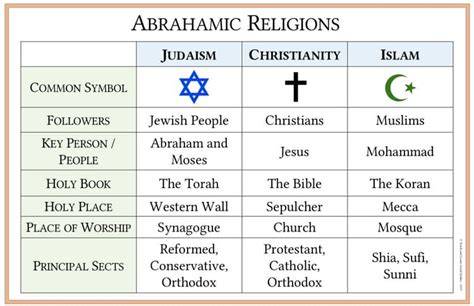
Christianity, Islam, and Judaism are three of the most influential world religions in history and share a common heritage. They are sometimes called “Abrahamic religions” because they trace their history to the ancient figure of Abraham, who is first mentioned in the Jewish Bible.
Across the ancient Near East, three religions developed that continue to influence the beliefs of billions of people across the modern world. Judaism, Christianity, and Islam each claim descent from Abraham, a man who, according to tradition, entered into a covenant with a single, all-powerful God.
Although they share origins in the same region and often honour the same figures, they developed separate teachings, sacred texts, and religious customs that now distinguish them in practice and belief.
All three religions teach belief in a single, all-powerful God who created the universe, gives moral law, and judges human actions. Also, each faith relies on sacred scripture that records revelation from God and guidance.
Prophets such as Abraham and Moses, along with David appear in all three traditions, although their roles and stories differ. Jesus appears in both Christianity and Islam, where he is known as Isa, a prophet born of Mary.
Additionally, prayer and almsgiving, along with fasting form essential parts of religious life. Each religion includes periods of reflection and special festivals.
Ideas about the afterlife, including judgment and reward, as well as punishment, are central to belief, as is the idea that God communicates with humanity through chosen messengers.
Abraham and the shared historical background
According to the biblical account, Abraham lived sometime between 2000 and 1500 BC and originally came from Ur, a city in Mesopotamia near the lower Euphrates River in what is now southern Iraq.
After he had received a call from God, he travelled to Canaan, where he was promised descendants and land as signs of God’s favour.
For Jewish tradition, Abraham became the founding father of the Israelites and the first person to receive God’s covenant, as described in Genesis 17:5 when his name was changed from Abram to Abraham.
From an Islamic perspective, Abraham, known as Ibrahim, was a prophet who rejected idol worship and showed complete obedience to God.
Islamic tradition holds that he built the Kaaba at Mecca with his son Ishmael and prepared to sacrifice his son at God’s command, a moment remembered during Eid al-Adha.
For Christians, Abraham became a spiritual example whose faith, rather than bloodline, formed the model for salvation.
Finally, in Christianity, the apostle Paul’s letters described Abraham as a special religious person who was justified by belief, not law, which made him the father of all people who have faith in God.
Although all three hold some views of the ancestor Abraham in common, they also interpret texts about him differently.
For example, in Gen 12:1-3, God promises Abraham that he will be “a great nation,” “a blessing” and that “in him all the families of the earth will be blessed.”
The Jewish understanding of the passage is that the “blessing” will be accomplished through Abraham’s descendants, the Jews.
For Christians, Jesus and all who believe in him also are descendants of Abraham.
And Islam interprets this passage to mean that God makes Abraham an imam, or a leader of humanity, and that the “blessing” comes through Abraham himself.
Historical origins of the three religions
Judaism
Judaism probably began among the early Israelites in Canaan, a region later known as Israel and Judah, where the descendants of Abraham had settled and had developed a religion organised around tribes.
During the 13th century BC, the tradition says that Moses received the Torah on Mount Sinai, which included commandments that were meant to guide personal actions and worship within community life.
The Torah consists of five books: Genesis, Exodus, Leviticus, Numbers, and Deuteronomy.
Over time, these laws became the foundation of Jewish religious identity, maintained even after the destruction of the Second Temple in AD 70 by the Romans under Titus.
Jewish worship takes place in synagogues, which is a dedicated building for prayer, reading of scripture, and religious education.
While the ancient priesthood ended with the loss of the Temple, authority shifted to rabbis, who teach, interpret Jewish law, and guide religious communities.
Rabbis receive formal training in the study of sacred texts and care for communities, as well as continuing the work of influential figures such as Hillel and Akiva.
Christianity
Christianity developed in the first century AD in the Roman province of Judea, mainly among Jewish communities.
Jesus of Nazareth taught during the reign of the Roman emperor Tiberius, but he was crucified in Jerusalem around AD 30 to 33.
His disciples, convinced that he had risen from the dead, began to spread his message throughout the eastern Mediterranean.
Early Christian communities included both Jews and Gentiles, people who weren't Jews, but differences in belief that grew over time eventually led to a distinct religion.
Paul’s letters from the AD 50s helped define early Christian belief, and later councils such as Nicaea in AD 325 made key ideas clearer.
Churches became the primary spaces for Christian worship. From early gatherings in homes to later basilicas and cathedrals, churches provided places for prayer and preaching, as well as sacraments such as baptism and communion.
Islam
Islam began in the city of Mecca during the early seventh century AD.
At the age of 40, Muhammad began to receive revelations that Muslims believe came directly from God, conveyed by the angel Jibril.
Those messages, which were delivered over 22 years, addressed moral behaviour and justice in matters of worship, and they were later written down as the Quran.
During the caliphate of Uthman (r. AD 644-656), the Quran was compiled into its final written form.
However, opposition in the city of Mecca forced Muhammad and his followers to migrate to Medina in AD 622, an event known as the Hijra.
Muslims regard Mohammed more as the restorer of the true monotheistic faith, rather than the founder of a new religion.
Comparison of the three religions
| Topic | Christianity | Islam | Judaism |
|---|---|---|---|
| Origin of the name | From the Greek: christos, “Anointed” - referring to Jesus Christ. | Derived from an Arabic word for “submission”. Also related to the Arabic word salaam, “peace”. | From the Hebrew: Yehudim, “Judah”. |
| Founder or central historical figure | Jesus Christ (c. 4 B.C. - 30 A.D.) | Mohammed (570 - 632 A.D.) | Abraham (First Patriarch, born c. 1800 B.C.) |
| Main divisions | Three main groups: Orthodox, Protestant and Roman Catholic. | Two main groups: Sunni and Shia. There is also a mystical/ascetic movement in Islam known as Sufi. | Several divisions, including Hasidic, Conservative and Reform Judaism. |
| Nature of God | One God, who exists in three distinct persons: Father, Son and Holy Spirit. | One God, Allah, who is not a trinity. The Islamic view of God is called strict Monotheism. | One God, known in English as “Yahweh” or “Jehovah”: “Hear Israel, the Lord is our God, the Lord is one.” |
| Holy books | The Bible, including the Old Testament and the New Testament. | The Quran or Koran, together with the Hadith. | The Hebrew Tanakh, including the Torah, Nevi’im and Ketuvim, together with rabbinic traditions. |
| View of Jesus | The second person of the Trinity and born of the Virgin Mary. | Isa was a prophet, sent by Allah and born of the Virgin Mary, but not divine. | An ordinary Jew, not the Messiah nor a divine person. |
| Jesus’ mission | To reconcile humanity to God through his death as a sacrifice for the sins of all mankind. | To proclaim the Injil, or gospel, which Muslims believe was corrupted over time by human additions and alterations. | As Judaism rejects the idea of Jesus as Messiah, his mission is of no relevance. |
| Jesus’ death | Jesus was crucified, died, was buried, rose again on the third day, and ascended into heaven. | Jesus was not crucified but was raised to Heaven by Allah. | Jesus was crucified for his claim to be divine. |
| Holy Spirit | The third person of the Trinity, truly divine. | Identical with the Angel Gabriel, who appeared to the Prophet Mohammed giving him the Quranic text. | Not a distinct person, but a divine power which, for example, was given to the Prophets. |
| Important traditions | The writings of the early church fathers and ecumenical councils, including the Creeds. | The Hadith, a collection of traditions and sayings of the Prophet Mohammed. | The Talmud, an oral tradition explaining and interpreting the Tanakh. |
| Salvation | By grace through faith in Jesus Christ. | Achieved through good works, thus personal righteousness must outweigh personal sin. | Through good works, prayers and the grace of God. |
| Hell | A place of everlasting punishment for the unrighteous. There is no crossover between Heaven and Hell. | A place of torment and fire. In Islam, Hell is known as Jahannam, which has several levels and a person may not necessarily spend eternity there. | Traditionally, Gehinnom or Gehenna may involve temporary punishment, although certain sins merit eternal punishment. |
Different concepts of God
The most important theological difference concerns the nature of God.
Christianity teaches one God who exists in three distinct persons: the Father, the Son, and the Holy Spirit.
Christianity has a Trinitarian understanding of the one true God because of Jesus’ divinity that is not shared by Judaism and Islam.
Judaism teaches strict monotheism and stresses the unity of God through the Shema: “Hear O Israel, the Lord is our God, the Lord is one” Deut 6:4.
Islam also teaches strict monotheism. Muslims believe in one God, Allah, who is not a trinity.
While “Allah” is just the Arabic word for God, being used even in the Arabic New Testament, it doesn’t follow from common vocabulary or words that Muslims and Christians have the same concept of God.
No Muslim would concede that God is a Trinity of persons, as Christians believe, and the Qur’an condemns to hell those who claim that Jesus is God’s Son, as Christians believe.
For Christians, Jesus is the fulfillment of the Old Testament promise. Judaism and Islam simply do not recognize the divinity of Jesus.
For this reason, the monotheism practiced by Judaism and Islam is different from the monotheism of Christianity.
In fact, Islam would describe Christianity as a tri-theist religion, rather than a monotheistic religion.
Jesus in Judaism, Christianity, and Islam
The person of Jesus Christ and the meaning of his passion, death and resurrection are viewed differently by all three religions.
For the Jewish people, Jesus cannot be divine because there is only one God, and for them his divinity presupposes the existence of two.
For Islam, too, the concept of a Trinitarian God implies the existence of more than one God.
Both Judaism and Islam acknowledge that Jesus was a great prophet, but deny his divinity.
In Christianity, Jesus is the second person of the Trinity and was born of the Virgin Mary.
Christians regard Jesus as “true God from true God” and believe that he reconciled humanity to God through his death as a sacrifice for the sins of all mankind.
Judaism regards Jesus as an ordinary Jew, not the Messiah nor a divine person.
As Judaism rejects the idea of Jesus as Messiah, his mission is of no relevance.
Islam teaches that Isa, or Jesus, was a prophet sent by Allah and born of the Virgin Mary, but not divine.
Muslims believe that Jesus proclaimed the Injil, or gospel, but that this gospel was corrupted over time by human additions and alterations.
The crucifixion and resurrection
Christianity teaches that Jesus was crucified, died, was buried, rose again on the third day, and ascended into heaven.
Judaism teaches that Jesus was crucified for his claim to be divine.
Islam teaches that Jesus was not crucified but was raised to Heaven by Allah.
It is ironic that the Qur’an chooses to deny the best established fact about Jesus, namely, his crucifixion.
Not only is there not a single shred of evidence in favor of this remarkable hypothesis, but the evidence supporting Jesus’ crucifixion is, as Emory University New Testament scholar L. T. Johnson puts it, “overwhelming.”
Paula Frederickson, whose book From Jesus to Christ inspired the PBS special by the same name, declares, “The crucifixion is the strongest single fact we have about Jesus.”
The crucifixion of Jesus is recognized even by the sceptical critics in the Jesus Seminar as “one indisputable fact.”
Christianity regards Jesus’ resurrection as central to Christian belief and as confirmation of his claims to be the Jewish Messiah.
As for Judaism, the decisive consideration is Jesus’ claims to be the Jewish Messiah and his subsequent resurrection from the dead.
Jewish scholars are coming to recognize the historical facts undergirding Jesus’ resurrection and are hard-pressed to explain those facts apart from the resurrection.
Indeed, one of their number, the late Pinchas Lapide, declared himself convinced that the God of Israel raised Jesus of Nazareth from the dead.
He also thought that Jesus believed himself to be the Messiah.
Sacred scriptures and revelation
The Jewish Tanakh and rabbinic tradition
The central scripture of Judaism is the Tanakh, which includes the Torah, the Law, and the two other sections known as Nevi’im, Prophets, and Ketuvim, Writings.
The Torah consists of five books: Genesis, Exodus, Leviticus, Numbers, and Deuteronomy.
In addition, rabbinic commentary preserved in the Mishnah, c. 200 CE, and the Babylonian Talmud, completed c. 500 CE, provides guidance for the interpretation and application of religious law across generations.
Together, these texts define Jewish practice and ethics, as well as belief.
The Christian Bible
Christian scripture consists of the Bible, which includes the Old Testament, which is closely aligned with the Hebrew Bible, and the New Testament, which contains the Gospels, the Acts of the Apostles, epistles by early Church leaders, and the Book of Revelation.
Christians regard the New Testament as the final word on salvation, focused on the life, death, and resurrection of Jesus.
The Bible is regarded by Christians as the Word of God. The Bible writers were inspired by God in their writings.
The Christian reading necessarily requires the lens of Christology, whether implicitly or explicitly.
And yet, the Old Testament must be viewed in continuity with the New Testament, since both are of the Word.
The Quran and Hadith
The Quran or Koran is an Arabic word meaning “recitation”. It was revealed to the prophet Mohammed over a period of about 20 years.
The Quran is the final revelation given by Allah to mankind.
The Quran continues to be Islam’s primary scripture. It is written in Arabic and considered by Muslims to be the unaltered word of God.
Additional texts known as Hadith record Muhammad’s words and actions and offer practical guidance on prayer, fasting, family relations, and ethics.
One widely used collection is Sahih al-Bukhari.
Major Islamic legal schools such as the Hanafi, Shafi’i, Maliki, and Hanbali schools developed from these sources.
Different readings of the Old Testament
Judaism does not share the belief in the Incarnate Word.
The Old Testament is read not with Christ in mind, but as the earliest inspired documents of the Jewish religious community through which Jews can see and better understand their present existence as a people.
When it comes to reading the Old Testament, a Christian reading necessarily requires the lens of Christology, whether implicitly or explicitly.
Christians see another level of meaning in the Old Testament, namely a Christological one which interprets texts in the light of the paschal mystery.
Finally, an Islamic reading of the Old Testament would be very different from both a Christian and Jewish reading.
Islam thought of the Old Testament as becoming somehow defective.
Therefore, any reading of the Old Testament would be a Koranic reading since Muslims believe the Koran is the true word of God that actually supplants the Old Testament.
If a contradiction existed between the Old Testament and the Koran, the teaching of the Koran would be adhered to while that of Old Testament would be rejected.
Sin, repentance, and salvation
Christianity
Christianity teaches that humanity inherits a sinful nature through the common ancestor Adam, who rebelled against God.
Jesus Christ atoned for human sins through his death on the Cross.
Salvation is understood as coming by grace through faith in Jesus Christ.
Christian views of the afterlife typically include belief in heaven and hell, based on a person’s acceptance of Christ and moral conduct.
Islam
Islam teaches that there is no concept of original sin, nor vicarious atonement.
All humans are born sinless, but human weakness leads to sin.
Salvation is achieved through good works, thus personal righteousness must outweigh personal sin.
Muslims believe in Paradise, Jannah, and Hell, Jahannam, where judgment depends on faith and deeds.
Jahannam has several levels and a person may not necessarily spend eternity there.
Judaism
Judaism rejects the doctrine of original sin.
Atonement for sins committed is made through seeking forgiveness from God in prayer and repentance.
In addition, the day of atonement, Yom Kippur, is set aside specially for this purpose.
Traditionally, there is the concept of Gehinnom or Gehenna, where those who die in sin may suffer temporary punishment, although certain sins merit eternal punishment.
However, Judaism’s ideas of the afterlife have varied widely among different groups and in different time periods.
For the most part, Judaism does not emphasize the afterlife.
Rituals and religious practice
| Religion | Main practices and rituals | Place of worship |
|---|---|---|
| Christianity | The sacraments, including Baptism and Holy Communion, or Eucharist. Prayer is also an important part of the faith. | Churches provide places for prayer and preaching, as well as sacraments such as baptism and communion. |
| Islam | The five pillars: Shahadah, a profession of faith; Salat, prayer five times daily; Zakat, alms giving; Sawm, fasting during Ramadan; and Hajj, pilgrimage to Mecca. | Mosques contain a prayer hall that faces Mecca, a minbar for the Friday sermon, and a mihrab indicating the qibla. |
| Judaism | Circumcision of newly born Jewish males, Barmitzvah, observation of the Sabbath, and prayer. The Jewish prayer book is called the siddur. | Synagogues are dedicated buildings for prayer, reading of scripture, and religious education. |
Christian worship
The Sacraments include Baptism and Holy Communion, or Eucharist.
In Orthodoxy and Roman Catholicism, five more are added: Confirmation, or Chrismation, Marriage, Penance, Holy Orders and Anointing of the sick.
Prayer is also an important part of the faith.
The Christian tradition comprises three major expressions of the life of prayer: vocal prayer, meditation, and contemplative prayer.
Contemplative prayer is a gaze of faith fixed on Jesus, an attentiveness to the Word of God, and a silent love.
Muslim worship
Five important rituals, known as the pillars of Islam, are Shahadah, a profession of faith; Salat, prayer five times daily; Zakat, alms giving; Sawm, fasting during the Holy month of Ramadan; and Hajj, pilgrimage to the Holy city of Mecca.
Mosques are the main places of Muslim worship.
They contain a prayer hall that faces Mecca, together with a pulpit, minbar, for the Friday sermon, as well as a mihrab, a niche that indicates the qibla.
Separate areas for men and women are also common.
Jewish worship
Rituals include the circumcision of newly born Jewish males, Barmitzvah, a ceremony marking the “coming of age” of Jewish boys, and observation of the Sabbath, Shabat.
As in the other faiths, prayer is important.
The Jewish prayer book is called the siddur.
Religious leadership and community life
Religious leadership varies across Christian denominations.
Catholic and Orthodox churches maintain bishops and priests, along with deacons, while Protestant groups often rely on pastors or ministers who lead worship and interpret scripture.
Rabbis act as legal and spiritual guides.
Muslim imams and scholars lead prayer and interpret religious law that comes from God based on textual sources.
Religious leadership includes imams, who lead daily prayers, and scholars known as ulama, who interpret Islamic law based on the Quran and traditions of the Prophet.
Jewish worship takes place in synagogues, which are dedicated buildings for prayer, reading of scripture, and religious education.
Churches focus on communal worship and sacramental rites, while mosques centre on disciplined prayer and instruction.
Synagogues emphasise study and prayer.
Languages and sacred texts
Sacred languages also are important: Hebrew and Aramaic in Judaism, Greek in Eastern Christianity, Latin in Western Christianity, and Arabic in Islam.
The Tanakh is written mostly in Hebrew, while the Christian Bible includes Hebrew and Greek texts, and the Quran is written in Arabic.
The Quran is written in Arabic and considered by Muslims to be the unaltered word of God.
The Torah and the wider Tanakh remain central to Jewish religious identity, while the Bible, including the Old Testament and New Testament, is central to Christianity.
Historical development and geographical spread
During the early medieval period, Christianity expanded rapidly throughout Europe.
After the conversion of Constantine and the establishment of Christianity as the state religion of the empire, bishops and monks, together with missionaries spread the faith among Germanic and Celtic peoples, together with Slavic groups.
Christian monasteries kept important texts and educated leaders, and they also held regions together under common doctrine.
The split between Catholic and Orthodox churches in the Great Schism of 1054 and the rise of Protestantism with reformers like Martin Luther in 1517 show the variety within Christianity.
At the same time, Islam spread across the Arabian Peninsula and into nearby regions, and within a century of Muhammad’s death, Muslim rule reached from Spain to Central Asia.
Islamic civilisation promoted Arabic as the language of scripture and scholarship, as well as administration, which helped bring together believers across a wide area under a shared religious culture.
Jewish communities were often scattered by conquest and forced movement and lived under both Christian and Muslim rulers.
In Muslim lands such as Al-Andalus, many Jews enjoyed periods of relative freedom to study and trade, and they added to theology and science, as well as philosophy.
Jewish philosopher Maimonides was active in twelfth-century Egypt and produced influential works in Jewish law and medicine.
In Christian Europe, legal restrictions and persecution created periods of hardship, but religious life continued in synagogues and yeshivas, where sacred texts remained central.
Major internal divisions
Christianity has three main groups: Orthodox, Protestant and Roman Catholic.
The split between Catholic and Orthodox churches in the Great Schism of 1054 and the rise of Protestantism with reformers like Martin Luther in 1517 show the variety within Christianity.
Islam has two main groups: Sunni and Shia.
The division occurred due to a dispute as to the legitimate successor of the prophet Mohammed.
There is also a mystical and ascetic movement in Islam known as Sufi.
Judaism has several divisions, including Hasidic, Conservative and Reform Judaism.
Ethnic groupings include Ashkenazi, the majority, and Sephardi Jews.
Population and global presence
Today, Christianity is generally strongest in Europe, the Americas, sub-Saharan Africa, and the Philippines.
Missionary work, colonisation, and migration have contributed to the global spread of Christian belief over the last two thousand years, which now exists in hundreds of denominational forms.
Current estimates place the global Christian population at around 2.4 billion.
Most Muslims live in countries across North Africa, the Middle East, South Asia, and Southeast Asia.
The largest national population is in Indonesia, followed by significant numbers in Pakistan, India, Bangladesh, Turkey, and Egypt.
Muslim minorities also exist in Europe, the United States, and Australia, and current global estimates place the Muslim population at over 1.9 billion.
At present, the largest Jewish populations generally live in Israel and the United States.
While smaller communities still live in Europe and South America, as well as Australia, many were displaced or destroyed during the twentieth century due to antisemitic violence and war.
Today, there are approximately 15 million Jews worldwide.
Why Jesus is the central dividing question
Judaism, Christianity, and Islam are the world’s three great monotheistic faiths, genetically related and so having much in common, but what divides them is their account of Jesus.
Judaism and Islam differ primarily from Christianity in an understanding of the person of Jesus.
For Christians, Jesus is the fulfillment of the Old Testament promise.
Judaism and Islam simply do not recognize the divinity of Jesus.
Consequently, one basic way that a Christian reading of the Old Testament differs from that of Judaism and Islam is that Christians see another level of meaning in it, namely a Christological one which interprets texts in the light of the paschal mystery.
Although Judaism, Christianity, and Islam trace their beginnings to the same region and honour many of the same figures, their different answers to questions of law and prophecy, as well as salvation created separate paths.
Each faith formed its own sacred writings and leadership structures, along with ritual life, which developed over centuries of belief and experience.
tags: #judaism #christianity #and #islam #differences