The LDS Church Historian and Recorder is responsible for collecting, preserving, documenting, interpreting, and making accessible the history and records of The Church of Jesus Christ of Latter-day Saints. The office combines historical research with the official recording of current Church transactions, decisions, activities, ordinances, and other records.
Elder Kyle S. McKay began serving as the 16th Church Historian and Recorder of The Church of Jesus Christ of Latter-day Saints on August 1, 2022. In this role, he oversees the Church History Department, historic sites, the Church History Library, the Church History Museum, and major publication and preservation initiatives.
What the LDS Church Historian and Recorder does
The Church Historian and Recorder works through the Church History Department, which includes the Church’s historic sites; the Church Historian’s Press, which has produced the “Saints” series and the Joseph Smith Papers project; and the Church History Library and Church History Museum in downtown Salt Lake City.
The department also collects and maintains a variety of records and histories, from those relating to the administration of the Church, to those of the Church and its members from across the globe. There are also oral histories, artifacts and journals along with the collection of books and publications and efforts to digitize and preserve records.
“I’m called the Church historian, but in truth, the real historians are the people I work with. I preside over a department that is full of absolutely brilliant people,” he said.
Historian and recorder: two connected responsibilities
The office of Church Recorder complements and connects with the office of Church Historian. The recorder operates in the present by looking forward to the future; he records modern transactions such as ordinances, decisions in meetings, and activities such as missionary or temple service.
The recorder ensures that records are kept now and certifies that what has been kept is accurate and complete. The historian also operates in the present and fulfills his role by looking back on the gathered records to discern trends over time and offer retrospective analysis.
What is gathered under the recorder function can later be put to service under the historian function. Gathered records can be used in leadership and decision-making, to inspire or motivate, to defend the Church against legal challenges, or to publish the truth through historical research and writing.
This pattern is illustrated in the Book of Mormon as Nephi, Jacob, Alma, and others made records, often without knowing all of the reasons why. Then, hundreds of years later, Mormon drew from those records to compile an abridged history, sometimes quoting directly from previous writings, sermons, and letters and other times offering his own commentary and analysis.
Scriptural foundations of Church record keeping
On the day the Church was organized Joseph Smith was told, “Behold, there shall be a record kept among you” (D&C 21:1). That was the initial message that forms the foundation for all this work.
The year after the Church was organized, John Whitmer was commanded to “keep the church record and history continually,” to “travel many times from place to place, and from church to church, that he may the more easily obtain knowledge,” and to do it “for the good of the church, and for the rising generations that shall grow up on the land of Zion, to possess it from generation to generation” (D&C 47:3; 69:7-8).
The Saints were commanded to record the names of Church members, “that which the prophets and apostles have written,” questions asked and decisions made, accounts of personal ministry and stewardship, and genealogical records (D&C 20:82; 52:9; 69:5-6; 70:3-6; 72:5-6; 102:23; 128:24).
Local clerks were instructed to record “a history, and a general church record of all things that transpire in Zion,” including donations, receipts of assistance, and notes on the “manner of life, their faith, and works,” and those who left the Church (D&C 85:1-2).
After the Saints were expelled from Missouri, they were commanded to collect magazines, encyclopedias, and histories published about their experiences and history (see D&C 123:1-6).
Temple ordinances also require careful recording: “When any of you are baptized for your dead, let there be a recorder, and let him be eye-witness of your baptisms; let him hear with his ears, that he may testify of a truth, saith the Lord; That in all your recordings it may be recorded in heaven” (D&C 127:6-7).
The last part of that verse emphasizes that for the work of salvation to be complete, its records must be kept. There is therefore a theology behind Latter-day Saint record keeping: records are part of the expression of faith.
John Whitmer and the origins of the office
In Doctrine and Covenants 47, John Whitmer was called to serve as the Church’s historian and recorder in March 1831. Doctrine and Covenants 69 includes instructions for John Whitmer in his calling.
He was given a mandate to gather up histories and writings and things that would be of value to the Church and the rising generations that would grow up in Zion. Elder Kyle S. McKay said that since learning of his assignment, he had felt drawn to the rising generations and to protect them and to build their faith.
In the nineteenth century, the offices of Church Historian and Church Recorder were separate and each was held by a different person. The history of Church record keeping later included modernization during the twentieth century, years spent without a Church Recorder, and renewed work in the twenty-first century.
Development of modern Church record keeping
Elder Marlin K. Jensen, who served as Church historian from 2005 to 2012, oversaw the revitalization of the Church’s records management program and the institution of electronic systems for preserving digital records.
Elder Steven E. Snow served as the Church Historian and Recorder of The Church of Jesus Christ of Latter-day Saints from August 1, 2012, to July 31, 2019. During this time, he oversaw significant developments in the work of Church history, from record keeping to publishing to developing historic sites and exhibits.
| Church History Department executive director | Years |
|---|---|
| Marlin K. Jensen | 2004-2012 |
| Steven E. Snow | 2012-2019 |
| LeGrand R. Curtis Jr. | 2019-2022 |
| Kyle S. McKay | Executive Director and Church Historian and Recorder |
During Snow’s tenure, the Church History Department continued work on major historical publications, expanded digital access to collections, globalized record collection, established secure preservation centers, and strengthened digital preservation systems.
Steven E. Snow and the office of Church Recorder
The question of the recorder’s responsibilities was inherited by Elder Steven E. Snow from his predecessor, Elder Marlin K. Jensen. Jensen frequently told the story of his call as Church Historian and Recorder and said, “As President Hinckley extended the call, I had the presence of mind to ask him what his expectations of me as Church Historian were. He said crisply, ‘That you read the scriptures and do your duty!’ I then asked, ‘And what about the office of recorder?’ He replied, ‘I haven’t given that a bit of thought, but you’d better!’”
Snow initially worried about the question because Church records were being created all around the world. When he served as the Area President of the Africa Southeast Area, headquartered in Johannesburg, South Africa, he inherited a closet full of records, which were shipped back to Church headquarters for safekeeping.
He also recognized that the majority of records being created in the twenty-first century were digital. He wondered how the Church would collect and preserve emails, electronic documents, information in databases, and web materials created or updated every day.
A turning point came during a meeting in December 2015. Information was gathered about the office of the Church Recorder, the people who had held it, what they had done, and the current status of significant Church records. The discussion examined the past, present, and future of Church records.
Snow said he left the conversation feeling much more hopeful. He came to see the office of Church Recorder as complementary and connected to the office of Church Historian.
Global records and preservation centers
Since 2010, area Church history advisers have been called throughout the world. They have collected records, conducted oral histories with living Saints in their home countries, and helped increase the submission of annual histories by 20 percent.
Since 2012, secure record preservation centers have been established in more than two dozen places around the world to store records according to local laws and customs. The Church also began hiring Church History Department employees who live and work in their home countries.
The first three employees were hired in Peru, South Africa, and Mexico. These volunteers and employees have helped create exhibits, host commemorative events, and prepare online publications in their countries.
They have also helped the Church collect far more international records than ever before. In any given year, the Church collects records about the Church in sixty to seventy different countries.
“Not all records have to be here. We'll bring things here, but we have Record Preservation Centers all over the globe,” Elder McKay said.
Digital preservation and the Granite Mountain Record Vault
A second less visible area of development involved digital-record storage. In 2015, ten years of planning culminated in retrofitting two chambers of the Granite Mountain Record Vault with servers to house the Church’s digital-record preservation system.
The facility reopened in December of that year with a ribbon-cutting ceremony and addresses by Elder Quentin L. Cook and Bishop Dean Davies. The Church also strengthened its digital preservation efforts by storing copies of records on servers located outside the Intermountain West.
Since 2012, the Church has digitized more than fifteen million images and continues to add about three hundred images per hour. A new version of the online catalog was released to make it easier to find and view digital images.
Kyle S. McKay as Church Historian and Recorder
Elder Kyle S. McKay began serving as Church historian and recorder on August 1, 2022. Before receiving the assignment, he served as the assistant executive director of the Church History Department for three years under the leadership of Elder LeGrand R. Curtis Jr.
McKay was sustained as a General Authority Seventy in 2018. He is an attorney and has been the vice president of Smith’s and Fry’s with the Kroger Co.
As assistant executive director, he served with Elder LeGrand R. Curtis Jr., the Church historian and recorder since 2019. McKay said that in addition to learning the mechanics of the department, he learned more about history and found that work fascinating.
Elder Kyle S. McKay is the second from the right in a photograph showing him working on the farm of Elder Marlin K. Jensen, former Church Historian and Recorder, during most of his youth.
McKay’s family and connection to David O. McKay
Elder McKay is distantly related to President David O. McKay. Elder McKay’s grandfather and President McKay were first cousins, making Elder McKay’s relationship a first cousin twice removed.
He has a black-and-white photo with President McKay pausing for the photographer and young Kyle, apparently distracted by something outside of the photo’s frame, on the other side of the photo.
Although Elder McKay’s family lived in Bountiful, Utah, he spent much of his youth in Huntsville, an area his ancestors helped settle. His Huntsville bishop was then a young attorney by the name of Marlin K. Jensen.
Elder McKay recalls living and working on Bishop Jensen’s farm for a year as a teenager after his family returned to Bountiful because he wanted to stay in the Ogden Valley. “It’s not like we talked about Church history,” he recalled. “We milked cows and hauled hay and fixed fences when I was there as a 14-year-old boy. I turned 15 when I was living in his home.”
He kept a journal during his time with the Jensens. “Bishop woke me up at 4:45 [a.m.] and we milked [the cows]. After milking, we went straight home and ate pancakes and bacon for breakfast,” said an entry from Saturday, May 3, 1975.
“I grew up under the tutelage of Marlin Jensen. And he has been a kind mentor my entire life. I watched him from a distance as he fulfilled this responsibility,” Elder McKay said.
The Jensen family had a dairy farm, and Marlin Jensen was starting his law practice. “There was no reason that they should take me in. In fact, there was every reason not to,” Elder McKay said.
The Jensens made it a matter of fasting and prayer. “And so, I grew up under the tutelage of Marlin Jensen. And he has been, just a kind, kind mentor my entire life.”
McKay’s view of historical memory
“It’s difficult, if not impossible, to remember who you are, until you know who you are,” said Elder Kyle S. McKay. “The history, the things that we do help us know and remember who we are. In fact, that’s one of the commandments God has given us, is to remember.”
He said that people are interested in things of the past and connected this interest with what Latter-day Saints call the Spirit of Elijah. Church history is charged to keep track of people, their faith, their works, and the histories of places and things.
McKay also believes that Church history has the capacity to strengthen faith and ought to be used for that purpose. One purpose of the department is to help bring people unto Christ, develop and grow faith in Christ, and sometimes rehabilitate or reclaim faith in Christ.
“And so you do that by studying Christ and His doctrines and His truths,” Elder McKay said.
Church history, difficult events, and faith
Elder McKay recognizes that there are some things in Church history that people struggle with. “God works with imperfect people, and sometimes our members are surprised to learn that their leaders are not perfect and that they have made mistakes. … You will never come to know and understand the truths of God by studying the errors of man. Our focus, our passion should be to know and understand the truths of God,” he said.
In his experience, “most people that struggle with matters of Church history are not bumping up against a specific truth or principle or doctrine. They’re bumping up against a person, against a personality or an event.”
“My invitation is: study the truths of God. If you study error, you will come to know only error. And our purpose in or out of the Church ought to be to seek out truth. And not just facts but truth, and specifically saving truth,” he said.
McKay says the best information on the Church and the gospel of Jesus Christ can be found in the Church’s scriptures, including the Book of Mormon. “I think it is not just a starting point, but it’s the ending point. That’s what we believe. And then after that, you can … consult our histories [for context and application],” he said.
Major responsibilities under the Church Historian
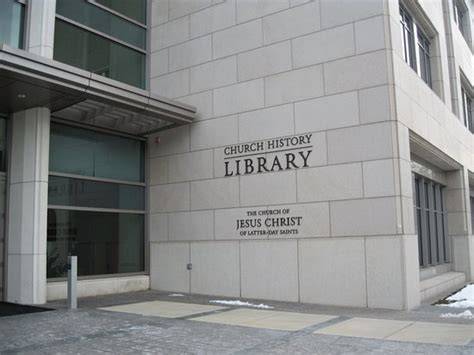
Elder McKay oversees the Church History Department, Church historical sites, a publications department, and the Church History Library and Church History Museum on Temple Square in Salt Lake City.
The Church Historian and Recorder also serves as chair of the Church’s Historic Sites Committee. The committee brings together representatives from multiple departments at headquarters, including the Church History, Missionary, Temple, and Meetinghouse Facilities Departments, as well as the director of temporal affairs for historic sites.
During Snow’s service, one major development was the creation of a new historic site in Pennsylvania commemorating the priesthood restoration. The Church also completed master planning at many sites throughout the United States.
The historic tabernacle in St. George, Utah, was renovated, and responsibility for operations of the Church’s historic sites shifted from the Missionary Department to the Church History Department.
The Church History Museum was closed for more than a year to install a new exhibit called The Heavens Are Opened, which corresponds with volume 1 of Saints. The exhibit features historical documents and artifacts as well as interactive experiences, including a new video about the First Vision shown on a wraparound screen.
A new history center was opened in Hamilton, New Zealand, with exhibits about the history of the Church in the Pacific. Rare and priceless historical documents were also placed on display in the Church History Library.
Major publications and digital historical resources
The Joseph Smith Papers
The Joseph Smith Papers was called “the most significant historical project of our generation” by Elder Marlin K. Jensen, former historian and recorder for The Church of Jesus Christ of Latter-day Saints.
The project provides access to the complete collection of Joseph Smith documents. It includes documents written by Joseph Smith and documents written to him, with historical annotation and editorial work.
“I think the best example is the Joseph Smith Papers. There is virtually nothing that has been left unpublished with respect to things written by him or to him,” McKay explained.
The final volume of the print edition of The Joseph Smith Papers was published in June 2023. The web edition of the papers is expected to be completed by December 2026.
Saints
The Church Historian’s Press has produced the “Saints” series, a four-volume narrative history of The Church of Jesus Christ of Latter-day Saints called Saints: The Story of the Church of Jesus Christ in the Latter Days.
Volume 1 was published in September 2018 in fourteen languages, and work was under way on the remaining volumes. In addition to the narrative, more than one hundred essays on historical topics were published to supplement the reading.
Elder McKay recently received the next volume in the “Saints” series for review.
Historical essays and curriculum resources
Increased access to historical materials provided clearer views into Church history. As a result, adjustments were prepared for the introductory headings to sections of the Doctrine and Covenants in 2013.
A series of essays placed the revelations into historical context and linked the essays to online Gospel Doctrine curriculum materials during 2017. A different series of “Gospel Topics Essays” was published between 2013 and 2015 to provide answers about some of the more difficult aspects of the Church’s past.
Another initiative was the creation of “Global Histories,” histories of the Church in individual countries.
Collections documenting Latter-day Saint history
Native Saints: The Washakie Ward
Native Saints: The Washakie Ward is a digital history resource that tells the story of the Washakie Ward, a Northwestern Shoshone congregation of the Church of Jesus Christ of Latter-day Saints that operated between 1880 and 1966.
It features historical essays, biographies, photographs, and maps, as well as a database of community members mentioned in missionary and congregational records through 1940.
The project is a collaboration between the Church History Department and The Northwestern Band of the Shoshone Nation.
Carry On: The Latter-day Saint Young Women Organization, 1870-2024
Carry On traces the development of the church's Young Women organization from a small association founded among Brigham Young’s daughters into today’s global organization.
Chronicling the organization’s continuous commitment to religious foundations and purposes amid changing cultural circumstances, this history draws from autobiographies, oral histories, correspondence, local and general meeting minutes, and other records.
Journals of Early Sister Missionaries
The Church of Jesus Christ of Latter-day Saints began formally commissioning women to preach the restored gospel and bring souls to Jesus Christ around the turn of the twentieth century.
The journals featured in this digital publication document the day-to-day experiences of some of the church’s earliest full-time women missionaries, whose pioneering work left an enduring legacy of service that remains vital to the church’s missionary efforts into the twenty-first century.
The Prison Journal of Belle Harris
Isabelle Maria Harris spent the summer of 1883 in the Utah Territorial Penitentiary, imprisoned for contempt of court after refusing to answer a grand jury’s questions concerning her former husband’s practice of plural marriage.
The journal she kept there offers an intimate look at nineteenth-century women’s prison life and the struggle of an ordinary Latter-day Saint who found herself at the center of a political controversy.
The Diaries of Emmeline B. Wells
The diaries of Emmeline B. Wells provide a window into the life of one of the most influential Latter-day Saint women in the mid-nineteenth and early twentieth centuries.
In the diaries she is both historymaker, as she meets with presidents and works with national suffrage leaders, and historian, as she documents noteworthy events, daily interactions with her family and members of her community, and her adversities and faith.
The Discourses of Eliza R. Snow
Eliza R. Snow, second general president of the Relief Society of The Church of Jesus Christ of Latter-day Saints, was a prolific speaker and the most influential Latter-day Saint woman of her time.
She taught religious doctrine, emphasized practical principles, shared her political opinions, and conveyed love and encouragement for church members in nearly twelve hundred discourses given from 1840 to 1887 in western Illinois and throughout Utah and Idaho territories.
All extant discourses are transcribed on the website, and an annotated selection of fifty-two of them is available in print.
The Journal of George F. Richards
George F. Richards was a member of the Quorum of the Twelve Apostles for forty-four years. His life bridged the pioneer era and modern era of The Church of Jesus Christ of Latter-day Saints.
Richards’s journals, consisting of twenty-three physical volumes, chronicle his eventful life and provide unprecedented access to a trove of information about Richards and the Church.
The Journal of George Q. Cannon, 1849-1901
George Q. Cannon was a member of the First Presidency and an apostle in The Church of Jesus Christ of Latter-day Saints for a combined forty-one years.
His journal covering 1855 through 1901 offers a rare glimpse into the inner workings of Church leadership during a time of rapid change for the Church. The journal was published online for the first time.
At the Pulpit: 185 Years of Discourses by Latter-day Saint Women
This significant collection shines a spotlight on the preaching and teaching of Latter-day Saint women past and present.
At the Pulpit presents fifty-four carefully selected discourses given by Latter-day Saint women from 1831 to 2016.
The First Fifty Years of Relief Society
The First Fifty Years of Relief Society: Key Documents in Latter-day Saint Women’s History examines the founding of the Relief Society and the devotion, contributions, challenges, and teachings of Latter-day Saint women in the nineteenth century.
The collection includes rare photographs and historic documents relating to the first fifty years of the Relief Society.
Other historical resources
Other digital history projects include historical essays, biographies, photographs, maps, missionary journals, congregational records, oral histories, correspondence, local and general meeting minutes, personal journals, speeches, artifacts, and administrative records.
| Resource | Primary historical focus |
|---|---|
| Native Saints: The Washakie Ward | Northwestern Shoshone congregation, 1880-1966 |
| Carry On | Latter-day Saint Young Women Organization, 1870-2024 |
| Journals of Early Sister Missionaries | Early full-time women missionaries |
| The Prison Journal of Belle Harris | Women’s prison life and plural-marriage controversy |
| The Diaries of Emmeline B. Wells | Latter-day Saint women’s history and suffrage |
| The Discourses of Eliza R. Snow | Religious doctrine and women’s public teaching, 1840-1887 |
| The Journal of George F. Richards | Apostolic life across the pioneer and modern eras |
| The Journal of George Q. Cannon | Church leadership, 1855-1901 |
| At the Pulpit | Discourses by Latter-day Saint women, 1831-2016 |
Important artifacts and scripture manuscripts
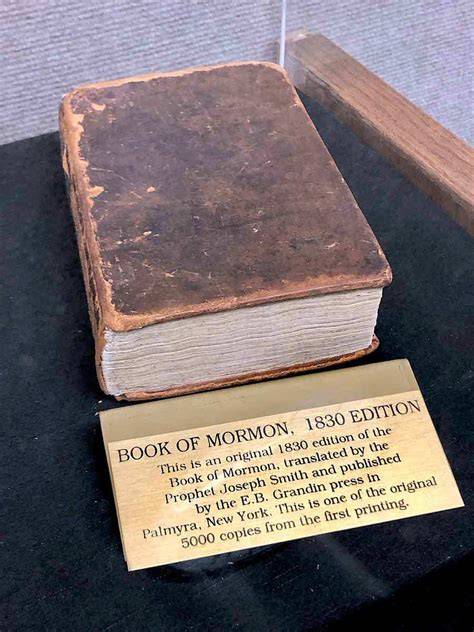
For Elder McKay, “the most important and coolest artifacts” the Church has are related to the scriptures, including the Book of Mormon manuscript, the printer’s manuscript, and the Book of Commandments.
He described the most important and interesting artifacts as early writings of the Book of Mormon and scripture, the Book of Commandments, and the original manuscript of the Book of Mormon, of which only about 25%-27% remains.
The Church has virtually the entire printer’s manuscript. “The most important documents-historic or modern-are those that contain the word of God,” Elder McKay said.
“We wouldn’t have the Church history that we have if not for people who have kept pretty clean and detailed journals” such as Wilford Woodruff, Elder McKay said.
Church history as a global activity
The work of the Church Historian and Recorder extends beyond Church headquarters in Utah. Records are preserved not only in Utah but also in more than two dozen locations throughout the world.
Area Church history advisers, local employees, and volunteers collect records and conduct oral histories with living Latter-day Saints in their home countries. They also help create exhibits, host commemorative events, and prepare online publications.
The Church collects records about its history in sixty to seventy different countries in any given year. This approach allows the historical record to reflect the experiences of members and congregations across the globe.
Leadership and staff connected with the Joseph Smith Papers
The Joseph Smith Papers project involved historians, editors, archivists, research specialists, document specialists, transcription specialists, and other contributors over the course of the project.
| Role | People or positions |
|---|---|
| Executive Director, Church History Department, and Church Historian and Recorder | Kyle S. McKay |
| Assistant Executive Director, Church History Department | Hugo E. Martinez |
| Managing Director, Church History Department | Matthew J. Grow |
| Director of Publications | Matthew S. McBride |
| General Editors | Matthew C. Godfrey; R. Eric Smith; Ronald K. Esplin |
| Managing Historian | Brent M. Rogers |
| Associate Managing Historian | Spencer W. McBride |
| Project Archivist | Sharalyn D. Howcroft |
| Web Editorial Lead | Sharon Nielsen |
The project’s national advisory board included Richard Lyman Bushman, Terryl L. Givens, Dean C. Jessee, Mary-Jo Kline, Laurie F. Maffly-Kipp, Sara Martin, Susan Holbrook Perdue, Stephen J. Stein, and Harry S. Stout.
Church historians and recorders
Elder Marlin K. Jensen served as Church historian from 2005 to 2012. Elder Steven E. Snow served as Church historian and recorder from 2012 to 2019. Elder LeGrand R. Curtis Jr. served as Church historian and recorder from 2019 to 2022.
Kyle S. McKay began serving as Church historian and recorder on August 1, 2022, after serving as assistant executive director of the Church History Department from 2019 to 2022.
The office has developed from the early nineteenth-century call to keep a Church history and record into a modern system encompassing physical documents, digital records, artifacts, historic places, oral histories, publications, international collections, and official records of current Church activity.