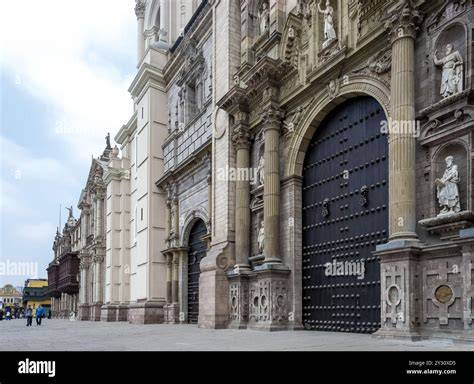
Lima Cathedral is one of the most important religious buildings in Peru and a central stop on a walking tour of Lima’s Historic Center. Standing on Plaza Mayor, the cathedral combines Renaissance, Baroque, and Neoclassical elements shaped by centuries of construction, earthquakes, and reconstruction.
A visit usually takes around 45 minutes to 1 hour and includes the ornate nave, decorated chapels, Francisco Pizarro’s tomb, an underground crypt, the cathedral organ, a library, and historic religious artworks. Its location makes it easy to combine with Plaza San Martín, Jirón de la Unión, Plaza Mayor, the Archbishop’s Palace, and the Church and Convent of Saint Francis and the Catacombs.
Why Include Lima Cathedral in a Historic Center Tour?
Founded by Spanish conquistador Francisco Pizarro in 1535, Lima became the capital of the Viceroyalty of Peru, the Spanish Empire’s administrative center in South America. It’s little wonder, then, that its Centro Histórico, now a UNESCO World Heritage Site, has one of the most impressive concentrations of Spanish colonial architecture and historic landmarks of any South American capital I’ve visited.
Standing on Plaza Mayor, Lima Cathedral is one of the most important religious buildings in Peru. Its imposing façade and richly decorated interior reflect the city’s role as the former capital of Spanish South America. Inside, visitors can explore chapels, altars and artwork that showcase colonial craftsmanship.
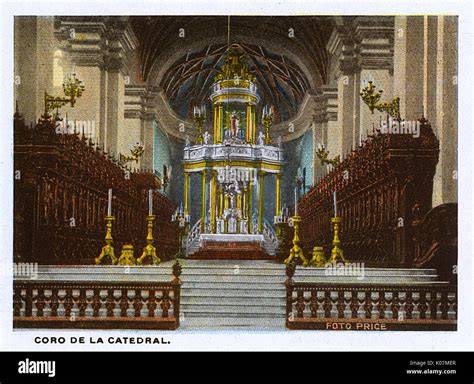
The cathedral’s vaulted ceilings and wooden choir stalls highlight the influence of Spanish religious architecture in the Americas. Its central location makes it a key stop when exploring Lima’s historic core.
Recommended Lima Cathedral Walking Route
Lima’s Historic Center is dense with colonial architecture, museums, and major landmarks, but the main sights are concentrated enough to fit into a single walkable route when the sites are open. It’s an easy way to see the highlights of the historic core without constantly navigating or doubling back.
The stops follow a natural path through the historic center so you can see the highlights without backtracking. The route starts and ends at Plaza San Martín, passes through Jirón de la Unión and Plaza Mayor, and places Lima Cathedral early in the itinerary.
| Item | Details |
|---|---|
| Total walking | ~2.5-3 miles / 4-5 km |
| Walking time | 45 minutes, outside of walking within each stop |
| Total time | ~4-6 hours at a relaxed pace |
| Start point | Plaza San Martín |
| End point | Plaza San Martín |
| Best for | First-time visitors who want an efficient overview of Lima’s historic highlights |
| Pacing | Plaza San Martín → historic streets → Plaza Mayor → cathedral & monastery stops |
Suggested Schedule
| Time | Stop | Suggested duration |
|---|---|---|
| Midday | Plaza San Martín | 20 minutes |
| Early afternoon | Walk Jirón de la Unión to Plaza Mayor | 10 minutes |
| Early afternoon | Plaza Mayor | 10 minutes |
| Early afternoon | Lima Cathedral | 50 minutes |
| Lunch | Bar Cordano | 1 hour |
| After lunch | House of Peruvian Literature | 10 minutes |
| Mid-afternoon | Church and Convent of Saint Francis and the Catacombs | 1 hour 10 minutes |
| Late afternoon | Church and Convent of Santo Domingo | 10 minutes |
| Wrap-up | Walk back to Plaza San Martín | 30 minutes |
1. Start at Plaza San Martín
Plaza San Martín has at its center a monument to José de San Martín and is surrounded by neoclassical architecture, all together forming a cohesive white facade. It is an impressive public square and an easy spot for Uber drop off and pick up.
Admire the grand architecture around the square, take quick photos, and spend a few minutes people-watching before continuing toward the historic streets leading to Plaza Mayor.
I was especially interested in Gran Hotel Bolivar, a Spanish Revival historic hotel built in 1924 that Hollywood stars from the 40s and 50s, such as Orson Welles and Ava Gardner, stayed at and discovered the pisco sour. The lobby has a beautiful stained glass domed roof, and while the hotel itself is obviously not as fancy in modern standards, you can imagine its grandeur back in the day.
2. Walk Along Jirón de la Unión
On the northwest corner of Plaza San Martín is Jirón de la Unión, a historic (now pedestrian) street that used to serve as a main road during Spanish colonial times and as a gathering place for the aristocratic class. Now, it’s a busy street full of modern commercial activity and was honestly quite crowded and busy.
But if you look up, you can still see the old balconies and architecture. The pedestrian stroll takes around 10 minutes and offers old balconies, historic churches, storefronts, and street energy along the way.
One particular point of interest to me was the Basilica and Convent of Nuestra Señora de la Merced, a Roman Catholic Church in the Churrigueresque style, a particular Spanish Baroque style that stands out for its extremely detailed and expressively carved building facades. This facade really stood out among all the relatively simple buildings surrounding it.
3. Explore Plaza Mayor
Jirón de la Unión directly takes you to Plaza Mayor, also known as Plaza de Armas, the main public square of the historic center now and during Francisco Pizarro’s time. The square is the historical and visual heart of central Lima.
The plaza is surrounded by many major landmarks, including the Government Palace (the governmental seat and residence of the President), the Municipal Palace (Lima City Hall), and Lima Cathedral, where we’re going next.
From Plaza Mayor, you can take in the cathedral facade and the surrounding colonial architecture before entering the cathedral. This is also a useful place for quick photographs of the Government Palace, Casa del Oidor, the Fountain of Plaza Mayor, the Archbishop’s Palace, and Lima Cathedral.
4. Lima Cathedral: Visitor Information
Basic Details
| Visitor information | Details |
|---|---|
| Official name | La Basílica Catedral de Lima |
| Entrance fee | 30 soles (~8 USD) for adult foreigners |
| Tickets | You can buy tickets online and choose an entrance time, or buy them at the door |
| Monday to Friday | 9AM to 8PM |
| Saturday | 10AM to 10PM |
| Sunday | 1PM to 7PM |
| Visit type | Self-guided, you’re free to roam |
| Visit length | Overall, budget around 45 minutes to 1 hour for the visit |
Always double-check same-day hours - schedules can change. Note that it’s open only in the afternoon on Sundays.
For us, there was about a ~15 minute line to enter to buy tickets, then we could enter immediately. I’d recommend first admiring the nave and ornate ceiling of the cathedral, then doing your visit counterclockwise (so starting on the right side when you enter), starting with the Chapel of Francisco Pizarro.
5. What to See Inside Lima Cathedral
The Nave and Ornate Ceiling
The first part of the visit should focus on the main nave, the cathedral’s scale, the ornate ceiling, and the general arrangement of its chapels and altars. Inside, visitors can explore chapels, altars and artwork that showcase colonial craftsmanship.
The cathedral’s vaulted ceilings and wooden choir stalls highlight the influence of Spanish religious architecture in the Americas. The decorated interior provides an immediate sense of the building’s religious and historical importance.
Francisco Pizarro’s Tomb
The cathedral is also known as the burial place of Francisco Pizarro, the Spanish conquistador who founded the city. Francisco Pizarro’s tomb is one of the most distinctive and unexpected features of the visit.
I was a bit shocked to see Pizarro’s bones right on display in a glass coffin, and did a bit of research on the spot to ascertain that those were actually his bones, and they were.
Apparently they had originally displayed a mummified body of someone they thought was Pizarro, since Pizarro was assassinated in Lima and buried in this cathedral, but the exact location was forgotten. That display was a popular tourist attraction for over a century.
But later in 1977, church custodians discovered a box labeled that the contents were the Pizarro’s bones, and the bones were confirmed by forensic analyses. So, now his bones are correctly displayed in the church.
The Underground Crypt
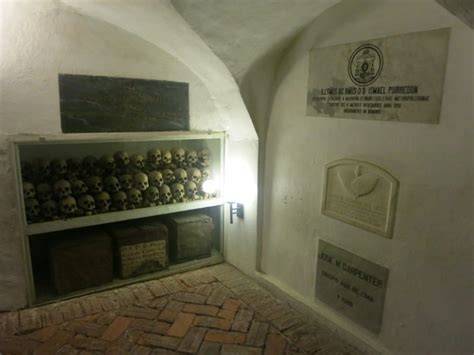
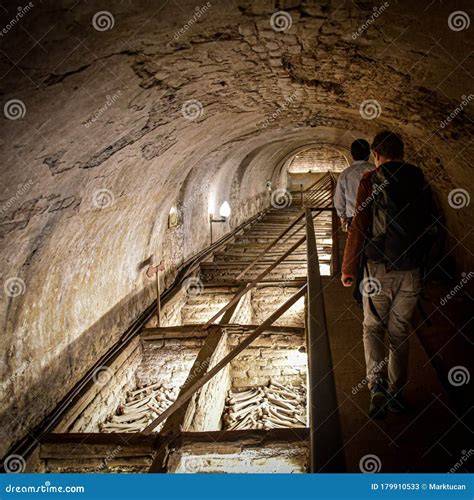
Towards the end of the right side of the cathedral, there is a little entrance to the underground crypt that you have to crouch a bit to enter. The crypt was once Lima’s main burial vaults for Spanish colonial elites, and you can see bones of family members buried in their own clusters, as well as skulls in neat stacks.
The crypt was both eery and fascinating to see. These tombs are different from the catacombs of the San Francisco Convent, which I’ll talk about later, in that these tombs belonged to colonial elites, both religious and lay, who could afford to be buried in the sacred church grounds.
The Organ and View of the Nave
Turning around to the left side of the cathedral, there is a staircase up to see the cathedral organ, as well as a top-down view of the church nave. This perspective makes it possible to appreciate the cathedral’s layout and the relationship between its chapels, ceiling, and central space.
The Cathedral Library
Towards the front left side of the cathedral, there is a little courtyard with a way to the cathedral library, which is an awesome space with shelves of old books (you can’t interact with any of them).
On display, there is a massive book of chorus sheet music - the print is huge so that the entire choir can read and sing from it together. The library adds a quieter and more unusual dimension to the cathedral visit.
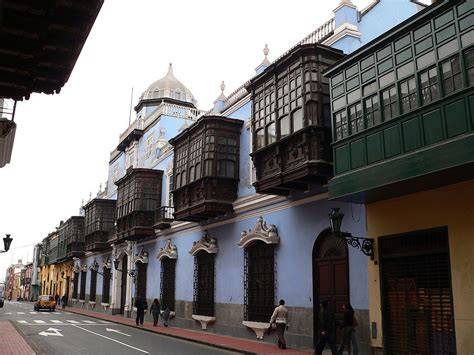
After the library, that was about it for the visit. We went outside and admired the cathedral facade a bit, as well as the details on carved wooden balconies in the Archbishop's Palace next to the cathedral, a quintessential example of the Limeño Baroque style.
6. Lunch at Bar Cordano
Next, we went for lunch at Bar Cordano, founded in 1905 and one of Lima’s oldest restaurants. Since it’s located right next to the Government Palace, it is said that almost all presidents of Peru have dined there.
We figured, since this is a history-focused day, might as well dine at a historic establishment too. I’d say, the atmosphere and decor was top-notch, with its old-world feel, antique furniture, and photo-covered mud walls.
But the food was so-so (it felt like they might not have updated the taste to the modern palette, but that’s just my take), with an average price (like $10-12 USD per main dish). We ordered a kidney dish and a lamb shank.
7. Visit the House of Peruvian Literature
After lunch, we made a pit stop at the museum House of Peruvian Literature, right down a short pedestrian street. It’s located in the Desamparados railway station, though now, the museum occupies basically the entire building.
The main station hall area is an exhibition hall, most notably a presidential wagon. And the old rail tracks and boarding area is now an area with benches where people can sit, drink coffee, and read.
We didn’t stop too long, but it felt really nice to be able to relax and read with others in the area, seeped in the history of the old, overgrown rail tracks.
8. Church and Convent of Saint Francis and the Catacombs
Visitor Information
| Visitor information | Details |
|---|---|
| Entrance fee | 20 soles (~7 USD) per person |
| Tickets | Tickets are sold in person at the door |
| Hours | Everyday 9AM to 6PM |
| Visit type | Guided tours only, Spanish or English |
| Visit length | The tour is around 1 hour |
| Photography | Pictures are not allowed |
When Lima was founded in 1535, the city was divided and distributed, and this lot was given to the Franciscan order of the Catholic Church. The Church of San Francisco was built in the Liman Baroque style.
My partner and I joined the Spanish version of the tour, and I tried my best to understand. The first half of the tour was focused on the church and convent areas, including the church nave and altar, the cloisters with the view of the courtyard, chapter house, and more.
The guide was super detailed, giving a history of each of the rooms. One of the most fun things to see in this section was a giant depiction of The Last Supper with Jesus and the apostles eating traditional Peruvian foods, including cuy (guinea pig), chicha (a corn-based beverage), and Andean dishes.
The Catacombs
The second half of the tour was focused on the catacombs, which were absolutely insane. The catacombs served as the main cemetery of Lima’s parishioners for 300 years during the Spanish colonial era, and housed an estimate of between 25,000 to 70,000 people, depending on the source.
The bodies were buried in large pits, many of which had bones that were layered in various geometric or artistic arrangements (like circular long bones with corresponding skulls). Some of the bones were also organized seemingly by the type of bone, like skulls or femurs.
The difference between these catacombs and the crypt below Lima Cathedral is that the catacombs housed ordinary citizens, not just the clergy or elites, and the people were also buried in mass graves, rather than individual tombs.
Seeing the sheer number of bones there was definitely a very unique experience. The tour ended after we emerged from thirty minutes with bones in the underground, and we were led to a gift shop area and a courtyard where we could freely explore.
9. Church and Convent of Santo Domingo
As the last stop, we went to the Church and Convent of Santo Domingo, of the Dominican order. We were debating whether to also enter the cloister area (which required a ticket for entry) to look at the colorful Sevillian tiles (azulejos sevillianos), but we ended up just resting a bit in the church nave.
Both the interior of the church and the exterior were constructed in beautiful light-blue tones, which we found to be pretty unique from the colors of historic Catholic churches. The little surrounding plaza of the church was nice too, with wooden benches and buildings also in similar shades of blue.
10. Return to Plaza San Martín
After Santo Domingo, wander back toward Plaza San Martín. The route ends at the same central square where it began, making it an easy place to arrange transportation onward.
If you’re staying outside Centro Histórico, take an Uber. This itinerary starts/ends at Plaza San Martín, which is a straightforward spot for pickup and drop-off.
Practical Tips for a Lima Cathedral Tour
Safety
The main tourist core (around Plaza San Martín → Plaza Mayor) felt safe during the day, but the vibe can shift a few blocks out. Petty theft happens - keep your phone secured, avoid flashing valuables, and skip the area at night.
Opening Hours and Tickets
Always double-check same-day hours - schedules can change. Lima Cathedral tickets can be bought online or at the door, while tickets for San Francisco and the Catacombs are sold in person.
Visit Timing
The cathedral visit fits naturally into a broader historic-center walk, but the time required can increase if there is a line to buy tickets. For a relaxed itinerary, budget around 45 minutes to 1 hour inside the cathedral.
Photography and Guided Visits
Lima Cathedral is self-guided, so you’re free to roam. San Francisco and the Catacombs are guided tours only, and pictures are not allowed there.
Sunday Planning
Lima Cathedral is open only in the afternoon on Sundays, from 1PM to 7PM. This matters when planning a morning or half-day walking route through the Historic Center.
Optional Guided Tour Format
Guided walking tours of the Historic Center can combine Lima Cathedral with nearby landmarks such as the Archbishop’s Palace and Government Palace, providing context for Lima’s colonial past.
A half-day itinerary can also combine Plaza San Martín, Plaza de Armas, Lima Cathedral, and the San Francisco Convent and Catacombs. Other Lima itineraries extend beyond the historic center to Miraflores, Huaca Pucllana, and Barranco, but those areas are separate from this walkable cathedral route.