A Catholic who wishes to become Orthodox normally enters a period of catechism, regular participation in Orthodox worship, spiritual guidance, and personal discernment. The process commonly lasts about a year, although the priest determines the candidate’s readiness. The formal reception into the Orthodox Church takes place either through Baptism, when the candidate has not previously been baptized in the name of the Holy Trinity, or through the Mystery of Holy Chrismation, when the candidate’s previous Trinitarian baptism is accepted by the Orthodox Church.
Conversion is not merely a change of parish, worship style, or religious preference. The candidate is expected to accept the faith, Holy Tradition, dogmas, canons, spiritual discipline, worship, and commandments of the Orthodox Church without treating the Church as something to be reshaped according to personal expectations. A Catholic convert must therefore approach Orthodoxy as a total conversion and not a conditional one.
What Catholics and Orthodox Christians Believe in Common
Before exploring the differences between Orthodoxy and Roman Catholicism, we must first understand what the Orthodox Church and the Roman Catholic Church share. These two ancient Christian traditions come from the same apostolic inheritance. For the first thousand years of Christianity, the churches of the East and West lived in communion with one another. Because of this shared history, Orthodox Christians and Roman Catholics continue to affirm many of the same foundational beliefs.
- The Holy Trinity and the full divinity and humanity of Jesus Christ
- The Incarnation, death, Resurrection, and Ascension of Christ
- The first seven Ecumenical Councils of the undivided Church
- Apostolic succession through bishops, priests, and deacons
- The sacramental life of the Church
- The central role of the Eucharist and the true presence of Christ in the Eucharist
- The communion of saints and the honor given to the Virgin Mary as the Theotokos (“Mother of God”)
- The use of sacred images, including icons, in Christian worship
These shared beliefs reveal why the relationship between the Orthodox Church and Roman Catholic Church is complex. The differences between Orthodoxy and Roman Catholicism are not disagreements between unrelated Christian groups. Rather, they developed within a shared ancient tradition.
However, shared beliefs do not always mean identical understandings. Orthodox Christians and Roman Catholics may affirm the same practices while explaining their meaning differently. For example, both traditions honor saints and use sacred images, but they developed different theological explanations for these practices.
Why Similar Christian Traditions Developed Differently
If the Orthodox Church and the Roman Catholic Church share so much history and so many beliefs, why do they differ today? The differences between Orthodoxy and Roman Catholicism developed gradually over centuries. They did not come from a single disagreement but from different historical experiences, cultures, and theological emphases.
During the first millennium of Christianity, the Christian East and West developed different ways of approaching theology and the life of the Church. The Eastern Christian tradition placed strong emphasis on the mystery of God, the writings of the Church Fathers, and humanity’s transformation through communion with God.
The Western Christian tradition, on the other hand, increasingly developed through systematic theology, philosophical categories, and different approaches to explaining doctrine. These differences did not remain limited to theological discussions, but shaped the way each tradition understood authority, worship, salvation, and the role of the Church.
For Orthodox Christians, these distinctions matter because theology is not simply about ideas. The way we understand God shapes how we worship Him and how we live the Christian life. To understand the differences between Orthodoxy and Roman Catholicism, we must look not only at individual doctrines but also at the deeper theological perspectives that shaped East and West.
What Orthodoxy Means in the Life of the Church
The word ‘orthodoxy’ can conjure up foul associations. There’s Bertrand Russell’s famous quote, “Orthodoxy is the grave of intelligence,” which covers any sort of rigid or right thinking at the expense of creative thought. Orthodoxy (lower case) implies a strict adherence to tradition against which Modernism doesn’t stand a chance.
In Christianity, Orthodoxy which has never had a Second Vatican Council or anything approaching a Novus Ordo - Divine Liturgy with lay ministers and Protestant-style hymns - is a window into the ancient Church. Orthodox Christianity has always preserved a liturgical and ecclesial life rooted in the ancient Christian tradition.
In the Orthodox Church there are no activist organizations of lay women clamoring to be priests (although Metropolitan Kallistos Ware admits that at some point in time the Church may have to consider the question). To date Orthodox women, however feminist their inclinations, haven’t splintered off and gotten themselves “ordained” by renegade bishops.
There are no Orthodox lay liturgists trying to reinvent or modernize the Divine Liturgy, either. Tradition is already there, and it’s not going anywhere. It is, as they say, the Church.
Different Approaches to Theology and the Christian Life
The Orthodox Church understands theology as the expression of the Church’s lived experience of God. Christianity is not merely a collection of ideas to understand; it is communion with God through participation in the life of the Church. This way of seeing the faith is called the Orthodox phronema-the mind, disposition, and spiritual vision of the Church.
The Orthodox phronema is formed through Holy Scripture, the Divine Liturgy, the Mysteries, the writings of the Fathers, and the life of the saints. For Orthodox Christians, knowledge of God is not primarily an intellectual achievement. God is known through repentance, prayer, worship, and participation in His grace.
The Fathers used human language and philosophical concepts to defend and clarify the apostolic faith, but their theology remained rooted in the received Tradition of the Church. The Orthodox concern with later Western theological developments is not the use of reason itself, but the elevation of intellectual analysis as the primary means of understanding divine realities.
Over time, Western theology placed increasing emphasis on philosophical categories, systematic explanation, and precise definitions of doctrine. From the Orthodox perspective, theology must remain grounded in the worship and life of the Church. The mysteries of God are not merely concepts to be explained; they are realities to be encountered and lived.
The Orthodox Understanding of the Church
The Orthodox understanding of the Church begins with the reality that the Church is the Body of Christ and the dwelling place of the Holy Spirit. She is not merely a human institution that preserves teachings about God. She is the living communion through which Christ continues His saving work in the world.
The Orthodox Church preserves the apostolic faith through the life of the whole Church: her bishops, councils, Scriptures, Holy Tradition, worship, and saints. No bishop stands above the Church. Every bishop serves within the apostolic Tradition he has received.
Unity, therefore, rests on communion in the same faith, Eucharist, sacraments, and apostolic Tradition. This does not mean Orthodox Christians have never experienced disputes or schisms. They have, and such divisions are wounds within the Church, not evidence that the Church requires a universal bishop to maintain her unity.
The Orthodox response to division is repentance, reconciliation, and conciliar resolution according to the faith of the Church. Christ alone is the Head of the Church. Our bishops exercise authority within the conciliar life of the Church, not as a hierarchy centered on a single universal bishop.
The Roman Catholic Church shares the Orthodox understanding of apostolic succession and the importance of bishops. However, Roman Catholic ecclesiology gives the Bishop of Rome universal jurisdiction over the Church and a unique role as her visible head. Naturally, the Orthodox Church does not accept this understanding.
Thus, Orthodox unity does not depend upon centralized jurisdiction, but upon fidelity to the apostolic faith and communion in the life of Christ.
Authority, Primacy, and the Papacy
Primacy and Papal Supremacy
The Orthodox Church recognizes a real primacy belonging to the Bishop of Rome. In the ancient Church, Rome held the first place among the major episcopal sees. The Orthodox Church does not, however, understand this primacy as universal jurisdiction over every Christian.
Roman Catholicism teaches a much broader authority. The First Vatican Council (1870) defined that the Roman pontiff possesses “full and supreme power of jurisdiction” over the universal Church, including every bishop and faithful. It also taught that this authority is “ordinary and immediate.”
The Orthodox Church does not find this model in the ecclesiology of the ancient Church. Orthodox bishops exercise their authority within the conciliar life of the Church. A bishop may hold primacy, but he does not thereby receive jurisdiction over every other bishop.
Thus, the Orthodox Church distinguishes primacy from supremacy. Rome’s ancient primacy was real. The universal jurisdiction claimed by the modern papacy is another matter entirely.
The Papacy in the Ancient Church
The ancient canons do not describe the Bishop of Rome as a universal bishop. The First Council of Nicaea (325), for example, recognized the “ancient customs” giving Rome authority in its established region while simultaneously recognizing comparable jurisdictional arrangements for Alexandria and Antioch.
The canon treats these as established ecclesiastical customs, not as universal jurisdiction over every church. The Fourth Ecumenical Council at Chalcedon (451) provides even stronger evidence. Canon 28 explains Rome’s privileges in connection with its status as the imperial city and grants Constantinople “equal privileges” because it had become New Rome.
Rome rejected this canon, but its very existence demonstrates that the Eastern bishops did not understand Rome’s primacy as universal jurisdiction. The Council’s treatment of Pope Leo is equally instructive. The bishops received his Tome because they recognized it as faithful to the apostolic faith, proclaiming that “Peter has spoken through Leo.”
They did not treat Leo’s teaching as irreformable simply because he was pope. The council examined his teaching within the Tradition of the Church. The ancient Church therefore knew Roman primacy, but not the later Vatican I conception of the papacy.
What About Saint Peter?
Roman Catholic theology grounds papal supremacy in Christ’s promises to Saint Peter, especially the giving of the keys in Matthew 16:18-19. The Orthodox Church also recognizes Peter’s special place among the Apostles. He frequently speaks first and acts as their representative.
Yet Scripture never presents him as a universal monarch over the Apostles. Christ gives the authority to bind and loose to the Apostles collectively (Matthew 18:18). After His Resurrection, He gives the Apostles authority to forgive and retain sins (John 20:22-23).
The Apostle Paul provides another important example. When Peter temporarily withdrew from eating with Gentile Christians, Paul publicly rebuked him because his conduct contradicted the truth of the Gospel (Galatians 2:11-14). Neither Peter nor the other Apostles treated this correction as an attack upon a unique, irreformable authority.
The Council of Jerusalem likewise demonstrates the apostolic pattern. When a major doctrinal dispute arose, the Apostles and elders gathered together and reached a conciliar decision (Acts 15). Peter participated prominently, but he did not settle the matter by unilateral decree.
The Orthodox Church therefore honors Peter’s primacy without equating it with the later papal office. Peter was first among the Apostles, not a universal bishop exercising jurisdiction over them.
Papal Infallibility
Roman Catholicism teaches that the pope cannot err when he definitively teaches a doctrine of faith or morals ex cathedra as the supreme pastor of the universal Church. The First Vatican Council formally defined this doctrine in 1870, grounding this teaching in Christ’s promise to Peter, particularly Luke 22:32, and declaring that the Roman pontiff possesses the infallibility Christ willed for His Church.
It further taught that an ex cathedra definition is irreformable in itself, rather than requiring confirmation by the Church. The Orthodox Church understands the Holy Spirit’s preservation of the Church differently.
The Church’s indefectibility does not depend upon one bishop possessing a unique guarantee against doctrinal error. Bishops remain accountable to the apostolic faith and to the Church. Indeed, the ancient Church demonstrates this distinction. The Sixth Ecumenical Council condemned Pope Honorius I for supporting Monothelitism. His status as Bishop of Rome did not place his teaching beyond conciliar judgment.
The Filioque and the Procession of the Holy Spirit
One of the major theological differences between the Orthodox Church and Roman Catholicism concerns the Filioque clause in the Nicene-Constantinopolitan Creed. The Latin word Filioque means “and the Son.” Its inclusion states that the Holy Spirit proceeds from the Father and the Son.
The Orthodox Church preserves the original formulation that the Holy Spirit proceeds from the Father. The issue concerns both the content of the doctrine and the authority to alter the Creed of the undivided Church.
These changes not only included the Flioque clause in the Nicene Creed but the way Christians crossed themselves. The original method of crossing oneself was the Orthodox way, right to left, but Rome changed it from left to right in the 8th century.
A change like this seems a small thing but it can also be indicative of something deeper, like a tendency to re-invent and denude until centuries later you get something like the Second Vatican Council, where the changes were so drastic that if a Catholic from 1947 could come back he wouldn’t even recognize today’s Catholic Mass as being Catholic.
Scripture, Holy Tradition, and the Development of Doctrine
The Orthodox Church understands Scripture as living within Holy Tradition rather than existing separately from the Church. The Divine Liturgy, the Mysteries, the writings of the Fathers, the decisions of the Ecumenical Councils, the lives of the saints, and the Church’s prayer all belong to the environment in which Scripture is received and interpreted.
The Orthodox Church preserves the apostolic faith through the life of the whole Church: her bishops, councils, Scriptures, Holy Tradition, worship, and saints. The Fathers used human language and philosophical concepts to defend and clarify the apostolic faith, but their theology remained rooted in the received Tradition of the Church.
The Orthodox concern with later Western theological developments is not the use of reason itself, but the elevation of intellectual analysis as the primary means of understanding divine realities. The mysteries of God are not merely concepts to be explained; they are realities to be encountered and lived.
Salvation, Theosis, and the Healing of Humanity
The Orthodox Church understands the Christian life as participation in the life of God through communion, healing, and transformation. This spiritual outlook is known as the Orthodox phronema-the mind and way of seeing that comes from the life of the Church.
For Orthodox Christians, salvation is not merely a legal declaration or the cancellation of a debt. It is the healing and transformation of the human person through communion with Christ. The goal of Christian life is participation in God, traditionally described as theosis or deification.
God is known through repentance, prayer, worship, and participation in His grace. The Christian is united to Christ through the sacramental life of the Church, the practice of prayer, obedience to the commandments, and the healing of the passions.
Divine Energies and Participation in God
Orthodox theology distinguishes between God’s unknowable essence and His uncreated energies. Human beings do not become God by nature, but they truly participate in God through His grace and divine energies.
This distinction expresses how God can remain transcendent while genuinely communicating Himself to creation. The Christian life is therefore not merely intellectual agreement with doctrines but a real participation in divine life.
Original Sin and Ancestral Sin
Orthodox Christians commonly speak of ancestral sin rather than original sin in the same Western sense. Humanity inherits mortality, corruption, and a tendency toward sin from Adam, but the person is not regarded as personally guilty of Adam’s individual transgression merely by being born.
This emphasis supports the Orthodox understanding of salvation as healing humanity from death and corruption and restoring communion with God. The difference does not mean that Orthodox Christians deny the Fall or the universal reality of sin; it reflects a different theological explanation of humanity’s condition.
The Eucharist and the Real Presence
Both traditions affirm the central role of the Eucharist and the true presence of Christ in the Eucharist. The Eucharist is not a symbol or a memorial, it is real.
For the ordinary people in the pews, ie. people who are not theologians, priests or monks, it is the Eucharist that stands out as the centerpiece of spiritual life. Comments like these bypass the usual East-West schism rhetoric having to do with the Filioque, or questions related to the primacy of the Bishop of Rome.
It’s not that many or most Orthodox don’t think that these questions are important; many do. But for the ordinary people in the pews, ie. people who are not theologians, priests or monks, it is the Eucharist that stands out as the centerpiece of spiritual life.
Holy Communion is offered only to those persons who are baptized and chrismated in the Holy Orthodox Church. Becoming a catechumen is the process of preparing for Baptism and/or Chrismation. After the person is baptized/chrismated, he or she should first participate in the Mystery of Repentance/Confession and then, under the guidance of the priest, one may receive Holy Communion and other Mysteries.
The Virgin Mary and the Theotokos
Both traditions honor the Virgin Mary as the Theotokos (“Mother of God”). The Orthodox Church understands Mary’s holiness through the life of the Church, her obedience, purity, cooperation with God’s will, and unique role in the Incarnation.
Roman Catholicism teaches the Immaculate Conception as a defined dogma. The Orthodox Church does not accept the Immaculate Conception in its Roman Catholic formulation. Orthodox theology approaches Mary’s holiness and the ancestral condition of humanity through a different theological framework.
Both traditions also have Marian devotions and accounts of apparitions. Orthodoxy, however, evaluates such reports within the life, worship, and spiritual discernment of the Church rather than treating every reported apparition as an equally authoritative basis for doctrine.
The Saints and Their Intercessions
Orthodoxy has canonized saints, monks, nuns, priests, vestments, miters-everything in fact that Catholicism had, even miracle stories, bleeding and myrrh streaming images, as well as visions of the Virgin Mary.
Both traditions honor the saints and ask for their intercessions. The Orthodox Church understands the saints as living members of the Body of Christ who pray for the world and manifest the transforming work of divine grace.
When a person converts to Orthodoxy through baptism or chrismation, he or she is encouraged to take on a Christian or Saint's name. Especially if the present name is strictly secular. The reason is two-fold. First, the Saint becomes a personal example and a model of authentic spirituality to the catechumen and therefore is inspired to emulate his/her virtuous life. Also, the Saint becomes the Patron of the newly converted, praying and interceding to God on his/her behalf.
Legally, no one is required to change their name. Spiritually, however, taking a Christian or saint’s name may express the person’s entrance into the life of the Church and relationship with a heavenly patron.
Icons and Sacred Images
Both traditions use sacred images, including icons, in Christian worship. The Orthodox Church makes a strong distinction between the worship due to God alone and the veneration offered to saints and sacred images.
Icons are not treated as ordinary decoration. They participate in the Church’s proclamation of the Incarnation: because the Son of God truly became man, Christ can be depicted. The honor shown to an icon passes to the person represented by it.
Not far from the Pavilion was a small log cabin church with a three-bar cross on top. I knew the cross to be Russian Orthodox. The chapel was a replica of the first Orthodox chapel in America built in the 1800s at Fort Hood, California.
While the rustic exterior put one in mind of Lincoln Logs or Lewis and Clark expeditions, the interior - we had to peer through the windows because the chapel was locked - revealed something startling: a small chandelier illuminating a colorful iconostasis in the center of which were circles of electric candles and a replica of the framed (miraculous) icon of Our Lady of Kazan.
The beauty of that small log cabin church far surpassed anything in the great white Pavilion monolith with its cold and empty Chapel of the Good Shepard.
Purgatory and the Intermediate State
The Orthodox Church prays for the departed and affirms that the dead remain within God’s care. Orthodox theology does not accept the Roman Catholic doctrine of purgatory in its developed Western formulation.
The difference concerns the theological explanation of the condition of the departed, purification, judgment, and the relationship between divine justice and mercy. Orthodox Christians entrust the departed to God’s mercy through prayer and the Eucharistic life of the Church.
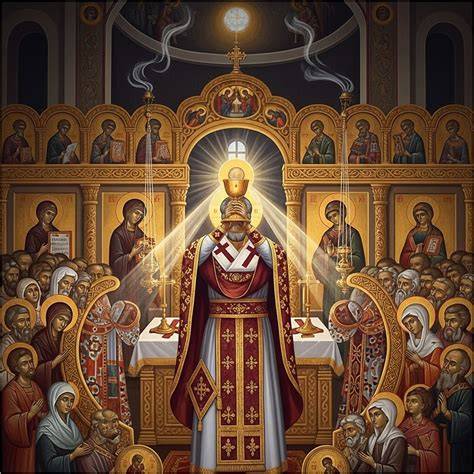
Worship and Liturgical Life
In Christianity, Orthodoxy which has never had a Second Vatican Council or anything approaching a Novus Ordo - Divine Liturgy with lay ministers and Protestant-style hymns - is a window into the ancient Church.
Priests like that never get a chance to bloom in Orthodoxy; or, if one was discovered in seminary, he’d be sent packing or be told to switch hit to the local Catholic Franciscans. There are no Orthodox lay liturgists trying to reinvent or modernize the Divine Liturgy, either.
I came to Orthodoxy from Catholicism partially because of its unchanged liturgy; because the Orthodox Church, in its wisdom, never embarked on a path of liturgical self-destruction. It was not enough for me to attend the Traditional Catholic Latin Mass once a month when the bulk of the Catholic Church remains in the Novus Ordo camp.
Even while attending the TLM at beautiful Saint Paul’s church in South Philadelphia, one could not escape the reality that this Mass was a minority Mass, primarily a footnote to the Novus Ordo. It pained me to realize that the TLM was seen more as a specialized event and not part of the regular lists of masses in most Catholic churches.
In the Orthodox Church there is always the traditional liturgy; the rubrics never wax or wane depending on the latest liturgical fashion. There’s no need for committees to advertise or promote tradition.
Since becoming Orthodox, gone are the endless personal narratives that would run in my head whenever I’d attend either a TLM or the Novus Ordo. Those narratives concentrated on what had been lost or thrown away. In the Orthodox Church, tradition is not shuffled in and shuffled out, like a road show trekking onto Buffalo.
Fasting, Feasts, and the Church Calendar
Orthodox worship is connected with a complete liturgical rhythm of feasts, fasts, services, prayers, and commemorations. A catechumen is expected to attend the Divine Liturgy each Sunday as well as special Divine Services throughout the ecclesiastical year.
Fasting is understood not simply as a dietary rule but as part of repentance, prayer, self-control, and preparation for communion with God. The precise application of fasting is discussed with the priest, especially because personal health, work, family circumstances, and spiritual maturity may require pastoral guidance.
Sacraments, Mysteries, and the Clergy
The Orthodox Church refers to the sacraments as the Holy Mysteries. Both Orthodox Christians and Roman Catholics affirm sacramental life, apostolic succession, and the importance of bishops, priests, and deacons.
The Orthodox Church understands the Mysteries within the life of the whole Church. They are not isolated religious ceremonies but means through which the faithful participate in the life of Christ and receive divine grace.
Holy Communion is offered only to those persons who are baptized and chrismated in the Holy Orthodox Church. After the person is baptized/chrismated, he or she should first participate in the Mystery of Repentance/Confession and then, under the guidance of the priest, one may receive Holy Communion and other Mysteries.
The Process of Becoming Orthodox
1. Initial Discernment and Contact with a Parish
You may have already decided to join the Orthodox Christian Church. However, participating in a learning program does not obligate you to join the Church.
Conversion to Orthodoxy should begin with honest discernment and regular contact with an Orthodox parish. The candidate should attend services, speak with the priest, ask questions, and become familiar with the life of the local community.
No priestly act is of a more far-reaching consequence than a conversion to Orthodox Christianity. It crucially determines for all time the convert's allegiance.
2. Becoming a Catechumen
A catechumen is defined as “one receiving instruction in the basic doctrines of Christianity before admission to communicant membership in the Church.” Becoming a catechumen is a period of preparation rather than immediate membership in the Orthodox Church.
A catechumen is expected to attend the Instructional Classes faithfully. Orthodoxy means "right doctrine" or "true worship." In other words, the Holy Orthodox Church has specific teachings and traditions regarding the nature of God, Jesus Christ, the Holy Spirit, the Church; as well as what it means to be a true follower of our Lord and Savior Jesus Christ and how to live as a genuine Christian.
The catechumen learns the Creed, Scripture, the Ecumenical Councils, the Mysteries, prayer, fasting, repentance, the saints, icons, worship, Church history, and the differences between Orthodox Christianity and other Christian traditions.
3. Regular Church Attendance
Worship of God is at the center of Orthodox Christian life and spirituality. Worship is not only an experience of learning but a way that God's mystical grace comes to us, touches us and changes us.
A catechumen is expected to attend the Divine Liturgy each Sunday as well as special Divine Services throughout the ecclesiastical year.
Regular attendance helps the candidate understand Orthodoxy through participation rather than theory alone. The Orthodox faith is encountered through prayer, the liturgical cycle, preaching, the sacraments, the icons, the chants, and the life of the parish.
4. Instructional Classes
Orthodoxy means "right doctrine" or "true worship." The Church has specific teachings and traditions regarding the nature of God, Jesus Christ, the Holy Spirit, the Church, the Christian life, and the purpose of salvation.
A catechumen is expected to attend the Instructional Classes faithfully. The candidate must learn not only what Orthodox Christians believe but also how those beliefs are expressed in worship and spiritual practice.
5. Spiritual Guidance
In our Holy Orthodox Church, one does not determine and follow their own spiritual path without the advice and guidance of spiritual fathers and mothers. Personal accountability is essential to growth in Christ along with intellectual knowledge and church attendance.
In a spirit of agape, the spiritual father watches over the growth and progress of the spiritual child. The priest will help the catechumen in a spiritual self-examination to prepare for the Mystery of Repentance/Confession.
The priest will also help deal with personal questions, issues, problems that may arise before or after joining the Orthodox Church. This relationship is not merely administrative; it is part of the candidate’s preparation for life within the Church.
6. Godparent or Sponsor
Everyone who is converting to the Orthodox Faith needs a godparent or sponsor. The sponsor must be an Orthodox Christian in good standing with the Church.
He or she should be a model and example of faithfulness and take quite seriously the role of a godparent. If the godparent is from another Orthodox parish, a letter of verification of membership in good standing from his/her parish priest is required.
The sponsor supports the candidate during the process of preparation and remains a spiritual witness to the convert’s entrance into the Orthodox Church.
7. Baptism or Chrismation
The conditions for becoming an Orthodox Christian are simple enough in definition. A properly qualified catechist, after instructing the candidate, must be satisfied that the candidate is genuinely willing and able to accept all the religious discipline of the Orthodox Church without any reservation.
Whereupon the formal act of conversion is carried out, either by baptism where the candidate has not been previously baptized in the name of the Holy Trinity, or by the Mystery (ion) of Holy Chrismation.
If someone decided to enter into the process of preparation, the following is an outline of the process--its guidelines and requirements.
8. Confession and First Communion
After the person is baptized/chrismated, he or she should first participate in the Mystery of Repentance/Confession and then, under the guidance of the priest, one may receive Holy Communion and other Mysteries.
Holy Communion is offered only to those persons who are baptized and chrismated in the Holy Orthodox Church. Becoming a catechumen is the process of preparing for Baptism and/or Chrismation.
Does a Catholic Need to Be Baptized Again?
If a person was baptized in another Christian tradition, he does not automatically need to be baptized in the Orthodox Church. The practice of the Ecumenical Patriarchate of Constantinople and most Orthodox Patriarchates is to admit a Christian who has been baptized through the Mystery of Chrismation.
Again it depends on whether the baptism of a specific denomination is considered as valid by the Orthodox Church. However, a potential convert must provide documented proof of his/her Trinitarian baptism (done in the name of the Father, Son and Holy Spirit) in the other Faith.
For a Catholic, the question is therefore determined by the Orthodox jurisdiction and the receiving priest or bishop. The candidate should provide baptismal documentation and follow the direction of the local Orthodox authority.
How Long Does Conversion Usually Take?
Usually, it is a year-long process. However, the priest always uses discretion to determine the readiness of a catechumen.
Becoming a member is not just learning about the Faith but growing in faith-a personal transformation must be evident. Frequently, this takes time and is dependent on the level of cooperation and commitment of the candidate.
The length of preparation can therefore vary. The important consideration is not completing a schedule as quickly as possible but demonstrating that the candidate understands the Orthodox faith, participates in the life of the Church, accepts spiritual guidance, and is prepared to live as an Orthodox Christian.
Does a Convert Need to Change Their Name?
Legally, no. Spiritually, one who is converting to Orthodoxy through baptism or chrismation is encouraged to take on a Christian or Saint's name, especially if the present name is strictly secular.
The reason is two-fold. First, the Saint becomes a personal example and a model of authentic spirituality to the catechumen and therefore is inspired to emulate his/her virtuous life. Also, the Saint becomes the Patron of the newly converted, praying and interceding to God on his/her behalf.
What Total Conversion Means
What must be understood with one who wishes to become an Orthodox Christian is that it demands total conversion and not a conditional one. The new convert must adhere to the Holy Tradition of the Church, to the holy Canons, to the Dogma, to the spiritual discipline, and to conform and be obedient to the teachings and commandments of our Lord and Savior Jesus Christ.
He or she cannot have a different agenda! He or she cannot be selective what one likes or dislikes. One does not become an Orthodox Christian so as to change the Holy Church from within to meet his/her expectations.
He or she must always remember what Saint Paul writes: “Jesus Christ is the same yesterday, today, and forever” (Hebrews 13:8).
The true proselyte (convert) will live up to the qualifications so concisely expressed by the most famous of them all, when Ruth the Moabite pledged: “Where you go, I will go; and where you lodge for the night, I will lodge” - sharing the life of the people she converted to; “your people will be my people” - joining the togetherness of the people she converted to; “and your God will be my God” - serving as a witness (martyras) to religious commitments “where you die, I will die, and there shall I be buried” (Ruth 1:16-17).
Anyone prepared to follow Ruth's example of total loyalty will be accepted into the Holy Orthodox Christian Faith with love and open arms.
5 Things Orthodox Christian Converts Should Expect
tags: #catholic #converting #to #orthodox