Mark chapter 13 KJV records Jesus Christ’s teaching about the destruction of the temple, the signs preceding the end, persecution, the abomination of desolation, His coming in glory, and the necessity of spiritual watchfulness.
The chapter’s central command is stated at its close: “And what I say unto you I say unto all, Watch.” Jesus gives warnings about deception, wars, earthquakes, famines, persecution, false Christs, and tribulation, while also declaring that “Heaven and earth shall pass away: but my words shall not pass away.”
Jesus Predicts the Destruction of the Temple
And as he went out of the temple, one of his disciples saith unto him, Master, see what manner of stones and what buildings are here! And Jesus answering said unto him, Seest thou these great buildings? there shall not be left one stone upon another, that shall not be thrown down.
The disciples admired the temple’s massive stones and magnificent buildings, but Jesus announced that the entire structure would be thrown down. His statement redirected their attention from the apparent permanence of the temple to the certainty of God’s prophetic word.
The Setting on the Mount of Olives
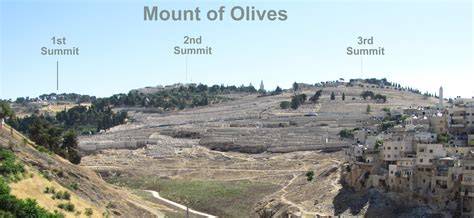
And as he sat upon the mount of Olives over against the temple, Peter and James and John and Andrew asked him privately, Tell us, when shall these things be? and what shall be the sign when all these things shall be fulfilled?
The question was asked privately by Peter, James, John, and Andrew. They wanted to know when the temple’s destruction would occur and what sign would indicate that these things were about to be fulfilled.
Warnings About Deception
And Jesus answering them began to say, Take heed lest any man deceive you: For many shall come in my name, saying, I am Christ; and shall deceive many.
Jesus begins His answer with a warning about deception. Many would come in His name and claim authority or identity that did not belong to them, and many people would be led astray.
- “Take heed lest any man deceive you.”
- “Many shall come in my name.”
- “And shall deceive many.”
The warning is repeated later in the chapter when false Christs and false prophets perform signs and wonders. The presence of impressive claims or extraordinary signs is not, by itself, proof that a message is true.
Wars, Rumors of Wars, Earthquakes, Famines, and Troubles
And when ye shall hear of wars and rumours of wars, be ye not troubled: for such things must needs be; but the end shall not be yet. For nation shall rise against nation, and kingdom against kingdom: and there shall be earthquakes in divers places, and there shall be famines and troubles: these are the beginnings of sorrows.
Jesus tells His disciples not to be troubled when they hear of wars and rumors of wars. Such events must happen, but they do not mean that the end has already arrived. Nations and kingdoms will rise against one another, earthquakes will occur in various places, and there will be famines and troubles.
These events are described as “the beginnings of sorrows.” The image is that of the beginning of birth pains: significant events have begun, but the beginning is not identical with the completion.
| Sign or circumstance | What Jesus says |
|---|---|
| Wars and rumors of wars | “Be ye not troubled” |
| Nations and kingdoms in conflict | These things must happen |
| Earthquakes | They will occur in divers places |
| Famines and troubles | They are the beginnings of sorrows |
Persecution and Witness
But take heed to yourselves: for they shall deliver you up to councils; and in the synagogues ye shall be beaten: and ye shall be brought before rulers and kings for my sake, for a testimony against them.
Jesus warns that His followers would face legal proceedings, physical punishment, and appearances before rulers and kings because of His name. Their suffering would also provide an opportunity for testimony.
And the gospel must first be published among all nations.
The proclamation of the gospel among all nations is placed within Jesus’ teaching about persecution and the events preceding the end. The disciples’ witness would continue even under opposition.
The Holy Ghost Gives Words to the Persecuted
But when they shall lead you, and deliver you up, take no thought beforehand what ye shall speak, neither do ye premeditate: but whatsoever shall be given you in that hour, that speak ye: for it is not ye that speak, but the Holy Ghost.
Jesus tells His disciples not to prepare an anxious defense in advance when they are arrested and brought to trial. They are to speak what is given them in that hour, because the Holy Ghost will speak through them.
This instruction addresses the moment of arrest and trial described in the passage. It emphasizes reliance upon the Holy Ghost rather than fear, panic, or dependence upon a carefully planned speech.
Betrayal Within Families
Now the brother shall betray the brother to death, and the father the son; and children shall rise up against their parents, and shall cause them to be put to death.
Jesus describes persecution as reaching even into the closest family relationships. Brother may betray brother, father may betray son, and children may rise against their parents.
And ye shall be hated of all men for my name’s sake: but he that shall endure unto the end, the same shall be saved.
The disciples would be hated because of Jesus’ name, but endurance is presented as the defining response of those who remain faithful. The promise is directed to the one who endures unto the end.
The Abomination of Desolation
But when ye shall see the abomination of desolation, spoken of by Daniel the prophet, standing where it ought not, (let him that readeth understand,) then let them that be in Judaea flee to the mountains.
Jesus refers to “the abomination of desolation” spoken of by Daniel the prophet. When it stands where it ought not, those in Judaea are commanded to flee to the mountains.
The instruction is urgent. The warning does not describe a situation in which people have time to return home, collect possessions, or prepare for a long departure.
The Urgency of Flight
And let him that is on the housetop not go down into the house, neither enter therein, to take any thing out of his house: And let him that is in the field not turn back again for to take up his garment.
Those on the housetop are told not to go down into the house to take anything out, and those in the field are told not to turn back for their garment. The commands emphasize immediate flight rather than the preservation of property or personal belongings.
But woe to them that are with child, and to them that give suck in those days! And pray ye that your flight be not in the winter.
Jesus acknowledges the particular hardship that these days would bring upon pregnant women and nursing mothers. He also tells His disciples to pray that their flight would not take place in winter.
Great Affliction and the Shortening of the Days
For in those days shall be affliction, such as was not from the beginning of the creation which God created unto this time, neither shall be.
The affliction would be unlike anything from the beginning of creation until that time, and it would not be equaled afterward. The description presents the distress as extraordinary in its severity and scale.
And except that the Lord had shortened those days, no flesh should be saved: but for the elect’s sake, whom he hath chosen, he hath shortened the days.
Jesus declares that no flesh would be saved if the Lord had not shortened those days. The shortening is described as being for the elect’s sake, whom the Lord has chosen.
False Christs and False Prophets
And then if any man shall say to you, Lo, here is Christ; or, lo, he is there; believe him not: For false Christs and false prophets shall rise, and shall shew signs and wonders, to seduce, if it were possible, even the elect.
During that time, people will claim that Christ is present in one place or another. Jesus commands His disciples not to believe such claims, because false Christs and false prophets will arise.
These false figures will show signs and wonders with the purpose of seducing people. The warning is especially serious because the deception is presented as powerful enough to challenge even the elect, if it were possible.
But take ye heed: behold, I have foretold you all things.
Jesus tells His disciples that He has warned them beforehand. His prophecy is intended to prepare them to recognize deception, endure persecution, and remain watchful.
Cosmic Signs After the Tribulation
But in those days, after that tribulation, the sun shall be darkened, and the moon shall not give her light, And the stars of heaven shall fall, and the powers that are in heaven shall be shaken.
After the tribulation, Jesus describes signs involving the sun, the moon, the stars, and the powers in heaven. The darkening of the sun, the withholding of the moon’s light, the falling of the stars, and the shaking of heavenly powers mark a dramatic disturbance in the created order.

The Coming of the Son of Man
And then shall they see the Son of man coming in the clouds with great power and glory.
Following these signs, people will see the Son of Man coming in the clouds. His coming will be characterized by great power and glory.
And then shall he send his angels, and shall gather together his elect from the four winds, from the uttermost part of the earth to the uttermost part of heaven.
The Son of Man will send His angels to gather His elect. The gathering will extend from the four winds and from the uttermost part of the earth to the uttermost part of heaven.
The passage therefore connects the coming of the Son of Man with power, glory, angelic activity, and the gathering of the elect from every direction.
The Parable of the Fig Tree
Now learn a parable of the fig tree; When her branch is yet tender, and putteth forth leaves, ye know that summer is near:
Jesus uses the fig tree as a lesson about recognizing nearness. When its branch becomes tender and puts forth leaves, people know that summer is near.
So ye in like manner, when ye shall see these things come to pass, know that it is nigh, even at the doors.
In the same way, when the things Jesus has described come to pass, His disciples are to know that it is near, even at the doors. The comparison teaches attentiveness to the signs without providing permission to set a date.
“This Generation Shall Not Pass”
Verily I say unto you, that this generation shall not pass, till all these things be done.
Jesus gives this solemn statement immediately after the fig-tree lesson. The verse declares that this generation shall not pass until all these things are done.
Heaven and earth shall pass away: but my words shall not pass away.
The permanence of Jesus’ words is contrasted with the passing away of heaven and earth. Created things may pass away, but His words will not pass away.
No One Knows the Day or the Hour
But of that day and that hour knoweth no man, no, not the angels which are in heaven, neither the Son, but the Father.
Although Jesus gives signs and explains the sequence of events, He states that no man knows the day or the hour. The angels in heaven do not know it, nor does the Son, but the Father alone knows.
This statement prevents the signs from being used as a basis for setting a precise date. The proper response to uncertainty about the time is not speculation but watchfulness.
Watch and Pray
Take ye heed, watch and pray: for ye know not when the time is.
Jesus commands His disciples to take heed, watch, and pray. They do not know when the time will come, so they must remain spiritually alert.
- Take heed.
- Watch.
- Pray.
The Man Going on a Far Journey
For the Son of man is as a man taking a far journey, who left his house, and gave authority to his servants, and to every man his work, and commanded the porter to watch.
Jesus compares the situation to a man who leaves his house for a far journey. He gives authority to his servants, assigns every man his work, and commands the porter to watch.
The illustration includes both responsibility and uncertainty. The servants have work to do, and the porter has a specific duty to remain watchful, but the time of the master’s return is not disclosed.
The Four Watches of the Night
Watch ye therefore: for ye know not when the master of the house cometh, at even, or at midnight, or at the cockcrowing, or in the morning:
The master of the house may come in the evening, at midnight, at the cockcrowing, or in the morning. Because the time is unknown, watchfulness must continue through every possible period.
Lest coming suddenly he find you sleeping.
The danger is that the master may come suddenly and find the servants sleeping. Jesus uses this image to warn against spiritual carelessness and unpreparedness.
Jesus Prays on the Mount of Olives - Gethsemane | The disciples fell asleep | Bible Story Kids
The Final Command: Watch
And what I say unto you I say unto all, Watch.
The command is not limited to Peter, James, John, and Andrew. Jesus says that what He has told them, He tells unto all: Watch.
Mark chapter 13 KJV therefore presents watchfulness as the proper response to prophecy. Jesus warns against deception, commands endurance in persecution, calls for prayer, affirms the certainty of His words, and instructs everyone to remain awake because the time of the master’s coming is unknown.