Notre-Dame-des-Victoires Catholic Church is one of the most historically significant landmarks in Old Québec. Located in Place Royale, it stands on the site of Samuel de Champlain’s first Habitation and embodies the enduring Catholic, French, and architectural heritage of Québec City.
Construction began in 1688 on the ruins of Samuel de Champlain’s “habitation,” the colony’s first building, and the church was finally completed in 1723. Bombarded, rebuilt, threatened with demolition, and renovated, one of its greatest victories is the fact that it has remained faithful to its original architectural design to this day.
Historical origins on the site of Champlain’s Habitation
The church stands on the very site where the first French settlers established themselves in the early 17th century, making this area widely regarded as the birthplace of Québec. It was on this very site that Samuel de Champlain established his Habitation in 1608, marking the beginning of the history of Québec and Canada.
Construction began in 1688 on the ruins of Samuel de Champlain’s “abitation,” the colony’s first building. Notre-Dame-des-Victoires Church is Place-Royale’s most authentic building from the French Regime, despite the many transformations that have marked its history.
The cobblestone square, the surrounding stone houses, and the church itself together form a living tableau of the New France era. The church’s high, narrow form has preserved the personality imposed by its setting, while the square continues to reflect the urban character of early French settlement in North America.
Construction and early development
When the first bishop of Québec, François de Laval, fought to push ahead with construction of this church, which began in 1688, he had no reason to think it had been born under a lucky star. The merchants complained that it deprived them of space for business, and construction was held up by numerous lawsuits.
In 1688 barely 10,000 people lived in New France, and Québec had fewer than 1,000 inhabitants. Signs of wealth were rare. This satellite church of the Upper Town cathedral, whose mission was to minister to the many Lower Town faithful, is unpretentious.
Parishioners, newlyweds, and tourists continue to experience this place of worship typical of New France. Though modest in size, it is packed with stories that trace the roots of French settlement in Canada and the enduring Catholic heritage of Québec City.
Why the church is called Notre-Dame-des-Victoires
At first the church was dedicated to the Infant Jesus, but before it was completed, Admiral Phips dropped anchor across from Québec with a fleet of some 30 vessels poised to seize the city. Governor Frontenac adroitly led the defence against the invaders.
But the townsfolk maintained that it was prayers to the Virgin Mary that had turned the tide. The church was therefore named in her honour. Notre-Dame-des-Victoires bears a name that commemorates French victories against British sieges in the early 1700s.
The church’s name commemorates two victories over the English, during their failed attempts to capture Québec in 1690 and 1711. A second attempted siege was cut short on the reefs of the Gulf of St. Lawrence in 1711. That is when the church was renamed Notre-Dame-des-Victoires, Our Lady of the Victories.
| Historical element | Significance |
|---|---|
| Original dedication | The Infant Jesus |
| First attempted capture of Québec | 1690 |
| Second attempted siege | 1711 |
| Construction began | 1688 |
| Construction completed | 1723 |
Architecture: a Canadian style of New France
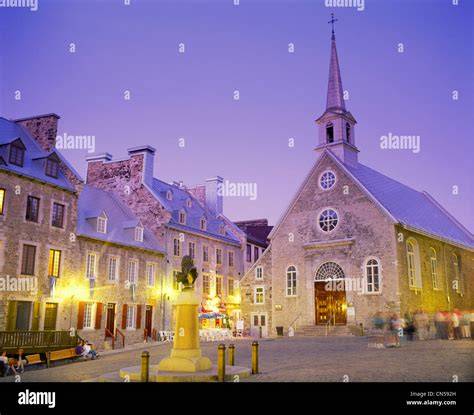
Unlike the grand cathedrals and basilicas that tower over many historic cities, Notre-Dame-des-Victoires enchants through its intimacy. Its stone exterior, symmetrical façade, and modest bell tower create a picture-perfect scene that feels almost like a European village chapel frozen in time.
The simple but noble stone exterior with its rounded, paned windows and steeple is both warm and inviting, and it is all set within the old world feel of Place Royal. The understated charm is precisely what draws so many visitors: the church looks and feels authentic, approachable, and deeply human.
Its sombre style, in contrast to the monumental style of churches in France, would become characteristic of churches in the colony. The church’s restrained appearance reflects the limited wealth and resources of New France while also demonstrating the practical adaptation of European Catholic architecture to the conditions of the colony.
Exterior form and proportions
Engravings from the time show that today’s church resembles its older self. An eagle eye will note that the plaster that covered the walls is gone and the alcoves housing statues on the facade of the church have been replaced by windows.
The belfry has also been moved closer to the front of the church. But the general physiognomy has not changed. Like a face with only a few wrinkles, the general features remain-the windows are where the alcoves once were, the canopy is laid out the same way, and the basic imprint-the size and proportions of the building-is identical.
The church is also recognized as the oldest stone church in the country to have retained its original walls. Its preserved masonry and recognizable proportions make it an especially important architectural witness to the French Regime.
Interior decoration and religious atmosphere
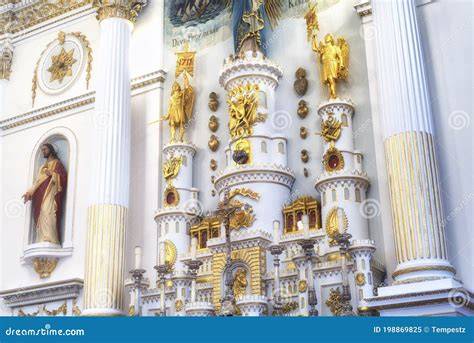
The interior of the church carries with it a style quite characteristic to this period in Quebec, a style which might surprise some readers given the relatively sober exterior of the church. White painted wood with gold gilt details reign supreme here.
Inside, the atmosphere is serene and contemplative. Wooden pews, soft lighting, and traditional religious artworks provide a quiet contrast to the busy streets just outside. Many visitors step in for a few moments of reflection, to appreciate the craftsmanship of earlier centuries, or simply to soak in the calm ambiance that permeates the space.
The current interior provides a very good idea of how the church looked to 18th-century parishioners gathered to worship. The contrast between the plain stone exterior and the more elaborate interior reflects a characteristic pattern of Catholic church design in Québec during this period.
Surviving and reconstructed elements
There is only one remaining original element inside the church-the tabernacle of the chapel of Sainte-Geneviève. The tabernacle is therefore one of the most important surviving objects associated with the church’s original interior furnishings.
Period paintings have been brought back, such as this one of the miraculous deliverance of the ship L’Aimable Marthe, a gift in 1747 in gratitude to the Virgin Mary. You can also admire the replica of the 17th-century vessel Le Brézé, which was recovered from the ruins of Notre-Dame-de-Québec Cathedral Basilica in 1759 and is now suspended from the ceiling.
- The tabernacle of the Sainte-Geneviève Chapel is the only original element remaining inside the church.
- The painting of the miraculous deliverance of L’Aimable Marthe was given in 1747 in gratitude to the Virgin Mary.
- The replica of the 17th-century vessel Le Brézé was rescued from the ruins of the Notre-Dame-de-Québec Basilica-Cathedral in 1759.
- The ship is suspended from the ceiling as a reminder of the church’s maritime and devotional history.
War, destruction, and rebuilding
Most buildings in Place-Royale were heavily damaged by enemy shelling in 1759. Notre-Dame-des-Victoires was painstakingly rebuilt. The church’s history therefore reflects not only religious continuity but also the military conflicts that reshaped Québec and New France.
But the church was quick to be ravaged by fire. The second renovation was done hastily, with disappointing results. Consequently, in 1816, architect François Baillairgé undertook a major and much-needed overhaul, giving the church the appearance it has today.
Over the centuries, it has been damaged, restored, and lovingly preserved, mirroring the turbulent yet resilient history of Québec City. Its continued existence is closely tied to the efforts of parishioners, architects, preservationists, and the broader community.
Threat of demolition and heritage protection
Some 50 years later, the church came very close to being demolished. Its congregation had outgrown it, and once more the merchants wanted it gone. However, the parishioners put up a fight.
In 1929 it was classified a historical monument by a newly created commission for the Province of Québec, making Notre-Dame-des-Victoires among the first three historical buildings to be preserved for posterity. From that day forward, the church did not have to fear for its future.
It was renovated again in the 1970s when extensive work was done on Place-Royale. The preservation of the building ensured that its original architectural character would remain connected to the historic setting around it.
Notre-Dame-des-Victoires and Place Royale
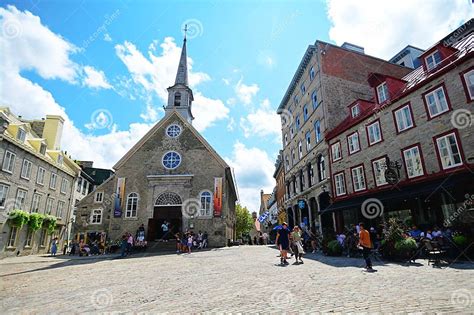
Right outside the church doors lies Place Royale, a small but immensely significant square that many consider the cradle of French civilization in North America. Today, the square resembles a carefully preserved historical stage, framed by stone buildings and narrow streets that echo the urban fabric of Old Europe.
The cobblestones underfoot, the sloped roofs, and the harmoniously restored façades all contribute to a uniquely immersive experience. Street musicians sometimes perform here, and seasonal decorations lend the square a particularly magical feel during summer evenings or around the winter holidays.
Notre-Dame-des-Victoires serves as the square’s focal point, anchoring the space visually and spiritually. Its scale and position make it an essential part of the square’s identity rather than an isolated historic structure.
Cultural and spiritual significance
Beyond its photogenic beauty, Notre-Dame-des-Victoires holds deep cultural and spiritual significance. It embodies the endurance of the French language and Catholic tradition in a region that has navigated conquest, political change, and modern urban development.
Locals often maintain a strong emotional connection to the church, seeing it as a witness to community milestones and a keeper of shared memory. Parishioners, newlyweds, and tourists continue to experience this place of worship typical of New France.
For visitors, stepping into the church offers a chance to connect with this living heritage. Whether you approach it from a spiritual perspective, as a lover of architecture, or simply as someone curious about the origins of Québec City, the church and its square provide a powerful sense of continuity between past and present.
What to see at the church
A visit to Notre-Dame-des-Victoires Church provides an opportunity to examine both the preserved structure and the objects associated with its religious and historical past. The building’s significance lies in the combination of its original walls, recognizable exterior form, surviving tabernacle, restored artwork, and symbolic location.
- Discover the tabernacle of the Sainte-Geneviève Chapel, the only original element remaining.
- Admire the replica of the ship Le Brézé, rescued from the ruins of the Notre-Dame de Québec Basilica-Cathedral in 1759.
- Observe the white-painted wood and gold gilt details of the interior.
- Look at the rounded, paned windows, stone façade, canopy, and modest bell tower.
- Spot, outside the church, the traces on the ground of Champlain’s second Habitation.
- Take in the church’s position against the historic backdrop of Place Royale.
Exploring the surrounding historic quarter
A visit to Notre-Dame-des-Victoires and Place Royale can easily fill several hours if you take the time to explore the surrounding streets. Small boutiques, galleries, and cafés invite you to pause and admire local craftsmanship, sample regional flavors, or simply sit with a coffee while observing the flow of visitors and locals alike.
Not far from the square, you can continue your journey through Old Québec’s layered history. Climb towards the Upper Town for sweeping views of the St. Lawrence River, discover fortifications, and explore additional religious and civic landmarks.
Returning to Place Royale at different times of day is also rewarding; the square’s mood changes with the light, from soft morning calm to glowing evening ambiance. The church’s stone walls and the surrounding historic façades acquire a different character as the day progresses.
Planning a respectful visit
Notre-Dame-des-Victoires remains first and foremost a place of worship, but it is also open to visitors interested in history, architecture, and religious heritage. When visiting, it is recommended to maintain a respectful demeanor: speak softly, dress appropriately, and be mindful if religious services or private moments of prayer are taking place.
Photography may be permitted, but always observe posted guidelines or instructions from staff and volunteers. Adults and older teens may be asked to pay a small symbolic fee, which helps support the maintenance and preservation of the building.
The opening hours of Notre-Dame-des-Victoires Church vary throughout the year, reflecting seasonal rhythms in Old Québec. In general, the church opens in the morning and closes in the late afternoon or early evening, with extended hours during the peak summer season when the neighborhood is at its liveliest.
- Typical daytime hours: Around mid-morning to late afternoon.
- Summer season: Open daily, often into the evening to accommodate the flow of visitors enjoying the long daylight hours.
- Late autumn to early spring: Frequently open only on Sundays or on a reduced schedule, with variations depending on the period.
Because schedules can change with the season, special events, or liturgical celebrations, it is always wise to check the latest information before planning your visit. Doing so ensures you can enter the church, explore at your own pace, and perhaps attend a service if one coincides with your time in the city.
Getting the most from the setting
Because Notre-Dame-des-Victoires is located in a highly walkable historic quarter, it can easily be integrated into a broader itinerary of Old Québec. Many travelers choose to explore the area on foot, allowing them to appreciate the narrow alleyways, heritage buildings, and scenic viewpoints that might be missed from a vehicle.
Comfortable shoes, layered clothing for changing weather, and a flexible schedule will help you make the most of your time here. Consider timing your visit to the church either early in the day or later in the afternoon, when the square can feel more peaceful and atmospheric.
During summer, the extended opening hours make it possible to visit after dinner, when the light is softer and the historic stone façades glow warmly. The combination of the church, the square, and the surrounding streets makes the site particularly effective for understanding the relationship between architecture, religious practice, and the history of Québec City.