The Orthodox Great Doxology is a major hymn of praise to the Holy Trinity. It glorifies God the Father, the Son, and the Holy Spirit; praises Christ as the Lamb of God who takes away the sins of the world; asks for mercy and guidance; and confesses that God alone is holy and Lord.
In Orthodox worship, the Great Doxology is sung at the end of Matins, immediately before the Divine Liturgy begins in the usual manner. Its opening proclamation, “Glory to God, Who has shown us the Light!”, announces the revelation of divine light and leads the congregation from the praises of Matins toward the celebration of the Eucharistic Liturgy.
What “doxology” means
A “doxology,” etymologically speaking, is “a word of glory.” It is an eruptive statement of praise to the God who is worthy of all glory-words, and more.
Δόξα (doxa), “glory” or “praise,” plus λόγος (logos), “word.” The word therefore describes speech or song that gives glory to God rather than placing human concerns at the center.
“First of all every holy rite begins with the doxology: ‘Blessed is the kingdom of the Father, and of the Son and of the Holy Spirit.’ Intercourse with God consists of thanksgiving, doxology, confession, and petition.
The first of these is doxology, because when grateful servants approach their Master it is fitting that they should begin not by pushing their own affairs into the foreground, but should concentrate on those of their Master.
Such is the nature of doxology. In petitioning we have in mind the advancement of our own interests. In confession we seek to be delivered from evils, and accuse ourselves. In giving thanks we clearly rejoice in the good things which we enjoy.
But in doxology we lay aside ourselves and all our interests and glorify the Lord for his own sake, for his power and his glory. And so the very nature and the appropriateness of the act demand that the doxology should come first.”
Biblical foundations of doxology
Doxologies are as old as Scripture. They punctuate each of the five books of the Psalms, as summative gatherings of the praises of the people (Pss 41:13; 72:19; 89:52; 106:48; 150:1-6).
They appear at key moments in the salvation history of Israel, such as in David’s public prayer as the kingdom is passed to Solomon (1 Chr 29:10-13)-words which eventually find a more permanent home in the doxological ending of the Lord’s Prayer: For yours is the kingdom and the power and the glory, forever. Amen.
Likewise in the New Testament, doxologies herald those key moments in the most climactic of events in salvation history-the parousia of Jesus Christ. The angels sing a doxology at his birth (Luke 2:14).
King Jesus has doxologies sung to him on the first Palm Sunday, during his triumphal entry into Jerusalem (Luke 19:38). And as the apostle Paul explores the theological implications of the Christ-event, he cannot help but burst out in praise throughout his epistles (Rom 11:33-36; 16:27; Eph 3:21; 1 Tim 1:17).
The canonical Scriptures close in a symphony of praise (Jude 24-25; Rev 5:13; 19:1), revealing that heaven itself is a place of ceaseless doxology.
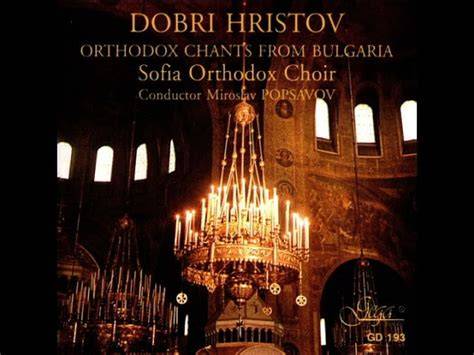
The Great Doxology in Orthodox worship
It would be very natural, therefore, and in keeping with the patterns both of the Bible and of heavenly worship, that the Christian worship tradition would develop doxologies for its worship, both in the weekly gathering and the daily prayers of the people of God.
The Orthodox Great Doxology belongs to the morning office of Matins. It gathers together praise, thanksgiving, confession, petition, Trinitarian faith, and appeals for mercy before the Divine Liturgy begins.
Immediately we approach God we recognize the inaccessibility and force and grandeur of his glory, and are filled with wonder and awe and similar feelings. This is indeed doxology.
We go on to recognize this goodness and love for mankind, and this gives rise to thanksgiving. Then we consider his exceeding goodness and the liberality of his love for mankind, counting our own wickedness as the first and sufficient proof of that generosity and liberality, for whatever our shortcomings he continues to crown us with blessings.
This is something which is near at hand within us, before our very eyes, and it proves to us more than anything else how much God loves mankind. And so we remember our sins before God, and this is called confession.
The fourth element is petition. It follows that we can be confident that our requests for our needs will be granted, for we have just learned something of God’s goodness and his love for mankind.
He who has been good to those who were still sinners will surely be more so to those who have repented, and have become righteous by avowing their sins, according to the words of the prophet: ‘First confess yours sins in order that you may be justified.”
Text of the Orthodox Great Doxology
Opening praise
Priest: Glory to Thee, who hast shone us the light!
People: Glory to God in the highest, and on earth peace,good will to men.
Glory to God, Who has shown us the Light!
Glory to God in the highest, and on earth, peace, good will toward men!
Praise of the Holy Trinity
We praise Thee, we bless Thee, we worship Thee, we glorify Thee, we give thanks to Thee for Thy great glory: O Lord, heavenly King, God the Father Almighty; O Lord, the Only-begotten Son, Jesus Christ, and the Holy Spirit.
We praise You! We bless You! We worship You! We glorify You and give thanks to You for Your great glory!
O Lord God, Heavenly King, God the Father Almighty! O Lord, the Only‑Begotten Son, Jesus Christ, and the Holy Spirit!
Christ the Lamb of God
O Lord God, Lamb of God, Son of the Father, that takest away the sins of the world, have mercy on us.
Thou that takest away the sins of the world, receive our prayer.
Thou that sittest on the right hand of the Father, have mercy on us.
For Thou alone art holy, Thou alone art Lord, Jesus Christ, in the glory of God the Father. Amen.
O Lord God, Lamb of God, Son of the Father, Who takes away the sins of the world, have mercy on us!
You, Who take away the sins of the world, receive our prayer!
You, Who sit on the right hand of God the Father, have mercy on us!
For You alone are holy, and You alone are Lord. You alone, O Lord Jesus Christ, are most high in the glory of God the Father! Amen!
Psalmic prayers and petitions
Every day will I bless Thee, and praise Thy name forever and ever.
Vouchsafe, O Lord, to keep us this day without sin.
Blessed art Thou, O Lord, God of our fathers, and praised and glorified is Thy Name forever. Amen.
Let Thy mercy, O Lord, be upon us, as we have set our hope in Thee.
Blessed art Thou, O Lord, teach me Thy statutes.
Blessed art Thou, O Master, teach my Thy commandments.
Blessed art Thou, O Holy One, enlighten me with Thy precepts.
O Lord, Thou hast been our refuge from generation to generation.
I said: Lord, have mercy on me! Heal my soul, for I have sinned against Thee!
O Lord, I flee unto Thee! Teach me to do Thy will, for Thou art my God.
For with Thee is the fountain of life, and in Thy light shall we see light.
Continue Thy mercy unto those who know Thee.
I will give thanks to You every day and praise Your Name forever and ever.
Lord, You have been our refuge from generation to generation!
I said, �Lord, have mercy on me. Heal my soul, for I have sinned against You!�
Lord, I flee to You. Teach me to do Your will, for You are my God.
For with You is the fountain of Life, and in Your light shall we see light.
Continue Your lovingkindness to those who know You.
Vouchsafe, O Lord, to keep us this day without sin.
Blessed are You, O Lord, the God of our fathers, and praised and glorified is Your Name forever. Amen.
Let Your mercy be upon us, O Lord, even as we have set our hope on You.
Blessed are You, O Lord; teach me Your statutes.
Blessed are You, O Master; make me to understand Your commandments.
Blessed are You, O Holy One; enlighten me with Your precepts.
Appeal for mercy and final Trinitarian praise
Holy God, Holy Mighty, Holy Immortal, have mercy on us (3).
Glory to the Father, and to the Son, and to the Holy Spirit, now and ever and unto ages of ages. Amen.
Holy Immortal, have mercy on us.
Holy God, Holy Mighty, Holy Immortal, have mercy on us.
Your mercy endures forever, O Lord! Do not despise the works of Your hands!
To You belongs worship, to You belongs praise, to You belongs glory: to the Father and to the Son and to the Holy Spirit, now and ever and unto ages of ages. Amen.
Meaning of the main parts
“Glory to God, Who has shown us the Light”
The opening words place the entire hymn within the biblical language of divine illumination. The faithful praise God as the source of light, revelation, and salvation before moving to the broader hymn of the Holy Trinity.
The opening also establishes that worship is a response to God’s initiative. Human beings do not create divine glory through singing; they recognize and proclaim the glory that God has already revealed.
“Glory to God in the highest”
“Glory to God in the highest, and on earth peace, good will toward men” echoes the song of the angels at the birth of Christ (Luke 2:14). The line joins heaven and earth: the heavenly praise of the angels becomes the praise of the Church.
The phrase presents worship as participation in a reality larger than the local congregation. The earthly assembly joins the heavenly host in glorifying God and proclaiming the peace revealed in Christ.
“We praise Thee, we bless Thee, we worship Thee, we glorify Thee”
This sequence expresses the complete orientation of worship toward God. Praise, blessing, worship, glorification, and thanksgiving are not presented as competing activities but as closely related movements of one response to divine glory.
In doxology we lay aside ourselves and all our interests and glorify the Lord for his own sake, for his power and his glory. The words therefore direct attention away from personal demands and toward God’s identity and majesty.
“We give thanks to Thee for Thy great glory”
The Great Doxology combines thanksgiving with praise. Thanksgiving recognizes the good things received from God, while doxology glorifies God for his own sake, for his power and his glory.
In giving thanks we clearly rejoice in the good things which we enjoy. The hymn consequently teaches that Christian prayer can remember both God’s gifts and God himself as the source and fulfillment of all blessing.
“O Lord God, Heavenly King, God the Father Almighty”
This address confesses God as Lord, heavenly King, and Father Almighty. The language is both majestic and relational: God possesses sovereign authority, yet the Church approaches him as Father.
The Christian confession is the mystery that we worship one God, eternally existing in three Persons. To name and praise him as such sets him apart as the one true God over against all others.
“The Only-begotten Son, Jesus Christ”
The Great Doxology names Jesus Christ as the Only-begotten Son. It therefore places the hymn within the Christian confession of the Son’s unique relationship to the Father and his central role in salvation.
The righteousness of God is revealed in Christ, who is given to us out of God’s rich love apart from any works of ours (Rom 3:21-26). Christ is the chief, central blessing that God has bestowed upon us and upon the whole world, from whom as a result “every spiritual blessing” flows (Eph 1:3 NIV).
“Lamb of God, Son of the Father”
The title “Lamb of God” recalls the biblical image of sacrificial offering and the Christian confession that Christ takes away the sins of the world. The hymn addresses Christ directly as the one to whom the Church brings its plea for mercy.
O Lord God, Lamb of God, Son of the Father, that takest away the sins of the world, have mercy on us. Thou that takest away the sins of the world, receive our prayer.
The repeated appeal for mercy does not interrupt the doxology. It shows that praise and petition belong together: the Church asks Christ for mercy because it has confessed who he is and what he does.
“For Thou alone art holy”
The declaration that Christ alone is holy and Lord gives the hymn a strongly confessional character. It identifies Christ as sharing in the divine glory and places the congregation’s worship within the Church’s Trinitarian faith.
For You alone are holy, and You alone are Lord. You alone, O Lord Jesus Christ, are most high in the glory of God the Father! Amen!
“Every day will I bless Thee”
Every day will I bless Thee, and praise Thy name forever and ever. This line extends the act of worship beyond the particular service. Praise is not limited to a single gathering but becomes a daily pattern of life.
The Doxology teaches that the Church’s worship is continuous. When Christians gather to “begin” worship, they are actually stepping into an already moving stream of worship somewhere at its midpoint.
“Keep us this day without sin”
Vouchsafe, O Lord, to keep us this day without sin. This petition shows that the Great Doxology is not abstract praise detached from daily conduct. The worshipers ask for divine help in living faithfully throughout the day.
In petitioning we have in mind the advancement of our own interests. In confession we seek to be delivered from evils, and accuse ourselves. The Great Doxology places these needs within a larger movement that begins with God’s glory.
“Blessed art Thou, O Lord, teach me Thy statutes”
The repeated requests to be taught God’s statutes, commandments, and precepts express humility before divine instruction. The worshiper does not claim to possess sufficient wisdom but asks God to enlighten the mind and direct the will.
Blessed art Thou, O Lord, teach me Thy statutes. Blessed art Thou, O Master, teach my Thy commandments. Blessed art Thou, O Holy One, enlighten me with Thy precepts.
The corresponding form also says: Blessed are You, O Lord; teach me Your statutes. Blessed are You, O Master; make me to understand Your commandments. Blessed are You, O Holy One; enlighten me with Your precepts.
“In Thy light shall we see light”
For with Thee is the fountain of life, and in Thy light shall we see light. This statement presents God as the source of life and the condition for true understanding. Divine light is not merely an image of information but a gift by which human beings are enabled to see and live rightly.
For with You is the fountain of Life, and in Your light shall we see light. The wording connects the opening proclamation of the light with the later prayer for illumination.
“Holy God, Holy Mighty, Holy Immortal”
The Trisagion acclamation, “Holy God, Holy Mighty, Holy Immortal, have mercy on us,” combines praise of God’s holiness, power, and immortality with the repeated plea for mercy.
The repetition gives the congregation a concentrated confession of divine holiness. The appeal “have mercy on us” acknowledges both God’s majesty and human dependence upon him.
“To You belongs worship, praise, and glory”
To You belongs worship, to You belongs praise, to You belongs glory: to the Father and to the Son and to the Holy Spirit, now and ever and unto ages of ages. Amen.
The final sentence gathers the entire hymn into a Trinitarian doxology. Worship, praise, and glory belong to the Father, the Son, and the Holy Spirit eternally.
The Great Doxology and the Church’s heavenly worship
The Great Doxology reflects the biblical conviction that Christian worship joins the praise of heaven and earth. The Doxology gathers up the worship of heaven and earth, giving each worshiper a sense that corporate worship is always more than meets the eye or ear.
While any one local church might gather in a cathedral, a meeting house, a living room, or even a catacomb, the confession of every worshiping believer present is that their gathering includes all other gatherings together-as “one holy catholic and apostolic church,” as the Nicene Creed says.
Even more, these lines of the Doxology recognize that when we worship, we are gathering with the saints who have gone before us, the “great cloud of witnesses” of Hebrews 12-along with the multitudes from every tribe, tongue, and nation, who stand in white-robed glory around the throne of God, ceaselessly worshiping in unfettered praise (Rev 7:9-10).
The Great Doxology - Byzantine Hymn with Greek Lyrics | Mega Doxologia Orthodoxy
As mentioned, we are in Christian worship summoning not only our fellow earthly sojourners to praise God; we are bending our voices to heaven-we are commanding the angels, and all the company of heaven listed in the opening chapters of the book of Revelation, to join our voices in praise.
Not only is the heavenly realm of angels, saints, and other beings real, but the Doxology reminds us that there are meaningful points of interaction between us, the “church militant” here on earth, and all who dwell in the heavenly places.
Here we faithfully mirror the language of Psalm 150:1 (NIV): “Praise him in his mighty heavens.” Gathered worship is not only a place where heaven talks to us. We talk back to heaven.
Doxology, creation, and the whole human community
“Praise him, all creatures here below” is even more expansive than the universal church. It summons all creation-plants, animals, and perhaps even the stones of the ground (cf. Luke 19:40)-to join in praise.
We are here given a cosmic, eschatological perspective: just as all creation was made by the Word of God, so one day it will all be remade by that same Word (Gen 1-2; John 1:1-18; 2 Cor 5:17), restored to worship completely, unencumbered by the effects of the fall.
Some traditions can overemphasize the vertical-God-to-human, human-to-God-dimensions of corporate worship to the exclusion of the horizontal, the human-to-human. The Doxology provides a wonderful remedy to this anemia by forcing us out of an individualistic framework and into a communal space.
We are pressed to look around and engage in the necessary and edifying work of ministry to one another as an act of corporate worship. Paul encourages the Colossian church and us:
Let the message of Christ dwell among you richly as you teach and admonish one another with all wisdom through psalms, hymns, and songs from the Spirit, singing to God with gratitude in your hearts. (Col 3:16 NIV)
And to the church at Ephesus, the apostle writes, Be filled with the Spirit, speaking to one another with psalms, hymns, and songs from the Spirit. Sing and make music from your heart to the Lord. (Eph 5:18-19 NIV)
We learn that the horizontal dimension to worship, particularly through music, is a vital component of Christian worship. As we sing, pray, praise, preach, and receive baptism and the Lord’s Supper, we do so not only to glorify God and to hear from him, but also to build up, encourage, and strengthen our brothers and sisters in Christ.
The Orthodox Great Doxology and other Christian doxologies
Three doxologies in particular have emerged from various streams of the church to take prominent and permanent places in global Christian worship.
Gloria Patri
The Gloria Patri, sometimes called “the lesser doxology,” appears in Christian liturgies as early as the fourth century. It is spoken or sung especially around the public reading of Scripture, and it used both as a form of Trinitarian confession and as an affirmation of the continuity of revelation between the Old and New Testaments:
Glory be to the Father and to the Son and to the Holy Ghost; As it was in the beginning, is now, and ever shall be, world without end. Amen.
Gloria in Excelsis
The Gloria in Excelsis, sometimes called “the greater doxology,” has come to us from the Greek churches of the Eastern tradition. A hymn in use since the fourth century, this doxology eventually found prominent place in the eucharistic liturgies of both the East and West.
Glory be to God on high, and on earth peace, good will towards men. We praise thee, we bless thee, we worship thee, we glorify thee, we give thanks to thee for thy great glory, O Lord God, heavenly king, God the Father almighty.
O Lord, the only-begotten Son, Jesu Christ; O Lord God, Lamb of God, Son of the Father, that takest away the sins of the world, have mercy upon us.
Thou that takest away the sins of the world, have mercy upon us. Thou that takest away the sins of the world, receive our prayer. Thou that sittest at the right hand of God the Father, have mercy upon us.
For thou only art holy; thou only art the Lord; thou only, O Christ, with the Holy Ghost, art most high in the glory of God the Father. Amen.
“Praise God, from whom all blessings flow”
Common to many who worship in the heritage of Western, English-speaking Christianity is the third word of praise we most commonly call “The Doxology,” which consists of four lines of praise:
Praise God, from whom all blessings flow; Praise him, all creatures here below. Praise him above, ye heavenly host. Praise Father, Son, and Holy Ghost. Amen.
Paying careful attention to the four lines of the Doxology, we recognize that three of the four lines are a call to worship, with only the last line being a doxology proper, words of praise to God.
The text is ascribed to Thomas Ken (1637-1711), a bishop in the Church of England who, in his early days as pastor, displayed a passion for worship, writing both a Manual of Prayers and eventual accompanying morning and evening hymns for boys in his town of Winchester.
The music traditionally associated with this Doxology is called “Old Hundredth,” after the number of the Psalm in the Genevan Psalter from which the tune originated.
This Doxology found its place in many streams of Christian worship, often now connected as a response to offertories, or the giving of tithes and offerings, in many Western and English-speaking traditions.
The Great Doxology as a pattern of prayer
The Great Doxology illustrates a basic order of Christian approach to God: doxology, thanksgiving, confession, and petition. The order begins with God’s glory and only then turns to the needs and sins of the worshipers.
When we “Praise God, from whom all blessings flow,” we are in fact praising God for and in response to Jesus Christ and all his benefits. We are giving a heartfelt “yes and amen” to that great rhetorical question of Paul’s, “What do you have that you did not receive?” (1 Cor 4:7 NIV).
Here we learn, theologically, that all human worship is a response to the initiation and revelation of God through Jesus.
Martin Luther would call this orientation of the Christian to God the vita passiva, perhaps best translated as “the receptive life.”
In this pattern, the faithful first recognize God’s glory, then give thanks for his goodness, confess their sins, and ask for mercy, protection, instruction, and strength. The Great Doxology therefore serves both as a hymn of praise and as a condensed theology of Christian prayer.
Liturgical placement and purpose
The Great Doxology is sung at the end of Matins. Its place is significant: it gathers the themes of the morning service into a final proclamation before the Divine Liturgy.
Its movement may be summarized as follows:
| Movement | Content |
|---|---|
| Opening glorification | “Glory to God, Who has shown us the Light!” |
| Angelic and earthly praise | “Glory to God in the highest, and on earth peace” |
| Trinitarian worship | “We praise Thee, we bless Thee, we worship Thee” |
| Christological confession | Christ is named the Only-begotten Son and Lamb of God |
| Petition for mercy | “Have mercy on us” and “receive our prayer” |
| Daily discipleship | Requests to be kept without sin and taught God’s commandments |
| Trisagion praise | “Holy God, Holy Mighty, Holy Immortal” |
| Final doxology | Glory belongs to the Father, Son, and Holy Spirit |
The hymn therefore moves from heavenly glory to human need without separating the two. The congregation praises God, confesses Christ, asks for mercy, seeks instruction, and ends by returning to the glory of the Holy Trinity.
Then the Divine Liturgy begins immediately in the usual manner.
The theological center of the Great Doxology
The essential end takes us back to the beginning. The Christian confession is the mystery that we worship one God, eternally existing in three Persons.
Until this moment in the Doxology, perhaps this worship song could be sung by nearly any worshiper in any tradition. But now, with our triune confession, we proclaim the exclusive glory of our One God, who reveals himself in the Son, Jesus Christ, only by the power of the Holy Spirit.
The Great Doxology is therefore not merely a collection of devotional expressions. It is a compact confession of biblical worship, the Trinity, the incarnation and saving work of Christ, the reality of heavenly praise, the need for mercy, and the continuing responsibility of the faithful to live according to God’s commandments.
To You belongs worship, to You belongs praise, to You belongs glory: to the Father and to the Son and to the Holy Spirit, now and ever and unto ages of ages. Amen.