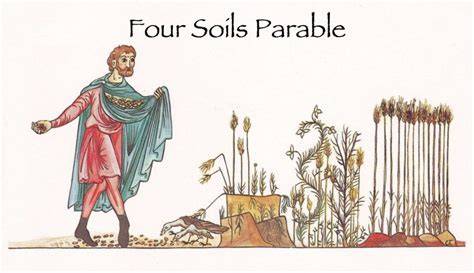
The Parable of the Sower teaches children that God’s Word is like a seed and that people are like different types of soil. The seed grows differently depending on whether it falls on a path, rocky places, among thorns, or in good soil.
These Parable of the Sower activity sheets and activities help children understand the story through coloring, crafts, gardening, movement, games, observation, and Scripture memorization. The activities also emphasize that our hearts must be responsive to God’s Word, that we can ask for help to understand the Bible, and that we must share God’s truth with others.
Bible Passages for the Parable of the Sower
The Parable of the Sower is found in Matthew 13:1-23, Mark 4:1-20, and Luke 8:4-15. The Scripture reading for this lesson is Matthew 13:1-9, 18-23.
This parable is best read directly from the scriptures. Jesus offers a clear explanation of the four different types of soil and shows how each one represents a different response to God’s Word.
What Is a Parable?
A parable is a story Jesus taught to help people understand important truths. Parables are little stories Jesus told that teach us about the Kingdom of God.
They are similar to fables in that they are stories with a deeper meaning. But fables give moral or ethical lessons. For example, the Tortoise and the Hare teaches us not to give up if you are the tortoise and not to be too full of yourself if you are the hare.
The Boy Who Cried Wolf teaches us that if we lie repeatedly, people will not believe us even when we are telling the truth. Parables teach us about life in the Kingdom of God, or life as a Christian.
The Four Types of Soil
| Type of soil | Meaning |
|---|---|
| Path | When we do not understand the word, it is like it is snatched up like a bird swoops down and eats a seed he finds on a path. |
| Rocky Places | When we receive the word and it springs up quickly, but trouble comes and because it does not have a good root, it quickly falls away. |
| Thorns | When we receive the word, but the worries of life and our possessions choke it out. |
| Good Soil | When we receive the word, understand it, and it changes us. It “produces a crop.” |
The imagery is that we are all a kind of soil, and God’s word falls on us like seeds scattered by the sower. How the seed grows depends on the condition of the soil.
The Kingdom lesson in this parable is that not everyone receives the Word of God. We must be willing to receive it and allow it to be more important than anything else in the world.
If we want to be good soil, we must ask the farmer to work us over so that the seed he plants in us will grow well. The encouraging thing is that God, our heavenly farmer, wants to grow his word in us.
So we know that if we ask him, he will make us into the kind of soil ready to grow a bountiful harvest for God.
Learning Objectives
- Understand that the seed in the parable represents God’s Word.
- Recognize the four types of soil in the story.
- Explore how people respond differently to God’s Word.
- Understand that our heart must be responsive to God’s Word.
- Learn that we can ask for help to understand the Bible.
- Think about ways to share God’s truth with others.
- Memorize a Bible verse connected with the lesson.
Four-Field Object Lesson
Begin this week’s lesson by creating four fields with your child. To do this, you will need four plastic containers or seed trays.
Fill each container with a layer of soil and then follow the steps in the parable. Create a path across the field. Have your child step on the soil to compress it and make it hard.
Cover the field in rocks. Find some garden weeds and twigs to place in the field. Leave the soil looking nice and clean.
Give your child some seeds and ask them, “Which field would be the best to plant the seeds?”
Remind your child that a parable is a story Jesus taught to help people understand important truths. In this parable, Jesus wanted the people to understand the effects of God’s Word and his teaching on their hearts.
Read the parable from your children’s Bible and review the fields you have created as you go along.
Parable of the Sower Activity Sheets
Free Bible Coloring Pages
Use free Bible coloring pages about the Parable of the Sower to help children review the story. Children can color the sower, seeds, fields, birds, rocks, thorns, and good soil.
As children color, talk about the meaning of each part of the picture and ask which type of soil produced a harvest.
Reflection Worksheet
This downloadable worksheet is made to accompany the Parable short video series.
Jesus uses the parable of the sower, found in Matthew 13, to give us a picture of why some people seem to grow and flourish in faith, and others do not.
What kind of soil will we be? Will we be like a path, where the seed can be easily snatched up by hungry birds? Will we be like dry and cracked earth offering no space for deep roots?
Maybe we will find that the worries of this world prove too much. Sometimes the darkness does seem to drown out the light. But what about the good soil?
That soil returns to the sowers a great harvest. What kind of soil would you rather be?
Use the downloadable worksheet to reflect on those things. There are a couple of suggestions already, what more can you think of?
Fill the garden with beautiful plants, use different shapes and colours to make it flourish. As you draw, maybe you could ask God to help you become the kind of soil that is ready to grow.
Good Soil Plate Craft
What you need:
- 2 paper plates
- Paint and brushes
- Glue
- Seeds template
- Pens
- Scissors
What to do:
- Paint half of the underside of a paper plate brown and the inside of another paper plate blue.
- Allow to dry.
- Cut the brown paper plate in half and glue it to the blue plate.
- Cut out seeds from the template.
- Write Bible memory verses on some seeds and “plant” them in the soil.
“God’s Word” Book
Give the children paper and markers to draw and cut out a Bible shape and write GOD’S WORD on it to form the cover for a book.
They can then add pages with pictures or words from today’s lesson. Each page could have a seed drawn or glued onto it, and children can draw a picture representing the type of soil that the “seed” fell on, such as rocky soil, weeds, or good soil.
Seed Marker
Let children make a colorful Bible book marker with “I WILL HIDE GOD’S WORD IN MY HEART” and tape a seed to the book marker.
Write in colorful letters today’s Bible verse and try to memorize the verse before leaving class.
Seed Drawings
Let the children draw a few big flowers on a sheet of paper and then glue seeds in the middle of the flowers or to form an outline around the flowers.
Write today’s Bible verse or words from today’s lesson at the top of their drawings or in little words on the stem and leaves of the seed drawing.
Seed Art
Give the children many types of seeds and let them glue the seeds on a piece of colored construction paper to form “GOD’S WORD.”
Remind the children that the seeds in the story represent GOD’S WORD.
Flower Pots
Let each child plant a small flower in a ceramic pot or Styrofoam cup and write or glue today’s Bible verse on the side of the pot.
Tissue Paper Flowers
Let the children fold a piece of tissue paper “accordion style” and then pull the tissue layers apart to form a flower and add a chenille wire for the stem.
Let the children add a strip of paper to the stem with today’s Bible verse or attach a seed packet to the tissue flower arrangement and tape a copy of the Bible verse on the packet.
Garden Stone
Give the children a large flat stone to write words from today’s lesson.
If the teacher desires, a garden stone can be made out of a stepping stone mold and painted. This might take two weeks of class time, but would be a treasure and keepsake for the child.
Planting and Gardening Activities
Seed Planting in Good Soil
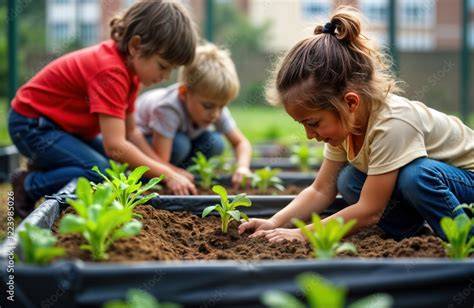
Let the children plant some seeds and watch them grow in GOOD SOIL for the next few weeks.
Take a picture of the children in front of their new pots first and then a picture of the children in front of the pots of flowers after they have grown.
Discuss how the seeds will grow in GOOD soil as in the Bible lesson.
Gardening With Children
One of the best ways to understand this parable is by doing some gardening with your children.
Gardening with children engages all their senses and is a great learning tool without even realizing. It is also shown to help healthy eating.
For this week’s lesson, plant some seeds, pick and identify some weeds, and talk about why certain plants grow in certain places.
Soil and Seed Walk
Give each child some seeds and take a walk outside to place those seeds on the types of soil that were discussed in the lesson.
Children can compare the hard path, rocky places, weeds, and good soil. The activity connects the physical environment with the four responses described in the parable.
Plant in the Good Soil Game
Mark four squares on the ground. Label each square to match the ground in the parable.
Give each child a bean bag and have them throw it into the good soil. Points are scored only when the seed lands in the good soil.
Counting Seeds in Fruit
Share how the seed that landed on good soil went on to produce a great harvest.
Slice a tomato, watermelon, or another fruit with seed inside and count out some of the seeds with your child.
Explain how a seed produces another plant, which in turn creates many fruits and many more seeds.
Think about how God wants us to share His truths with others and to plant seeds for Him. Think of ways we can do this.
Activities About Listening and Understanding
“Simon Says” Listening Game
Play a listen game such as “Simon says.” Speak about how it is important that we listen carefully and obey the correct things.
Talk about ways we respond to what people tell us. For example, maybe your child tries to tell you something important when you are busy, and you do not really pay attention.
Ask them how that makes them feel, apologise, and remind them that what they tell you is really important.
Share that more and more people came to listen to Jesus’ teaching, but many of them did not have the right heart to listen and obey him.
Asking for Help to Understand the Bible
Read the second part of the passage where Jesus explains the parable.
Show how the disciples did not understand its meaning, so they asked Jesus to explain it.
Remind your child how God knows we have a lot to learn and that we may not understand everything in the Bible.
When we do not understand something, we can pray and ask God to help us understand it. Think of people we could ask to help us understand the Bible.
Seed and Garden Games
Build a Scarecrow
You can build a scarecrow for indoors or outdoors. Find some old clothes around your home and stuff them with old paper or straw.
For the face, you could use a paper plate, balloon, or a stuffed face. Talk about how the birds stole the seed on the path.
Weed Pictures
The teacher can have real weeds of various types in class or just pictures of weeds and flowers and let children try to guess if each item is a weed or a flower.
Talk about the weeds in the story and the effect they have on the seed.
Seed-Themed Snack
Dirt Cup Desserts
Decorate a small cup with words from the Bible lesson.
Let children put a small amount of chocolate pudding in the bottom and sprinkle it with crushed-up cookies to look like the soil in today’s lesson.
Gummy worms or sunflower seeds could be added to their snack.
Songs for the Lesson
- “Thy Word” by E. O. Sellers
- “The B-I-B-L-E” by Composer Unknown
- “Thy Word Is Like a Garden, Lord” by Louis Spohr and Edwin Hodder
Words and music, MP3 piano accompaniment, and other lesson resources can be used to support the Bible teaching and help children remember the central message of the Parable of the Sower.
Discussion Questions
- What does the seed represent in the parable?
- What happened to the seed that fell on the path?
- Why did the seed in the rocky places fall away?
- What do the thorns represent?
- What happened to the seed planted in good soil?
- Which type of soil would you rather be?
- What can we do when we do not understand something in the Bible?
- How can we listen carefully to God’s Word?
- How can we share God’s truth with others?
- What kind of things do you think God wants to grow in us?